Japanese festival dates follow three different rules: fixed calendar days, weekday formulas, and annual announcements. This calendar sets out 50 major matsuri month by month, marks which 2027 dates organisers have already confirmed, and says plainly which are still unannounced. Nineteen of them sit in Central Japan, within reach of Nagoya.
Most festival lists tell you a month. That is not enough to book with. The Aomori Nebuta Matsuri falls on 2-7 August whatever day of the week that is, the Sanja Matsuri moves with the third Saturday of May, and the Konomiya Hadaka Matsuri is set by the old lunar calendar. This page separates those three cases for 50 festivals, so you know which dates you can hold a hotel against today and which ones you have to wait for. Every date, time and figure below is taken from the organisers, the shrine or the city that runs the festival, checked in August 2026.
Written by Yuu — a Nagoya native of 35 years. Published August 24, 2026.
This article may contain affiliate links. See our affiliate disclosure for details.
How Are Japanese Festival Dates Decided?
Three ways. Some festivals sit on fixed calendar dates and never move. Some follow a weekday formula the organisers publish. The rest are announced fresh each year with no published rule. Which group a festival belongs to decides how early you can book.
- Fixed dates. The same calendar days every year, on whatever weekday they land. The Aomori Nebuta Matsuri (青森ねぶた祭) is 2-7 August, the Akita Kanto Matsuri (秋田竿燈まつり) 3-6 August, the Sendai Tanabata Matsuri (仙台七夕まつり) 6-8 August, the Gion Matsuri (祇園祭) processions 17 and 24 July, the Tenjin Matsuri (天神祭) 24-25 July, the Chichibu Yomatsuri (秩父夜祭) 2-3 December, the Karatsu Kunchi (唐津くんち) 2-4 November. You can plan these years out.
- Weekday rules. The organisers publish a formula — the fourth Saturday of January, the Sunday closest before 25 October, the Days of the Rooster in November. You can predict the weekend; you still want the year’s own announcement for the exact date.
- Annual announcement. No published rule at all. The Sapporo Snow Festival (さっぽろ雪まつり), the Kanazawa Hyakumangoku Matsuri (金沢百万石まつり) and the Kishiwada Danjiri Matsuri (岸和田だんじり祭) are all in this group, and you simply wait for the organisers to speak.
This page only calls a festival fixed when the organisers themselves state it in those terms. Where the 2027 dates are not out, it says so rather than guessing.
| Festival | Confirmed 2027 dates | Where |
|---|---|---|
| Shirakawa-go Winter Light-Up | 11, 17, 24 and 31 January (four evenings) | Shirakawa Village, Gifu |
| Sapporo Snow Festival | 4-11 February (8 days, 77th edition) | Sapporo, Hokkaido |
| Yokote Kamakura Snow Festival | 12-13 February | Yokote, Akita |
| Konomiya Hadaka Matsuri | 19 February, 15:00 (night rite 03:00 on the 20th) | Inazawa, Aichi |
| Omihachiman Sagicho Matsuri | 13-14 March | Omihachiman, Shiga |
| Sanja Matsuri | 14-16 May (Friday to Sunday) | Asakusa, Tokyo |
| Nabana no Sato Illumination | Running until 31 May 2027 | Kuwana, Mie |
| Nippon Domannaka Matsuri (Domatsuri) | 27 August (eve festival), 28-29 August (main days) | Nagoya, Aichi |
| Setomono Matsuri | 11-12 September | Seto, Aichi |
| World Cosplay Summit | 12-14 November | Aichi and Nagoya |
Which Festivals Run From January to March?
Winter is the season of fire and snow. New Year shrine visits fill the first three days, fire festivals take over mid-January, and February belongs to snow towns and to the naked festivals of the lunar new year.
January
Hatsumode (初詣) — 1-3 January, nationwide. The first shrine visit of the year, and the busiest three days on any shrine calendar. Meiji Jingu (明治神宮) in Tokyo is known as the shrine that draws the largest hatsumode attendance in Japan. In Central Japan, Atsuta Jingu and Ise Jingu play the same role — see our Central Japan winter and New Year guide for how the crowds move here.
Toka Ebisu (十日戎) — 9, 10 and 11 January, Imamiya Ebisu Shrine, Osaka. Fixed dates. The lucky bamboo is given out from 07:00 to 01:00 on all three days, and worshippers can enter around the clock during the festival, with the gates finally closing at 01:00 on the 12th. Details for the following year go up on the official site around 1 November. One caution: the main hall is under a roof re-thatching programme (February to December 2026, and roughly February to June 2027), and the car park is unavailable through 2026.
Nozawa Onsen Dosojin Fire Festival (野沢温泉の道祖神祭り) — 15 January, Nagano. A fixed-date fire festival in a deep-snow hot spring village, designated an Important Intangible Folk Cultural Property. Because the date never moves, it is one of the easiest winter festivals to build a trip around.
Wakakusa Yamayaki (若草山焼き) — fourth Saturday of January, Nara. About 600 fireworks go up from 18:15, and at 18:30 some 300 members of the Nara City fire brigade light the hillside at once. Cancelled in severe weather. The 2026 edition fell on 24 January; the 2027 date has not been published, so check the Nara City Tourist Association before fixing your dates.
Shirakawa-go Winter Light-Up (白川郷ライトアップ) — four set evenings, Gifu. The gassho-zukuri farmhouse village, inscribed as a UNESCO World Heritage site in December 1995 and holding over a hundred thatched houses, lit against the snow. 2027 is confirmed for 11, 17, 24 and 31 January, the 41st edition. It is reservation-only — turning up on the night without a booking does not get you in — and the Tourist Association published the booking detail on September 2, 2026, covering the admission ticket system, car parking reservations sold in two rounds and a ballot for village accommodation. Full detail in our Shirakawa-go light-up guide.
February
Sapporo Snow Festival (さっぽろ雪まつり) — 4-11 February 2027, Hokkaido. Eight days, the 77th edition, and all three sites run the same period. The hours differ by site: Odori is open whenever you walk in, lit until 22:00; Tsudome runs 10:00-16:00; Susukino is open to walk through, lit until 23:00 and 22:00 on the final day. Entry is free at every site, apart from the skating rink at Odori 3-chome and some Tsudome attractions. It began in 1950 with six snow statues built by local students and now draws over two million visitors. The outline for the following year is published around July, which makes it one of the very few large events you can plan a full year ahead. One trap: the official site’s English pages have not been updated since 2024-2025 and disagree with the Japanese ones.
Yokote Kamakura Snow Festival (横手の雪まつり かまくら) — 12-13 February 2027, Akita. A small-new-year rite roughly 450 years old, with around 60 snow domes built across the city, open 18:00-21:00. Note the change: from 2026 the dates moved from a fixed 15-16 February to the second Friday and Saturday of February, a trial running through 2029. Yokote City has confirmed 2027.
Konomiya Hadaka Matsuri (国府宮はだか祭) — 19 February 2027, Aichi. Set by the old lunar calendar — the thirteenth day of the first lunar month — so the Gregorian date shifts every year. 2027 falls on Friday 19 February at 15:00, with the night Naoi rite at 03:00 on Saturday the 20th. The winter festival that draws the most overseas interest in this region; see our Konomiya Hadaka Matsuri guide.
On Setsubun: the date moves with the solar term. The National Astronomical Observatory of Japan puts risshun in 2027 on 4 February, which makes Setsubun 3 February.
March
Omizutori / Shuni-e (お水取り・修二会) — 1-14 March, Todaiji Nigatsudo, Nara. Begun in 752 and never once interrupted; 2026 was the 1,275th observance. What visitors come for is the otaimatsu torch ceremony, and it runs every single night of the period, at different lengths.
| Dates | Start | Torches | Duration |
|---|---|---|---|
| 1-11 and 13 March | 19:00 | 10 | About 20 minutes |
| 12 March (kago-taimatsu) | 19:30 | 11 | About 45 minutes |
| 14 March | 18:30 | 10 | About 10 minutes |
The water-drawing that gives the rite its name happens late on 12 March, at around 01:30 on the 13th. The 12th is also the largest and longest torch night, so if you want space to stand, pick another evening — Todaiji publishes the full schedule.
Omihachiman Sagicho Matsuri (近江八幡 左義長まつり) — 13-14 March 2027, Shiga. A fire festival at Himure Hachimangu, held on the Saturday and Sunday nearest 14-15 March, rain or shine — which is how 2027 lands on the 13th and 14th, already confirmed by the shrine. Selected as a national Intangible Folk Cultural Property in 1992, and designated by Shiga Prefecture in 1991.
Hina Matsuri falls on 3 March, and doll displays open across Central Japan through late February and March — those are covered in the Central Japan festival calendar.
Which Festivals Run From April to June?
April is the densest month in Central Japan, with float festivals stacked against the cherry blossom. May belongs to the cities and Golden Week. June is the thinnest month of the year nationally, which is exactly why it is worth a look.
April
Takayama Spring Festival, Sanno Matsuri (春の高山祭・山王祭) — 14-15 April, Gifu. The grand festival of Hie Shrine, with twelve floats through the old town, and the best-known member of the UNESCO-inscribed Yama, Hoko and Yatai float festivals. 2027 falls on Wednesday 14 and Thursday 15 April. Our Takayama Festival guide covers both the spring and autumn festivals.
Inuyama Festival (犬山祭) — first Saturday of April and the Sunday after, Aichi. Thirteen tiered floats through the castle town, lantern-lit after dark, and often timed with the blossom. 2027 is not yet announced. The year’s detail lands in March — traffic-restriction map on 1 March, float routes and schedule on 2 March, the eve-festival notice on 27 March. Note that float running can be cut short or called off in bad weather, and the decision is posted on the official site by 08:00 on the day. See our Inuyama Festival guide.
Hida Furukawa Festival (古川祭) — 19-20 April, Gifu. Fixed dates regardless of weekday: the 19th is the eve rite with the okoshi-daiko drum, the 20th the main day. Another of the UNESCO-listed float festivals. The 2027 announcement is not out, though the fixed rule puts it on 19-20 April; the year’s official pamphlet, with the drum route and float schedule, goes up in early April. More in our Hida Furukawa Festival guide.
Nagahama Hikiyama Matsuri (長浜曳山まつり) — 9-17 April, Shiga. The festival of Nagahama Hachimangu, and the draw is kabuki performed by children on the float stages, staged on 13, 14, 15 and 16 April at the shrine, the otabisho and along the approach. It is one of the 33 float festivals on the UNESCO list, registered under the name Nagahama Hikiyama Matsuri no Hikiyama Gyoji.
April is also cherry blossom season nationwide. For Nagoya and Central Japan, start with our Nagoya cherry blossom guide.
May
Hakata Dontaku Port Festival (博多どんたく港まつり) — 3-4 May, Fukuoka. The dates were set in 1949 and have not changed since; the eve festival is 2 May, and the main days run 09:00-17:00 across the city. Hakata Matsubayashi, the folk rite at its origin, was designated an Important Intangible Folk Cultural Property on 16 March 2020. One thing to update if you are working from older articles: from the 65th edition in 2026 the Suijo Park grandstand was discontinued and replaced by walk-through viewing seats at the main square.
Hamamatsu Festival (浜松まつり) — 3, 4 and 5 May, Shizuoka. Giant kite battles on the Nakatajima dunes by day, carved palace floats through the city after dark. Fixed calendar dates whatever the weekday; in 2026, 173 neighbourhoods took part and 87 of them brought floats into the centre. 2027 is not yet announced. See our Hamamatsu Festival guide.
Kamezaki Shiohi Matsuri (亀崎潮干祭) — 3-4 May, Aichi. Five floats hauled down onto the tidal flats of Mikawa Bay — a UNESCO-listed festival that runs on the tide table rather than the clock, which is why the start time shifts each year. 2027 is not yet announced. Our Kamezaki Shiohi Matsuri guide has the tide detail.
Aoi Matsuri (葵祭) — 15 May, Kyoto. Formally the Kamo Matsuri, and one of Kyoto’s three great festivals. The Heian-costume procession leaves the Kyoto Imperial Palace at 10:30, performs rites at Shimogamo Shrine, then heads north up Kamo-kaido to reach Kamigamo Shrine at about 15:30: over 500 people, 36 horses and 4 oxen. It is postponed in rain, and — usefully for anyone holding a hotel — that call is made and announced around 18:00 the evening before, not on the morning itself. Paid grandstands are set up at Kyoto Gyoen and along the Shimogamo approach; in the 2026 edition those held about 6,600 and about 500 seats.
Sanja Matsuri (三社祭) — Friday, Saturday and Sunday based on the third Saturday of May, Asakusa, Tokyo. The grand festival of Asakusa Shrine, covering forty-four parish neighbourhoods; on the second day about 100 neighbourhood mikoshi converge on the precinct. 2027 is confirmed for Friday 14 to Sunday 16 May, with the neighbourhood mikoshi on Saturday 15 May (the shrine notes the schedule may still change). Watch out for one discrepancy: the shrine’s English page still describes a two-day festival on the third Saturday and Sunday, while the Japanese official page gives three days, Friday to Sunday. The Japanese version is the current one.
On the Kanda Matsuri: it alternates with the Sanno Matsuri, so it only runs its full form every other year. 2026 was the quiet year, with no shinkosai and no mikoshi entry. The next main festival is expected in 2027, but the dates have not been published.
June
Kanazawa Hyakumangoku Matsuri (金沢百万石まつり) — June, Ishikawa. A festival commemorating the entry of Maeda Toshiie into Kanazawa Castle. The centrepiece Hyakumangoku Parade runs from the east plaza of Kanazawa Station to Kanazawa Castle Park; the 75th edition was scheduled for 5-7 June 2026, with the parade set for Saturday 6 June, 14:00-18:00. There is no published rule such as “the first Saturday of June”, so the dates wait on the annual announcement each year.
Atsuta Festival (熱田まつり) — 5 June, Nagoya. The most important rite in Atsuta Jingu’s year, attended by an imperial envoy, with food stalls on both 4 and 5 June. Because the date is fixed, it often lands on a weekday — and that is the point: a major shrine festival you can actually move around in. Our Atsuta Festival guide has the timings.
Sanno Matsuri (山王祭) — mid-June, Hie Shrine, Tokyo. An eleven-day sequence carrying the old shogunal festival tradition. The crucial point for planning: the Shinkosai procession, the reason to go, is held only in even-numbered years. 2026 was one; the next is 2028. Go in 2027 and there is no procession. When it does run, it fields two imperial palanquins, one shrine mikoshi, six floats and around 500 attendants. The year’s dates are announced around April on the shrine’s site.
Which Festivals Run in July and August?
This is the heart of the Japanese festival year and the hardest two months to book. Two of the three festivals Japan calls its greatest fall in July, and the first half of August belongs to the Tohoku giants.
July
Hakata Gion Yamakasa (博多祇園山笠) — 1-15 July, Kushida Shrine, Fukuoka. Fifteen days, building to the Oiyama race that starts at 04:59 on 15 July. Two rehearsal events precede it: Oiyama Narashi at 15:59 on 12 July and the Shudan Yamakasa Mise at 15:30 on 13 July. One of the 33 UNESCO-listed float festivals. The promotion association traces the origin to 1241, when the priest Shoichi Kokushi is said to have sprinkled prayer water to drive out an epidemic. Given the 04:59 start, staying in Fukuoka the night before is not optional.
Gion Matsuri (祇園祭) — the whole of July, Yasaka Shrine, Kyoto. Traced to 869 and one of Japan’s three great festivals. It runs for a full month, but four dates matter to a visitor.
| Event | Dates | Time |
|---|---|---|
| Saki matsuri yoiyama (eve nights) | 14-16 July | From early evening |
| Saki matsuri float procession | 17 July | From 09:00 |
| Ato matsuri yoiyama (eve nights) | 21-23 July | From early evening |
| Ato matsuri float procession | 24 July | From 09:30 |
Two corrections worth carrying. First, the ato matsuri float procession was revived in 2014; descriptions that say the later half is only a flower-parasol parade are out of date. Second, the two processions do not start at the same hour — there is a thirty-minute difference. Reserved grandstand seating is set up along Oike-dori. Check the Kyoto City Tourism Association for the current year before you travel, since individual events shift some years.
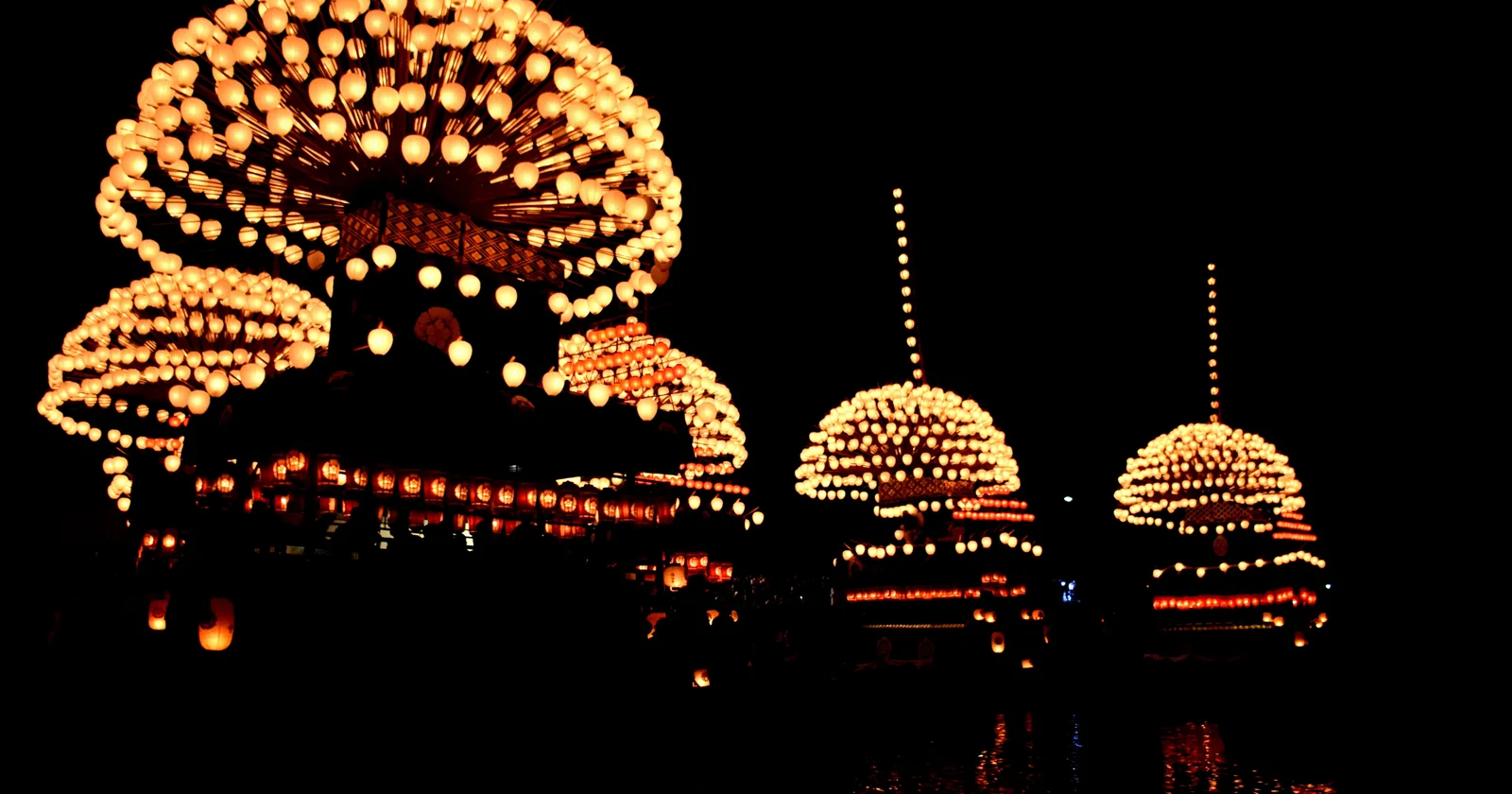
Owari Tsushima Tenno Matsuri (尾張津島天王祭) — fourth Saturday of July and the Sunday after, Aichi. A UNESCO-listed river festival on its present dates since 1963. The eve festival is the sight: five makiwara boats, each carrying around 500 lanterns and standing some 20 metres tall, rowed across the water. 2027 is not yet announced. See our Owari Tsushima Tenno Festival guide.
Tenjin Matsuri (天神祭) — 24 July eve, 25 July main day, Osaka Tenmangu. Osaka Tenmangu itself names this one of Japan’s three great festivals, alongside Kyoto’s Gion Matsuri and Tokyo’s Kanda Matsuri. On the night of the 25th the boat procession moves down the Okawa and votive fireworks go up; the reflection of bonfires, lanterns and fireworks on the water is why it is called the festival of fire and water. The firing times and shell counts are not published officially, so this page does not print numbers for them.
Sumida River Fireworks Festival (隅田川花火大会) — last Saturday of July, Tokyo. About 9,350 shells at the first site and about 10,650 at the second, roughly 20,000 in total. The 49th edition, on 25 July 2026, ran 19:00-20:30 with an expected audience of 930,000. The thing to understand before you plan: the Sumida has no riverbank esplanade, so the organisers describe it as a festival watched on the move from bridges and surrounding streets, and state that apart from the citizen-supporter seats there is no designated viewing area. The year’s outline is published in early April. 2027 is not yet announced.
Gujo Odori (郡上おどり) — July to September, Gifu. Around thirty nights of dancing, and the great thing about it is that visitors can simply join the circle, free of charge. The 2026 season ran 11 July to 5 September across 30 nights. The peak is the all-night Tetsuya Odori on 13-16 August: 20:00 to 04:00 on the 13th and 16th, and 20:00 to 05:00 on the 14th and 15th. See our Gujo Odori guide.
August
Aomori Nebuta Matsuri (青森ねぶた祭) — 2-7 August, Aomori. Fixed dates, six days: night runs from the 2nd to the 6th, then on the 7th a daytime run followed by fireworks and the seaborne nebuta in the evening, with an eve festival on 1 August. Designated an Important Intangible Folk Cultural Property in 1980. Large nebuta are capped at 9 m wide, 7 m deep and 5 m high including the cart, and weigh about 4 tonnes. It is also one of the very few big festivals where the organisers state plainly that you can watch from anywhere outside the reserved stands, crowded though it is. Ten minutes on foot from JR Aomori Station.
Akita Kanto Matsuri (秋田竿燈まつり) — 3-6 August, Akita. About 280 kanto poles raised along Kanto Odori, carrying roughly 10,000 lanterns in total. In 2026 the evening sessions began with entry at 18:45 and performance at 19:10 on the 3rd and 6th, entry at 18:50 and performance at 19:15 on the 4th and 5th, finishing at 21:00 each night. Unlike Nebuta, the organisers make no statement about free roadside viewing, so if you need certainty, reserved seating is the safe route.
Sendai Tanabata Matsuri (仙台七夕まつり) — 6-8 August, Miyagi. Originally a seventh-day-of-the-seventh-month rite; Sendai keeps it to the month-late reckoning, which is how it lands in August. Streamers fill the arcades from the front of Sendai Station along Chuo-dori and Ichibancho, and over two million people come each year. Because the main venue is a covered arcade, it holds up better in rain than most.
Yosakoi Matsuri (よさこい祭り) — 9-12 August, Kochi. The 9th is the eve festival, the 10th and 11th the main days, the 12th the after-festival and national contest, spread over 10 competition sites and 6 performance sites across the city. In 2026 the main Otesuji site ran 13:15-17:15 in the afternoon and 17:45-21:30 in the evening; the Asahi site was suspended that year.
Awa Odori (阿波おどり) — 12-15 August, Tokushima. The outdoor dance grounds, both paid and free, run 12-15 August. Paid grounds work in two sittings, 18:00-19:40 and 20:20-22:00, and there are free dance grounds and open plazas as well, so you can see it without buying anything. A common confusion: Tokushima City’s page says 11-15 August, but that figure includes the indoor performance on the 11th — the outdoor grounds start on the 12th. 2027 is not yet announced.
Nippon Domannaka Matsuri, Domatsuri (にっぽんど真ん中祭り) — August, Nagoya. The city-scale dance festival that began in Nagoya. The 28th edition ran 28-30 August 2026. There is no published date rule, but 2027 is confirmed: eve festival 27 August, main days 28-29 August. Our Nagoya summer festival guide covers the whole season here.
One diary change to note: the World Cosplay Summit, held in Nagoya each summer — the 2026 edition ran 31 July to 2 August with 40 countries and regions taking part — moves to November from 2027. If you were planning around a summer visit, the plan needs rebuilding.
Which Festivals Run From September to November?
Autumn is the busiest stretch of the whole calendar and the most comfortable to travel in. October alone stacks so many festivals that they collide, so work backwards from the one you actually want.
September
Kishiwada Danjiri Matsuri (岸和田だんじり祭) — September and October, Osaka. Over 300 years old, traced to an Inari rite held by the lord of Kishiwada in the mid-Edo period. The point people miss: the September and October festivals are separate events with different districts taking part.
| Districts | 2026 dates | |
|---|---|---|
| September festival | Kishiwada and Haruki | Eve 19 September 06:00-22:00; main 20 September 09:00-22:00 |
| October festival | Higashi-Kishiwada, Minamikamori, Yagi, Yamadai, Yamadai-minami, Yamataki | Eve 10 October; main 11 October 07:00-22:00 (varies by district) |
Kishiwada City publishes no rule such as “the weekend before Respect for the Aged Day”, so the dates wait on the annual announcement.
Toride Shrine Whale Boat Festival (鳥出神社の鯨船行事) — the Saturday and Sunday on or after 23 September, Mie. A UNESCO-listed rite in which four neighbourhood groups stage a mock whale hunt on dry land with boat-shaped floats. The timing changed permanently in 2025: through 2024 it was fixed to 14-15 August, and it moved to September to escape the heat. Old information will send you to Yokkaichi in August to find nothing. 2026 ran 26-27 September. See our Toride Shrine whale boat festival guide.
Setomono Matsuri (せともの祭) — a September weekend, Aichi. A vast ceramics market through the pottery town of Seto, with kilns and dealers selling direct. The 2026 edition ran 12-13 September; 2027 is set for Saturday 11 and Sunday 12 September. More in our Setomono Matsuri guide.
October
Nagasaki Kunchi (長崎くんち) — 7-9 October, Suwa Shrine, Nagasaki. The autumn grand festival of the city’s tutelary shrine: the 7th is the first day, the 8th the middle, the 9th the last. Its dedicatory dances, shaped by centuries of foreign contact, were designated an Important Intangible Folk Cultural Property in 1979. There are four performance venues — Suwa Shrine, the Otabisho, Yasaka Shrine and the Chuo Park stand. The Nagasaka steps facing the shrine’s dance floor are free, but you need a Nagasaka ticket, allocated by lottery.
Takayama Autumn Festival, Hachiman Matsuri (秋の高山祭・八幡祭) — 9-10 October, Gifu. The counterpart to the spring festival, held at Sakurayama Hachimangu with eleven floats and mechanical puppet dedications. Covered alongside the spring festival in our Takayama Festival guide.
Nada no Kenka Matsuri (灘のけんか祭り) — 14-15 October, Hyogo. The autumn grand rite of Matsubara Hachiman Shrine, famous for three mikoshi being driven into each other and for the jostling of seven floats. Designated an Important Intangible Folk Cultural Property by both Himeji City and Hyogo Prefecture. Access catches people out: the station is Shirahama-no-miya on the Sanyo Electric Railway Main Line, not JR, five minutes south on foot, and limited express services make special stops on festival days.
Nagoya Matsuri (名古屋まつり) — October, Nagoya. The city’s largest civic festival, normally led by the procession of the Three Heroes — Oda Nobunaga, Toyotomi Hideyoshi and Tokugawa Ieyasu. The 72nd edition takes place on 17-18 October 2026, but the parade itself, including the Three Heroes procession, will not be held: the dates clashed with the Asian Para Games torch relay and opening ceremony, and it was dropped on safety grounds. What replaced it is in our Nagoya Matsuri guide.
Jidai Matsuri and the Kurama Fire Festival — both on 22 October, Kyoto. Kyoto runs two major festivals on the same date.
- Jidai Matsuri (時代祭), at Heian Jingu, began in 1895 to mark 1,100 years since the capital moved to Kyoto. The procession — about 2,000 people stretching some 2 km — sets off at noon. It is postponed in rain, with the call made early on the day, and cancelled outright if the 23rd is also bad.
- Kurama no Hi-matsuri (鞍馬の火祭), at Yuki Shrine, is one of Kyoto’s three eccentric festivals, running from 18:00 until past midnight. It is traced to 940, when villagers are said to have met the Yuki deity’s arrival in Kurama with torches.
Do not assume you can do both. Jidai Matsuri can be postponed, which breaks the pairing in a wet year, and from 15:00 on the day Kurama closes all its car parks and restricts general traffic between Kibuneguchi and Kurama Onsen. Plan around the Eizan line and leave yourself far more time than the map suggests.
Ueno Tenjin Matsuri (上野天神祭) — October, Mie. The main Shinkosai falls on the Sunday closest before 25 October, with the two preceding days making up a three-day festival. Two mikoshi are escorted by a demon parade and by danjiri floats through the old castle town — another of the UNESCO-listed float festivals. See our Ueno Tenjin Festival guide.
November
Karatsu Kunchi (唐津くんち) — 2, 3 and 4 November, Saga. The autumn grand rite of Karatsu Shrine. The fourteen floats weigh 2 to 4 tonnes each and take 200 to 400 people to pull. The float ceremonies were designated an Important Intangible Folk Cultural Property on 28 January 1980 and inscribed by UNESCO in December 2016; the floats themselves are Saga Prefecture Important Tangible Folk Cultural Properties.
| Date | Event | Time |
|---|---|---|
| 2 November | Yoi-yama (eve float run) | 19:30-22:10 |
| 3 November | Otabisho Shinko (hauled onto Nishi-no-hama at noon, out again at 15:00) | 09:30-16:30 |
| 4 November | Yokujitsu-sai (the day after) | 10:00-16:40 |
Ten minutes on foot from Karatsu Station on the JR Karatsu and Chikuhi lines — Karatsu Shrine has the year’s detail.
Tori-no-Ichi (酉の市) — the Days of the Rooster in November, Tokyo and elsewhere. The date moves because it follows the twelve-day zodiac cycle: in a year with two Rooster days there are two markets, in a year with three there are three. Each one runs a full 24 hours from midnight, opened by the first drum. At Otori Shrine in Asakusa, around 150 rake sellers and some 750 street stalls draw 700,000 to 800,000 people a year. In 2026 the days fell on 7 and 19 November. 2027 is not yet announced.
Gifu Nobunaga Festival (ぎふ信長まつり) — November, Gifu. A warrior procession built around Oda Nobunaga. The 70th edition takes place on 7-8 November 2026, with the mounted warrior procession on the 8th. See our Gifu Nobunaga Festival guide.
World Cosplay Summit (世界コスプレサミット) — 12-14 November 2027, Nagoya. After years as a summer event, the 2027 edition moves to 12-14 November, still centred on Aichi Prefecture and Nagoya. It is one of the festivals here whose 2027 dates are already fixed.
Which Festivals Close Out the Year in December?
December is short on festivals but heavy on the ones it has. Two of the country’s most demanding night festivals fall in the first half of the month, and the illuminations run right through.
Chichibu Yomatsuri (秩父夜祭) — 2 December eve, 3 December main day, Saitama. The grand festival of Chichibu Shrine, with six floats — two kasaboko and four yatai, designated an Important Tangible Folk Cultural Property in 1962 — and inscribed by UNESCO in December 2016 as one of the 33 float festivals. Three minutes on foot from Chichibu Station on the Chichibu Railway, fifteen from Seibu-Chichibu, and longer on the day itself. The warning matters here: Chichibu’s tourism office states that the climactic haul up Dango-zaka is essentially unwatchable without a reserved paid seat, because the area is narrow and temporary stands fill it. Traffic restrictions and procession times appear in mid-November; the paid-seat sales outline comes out in early September.
Kasuga Wakamiya On-Matsuri (春日若宮おん祭) — 15-18 December, Nara. Begun in 1136 and carried on for close to 900 years without a break; the procession and the sacred performing arts are designated Important Intangible Folk Cultural Properties. Everything turns on 17 December, which runs from the midnight transfer rite through the Owatari-shiki procession leaving the prefectural office plaza at noon, the Otabisho rite at 14:30, and the return rite at about 23:00.
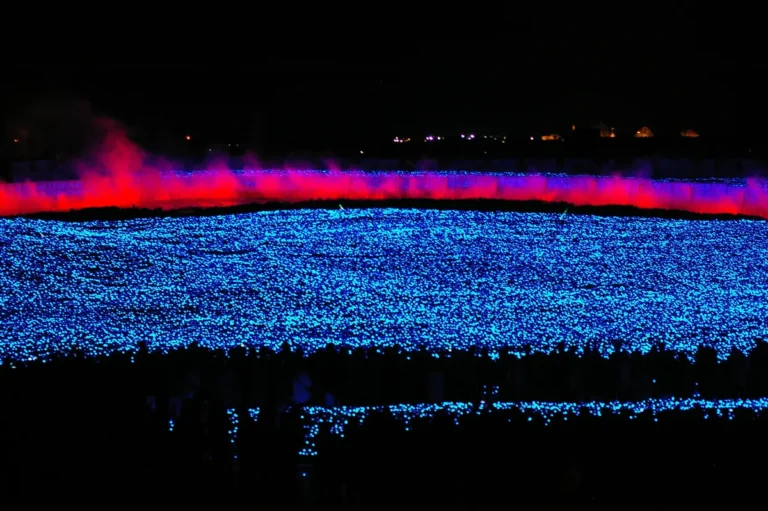
Nabana no Sato Winter Illumination (なばなの里イルミネーション) — 17 October 2026 to 31 May 2027, Mie. The largest light event in Central Japan, including a tunnel of light some 200 metres long. Closed on 6 and 7 January, and open as normal over the new year. The park publishes a day-by-day lighting table for 2026-2027 that tracks sunset: switch-on is 17:20 on the opening day, 17:00 through most of November and December, and later after the new year, reaching 19:10 from 17 May 2027. See our Nabana no Sato illumination guide.
And on 31 December, temples across the country ring out the old year. How that plays here is in our Central Japan winter and New Year guide.
Can You Base a Whole Festival Trip in Nagoya?
Yes — 19 of the 50 festivals on this page are in Central Japan, all reachable from Nagoya as a day trip or a single overnight. Kyoto and Osaka are also inside the Shinkansen radius, which puts Gion Matsuri and Tenjin Matsuri within the same base.
I was born in Nagoya and have lived here 35 years, and the honest reason I write this region rather than the famous list is that I do not have to travel to see festivals. From my flat in Osu I can be at the Atsuta Festival in ten minutes on the subway, at the Inuyama Festival in half an hour, at the Takayama Festival in a morning. That is a different relationship to a festival than flying in for one.
The Central Japan entries on this calendar, each with its own guide: the Takayama Festival in spring and autumn, the Inuyama Festival, the Hida Furukawa Festival, the Hamamatsu Festival, the Kamezaki Shiohi Matsuri, the Atsuta Festival, the Owari Tsushima Tenno Matsuri, Gujo Odori, Domatsuri, the World Cosplay Summit, the Toride Shrine whale boat festival, the Setomono Matsuri, the Nagoya Matsuri, the Ueno Tenjin Matsuri, the Gifu Nobunaga Festival, the Konomiya Hadaka Matsuri, the Shirakawa-go winter light-up and the Nabana no Sato illumination.
If you only have one week and want two festivals rather than one, this is the argument for a Nagoya base over a Tokyo or Kyoto one. In April, the Takayama Spring Festival on the 14th and 15th and the Hida Furukawa Festival on the 19th and 20th are close enough to string together without changing region. I have done that stretch more than once, and it is far less punishing than chasing the same number of festivals across the country.
For the region in detail, with local commentary rather than a listing, go to the Central Japan festival calendar. For the seasons, see the Nagoya summer festivals, Central Japan autumn festivals and winter and New Year guides.
Building the rest of the trip around a festival date?
Useful if you want day trips and guided experiences booked around the dates you have fixed.
First time at a Japanese festival? Read the first-timer’s guide for what actually happens and what organisers ask of spectators, the yatai food guide for what to order and whether you need cash, and the fireworks guide for holding a spot and getting home afterwards.
How Far Ahead Can You Actually Plan?
It depends on the group. Fixed-date festivals can be booked immediately. Weekday-rule festivals can be predicted but not confirmed. Annual-announcement festivals have to wait — and each organiser has its own habitual month for speaking, which is the useful thing to know.
| Festival | Usual announcement |
|---|---|
| Sapporo Snow Festival | Next year’s outline around July of the preceding year; venue detail from mid-December |
| Inuyama Festival | March (traffic map 1 March, routes and schedule 2 March, eve-festival notice 27 March) |
| Hida Furukawa Festival | Official pamphlet in early April |
| Sanno Matsuri (Hie Shrine) | Around April, on the shrine’s news page |
| Sumida River Fireworks | Outline plan in early April |
| Chichibu Yomatsuri | Paid-seat outline early September; traffic and timings mid-November |
| Toka Ebisu (Imamiya Ebisu) | Around 1 November |
| Shirakawa-go Light-Up | Booking detail published September 2, 2026; accommodation ballot detail from October 1, 2026 |
For a good many festivals — Sanja Matsuri, Tori-no-Ichi, Aomori Nebuta, Sendai Tanabata, Wakakusa Yamayaki, Kishiwada Danjiri, Kanazawa Hyakumangoku, Hakata Gion Yamakasa, Hakata Dontaku, Nagasaki Kunchi, Karatsu Kunchi, Awa Odori, Yosakoi and Domatsuri — no announcement month is published at all. There, checking the organiser’s own site periodically is the only method that works.
Frequently Asked Questions
What is the best month to see festivals in Japan?
It depends what you are optimising for. July and August are the densest months, holding Gion Matsuri, Tenjin Matsuri, Hakata Gion Yamakasa, Aomori Nebuta, Akita Kanto, Awa Odori and Gujo Odori, but they are also the hottest and the hardest for accommodation. October carries almost as many festivals in far gentler weather, with Nagasaki Kunchi, the Takayama Autumn Festival, Nada no Kenka Matsuri, Jidai Matsuri and the Kurama Fire Festival all falling inside three weeks. If crowds are the thing you want to avoid, look at June: there are few festivals, but the Atsuta Festival on 5 June often lands midweek, which makes it far easier to move around in.
How many months ahead should I plan a festival trip?
Ten festivals on this page already have confirmed 2027 dates and can be booked now: the Sapporo Snow Festival on 4-11 February, the Yokote Kamakura on 12-13 February, the Konomiya Hadaka Matsuri on 19 February, the Shirakawa-go light-up on 11, 17, 24 and 31 January, the Omihachiman Sagicho on 13-14 March, the Sanja Matsuri on 14-16 May, Domatsuri on 27-29 August (the 27th is the eve festival), the Setomono Matsuri on 11-12 September, the World Cosplay Summit on 12-14 November and the Nabana no Sato illumination running to 31 May. Separately, the fixed-date festivals can be booked without waiting for any announcement at all, since Aomori Nebuta is always 2-7 August, the Gion Matsuri processions always 17 and 24 July, Tenjin Matsuri always 24-25 July, Chichibu Yomatsuri always 2-3 December and Karatsu Kunchi always 2-4 November. Only the weekday-rule and annual-announcement festivals require you to wait.
Can you watch Japanese festivals for free?
Sometimes, but the organisers have to say so, and many do not. Free viewing is stated officially at the Aomori Nebuta Matsuri outside the reserved stands, across all sites of the Sapporo Snow Festival, at the free dance grounds and plazas of Awa Odori, on the Nagasaka steps at Nagasaki Kunchi if you win a lottery ticket, and for joining the dance at Gujo Odori. At the other end, some things are effectively closed without a paid seat: the Dango-zaka haul at Chichibu Yomatsuri is one, and the Sumida River Fireworks is another, since there is no riverbank and the citizen-supporter seats are the only place you can sit. Most festivals publish nothing about admission either way, so if you need a guaranteed seat, treat reserved seating as the safe option.
How do I find the dates for festivals that move every year?
Go to the organiser’s own site, and know roughly when it speaks. The Sapporo Snow Festival publishes the next year around July, which is the most generous lead time of any large event in Japan. The Hie Shrine Sanno Matsuri announces around April, the Sumida River Fireworks releases its outline plan in early April, the Inuyama Festival posts its detail in March, the Hida Furukawa Festival its pamphlet in early April, Imamiya Ebisu around 1 November, and Chichibu publishes paid seating in early September and timings in mid-November. Many festivals publish no announcement schedule at all, and for those there is no substitute for checking the official site periodically.
Can I see more than one festival on a single trip?
Yes, and some clusters are unusually efficient. Early August in Tohoku is the strongest: Aomori Nebuta on 2-7 August, Akita Kanto on 3-6 August and Sendai Tanabata on 6-8 August all sit within Shinkansen reach of each other. Late July in Kansai gives you the Gion Matsuri ato-matsuri procession on 24 July and the Tenjin Matsuri main day on 25 July back to back. April in Central Japan pairs the Takayama Spring Festival on 14-15 April with the Hida Furukawa Festival on 19-20 April. Watch for genuine collisions, though: 22 October holds both Jidai Matsuri and the Kurama Fire Festival, and Kurama restricts traffic and closes its car parks from 15:00 that day.
What can I reach from a Nagoya base?
Nineteen of the 50 festivals here are in Central Japan and sit within a day trip or one overnight of Nagoya: the Takayama Festival in spring and autumn, the Inuyama Festival, the Hida Furukawa Festival, the Hamamatsu Festival, the Kamezaki Shiohi Matsuri, the Atsuta Festival, the Owari Tsushima Tenno Matsuri, Gujo Odori, Domatsuri, the World Cosplay Summit, the Toride Shrine whale boat festival, the Setomono Matsuri, the Nagoya Matsuri, the Ueno Tenjin Matsuri, the Gifu Nobunaga Festival, the Konomiya Hadaka Matsuri, the Shirakawa-go winter light-up and the Nabana no Sato illumination. Kyoto and Osaka are also inside the Shinkansen radius, so Gion Matsuri and Tenjin Matsuri combine with the same base.
Where Can You Check Official Information?
Dates, times and viewing arrangements change, and English pages on Japanese festival sites are often years behind the Japanese ones. These are the primary sources behind this calendar.
- UNESCO float festivals: Agency for Cultural Affairs — the definitive list of the 33 Yama, Hoko and Yatai float ceremonies inscribed in 2016. Several very famous festivals are not on it, whatever other sites claim.
- Sapporo Snow Festival: snowfes.com — use the Japanese pages; the English ones are stale.
- Gion Matsuri: Kyoto City Tourism Association, and Yasaka Shrine for the shrine itself.
- Tenjin Matsuri: Osaka Tenmangu.
- Aomori Nebuta Matsuri: nebuta.jp — the older nebuta.or.jp address now redirects here.
- Awa Odori: awaodorimirai.com, the festival’s own committee.
- Nagasaki Kunchi: nagasaki-kunchi.com. Karatsu Kunchi: Karatsu Shrine.
- Chichibu Yomatsuri: Chichibu tourism. Kasuga Wakamiya On-Matsuri: the preservation society.
- Omizutori: Todaiji. Shirakawa-go light-up: Shirakawa-go Tourist Association.
- Nabana no Sato: Nagashima Resort. Kishiwada Danjiri: Kishiwada City.
Where an organiser publishes nothing on price or on free viewing, this page says nothing rather than guessing. Where 2027 has not been announced, it says so.
Related Guides
- Central Japan Festival Calendar — the same month-by-month idea for Aichi, Gifu, Mie, Nagano and Shizuoka, with local commentary.
- More Central Japan festival guides — Mino Festival, Nagara River cormorant fishing, Kuwana Ishidori, Gifu Nagaragawa Fireworks, Okazaki Fireworks, Toyohama Tai Matsuri, Kariya Mando, Mino Washi Akari Art, Koromo Matsuri, Nagoya Minato Matsuri, Osu Daido Machinin Matsuri.
- Japanese Festivals for First-Timers — what actually happens at a matsuri and what organisers expect of spectators.
- Festival Food and Yatai Guide — what to order at the stalls and whether you need cash.
- How to Enjoy Japanese Fireworks Festivals — holding a spot, and the crush on the way home.
- Nagoya Summer Festivals — Domatsuri, the World Cosplay Summit and the rest of the season.
- Central Japan Autumn Festivals — the region’s densest festival season.
- Winter Festivals and New Year — hatsumode, the bell ringing and the snow country.
- Nagoya Cherry Blossom Guide — for April trips built around the blossom as well as the floats.
- Best Time to Visit Nagoya — month-by-month weather, crowds and what to pack.