Setomono Matsuri (せともの祭) is a two-day pottery festival in Seto, Aichi, held September 12–13, 2026. About 200 ceramics shops line both banks of the Seto River, entry is free, fireworks run Saturday 18:25–18:45, and the venue is right outside Owari-Seto Station — ¥510 and about 35 minutes from central Nagoya.
Every September, the city of Seto (瀬戸市) in Aichi Prefecture closes the roads along its river and lines them with pottery. About 200 shops, two days, and prices that make people carry home more plates than they planned to. If you have ever wanted to buy Japanese ceramics somewhere other than a department store, this is the weekend — and everything below is confirmed from the organisers, the city, the prefecture and the railway themselves.
Written by Yuu — a Nagoya native of 35 years. Published August 15, 2026.
This article may contain affiliate links. See our affiliate disclosure for details.
All festival details verified from official sources on August 15, 2026.
On this page
- What do you need to know in one minute?
- What is Setomono Matsuri?
- When is Setomono Matsuri 2026, and what are the hours?
- What are the highlights of Setomono Matsuri?
- How do you get to Setomono Matsuri from Nagoya?
- Should you drive, and where can you park?
- What happened at the 2025 festival?
- How crowded does it get?
- Frequently asked questions
- Where can you check official information?
- Related guides
What Do You Need to Know in One Minute?
Setomono Matsuri 2026 is the 95th edition, held Saturday 12 and Sunday 13 September in Seto, Aichi. The pottery market runs from 9:00 both days, admission is free, and everything starts at the exit of Owari-Seto Station.
| Item | Detail |
|---|---|
| Festival | Setomono Matsuri (せともの祭 / Seto Pottery Festival), 95th edition |
| 2026 dates | September 12–13, 2026 (Sat–Sun) |
| Main market hours | Sat 9:00–18:00 / Sun 9:00–17:30 |
| Food stalls | Sat 9:00–19:00 / Sun 9:00–17:30 |
| Fireworks | Sat 18:25–18:45 (moved to Sun 18:05–18:25 if the weather is bad) |
| Where | Around Owari-Seto Station (尾張瀬戸駅) and across central Seto, Aichi |
| Nearest station | Owari-Seto Station, Meitetsu Seto Line — the venue starts at the exit |
| Admission | Free; some workshops and exhibitions charge separately |
| From Nagoya | Subway to Sakae, then Meitetsu Seto Line from Sakaemachi: ¥510, 32–37 min, no transfer |
| Organiser | Dai-Setomono Matsuri Kyosankai (大せともの祭協賛会 / Setomono Festival Association) |
| Official site | setocci.or.jp/setomonomatsuri |

What Is Setomono Matsuri?
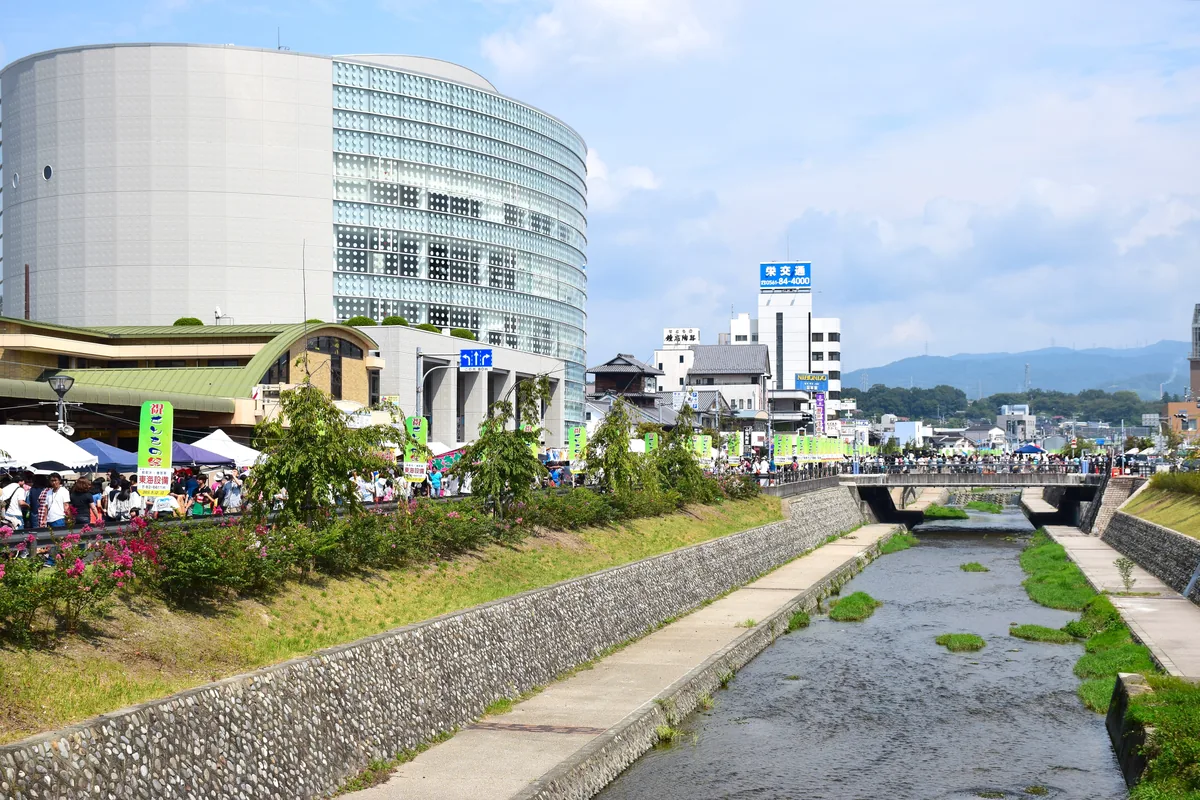
Setomono Matsuri is an industrial fair founded in 1932 to honour Kato Tamikichi, the man credited with bringing porcelain-making to Seto. Its centrepiece is the Setomono Great Bargain Market, where about 200 pottery shops sell along both banks of the Seto River.
Seto is the town that gave the Japanese language its everyday word for crockery. Setomono (せともの) literally means “things from Seto,” and it is still what a lot of people say when they mean “ceramics” — the way “china” works in English.
That is not marketing. According to Seto City, the city is a pottery-producing area “with over a thousand years of history and tradition.” In April 2017 Seto was recognised as part of a Japan Heritage story called Kitto Koisuru Rokkoyo — the Six Ancient Kilns (六古窯), the six production areas (Seto, Tokoname, Shigaraki, Tamba, Bizen and Echizen) that have kept firing since medieval times. Seto City notes that during the Kamakura and Muromachi periods it was the only one of them producing glazed wares. The designation was renewed in July 2023.
One clarification for travellers, because the wording trips people up: Japan Heritage is a Japanese national designation. It is not UNESCO World Heritage, and Seto does not claim to be.
The festival itself is younger. It began in 1932 as an industrial fair honouring Kato Tamikichi (加藤民吉), the man revered as the jiso — the father of Seto porcelain. In the Edo period he travelled to Kyushu to learn how porcelain was made and brought the technique back to Seto. During the festival there is a small free exhibition about him at the Seto Gura (瀬戸蔵) complex, covering his training in Amakusa in Kumamoto and Sasa in Nagasaki.
2026 is the 95th edition.
The heart of it all is the Setomono Great Bargain Market (せともの大廉売市 / Setomono Dai-Renbaiichi). The roads along the Seto River are closed to traffic and about 200 pottery shops set up along both banks. Seto City’s tourism office calls it “one of the largest in the country”; the organisers’ own site goes further and says it is “said to be the largest of its kind in Japan.”
When Is Setomono Matsuri 2026, and What Are the Hours?
September 12–13, 2026, Saturday and Sunday. The main market opens at 9:00 both days and closes at 18:00 on Saturday, 17:30 on Sunday. Saturday is the longer day and the one with the fireworks.
September 12–13, 2026 (Saturday–Sunday). All three official sources — the organisers, Seto City tourism, and Aichi Prefecture’s tourism site — list the same dates.
Hours, event by event
| What | Sat, Sept 12 | Sun, Sept 13 |
|---|---|---|
| Setomono Great Bargain Market | 9:00–18:00 | 9:00–17:30 |
| Food stalls (roten ennichi) | 9:00–19:00 | 9:00–17:30 |
| Fireworks | 18:25–18:45 | only if postponed: 18:05–18:25 |
| Ao no Hiroba (Seto sometsuke area) | 9:00–18:00 | 9:00–17:30 |
| Seto yakisoba plaza | 10:00–15:00 (until sold out) | 10:00–15:00 (until sold out) |
| Free rest areas | 9:00–17:00 | 9:00–17:00 |
| Seto Tourist Information Centre | 9:00–18:30 | 9:00–17:30 |
Note the Saturday/Sunday difference. Sunday finishes 30 minutes earlier, and the Sunday food stalls close 90 minutes earlier than Saturday’s. If you only have one day, Saturday is the longer one and the one with the fireworks.
Where the market actually is
The stalls run along both banks of the Seto River, plus Kamagami-dori street, the station plaza in front of Parti Seto (パルティせと), and the outdoor plaza at Seto Gura. All of it is within walking distance of Owari-Seto Station.
Admission
Aichi Prefecture’s official tourism site lists admission as free, though it notes this varies by event. Walking the market costs nothing. Individual activities do charge — the porcelain-painting workshop is ¥1,200, the Seto Gura Museum special exhibition (New Acquisitions 2023–2025, running 4 July to 27 September) requires an admission fee, and the pottery-wheel session out in the Shinano area is ¥2,000 per piece.
If it rains
Only three things are stated officially, so those are the only three I will state:
- Fireworks: if the weather is severe, they move to Sunday, 18:05–18:25.
- Parking: the school car parks (P3, P5, P6) cannot be used in the rain.
- Seto City’s event listings carry a blanket note that event details are subject to change.
There is no official statement about whether the market itself runs in rain, so please do not assume either way — check the official site before you travel.
What Are the Highlights of Setomono Matsuri?
The riverside bargain market is the main event. Beyond it: Ao no Hiroba for Seto blue-and-white ware, a plate-painting workshop at Seto Gura, twenty minutes of fireworks on Saturday evening, a Seto yakisoba plaza, and a Kumamoto mascot with a 200-year-old reason to be there.
1. About 200 shops along the river
This is the reason to come. Tables of plates, bowls, cups, teapots and vases stretch along the closed-off riverside roads: everyday tableware at prices that feel like a mistake, alongside pieces by named artists.
A few things worth keeping in mind about how markets like this work:
- The stalls are on both banks. It is easy to walk one side, decide you have seen it, and miss half the festival. Walk out along one bank and back along the other.
- Go early for selection. The 9:00 opening is when the stock is deepest, and it is the coolest part of a mid-September day in Aichi, which still gets hot.
- Bring your own padding. Most stalls will wrap a purchase, but you are the one carrying it home. A tote you do not mind sacrificing saves a lot of anxiety on the train back.
- One honest caveat: plenty of travel articles promise you can haggle here. The organisers say nothing about bargaining, so I am not going to tell you it is expected.
Stamp rally: spend ¥1,000 or more at one shop and you get a stamp. Collect three and you can claim a tote bag at the Seto Ceramics Wholesalers’ Cooperative headquarters — 500 available per day.
2. Ao no Hiroba, the blue-and-white corner
At the north end of Kinenbashi bridge there is a dedicated area called Ao no Hiroba (青の広場), “the Blue Square,” given over to Seto sometsuke (瀬戸染付焼) — the local blue-and-white ware, which is a nationally designated Traditional Craft.
The organisers describe it like this: a white clay body painted with gosu (呉須), a blue cobalt pigment, producing a contrast of blue and white; the realistic, finely detailed brushwork is highly regarded overseas.
Alongside the selling, artisans demonstrate the brushwork at the individual booths across both days. There is also a silkscreen workshop where you pick a design and print it onto a T-shirt or tote bag you buy there (Sat 9:00–17:00, Sun 9:00–16:30, closed 12:00–13:00 both days, and it ends when materials run out).
3. Painting your own plate — read this before you sign up
On the second floor of Seto Gura, there is a workshop where you paint a gosun plate (五寸皿, about 15 cm) in sometsuke style.
- Ages: 5th grade of elementary school and above
- Sign-up: from 9:50 each day
- Sessions: 10:00, 11:00, 13:00, 14:00
- 24 people per session, ¥1,200
The catch, and it is a big one for travellers: your plate has to be fired, so you collect it later at Seto Gura, or pay separately to have it posted. You are not walking away with it that afternoon. Worth knowing before you build an afternoon around it.
4. Twenty minutes of fireworks
Saturday, 18:25–18:45. Aichi Prefecture’s tourism site puts it at around 1,000 shells; the organisers themselves do not publish a number, so treat that figure as the prefecture’s.
One thing that deserves emphasis, because it is unusual and it is official. In their own fireworks programme, the organisers ask people to help ease congestion at the festival site by watching from home or elsewhere rather than crowding in. There is no ticketed seating, no designated viewing area, and no official “best spot” — so I am not going to invent one. Take it as a straight signal about how busy Saturday evening gets.
The upside of the Saturday timing: food stalls stay open until 19:00, so there is somewhere to go afterwards.
5. Eating
Seto yakisoba (瀬戸焼そば) gets its own plaza, in the Meitetsu Kyosho car park just west of Owari-Seto Station, 10:00–15:00 both days and it closes when it sells out. That is a narrow window — if you spend the whole morning shopping and drift over at 15:30, you have missed it. Regional specialities from elsewhere in Aichi join in too, including Toyokawa inari-zushi and Takahama torimeshi.
The general food stalls are spread around the Parti Seto station plaza, Miyamae, the approach to Fukagawa Shrine, and the Miyagawa Mall area.
6. Kumamon, and why he is here
Kumamoto Prefecture’s mascot Kumamon (くまモン) appears on stage both days — Saturday 10:50 at the Kamagami-bashi stage and 13:30 at Seto Gura’s Tsubaki Hall (first 300 people), Sunday 10:55 and 13:30 in the same places. Each appearance runs about 30 minutes, weather permitting, and the Tsubaki Hall doors open 45 minutes before each session.
It looks random until you remember that Kato Tamikichi learned porcelain-making in Amakusa, Kumamoto. Kumamoto Prefecture also runs a promotional booth at Seto Gura both days, 9:00–17:00, with Kumamoto products, Kumamon goods, and stalls from Amakusa City and Nagasu Town. The official framing is an exchange-and-cooperation agreement and a disaster mutual-aid agreement rather than the apprenticeship — but a 200-year-old training trip is still the reason those two names sit next to each other.
7. The Shinano area, if you are driving
Out at the Shinano Ceramics Centre there is a separate craft fair and kiln market (both days 9:00–17:00; the craft fair ends at 16:00 on Sunday) — and, crucially, 1,000 parking spaces at the Shinano Ceramics Centre / Michi-no-Eki Seto Shinano. Given how tight parking is in the centre, that is worth knowing. There is a pottery-wheel session there too, ¥2,000 per piece including firing. Note that officials publish no transport link between Shinano and the riverside market, so do not plan on hopping easily between the two.
How Do You Get to Setomono Matsuri from Nagoya?
Take the subway from Nagoya Station to Sakae, walk to Sakaemachi Station, and ride the Meitetsu Seto Line straight to Owari-Seto. Meitetsu’s official fare search gives ¥510 for an adult, 32–37 minutes, no transfer. The venue starts at the station exit.
The single most important thing about getting here
The Meitetsu Seto Line (名鉄瀬戸線) does not run from Meitetsu Nagoya Station. This trips up a lot of people. The Seto Line is a self-contained line whose city terminus is Sakaemachi Station (栄町駅), in the Sakae district — a different place from Nagoya Station.
From Nagoya Station, take the subway to Sakae, then walk to Sakaemachi and board there. Meitetsu’s own station page confirms Sakaemachi connects with the Higashiyama and Meijo subway lines. If the Nagoya subway system is new to you, our guide to getting around Nagoya covers the ticket machines and IC cards.
A note from a Nagoya local: “Meitetsu Nagoya” and “Sakaemachi” being different stations on the same private railway is the single most common mix-up I see visitors make, and it is not their fault — the network map makes them look connected. Give yourself the extra fifteen minutes to cross town to Sakae rather than discovering the problem at a ticket gate on a festival morning.
Fares and journey time
From Meitetsu’s official timetable-and-fare search, run for the festival date itself:
| Route | Fare | Time | Transfers |
|---|---|---|---|
| Sakaemachi → Owari-Seto | ¥510 adult / ¥260 child | 32 min (semi-express) – 37 min (local) | None |
From Owari-Seto Station the venue “starts right outside,” as Seto City puts it.
You do not need a limited-express ticket. Only three train types run on the Seto Line — express, semi-express and local. The μSKY and limited-express services you may have read about elsewhere on the Meitetsu network do not operate here, so there is no reserved-seat surcharge and no Mu Ticket to buy. Just tap in and go.
Seto also works as a half-day add-on rather than a whole trip; if you are assembling a wider itinerary, see our best day trips from Nagoya.
Ready to book a day trip?
Handy if you want to pair this with other sights the same day.
Should You Drive, and Where Can You Park?
The organisers say no: parking is limited and they ask visitors to come by public transport, with street parking strictly prohibited. If you must drive, there are eight free car parks with 10–30 minute walks, no shuttle bus, and three of them close in the rain.
Aichi’s tourism site lists roughly 10 minutes from the Seto-Akazu IC, 15 minutes from the Seto-Shinano IC (both on the Tokai-Kanjo Expressway), and 15 minutes from the Nagakute IC on the Nagoya-Seto Road — but those are normal-day times, and this is not a normal day.
The organisers are blunt about it: “Parking is limited, so please come by public transport,” and “absolutely no street parking.”
If you do drive, there are eight free car parks:
| Lot | Location | Spaces | Walk to venue | Notes |
|---|---|---|---|---|
| P1 | Seto City Hall | 150 | 25 min | — |
| P2 | Kamagami Ground | 250 | 10 min | Portable toilets |
| P3 | Former Fukagawa Elementary | 120 | 10 min | Closed in rain |
| P4 | Culture Centre | 300 | 10 min | — |
| P5 | Baseball ground | 250 | 10 min | Closed in rain |
| P6 | Minanase Junior High | 300 | 15 min | Closed in rain; portable toilets |
| P7 | Tohara Community Centre | 200 | 15 min | Portable toilets |
| P8 | Seto Chamber of Commerce | 50 | 30 min | — |
All eight open at 8:30 and lock at 20:00 on both days. The school car parks (P3, P5, P6) are unusable in wet weather — which, combined with the 25–30 minute walks from the remaining lots, is a real risk on a rainy weekend.
There is no shuttle bus. Nothing in any official document mentions one, so plan on walking from wherever you park.
Road closures
The centre of Seto is closed to traffic on a large scale across the whole weekend:
- Saturday 7:00–19:45 and Sunday 8:00–20:00 (main closure)
- Saturday 7:00 through Sunday 20:00 (a second closure zone)
- No-entry zone from Saturday 6:00 through Sunday 20:00
Buses
Several stops move or suspend:
- Meitetsu Bus “Seto Ekimae” relocates from first bus Saturday until 20:30 Sunday
- Meitetsu Bus “Kinenbashi” is suspended over the same period
- Meitetsu Bus “Nishikuradokoro” is suspended in both directions
- The Kaminoyama community bus stop also relocates — and note the official warning that no extra vehicles are laid on during the festival, so if a bus is full you will not get on
On the ground
- General information centre near Parti Seto — it also houses the lost-child desk and first-aid post
- Free rest areas, 9:00–17:00 both days: the lawn plaza and meeting rooms 2–5 on the 4th floor of Seto Gura
- Seto Tourist Information Centre: Sat 9:00–18:30, Sun 9:00–17:30
- Portable toilets at car parks P2, P6 and P7
A note from a Nagoya local on the weather: mid-September here is not autumn. Daytime Aichi in the second week of September still routinely sits in the low thirties Celsius, and a riverside market means a full day on open pavement with very little shade. Water, a hat and a plan for where the free rest areas are will do more for your day than any packing list item. Our guide to when to visit Nagoya goes into the seasonal detail.
What I would bring: water, sun protection, comfortable shoes for a full day on outdoor pavement, and a sturdier bag than you think you need.
What Happened at the 2025 Festival?
The 94th edition ran September 13–14, 2025, with the bargain market keeping exactly the hours it keeps in 2026 and using exactly the same venues. The shape of the festival is stable year to year — but the dates are not on a fixed rule.
For a sense of the pattern, here is the 94th edition, from the organisers’ own site as it stood at the time:
- Held September 13–14, 2025 (Sat–Sun)
- Great Bargain Market: Sat 9:00–18:00, Sun 9:00–17:30 — identical hours to 2026
- Same venues: both banks of the Seto River, Kamagami-dori, the Parti Seto station plaza, and the Seto Gura outdoor plaza
So the shape of the festival is stable year to year. What I will not do is tell you it is “always the second weekend of September” — the organisers publish no such rule, and the dates are announced fresh each year. Check before booking.
How Crowded Does It Get?
Officially, nobody publishes an attendance figure. But the organisers use their own fireworks programme to ask people to watch from home to relieve congestion at the site, which tells you more about Saturday evening than a number would.
I have not been to this one myself, so rather than invent an experience, here is what the official record shows and where to see the festival through other people’s eyes.
Watch it first: Seto City’s tourism office embeds an official promotional video on its own event page — the quickest way to gauge the scale of the riverside market before committing a weekend to it.
- Official PR video: https://www.youtube.com/watch?v=e5l90Rv3Juw
- Seto City Tourism Association on Instagram: @setoshi_kanko
- Seto Marutto Museum on Facebook: https://www.facebook.com/setomarutto
On how busy it gets, the official language is consistent and worth reading between the lines of. The organisers describe the market as drawing large crowds “from every corner of the country.” Seto City’s tourism site says it “bustles with many pottery fans.” And most tellingly, the organisers use their official fireworks programme to ask residents to watch from home to relieve congestion at the site — an event does not print that request unless Saturday evening gets genuinely packed.
No visitor-count figure appears in any official document, so you will not find one here either. Where other guides quote “hundreds of thousands,” they are not citing the organisers, the city or the prefecture.
Frequently Asked Questions
When is Setomono Matsuri 2026?
September 12–13, 2026 (Saturday and Sunday). The main Setomono Great Bargain Market runs 9:00–18:00 on Saturday and 9:00–17:30 on Sunday.
Is there an entrance fee?
Aichi Prefecture’s official tourism site lists admission as free, noting that it varies by event. Browsing the market costs nothing, but some activities are paid — the sometsuke plate-painting workshop is ¥1,200, and the Seto Gura Museum special exhibition charges admission.
How do I get to Setomono Matsuri from Nagoya?
Important: the Meitetsu Seto Line does not depart from Meitetsu Nagoya Station. Take the subway from Nagoya Station to Sakae, walk to Sakaemachi Station, and ride the Seto Line directly to Owari-Seto. Meitetsu’s official search gives ¥510 for adults (¥260 for children), 32–37 minutes, with no transfer. The festival begins right outside Owari-Seto Station.
What time are the fireworks, and what happens if it rains?
Saturday, September 12, from 18:25 to 18:45 — a 20-minute display. If the weather is severe they move to Sunday, September 13, from 18:05 to 18:25. Note that the organisers ask people to watch from outside the festival site where possible, to ease congestion, and there is no ticketed viewing area.
Can I drive, and is there parking?
There are eight free car parks (P1–P8), open 8:30–20:00 on both days, with walks of 10–30 minutes to the venue. But the organisers explicitly ask visitors to come by public transport because parking is limited, and street parking is strictly prohibited. There is no shuttle bus, and the three school car parks close in wet weather.
Can I take a pottery workshop and bring the piece home the same day?
No. Both official hands-on options require firing after you finish. The ¥1,200 sometsuke plate workshop at Seto Gura hands pieces back later at Seto Gura, or posts them for a separate shipping fee, and the ¥2,000 pottery-wheel session in the Shinano area includes firing but not postage. If you are on a short trip, factor in a shipping address.
Where Can You Check Official Information?
Four official channels cover this festival: the organisers’ own site, Seto City’s tourism site, Aichi Prefecture’s tourism site, and two phone numbers. Details change, so check the organisers’ site in the week before you travel.
- Setomono Matsuri official site (Dai-Setomono Matsuri Kyosankai / Seto Chamber of Commerce): http://www.setocci.or.jp/setomonomatsuri/ — full programme, plus downloadable PDFs for the programme, the fireworks programme, and the road-closure and parking map
- Seto Marutto Museum, Seto City official tourism site: https://www.seto-marutto.info/event-post/setomonomatsuri2026/
- Aichi Now, Aichi Prefecture official tourism site: https://aichinow.pref.aichi.jp/events/detail/65/
- Enquiries: Dai-Setomono Matsuri Kyosankai (inside Seto Chamber of Commerce) 0561-82-3123 · Seto Marutto Museum Tourism Association 0561-85-2730
Details can change. The organisers publish updates on the official site, and Seto City notes that event contents are subject to change — worth a final check in the week before you go.
Related Guides
- Central Japan Festival Calendar — every major festival in the region, month by month, and the best place to start if you are building a trip around one
- Autumn Festivals in Nagoya & Central Japan — what else is happening in the same season, including Tokoname Pottery Festival, another of the Six Ancient Kilns towns, about an hour away on the other side of Nagoya
- Getting Around Nagoya — subways, IC cards and the Meitetsu network, which is what you need to reach Sakaemachi in the first place
- Best Day Trips from Nagoya — where Seto sits among the other half-day and full-day options
- Best Time to Visit Nagoya — what September actually feels like before you commit to a full day outdoors