Suzuka Circuit in Mie Prefecture hosts the Formula 1 Japanese Grand Prix under a contract running to 2029, but the next edition had no announced date as of August 16, 2026. This guide covers the Nagoya-based approach: the Kintetsu route to Shiroko, the station your map app will wrongly recommend, tickets and where to sleep.
Written by Yuu — a Nagoya native of 35 years. Published August 16, 2026.
This article may contain affiliate links. See our affiliate disclosure for details.
All festival details verified from official sources on August 16, 2026.

What is the Japanese Grand Prix at Suzuka?
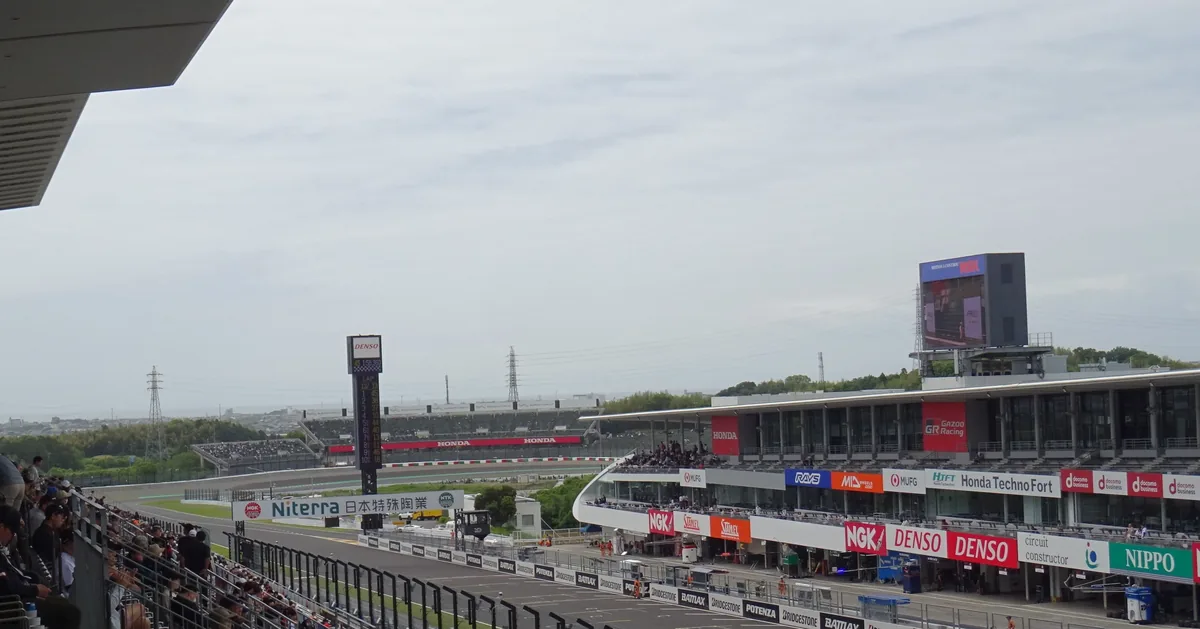
The Japanese Grand Prix is the Formula 1 world championship round held at Suzuka Circuit (鈴鹿サーキット) in Suzuka City, Mie Prefecture, about fifty minutes south of Nagoya by train. The circuit is run by Honda Mobilityland Corporation, which has a contract to host the race through 2029.
Suzuka opened in 1962 as Japan’s first full-scale racing course, built on Honda founder Soichiro Honda’s conviction that cars do not improve unless you race them. Takeo Fujisawa’s contribution still surprises first-time visitors: an amusement park was built alongside the track, designed around the idea that the customer should be the one driving. That is why a Formula 1 venue also has a full amusement park attached to it. The operator, Honda Mobilityland Corporation (ホンダモビリティランド株式会社), has its head office at the circuit, 7992 Ino-cho, Suzuka City, and is a separate legal entity from Honda Motor Co., so do not shorten it to “Honda” when searching for official notices.
The race is no longer an autumn event
If you picture Suzuka in October, update it. The 2024 race was the first spring edition, moved out of autumn to cooperate with the carbon-neutrality and schedule-rationalisation work being done by the FIA and Formula 1’s commercial arm. Spring is not a fixed month, though. The 2025 weekend ran April 4 to 6, with the race on Sunday April 6. The 2026 edition moved earlier: the circuit was open Thursday March 26 through Sunday March 29, while the Formula 1 calendar listed it as Round 3, dated 27 to 29 March. Both are correct. Formula 1 counts the three days from Friday practice; Suzuka counts four, because Thursday is a real day at the circuit with its own ticket.
How big is it?
Big enough to reshape the region for a weekend. The 2025 Grand Prix drew 266,000 people across three days, the highest total since 2006, and 115,000 on race Sunday alone. Suzuka City itself has a population of roughly 190,000. The town more or less doubles, which is why this guide spends more space on transport than on the racing.
When is the next race, and how do I get tickets?
As of August 16, 2026, the next Japanese Grand Prix date had not been announced. Formula 1’s official ticketing page for Japan showed the year 2027 with no dates and only a waitlist sign-up. In recent years Suzuka has put tickets on sale in mid-October of the year before.
I want to be blunt about this, because a lot of English-language pages are not. When I checked on August 16, 2026, there was no 2027 season calendar on the Formula 1 website at all, Suzuka Circuit’s own section still showed the 2026 event, and Honda Mobilityland’s press release index had nothing about 2027 either. Several news sites were confidently publishing specific 2027 dates. None came from a primary source.
What you can plan on
Two things are firm. First, the race is contracted: on February 2, 2024, Honda Mobilityland announced that it had agreed with Formula 1 to host the Japanese Grand Prix at Suzuka from 2025 through 2029. You can plan a trip around this race existing. Second, the sales pattern has been consistent. Tickets for the 2026 race went on sale at 11:00 on October 13, 2025, every category at once, and the 2025 race also went on sale on October 13 the year before. Two consecutive years is a pattern, not a guarantee, so treat early October 2026 as the window to start watching the official pages.
| Item | Status |
|---|---|
| Suzuka hosts the race through 2029 | Confirmed, announced February 2, 2024 |
| Next race dates | Not announced |
| Ticket on-sale date and prices | Not announced |
| Formula 1 waitlist registration | Open on the official ticketing site |
| On-sale pattern in 2024 and 2025 | October 13, 11:00, all categories at once |
| Shuttle bus and access arrangements | Published each year in the run-up to the race |
Where to buy, and the traps for overseas buyers
The official channel is Suzuka Circuit’s own online shop, MobilityStation, plus authorised agencies. Three things to know before you try.
One: MobilityStation requires membership registration before you can buy, so set the account up in advance, not at 11:00 on sale day. Two: the circuit states plainly that MobilityStation cannot be used from some countries and regions, and directs those buyers to Formula 1’s own F1 Tickets site instead. Three, the one that catches people out: Suzuka warns that debit, prepaid and overseas-issued credit cards may fail to register. If your card is rejected, that is a known condition, not a mistake you made.
Stay inside those channels. Suzuka has confirmed cases of Grand Prix tickets being bought fraudulently, and states that any ticket identified as improperly purchased is voided without notice and refused entry on the day. A cheap ticket from an unofficial reseller is no bargain if it does not open the gate.
Which seat, and roughly what it costs
These are 2026 prices for a race that has already happened, and prices for the next edition have not been published. Use them for budgeting, not booking. Adult advance prices ran from 5,800 yen for a Thursday ticket and 11,000 yen for a Thursday-and-Friday ticket, through 18,000 yen for a West Area ticket, to 22,000 yen for G Seat bench seating at 130R and the Overpass. Mid-range reserved seats sat between 28,000 and 45,000 yen, covering Spoon Curve, the S Curves, NIPPO Corner, 110R and the NISSIN Brake Hairpin.
One naming point matters more than any price. Do not think of “the grandstand” as one thing. At Suzuka the main straight grandstand splits into V1 Seat on the lower tier from 94,000 yen, V2 Seat on the upper tier from 105,000 yen, and VIP Suite Premium at the top from 600,000 yen, with hospitality running to 1,100,000 yen for the Formula 1 Paddock Club. If someone tells you they sat “in the grandstand”, ask which tier.
Not everything goes on sale at once, either: in 2026 the Thursday and Thursday-and-Friday tickets were held back to December 21, and the circuit is explicit that a category which sells out in advance gets no same-day sales at all. By August 2026, everything except those cheapest categories had sold out. Reserved seats go early. Younger visitors have one extra option: Suzuka ran a “16-23 ZERO yen pass” admitting people aged 16 to 23 free on the Thursday and Friday, though the conditions attached to it are only set out on the official page, so check there before counting on it.
How do I get to Suzuka Circuit from Nagoya?
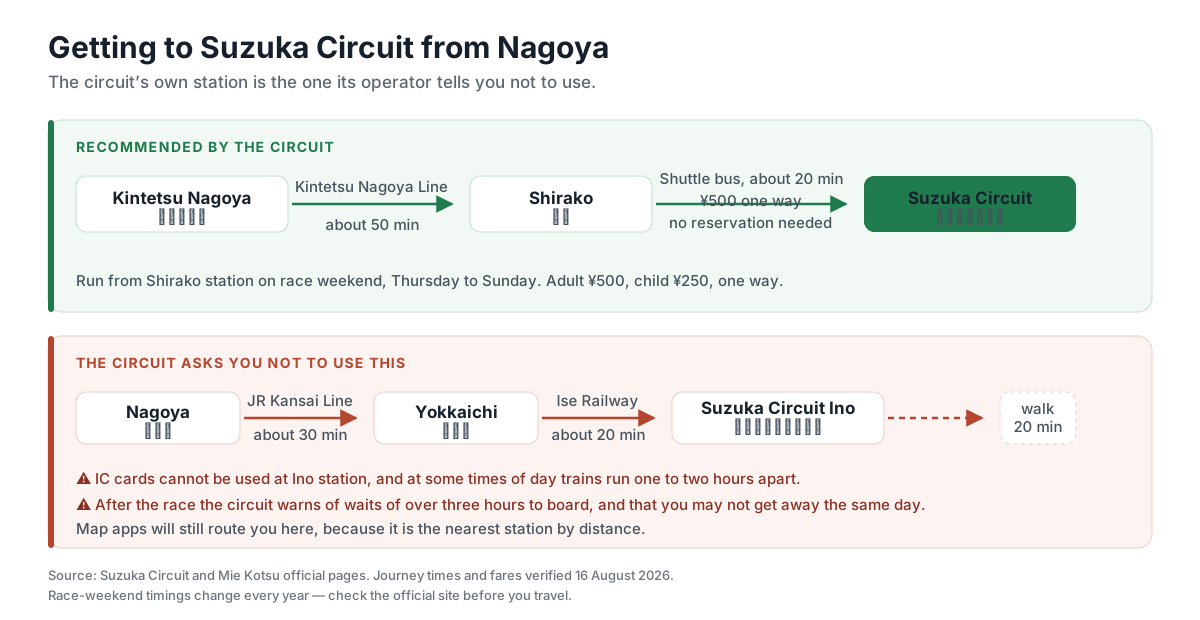
Take the Kintetsu Nagoya Line to Shiroko Station, roughly fifty minutes, then the shuttle bus. The fare is 1,000 yen plus 920 yen for a limited express seat, and the Grand Prix shuttle from Shiroko costs 500 yen one way with no reservation needed. Do not use Suzuka Circuit Ino Station.
That last sentence is the circuit’s own position, not mine, and it needs its own section.
| Route | Adult one way | Journey | Verdict |
|---|---|---|---|
| Kintetsu Nagoya to Shiroko, then Grand Prix shuttle bus | 1,920 yen by limited express, plus 500 yen shuttle | About 50 min by rail, then about 20 min by road | The default. No reservation needed for the shuttle |
| Kintetsu Nagoya to Shiroko, then walk | 1,920 yen by limited express | About 50 min by rail, then 70 to 80 min on foot, about 6 km | Possible, but the longer of the two walking options |
| Kintetsu Nagoya to Hiratacho via Ise-Wakamatsu, then walk | 1,070 yen, no limited express on this line | About 55 min by rail, then about 3.7 km on foot | The circuit’s pick if you intend to walk |
| Reserved direct coach from Nagoya Station, Sakae or Kanayama | Fare set by each operator, not published centrally | Direct, no changes | The circuit’s own first recommendation. Book ahead |
| Ise Railway to Suzuka Circuit Ino Station, then walk | Not published in a single official figure | About 20 min on foot from the station | Officially not recommended on race days. See below |
The map-app trap: Suzuka Circuit Ino Station
Here is the warning I would tattoo on the inside of your eyelids. Type “Suzuka Circuit” into a mapping app and it will route you to Suzuka Circuit Ino Station (鈴鹿サーキット稲生駅) on the Ise Railway, because it genuinely is the nearest station, twenty minutes on foot. On an ordinary day that is fine: the circuit’s everyday access page lists it as a nearest station, noting only that it takes no IC transport cards and that trains can run one to two hours apart. On a Grand Prix day it is a mistake that can cost you your evening.
Suzuka Circuit publishes a page titled, in translation, routes we do not recommend, and Ino Station is the entry on it. The stated reason is limited train frequency and platform capacity, which severely constrains how many people can board. The warning about the hours after the race is unusually direct for a Japanese operator: you may wait more than three hours to board, and depending on conditions you may not board at all that day. The recommendation instead is Shiroko Station, about eighty minutes on foot from the Turn 1 gate, or Hiratacho, about sixty from the Main Gate.
The numbers behind that are worth seeing. Ino Station normally handles around 90 passengers a day, with no station building and no automatic ticket gates; the circuit calls it an unmanned stop rather than a station. In 2025 the queue home peaked at a 180-minute wait. Nothing built for ninety people a day survives a crowd leaving a venue that drew 115,000 on race Sunday.
On the afternoon of the 2025 race, Ise Railway’s official account posted, in essence, that anyone wanting to get home that day should go around via Kintetsu, and that Shiroko Station was an hour’s walk away. Suzuka Circuit embeds that post on its own website.
When the railway itself asks you to use a competitor and the circuit republishes the request, the matter is settled. One footnote: the Ise Railway line takes neither credit cards nor IC transport cards, so it is cash only.
There is one conditional exception. JR Central runs a special limited express named Suzuka Grand Prix during the race period, non-stop from Nagoya to Ino Station, twenty minutes’ walk from the gates. It is entirely reserved seating, and the circuit says tickets for qualifying and race days sell out instantly. Its summary is fair: with a confirmed seat, Ino Station is the best option there is; without one, the weekend return is the one to avoid.
The route I would actually take
Kintetsu Nagoya Station is part of the Nagoya Station complex, so you can walk to it from the Shinkansen concourse without going outside. The basic adult fare to Shiroko is 1,000 yen and a limited express seat adds 920 yen, so 1,920 yen one way; children pay 500 yen plus 460 yen. Journey time is about fifty minutes.
From Shiroko, the Grand Prix shuttle runs from beside the station throughout the race period: 500 yen for adults aged 12 and over, 250 yen for children, no reservation required, about twenty minutes. It takes national IC cards including Suica and PASMO, and in 2026 also contactless credit cards from Friday to Sunday. On ordinary days the standard Mie Kotsu (三重交通) route bus covers the same ground for the same 500 yen in the same twenty minutes, so the shuttle is not a premium product. There are simply more of them.
In 2026 it left Shiroko from 07:00 on the Thursday and 06:00 on race Sunday, with the last return at 19:30, boarding at car park P7 rather than the main entrance from Friday onwards.
If you would rather not change vehicles at all, the circuit’s own first recommendation is a reserved direct coach, running in 2026 from Nagoya Station, Sakae Bus Terminal, Kanayama, Gifu, Toyota-shi, Kyoto and Shin-Osaka. The case for them is a guaranteed seat, a much shorter boarding queue and no changes. The circuit’s case against is equally frank: you are locked into a departure time, the fare is higher, and a coach sits in the same traffic as everyone else. From years of watching event traffic on Route 23, I would call the fixed departure time the real cost.
If you are walking
Thousands walk it, but the circuit’s advice is specific: walk from Hiratacho, not Shiroko. Shiroko to the circuit is about six kilometres, roughly seventy minutes, or eighty to the Turn 1 gate. Hiratacho is about 3.7 kilometres, with convenience stores and places to eat on the way. The catch is the return: Hiratacho is on the Kintetsu Suzuka Line, so northbound passengers change onto the Nagoya Line at Ise-Wakamatsu and then pick up the race-day crowd at Shiroko further up the line anyway. Kintetsu Nagoya to Hiratacho is 1,070 yen, with no limited express.
From Tokyo the practical shape is Shinkansen to Nagoya and then this article’s route, which our Tokyo to Nagoya transport guide covers; from Osaka-Namba, Shiroko is about 100 minutes by Kintetsu. For how Kintetsu fits alongside JR, Meitetsu and the subway, see getting around Nagoya, and note from our IC card guide that the Ise Railway is a genuine exception.
Where should I stay for the Japanese Grand Prix?
Base yourself in Nagoya. That is an editorial judgement rather than an official recommendation, but it follows from the facts: Shiroko is about fifty minutes away on a frequent limited express, Nagoya has far more rooms, and the circuit itself says its on-site hotel is often hard to book on a race weekend.
What Suzuka Circuit actually says is that reservations at the Suzuka Circuit Hotel are frequently difficult over a race weekend, and it points visitors instead towards the Suzuka Circuit Family Camp or hotels in the surrounding area. It does not tell you to stay in Nagoya. I am telling you that, as somebody who has watched this region absorb big events for thirty-five years. Suzuka City has around 190,000 residents and the race brings well over 100,000 people on the Sunday alone. The local hotel stock cannot comfortably absorb that. Nagoya has a deep hotel market, and it sits at the top of the same Kintetsu line you need anyway.
Be clear about what I have not verified, though: I have no primary source for room rates near the circuit, for how full Suzuka gets, or for how far ahead the local hotels fill. Anyone quoting a precise “book eight months ahead” figure is guessing. What I can tell you is where the rooms by the station are. Comfort Hotel Suzuka is about three minutes’ walk from Shiroko Station’s west exit and puts the circuit at fifteen minutes by car; Shiroko Storia Hotel is a minute from the same station and quotes ten.
On the Nagoya side, read hotels near Nagoya Station first, because proximity to Kintetsu Nagoya is what matters on a race morning when you want a train before seven. For which district suits you, see where to stay in Nagoya; if the ticket has taken a bite out of the budget, budget hotels in Nagoya covers the cheaper end.
What should I know on race weekend?
Three things: the Thursday is a genuine day at the circuit with its own ticket, the amusement park beside the track is not operating on its normal terms, and the smartest move after the chequered flag is to not move at all for an hour or two.
Thursday is not a throwaway
Suzuka opens for four days and sells a Thursday-only ticket, 5,800 yen for adults in 2026. Formula 1’s calendar shows only Friday to Sunday because that is when the cars run, but the circuit is open and the crowds are a fraction of Sunday’s. If your budget will not stretch to a reserved seat, a Thursday ticket is the cheapest way to stand inside Suzuka.
The amusement park runs on different rules
The park attached to the circuit normally uses date-based pricing that changes day by day, so there is no single figure to quote. During the Grand Prix that system is partly suspended: for the 2026 race, Thursday to Sunday excluded invitation vouchers and Suzuka Motor Sports Club membership, and Friday to Sunday the annual passport too. What exists instead is the Race Day Special Passport, bundling admission, unlimited rides and race viewing, valid across all four days rather than the usual two.
The post-race hour
This is the most useful advice on this page and it comes from the circuit, not from me. The return shuttle to Shiroko is inevitably crowded once a session ends. But the Honda RACING Gallery and a full amusement park sit immediately alongside, so if you have any flexibility you can let the peak pass rather than spend the same time in a queue. You wait either way. One version of the wait has a roof and a coffee.
I have not been to the Grand Prix myself, so I will not pretend to describe the walk back in the dark. But from three and a half decades of Tokai event traffic I know the surge after a big event is sharp and short.
Booking a tour instead
Packages exist through official channels: Suzuka Circuit links to JTB plans combining a grandstand ticket with a nearby hotel, access-only tours, and F1 Experiences for the hospitality tier. On the general platforms the picture is uneven. Klook carried Japanese Grand Prix listings including a three-day tour with accommodation and transfer, while GetYourGuide’s Suzuka Circuit page had one product and it had nothing to do with Formula 1.
Building the trip around this?
Handy if you want tours or day trips booked around the wider Central Japan route.
What can you check for yourself before you commit?
More than you would expect, and all of it from primary sources. The circuit runs official accounts on X and Instagram and publishes a dedicated Grand Prix section, while Honda Mobilityland posts corporate announcements separately. Between them you will see the next race confirmed before any travel site repeats it.
I have not attended the Japanese Grand Prix, and I will not paraphrase other people’s race reports as though I had. What I can do is point you at the channels that will actually tell you something.
- Suzuka Circuit’s Formula 1 section is where the next edition’s dates, sale schedule and access pages appear first, and right now it is the clearest evidence that nothing has been announced.
- Honda Mobilityland’s press release index is the corporate channel. The 2024 contract announcement went out there, and a 2027 hosting announcement would too.
- Formula 1’s season calendar is the cross-check. If a date is real, it will be on both sites.
- The circuit’s accounts, X at suzuka_event and Instagram at suzukacircuit_official, carry updates on the day.
- Ise Railway’s official account is the operator that publicly asks race-day crowds to use Kintetsu instead.
One habit will serve you well: when a page quotes a ticket price or a shuttle timetable, check which year’s race it belongs to. Event sites in Japan routinely leave the finished edition up for months. Suzuka’s ticket page was still live in August 2026 with categories marked as on sale for a race held the previous March. That is a leftover, not an offer.
What else do travellers ask about the Japanese Grand Prix?
Several of these have answers that are either unannounced or the opposite of what people assume. Where no official source has stated something, I say so.
When is the next Japanese Grand Prix at Suzuka?
Not announced as of August 16, 2026. Formula 1 had no 2027 season calendar published, and its official Japanese Grand Prix ticketing page showed the year with no dates and only a waitlist. What is confirmed is that Suzuka is contracted to host the race from 2025 through 2029, under an agreement announced by Honda Mobilityland on February 2, 2024.
When do Japanese Grand Prix tickets go on sale?
In recent years, in mid-October of the previous year. Tickets for the 2026 race went on sale at 11:00 on October 13, 2025, with all seat categories released at once, and the 2025 race also went on sale on October 13 the year before. The date for the next edition has not been announced, so watch the official pages from late September.
Where should you buy Japanese Grand Prix tickets?
Through MobilityStation, Suzuka Circuit’s official online shop, or an authorised agency. Membership registration is required first. Buyers in some countries and regions cannot use MobilityStation and are directed to the F1 Tickets site instead, and Suzuka warns that debit, prepaid and overseas-issued credit cards may fail to register. Tickets bought improperly are voided without notice.
How do you get to Suzuka Circuit from Nagoya?
Take the Kintetsu Nagoya Line to Shiroko Station, about fifty minutes, then the shuttle bus for about twenty minutes. The basic fare is 1,000 yen with a 920 yen limited express supplement, and the Grand Prix shuttle from Shiroko is 500 yen one way for adults with no reservation required. Reserved direct coaches from Nagoya Station are the circuit’s own first recommendation.
Should you use Suzuka Circuit Ino Station?
Not on a race day. Suzuka Circuit lists it among the routes it does not recommend, warning that limited train frequency and platform capacity can mean a wait of more than three hours to board after the race, and possibly no departure that day at all. The 2025 peak was a 180-minute wait. The station normally handles around 90 passengers a day.
Is it better to stay in Nagoya or near the circuit?
Nagoya is the more practical base for most visitors, given a fifty-minute rail link and a far deeper hotel market. That is an editorial judgement. What the circuit itself states is that its on-site hotel is often difficult to book over a race weekend, and it recommends the Suzuka Circuit Family Camp or hotels in the surrounding area instead.
How much do Suzuka Circuit grandstand seats cost?
For the 2026 race, V1 Seat on the lower main straight grandstand started at 94,000 yen, V2 Seat on the upper tier at 105,000 yen and VIP Suite Premium at 600,000 yen. Cheaper options ran from 5,800 yen for a Thursday ticket and 18,000 yen for a West Area ticket. Prices for the next edition have not been published.
Where can you check official Japanese Grand Prix information?
Start with Suzuka Circuit, which publishes tickets and access before anyone else and in more detail. Formula 1 confirms the calendar, Honda Mobilityland handles corporate announcements, and the transport operators own the fares. Every source below is primary.
| What you need | Official source |
|---|---|
| Grand Prix hub: news, tickets, access | Suzuka Circuit, Japanese Grand Prix |
| English-language circuit pages | Suzuka Circuit, English ticket information |
| Seat categories, prices and sales channels | Suzuka Circuit ticket information |
| Sales schedule, fees and payment methods | Suzuka Circuit sales schedule |
| The routes the circuit does not recommend | Suzuka Circuit, routes not recommended |
| Shiroko shuttle bus, fares and hours | Suzuka Circuit, Shiroko shuttle bus |
| Reserved direct coaches | Suzuka Circuit, reserved direct buses |
| Access advice, attendance figures, station background | Suzuka Circuit access tips |
| Everyday access and nearest stations | Suzuka Circuit, by train and bus |
| Season calendar and round numbers | Formula 1 official season calendar |
| Waitlist for the next Japanese Grand Prix | Formula 1 official ticketing, Japan |
| Corporate announcements, including the hosting contract | Honda Mobilityland press releases |
| Kintetsu fares and limited express supplements | Kintetsu Railway official site |
| Mie Kotsu route bus times and fares | Mie Kotsu official site |
| Amusement park admission and opening hours | Suzuka Circuit Park tickets |
The circuit’s switchboard is 059-378-1111, at 7992 Ino-cho, Suzuka City, Mie Prefecture 510-0295. One warning on searching: the page under the path info_s/suzukacircuitpark describes a licensed facility in Kaohsiung, Taiwan, not the amusement park in Mie, which lives under the park path. The English names are identical.
Which related guides should you read next?
A Grand Prix trip is really a Nagoya trip with one very busy day in Mie attached.
- Tokyo to Nagoya transport guide handles the first leg if you are arriving from the east.
- Getting around Nagoya explains how Kintetsu, JR, Meitetsu and the subway fit together, which matters on a morning when you need a specific train.
- Hotels near Nagoya Station is the practical shortlist for a race weekend, since Kintetsu Nagoya is in the same complex.
- The best day trips from Nagoya covers what else is within reach on the days either side of the race.
- The central Japan festival calendar helps if you want something seasonal alongside it, though remember the Grand Prix date moves.
This guide will be updated as soon as Suzuka Circuit and Formula 1 publish the next race dates and the ticket on-sale schedule.