Central Japan’s New Year is not a single night but a six-week calendar of shrine and temple rites, followed by fire and loincloth festivals in February. This guide covers hatsumode at Atsuta Jingu, Osu Kannon and Ise Jingu, what stays open, and the winter weather you should actually dress for.
One warning before you plan anything. As of August 16, 2026, none of the region’s big shrines and temples has published its 2026-27 New Year information: Atsuta Jingu’s traffic notice, Osu Kannon’s new-year programme and Ise Jingu’s extended hours all appear in December and not before. Everything dated below is either a permanent rule or last season’s published schedule, and where it is last season’s, this guide says so.
Written by Yuu — a Nagoya native of 35 years. Published August 16, 2026.
This article may contain affiliate links. See our affiliate disclosure for details.
All festival details verified from official sources on August 16, 2026.
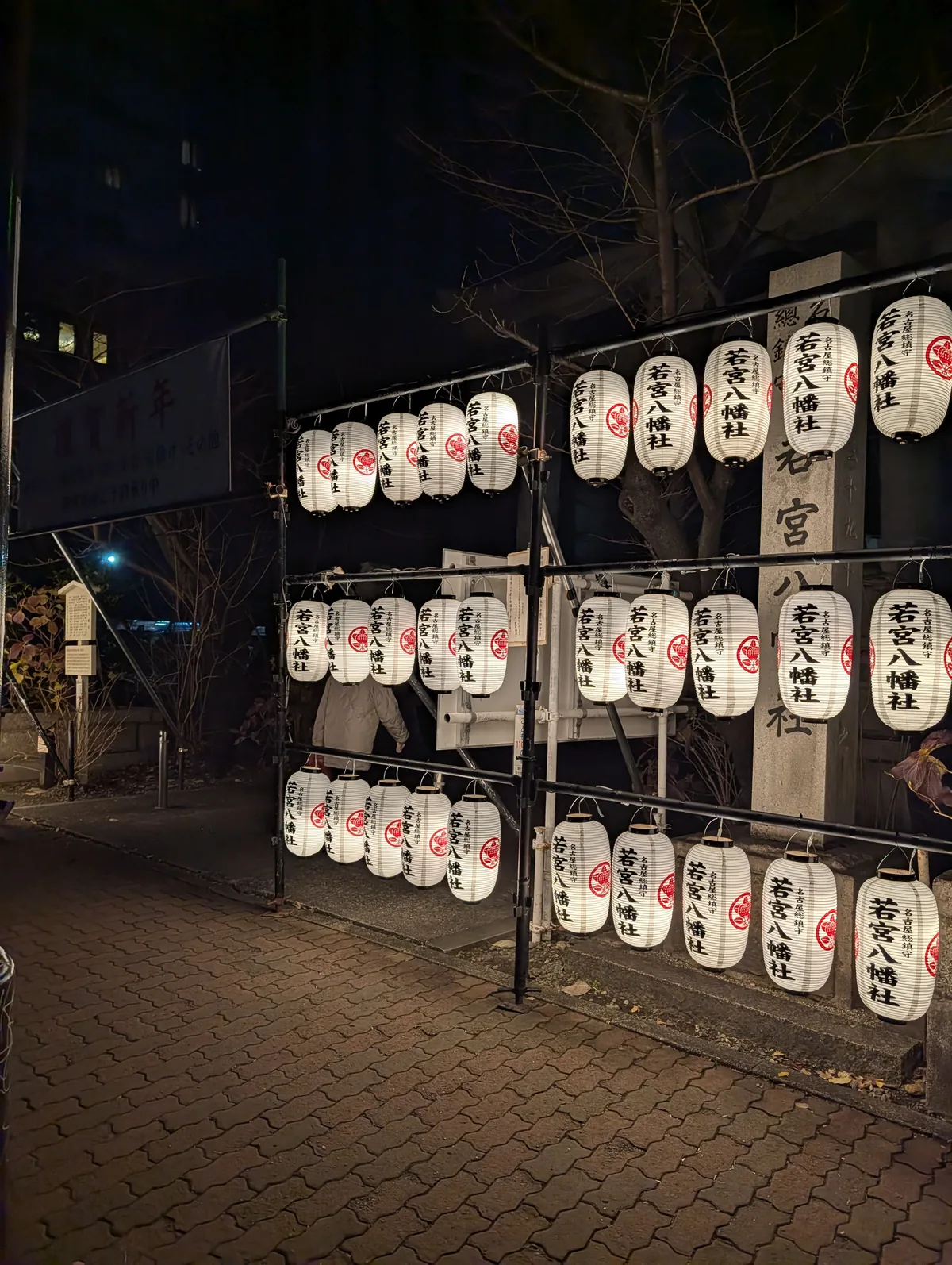
What Happens in Japan at New Year?
Hatsumode (初詣), the first shrine or temple visit of the year, is the centre of it. But the New Year in this region is not one night. It is a rolling calendar of dated rites that begins with a cleaning ceremony in late December and does not finish until the bean-throwing of early February.
It helps to know that shrines and temples do different things, because English-language guides routinely mix them up. The bell you have read about — joya no kane (除夜の鐘), the New Year’s Eve bell — is a Buddhist temple practice. You will not hear one at Atsuta Jingu, because Atsuta Jingu is a Shinto shrine; its own final rite of the year is the Oharae (大祓) at 3:00pm on December 31, in which participants hold a haraegushi wand and sweep away the impurity accumulated over the year. Six days earlier, on December 25 at 10:00am, priests perform the Osusu-osame Shinji (御煤納神事), sweeping a year of dust off the shrine buildings. Neither rite involves a bell. For that you go to a temple, and in central Nagoya that means Osu.
The Tokai region’s New Year calendar
What makes Atsuta Jingu unusual is the density of what follows January 1. The shrine says it maintains around sixty annual rites and about ten special rites, and a striking share of them fall in the first six weeks of the year. These are religious ceremonies rather than public performances, and the shrine does not publish whether visitors may watch each one, so treat the table below as a calendar of what is happening around you rather than a list of shows with seats.
| Date and time | Rite | Where |
|---|---|---|
| Third Friday of December, 9:30am | Nogyo Kansha-sai, the agricultural thanksgiving rite, with a produce show from the previous day | Kaguraden; show at the Bunkaden |
| December 25, 10:00am | Osusu-osame Shinji, the year-end sweeping | Throughout the grounds |
| December 31, 3:00pm | Oharae, the great purification | Before the worship hall |
| January 1, 5:00am | Saitan-sai, the New Year’s Day rite | Main shrine and Betsugu |
| January 3, 7:00am | Genshi-sai | Main shrine and Betsugu |
| Midnight on the night of January 4-5 | Hatsu-Ebisu, for prosperity in business, the household and the fishing year | Okuninushi-sha and Kotoshironushi-sha |
| January 7, 2:00pm | Yodameshi Shinji, the water divination | Osakida Shrine |
| January 11, 10:00am and 1:00pm | Toka Shinji, the dance and drum divination | Yogonoma-sha and main shrine, then Betsugu and Osakida Shrine |
| January 12, noon | Fusui Yodameshi Shinji, the sealing of next year’s water jar | Kaguraden and Tohoden |
| January 15, 10:00am and 1:00pm | Hosha Shinji, the ceremonial archery | Main shrine, then the Kaguraden forecourt |
| February 11, 10:00am | Kigen-sai | Main shrine and Betsugu |
| February 23, 10:00am | Tencho-sai | Main shrine and Betsugu |
Two of those are worth understanding properly, because they are the reason a January visit to Atsuta Jingu is more interesting than the crowds suggest.
The first is a divination that takes a full year to run. At the Fusui Yodameshi Shinji on January 12, priests measure a fixed quantity of clean water into a jar, seal it, and store it under the floor of the Tohoden on the east side of the main hall. Twelve months later, on January 7, the jar is set before Osakida Shrine, two priests break the seal, and the water lost to evaporation is measured to divine how much rain the coming year will bring and whether there will be drought.
The second is the Hosha Shinji (歩射神事) on January 15, the most visually dramatic thing that happens at the shrine in winter. Six priest-archers — two each in the first, middle and final rounds — shoot two arrows apiece three times, thirty-six arrows in total, at a target six shaku across, about 1.8 metres. Popularly it is called omatou. The shrine’s own description is the interesting part: the instant the last arrow is loosed, worshippers surge at the target, because the chigi, a piece of wood fixed to it, has long been believed to ward off evil. The shrine does not publish whether visitors may join that scramble, so go to watch rather than to compete.
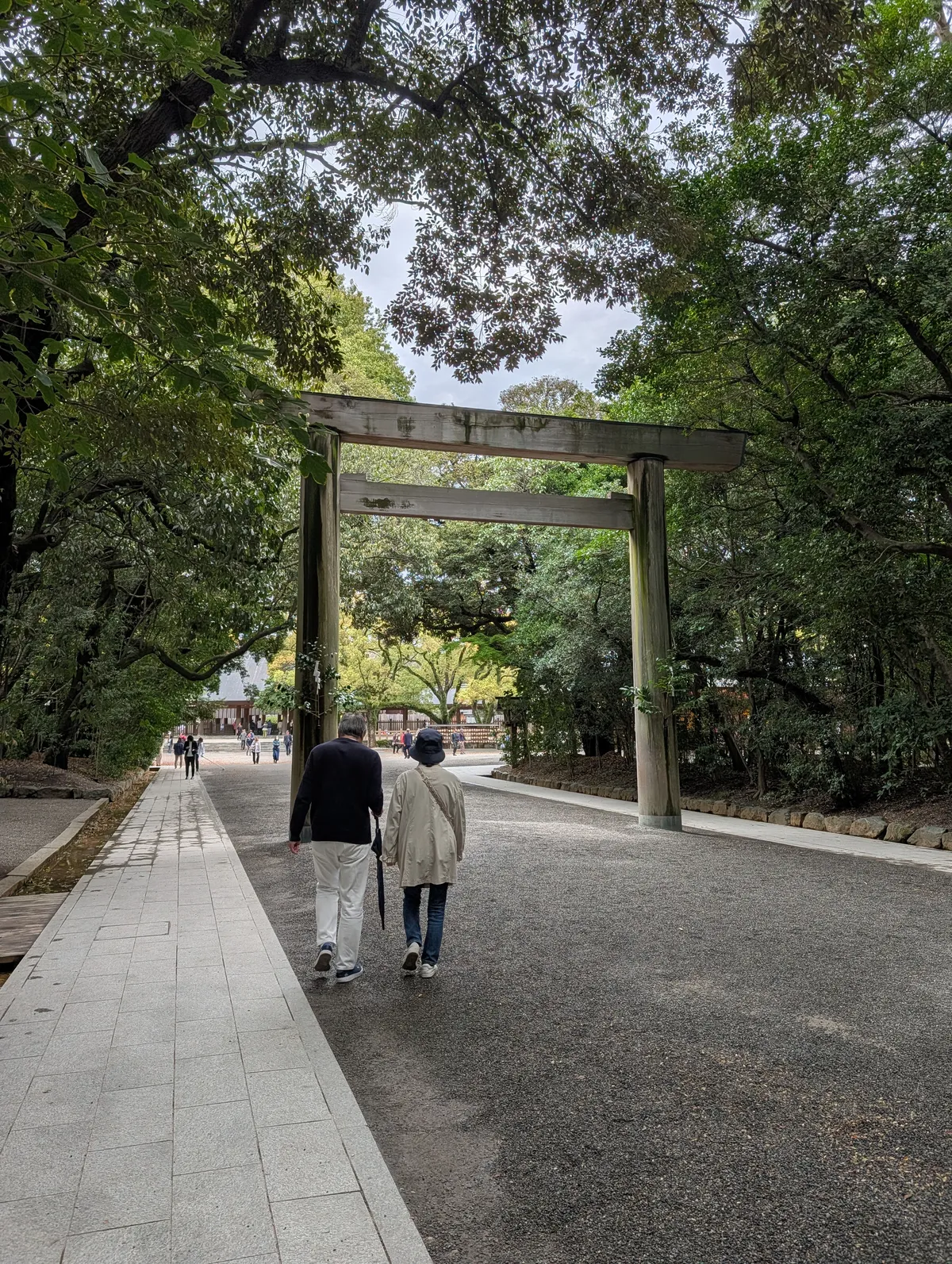
Where Should I Do Hatsumode in Central Japan?
Atsuta Jingu is the default and the busiest. Osu Kannon is the temple alternative in the middle of the city, and the one place in central Nagoya where the temple publishes tickets to ring the New Year’s Eve bell yourself. Ise Jingu, a train ride south into Mie, is the pilgrimage version. All three are different experiences, not tiers of the same one.
Atsuta Jingu: go at the right hour, and do not drive
The single most useful thing published about Atsuta Jingu at New Year is a crowding notice printed on the official traffic-control leaflet issued jointly by Atsuta Police Station and the shrine. It states the congested hours plainly: on January 1, midnight to 2:00am; on January 2 and 3, 10:00am to 3:00pm. That is the opposite of what most visitors assume about the first morning of the year — the crush at Atsuta is in the small hours of January 1, not the daylight of it. The notice tells you which hours to avoid; it does not name a quiet hour, so do not trust anyone who promises you one.
The traffic restrictions ran like this in the 2025-26 season: closures around the shrine from 11:00pm on December 31 until 3:00am on New Year’s Day; then 9:30am to 3:30pm on January 1, 2 and 3; then 9:30am to 4:30pm on January 4 and 5. The leaflet adds that restrictions may change with conditions and that you should follow police officers and signage. The 2026-27 notice, with its own dated map, had not been published as of August 16, 2026; it normally goes up on the shrine’s home page in early-to-mid December.
Driving is simply not an option, and the shrine says so itself: all roads around Atsuta Jingu are no-parking, and visitors are asked to come by train, bus, taxi or subway. In the 2025-26 season the shrine’s own car parks closed in stages from December 27 and stayed shut until mid-January, with the grounds closed to unauthorised vehicles from January 1 and coaches readmitted to the west gate from January 6. The shrine also warns that its car parks stay heavily congested until late February — long after the New Year crowds have gone.
The train is easy and cheap. JR Nagoya to Atsuta is 200 yen; Meitetsu Nagoya to Jingu-mae is 250 yen; the subway from Nagoya Station via Sakae to Atsuta-Jingu-Nishi takes about 25 minutes and costs 240 yen. Fares verified July and August 2026; see getting around Nagoya for the wider network.
Two practical details. If you are carrying last year’s charms — the custom is to return them to a shrine rather than bin them — Atsuta sets up collection points at three places during the New Year period: the centre of the main approach, and the entrances to the south and west approaches. And ordinary prayer services are squeezed hard over the first three days: in 2026 the main shrine did not begin vehicle purifications and road-safety prayers until January 16, with the affiliated Takakura-musubimiko Shrine in Atsuta ward taking them from January 6.
Osu Kannon: the bell, and no food stalls
Osu Kannon runs the New Year the way a temple does. At 7:00pm on December 31 comes a repentance service (懺悔会) in which the temple’s monks confess the year’s wrongdoing to the principal image on behalf of everyone present. From midnight the joya no kane is rung, and the first goma fire ritual of the year begins at the same hour.
You can ring the bell yourself, which is unusual for a city-centre temple. In the 2025-26 season tickets went on sale at 9:00am on December 18 at the main hall, at 1,000 yen each. The temple’s permanent calendar gives the same price. The 2026-27 sale date and price had not been announced as of August 16, 2026 — the new-year notice usually appears in the last week of December.
The temple states that more than 500,000 people come over the first three days of the year, so the arrangements are strict and worth reading before you arrive. During the New Year period, from midnight on January 1 until the end of January 3, the queue for worship forms only at the Nio-mon (仁王門), the gate with the guardian statues. You cannot reach the main hall from any other entrance. If you only want the prayer reception or the fortune-slip counter, you use a different gate entirely.
And here is the correction that matters most: there are no stalls in the grounds. The temple says so in writing. Every English article that pairs hatsumode with festival food is describing somewhere else. The surrounding Osu shopping arcade is a separate matter, with its own opening hours that this guide has not verified.
Two more notes from the 2026 season. New-year goma prayers ran on the hour, eight sittings a day from 10:00am to 5:00pm across January 1-3, each with a capacity limit and two worshippers per tablet. Goshuin, the temple seal stamps, were handled at the vehicle-blessing hall at the western edge of the grounds, paper-only from January 1 to 4 and suspended on New Year’s Eve night.
Ise Jingu: check the clock before you commit
The trap at Ise Jingu in winter is not crowds; it is daylight. The published hours for the Naiku, Geku and the auxiliary shrines are 5:00am to 5:00pm in October, November and December, extending to 6:00pm from January through April. A December day trip from Nagoya is therefore much shorter than the same trip in June, when the shrines stay open until 7:00pm.
The shrine states that hours change over the New Year, and publishes the details — along with local traffic restrictions — each December on its news page. Those pages are taken down once the season ends, which is why this guide links to the news index rather than to a page that will not exist by spring. As of August 16, 2026, nothing for the 2026-27 New Year had gone up.
For scale: Ise Jingu says the Naiku and Geku together receive more than seven million worshippers a year. That is an annual figure, not a New Year one, and you will see it misused as both. A further reason to come in this cycle is the 63rd Shikinen Sengu, the twenty-yearly rebuilding and transfer of the deities, which began in 2025 and runs for a little over eight years.
What Festivals Happen in Winter?
February is the month. Two of Aichi’s most extreme festivals fall in it — the Konomiya Hadaka Matsuri, where thousands of men in loincloths converge on one man, and the Toba Fire Festival, where teams climb into burning five-metre torches. December and January belong to the shrine calendar instead.
Konomiya Hadaka Matsuri: February 19, 2027
The Naoi Shinji (儺追神事) at Owari Okunitama Shrine in Inazawa, universally known as the Konomiya Hadaka Matsuri or Naked Man Festival, is confirmed for 3:00pm on February 19, 2027 (Fri), with the night rite, the Yonaoi Shinji, at 3:00am on February 20 (Sat). Those dates are already on the shrine’s official calendar, which makes them one of the few genuinely fixed points in this whole article.
Do not, however, write it into a future itinerary as an annual February event. The festival follows the thirteenth day of the first lunar month, so the Gregorian date moves every year: in 2026 it fell on March 1. That 2027 happens to land in February is a coincidence of the lunar calendar, not a rule. Everything else — the shin-otoko, the giant rice cake, the road closures, the rules on which groups may take part — belongs in the full Konomiya Hadaka Matsuri guide, which is the authoritative page on this site.
Toba Fire Festival: fire, and firm rules about where you stand
Toba no Hi Matsuri, at Toba Shinmeisha in Nishio, is a nationally designated Important Intangible Folk Cultural Property — not, as you will sometimes read, a UNESCO listing. Nishio City records it as continuing from the Daido era, 806 to 809, when the shrine is said to have been founded.
The mechanics are unlike anything else in the region. The town divides into two sides, Fukuji to the west and Inuiji to the east. Inside each suzumi (すずみ) — a torch-like structure of bamboo and thatch about five metres tall — are placed a shinboku, the sacred wood, and the junawa, twelve ropes standing for the twelve months. The suzumi are set alight, and the participants, known as neko, in costumes made from old banners, go into the flames to pull the wood and ropes out and carry them to the shrine. Whichever side is faster decides the divination for the year’s harvest.
The 2026 edition was set for Sunday February 8, with a published rain date of Monday February 9: purification around 3:00pm, the rite before the deity from about 7:30pm, and the suzumi lit at around 8:00pm. The city’s own description places the festival on the second Sunday of February, which would make February 14, 2027 (Sun) the likely date — but that is arithmetic from the published rule, not an announcement. Nishio City Tourism Association normally posts the confirmed date between December and January, and the 2027 poster has already been trailed, so the festival is going ahead.
The viewing rules are unusually explicit, and photographers should read them twice. There is no reserved seating. Saving a viewing or camera position is banned outright because it obstructs preparations, and any mat or marker left in place before 7:00am on the day will be removed by shrine officials. Entry to the grounds opens at 7:00am from the southern approach, and the area south of the shrine is for officials’ vehicles only. In 2026 the Furusato Park ground opened as a car park from 6:00pm the previous evening, but the association asks people to come by train regardless: Mikawa-Toba Station on the Meitetsu Gamagori Line is about a ten-minute walk. Since the fire is not lit until 8:00pm, the daytime is worth planning: in 2026 a local market called Toba Ichi ran from 11:00am to 4:00pm in the station car park, giving away about 200 servings of wakame miso soup at 11:30am and again at 3:00pm.
The rest of the winter calendar
Two more dates deserve a place in a January or February itinerary. Osu Kannon’s Sagicho (左義長) fire festival falls on the second Monday of January, Coming-of-Age Day, with the service and lighting from 2:30pm; last year’s charms, sacred ropes and New Year decorations are burnt, and a 1,000 yen offering for a large goma stick brings a fire-protection charm in return. In 2027 the second Monday is January 11. The temple’s first monthly feast day of the year, Hatsu-Kannon, is January 18.
Then there is setsubun (節分), and Osu Kannon’s version has a quirk worth travelling for. Bean-throwing prayers run from 10:00am to 6:00pm from a platform in front of the main hall, with tickets at 3,500 yen, or 5,000 yen with a wooden measure. The shout is only “Fuku wa uchi” — fortune in. “Oni wa soto”, demons out, is forbidden here, because of a demon mask among the temple’s treasures. In parallel, the Seven Lucky Gods process from Sakae on a treasure ship for a demon-chasing ceremony. The date is usually February 3, but setsubun is fixed by the start of spring in the old calendar and can fall a day either side, so check the temple’s announcement, published in late December.
Is Anything Open Over New Year?
Yes, from January 2. The pattern in Nagoya is that major attractions close for roughly December 29 to January 1 and reopen on the 2nd, which makes the first two days of the year a shrine-and-temple window and the rest of the holiday close to normal.
| Site | New Year closure | Normal hours | Admission |
|---|---|---|---|
| Nagoya Castle | December 29-31 and January 1 | 9:00am to 4:30pm; Honmaru Palace entry closes 4:00pm | 500 yen adults; free for junior-high age and under |
| Tokugawaen | December 29 to January 1, plus Mondays | 9:30am to 5:30pm; entry to 5:00pm | 300 yen; free for junior-high age and under |
| Toyota Commemorative Museum | Stated as the New Year period; no dates published | 9:30am to 5:00pm; last entry 4:30pm | Not verified here |
| Nabana no Sato illumination | Open as normal; closed January 6 and 7 | Season runs October 17, 2026 to May 31, 2027 | Not verified here |
Nagoya Castle adds a caveat of its own: the closure dates can change for events. Tokugawaen closes on Mondays as well, which is the trap in the second week of January — and the neighbouring Tokugawa Art Museum is a separate institution with its own fees and closing days. The Toyota Commemorative Museum states only that it closes over the New Year without giving dates, and its online calendar was unavailable when this guide was checked.
The one large attraction that stays open right through the holiday is the Nabana no Sato winter illumination in Kuwana, whose 2026-27 season is already confirmed from October 17, 2026 to May 31, 2027, with normal operation over New Year and closures only on January 6 and 7. Between December 23 and 25 it switches to timed tickets from 3:00pm with no daytime opening. Fares, lighting times and access are outside the scope of this guide.
One more thing for the calendar: February 11 and February 23 are national holidays, marked at Atsuta Jingu by the Kigen-sai and Tencho-sai rites. Museums, castles and trains are all busier on those days.
How Cold Does It Get?
Cold, but not alpine. The Japan Meteorological Agency’s thirty-year normals for Nagoya put January, the coldest month, at a mean of 4.8C, with daily highs around 9.3C and lows around 1.1C. It is a city where you need a proper coat and where snow is an event rather than a season.
| Month | Mean | Daily high | Daily low | Rainfall | Total snowfall | Days with snow |
|---|---|---|---|---|---|---|
| December | 7.2C | 11.7C | 3.4C | 56.6mm | 3cm | 4.8 |
| January | 4.8C | 9.3C | 1.1C | 50.8mm | 4cm | 9.4 |
| February | 5.5C | 10.5C | 1.4C | 64.7mm | 5cm | 6.8 |
Read the snow columns carefully, because they are widely misquoted. The 9.4 days figure for January counts days on which snow was observed at all, including flakes that never settle. Total snowfall over the whole month averages only 3 to 5cm, and the normal for maximum snow depth is 3cm in each of the three months. Snow in Nagoya is real and occasional; plan for a wet pavement rather than a ski resort, and do not plan on either.
What the numbers do not convey is standing still outdoors after dark, which is exactly what winter festival-going involves. The Toba fire is lit at 8:00pm, the bell at Osu Kannon rings at midnight, and hatsumode queues at Atsuta are outdoors from beginning to end. With lows near 1C and, in February, the region’s heaviest winter rainfall at 64.7mm, dress for two hours of not moving: thermal layers, a windproof outer layer, gloves, and shoes you do not mind soaking. Daylight is short too — Ise Jingu shuts at 5:00pm through December. For a wider seasonal view, see the best time to visit Nagoya and Nagoya in winter.
What Should I Know Before I Go?
Four things: travel by train, time your hatsumode against the published crowd hours rather than against sunrise, do not expect food stalls where the organisers say there are none, and confirm the 2026-27 dates in December, because almost nothing for this coming season has been announced yet.
On transport, the region’s own advice is unambiguous: Atsuta Jingu asks visitors to arrive by train, bus, taxi or subway and points out that every road around the shrine is no-parking, and Nishio says the same for the Toba Fire Festival despite laying on temporary parking. In the 2025-26 season the Nagoya subway ran all night on New Year’s Eve on every line except the Kamiiida Line — but that was stated on the police and shrine leaflet rather than by the operator, and nothing has been published for December 31, 2026. The city transport bureau typically announces all-night running in mid-October, with timetables in December.
On timing, if a specific rite is your reason for coming, the calendar rewards patience: the Hatsu-Ebisu at midnight between January 4 and 5, and the archery of January 15, both fall after the three-day rush is over.
On money, carry cash. The published prices in this article are all offerings and tickets bought in person at a temple counter: 1,000 yen for a turn at the bell, 1,000 yen for a goma stick at Sagicho, 3,500 or 5,000 yen for a bean-throwing ticket at setsubun. None of the organisers publishes a card policy.
Building more into the trip?
Handy if you want tours or day trips booked around the festival dates.
Finally, build the trip in the right order. The fixed points are the shrine and temple calendar plus the one confirmed 2027 festival, Konomiya on February 19. Everything with a season attached to it — traffic restrictions, bell tickets, Ise’s New Year hours — is confirmed in December, by the organiser rather than by an aggregator.
What Do Visitors Actually Experience?
Crowds, and a great deal of standing. This site does not reproduce other people’s reviews, so here are the published numbers and official statements instead, which are a more honest guide to what you are walking into.
Osu Kannon is the clearest case, because the temple counts its own visitors: it states that more than 500,000 people come over the first three days of the year. Set that against a single gate for the worship queue and you have a realistic picture of a January 1 morning in central Nagoya.
Atsuta Jingu is harder to pin down, and this is worth saying plainly. No figure for New Year attendance is published by the shrine, by Aichi Prefectural Police or by the City of Nagoya. The number in wide circulation comes from the media: the local broadcaster Tokai TV reported in January 2025 that around 2.3 million people were expected over the first three days of that year. That is an expectation reported by a broadcaster, not a count released by the shrine, and anyone quoting it as fact is overstating what is known.
For the February festivals the official sources describe conditions rather than counts. Nishio’s message about Toba is that there is no seating and no saving of positions, which tells you people arrive early enough for it to have become a problem. On the day itself, organisers’ own social accounts post cancellations and crowd restrictions first; the official sites are listed below.
Frequently Asked Questions
When is the busiest time at Atsuta Jingu for hatsumode?
The shrine and Atsuta Police Station publish the congested hours on their joint traffic notice: on January 1 it is midnight to 2:00am, and on January 2 and 3 it is 10:00am to 3:00pm. Note that the January 1 peak is in the small hours, not the morning. The notice names only the hours to avoid, so no official source promises a quiet hour.
Can I ring a temple bell on New Year’s Eve in Nagoya?
Yes, at Osu Kannon. From midnight the joya no kane is rung and the first goma fire ritual begins. In the 2025-26 season tickets were sold from 9:00am on December 18 at the main hall at 1,000 yen each; the 2026-27 sale date and price had not been announced as of August 16, 2026. Shinto shrines such as Atsuta Jingu do not ring a New Year bell at all.
Are there food stalls at hatsumode?
Not at Osu Kannon. The temple states in writing that there are no stalls in its grounds during the New Year period, so the familiar image of eating your way around a hatsumode visit does not apply there. The surrounding Osu shopping arcade is a separate matter with its own opening hours, which this guide has not verified.
Is the 2026-27 New Year information published yet?
No. As of August 16, 2026, Atsuta Jingu, Osu Kannon and Ise Jingu had all published only the previous season’s details. Atsuta’s traffic-control notice normally appears in early-to-mid December, Osu Kannon’s new-year and setsubun notices in late December, and Ise Jingu’s New Year hours and traffic information in December on its news page. Confirm with the organiser before you travel.
What winter festivals can I see in Aichi in February 2027?
The Konomiya Hadaka Matsuri at Owari Okunitama Shrine in Inazawa is confirmed for 3:00pm on February 19, 2027, with the night rite at 3:00am on February 20. The Toba Fire Festival in Nishio is held on the second Sunday of February, which would fall on February 14, 2027, though that is calculated from the published rule rather than announced. Osu Kannon holds its Sagicho fire festival on the second Monday of January.
Is anything open in Nagoya on January 1?
Most major attractions are not. Nagoya Castle closes from December 29 to 31 and on January 1, and Tokugawaen closes from December 29 to January 1, both reopening on January 2. The Toyota Commemorative Museum closes over the New Year without publishing dates. The Nabana no Sato illumination in Kuwana operates as normal over the New Year and closes only on January 6 and 7.
How cold is Nagoya in January, and does it snow?
The Japan Meteorological Agency normals for 1991 to 2020 give January a mean of 4.8C, a daily high of 9.3C and a daily low of 1.1C, making it the coldest month. Snow is observed on about 9.4 days in January, but total monthly snowfall averages only 4cm and the normal maximum snow depth is 3cm. Dress for standing outdoors after dark rather than for deep snow.
Official Information
- Atsuta Jingu, rites and ceremonies calendar — the source for every winter rite in the table above
- Atsuta Jingu home page — where the New Year parking and traffic notices are posted each December
- Atsuta Jingu hatsumode traffic notice, 2025-26 season — issued by Atsuta Police Station and the shrine; the source for the congested hours
- Osu Kannon, annual events and the 2026 New Year notice
- Ise Jingu, visiting and prayers and the news index, where New Year hours appear each December
- Owari Okunitama Shrine, Konomiya Hadaka Matsuri — the 2027 schedule
- Nishio City, Toba no Hi Matsuri cultural property record and Nishio City Tourism Association, 2026 festival notice
- Nagoya Castle, Tokugawaen and Toyota Commemorative Museum — opening hours and closures
- Japan Meteorological Agency, Nagoya climate normals
- Nabana no Sato winter illumination — the confirmed 2026-27 season
Related Guides
- Nagoya in Winter — the wider winter season, from food to lighting displays
- Konomiya Hadaka Matsuri — the full guide to February’s naked man festival, and the authoritative page for its rules and access
- Atsuta Jingu Guide — the shrine itself, its treasures and how to get there
- Atsuta Matsuri — the shrine’s grand annual rite on June 5, the other end of its calendar
- Ise Jingu Day Trip from Nagoya — timings, routes and what to see in a single day
- Central Japan Festival Calendar — the whole year, month by month
- Things to Do in Nagoya — for the days between the rites
- Nagoya Matsuri — the city’s autumn festival, for contrast