Nagoya Castle, built in 1612 by Tokugawa Ieyasu, draws approximately 2.4 million visitors annually. The reconstructed Hommaru Palace (completed 2018, cost 15 billion yen) is Japan’s most faithful historical palace reconstruction. Admission is 500 yen (rising to 1,000 yen on October 1, 2026), and a thorough visit takes 2-3 hours.
Nagoya Castle is Nagoya’s defining landmark and one of Japan’s most historically significant castles, but the real draw today is the reconstructed Hommaru Palace — the most faithful historical palace reconstruction in the country. With over 900 cherry trees, seasonal firefly viewing, the Kinshachi Yokocho castle town, and 400-year-old stone walls, the castle grounds offer far more than a single photo stop. Plan 2 to 3 hours for a thorough visit.
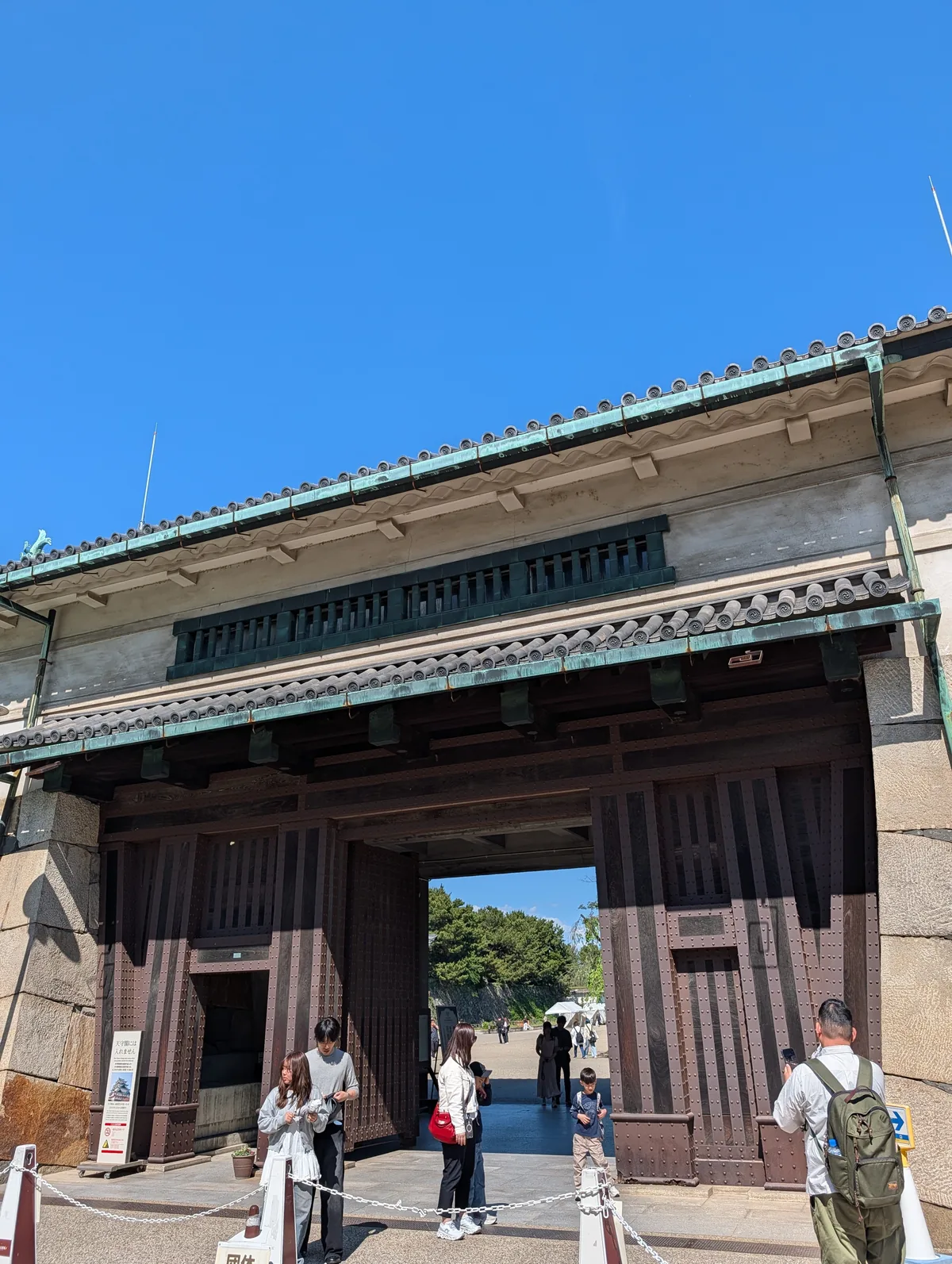
Last updated: August 2, 2026 | Written by Yuu, a Nagoya native of 35 years
This article may contain affiliate links. See our affiliate disclosure for details.
Table of Contents
- Why Should You Visit Nagoya Castle?
- What Makes the Hommaru Palace Japan’s Greatest Palace Reconstruction?
- What Can You See on the Castle Grounds and Stone Walls?
- What Are the Golden Shachihoko and Why Are They Famous?
- When Is Cherry Blossom Season at Nagoya Castle?
- Can You See Fireflies at Nagoya Castle?
- What Is Kinshachi Yokocho and What Should You Eat There?
- What Is Ninomaru Garden and Is It Worth Visiting?
- What Seasonal Events and Festivals Does Nagoya Castle Hold?
- How Do You Get to Nagoya Castle from Nagoya Station?
- What Are the Tickets, Hours, and Practical Details?
- What Tips Should You Know Before Visiting Nagoya Castle?
- What Can You Combine with a Nagoya Castle Visit?
- How Did a Local Spend a May Afternoon at Nagoya Castle in 2026?
- Frequently Asked Questions
- Related Guides
Why Should You Visit Nagoya Castle?
Nagoya Castle offers the Hommaru Palace (Japan’s finest historical reconstruction), 400-year-old original stone walls, over 900 cherry trees, seasonal firefly viewing, and Kinshachi Yokocho castle town dining — making it one of the best castle experiences in Japan.
Nagoya Castle is more than a tourist attraction to the people who live here. It is woven into the fabric of the city. I grew up going to this castle — with my family as a child, on school field trips, and for weekend outings that were simply part of the rhythm of life in Nagoya. The castle grounds were where we watched cherry blossoms every spring, where we ran around as kids while our parents sat on blue tarps with bento boxes.
Built in 1612 by order of Tokugawa Ieyasu, the castle served as the seat of the Owari branch of the Tokugawa clan, the most senior of the three branch families of the shogunate. For over 250 years, it was one of the largest and most splendid castles in Japan. The original castle tower and Hommaru Palace survived the Meiji Restoration, earthquakes, and centuries of wear — only to be destroyed by Allied air raids on May 14, 1945.
That loss still echoes in Nagoya. Which is why the completion of the reconstructed Hommaru Palace in 2018, after a decade of painstaking work, felt genuinely personal — like watching the city reclaim a piece of itself that was lost in the war. When I walk through those rooms now and see the gold-leafed walls and painted sliding doors recreated with extraordinary precision, I feel something that goes beyond appreciation for craftsmanship. It is a connection to the history of this place.
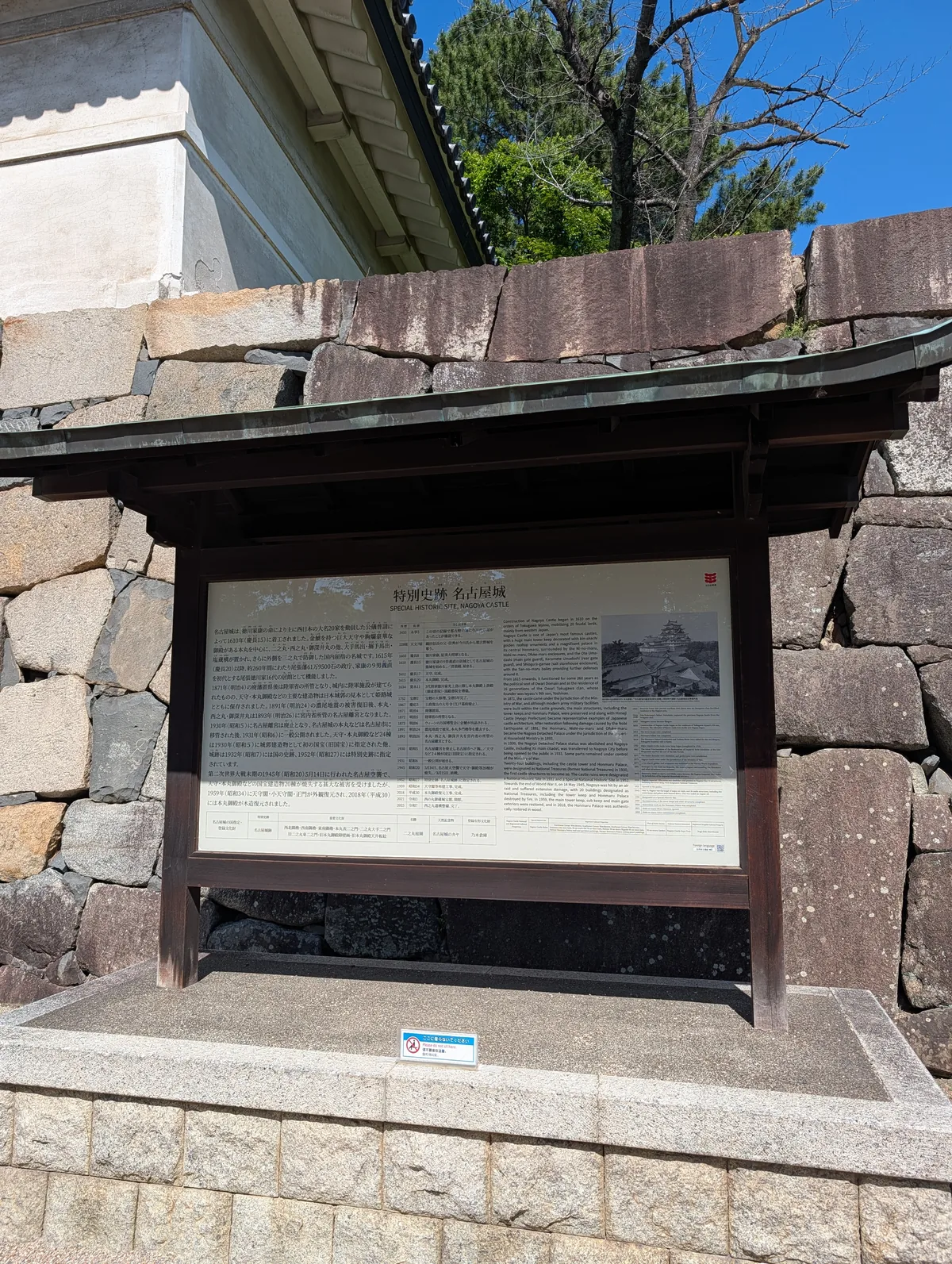
For visitors, Nagoya Castle offers several distinct experiences: the Hommaru Palace interior, the massive original stone walls and moats, cherry blossoms in spring, fireflies in early summer, the Kinshachi Yokocho dining area, and the peaceful Ninomaru Garden. It is easily one of the top things to do in Nagoya, and with the right timing, it can be the highlight of your entire trip to Central Japan.
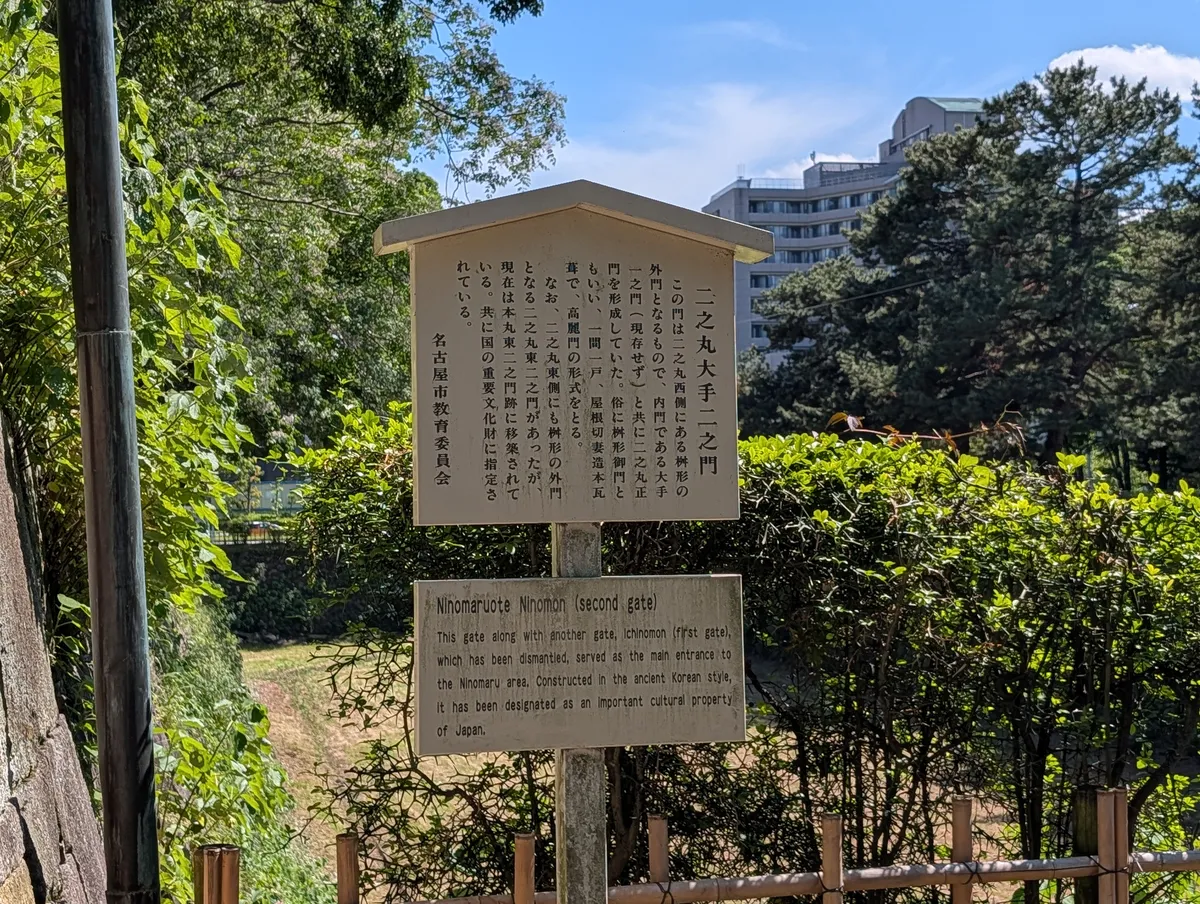
According to the City of Nagoya, Nagoya Castle attracts approximately 2.4 million visitors annually, making it the city’s most-visited historical landmark.
According to the Nagoya Castle Administration Office, the Hommaru Palace reconstruction cost approximately 15 billion yen and took 10 years to complete (2009-2018), using traditional Edo-period construction techniques.
According to the City of Nagoya’s cultural assets division, the castle grounds span approximately 23 hectares and contain over 900 cherry trees of multiple varieties.
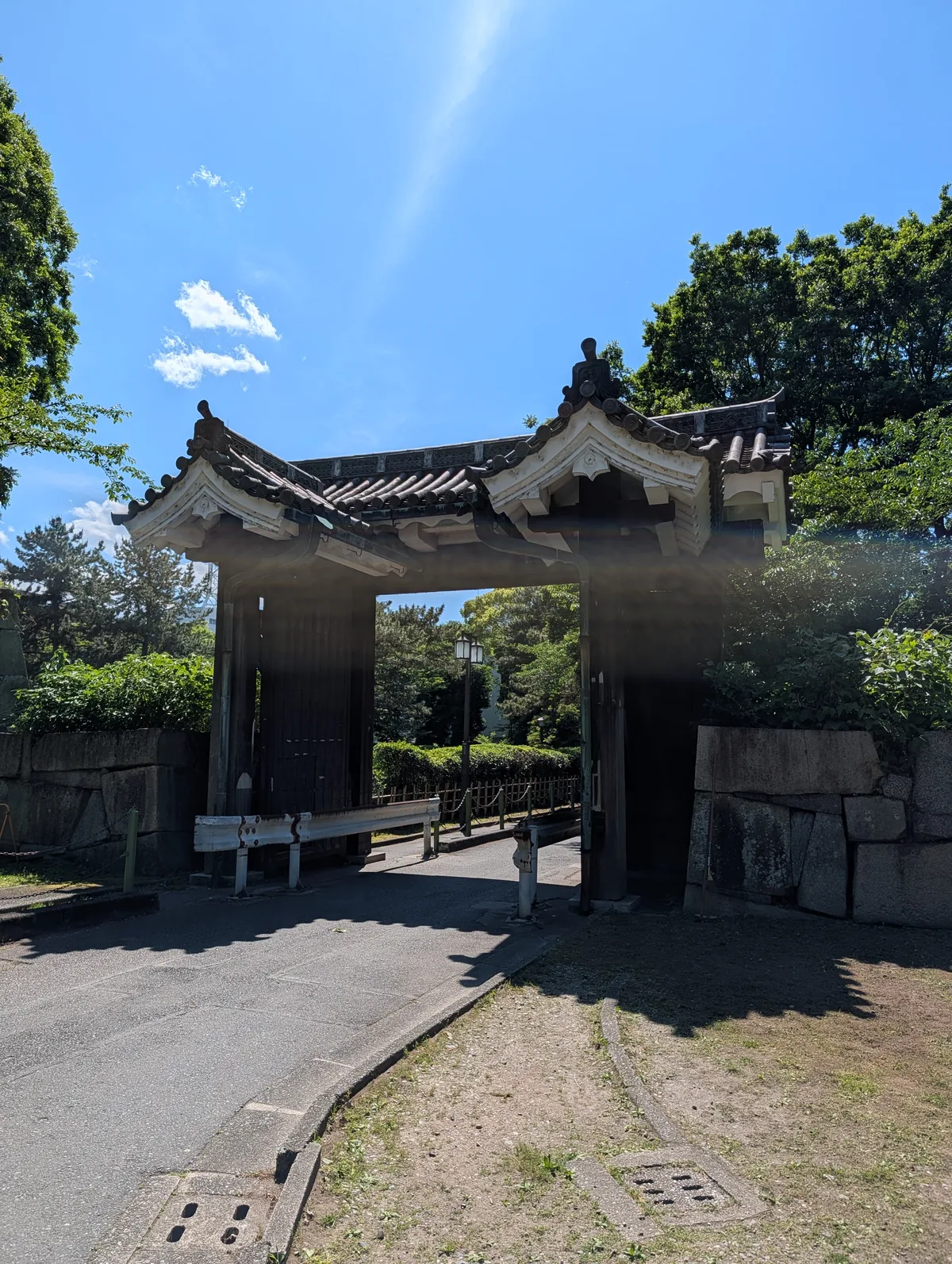
Current status of the main tower
As of 2026, the main castle tower (tenshukaku) is closed to the public. The concrete reconstruction built in 1959 has been closed since 2018 due to earthquake safety concerns. The city is planning a wooden reconstruction to restore the tower to its original 1612 appearance, currently targeted for completion around 2032, though the project has faced delays and public debate (Nagoya Castle Official Website). The Hommaru Palace, however, is fully open and is by far the more impressive attraction. Do not let the closed tower deter you from visiting.
What Makes the Hommaru Palace Japan’s Greatest Palace Reconstruction?
The Hommaru Palace was completed in 2018 after a 10-year, 15-billion-yen reconstruction using traditional Edo-period techniques and original blueprints. Every painted sliding door, carved transom, and gold-leafed wall was recreated by master craftspeople. Allow 45-60 minutes.
The Hommaru Palace is the reason to visit Nagoya Castle. Completed in 2018 after a ten-year reconstruction project, it is widely regarded as the most faithful historical palace reconstruction ever undertaken in Japan. Every element — from the painted fusuma sliding doors to the carved ranma transoms to the gold-leafed walls — was recreated using traditional Edo-period techniques by master craftspeople.
The original palace was built in 1615 as a residence and reception hall for the Owari Tokugawa lords. It was designated a national treasure before the war, alongside the castle tower. When air raids destroyed both structures in 1945, Japan lost one of its finest examples of Shoin-style architecture. But because extensive photographic documentation and original blueprints had survived, the city was able to undertake a reconstruction of extraordinary accuracy.
What to See Inside
The palace interior follows a one-way walking route. You cannot go back to revisit a room once you have passed through, so take your time in each space.
Genkan (Entrance Hall) — The first room you enter sets the tone immediately. The painted sliding doors feature tigers and leopards in a bamboo grove — a deliberate display of power designed to awe visitors before they had even reached the main chambers. In the Edo period, the quality of the artwork in the entrance hall signaled the wealth and status of the lord within.
Omote Shoin (Main Reception Hall) — This is where the lord of Owari received official guests. The room is enormous, with raised platforms creating a clear hierarchy of seating. Every surface is decorated — the ceiling coffered in geometric patterns, the walls covered in painted panels of landscapes and nature scenes. The craftsmanship is staggering when you consider that every brushstroke here was placed by a contemporary artist trained in 400-year-old techniques.
Taimenjo (Audience Hall) — Used for meetings with senior retainers, this room features fuzokuga genre panels showing the seasons, famous places and everyday life of Kyoto and Wakayama. The compositions convey both authority and refined taste.
Jorakuden (Shogun’s Private Quarters) — The most ornate section of the palace, prepared for visits by the shogun himself. The rooms become progressively more lavish as you move deeper. The final chambers are covered in floor-to-ceiling gold leaf with intricately carved wooden transoms that rank among the finest decorative woodwork in Japan. The Jorakuden was added to the palace in 1634 for the third shogun, Tokugawa Iemitsu, who stopped in Nagoya on his way from Edo (Tokyo) to Kyoto (Nagoya Castle Official — Hommaru Palace). No shogun made that journey again for another 229 years, so these rooms served their intended purpose essentially once.
Local tip
Note that the palace has no heating or air conditioning — it was rebuilt to reproduce the Edo-period interior faithfully — so it is not an escape from Nagoya’s summer heat, though the deep eaves and shade help. You must remove your shoes at the entrance (lockers provided). Photography is allowed in most areas but without flash. Budget 45 to 60 minutes for the full palace walk-through — rushing defeats the purpose.
What Can You See on the Castle Grounds and Stone Walls?
The castle grounds feature over 400-year-old original stone walls built using techniques including kirikomi-hagi (cut and fitted) and nozurazumi (wild piling), three concentric moats, and carved daimyo crests on the stones. The east side offers the best photography with cherry trees framing the castle tower.
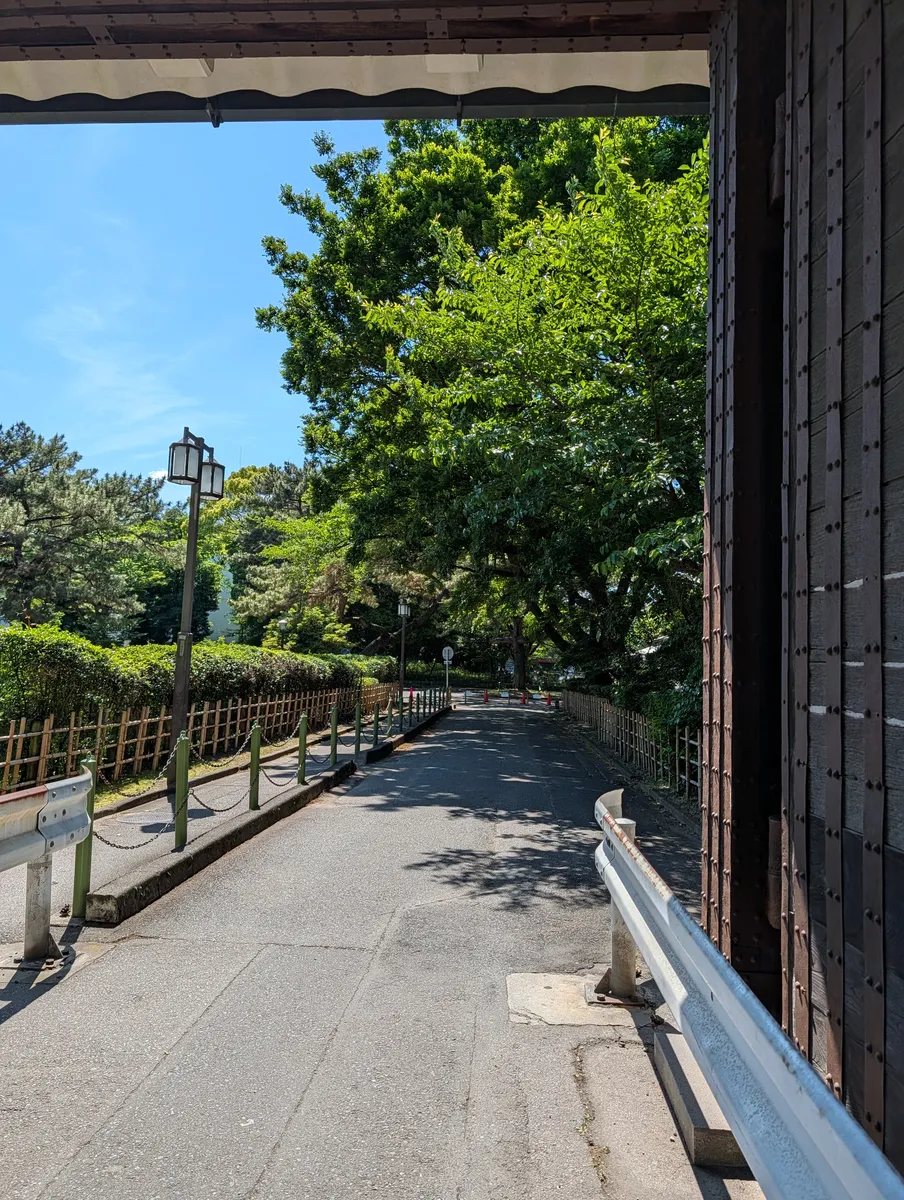
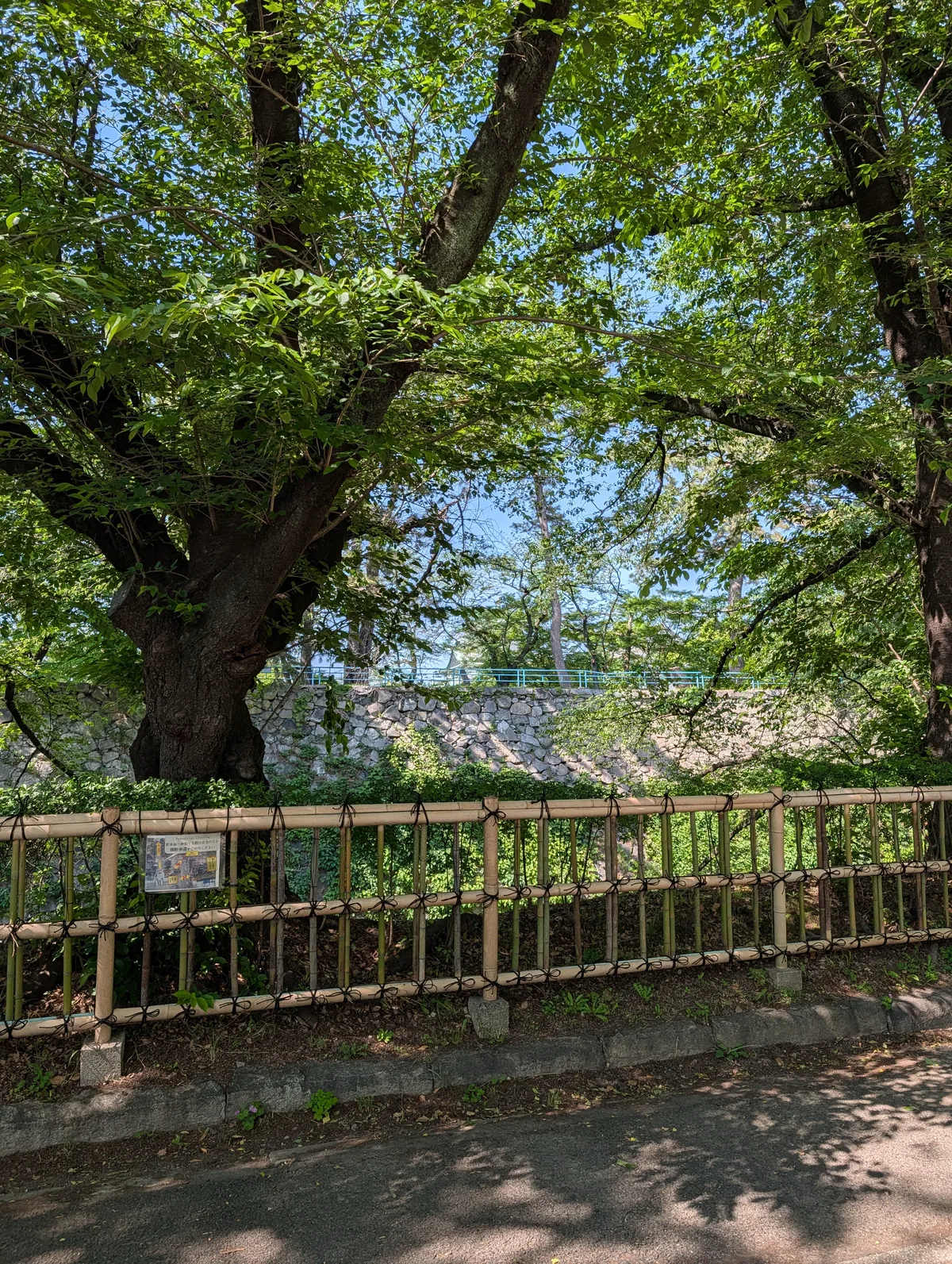
While the Hommaru Palace is the showpiece, the castle grounds themselves are worth significant time. The massive stone walls and deep moats are original Edo-period construction — over 400 years old and remarkably intact.
Stone Wall Engineering
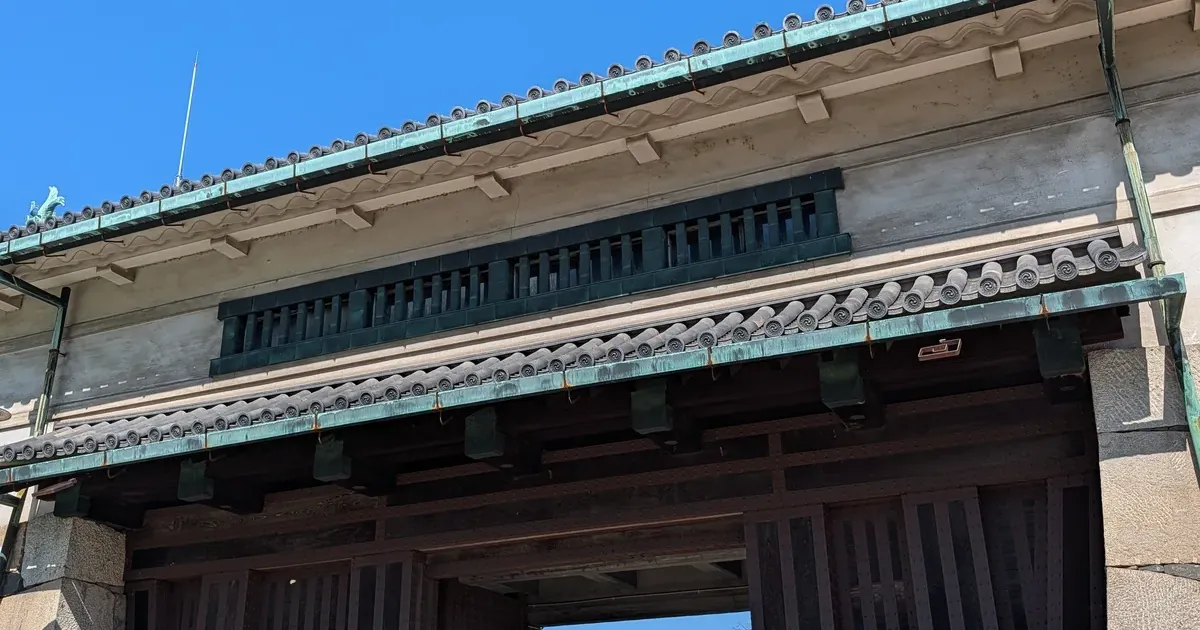
Nagoya Castle’s stone walls are among the finest examples of Edo-period military engineering in Japan. They were built using techniques including kirikomi-hagi (cut and fitted) and nozurazumi (wild piling), where stones are carefully fitted together without mortar. The walls lean inward at a precise angle calculated to withstand earthquake forces — a testament to the engineering knowledge of the era.
Look closely at the stones and you will notice carved markings on many of them. These are the crests of the various feudal lords (daimyo) who were ordered by Tokugawa Ieyasu to contribute to the castle’s construction. Each lord marked the stones his domain provided to prove his contribution and avoid disputes. It is a remarkable piece of living history — you are reading the signatures of people who lived four centuries ago.
The Moats
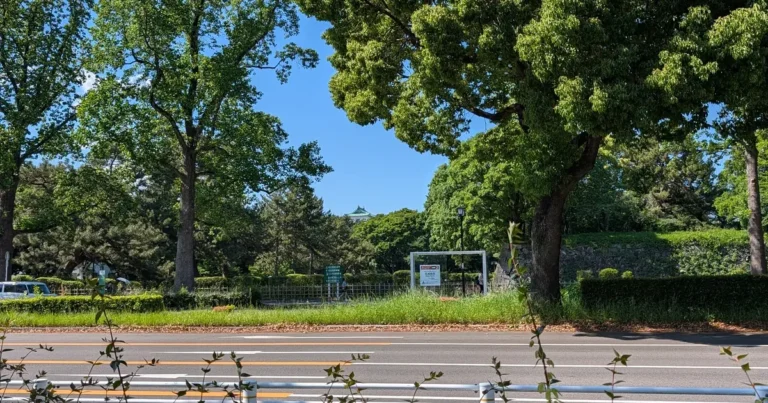
The castle has three concentric moats — the inner moat (uchi-bori), middle moat, and outer moat. The outer moat is now partly filled in and forms a public park, but the inner and middle moats remain impressive, particularly when viewed from the east side of the castle grounds. The nature around the castle moat is beautiful, especially in the early morning before the crowds arrive — the old stone walls, the water, the trees create a feeling like a different world from the city center just a few blocks away. In spring, cherry trees lining the moat banks create one of the most photographed scenes in Nagoya.
Free volunteer guides
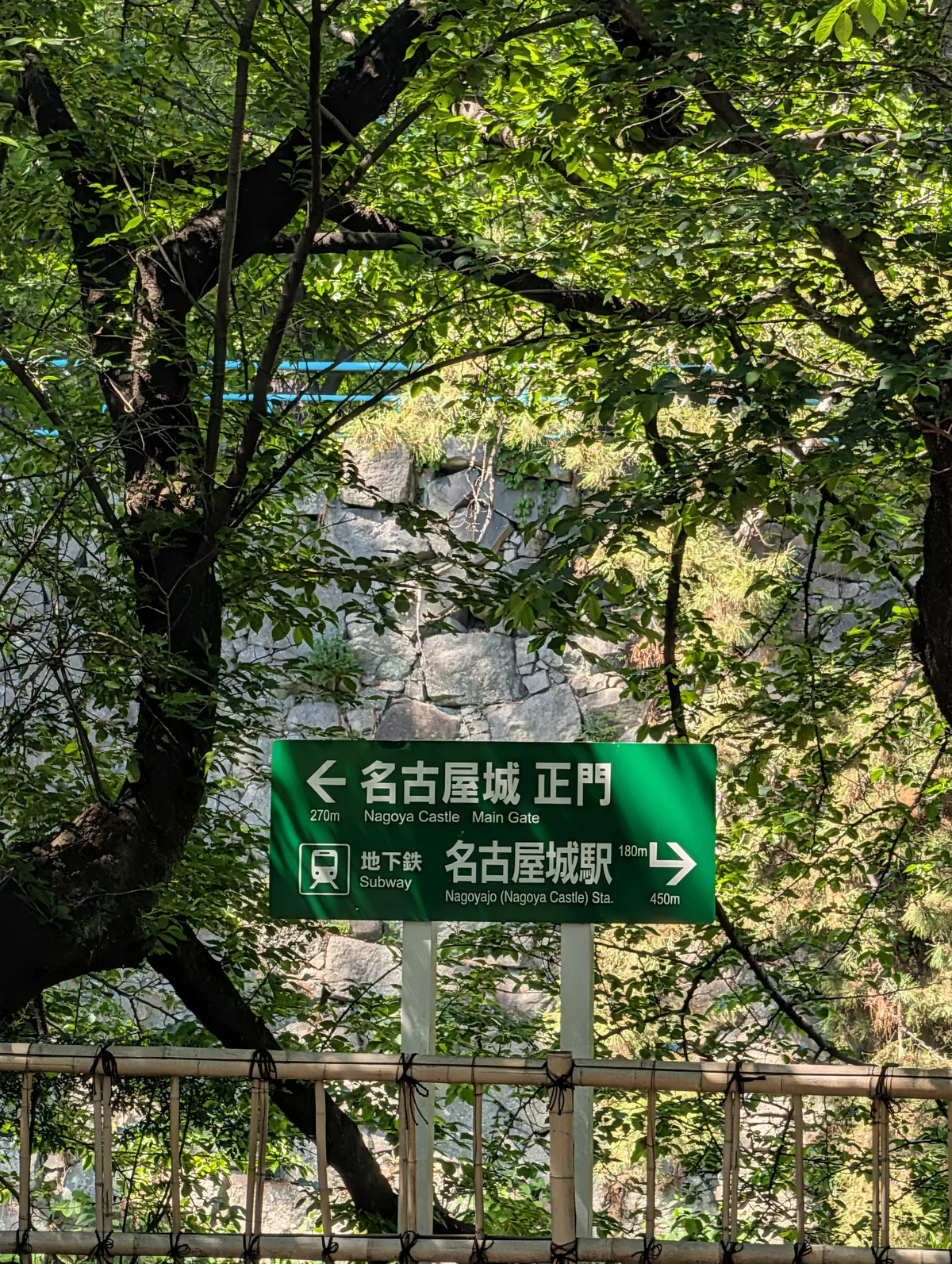
English-speaking volunteer guides from the NPO Aichi Goodwill Guide Network lead a tour every day at 12:30, meeting at the Main Gate and the East Gate — although the tours are suspended from June 22 to September 23, 2026 (Nagoya Castle Official — Castle Guides). They offer free guided tours of the castle grounds and can point out details you would otherwise miss, including the daimyo stone carvings and the strategic design of the castle’s defensive layout. No reservation is required — just look for the volunteer booth near the entrance.
What Are the Golden Shachihoko and Why Are They Famous?
The golden shachihoko are a pair of mythical dolphin-tiger fish on the castle tower roof, made with approximately 215 kilograms of gold in the originals. They are Nagoya’s most iconic symbol, appearing on manhole covers, souvenirs, and the city logo.
The kinshachi — the pair of golden shachihoko (mythical dolphin-tiger fish) perched on the roof ridge of the main tower — are the most recognized symbol of Nagoya. You will see them everywhere in the city: on manhole covers, souvenir packaging, local beer labels, train station decorations, and the logo of the city itself.
Shachihoko are mythical creatures with the head of a tiger and the body of a fish. In Japanese castle architecture, they were placed on rooftops as talismans to protect against fire — the logic being that a creature of the sea could summon water to extinguish flames. Most castles had modest versions. Nagoya’s were sheathed in gold plates rather than thin gold leaf, an extravagant display of Tokugawa wealth that made a clear statement to every visitor approaching the city: this domain was fabulously rich.
The original golden shachihoko used approximately 215 kilograms of gold. Over the centuries, the gold content was gradually reduced as the domain’s finances tightened — a fascinating economic footnote to the castle’s history. The current replicas on the reconstructed tower are faithful reproductions of the originals.
You can see golden shachihoko replicas up close in several locations on the castle grounds, which makes for excellent photographs. The gift shops also sell every conceivable shachihoko-themed souvenir, from gold-leaf-decorated cookies to plush toys.
When Is Cherry Blossom Season at Nagoya Castle?
Peak bloom typically falls in late March to early April, with over 900 cherry trees including somei yoshino, weeping cherry, and late-blooming varieties extending the season into mid-April. Night illumination events are held during peak bloom.
Nagoya Castle is one of the premier cherry blossom viewing spots in the city, and it has been part of my spring routine for as long as I can remember. The castle grounds contain over 900 cherry trees — including somei yoshino, shidare-zakura (weeping cherry), and several late-blooming varieties — which means the season extends over several weeks rather than the typical narrow window.
When to Visit
Peak bloom for somei yoshino (the most common variety) in Nagoya typically falls in late March to early April. The exact timing shifts by a few days each year depending on winter temperatures. Weeping cherry trees bloom slightly earlier, and late-blooming varieties like yaezakura extend the season into mid-April.
The combination of pink blossoms, the dark stone walls, the wide moats reflecting the trees, and the castle tower rising above creates a scene that is quintessentially Japanese. It is no exaggeration to say that cherry blossom season at Nagoya Castle is one of the most beautiful sights in Central Japan.
Night Illumination
During peak bloom, the city typically holds a special evening illumination event. The cherry trees are lit up after dark, and the castle grounds remain open later than usual. The reflections of illuminated blossoms on the moat water are extraordinary. Check the official Nagoya Castle website for exact dates, as they vary each year based on bloom timing.
Local tip
If you visit during cherry blossom season, arrive before 10:00 AM on a weekday for the best experience. Weekend afternoons during peak bloom are extremely crowded. The area along the outer moat on the south side of the castle is a popular spot for hanami picnics — you will see families and office groups with blue tarps and bento from early morning on weekends. For photography, the east side of the moat offers the best framing with cherry trees in the foreground and the castle tower behind.
Can You See Fireflies at Nagoya Castle?
Yes. From mid-May to early June, himebotaru fireflies appear in the dry outer moat on the south side of the castle (the stretch around Hommachi Bridge, outside the ticketed grounds) late at night, typically from around 11:00 PM until roughly 2:00 AM on warm, humid nights. Special viewing events are occasionally organized with access to normally closed areas.
This is something most guidebooks do not cover, and it is one of my favorite things about the castle grounds. The fireflies at Nagoya Castle are one of the city’s best-kept secrets — you need a local to guide you to the right spot and the right time, because it is not something you will find on Google Maps. Seeing fireflies in the heart of a major city is a uniquely Japanese experience. In early summer — typically mid-May through early June — the dry outer moat on the south side of the castle comes alive with himebotaru (fireflies).
The sight of these glowing insects drifting through the warm darkness with the castle silhouetted behind them is genuinely magical. There is a Japanese concept called nihon no genfukei — the “original landscape of Japan” — referring to scenes that evoke a deep, almost ancestral sense of home. Fireflies floating through the grounds of a centuries-old castle, with the sounds of water and frogs in the background, is exactly that kind of scene.
Finding the Best Spots
Here is where local knowledge matters. The firefly viewing spots are not signposted, and timing is everything. These are himebotaru, a species that flies very late: they normally glow from about 11:00 PM until roughly 2:00 AM on warm, humid nights with little wind. Unlike the water-breeding fireflies most visitors picture, himebotaru are a land species: the larvae live under leaf litter and eat snails, so the colony sits in the dry (waterless) stretch of the outer moat rather than by the water.
The castle occasionally organizes special evening viewing events during firefly season, which provide access to areas normally closed after hours. These events are typically announced on the official Nagoya Castle website and social media channels in May. If a special event is running during your visit, it is absolutely worth attending.
If no special event coincides with your visit, the moat areas and the green spaces around the castle perimeter can still offer sightings on good evenings. The key factors are: warm temperature (above 20 degrees Celsius), high humidity, little wind, and no rain. Overcast evenings tend to be better than clear ones.
Local tip
Do not use your phone flashlight or camera flash — artificial light disturbs the fireflies and ruins the experience for everyone. Let your eyes adjust to the darkness for at least 10 minutes. Once they do, you will see far more fireflies than you initially thought were there. This is a quiet, contemplative experience — not a photo opportunity. Some things are better held in memory than on a screen.
What Is Kinshachi Yokocho and What Should You Eat There?
Kinshachi Yokocho is a castle town dining complex adjacent to Nagoya Castle, opened in 2018 with two zones: the upscale Yoshinao Zone for traditional Nagoya meshi and the casual Muneharu Zone for ramen and craft beer. It is the best place to eat near the castle.
Kinshachi Yokocho is the castle town-style dining and shopping complex adjacent to Nagoya Castle, opened in 2018 to coincide with the Hommaru Palace completion. The name means “Golden Shachihoko Alley,” and it recreates the atmosphere of an old-fashioned castle town with small restaurants, shops, and food stalls lining narrow streets.
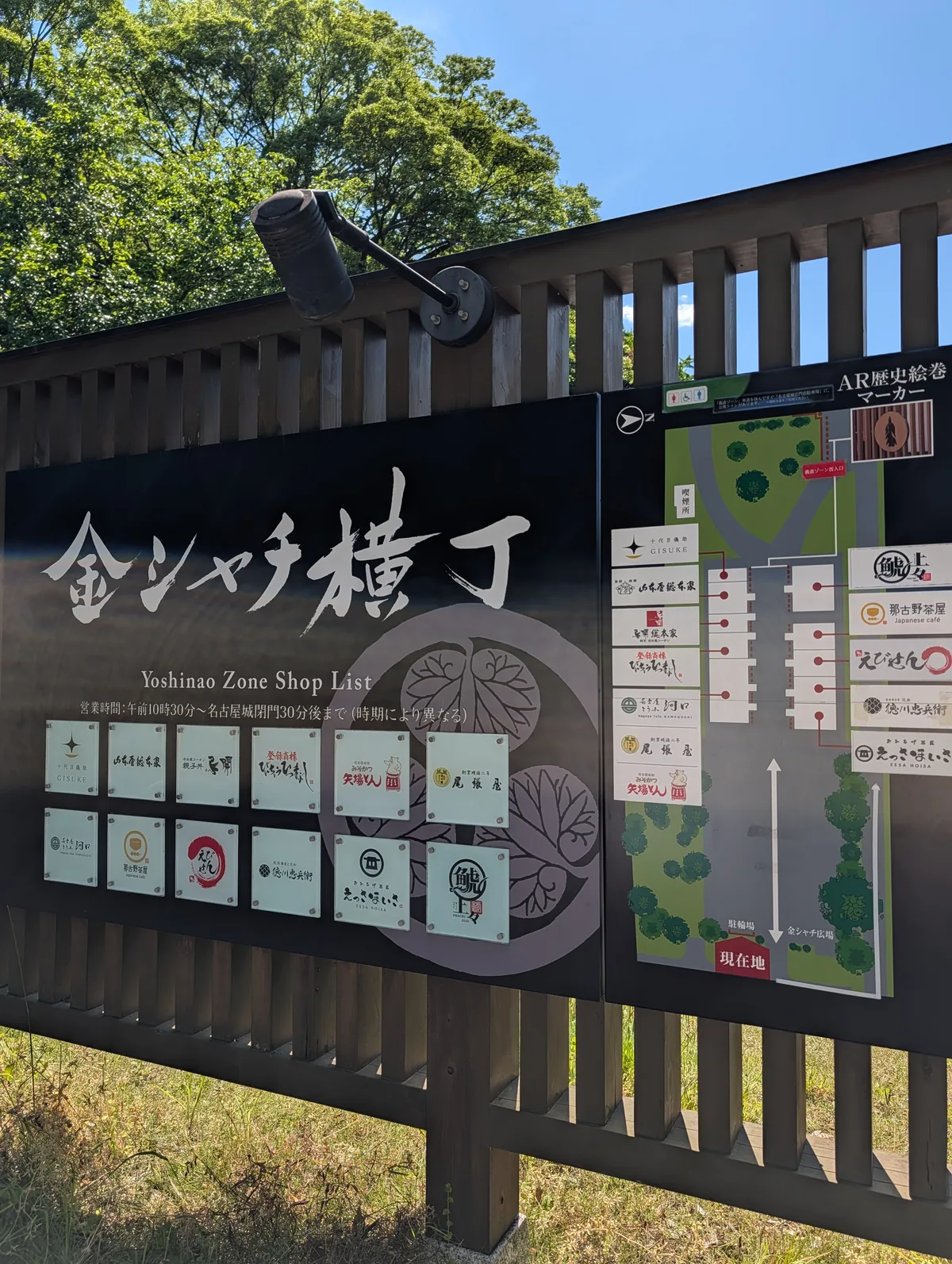
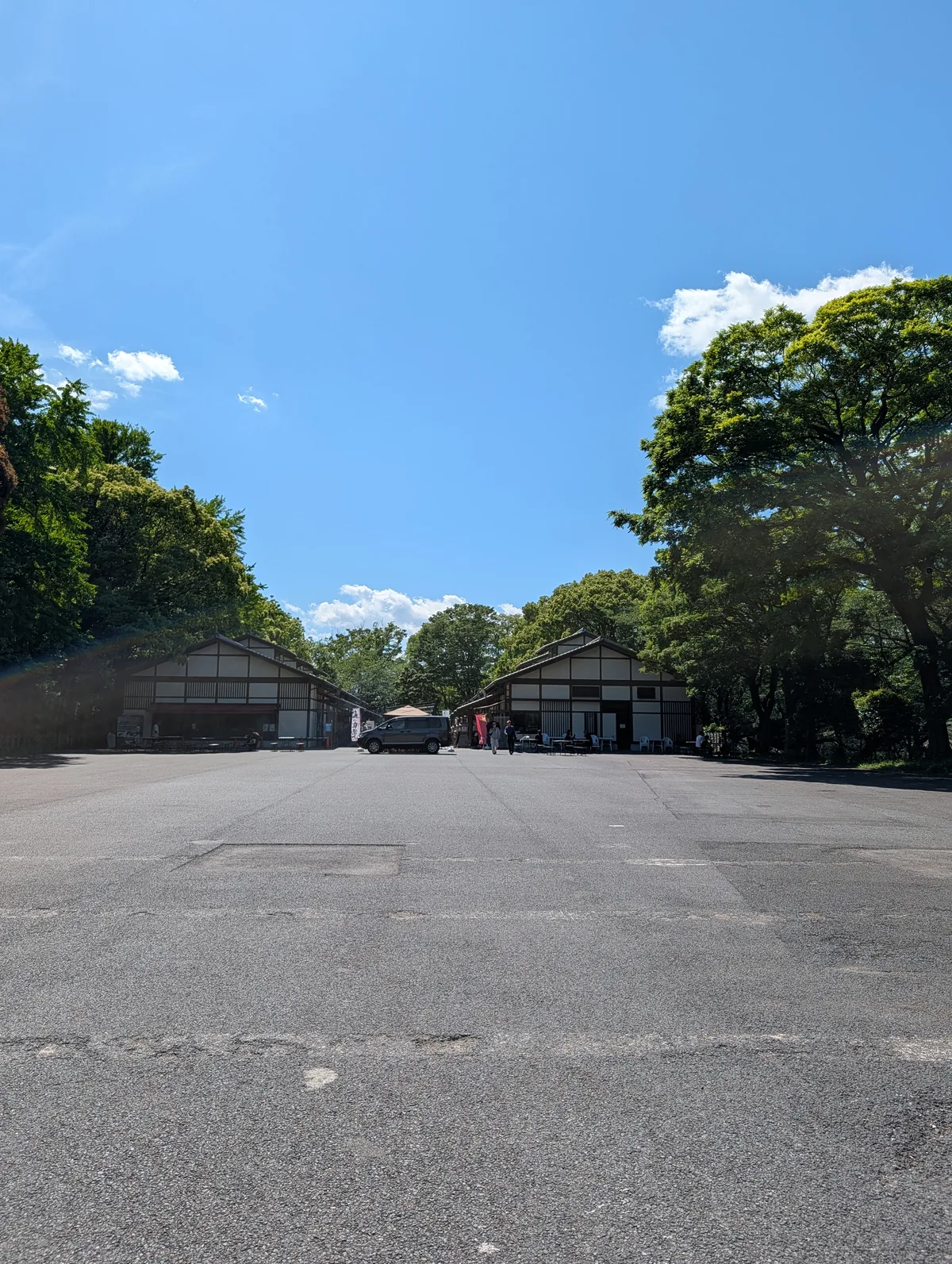
The yokocho is divided into two distinct zones:
Yoshinao Zone (Main Gate / West Side)
Named after Tokugawa Yoshinao, the first lord of Owari, this zone features traditional wooden architecture and upscale restaurants serving Nagoya’s signature dishes. This is where you will find high-quality versions of Nagoya meshi classics — hitsumabushi (grilled eel eaten three ways), miso katsu (pork cutlet with red miso sauce), and tebasaki (crispy chicken wings). The buildings are designed to evoke the Edo period, and the atmosphere is genuinely pleasant, particularly on a mild evening.
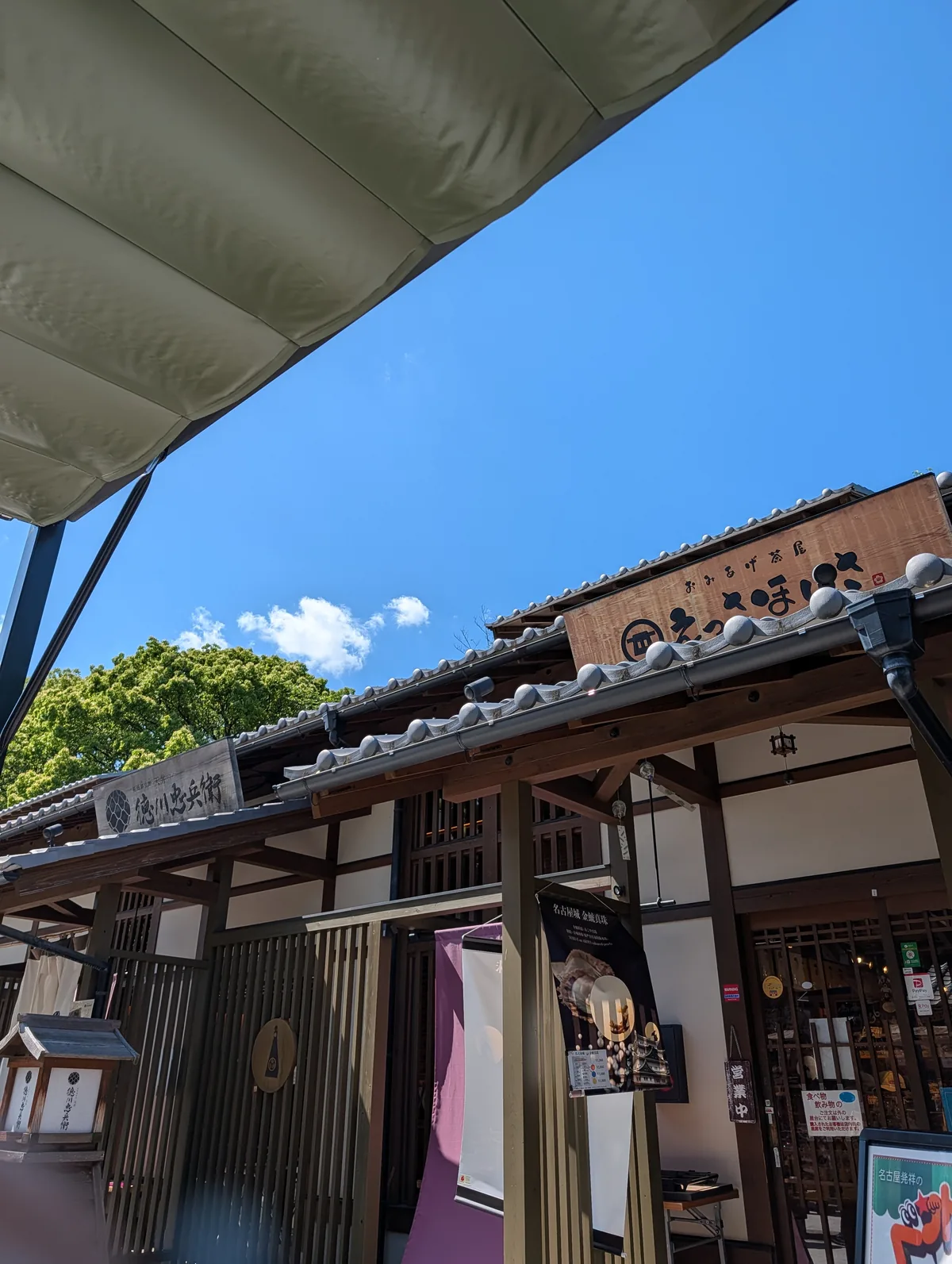
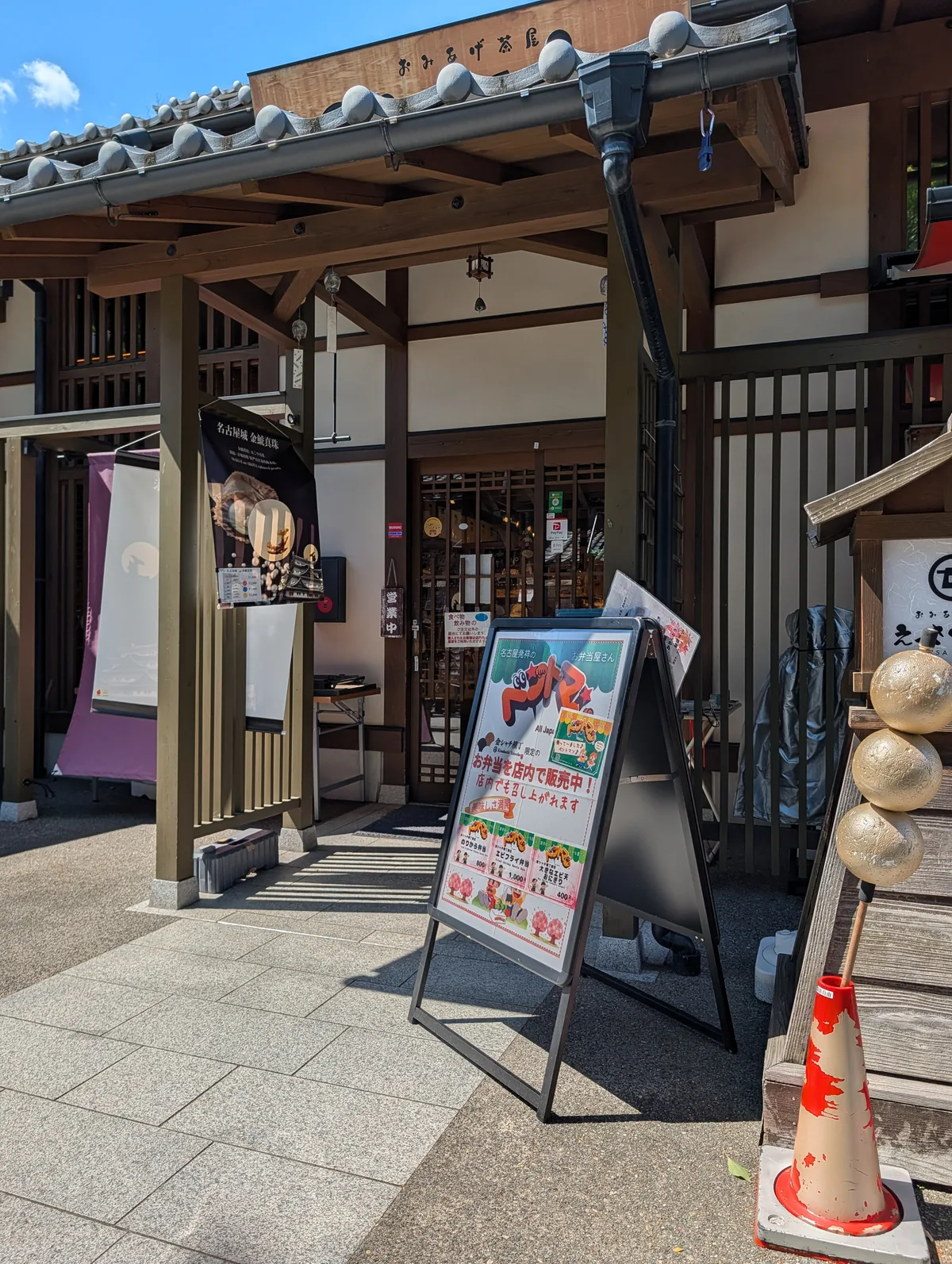
Muneharu Zone (East Gate / East Side)
Named after Tokugawa Muneharu, the seventh lord, the western zone has a more casual, modern feel. The restaurants here tend toward creative interpretations of local cuisine and include ramen shops, craft beer bars, and casual izakaya. Prices are generally lower than the Yoshinao zone, and the atmosphere is livelier.
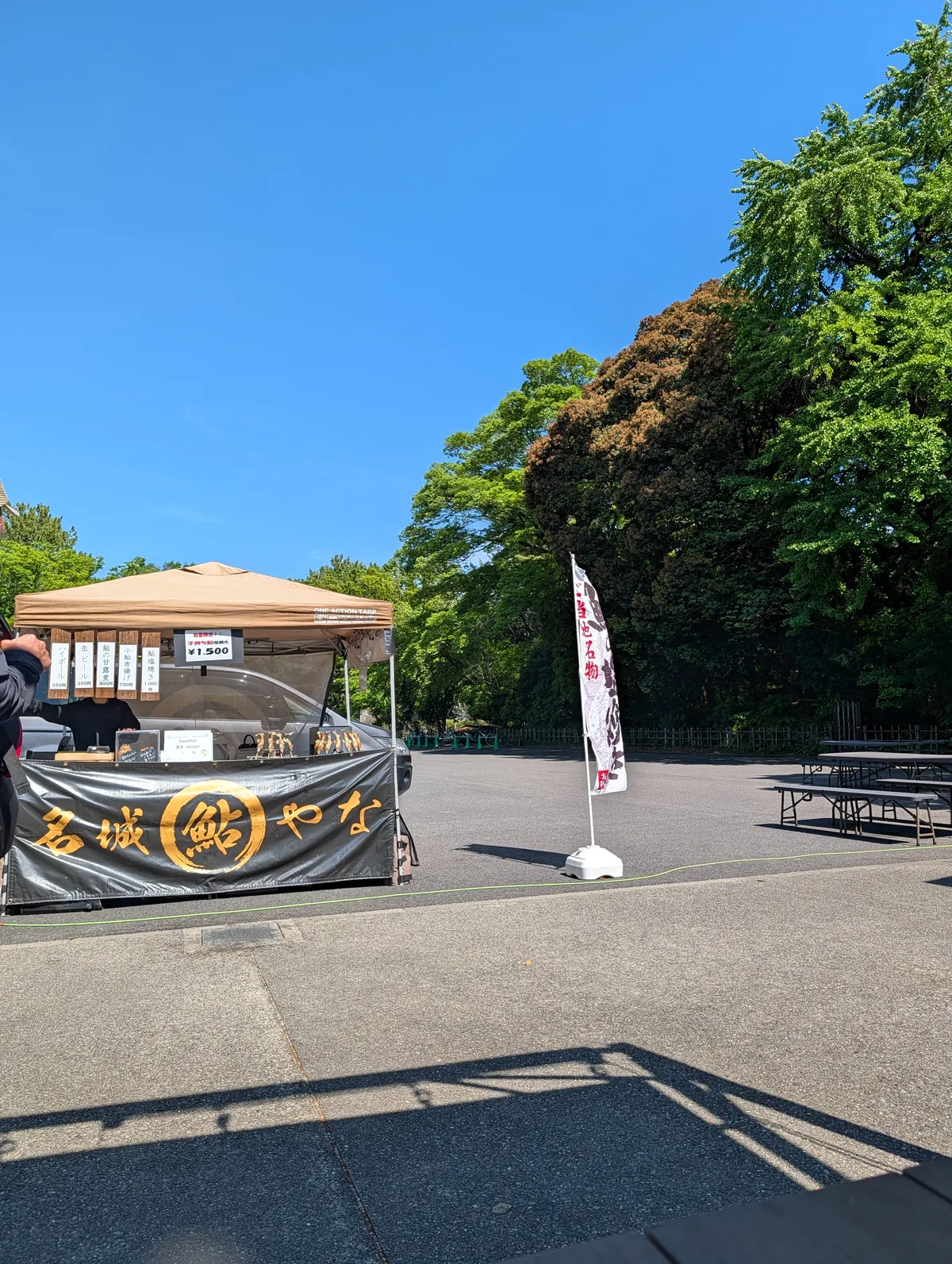
I visit Kinshachi Yokocho regularly for food after exploring the castle grounds — the restaurants here are a convenient way to combine sightseeing with a proper Nagoya meal. The yokocho has a warm, bustling energy that feels authentic rather than manufactured. On weekends and holidays, it fills with families, couples, and groups of friends enjoying food and drinks in the open air. It is the natural place to eat before or after visiting the castle.
What to eat
If you only have time for one meal at Kinshachi Yokocho, go for hitsumabushi in the Yoshinao zone. It is one of Nagoya’s most iconic dishes — grilled eel on rice, eaten in three stages: plain, with condiments, and as ochazuke (with broth poured over). The restaurants here serve it at a level comparable to the city’s best standalone establishments. See our full Nagoya food guide for more recommendations.
What Is Ninomaru Garden and Is It Worth Visiting?
Ninomaru Garden is a peaceful traditional Japanese garden within the castle grounds, included in the castle admission (500 yen, rising to 1,000 yen on October 1, 2026). It features a pond, shaped trees, and seasonal plantings. Autumn foliage is especially beautiful, and the tea house occasionally serves matcha.
Ninomaru Garden is a traditional Japanese garden located within the castle grounds, adjacent to the former site of the Ninomaru Palace. It is a peaceful, often-overlooked spot that provides a welcome contrast to the grandeur of the Hommaru Palace.
The garden features a pond, carefully shaped trees, stone arrangements, and seasonal plantings that change throughout the year. In autumn, the Japanese maples turn vivid shades of red and orange, creating beautiful reflections in the pond. In spring, plum blossoms precede the cherry trees, offering an early preview of the season.
The garden is included in the castle admission fee, and many visitors walk past it without stopping. That is their loss. On a quiet weekday, you can sit on one of the benches and enjoy a moment of stillness that feels remarkable given that you are in the middle of a city of 2.3 million people.
Ninomaru Chatei, the tea house within the garden, serves matcha with a Japanese sweet as a regular daily menu item (9:00 AM to 4:30 PM). When available, it is a lovely way to rest after walking through the palace — sitting in a traditional tea room, looking out at the garden, with a bowl of matcha and a small Japanese sweet.
What Seasonal Events and Festivals Does Nagoya Castle Hold?
Spring brings cherry blossom illumination and the Spring Festival. Summer features firefly viewing and evening festivals. Autumn offers chrysanthemum exhibitions and fall foliage. The mid-October Nagoya Festival is normally headlined by a parade of the Three Great Heroes of Nagoya, though the 2026 edition (October 17-18) is running without the procession.
Nagoya Castle hosts events throughout the year that can significantly enhance your visit if you time it right.
Spring (March-April) — Nagoya Castle Spring Festival. Cherry blossom illumination in the evenings during peak bloom. Extended opening hours. Food stalls and special exhibitions on the castle grounds.
Summer (May-June) — Firefly viewing events (see the dedicated section above). The castle grounds are lush and green, though Nagoya’s humidity can be intense from mid-June onward.
Summer (August) — Nagoya Castle Summer Festival. Evening events with traditional entertainment, food vendors, and cultural performances. The castle is sometimes illuminated with special lighting.
Autumn (October-November) — Nagoya Castle Autumn Festival. Chrysanthemum exhibitions, traditional performing arts, and autumn foliage viewing. The Ninomaru Garden is particularly beautiful during fall colors, typically peaking in mid to late November.
Winter (December-January) — Fewer visitors and a quieter atmosphere. The castle and palace are less crowded, making winter an underrated time to visit. Special New Year events are sometimes held in early January.
Nagoya Castle Seasonal Highlights at a Glance
| Season | Highlight | Typical Dates | Notes |
|---|---|---|---|
| Spring | Cherry blossom season & Spring Festival | Late March – Early April | Over 900 cherry trees across 10 varieties. Evening illumination during peak bloom with extended hours. Weekdays are far less crowded than weekends. One of Nagoya’s top hanami spots. |
| Spring | Wisteria and azalea blooms | Late April – May | The castle grounds transition from cherry blossoms to wisteria and azaleas, offering a quieter floral experience with fewer visitors. |
| Early Summer | Firefly viewing (Hotaru) | Mid May – Early June | Himebotaru fireflies in the dry outer moat on the south side of the castle, around Hommachi Bridge (outside the ticketed grounds). They glow very late — roughly 11 PM to 2 AM. A rare urban firefly experience. |
| Summer | Summer Festival & evening events | August | Traditional entertainment, food vendors, and special castle illumination. Evening visits avoid the worst of Nagoya’s summer heat. |
| Autumn | Nagoya Festival (Nagoya Matsuri) | Mid-October (one weekend) | Normally a grand parade of the Three Great Heroes of Nagoya — Oda Nobunaga, Toyotomi Hideyoshi, and Tokugawa Ieyasu. Note that the 2026 festival (October 17-18) is being held without the procession; check the official festival site before planning around it. |
| Autumn | Chrysanthemum exhibition | Late October – Late November | Elaborate chrysanthemum displays throughout the castle grounds. A traditional Japanese autumn art form with hundreds of meticulously cultivated blooms. |
| Autumn | Fall foliage (koyo) | Mid to Late November | Ninomaru Garden is the prime foliage spot, with Japanese maples turning vivid red and gold. The garden’s pond reflections are particularly photogenic. |
| Autumn – Winter | Autumn illumination | November – December (varies yearly) | Evening light-up of the castle and surrounding foliage. Check the official Nagoya Castle website for confirmed dates each year. |
| Winter | Quiet season & New Year events | December – February | The least crowded time to visit. Clear winter skies offer crisp views of the castle. Special New Year ceremonies may be held in early January. |
Local tip
The Nagoya Festival (Nagoya Matsuri), held on a weekend in mid-October, normally features a large parade that passes near the castle (the 2026 edition is being held without the procession). It includes a procession of people dressed as the Three Great Heroes of Nagoya — Oda Nobunaga, Toyotomi Hideyoshi, and Tokugawa Ieyasu — all of whom had deep connections to the city. If your visit coincides, it is worth watching. See our things to do in Nagoya guide for more festival information.
How Do You Get to Nagoya Castle from Nagoya Station?
Take the Higashiyama Line to Sakae, transfer to the Meijo Line, and ride to Nagoyajo Station (M07) — about 15 minutes total. The castle is a 5-minute walk from Exit 7. Alternatively, take the Me-guru sightseeing bus (210 yen per ride) or the Sakae No. 13 city bus to “Nagoyajo Seimon-mae” directly.
Nagoya Castle is located in Naka-ku, about 2.5 kilometers north of Nagoya Station. There are several ways to get there.
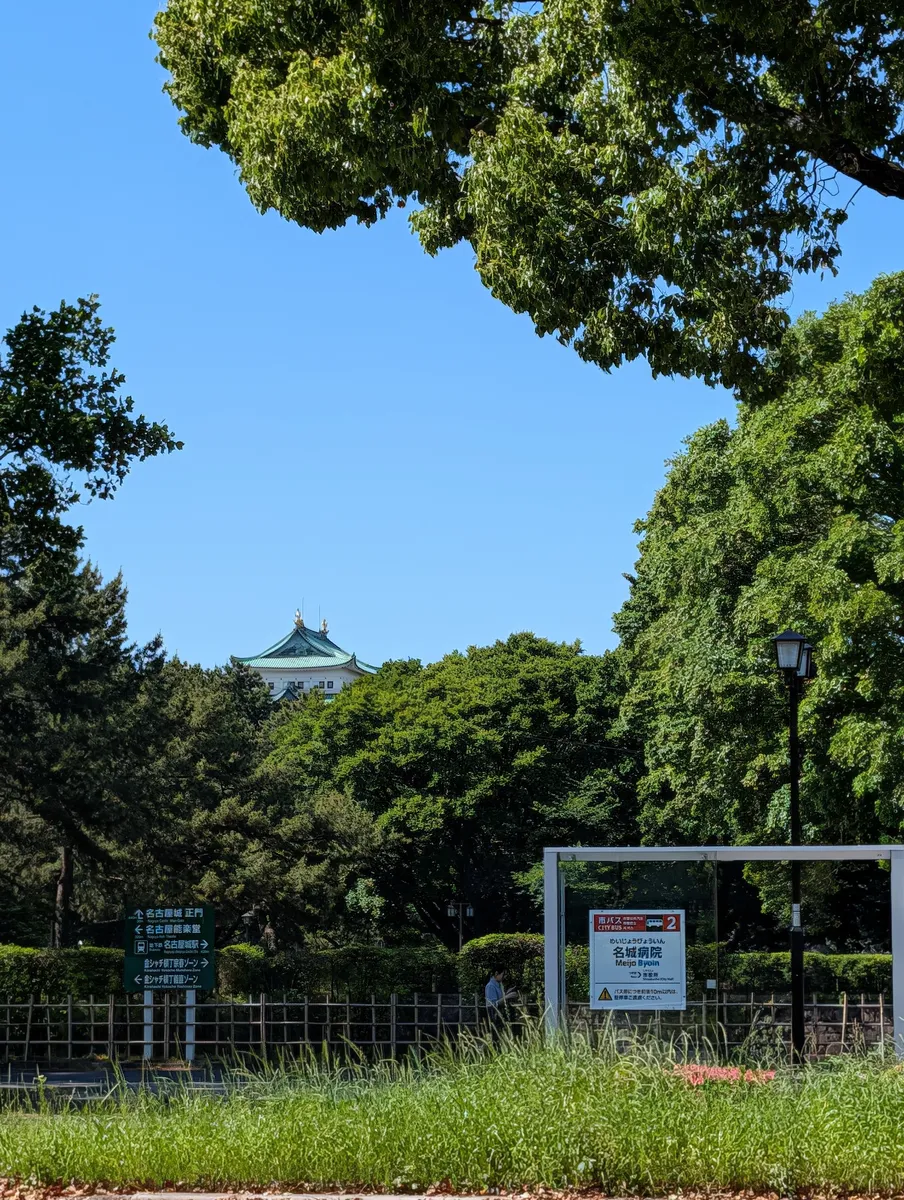
By Subway (Recommended)
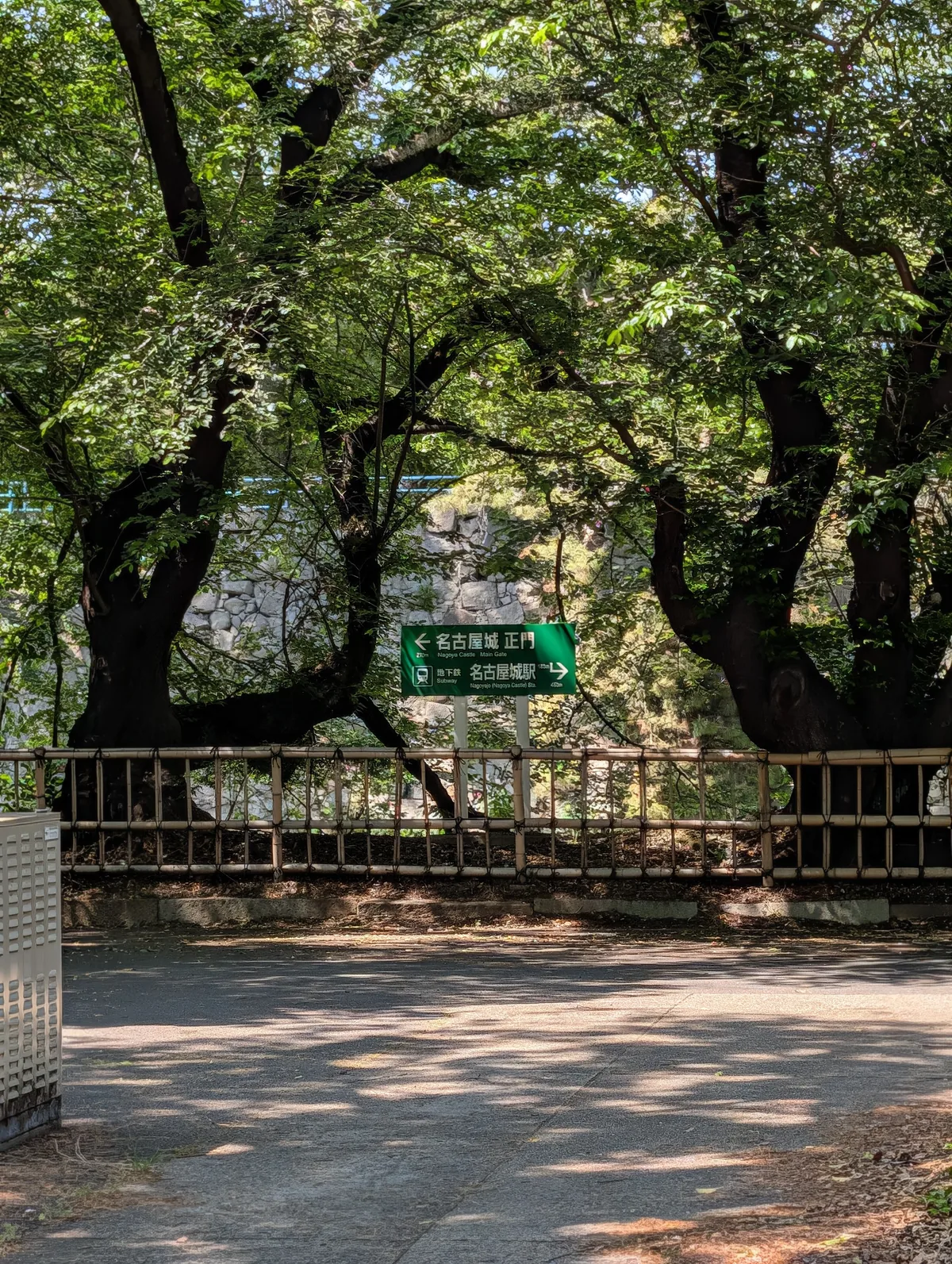
The closest station is Nagoyajo Station (M07) on the Meijo Line, the station that was renamed from “Shiyakusho” (City Hall) on January 4, 2023 (Nagoya Castle Official — Visitor Information). From Exit 7, the castle is a 5-minute walk.
From Nagoya Station:
- Take the Higashiyama Line (yellow) eastbound to Sakae Station (2 stops, 4 minutes)
- Transfer to the Meijo Line (purple) northbound to Nagoyajo Station (2 stops via Hisaya-odori, about 4 minutes)
- Exit from Exit 7 and walk to the castle’s east gate
Total journey time: approximately 15 minutes including the transfer.
Alternative subway route: You can also take the Meijo Line directly if you are coming from stations along that line, such as Ozone, Nagoya Dome-mae Yada, or Kanayama.
Meitetsu Seto Line: From Higashi-ote Station on the Meitetsu Seto Line, the castle is a 15-minute walk — useful if you are coming from the Sakaemachi (Meitetsu) side of the city (Nagoya Castle Official — Access).
By Bus
The Me-guru Nagoya Sightseeing Route Bus runs a loop from Nagoya Station to major tourist attractions including Nagoya Castle. It costs ¥210 per single ride or ¥500 for a Me-guru one-day pass (adult). The pass includes discounts at several participating attractions (Visit Nagoya — Me-guru One-Day Pass). The bus stops directly in front of the castle. On weekdays buses run every 30 minutes to an hour; on weekends and holidays every 20 to 40 minutes. Note that Me-guru does not operate on Mondays (or the next weekday when Monday is a public holiday), or from December 29 to January 3.
Regular city bus: The Sakae No. 13 city bus stops at “Nagoyajo Seimon-mae” (the castle’s main gate). The Kikan No. 2 line also passes “Shiyakusho” (City Hall) bus stop, a 5-minute walk to the castle (Nagoya Castle Official — Access).
By Taxi
A taxi from Nagoya Station to Nagoya Castle takes approximately 10 minutes and costs roughly ¥1,500 to ¥1,800 depending on traffic. This is a reasonable option for groups of 2 or more, especially if you have luggage or limited mobility.
On Foot
From Nagoya Station, the walk takes about 25 to 30 minutes heading northeast through the Marunouchi business district. It is a straightforward route along main roads and can be pleasant on a nice day, but there is not much to see along the way.
IC card tip
Use a Toica, Suica, Pasmo, or any major IC card for subway and bus rides. You do not need to buy individual tickets — just tap at the gate. If you plan to visit multiple attractions by subway in one day, consider the Donichi Eco Kippu (¥620 adult / ¥310 child), available on weekends, public holidays, and the 8th of each month, which gives unlimited rides on all city subway and bus lines plus discounts at several attractions (Nagoya City Transportation Bureau). See our getting around Nagoya guide for full details.
What Are the Tickets, Hours, and Practical Details?
Admission is 500 yen (1,000 yen from October 1, 2026) for adults and free for junior high school students and younger. The castle is open 9:00 AM to 4:30 PM daily (last entry 4:00 PM). The Hommaru Palace is included in the admission fee. The main tower is currently closed.
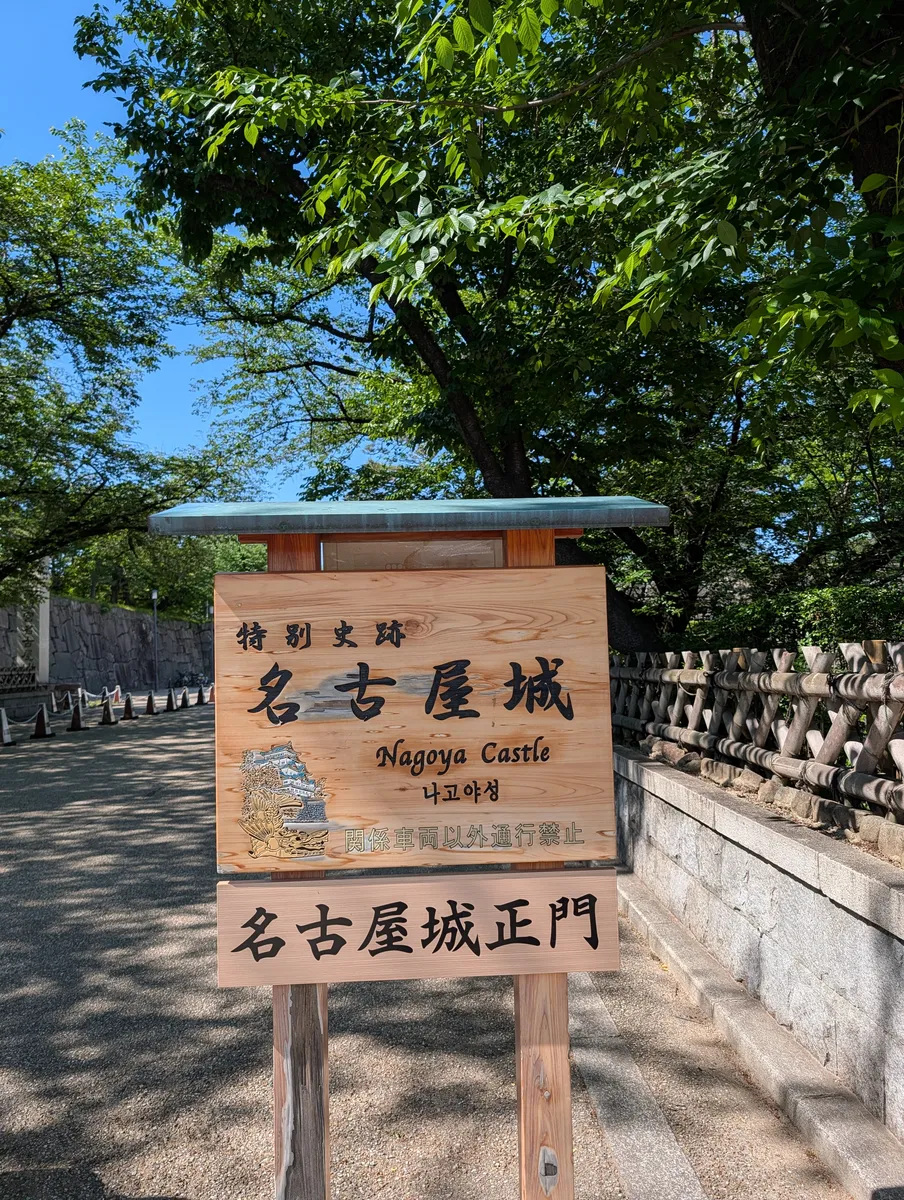
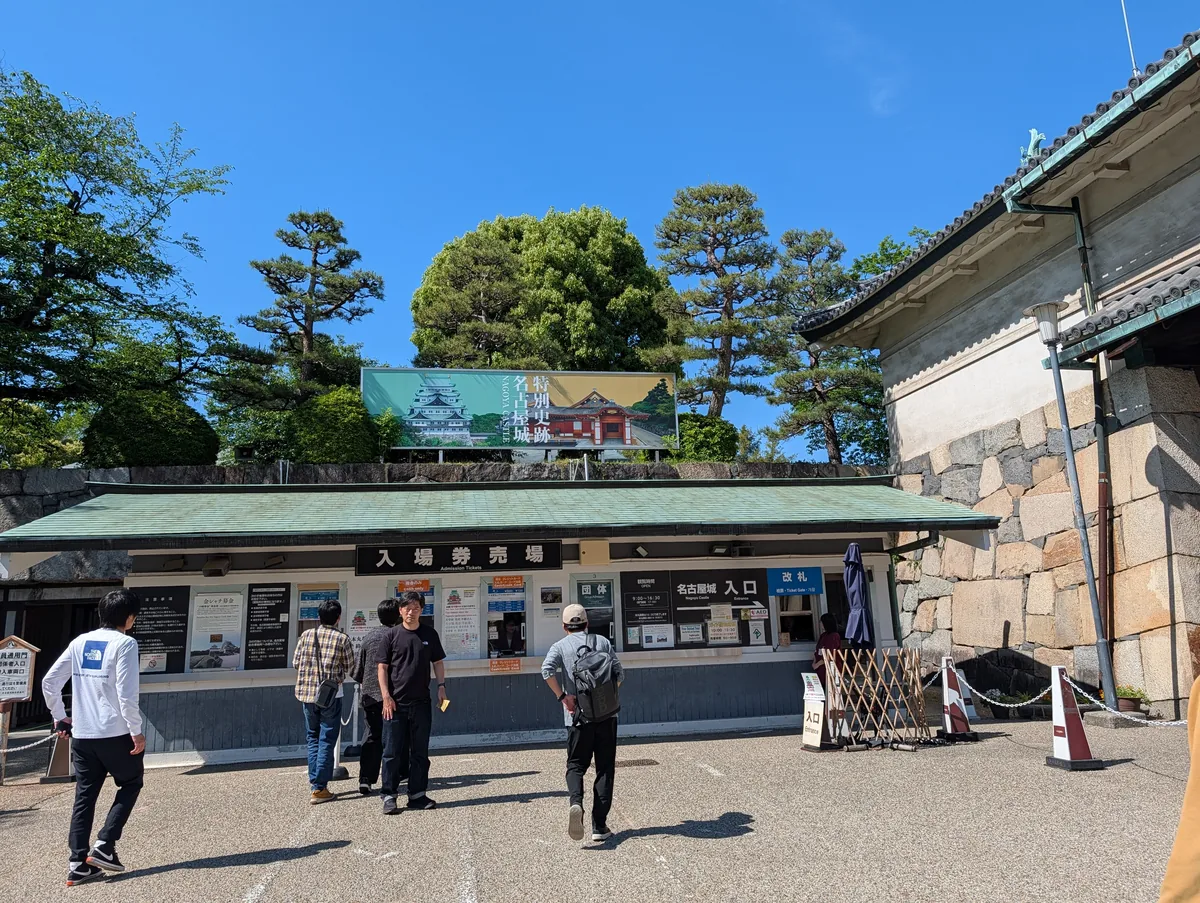
Admission (per the official Nagoya Castle visitor information):
- Adult: ¥500 (rising to ¥1,000 from October 1, 2026)
- Junior high school students and younger: Free
- Nagoya City senior citizens: ¥100, rising to ¥300 from October 1, 2026 (with valid ID)
- Group rates and a combination ticket with Tokugawaen (Tokugawa Garden) — ¥640 for adults, rising to ¥1,040 on October 1, 2026 — are also listed on the official site.
Opening Hours:
- 9:00 AM to 4:30 PM (last entry 4:00 PM)
- Extended hours during special events (cherry blossom illumination, summer festivals)
Closed:
- December 29 – January 1 (four days, per the official Nagoya Castle visitor information)
- Occasional closures for maintenance (check the official site)
Hommaru Palace:
- Included in the castle admission fee
- Same hours as the castle grounds
- Last entry to the palace is 4:00 PM
Main Tower (Tenshukaku):
- Currently closed to the public (as of 2026)
Facilities:
- Coin lockers available near the entrance
- Restrooms at multiple locations on the grounds
- Barrier-free access to most areas (a wheelchair ramp on the north side of the Hommaru Palace entrance and flat, level floors inside; wheelchairs and strollers are lent at the Main and East Gates)
- Gift shops near the entrance and within Kinshachi Yokocho
- Free Wi-Fi available in some areas
What Tips Should You Know Before Visiting Nagoya Castle?
Visit on a weekday morning for the best experience. Remember the one-way palace route does not allow backtracking. Bring water in summer when temperatures exceed 35 degrees. Wear comfortable shoes for gravel paths and wooden palace floors.
Visit on a weekday morning. This is the single most important piece of advice I can give. The difference between a Tuesday at 9:30 AM and a Saturday at 2:00 PM is enormous — not just in crowd levels but in the quality of your experience. The Hommaru Palace, in particular, benefits from fewer people. On quiet mornings, you can stand in the Jorakuden and absorb the gold-leafed walls without being jostled.
Remember the one-way route in the palace. The Hommaru Palace has a fixed walking route that does not allow backtracking. If you rush through a room and realize you missed something, you cannot go back. Take your time in each chamber, especially the Jorakuden at the end.
Photography tips. Photography without flash is permitted in the Hommaru Palace. The interiors are well-lit but can be challenging due to reflections on the glass barriers protecting the artworks. A wide-angle lens helps capture the full scale of rooms. For exterior shots, the southeast corner of the grounds offers the classic view of the castle tower with the moat in the foreground.
Bring water in summer. Nagoya summers are notoriously hot and humid — regularly exceeding 35 degrees Celsius with high humidity from June through September. The castle grounds offer limited shade in some areas. Bring a water bottle, use a sun umbrella if you have one, and plan your route around the shaded areas of the grounds (the palace itself has no air conditioning).
Wear comfortable walking shoes. The castle grounds are extensive, and you will be walking on gravel paths, stone steps, and the wooden floors of the palace (shoes off inside). Allow at least 2 hours, ideally 3, for a thorough visit.
Combine with Kinshachi Yokocho. Plan your visit so that lunch or an afternoon snack falls at Kinshachi Yokocho. Visiting the castle from 9:00 to 11:30 and then eating at the yokocho is a natural flow.
Local tip
If you are visiting during cherry blossom season and want to do hanami (flower viewing picnic), the lawns on the south side of the castle near the outer moat are the traditional spot. Convenience stores near Nagoyajo Station sell bento, drinks, and blue tarps. Arrive early on weekends to secure a good spot — serious hanami groups send someone to claim space by 8:00 AM.
Accessibility information
Nagoya Castle’s grounds are largely flat and wheelchair accessible. The Hommaru Palace features barrier-free access with ramps at the entrance and smooth wooden floors throughout — it is one of the most accessible historic palace experiences in Japan. The main castle tower (tenshukaku) is currently closed to the public and not a factor for planning.
- Hommaru Palace: Wheelchair accessible. Ramp entry available; smooth, level floors inside. Shoes must be removed (staff can assist).
- Castle grounds: Mostly flat gravel and paved paths. Strollers and wheelchairs can navigate the main routes comfortably. Some gravel sections near the moats may be uneven.
- Restrooms: Accessible restrooms are available near the main gate and inside the palace area.
- Kinshachi Yokocho: The adjacent restaurant area is flat and paved with no barriers.
What Can You Combine with a Nagoya Castle Visit?
Pair Nagoya Castle with Meijo Park and a Nishi-ku walk for a half day, or combine with Osu Shopping District or the Tokugawa Art Museum for a full day. Noritake Garden is a 15-minute walk southwest of the castle.
Nagoya Castle pairs well with several nearby attractions for a full day of sightseeing.
Nagoya Castle + Meijo Park + Nishi-ku Walk (Half Day)
After the castle, walk north through Meijo Park — a large public park that borders the castle grounds. The park is especially beautiful during cherry blossom and autumn foliage seasons. From there, you can explore the Nishi-ku (west ward) area, which has an older, more traditional Nagoya atmosphere with small shops and local restaurants.
Nagoya Castle + Osu District (Full Day)
Visit the castle in the morning, eat at Kinshachi Yokocho, then take the subway to Kamimaezu Station for the Osu shopping district — Nagoya’s most vibrant and eclectic neighborhood. The contrast between the castle’s historical grandeur and Osu’s chaotic energy is one of the best ways to experience Nagoya’s range. I live in the Osu area, and it remains my favorite part of the city for its unpretentious character. See our things to do guide for more on Osu.
Nagoya Castle + Tokugawa Art Museum (Full Day)
For history enthusiasts, combine Nagoya Castle with the Tokugawa Art Museum and Tokugawaen Garden in the afternoon. The museum houses the art collection of the Owari Tokugawa family — the same family that built the castle — so you get a deeper understanding of the cultural world that produced both. Take the Meijo Line from Nagoyajo Station to Ozone Station.
Nagoya Castle + Noritake Garden (Half Day)
Noritake Garden, the historic porcelain factory complex, is about 2 kilometres southwest of the castle — roughly a 30-minute walk, or a short ride on the Me-guru sightseeing bus, which stops at both. You can combine both in a morning, finishing with lunch at Kinshachi Yokocho. Noritake is free to enter (museum admission charged separately) and offers a peaceful, green space with a craft center where you can paint your own porcelain.
For a complete day-by-day plan incorporating Nagoya Castle with the city’s other highlights, see our 3-day Nagoya itinerary.
How Did a Local Spend a May Afternoon at Nagoya Castle in 2026?
In early May 2026 I rode my bicycle from Osu Kannon up to Nagoya Castle, picked up a takeaway bento at Kinshachi Yokocho, and ate lunch outside in the breeze. The whole loop — Osu to the castle to the grounds to lunch and back — took about three hours, including the cycling, and it remains one of the most enjoyable ways to spend a May afternoon in this city.
I want to put this section in for one reason: people sometimes ask me whether Nagoya Castle is worth a visit if they have already seen Himeji or Osaka or Matsumoto. The honest answer is that the castle, on its own, is not what makes the visit. What makes it worth doing is the way the castle fits into the rhythm of an ordinary Nagoya afternoon — biking through Osu, the wide boulevards north of the city center, the open plaza at Kinshachi Yokocho, the way May light falls on the old stone walls. The castle is the anchor, but it is the day around it that you remember.
Cycling up from Osu Kannon
I started from Osu, which is where I spend most of my time outside of work. The route from Osu Kannon to the castle is roughly 3 kilometers — north up Otsu-dori, then a short jog west to the castle’s southern approach. On a normal afternoon it takes about 15 to 20 minutes by bicycle, with traffic lights factored in. Nagoya is one of the easier major Japanese cities to cycle in: the streets are wide, the grid is logical, and there are bike-friendly side paths along most of the major arterials.
May is the right month to do this. The humidity has not yet arrived, the cherry blossoms are gone but the trees are at their fullest, and the sky often holds a kind of light blue that you do not see again until autumn. On the day I went, there was a steady, warm wind blowing through the streets — the kind of breeze that makes you forget you are pedaling.
A takeaway bento, eaten outside
Once I got to the castle area, I locked the bike and walked into Kinshachi Yokocho for lunch. There is no dedicated bento shop in the yokocho, but several of the restaurants sell food to take away, and what I carried out was a plain takeaway bento — a clear plastic box, mostly classic obento composition: rice flecked with greens and tiny chunks of cooked meat, tamagoyaki, shumai, a piece of fried fish or a bit of tempura, a small portion of pickled vegetables. Nothing fancy. The kind of bento you would actually take to work or to a picnic.
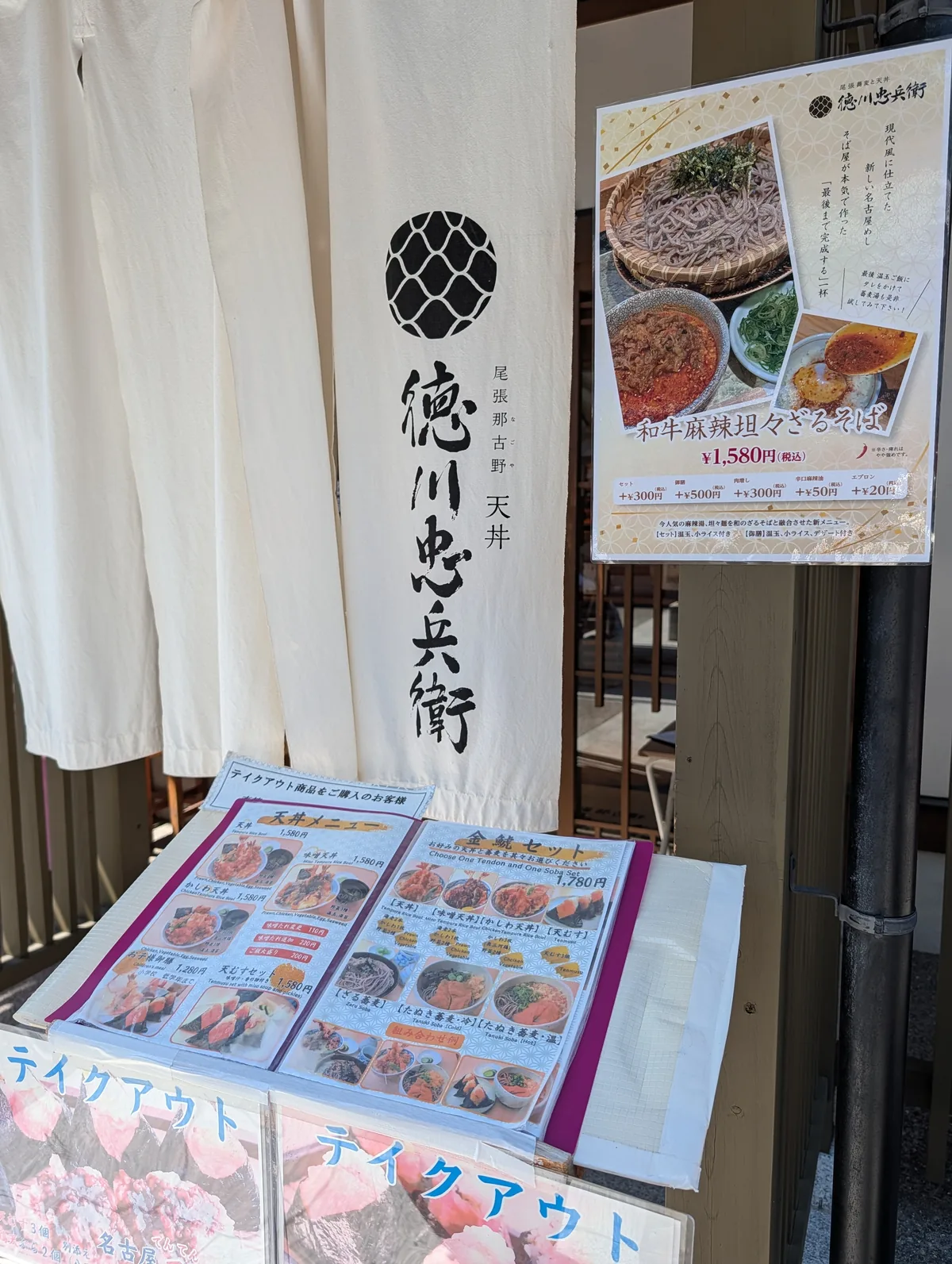
That is exactly why I picked it. There are sit-down restaurants in the yokocho that I like — Tokugawa Chubei does respectable Owari soba and miso tendon — but on a day like this I wanted to eat outside. So I bought the bento, found a bench in the open area of the Yoshinao Zone, by the Main Gate, and ate while the breeze ran through the grounds.
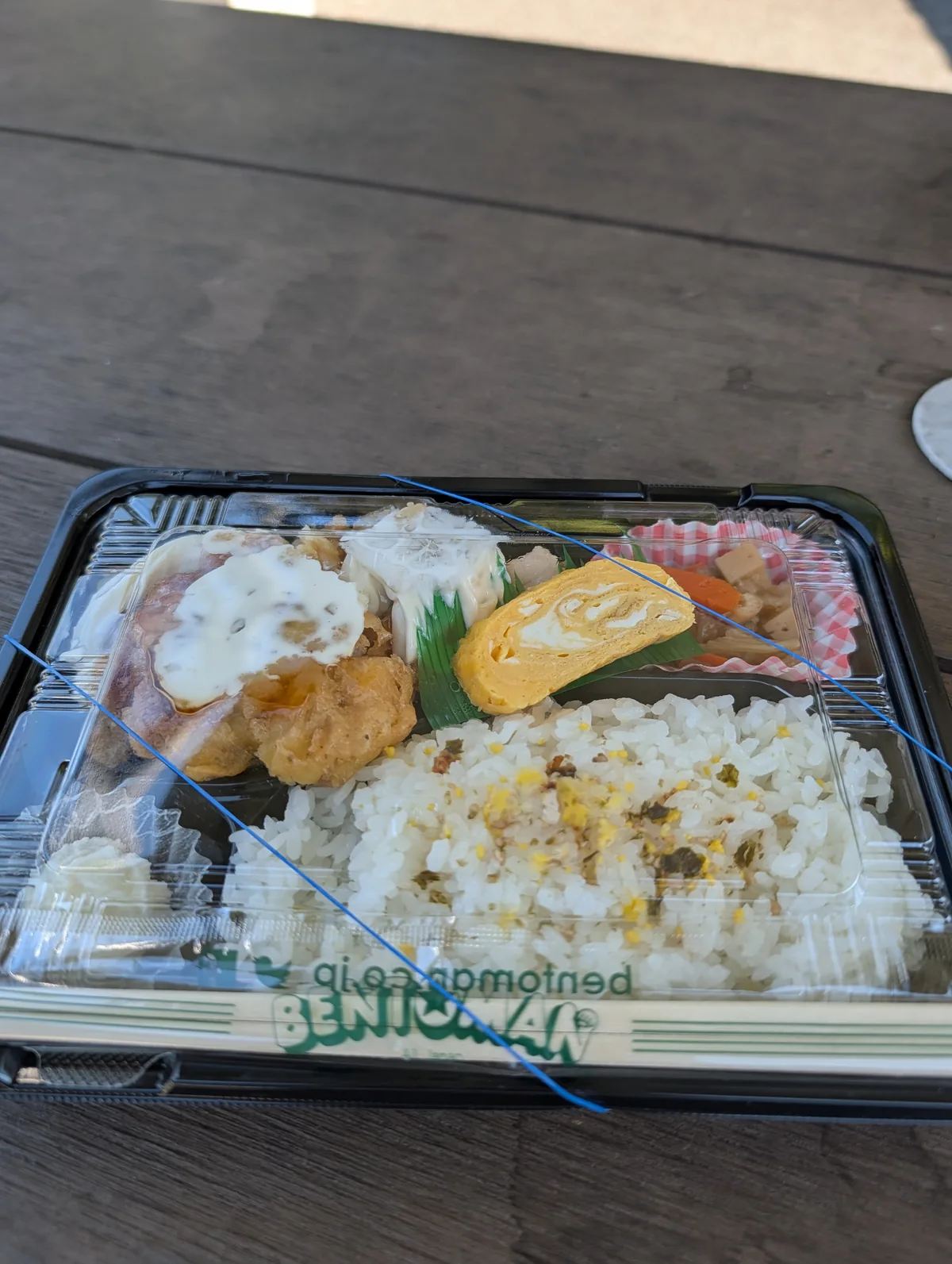
There is something specifically Japanese about eating a takeaway bento outdoors that does not really translate to other food cultures. The plastic clamshell, the rubber band, the cold rice and the small compartments — it is a complete object, designed to be carried somewhere and opened. Eating it inside a restaurant misses the point. Eating it outside on a clear May afternoon, with the castle a few hundred meters away, gets it exactly right.
What the grounds feel like in early May
After lunch I walked the grounds. Three things stood out from this particular visit.
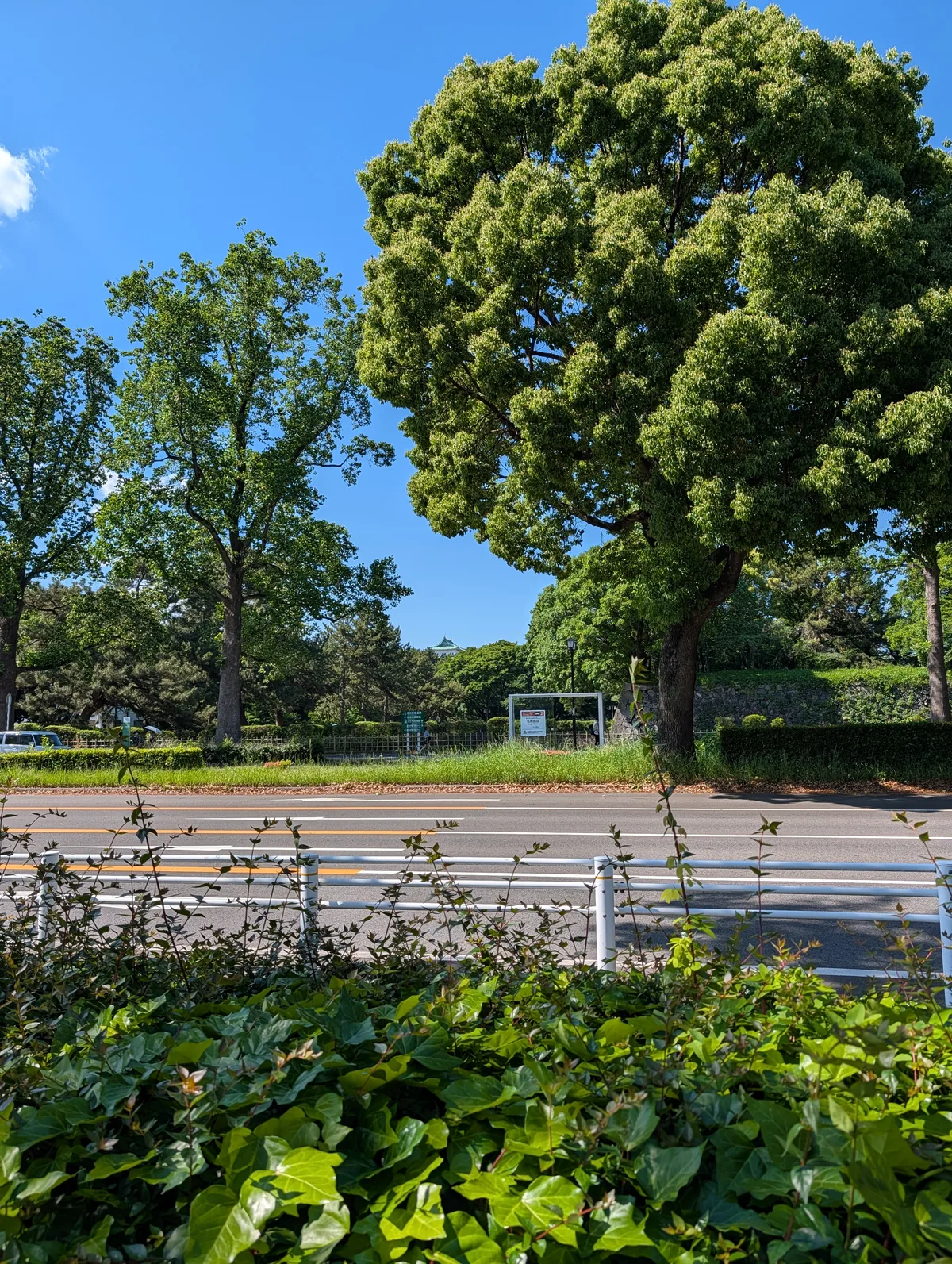
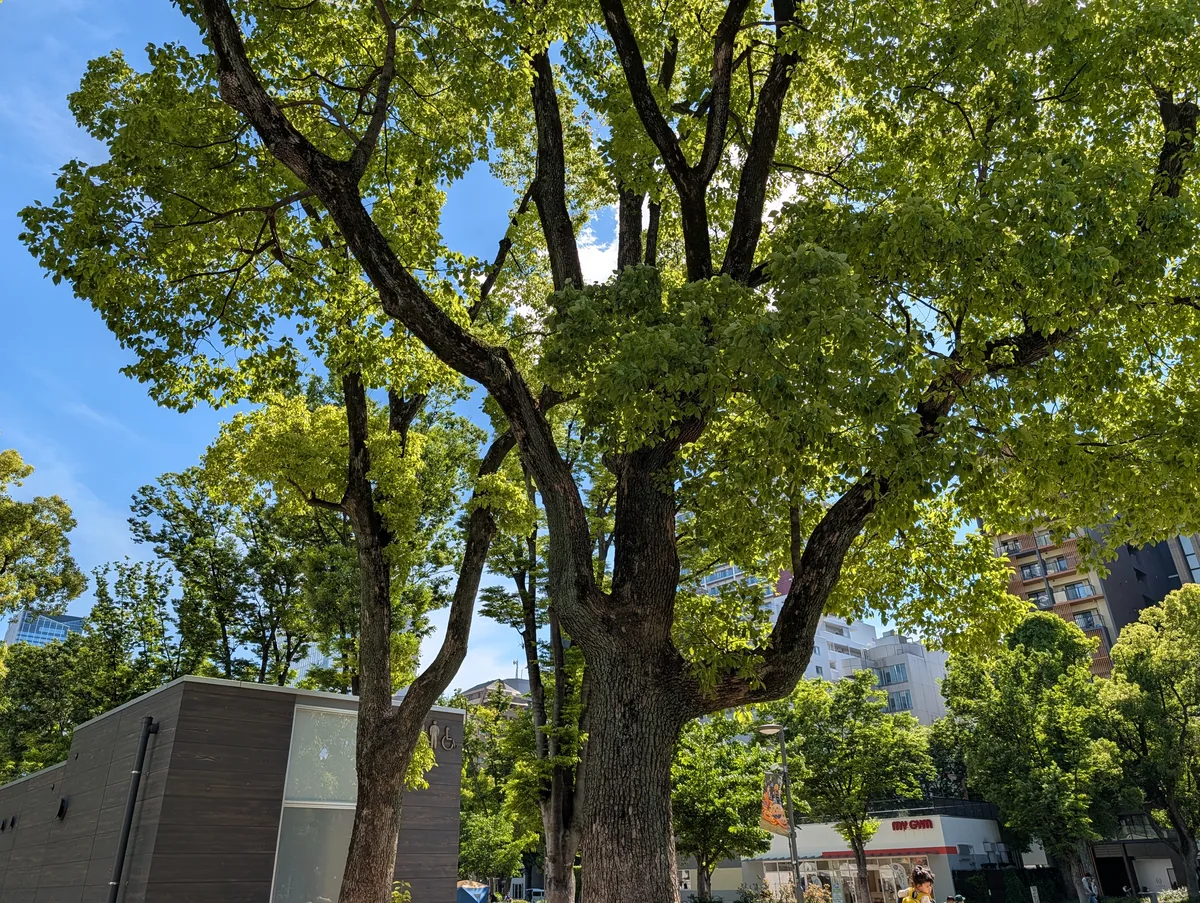
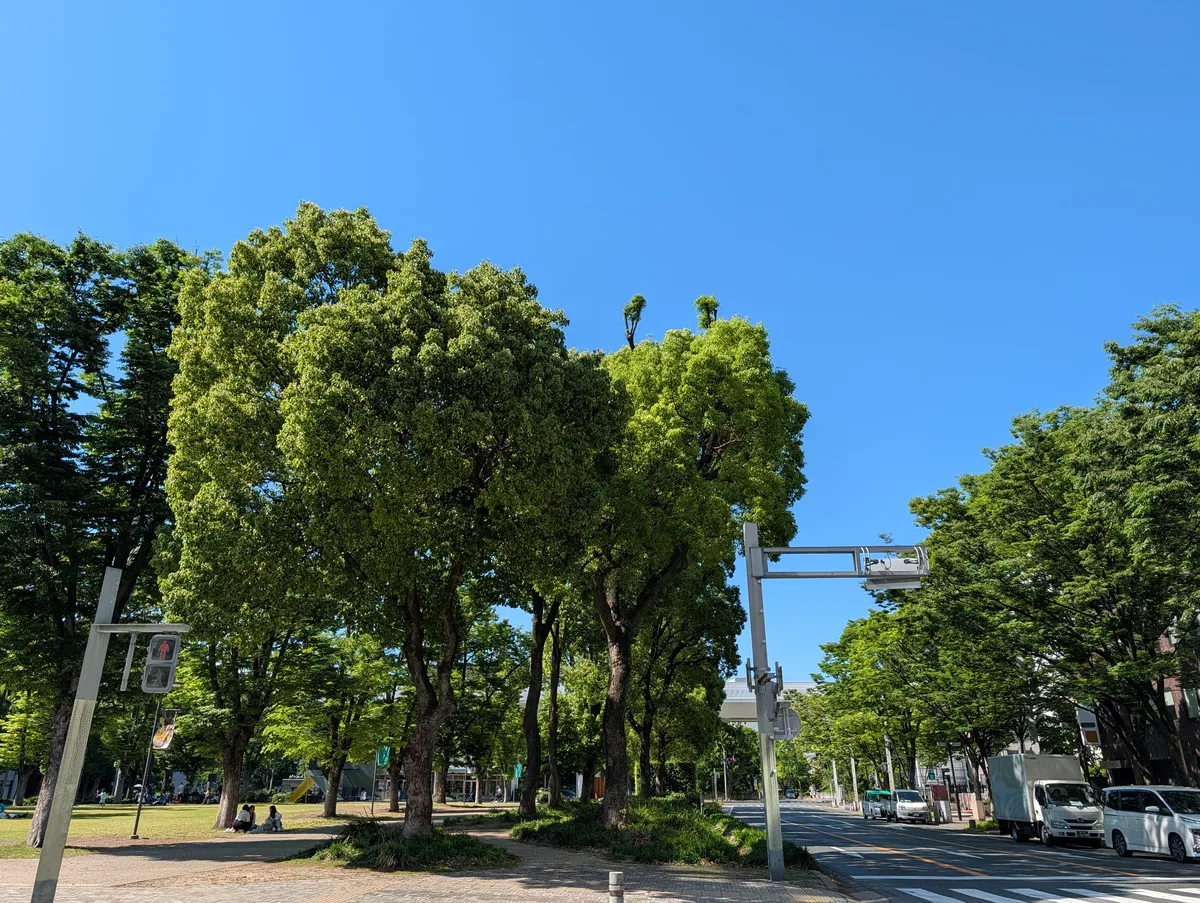
First, the May greenery. The keyaki (zelkova) and camphor trees that are scattered across the castle grounds are at their fullest now — bright, almost luminous green. Earlier in the year you can see straight through to the stone walls; in May, the foliage frames everything. It changes the photographic feel of the castle entirely.
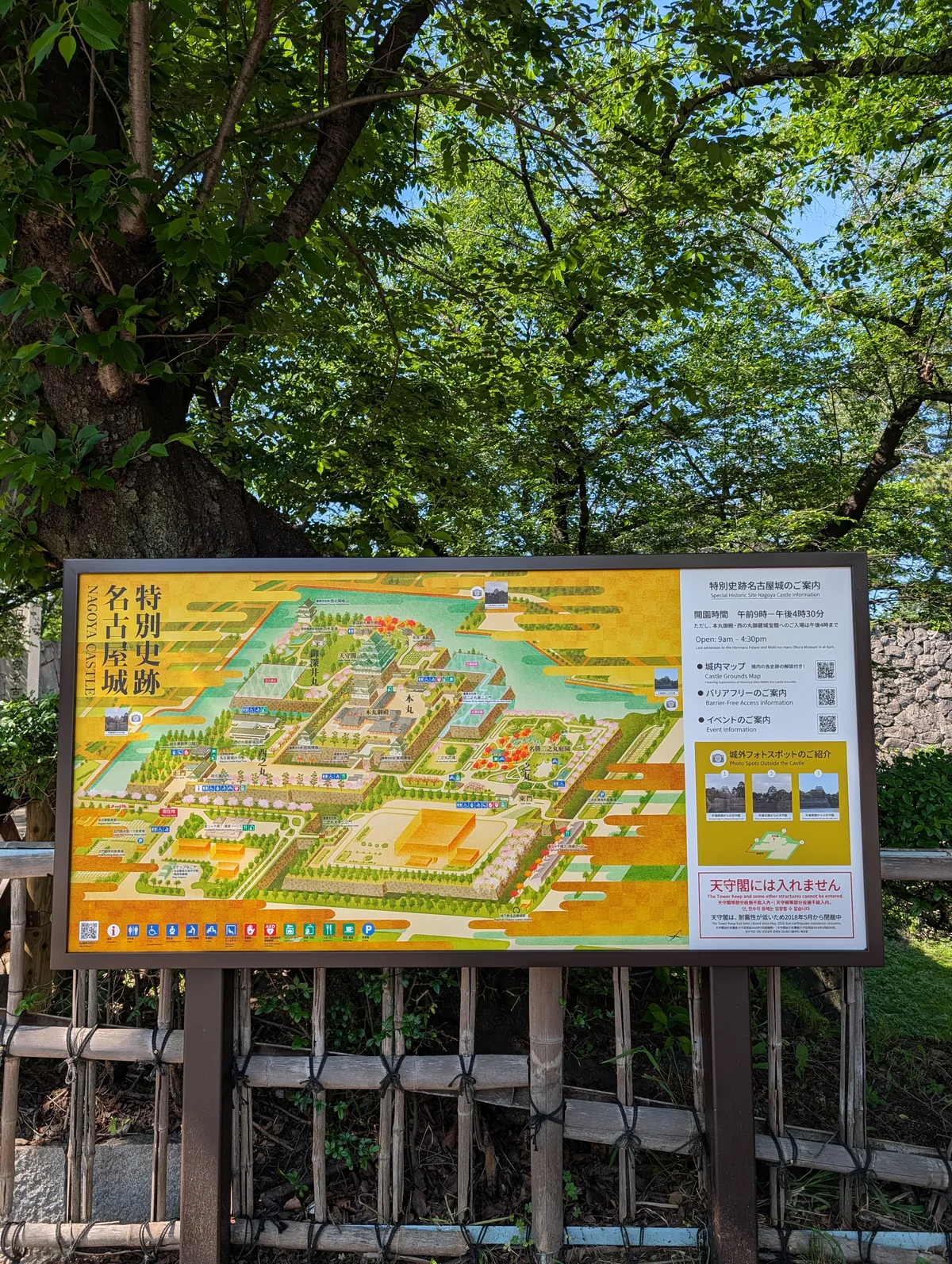
Second, the sky. May in Nagoya regularly delivers the cleanest blue skies of the year — better than autumn, in my opinion, because the air is still cool enough that the haze of summer humidity has not set in. If photographing the castle and stone walls is part of your plan, late April through mid-May is genuinely the best window. Cherry blossoms are gone by then, which means smaller crowds, but the light is better.
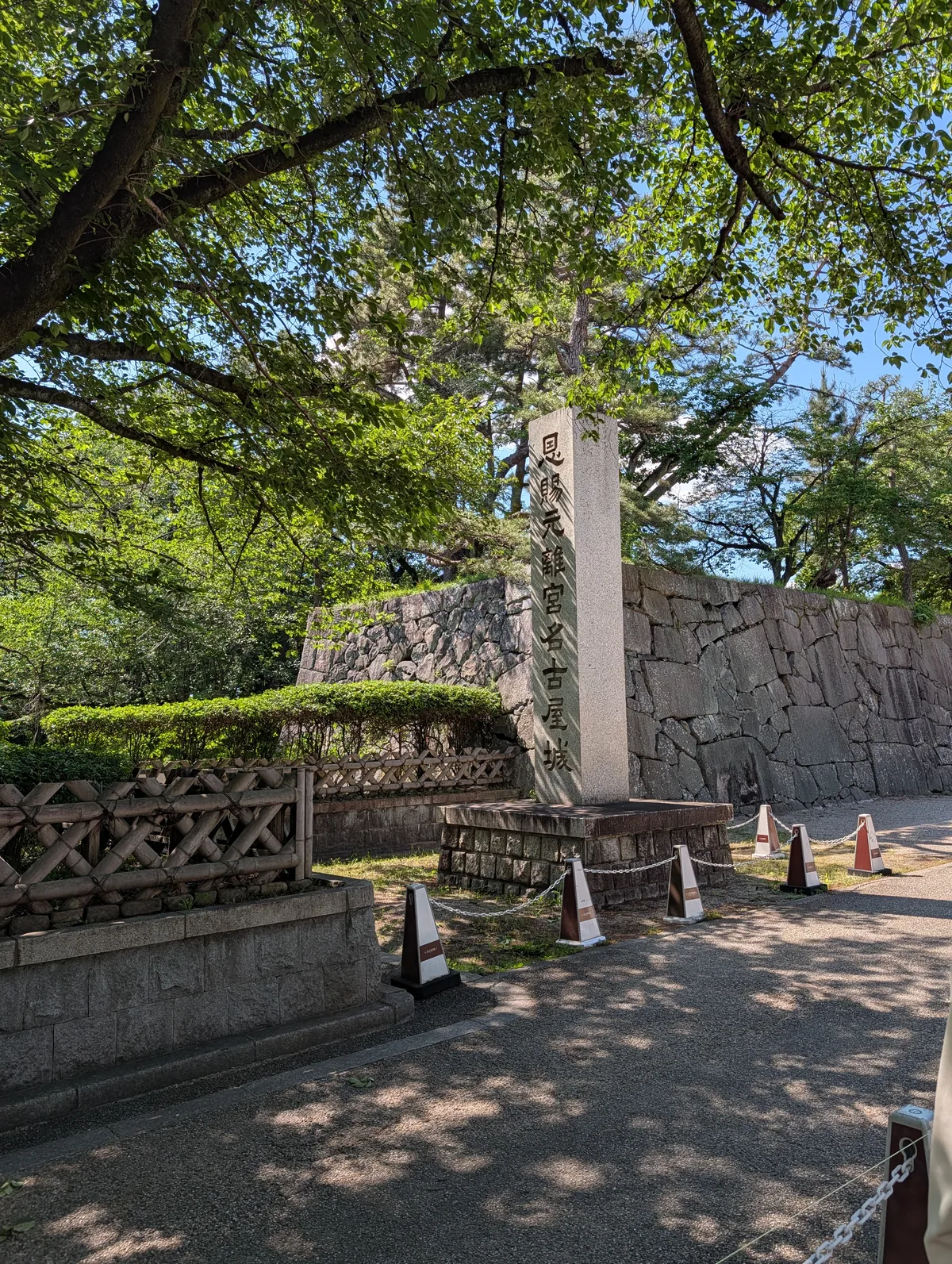
Third, how comfortable the temperature is for walking. Summer is brutal here — frequently above 35 degrees with high humidity. The castle grounds in August are something to endure rather than enjoy. May is the opposite. The air is warm enough that you do not need a jacket, cool enough that you can walk for two hours without getting tired. The Hommaru Palace has no heating or cooling, so it tracks the outside temperature, but the grounds themselves are at their best now.
The ride home
I cycled back the same way I came — south down Otsu-dori, back to Osu. The boulevards south of the castle, especially the green strip along Hisaya-odori Park, are some of the best urban cycling in the city. Wide, flat, lined with mature trees.
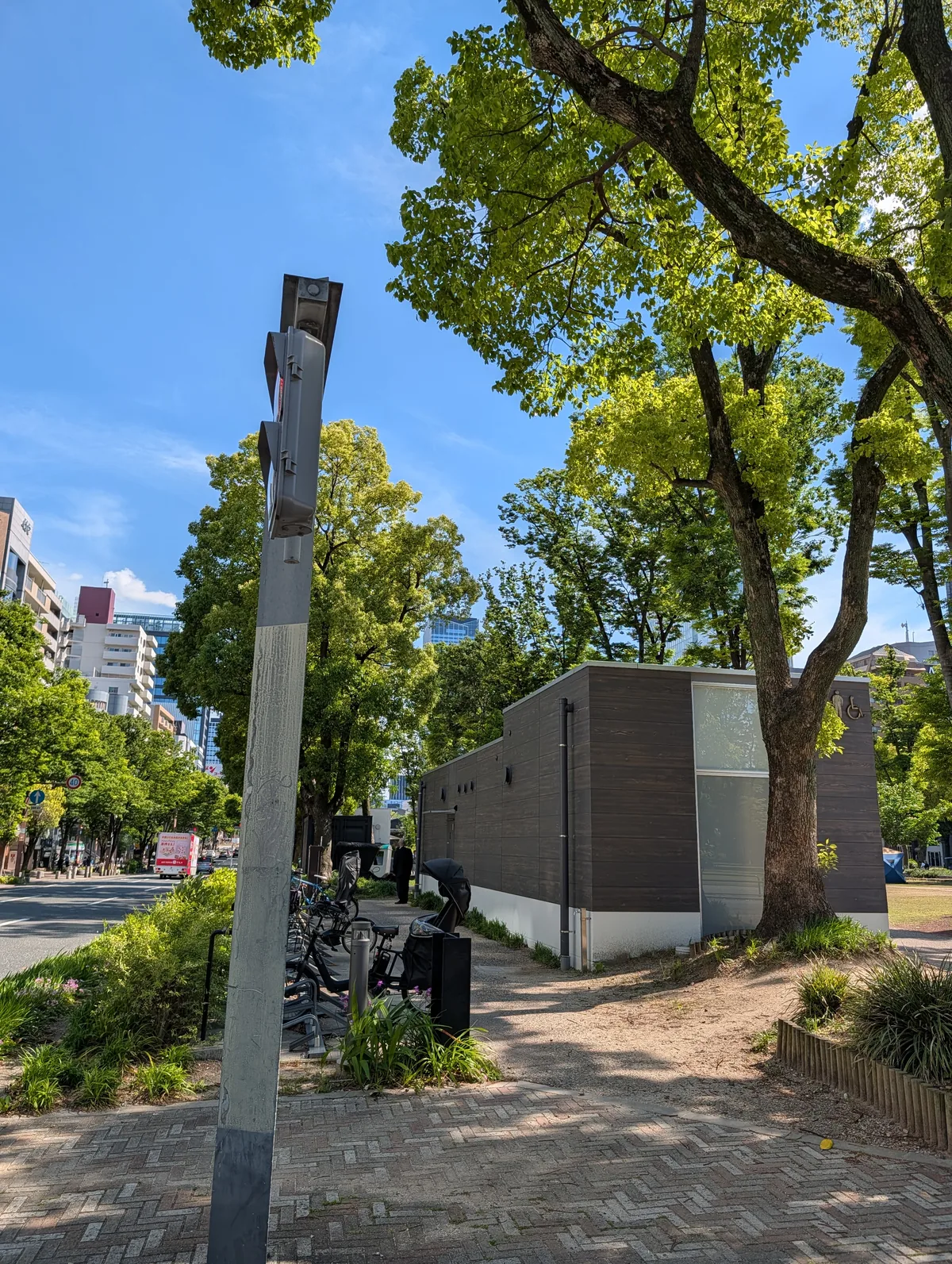
If you are visiting Nagoya as a tourist and you want to do something close to what locals actually do on a good weekend, this is it. Rent a bicycle near your hotel (most stations and many hotels have rental options), build the day around the castle plus one of the connecting neighborhoods (Osu for shopping and food, Sakae for shopping and architecture, Noritake Garden for craft and quiet), and pick up your lunch from a yokocho bento shop instead of sitting down for a full meal. You will see more of the city, eat well, and feel less like a tourist by the end of the day.
Local tip
If you want to replicate the bento-and-bench plan, several Yoshinao Zone restaurants sell food to take away — Torikai Sohonke does a fried-chicken bento, for example (Kinshachi Yokocho official) — and there are benches around the open area. On weekends the benches fill up by noon — aim to grab lunch by 11:30 if you can. Cycling rentals are easy in Osu (several rental shops near the Kannon temple) and in front of Nagoya Station.
Frequently Asked Questions
How long does it take to visit Nagoya Castle?
Plan for 2 to 3 hours to see everything properly. The Hommaru Palace alone takes 45 to 60 minutes with its one-way walking route. Add time for the castle grounds, stone walls, Ninomaru Garden, and Kinshachi Yokocho. If you visit during cherry blossom season, you may want even longer.
Can you go inside the main castle tower?
No. As of 2026, the main tower (tenshukaku) is closed to the public due to earthquake safety concerns. The city has been planning a wooden reconstruction, but the project has faced delays. The Hommaru Palace, however, is fully open and is the far more impressive experience.
Is Nagoya Castle worth visiting if the tower is closed?
Absolutely. The Hommaru Palace is the main attraction, and it is extraordinary. The palace, combined with the original stone walls, Ninomaru Garden, and Kinshachi Yokocho, makes for one of the best castle visits in Japan — even without access to the tower interior.
When is the best time to visit Nagoya Castle?
Spring (late March to mid-April) for cherry blossoms. Early summer (mid-May to early June) for fireflies. Autumn (mid-November) for fall foliage in Ninomaru Garden. Winter is cold but uncrowded. Avoid midsummer (July-August) unless you handle extreme heat well.
Are there English signs and information at Nagoya Castle?
Yes. The castle has English signage throughout, English audio guides are available for rent, and the Hommaru Palace has English explanatory panels in each room. Volunteer English-speaking guides are often available on weekends near the main gate.
Is Nagoya Castle accessible for wheelchairs and strollers?
Most of the castle grounds are accessible, with paved paths and ramps. The Hommaru Palace is single-storey: wheelchair users enter by the ramp on the north side of the palace entrance, and the interior is flat throughout. Wheelchairs and strollers are lent at the Main and East Gates, and the palace keeps its own indoor wheelchairs. Some gravel paths on the outer grounds may be more difficult. Contact the castle office in advance if you have specific accessibility requirements.
Can I bring food into the castle grounds?
Yes. You can bring food and drinks into the castle grounds, and there are benches and open areas where you can eat. However, food is not permitted inside the Hommaru Palace. Kinshachi Yokocho, just outside the castle gate, is the best dining option.
Where can I get a takeaway bento near Nagoya Castle?
Kinshachi Yokocho, immediately adjacent to the castle, has no dedicated bento shop, but several restaurants in the Yoshinao Zone sell food to take away — Torikai Sohonke does a fried-chicken bento, for example (Kinshachi Yokocho official). There are benches in the open area of the Yoshinao Zone, by the Main Gate, where you can sit and eat. On warm spring days this is one of the best simple lunches in the city.
Is May a good time to visit Nagoya Castle?
Yes — arguably the best month after cherry blossom peak. The trees are fully leafed, the humidity has not yet arrived, and Nagoya regularly produces clean blue skies in May. Crowds are notably lower than during cherry blossom season. The shaded interior of the Hommaru Palace is a welcome break from the afternoon sun, though the building itself has no air conditioning.
Related Guides
- 18 Best Things to Do in Nagoya (2026) — Complete overview of Nagoya’s top attractions
- Nagoya Food Guide: The Complete Guide to Nagoya Meshi — Every local dish you need to try
- 3-Day Nagoya Itinerary — Day-by-day plan including Nagoya Castle
- Getting Around Nagoya — Subway, bus, and transport guide
- Where to Stay in Nagoya — Best areas and hotel recommendations
Nagoya Castle has been a constant in my life for 35 years. I have watched it through every season, brought friends and family from other cities and countries, and felt the same quiet pride each time. Whether you come for the Hommaru Palace, the cherry blossoms, or the fireflies on a warm June evening — I hope this castle gives you a glimpse of what makes Nagoya worth knowing.