Nagoya Meshi is Japan’s boldest regional cuisine, featuring 18 unique dishes built around Hatcho miso aged for 2-3 years. Budget ¥5,000-10,000 per day to eat well. The essential trio is miso katsu (from ¥1,600), hitsumabushi eel (from ¥4,950), and tebasaki wings (¥690 for 5 pieces) at restaurants across the city.
Nagoya Meshi is Nagoya’s bold, one-of-a-kind local cuisine built around rich Hatcho miso, crispy deep-fried specialties, and inventions you will not find anywhere else in Japan. The essential dishes are miso katsu, hitsumabushi eel, tebasaki chicken wings, tori no miso nabe, and yakuzen ramen. Budget around 5,000-10,000 yen per day to eat well across Nagoya’s best restaurants.
Last updated: August 2, 2026 | Written by Yuu, a Nagoya native of 35 years
This article may contain affiliate links. See our affiliate disclosure for details.
Table of Contents
- What Is Nagoya Meshi and Why Should You Care?
- What Are the Must-Try Nagoya Meshi Dishes?
- 1. Miso Katsu
- 2. Hitsumabushi
- 3. Tebasaki
- 4. Miso Nikomi Udon
- 5. Kishimen
- 6. Ankake Spaghetti
- 7. Ogura Toast
- 8. Taiwan Ramen
- 9. Doteni
- 10. Tenmusu
- 11. Ebi Fry
- 12. Miso Oden
- 13. Nagoya Cochin Chicken
- 14. Oni Manjuu
- 15. Shiro Noir
- 16. Yakuzen Ramen (Kourai-kei)
- 17. Tori no Miso Nabe
- 18. Nakagawa-ku Ramen
- Where Are the Best Nagoya Food Neighborhoods?
- How Much Does Food Cost in Nagoya?
- What Does the Perfect Nagoya Food Day Look Like?
- What Is Nagoya’s Morning Service Culture?
- How Do You Navigate Nagoya Restaurants as an English Speaker?
- Nagoya Food Comparison: Which Dishes Should You Prioritize?
- Frequently Asked Questions About Nagoya Food
- Related Guides
Short on time? The 5 dishes to try first
Eighteen dishes is a lot to get through. If you only have a day or two, start with these five — they are the ones I steer every first-time visitor toward:
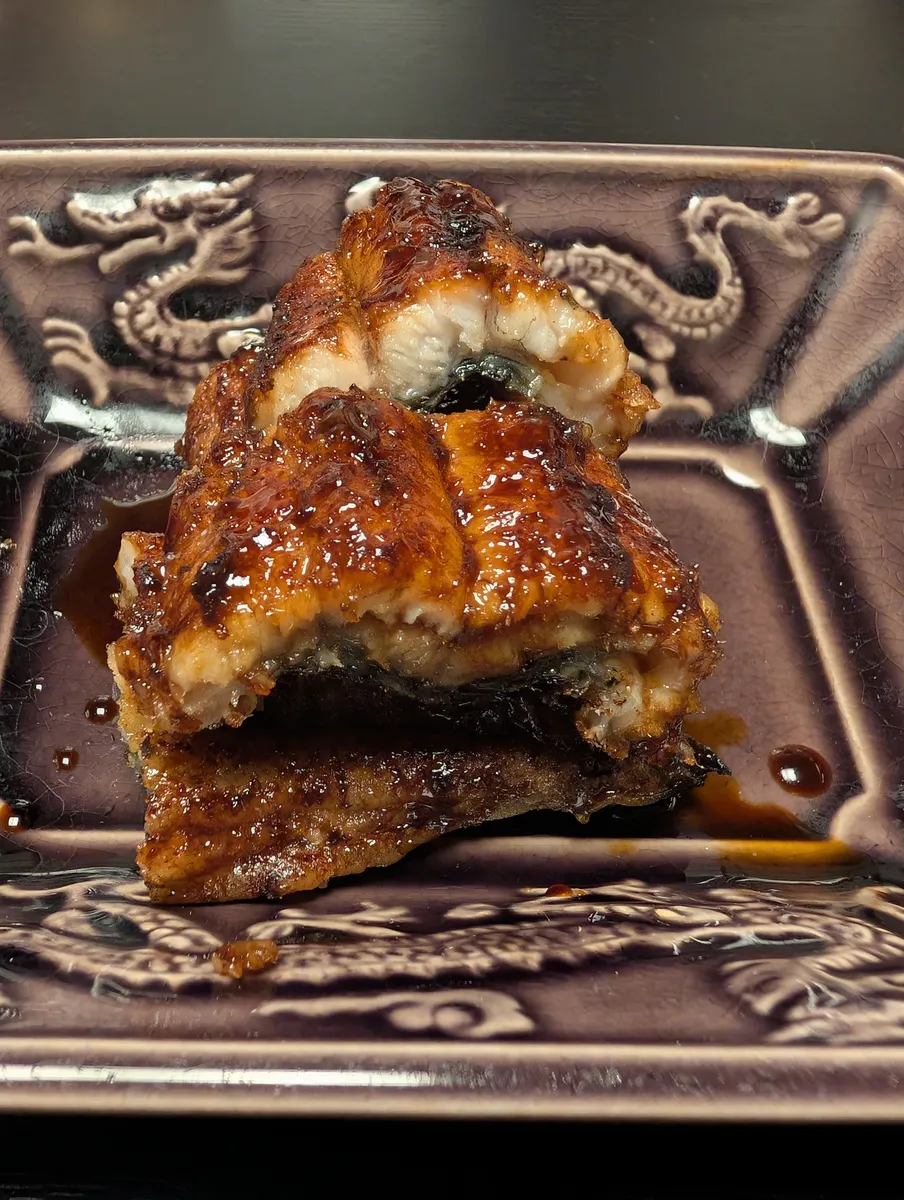
- Hitsumabushi — grilled eel over rice, eaten three ways. Nagoya’s most iconic splurge.
- Miso Katsu — a pork cutlet under sweet-savory red miso. The dish that defines the city.
- Tebasaki — sweet, peppery fried chicken wings. The ultimate bar snack.
- Miso Nikomi Udon — chewy udon simmered in red miso in a clay pot. Pure winter comfort.
- Taiwan Ramen — a fiery local invention that is nothing like Taiwanese food.
Everything below is worth your time too, but nail these five and you have tasted the real Nagoya. Full details on each dish follow.
What Is Nagoya Meshi and Why Should You Care?
Tokyo has its sushi. Osaka has its street food. Kyoto has its kaiseki. Nagoya has something entirely its own, and most international visitors have never heard of it.
Nagoya Meshi (名古屋めし) is the umbrella term for Nagoya’s unique local cuisine. It is bold, unapologetically flavorful, and unlike anything you will find in other Japanese cities. While the rest of Japan tends toward subtle and delicate, Nagoya goes big: rich miso sauces, crispy deep-fried cutlets, spicy chicken wings, eel glazed with sweet soy, and pasta smothered in thick peppery gravy.
I was born and raised in Nagoya. I have spent 35 years eating in this city — from the red-lantern izakayas of Nakagawa-ku where I grew up, to the back-alley udon shops of Nakamura-ku, to the polished restaurants of Sakae where I worked as a sales rep walking every neighborhood in the city. People tell me Nagoya food is “heavy” and “too rich.” They are wrong. Miso is not salty — it is sweet. The flavors are deep and complex, not overwhelming. If you pick the right places, Nagoya cuisine is as refined as anything you will eat in Japan. The problem is that most visitors never find those places. That is what this guide is for.
According to the Nagoya Convention & Visitors Bureau, Nagoya has over 12,000 restaurants across the city, and food tourism is now a primary reason international visitors choose to include Nagoya in their Central Japan itineraries.
The foundation of Nagoya Meshi is Hatcho miso — a dark red soybean paste that has been produced in the neighboring city of Okazaki for over 600 years. This miso is aged for two to three years in massive cedar barrels weighted with river stones, producing a deep, complex flavor that is saltier, more savory, and less sweet than the white or blended misos used elsewhere in Japan. Hatcho miso appears in nearly half of Nagoya’s signature dishes, giving the entire cuisine a distinctive character that you will recognize after just a few meals.
What makes Nagoya Meshi truly special is that these are not ancient traditional recipes preserved in time. Many of these dishes were invented in the 20th century by creative local restaurant owners who blended Japanese, Western, and Asian influences into something entirely new. Ankake spaghetti was created in the 1960s. Taiwan ramen was born in the 1970s. Nagoya Meshi is a living, evolving food culture — and eating your way through it is one of the best reasons to visit this city. Whether you are spending a day at Ghibli Park or exploring the castle and shrines, every evening should end with a proper Nagoya Meshi dinner.
Here is my philosophy, and I want you to take it to heart: do not go to the chains that tourists already know. Go to the tiny spot with handwritten menus where the youngest regular is 70. Food blogs and Google Maps miss the best places in Nagoya. The red-lantern izakayas are where the magic is.
If you are planning your trip, see our complete guide to things to do in Nagoya and our 3-day Nagoya itinerary for help building a schedule around these food experiences.
Nagoya Meshi is defined by three pillars: (1) Hatcho miso — a dark, aged red miso unique to this region, (2) bold and rich flavors that contrast with the subtlety typical of Japanese cuisine, and (3) creative fusion — many signature dishes are local inventions that blend Japanese and international influences. But “bold” does not mean crude. As a lifelong local, I can tell you that Nagoya miso is sweet, not salty. When visitors say the food is “heavy,” they have usually been to the wrong restaurants.
What Are the Must-Try Nagoya Meshi Dishes?
Here are the 18 dishes that define Nagoya’s food identity. I have eaten every one of these hundreds of times, and I am ranking them by how essential they are for a first-time visitor.
1. Miso Katsu (味噌カツ) — The Dish That Defines Nagoya
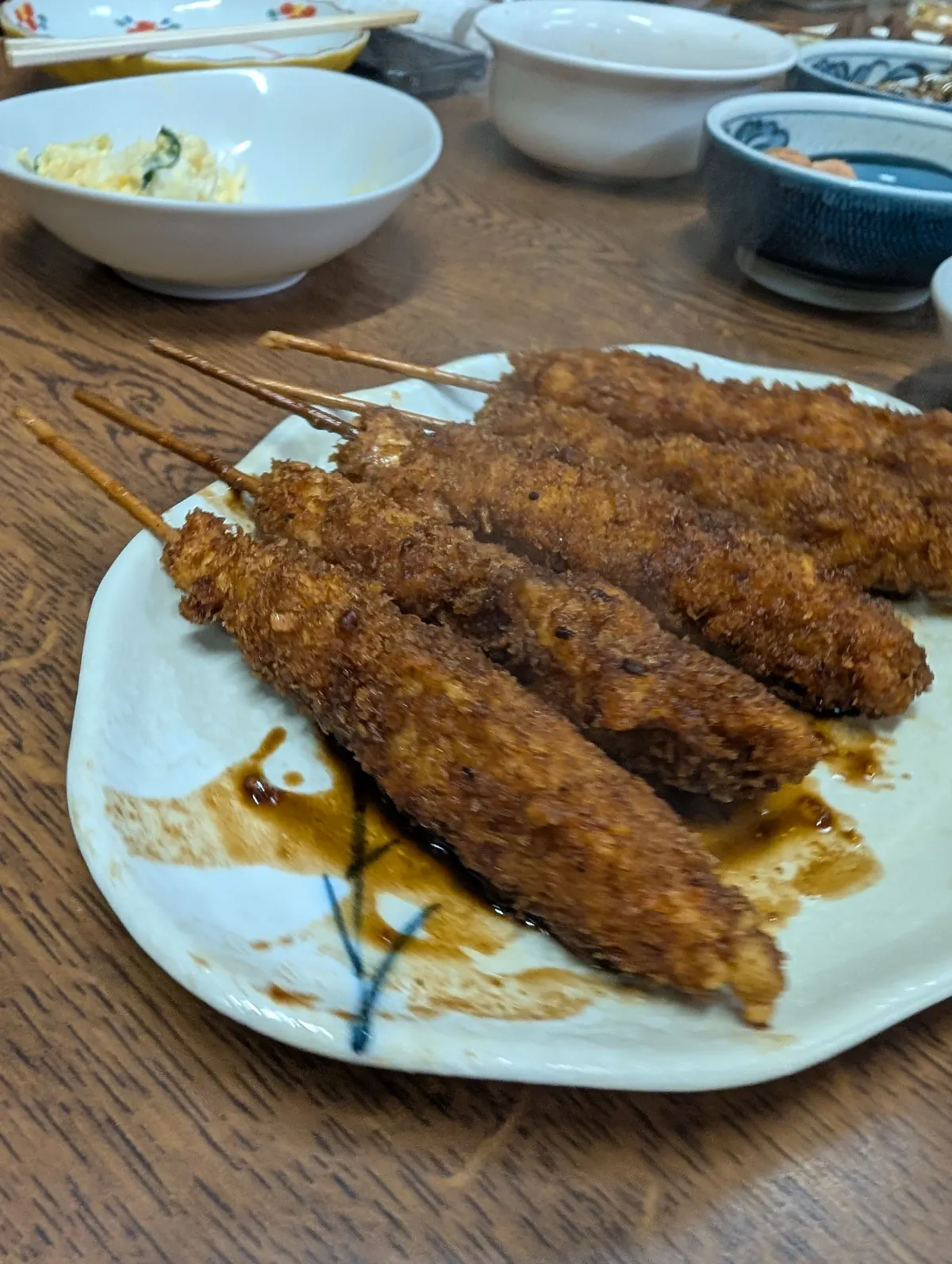
What it is: A golden, deep-fried pork cutlet (tonkatsu) smothered in a thick, sweet-savory sauce made from Hatcho miso. The sauce is the star — dark brown, almost black, with a depth of flavor that takes first-time visitors completely by surprise. My earliest memory of tonkatsu is Ozeki (オゼキ) in Nakamura-ku — a family restaurant that opened in 1954. When I was in fourth or fifth grade, my father told me, “Memorize all twelve animals of the Japanese zodiac, and I will take you to Ozeki.” I studied hard, recited them perfectly, and earned my first visit. That yaki-tonkatsu (pan-fried, not deep-fried) set the standard for every pork cutlet I have eaten since.
In Tokyo and Osaka, tonkatsu comes with a thin Worcestershire-style sauce or a simple dab of mustard. In Nagoya, we drown our katsu in a rich, glossy miso sauce that clings to every crumb of the breading. The first bite surprises everyone. The sweetness hits first, then the deep savory umami of the aged miso, and finally a slight bitterness that keeps you reaching for more. I have watched dozens of visitors try it for the first time, and the reaction is always the same: wide eyes and immediate silence as they process a flavor they have never encountered before.
Where to try it:
My #1 recommendation: Suzuya Akamon Branch (すゞ家 赤門店) — This is the restaurant I take every out-of-town visitor to, and the reason is simple: Yabaton has locations in Tokyo and Osaka now. I want to take people to places that only exist in Nagoya. Suzuya was founded in 1947, with recipes inherited from a chef who trained at the Imperial Hotel. It has earned a Michelin Bib Gourmand, the miso sauce is served on the side so you control the flavor, and you can choose between hire (tenderloin) and rosu (loin). The quality is outstanding and the wait is far shorter than Yabaton.
- Address: 3-11-17 Osu, Naka-ku, Nagoya
- Hours: 11:00 AM – 3:00 PM, 5:00 PM – 9:00 PM (closed Thursdays)
- Price: Miso katsu set from ¥1,600
- Access: Near Osu Kannon Station or Kamimaezu Station
Yabaton (矢場とん) — The most famous miso katsu restaurant in Nagoya, operating since 1947. The main branch is in Yaba-cho, with additional locations near Nagoya Station (Esca underground), Sakae, and inside department stores across the city. There is almost always a line at the Yaba-cho location, but it moves quickly. The pork is tender, the breading is crisp, and the miso sauce is rich without being overwhelming. It is an excellent choice, just not the only one.
- Address (main branch): 3-6-18 Osu, Naka-ku, Nagoya
- Hours: 11:00 AM – 9:00 PM daily
- Price: Standard Loin Tonkatsu Set around ¥2,000-2,100 (Teppan Rib Loin ¥2,100); Waraji tonkatsu (jumbo size) ¥2,000 (Yabaton Official)
- Access: 5-minute walk from Yaba-cho Station (Meijo Line)
For the adventurous: Katsu Taikou (かつ太閤) in Nakamura-ku — This is an ultra-local spot where it feels like you are eating at someone’s house. The miso is incredible, the prices are low, and absolutely no tourists come here. It is off the subway line and hard to find, but if you want to eat miso katsu the way Nagoya families have for decades, this is where you go.
At Suzuya, the miso sauce comes on the side. This lets you dip each bite exactly how you like it — a huge advantage over restaurants that smother the whole cutlet and make it soggy. Try your first bite with just a small dip to appreciate how good the cutlet itself is, then go heavier with the miso from there.
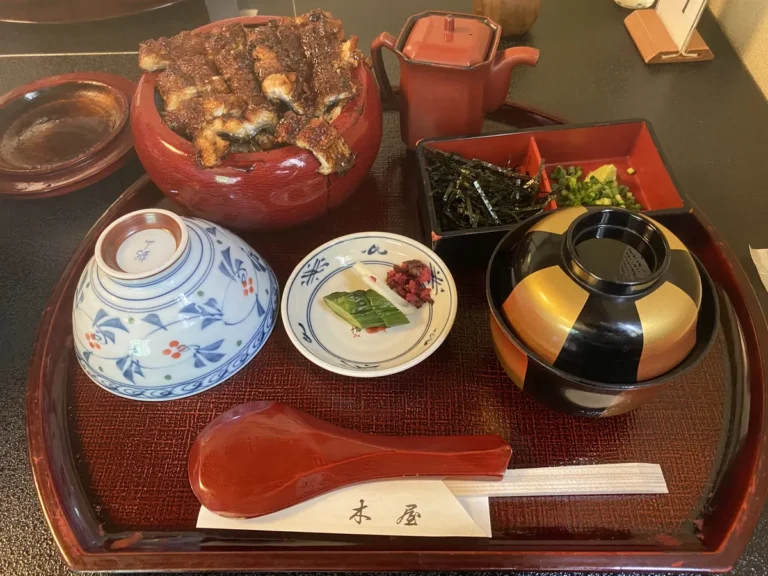
2. Hitsumabushi (ひつまぶし) — Nagoya’s Most Iconic Splurge
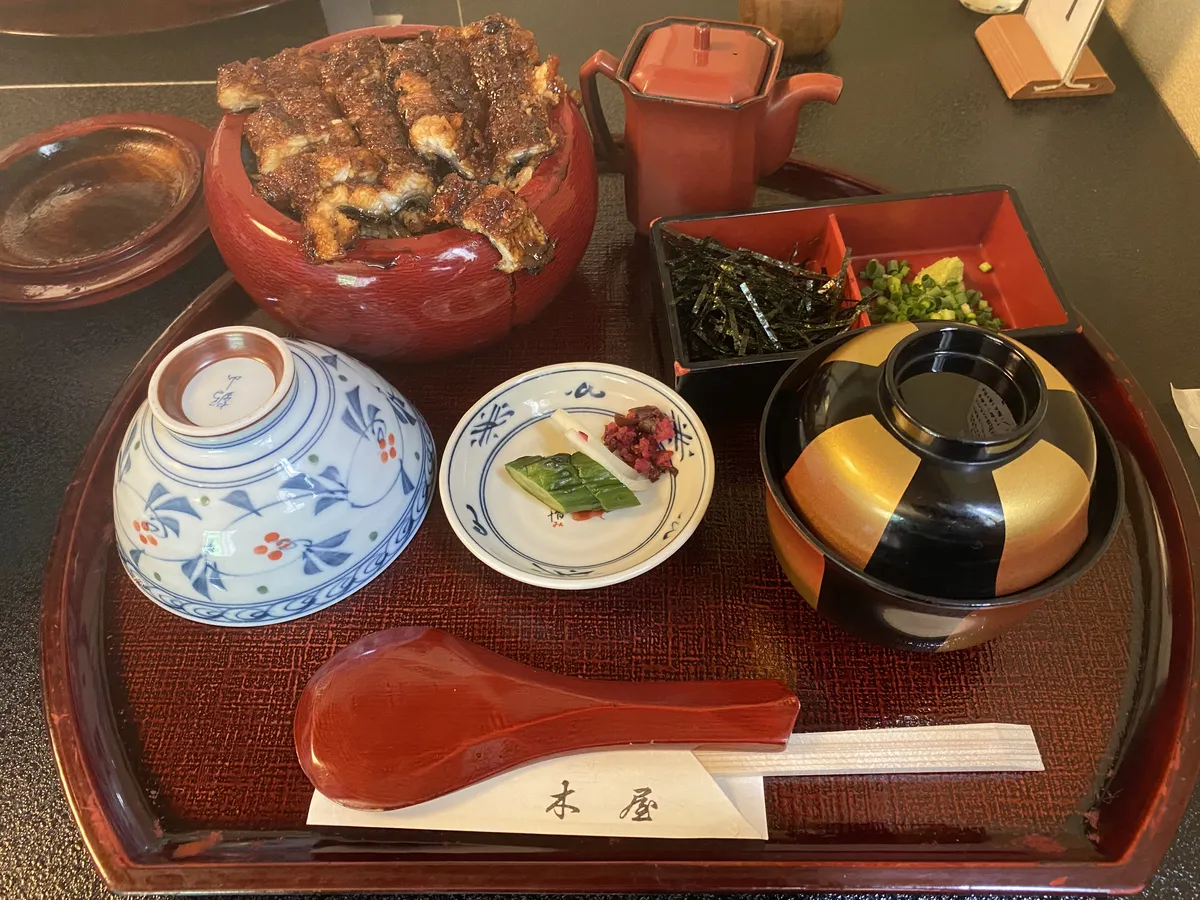
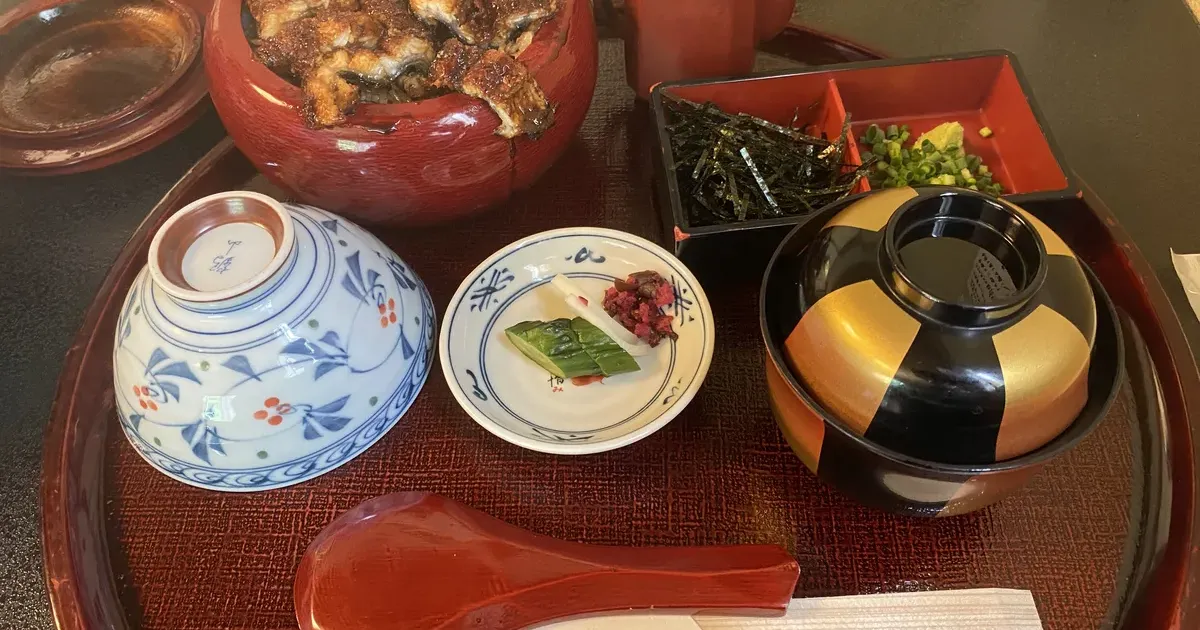
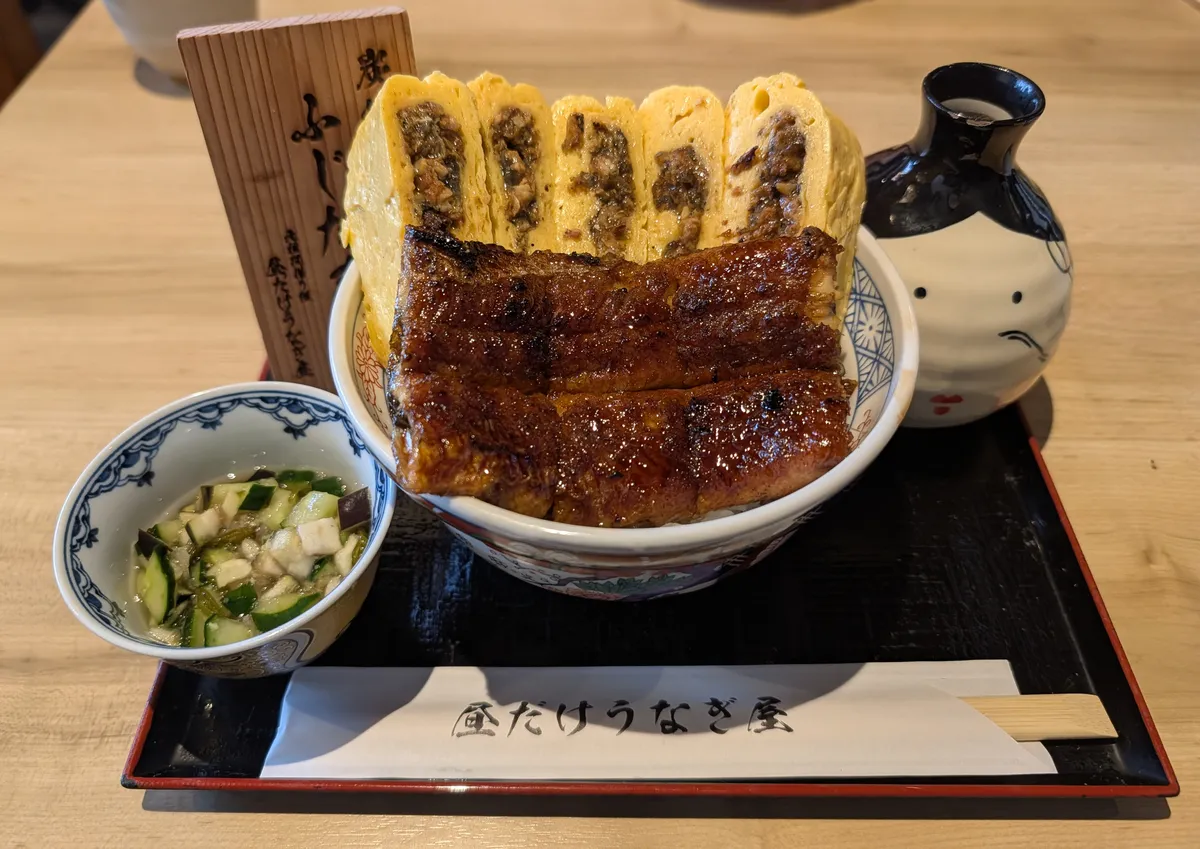
What it is: Grilled freshwater eel (unagi) served on rice in a wooden container called a hitsu. The eel is charcoal-grilled until the skin is crackling crisp and the flesh is tender, then lacquered with a sweet soy-based tare sauce. But the real magic of hitsumabushi is not the eel itself — it is how you eat it.
The proper three-way eating method:
- First portion: Eat it straight. Scoop the eel and rice with your rice paddle, and savor the pure flavor of the grilled eel.
- Second portion: Add condiments. Sprinkle wasabi, chopped green onion (negi), shredded nori seaweed, and sesame seeds over the eel and rice.
- Third portion: Pour hot dashi broth from the provided teapot over the eel and rice. Eat it like ochazuke (tea-poured rice). This transforms the rich, heavy eel into something light, fragrant, and deeply comforting.
- Fourth portion: Eat the remaining eel however you liked best.
Every time I take a visitor to eat hitsumabushi, the dashi broth step is the biggest surprise. People who think they do not like eel often change their minds with that third taste. The broth cuts through the richness and creates an entirely different dish from the same bowl.
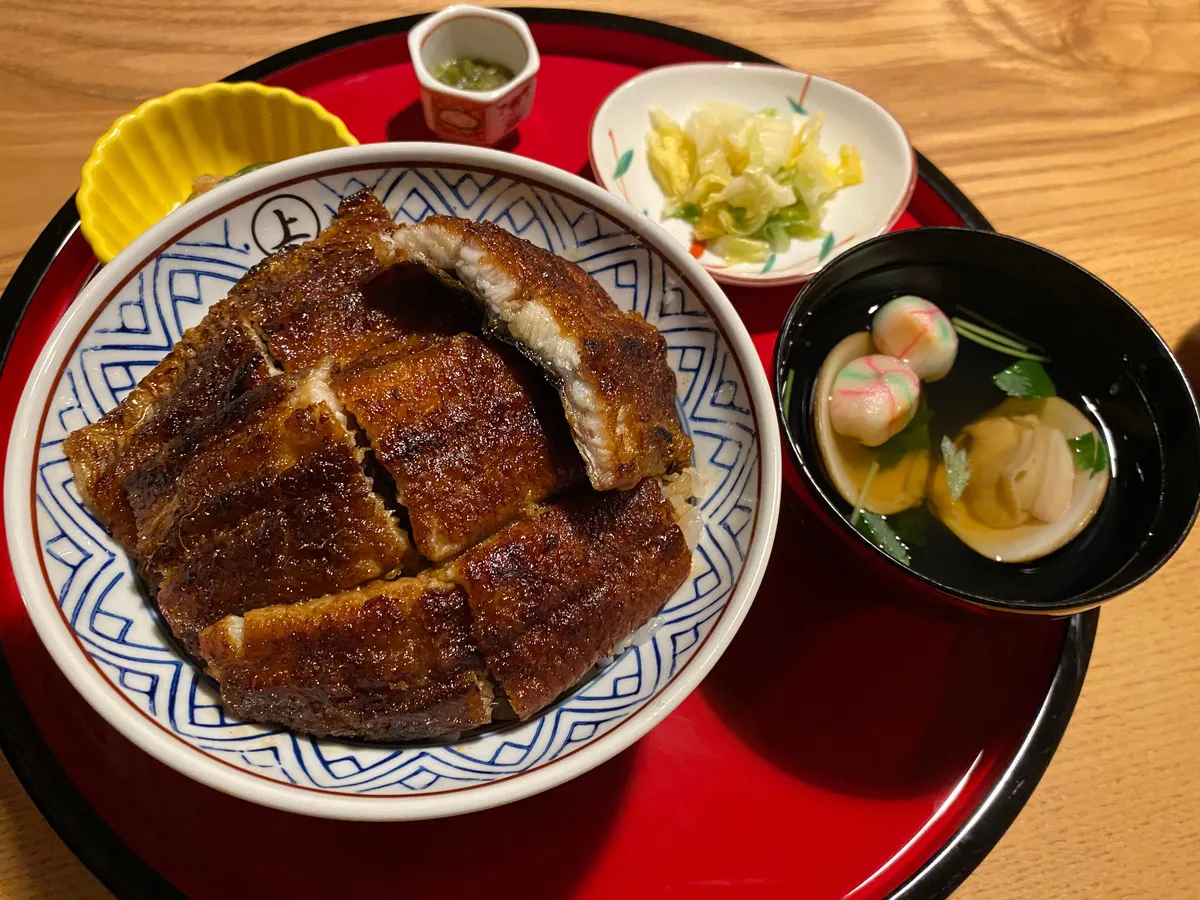
Where to try it:
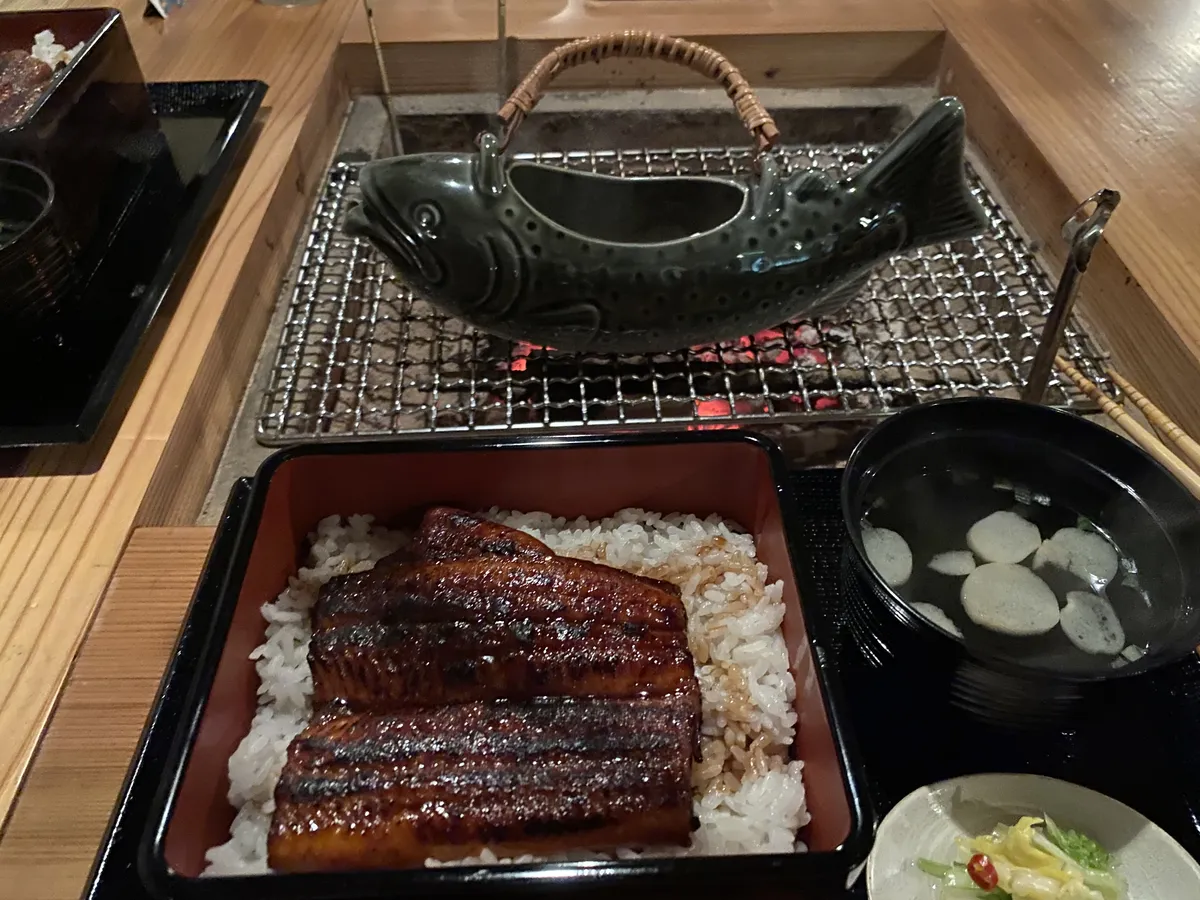
Atsuta Houraiken (あつた蓬莱軒) — The birthplace of hitsumabushi, established in 1873. This is the restaurant that invented the dish. I visit Atsuta Shrine at least three times a year — on my birthday, my company’s founding anniversary, and New Year — and Houraiken is always part of the ritual. The main branch near Atsuta Shrine regularly has waits of 1-2 hours on weekends — I have waited 90 minutes on a Saturday and it was absolutely worth it. The Matsuzakaya department store branch in Sakae has shorter waits (typically 20-40 minutes).
- Address (main branch): 503 Godo-cho, Atsuta-ku, Nagoya
- Hours: 11:30 AM – 2:00 PM, 4:30 PM – 8:30 PM (closed Tuesdays; if Tuesday is a holiday, closed Wednesday instead)
- Price: Hitsumabushi ¥4,950; Large hitsumabushi ¥6,600 (Atsuta Houraiken Official)
- Access: 7-minute walk from Tenmacho Station (Meijo Line)
Ibasho — A newer restaurant with excellent quality and significantly shorter wait times. The eel is grilled beautifully, and the atmosphere is more modern and relaxed.
- Price: Hitsumabushi from ¥4,200
Visit Atsuta Houraiken’s main branch right when it opens at 11:30 AM or at 4:30 PM for dinner service. Arriving 15-20 minutes before opening puts you near the front of the line. Combine your visit with nearby Atsuta Shrine for a perfect half-day experience.
Hitsumabushi is the most expensive Nagoya Meshi dish at 4,200-6,600 yen per serving. It is a splurge, but it is the single most quintessential Nagoya food experience. If you only eat one special meal in Nagoya, make it this one.
3. Tebasaki (手羽先) — Nagoya’s Ultimate Bar Snack
What it is: Deep-fried chicken wings seasoned with a sweet-spicy glaze and finished with a generous coating of black pepper and sesame seeds. Nagoya-style tebasaki are smaller than American buffalo wings, with an intensely crispy exterior and juicy interior. They are the definitive izakaya (pub) food in Nagoya, and a night out in this city is not complete without them.
Unlike Western-style wings with sauce on top, Nagoya tebasaki get their flavor from a seasoning blend that is applied after frying. The skin shatters when you bite in, releasing a burst of sweet, salty, peppery heat. They pair perfectly with cold draft beer, and eating them is a deeply social experience — plates of wings stacked on the table, cold drinks flowing, conversation buzzing.
I should tell you upfront: I am Team Furaibo. The two great tebasaki chains in Nagoya are Sekai no Yamachan and Furaibo, and locals fight about this the way people argue about sports teams. Yamachan’s wings are more peppery and assertive. Furaibo’s wings are less peppery and easier to eat — you can devour more of them without your tongue giving out. Both are excellent, but if you are trying tebasaki for the first time, I think Furaibo is the better starting point.
Where to try it:
Furaibo (風来坊) — My pick. The wings have a lighter pepper coating, a slightly sweeter finish, and a crunch that is second to none. The Sakae branches are the most convenient.
- Address (Sakae branch): 4-5-8 Sakae, Naka-ku, Nagoya
- Hours: 5:00 PM – 11:00 PM (until midnight Fri-Sat; closed Mondays)
- Price: 5 wings ¥693 (tax incl.)
Sekai no Yamachan (世界の山ちゃん) — “World’s Yamachan” is the most famous tebasaki chain in Nagoya, with dozens of locations across Japan. The wings here lean toward peppery and savory with a moderate spice level. An order of 5 wings costs ¥550 (Yamachan Official, 2026 price).
- Address (Sakae main branch): 4-9-6 Sakae, Naka-ku, Nagoya
- Hours: 5:00 PM – 12:00 AM (weekdays), 4:00 PM – 12:00 AM (weekends)
- Price: 5 wings ¥660; draft beer around ¥550
Here is something most visitors do not know: you can take tebasaki out. Both Furaibo and Yamachan do takeaway. I have carried bags of wings back to my hotel as a late-night snack, and I have eaten them on the train home. They are still delicious at room temperature. If you are staying at a hotel near Nagoya Station, grab a couple of orders to go and eat them in your room with a beer from the convenience store.
There is a technique to eating tebasaki, and it is worth learning before you arrive. Hold the wing with both hands, twist to separate the two small bones, then pull the meat off cleanly in one motion. It takes practice, but once you master it, you can eat wings at twice the speed. Watch the locals around you — they make it look effortless. Search for “tebasaki eating technique” on YouTube before your trip.
4. Miso Nikomi Udon (味噌煮込みうどん) — Winter Comfort in a Clay Pot
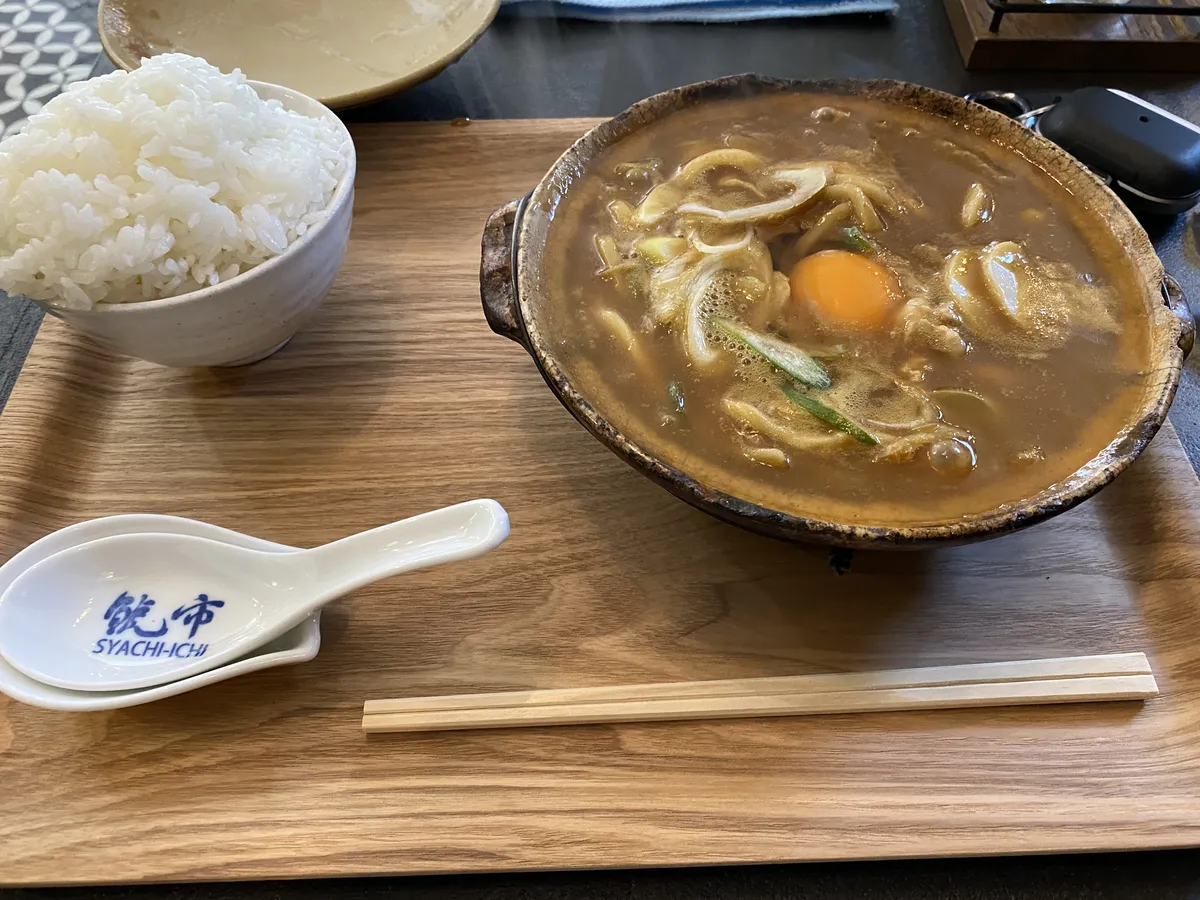
What it is: Thick, chewy udon noodles simmered in a clay pot (donabe) filled with rich Hatcho miso broth, typically with chicken, raw egg cracked on top, green onion, shiitake mushroom, and kamaboko (fish cake). The dish arrives at your table still bubbling furiously — the clay pot retains heat so well that it keeps cooking for several minutes after it leaves the kitchen.
The noodles are deliberately different from standard udon. They are made without salt, which gives them a dense, almost al dente texture that many first-time eaters find surprisingly firm. This is intentional — the firm noodles hold up to the thick, powerful miso broth without becoming soggy. On a cold Nagoya winter day (and Nagoya winters are genuinely cold), there is no more satisfying meal.
I need to be honest with you about something: the famous Yamamotoya-style miso nikomi udon has very firm noodles, and not everyone likes them. My grandfather and I both prefer softer noodles. We go to smaller local shops where the noodles have a gentler texture and the miso broth has its own personality. The best miso nikomi in Nagoya is often not at the famous chains — it is at the neighborhood udon shop with five tables and a handwritten menu on the wall.
Where to try it:
Gojo (五城) in Fushimi — This is a place that will surprise you. They do not serve miso nikomi in a clay pot. They serve it in a Chinese wok, with hakusai (Chinese cabbage) mixed in. It is completely unique and unlike any other miso nikomi udon in the city. The flavor is outstanding, and the cabbage adds a sweetness that balances the miso perfectly. If you want to taste something no other city and no other restaurant can give you, this is it.
- Address: Fushimi area, Naka-ku, Nagoya
- Price: Miso nikomi udon from ¥1,200
Yamamotoya Honten (山本屋本店) — One of two rival Yamamotoya chains in Nagoya, both claiming to be the original. This version has slightly firmer noodles and a broth that leans more savory.
- Address (Sakae branch): 3-3-21 Sakae, Naka-ku, Nagoya (Centrise Sakae B1F)
- Hours: 11:00 AM – 3:00 PM, 5:00 PM – 10:00 PM
- Price: Miso nikomi udon from ¥1,296 (Nagoya Meshi — Yamamotoya Honten ESCA)
Yamamotoya Sohonke (山本屋総本家) — The other Yamamotoya. The broth here is slightly sweeter, and the noodles are marginally softer. Both are excellent, and choosing between them is a matter of personal preference.
- Price: Oyako Miso Nikomi Udon ¥1,553 (pre-tax) (Visit Nagoya — Yamamotoya Sohonke)
My best advice for miso nikomi udon is this: walk around and find your own favorite small udon shop. Every neighborhood has one. The miso is different at every place, the noodles are different, the toppings are different. That discovery is half the fun.
Use the lid of the clay pot as a plate. It is specifically designed for this purpose — place the noodles on the overturned lid to cool slightly before eating. The pot itself stays scorching hot for 10+ minutes, so this technique prevents burned tongues.
5. Kishimen (きしめん) — Nagoya’s Flat Noodle Classic
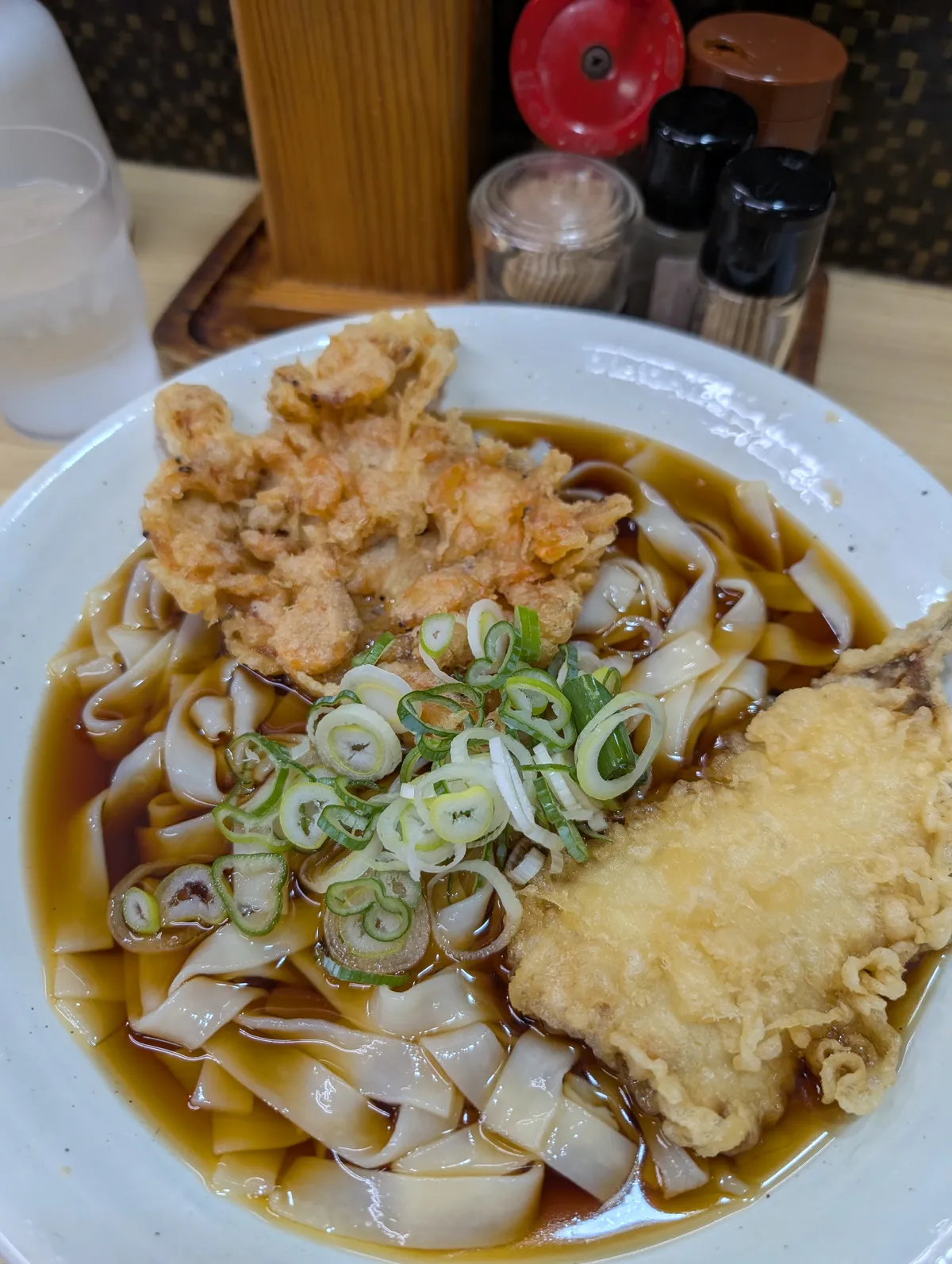
What it is: Flat, wide ribbon noodles served in a clear soy-dashi broth, topped with deep-fried tofu (abura-age), spinach, and a generous pile of bonito flakes (katsuobushi) that dance in the rising steam. The noodles have a silky, slippery texture completely different from round udon — they slide across your tongue with a satisfying smoothness.
Kishimen is the lighter counterpart to miso nikomi udon. Where miso nikomi is heavy and intense, kishimen is delicate and clean. It makes an ideal quick lunch or light afternoon snack.
Where to try it:
Standing kishimen stalls on the JR Nagoya Station platforms — These humble standing-noodle counters on the Shinkansen platforms (tracks 3-4 and tracks 5-6) serve some of the best kishimen in the city. Eating a steaming bowl of noodles while standing on a bullet train platform is a quintessentially Japanese experience that I never tire of.
- Price: ¥430-550
- Hours: Approximately 7:00 AM – 8:00 PM
Miyakishimen (宮きしめん) — Located inside the grounds of Atsuta Shrine, this restaurant serves kishimen in a beautiful garden setting. Combine it with a shrine visit for a perfect morning.
- Address: Inside Atsuta Jingu shrine grounds, Atsuta-ku, Nagoya
- Hours: 9:00 AM – 4:30 PM
- Price: Kishimen from ¥700
Do not skip the platform kishimen at Nagoya Station just because it looks humble. It is genuinely one of the best quick meals in the city, and eating there is a beloved local ritual. Nagoya residents have strong opinions about which platform stall is superior.
6. Ankake Spaghetti (あんかけスパゲッティ) — Nagoya’s Strangest Invention
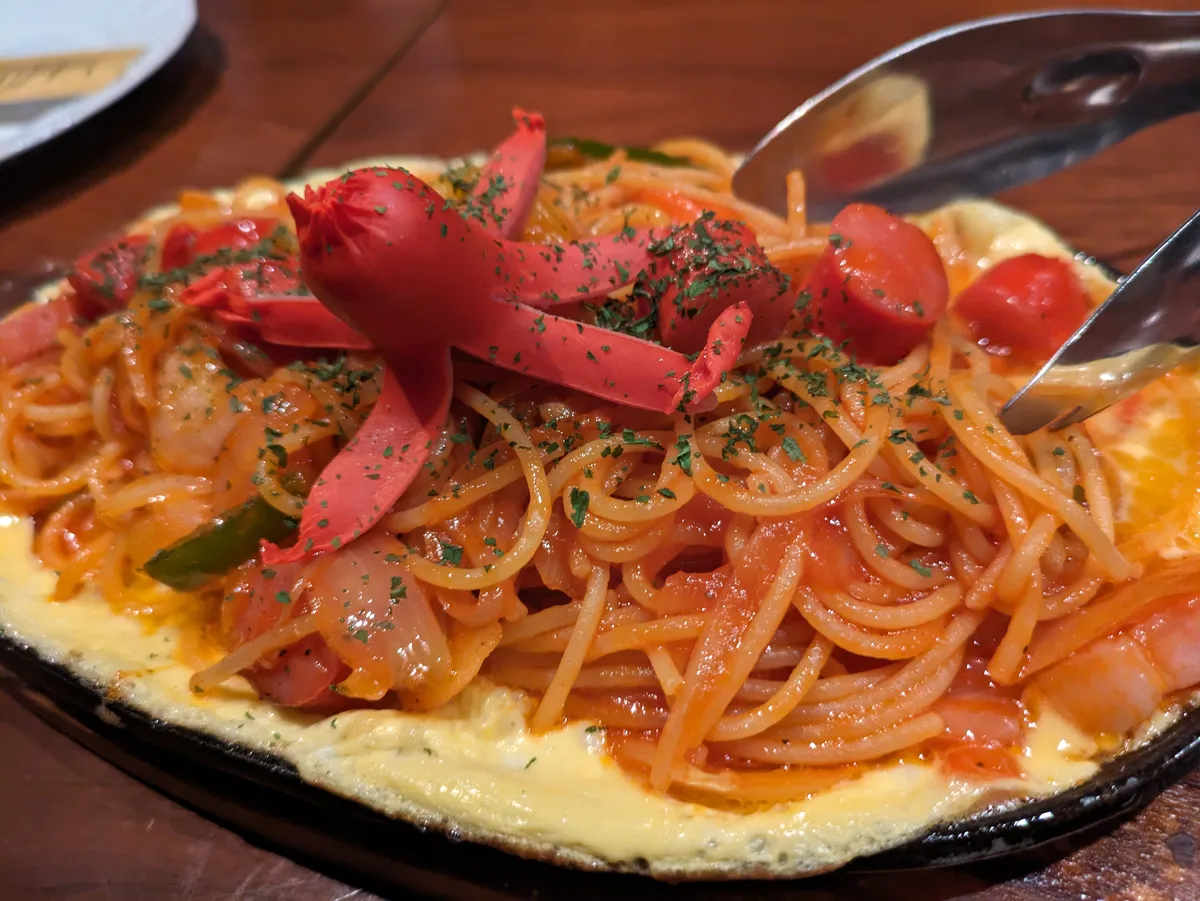
What it is: Thick spaghetti noodles — much thicker than Italian spaghetti, closer to 2.2mm — topped with a spicy, starchy tomato-based sauce with a distinctive thick, gravy-like consistency. The sauce is loaded with black pepper and has a kick that builds as you eat. Toppings typically include sausage, onion, green pepper, mushroom, and sometimes a fried egg.
This dish exists nowhere else in Japan, and it baffles most first-time visitors. It was invented in the 1960s at a restaurant called Yokoi in Nagoya’s Sumiyoshi area, and it has become a staple of the Nagoya Meshi lineup. The concept — Italian pasta meets Japanese starchy sauce meets aggressive pepper seasoning — sounds chaotic on paper. In practice, it is addictive.
Where to try it:
Yokoi (ヨコイ) — The original creator of ankake spaghetti. The restaurant is small, the menu is straightforward, and the portions are enormous.
- Address: 3-10-11 Sakae, Naka-ku, Nagoya (Santo Building 2F)
- Hours: 11:00 AM – 2:00 PM, 4:30 PM – 9:00 PM (closed Mondays)
- Price: Regular ankake spaghetti from ¥1,200; with all toppings from ¥1,550
Spaghetti House Ciao — A popular ankake spaghetti chain with locations throughout Nagoya. More accessible than Yokoi and open longer hours.
- Price: From ¥900; large portions available for ¥150 extra
Beyond ankake spaghetti, do not overlook the teppan Napolitan (iron plate spaghetti) that you find in Nagoya’s local kissaten coffee shops. This is not the ketchup-flavored spaghetti you might know from other parts of Japan — it is a Nagoya invention served sizzling on an iron plate, often with a thin layer of egg underneath. It is a hidden Nagoya specialty that most food guides skip entirely. Walk into any old-school kissaten and check if they have Napolitan on the menu. You will not regret it.
Ankake spaghetti menus use specific terms: “Milanese” means sausage and vegetables, “Country” means vegetables only, and “Viking” means everything. Start with Milanese for the classic experience.
7. Ogura Toast (小倉トースト) — Breakfast, Nagoya Style
What it is: A thick slice of buttered toast piled high with sweet red bean paste (ogura-an). The combination of warm, crispy, buttery bread with the earthy sweetness of red beans is simple and deeply satisfying. It is the definitive Nagoya breakfast item and the centerpiece of the city’s unique morning service culture.
In Nagoya, most kissaten (traditional coffee houses) offer morning service (モーニング) — order a cup of coffee in the morning, and you receive a free breakfast of toast, a boiled egg, and sometimes a small salad. At many places, you can request ogura toast as your morning service bread at no extra charge.
I should confess something: I actually do not like ogura (sweet red bean paste). I grew up in Nagoya and I have never developed a taste for it. When I go to Komeda, I always ask for jam instead. But I still recommend you try it at least once — most visitors enjoy it, and it is the quintessential Nagoya breakfast experience. Just know that even some Nagoya natives quietly prefer jam, and that is completely fine.
Where to try it:
Komeda Coffee (コメダ珈琲店) — Nagoya’s most famous coffee chain, now with locations across Japan. But the flagship experience is still best here in its hometown. My grandmother used to take me to Komeda as a child — it is one of my earliest food memories in this city. The morning service runs until 11:00 AM: order any drink and receive a free thick-cut toast with butter and red bean paste, plus a boiled egg.
- Locations: Over 100 in Nagoya; most convenient near Nagoya Station, Sakae, and major subway stations
- Hours: 7:00 AM – 11:00 PM (morning service until 11:00 AM)
- Price: Coffee ¥540-580 (morning service included free, Komeda Official)
Konparu (コンパル) — A beloved Nagoya-born kissaten with a retro atmosphere. Their ogura toast is excellent, and their iced coffee — served as hot coffee poured over ice at your table — is a signature experience.
- Address (Osu branch): 3-20-19 Osu, Naka-ku, Nagoya
- Hours: 8:00 AM – 9:00 PM
- Price: Ogura toast set from ¥600
While you are at a kissaten, check if they serve food beyond toast. Local kissaten food — yakisoba, Napolitan spaghetti, sandwiches — is a hidden Nagoya specialty in its own right. These are not chain restaurant meals. They are lovingly made comfort food with decades of history behind them. When I did an internship in Inuyama, I ate at local kissaten every day — the food was as good as any restaurant, and the prices were half of what you would pay in Sakae.
Nagoya’s morning service culture is extraordinary value. A single cup of coffee (¥540 at Komeda) gets you a full breakfast. At some independent kissaten, the morning service is even more generous — toast, egg, yogurt, and a small salad with your coffee. Always check what is included before ordering extra food.
8. Taiwan Ramen (台湾ラーメン) — Nagoya’s Spice Bomb
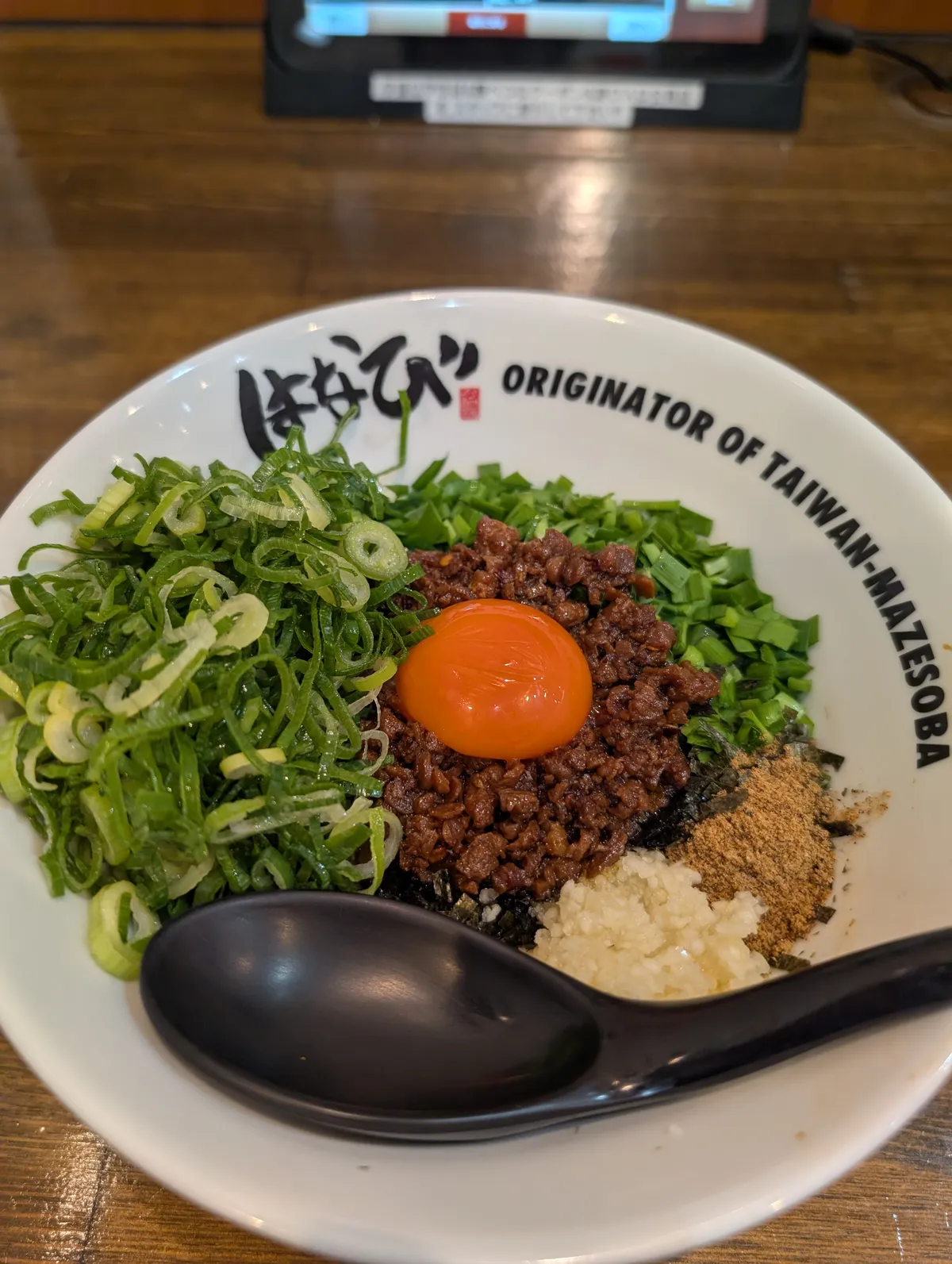
What it is: Despite its name, Taiwan ramen was invented in Nagoya by a Taiwanese immigrant chef in the 1970s. It features a clear soy-based broth loaded with stir-fried minced pork, raw garlic, chili peppers, and Chinese chives (nira). The heat is immediate and intense — this is one of the spiciest ramen styles in all of Japan.
The garlic-forward, chili-heavy flavor profile is completely different from the tonkotsu, shoyu, or miso ramen you find elsewhere. I remember my first bowl at Misen — my nose was running, my forehead was sweating, and I was already planning when to come back.
A word of warning: if you cannot handle spice, Taiwan ramen will wreck your stomach until the next day. I mean that literally. When you look at the menu at Misen, anything with a chili pepper mark next to it is seriously hot. If spice is not your thing, avoid those items entirely and stick to the non-spicy dishes — there are plenty of excellent ones.
Where to try it:
Misen (味仙) — The original inventor of Taiwan ramen. I have lived within walking distance of the Yaba-cho branch for nearly 10 years, so I have watched the crowds change over time. Before COVID, it was manageable. Now the Yaba-cho branch is insanely crowded, with lines wrapping around the block. Here is my pro tip: order takeout. The takeout line is practically empty while the dine-in line stretches down the street. If you do not need the sit-down experience, walk straight past the queue, order at the takeout window, and be eating within minutes.
- Address (Imaike main branch): 1-12-10 Imaike, Chikusa-ku, Nagoya
- Hours: 5:00 PM – 1:00 AM (open daily)
- Price: Taiwan ramen ¥630 (Nagoya Meshi)
Now here is what I really want to tell you about Misen. The Taiwan ramen gets all the attention, but the dishes I order every single time are the chinjao rosu (green pepper beef stir-fry) and the chahan (fried rice). These two are absolute essentials — non-negotiable. The chinjao is perfectly seasoned, and the chahan has that wok-kissed flavor that you cannot fake. I also highly recommend the kikurage (wood ear mushroom) dishes and the subuta (sweet-and-sour pork). Misen is not just a ramen shop — it is a full Chinese restaurant, and the non-ramen dishes are where the real magic is.
Regular Taiwan ramen is genuinely hot. If you want a milder version, order “American” (yes, really — it is the mild option). If you want more heat, order “Italian.” The naming makes no logical sense, but this is Nagoya — embrace the chaos. And remember: chinjao rosu and chahan are not spicy, so you can enjoy those regardless of your heat tolerance.
9. Doteni (どて煮) — The Izakaya Essential
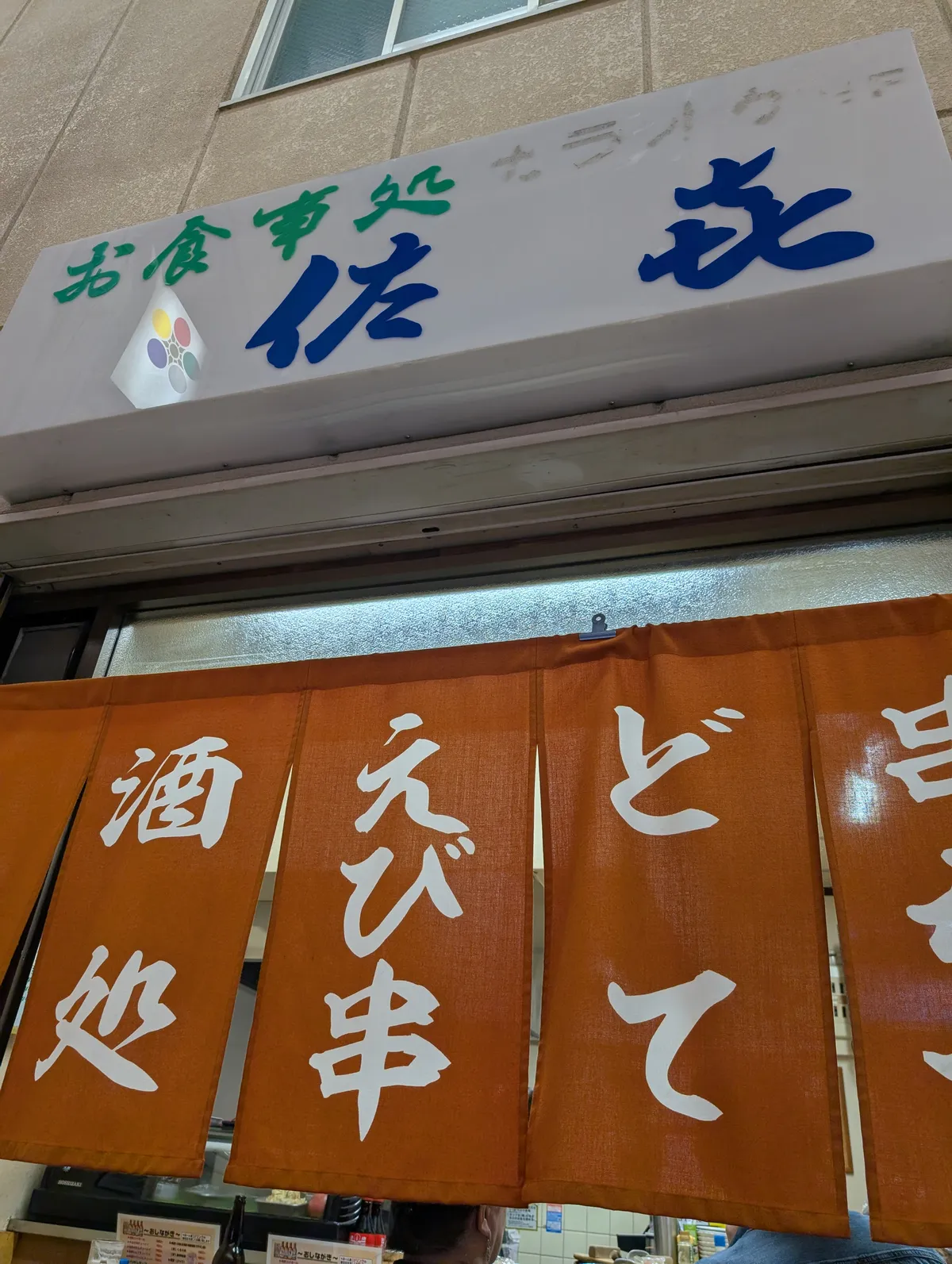
What it is: Beef tendon, daikon radish, konnyaku (konjac jelly), and sometimes boiled eggs slow-simmered for hours in a sweet Hatcho miso sauce until everything is meltingly tender. The sauce is thick, glossy, and coats every piece with deep umami. This is classic izakaya drinking food — rich, savory, and perfect alongside sake or beer.
Doteni is Nagoya’s answer to oden, and the miso makes all the difference. Where standard oden has a light dashi broth, doteni’s miso sauce is dark and intensely flavored. A single small bowl costs only ¥400-600 at most izakayas, making it an affordable way to sample the Hatcho miso flavor that defines Nagoya cooking.
Where to try it:
- Natsume (なつめ) in Osu — A small, atmospheric izakaya with excellent doteni and a warm, local crowd
- Most izakayas in the Sakae and Osu areas will have doteni on their menu
Price: ¥400-600 per serving
10. Tenmusu (天むす) — The Perfect Travel Snack
What it is: Small, bite-sized rice balls (onigiri) with a tempura shrimp tail poking out of the top, wrapped in a strip of nori seaweed. Each one is about three bites, and they are sold in sets of five. The combination of crispy tempura shrimp and seasoned rice is simple and satisfying — ideal for eating on the Shinkansen or carrying as a snack during sightseeing.
Where to try it:
Jiraiya (地雷也) — Available at Nagoya Station as takeaway bento boxes. Look for the shop in the underground concourse near the Shinkansen gates.
- Price: Set of 5 tenmusu ¥918 (tax incl.)
- Hours: 8:00 AM – 8:00 PM
11. Ebi Fry (エビフライ) — Nagoya’s Jumbo Shrimp Obsession
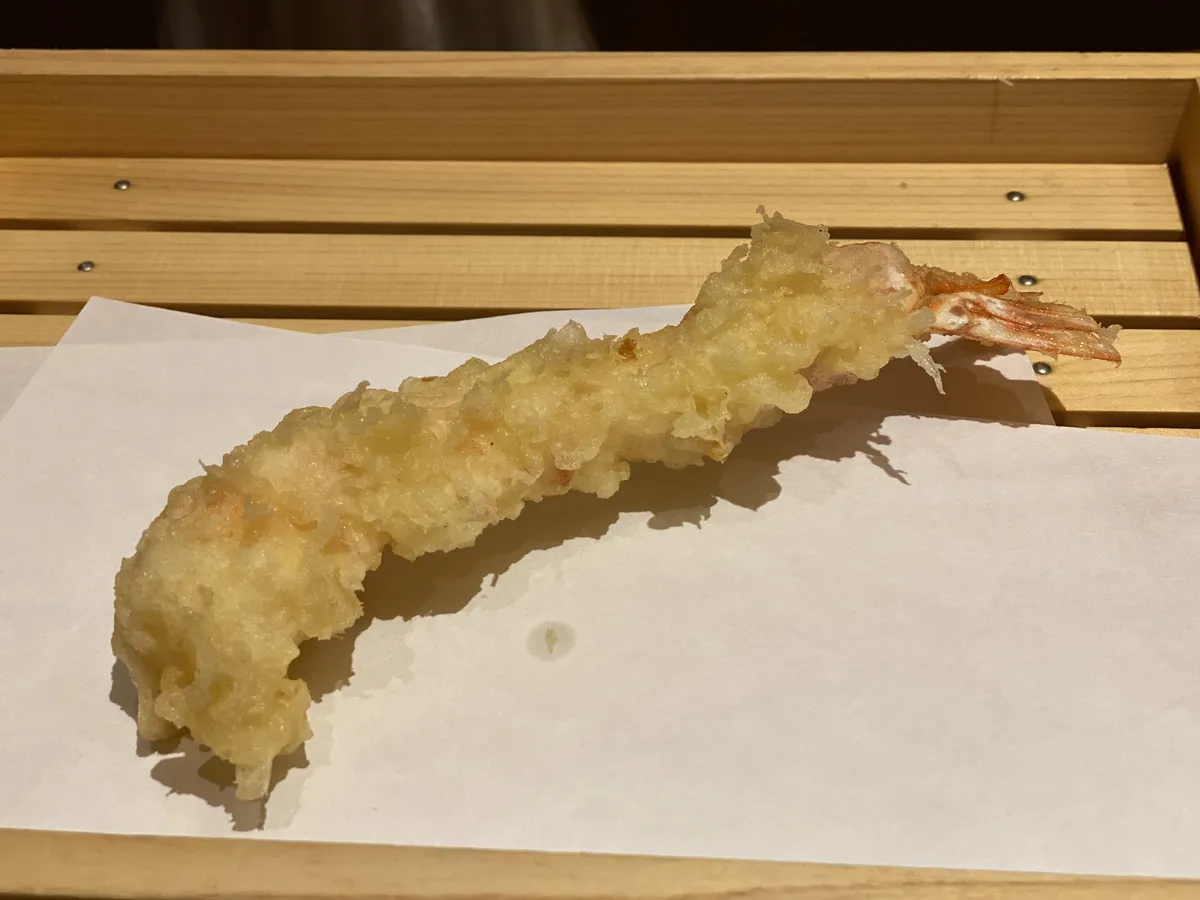
What it is: Deep-fried breaded shrimp. Ebi fry exists across Japan, but Nagoya takes it to an extreme with jumbo-sized shrimp (often 20cm or longer), obsessive attention to the crispy golden panko coating, and — of course — the option to add Hatcho miso sauce. The shrimp in Nagoya’s ebi fry are noticeably larger than what you find elsewhere.
Nagoya people are so proud of their ebi fry that the local dialect jokingly calls them “ebi furyaa” (a dialectal pronunciation), and shrimp motifs appear throughout the city’s marketing.
Where to try it:
Konparu — Famous for their ebi fry sandwich (ebi katsu sando), which layers breaded shrimp in a toasted sandwich with tartar sauce.
- Price: Ebi fry set from ¥1,200; Ebi katsu sando ¥950
12. Miso Oden (味噌おでん) — Convenience Store Surprise
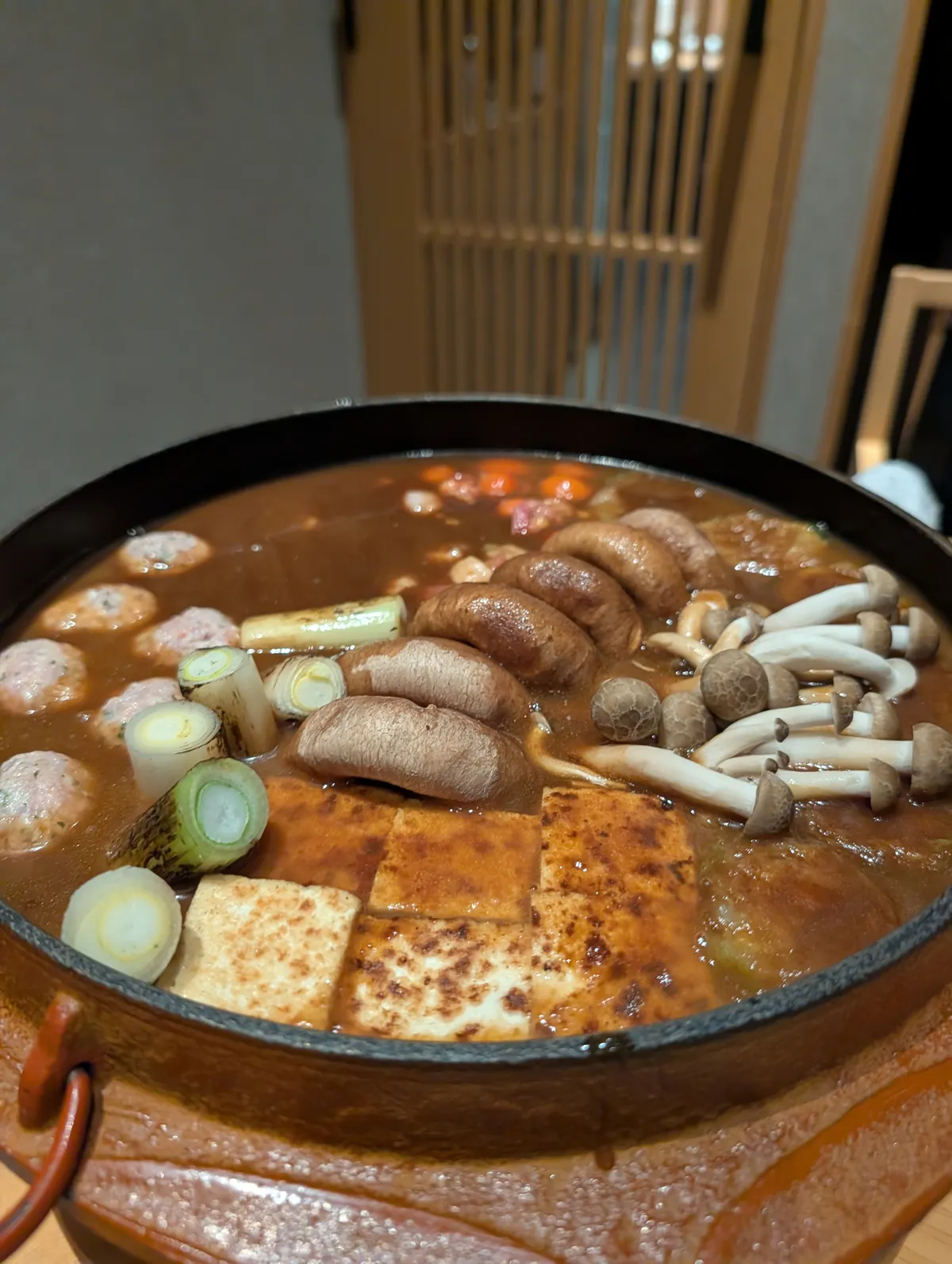
What it is: Traditional oden (simmered fish cakes, daikon radish, boiled eggs, konnyaku, and various ingredients) served in a dark Hatcho miso broth instead of the clear dashi broth used in the rest of Japan. The miso infuses every ingredient with deep, savory flavor.
What fascinates me about miso oden is how deeply it has penetrated Nagoya culture. Even the convenience stores — 7-Eleven, Lawson, FamilyMart — use miso-based broth for their oden pots during the cold months. It is a regional adaptation that you will not see in any other city.
Where to try it:
- Any convenience store in Nagoya during autumn and winter (typically October through March)
- Izakayas throughout the Osu and Sakae areas
- Price: ¥100-200 per item at convenience stores; ¥500-800 for a plate at izakayas
13. Nagoya Cochin Chicken (名古屋コーチン)
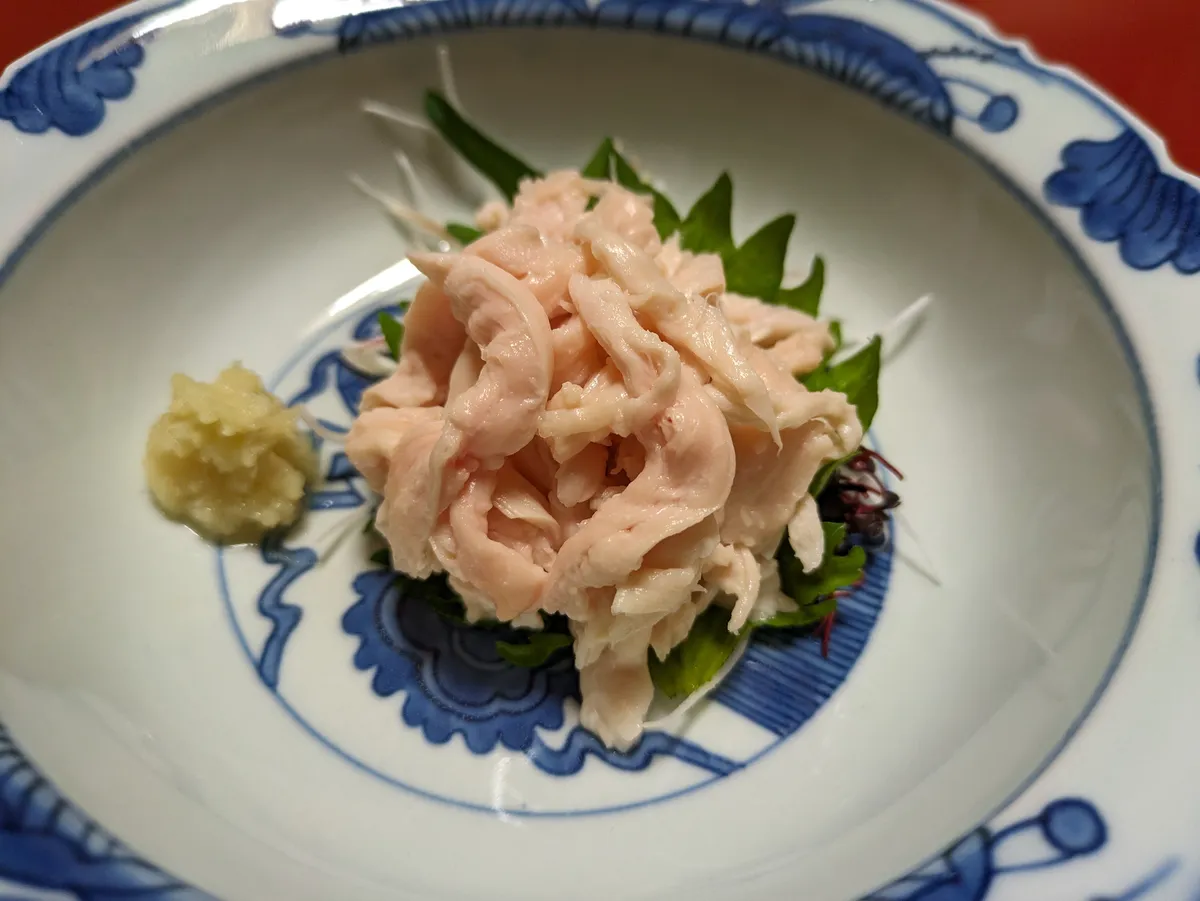
What it is: Nagoya Cochin is a heritage breed of chicken raised in Aichi Prefecture, prized for its firm texture, rich flavor, and golden-yolked eggs. The meat has a distinctly deeper chicken flavor compared to standard broiler chicken, with a pleasant chewiness that comes from the breed’s longer growing period. It is served as yakitori (grilled skewers), in hot pots (nabe), as sashimi (raw, for the adventurous), and in oyakodon (chicken-and-egg rice bowl).
I will be honest: Nagoya Cochin is delicious but expensive, and locals do not eat it as everyday food. Even as someone who has lived here my entire life, Nagoya Cochin is a special-occasion ingredient — the kind of thing you order when someone else is paying or when you are celebrating. You will find Nagoya Cochin oyakodon and yakitori at department store restaurants and commercial facilities like Esca. It is worth trying once, but do not feel like you need to spend a fortune on it. The chicken hot pot dishes I describe in the Tori no Miso Nabe section below are a better use of your dining budget — and a more authentically local dining experience.
Where to try it:
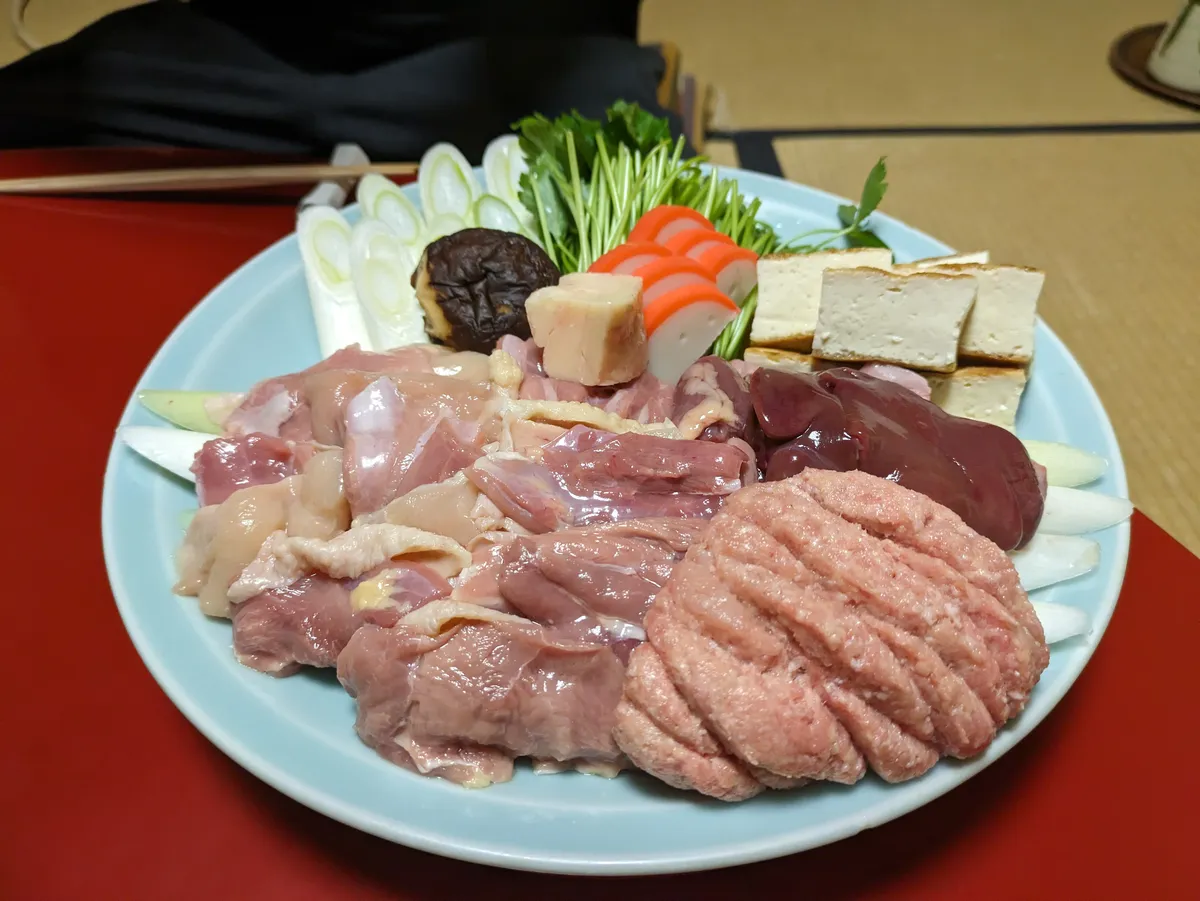
Torikai Sohonke (鳥開総本家) — A yakitori restaurant specializing in Nagoya Cochin. Their oyakodon (chicken and egg over rice) using Nagoya Cochin is superb.
- Address: Nagoya Station Esca underground
- Hours: 11:00 AM – 10:00 PM
- Price: Nagoya Cochin oyakodon ¥1,200; yakitori set from ¥1,800
14. Oni Manjuu (鬼まんじゅう)
What it is: A rustic steamed sweet made with chunky pieces of sweet potato mixed into a simple batter of flour, sugar, and water. The name means “demon bun” because the chunks of sweet potato sticking out of the surface resemble the bumpy clubs that oni (Japanese demons) carry. It is a humble, homestyle Nagoya sweet that you will find in wagashi shops and supermarket bakeries throughout the city.
Where to try it:
- Nagonoya and other local wagashi shops in the Osu district
- Department store basement food floors (depachika) in Sakae
- Price: ¥150-250 per piece
15. Shiro Noir (シロノワール) — Komeda’s Famous Dessert
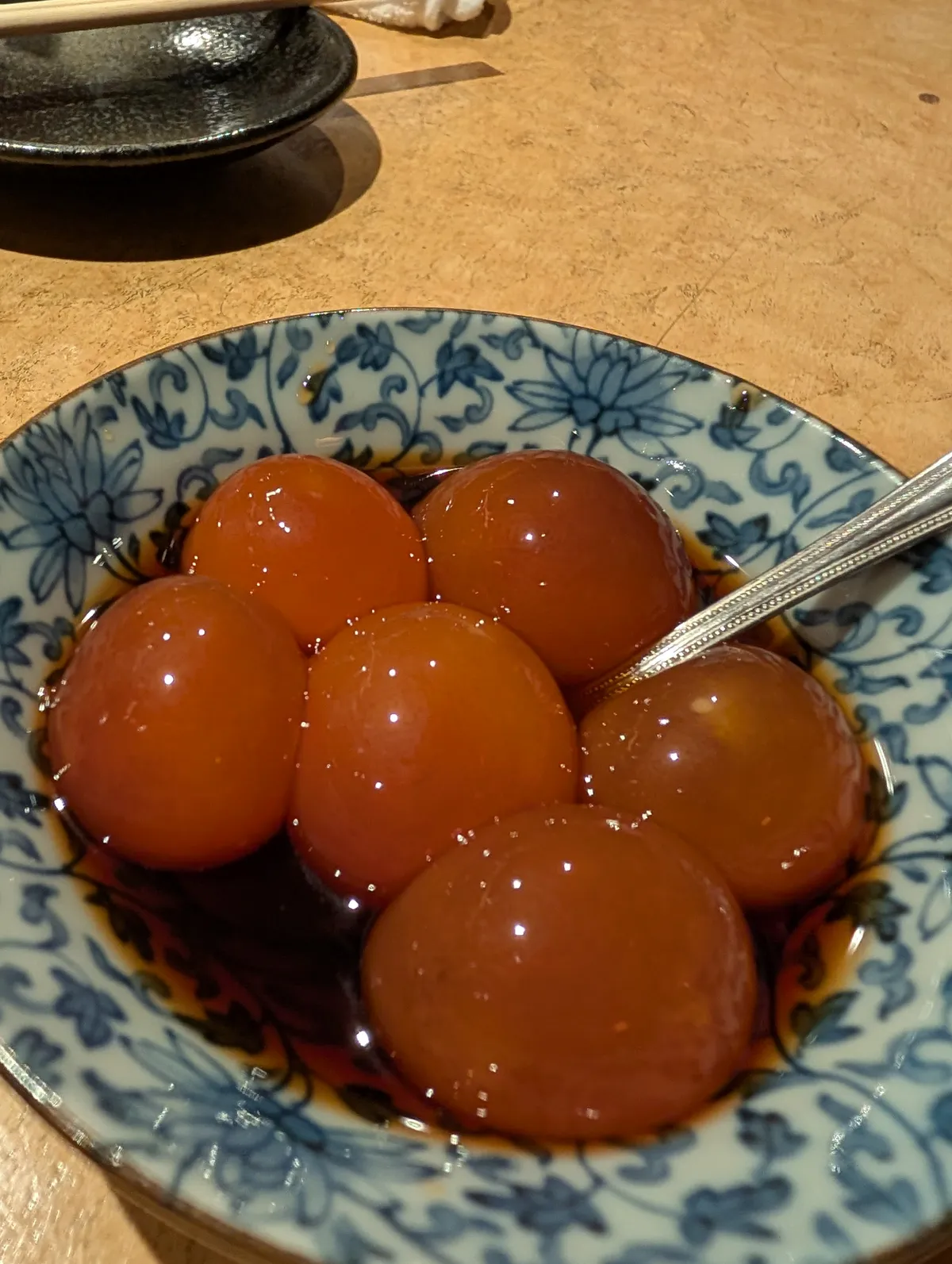
What it is: A warm, freshly baked Danish pastry topped with a generous swirl of soft-serve ice cream, optionally drizzled with syrup. The name combines “shiro” (white, for the ice cream) and “noir” (black, from the French word, for the pastry). The contrast between the warm, flaky bread and the cold, creamy ice cream is irresistible.
Shiro Noir was created by Komeda Coffee and has become one of Nagoya’s most recognizable desserts. It is available at all Komeda locations nationwide, but eating one in a Nagoya Komeda — where the concept was born — feels special. Komeda holds a deep place in my heart because my grandmother took me there throughout my childhood. The Komeda inside Centrair (Chubu Airport) is one of my favorites — it is surprisingly quiet and I use it almost every time I fly out. If you are killing time before a flight, it is a peaceful final Nagoya experience.
Where to try it:
- Any Komeda Coffee location
- Price: Regular Shiro Noir ¥720; Mini Shiro Noir ¥520
Order the mini Shiro Noir unless you are sharing. The regular size is enormous and extremely rich. The mini is the perfect single-serving size and saves you about ¥200.
16. Yakuzen Ramen / Kourai-kei (好来系ラーメン) — Nagoya’s Hidden Ramen Style
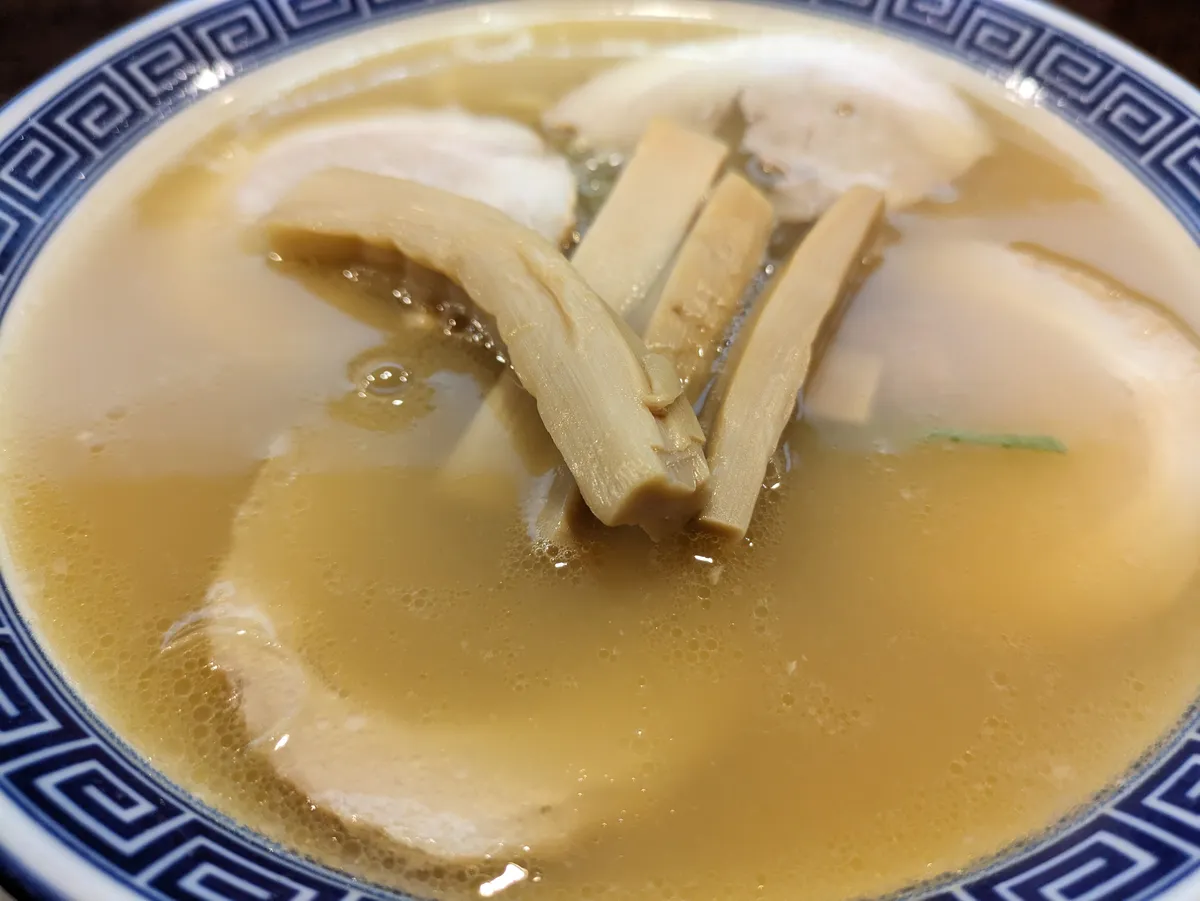
What it is: A ramen style that exists only in Nagoya, built on a delicate broth made from chicken, pork, fish, root vegetables, and herbal medicinal ingredients. The result is unlike any ramen you have tasted before — light, beautiful, deeply Japanese in character. If you are expecting heavy, rich tonkotsu or thick miso ramen, this is the opposite. And it is spectacular.
I need to say this directly: this is THE ramen you must eat in Nagoya. Most Nagoya locals do not even know about it. Food guides ignore it. Google Maps will not help you find it. But yakuzen ramen, specifically the style known as Kourai-kei (好来系), is the most unique ramen experience in the city and possibly in all of Japan.
Where to try it:
Kourai Dojo (総本家 好来道場) — The birthplace of this entire ramen style, founded in 1959 in Chikusa-ku near Fuki-age. The broth is a labor of love: chicken bones, pork bones, dried fish, root vegetables, and various herbal and medicinal ingredients simmered together into something that tastes clean, nourishing, and profoundly satisfying. The flavors are delicate and refined — if you want greasy, salty ramen, go somewhere else. If you want to taste something beautiful that speaks to the soul of Japanese cooking, come here.
- Address: Near Fuki-age, Chikusa-ku, Nagoya
- Hours: 11:00 AM – 2:00 PM only. Closed Sundays. Closes when the soup runs out — and it runs out regularly, so arrive early.
- Price: Ramen from ¥900
- Access: Walk from Fuki-age Station (Sakura-dori Line)
Koyoken (好陽軒) in Showa-ku — A husband-and-wife ramen shop in the Sakurayama-Takiko area that carries on the Kourai tradition. The atmosphere here is incredibly warm — the kind of place where the owners remember your face and greet you like family. For foreign visitors who want an authentic, human Japanese dining experience beyond just the food, this is it.
Kourai Dojo is only open for three hours a day, six days a week, and closes when the soup is gone. Plan your visit for 11:00 AM sharp. This is not a casual “swing by whenever” restaurant — it requires commitment. But the reward is a bowl of ramen you will remember for years.
17. Tori no Miso Nabe (鶏の味噌鍋) — Nagoya’s Best-Kept Secret
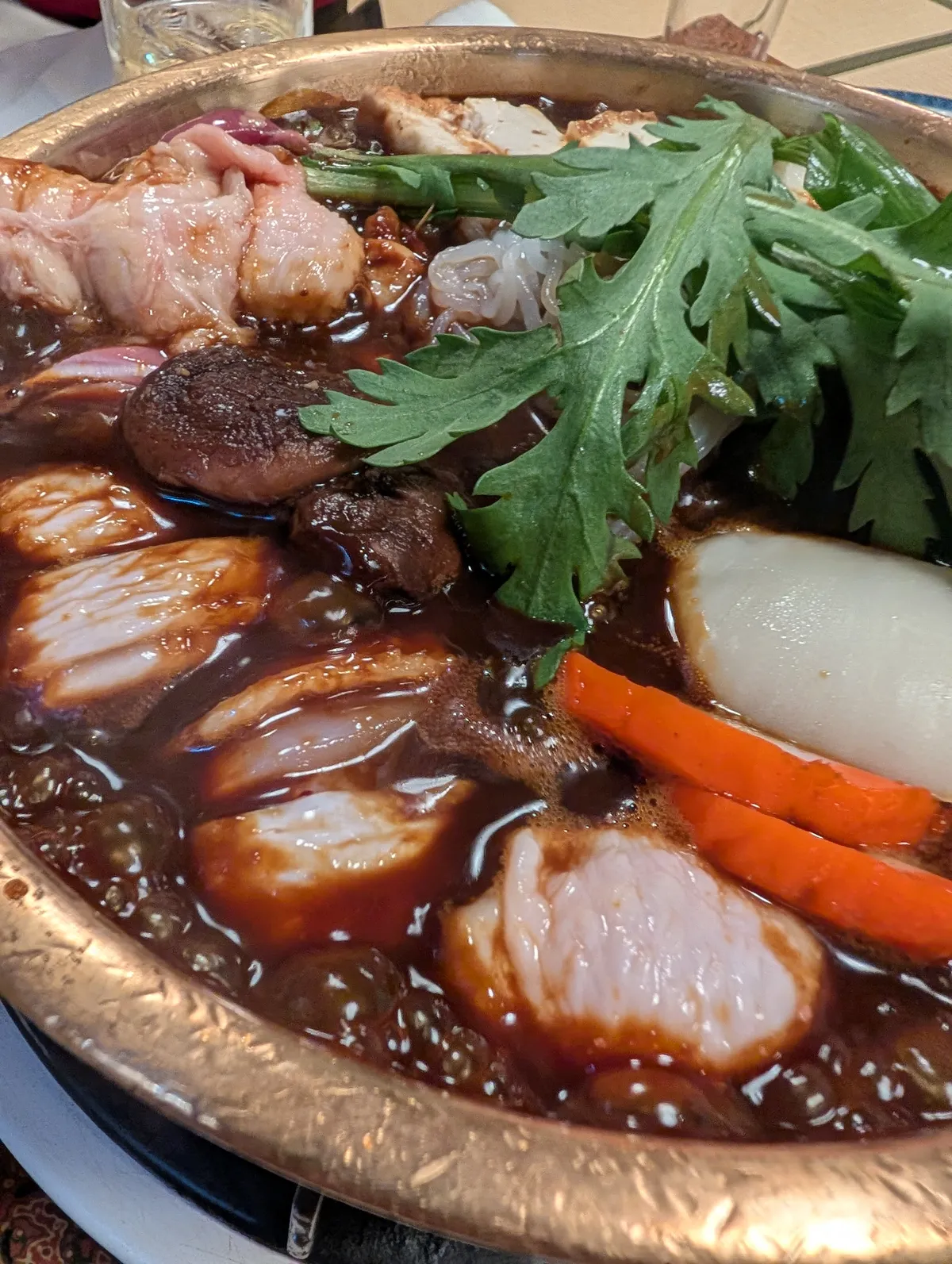
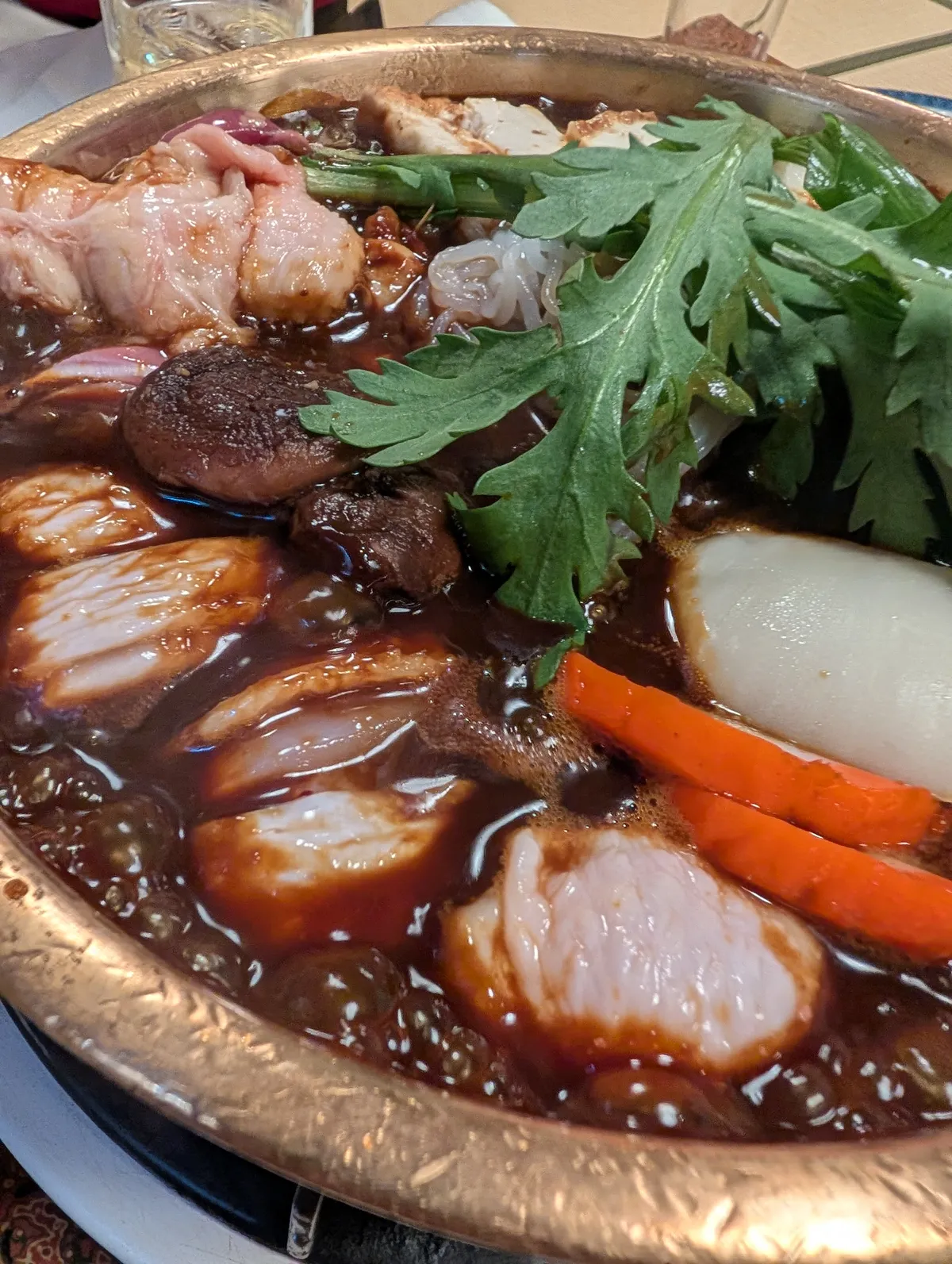
What it is: Chicken simmered in a rich Hatcho miso broth, served as a hot pot (nabe) meant to be shared at the table. This is the dish I am most passionate about recommending to foreign visitors, and I am going to tell you why: even most Nagoya locals do not know about it.
Tori no miso nabe is not on the standard “Nagoya Meshi” lists. It does not appear in tourist brochures. The restaurants that serve it are old, atmospheric, and deeply rooted in Nagoya’s dining culture. This is the dish that, more than any other, captures what eating in Nagoya is really about — sitting on tatami mats, sharing a simmering pot with friends, finishing with noodles or rice porridge, and walking out into the night feeling warm and profoundly satisfied.
Where to try it:
Miyakagi (宮鍵) — Founded in 1899. This is my favorite restaurant in Nagoya, and I have been here more than 10 times — I go 3 to 4 times a year. Miyakagi serves Mikawa red chicken simmered in an Okazaki Hatcho miso broth. The second floor has tatami seating where you sit on the floor around small tables and share the bubbling pot. It is Nagoya’s food culture made physical. When the chicken is done, you finish with kishimen noodles or zosui (rice porridge) cooked in the remaining broth. Every drop gets used. Credit cards are accepted, and prices are surprisingly reasonable for the quality and history.
- Address: 1-2-13 Meieki-Minami, Nakamura-ku, Nagoya
- Price: Chicken miso nabe course from ¥3,500 per person
- Access: Walk from Nagoya Station
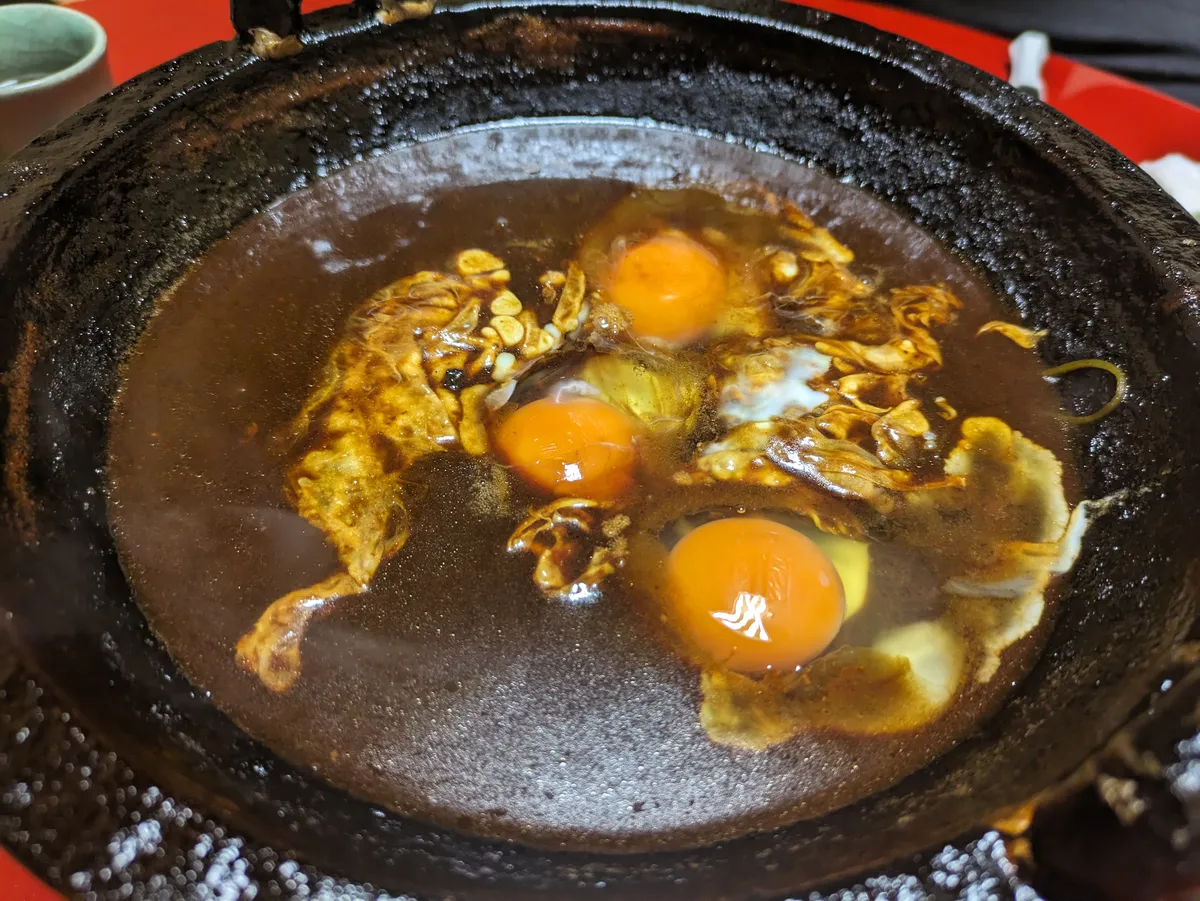
Raku (楽) — Reservation only, minimum 3 people. This restaurant has a secret family miso recipe passed down from the previous proprietress, and the flavor is unlike anything else. The atmosphere is stunning — the kind of place where you feel transported to another era. Cash only. Located in the heart of Nishiki in Sakae, so access is easy despite its hidden nature.
Torihisa (かしわ料理 鳥久) — This one is slightly different — it is chicken hot pot (not miso-based), served in an old Japanese house near Kokusai Center Station. The atmosphere is extraordinary: you are literally eating in what looks and feels like someone’s home from decades past. The chicken is delicate and flavorful. Cash only is likely. If you go, you will feel like you have stepped into a Japan that most tourists never see.
If you only have time for one “off the beaten path” meal in Nagoya, make it Miyakagi. It is walking distance from Nagoya Station, accepts credit cards, serves dishes that cannot be found anywhere else in Japan, and the tatami dining experience is the most authentic Japanese meal setting you can find in this city. Arrive hungry — you will want the kishimen or zosui at the end.
18. Nakagawa-ku Ramen Holy Land (中川区ラーメン) — Off the Tourist Map
What it is: This is not a single dish — it is an entire neighborhood. I grew up in Nakagawa-ku, and I call it the holy land of ramen. This working-class district on the west side of Nagoya has an extraordinary concentration of ramen shops, each one different, many of them nationally significant. No tourist comes here. That is exactly why you should.
Where to try it:
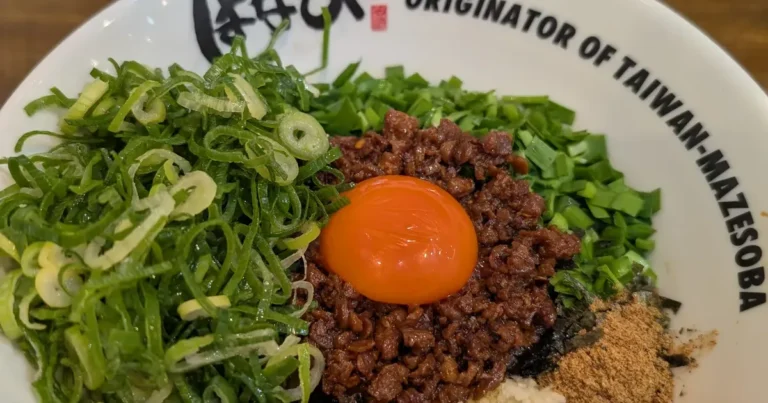
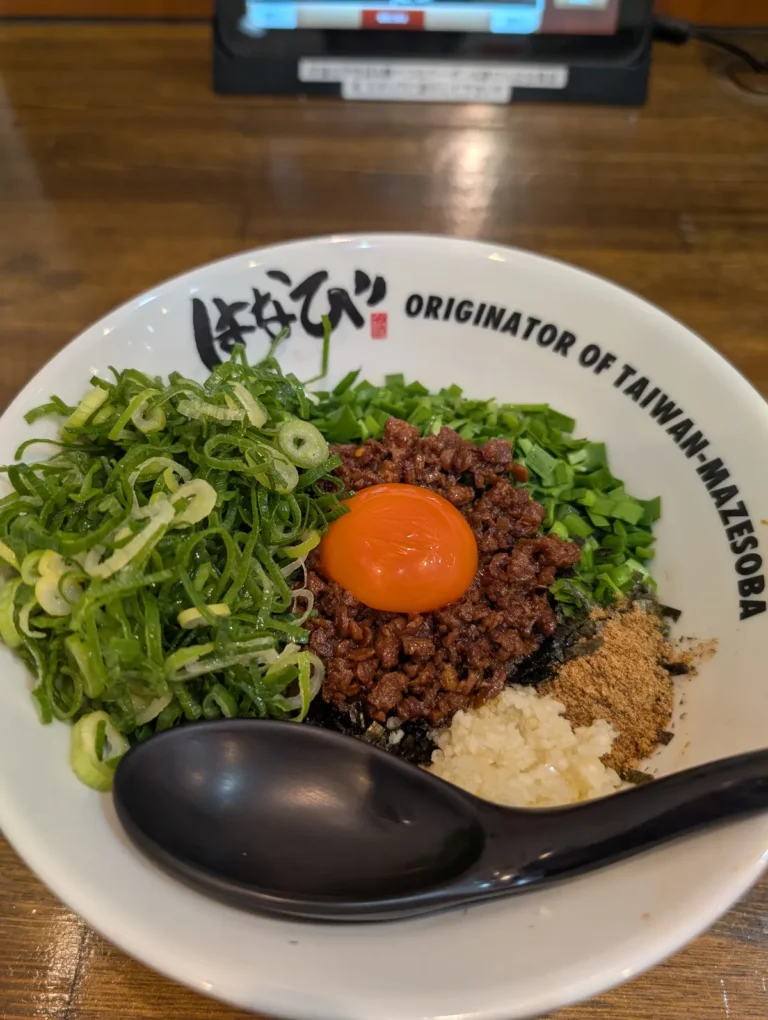
Menya Hanabi Takabata Main Branch (麺屋はなび 高畑本店) — This is where Taiwan mazesoba was born. Taiwan mazesoba is a dry ramen with no soup — spicy minced pork, garlic, egg yolk, nori, and green onion tossed together with thick noodles. The owner, Naoto Niiyama, invented it as a staff meal back when this was still just one tiny shop in Takabata. It has since exploded into a national phenomenon with locations across Japan, but the original Takabata branch is where the magic started.
- Address: Takabata area, Nakagawa-ku, Nagoya
- Price: Taiwan mazesoba from ¥900
- Access: Walk from Takabata Station (Higashiyama Line)
Tsukemen Maruwa Haruta Main Branch (つけ麺 丸和 春田本店) — Ultra-thick pork and chicken broth with 100% Hokkaido wheat noodles. The dipping broth is so concentrated it coats every strand. This is power ramen — rich, filling, and deeply satisfying.
- Address: Haruta area, Nakagawa-ku, Nagoya
- Price: Tsukemen from ¥950
Ramen Kaisui (ラーメン かいすい) — A neighborhood Chinese restaurant with over 100 items on the menu. I grew up eating here. My recommendation is the paiko-men — ramen topped with a big slab of fried chicken. The most popular item is the kaku-niku wanfu-men (braised pork noodles). Prices are low and the portions are honest.
- Address: 1-703 Noda, Nakagawa-ku, Nagoya
- Price: Paiko-men from ¥850
Beyond these named shops, Nakagawa-ku and the neighboring Minato-ku area have authentic Chinese restaurants run by Chinese families serving real Chinese food — not the Japanese-Chinese fusion you find elsewhere. I grew up eating at these places — many of them do not appear on Google Maps or Tabelog, and the youngest customer might be 70 years old. If you love Chinese cuisine and want the real thing in Japan, this is the area to explore.
Nakagawa-ku is about 20 minutes by bicycle from central Nagoya, or a short subway ride to Takabata Station on the Higashiyama Line — check our Nagoya transit guide for day pass options that cover unlimited subway rides. It is not a tourist destination, and that is the point. The ramen shops here serve locals, not visitors, and the quality reflects it. Come hungry, bring cash, and be ready to eat alongside Nagoya’s working families.
Where Are the Best Nagoya Food Neighborhoods?
According to the Michelin Guide, Nagoya and Aichi Prefecture hold over 200 Michelin-recognized restaurants including starred establishments and Bib Gourmand selections, placing the region among Japan’s top dining destinations outside Tokyo, Osaka, and Kyoto.
Nagoya’s food scene is spread across several distinct neighborhoods, each with its own character. I have lived in Sakae for over 10 years and grew up in Nakagawa-ku, and as a sales rep I spent years walking every neighborhood in this city eating lunch wherever I happened to be. Here is where to head depending on what you are craving.
| Neighborhood | Best For | Signature Dishes | Getting There |
|---|---|---|---|
| Nagoya Station (Esca/Meichika) | Quick meals, convenient chains, takeaway bento | Kishimen, miso katsu, tenmusu, Nagoya Cochin | You are already there |
| Sakae | Upscale dining, department store food floors, izakayas | Hitsumabushi, tebasaki, all Nagoya Meshi | Higashiyama or Meijo Line to Sakae Station |
| Osu | Street food, budget eats, international cuisine, izakayas | Doteni, street food, ogura toast, miso katsu at Suzuya | Tsurumai Line to Osu Kannon Station |
| Atsuta | Hitsumabushi pilgrimage | Hitsumabushi at Houraiken, kishimen at Atsuta Shrine | Meijo Line to Jingu-Nishi Station |
| Imaike | Spicy food lovers, late-night eating | Taiwan ramen at Misen | Higashiyama Line to Imaike Station |
| Yaba-cho | Miso katsu at its finest | Miso katsu at Yabaton | Meijo Line to Yaba-cho Station |
| Chikusa-ku (Fuki-age) | Nagoya’s hidden ramen | Yakuzen ramen at Kourai Dojo | Sakura-dori Line to Fuki-age Station |
| Nakagawa-ku | Ramen holy land, authentic Chinese food | Taiwan mazesoba at Hanabi, tsukemen at Maruwa | Higashiyama Line to Takabata Station |
| Nakamura-ku (west side) | Ultra-local dining, red-lantern izakayas | Tori no miso nabe at Miyakagi, local tonkatsu | Walk from Nagoya Station |
For details on getting around the city, see our guide on getting around Nagoya.
How Much Does Food Cost in Nagoya?
Nagoya is significantly more affordable than Tokyo or Osaka for dining — another reason to base yourself in Nagoya rather than just passing through. Here is a realistic daily food budget breakdown for 2026.
| Budget Level | Daily Food Cost | What You Can Eat |
|---|---|---|
| Budget (backpacker) | ¥2,500 – 4,000 | Morning service breakfast (free with ¥540 coffee), convenience store or station lunch (¥500-800), chain restaurant dinner (¥800-1,200) |
| Mid-range | ¥5,000 – 10,000 | Morning service + ogura toast, sit-down lunch at a Nagoya Meshi restaurant (¥1,200-2,000), izakaya dinner with tebasaki and beer (¥2,500-4,000) |
| Splurge | ¥10,000 – 15,000 | All of the above plus hitsumabushi lunch (¥4,950) and a multi-dish dinner with drinks (¥4,000-6,000) |
Take full advantage of Nagoya’s morning service culture. A ¥540 cup of coffee at Komeda gets you a complete breakfast (toast, egg, and red bean paste) for free. That is a savings of ¥500-800 over buying breakfast separately — every single morning of your trip.
For accommodations to pair with your food adventure, check our where to stay in Nagoya guide.
What Does the Perfect Nagoya Food Day Look Like?
If you have one full day dedicated to eating — and honestly, you should — here is my battle-tested plan based on 35 years of living and eating in this city.
| Time | Meal | What to Get | Cost |
|---|---|---|---|
| 8:00 AM | Morning service at Komeda Coffee | Coffee + free ogura toast + egg | ¥500 |
| 11:00 AM | Yakuzen ramen at Kourai Dojo | A bowl of Nagoya’s hidden ramen before the soup runs out | ¥900 |
| 1:00 PM | Hitsumabushi at Atsuta Houraiken | The full three-way eel experience | ¥4,950 |
| 3:30 PM | Platform kishimen at Nagoya Station | Hot flat noodles — the perfect light afternoon snack | ¥450 |
| 5:30 PM | Tebasaki and beer at Furaibo | 3 orders of wings + 2 draft beers | ¥2,700 |
| 7:30 PM | Miso katsu at Suzuya Akamon | Hire katsu with miso on the side | ¥1,600 |
Total cost: approximately ¥10,750 — a full day of eating Nagoya’s greatest hits, including dishes that most tourists never discover.
Is it a lot of food? Yes. Will you regret it? Not for a single second.
If you have a second day, dedicate it to the deeper Nagoya experience: tori no miso nabe at Miyakagi for dinner, Misen takeout for a late-night feast (chinjao rosu and chahan, remember), and a morning expedition to Nakagawa-ku for Taiwan mazesoba at Menya Hanabi. With a third day, take a day trip to Takayama and try the legendary Hida beef sushi while you are there.
If you have more time in the city, see our Nagoya 3-day itinerary which builds food experiences into a complete sightseeing schedule.
What Is Nagoya’s Morning Service Culture?
Nagoya’s morning service (モーニングサービス) is one of the city’s most charming cultural traditions, and it offers the best breakfast value in Japan. The concept is simple: order a cup of coffee at any kissaten (traditional coffee house) in the morning, and you receive a complimentary breakfast — typically thick-cut toast, a boiled egg, and sometimes a small salad, yogurt, or red bean paste.
According to the Japan National Tourism Organization (JNTO), Nagoya’s unique food culture is recognized as one of the top 5 regional cuisine experiences in Japan, with Hatcho miso production in nearby Okazaki dating back over 600 years to the Muromachi period.
This tradition began in the 1950s in Nagoya’s Ichinomiya area and spread throughout the city. Today, nearly every kissaten and many chain coffee shops in Nagoya offer morning service, typically from opening time until 10:00 or 11:00 AM.
Morning service is deeply personal to me. I grew up going to Komeda with my grandmother — that is where I learned to love Nagoya’s coffee culture. As an adult, I discovered Yaba Coffee (やばこーひー), a small café near Sakae that I have visited hundreds of times over the years. I went there to study during graduate school, and later to work when I started my own business. It is still one of my go-to morning spots: reasonably priced, never too crowded in the morning, and right in front of Flarie — a green space where you can enjoy fresh air after your coffee. They also serve onigiri (rice balls), which is a rare and welcome option for a kissaten.
The generosity of the morning service varies by establishment. At Komeda Coffee, you receive toast and an egg. At some independent kissaten, a single ¥500 cup of coffee gets you toast, a sandwich half, a boiled egg, a small salad, yogurt, and fruit. I have been to places where the “free” breakfast was more substantial than what you would pay ¥800 for at a Tokyo cafe.
For visitors, morning service is both a cultural experience and a practical money-saver. Start every morning of your Nagoya trip at a kissaten.
How Do You Navigate Nagoya Restaurants as an English Speaker?
Nagoya is less internationally touristy than Tokyo or Osaka, so English availability varies. Here is what to expect and how to prepare.
Chain restaurants (Yabaton, Yamachan, Furaibo, Komeda, Yamamotoya) typically have picture menus and often English menus. Pointing at pictures works perfectly, and the staff are accustomed to international visitors.
Independent restaurants and izakayas are more likely to have Japanese-only menus. However, these tips will get you through:
- Google Translate camera mode — Point your phone camera at a Japanese menu and get instant translation. This single tool removes 90% of the language barrier in restaurants.
- Learn three phrases: “Osusume wa nan desu ka?” (What do you recommend?), “Kore o kudasai” (This one, please), and “Oishii!” (Delicious!) — these go a long way.
- Tabelog and Google Maps — Check restaurant pages before you go. Many have photos of every menu item, so you can decide what to order before you arrive.
The best meals I have had in Nagoya are at places like Koyoken, Katsu Taikou, and the tiny udon shops in Nakamura-ku — places where the chef speaks zero English and the menu is handwritten on paper taped to the wall. A smile, pointing at what you want, and genuine enthusiasm for the food transcends language every time. Do not let the language barrier keep you in the tourist restaurants. The locals at these small shops are almost always delighted to see a foreign face — it happens so rarely that they go out of their way to make you feel welcome.
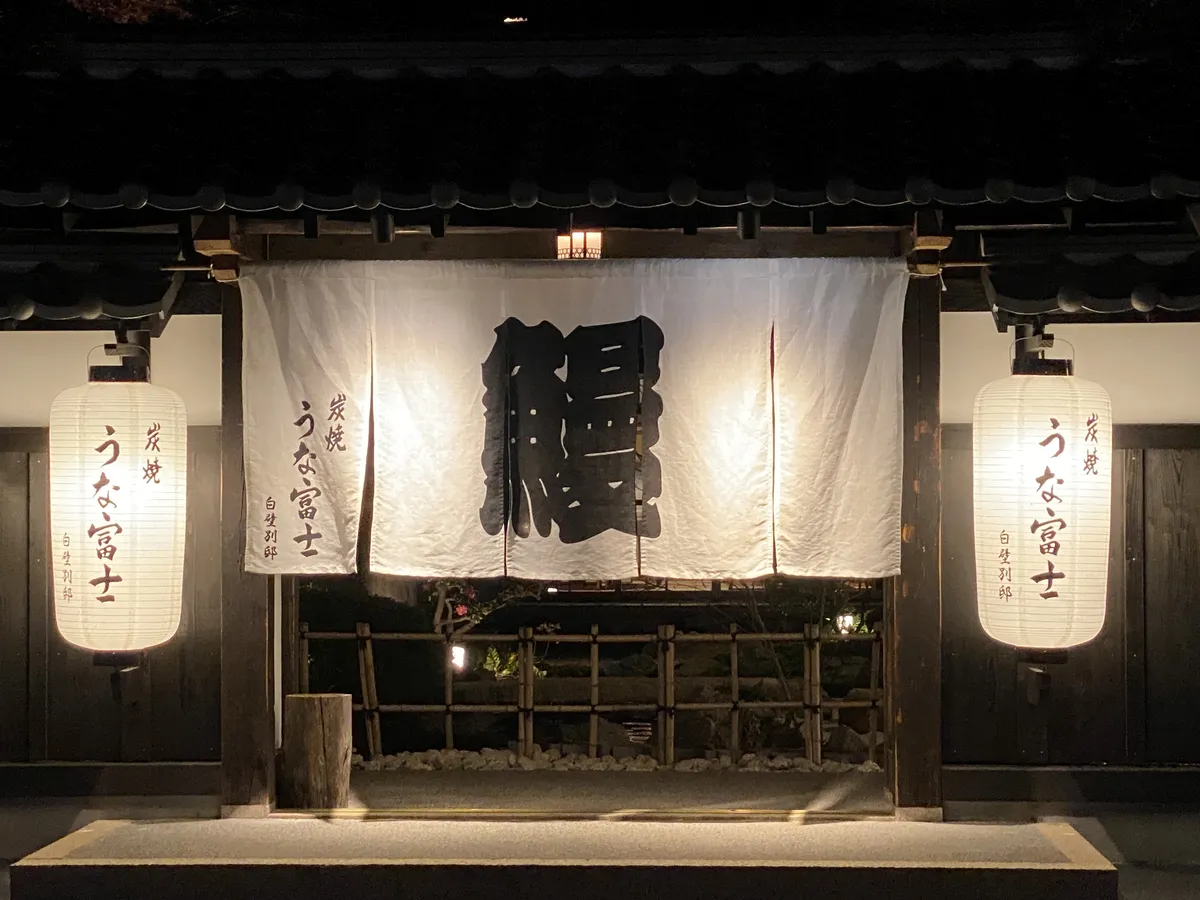
Do not let the language barrier stop you from visiting small, local restaurants. A smile, pointing at the menu, and genuine enthusiasm for the food transcends language every time. The red-lantern izakayas with handwritten menus and 70-year-old regulars are where you will find the real Nagoya.
For broader practical travel tips including language, transportation, and mobile data, see our Japan travel essentials guide for Central Japan.
Nagoya Food Comparison: Which Dishes Should You Prioritize?
If you have limited time, use this table to prioritize based on your preferences.
| Dish | Flavor Profile | Price Range | Best For | Priority |
|---|---|---|---|---|
| Hitsumabushi | Rich, sweet, savory, delicate | ¥4,200 – 6,600 | The bucket-list meal | Must-try |
| Miso Katsu | Rich, sweet-savory, bold | ¥1,500 – 2,200 | Hearty comfort food lovers | Must-try |
| Tebasaki | Sweet, spicy, crunchy | ¥650 – 700 per order | Beer lovers, social dining | Must-try |
| Tori no Miso Nabe | Rich, savory, warming, communal | ¥3,000 – 4,500 | Cultural dining experience seekers | Must-try |
| Miso Nikomi Udon | Rich, savory, warming | ¥1,296 – 1,815 | Cold-weather visits, noodle fans | High |
| Yakuzen Ramen | Delicate, herbal, clean | ¥900 – 1,100 | Ramen lovers seeking something unique | High |
| Kishimen | Light, clean, subtle | ¥430 – 850 | Quick meals, budget eaters | High |
| Ankake Spaghetti | Spicy, starchy, unique | ¥880 – 1,100 | Adventurous eaters | High |
| Ogura Toast | Sweet, buttery, comforting | Free with coffee | Everyone (it is free!) | High |
| Taiwan Ramen | Spicy, garlicky, bold | ¥700 | Spice lovers | Medium-High |
| Nakagawa-ku Ramen | Varies by shop | ¥850 – 1,100 | Ramen pilgrims, off-the-path explorers | Medium-High |
| Doteni | Sweet-savory, melt-in-mouth | ¥400 – 600 | Izakaya drinkers | Medium |
| Tenmusu | Light, savory, portable | ¥780 per set | Train travelers, snackers | Medium |
| Nagoya Cochin | Rich, deep chicken flavor | ¥1,200 – 1,800 | Chicken and yakitori fans | Medium |
| Ebi Fry | Crispy, sweet shrimp | ¥950 – 1,200 | Fried food enthusiasts | Medium |
| Miso Oden | Savory, warming, subtle | ¥100 – 200 per item | Winter visitors, convenience store snackers | Medium |
| Shiro Noir | Sweet, warm-cold contrast | ¥480 – 680 | Dessert lovers, Komeda visitors | Medium |
| Oni Manjuu | Sweet, earthy, rustic | ¥150 – 250 | Sweet potato fans, souvenir hunters | Low-Medium |
Frequently Asked Questions About Nagoya Food
What is the single best dish to try in Nagoya?
Hitsumabushi (grilled eel on rice) is the definitive Nagoya food experience and should be your top priority. The three-way eating method — plain, with condiments, and with dashi broth — provides three completely different flavor experiences from a single bowl. It is unique to Nagoya and unavailable in this style anywhere else in Japan.
If you visit Atsuta Houraiken, the restaurant that invented the dish in 1873, you are eating at the birthplace of a culinary tradition. The eel is charcoal-grilled to a perfect crispy-tender texture, and the sweet soy tare glaze is generations-old. Budget 4,950 yen and arrive early to minimize the wait. I have eaten hitsumabushi over a hundred times and it never gets old.
That said, if you want the dish that most surprised me when I recommended it to foreign visitors, it is tori no miso nabe at Miyakagi. The tatami seating, the bubbling miso broth, the chicken falling apart — it is an experience that captures what Nagoya dining is really about, and almost no one outside the city knows it exists.
Is Nagoya food too heavy for summer visits?
Many Nagoya Meshi dishes are rich and hearty, but lighter options like kishimen, Taiwan ramen, yakuzen ramen, and tenmusu work well in any season. Nagoya summers are hot and humid (regularly exceeding 35 degrees Celsius), and locals adjust their eating habits accordingly.
During summer, cold kishimen (hiyashi kishimen) is widely available and refreshing. Taiwan ramen, despite being a hot soup, is traditionally believed to help you cool down through perspiration — a concept the Japanese call “cooling by sweating.” Yakuzen ramen at Kourai Dojo is also surprisingly refreshing in warm weather thanks to its clean, herbal broth. Many restaurants also offer seasonal cold noodle dishes. The morning service culture remains year-round, and a cold iced coffee at Komeda with your complimentary breakfast is a perfect summer start.
Where should I eat near Nagoya Station if I only have one hour?
Head to the Esca or Meichika underground restaurant floors directly below Nagoya Station, where you can find excellent Nagoya Meshi in 30-45 minutes. Esca has branches of Yabaton (miso katsu), Yamachan (tebasaki), and several kishimen and Nagoya Cochin restaurants. If you have a bit more time, Miyakagi is within walking distance of the station for tori no miso nabe.
If you have literally 15 minutes between trains, the standing kishimen stalls on the JR platforms are your best option. A hot bowl of perfectly made flat noodles in 5 minutes for 450 yen — it does not get more efficient than that. I use these stalls regularly when transferring through Nagoya Station, and they never disappoint.
Can I do a self-guided Nagoya food tour on foot?
Yes — the Osu and Sakae neighborhoods are walkable and densely packed with restaurants, making them ideal for a self-guided food crawl. Start at Osu Kannon Station, walk through the covered shopping arcade sampling street food, then continue north toward Sakae for sit-down restaurants and department store food floors.
A good walking route: Osu Kannon Temple (street food stalls) to Osu shopping arcade (Turkish kebabs, takoyaki, croquettes) to Suzuya Akamon in Osu (miso katsu) to Sakae underground (more restaurants). The entire route is about 2 kilometers and can be done in 3-4 hours with eating stops. See our complete things to do in Nagoya guide for a full Osu neighborhood walkthrough.
What food souvenirs should I bring home from Nagoya?
The best Nagoya food souvenirs are vacuum-packed miso katsu sauce (by Yabaton), dried kishimen noodles with dashi packets, and Nagoya-exclusive snacks from the station gift shops. These items are shelf-stable, packable, and let you recreate Nagoya flavors at home.
The Nagoya Station Grand Kiosk and the KITTE Nagoya building next to the station have excellent souvenir sections. Top picks: Yabaton miso sauce (¥500), Yamamotoya dried miso nikomi udon kit (¥800), shrimp crackers (ebi senbei) from Keifuku-do (¥600-1,200), and Nagoya-limited Kit-Kat flavors (ogura toast flavor, when available). The underground food floors (depachika) of Takashimaya and Matsuzakaya department stores also have beautifully packaged sweets perfect for gifts.
Related Guides
- 15 Best Things to Do in Nagoya: A Local’s Complete Guide — Combine your food adventure with the city’s top attractions
- Complete Ghibli Park Guide: Tickets, Access, and What to Expect — Plan your visit to Studio Ghibli’s immersive theme park near Nagoya
- Nagoya to Takayama and Shirakawa-go Day Trip Guide — The most popular day trip from Nagoya through the Japanese Alps
- Where to Stay in Nagoya: Best Areas and Hotels — Find the perfect neighborhood and hotel for your food-focused trip
- Getting Around Nagoya: Subway, Bus, and Day Pass Guide — Navigate the city like a local
- Nagoya 3-Day Itinerary: The Perfect First Visit — A day-by-day plan that includes all the essential food stops
- Japan Travel Essentials for Central Japan — Practical tips for language, money, and connectivity
- How Much Does a Nagoya Trip Cost? Complete Budget Guide — Detailed cost breakdown for every travel style
- Nagoya Ramen Guide — The best bowls in the city
Find the Best Hotels in Nagoya for Your Food Trip
Find Nagoya Food Tours and Experiences
Get Your Nagoya Subway Day Pass
Want someone to order for you?
See Nagoya food tours →A guided walk is an easy way into the local dishes.