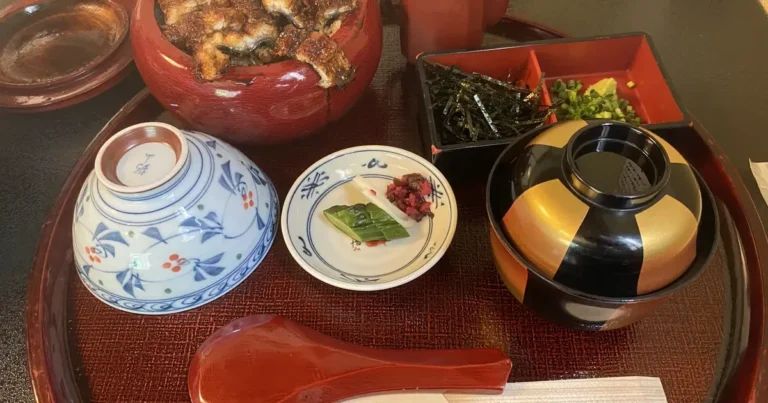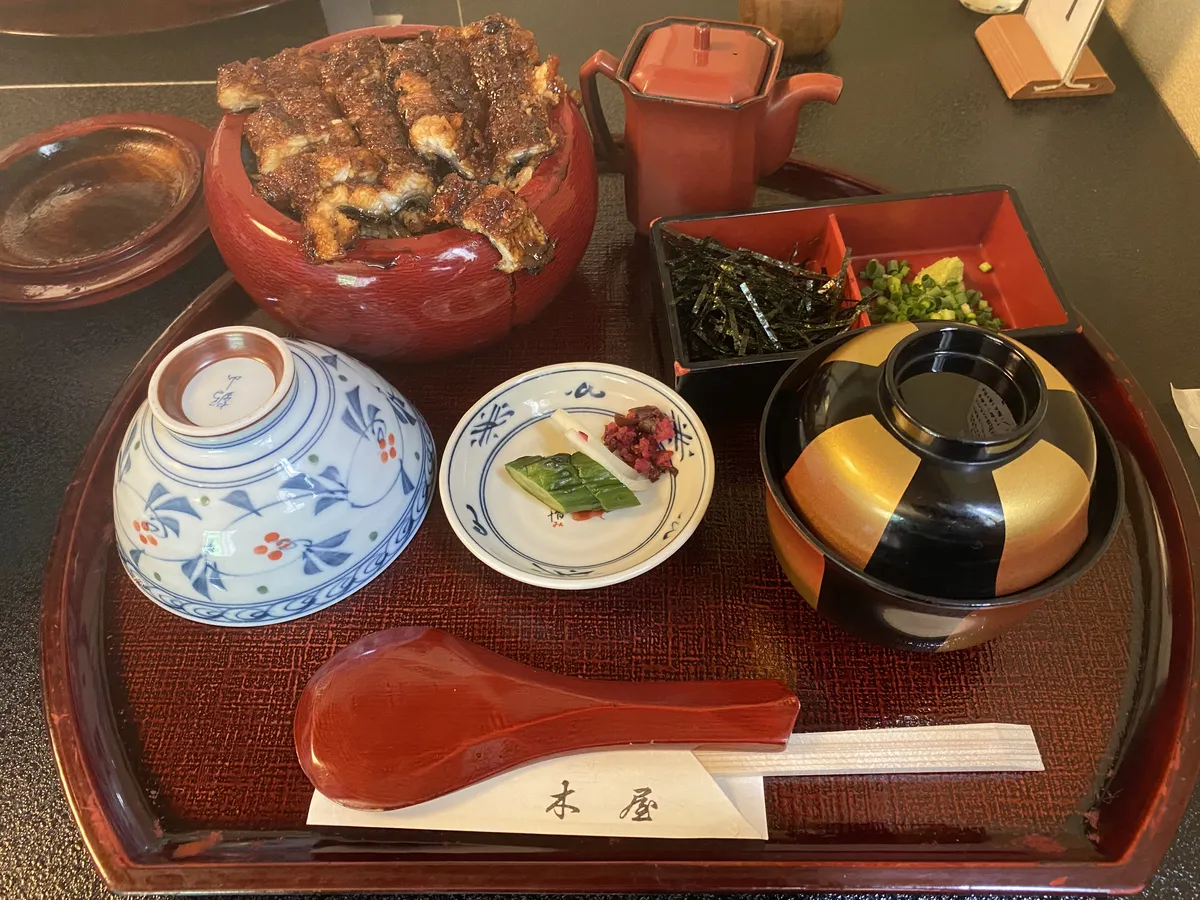
Hitsumabushi is Nagoya’s signature eel rice dish — charcoal-grilled unagi, finely chopped and layered over rice in a wooden ohitsu, eaten in four distinct stages. It was created at Atsuta Horai-ken, founded in 1873. This guide is written by a 35-year Nagoya local who has eaten hitsumabushi and unadon over 100 times. Inside you’ll find personal reviews of 16 restaurants I have actually visited, my honest top 4, the real way to eat the 4 stages, current prices (4,000-6,500 yen per bowl), and reservation strategies for the most popular shops.
Last updated: April 2026 | Author: Yuu (born and raised in Nagoya, 35 years local, 100+ hitsumabushi bowls)
This article may contain affiliate links. See our affiliate disclosure for details.
Table of Contents
- What Is Hitsumabushi?
- How Hitsumabushi Was Born
- The Right Way to Eat Hitsumabushi (4 Stages)
- 16 Hitsumabushi Restaurants I’ve Visited Over 35 Years
- My Personal Top 4 Picks
- Hitsumabushi vs. Unaju vs. Unadon
- Prices and Budgeting
- Reservation Tips and Reactions from Out-of-Town Guests
- Practical Information
- Frequently Asked Questions
- About the Author
- Related Guides
What Is Hitsumabushi?
Hitsumabushi is a Nagoya-born regional dish of charcoal-grilled eel kabayaki, finely chopped and spread over rice served in a wooden ohitsu (rice tub). What makes it different from a regular unaju or unadon is that the same single bowl is meant to be eaten in four different ways. The eel is cooked in the Kansai-style “jiyaki” method — grilled directly over charcoal without pre-steaming — which gives the skin a crisp edge and the flesh a smoky depth you simply do not get from the Tokyo-style steamed version.
I have lived in Nagoya for 35 years and currently live near the Osu shopping district. Between hitsumabushi and unadon, I have eaten eel over 100 times in my life. For the last three years I’ve been averaging 30+ bowls per year — at this point I genuinely cannot count anymore. Family meals, business meetings, friends visiting from out of town or overseas — eel is my default “special-day Nagoya meal” no matter who I’m with. Once a month, a long-standing client treats me to an unagi bento — usually from Unagi no Shirakawa or 4-Daime Kikukawa — and that monthly handover has quietly become one of my favorite working rituals.
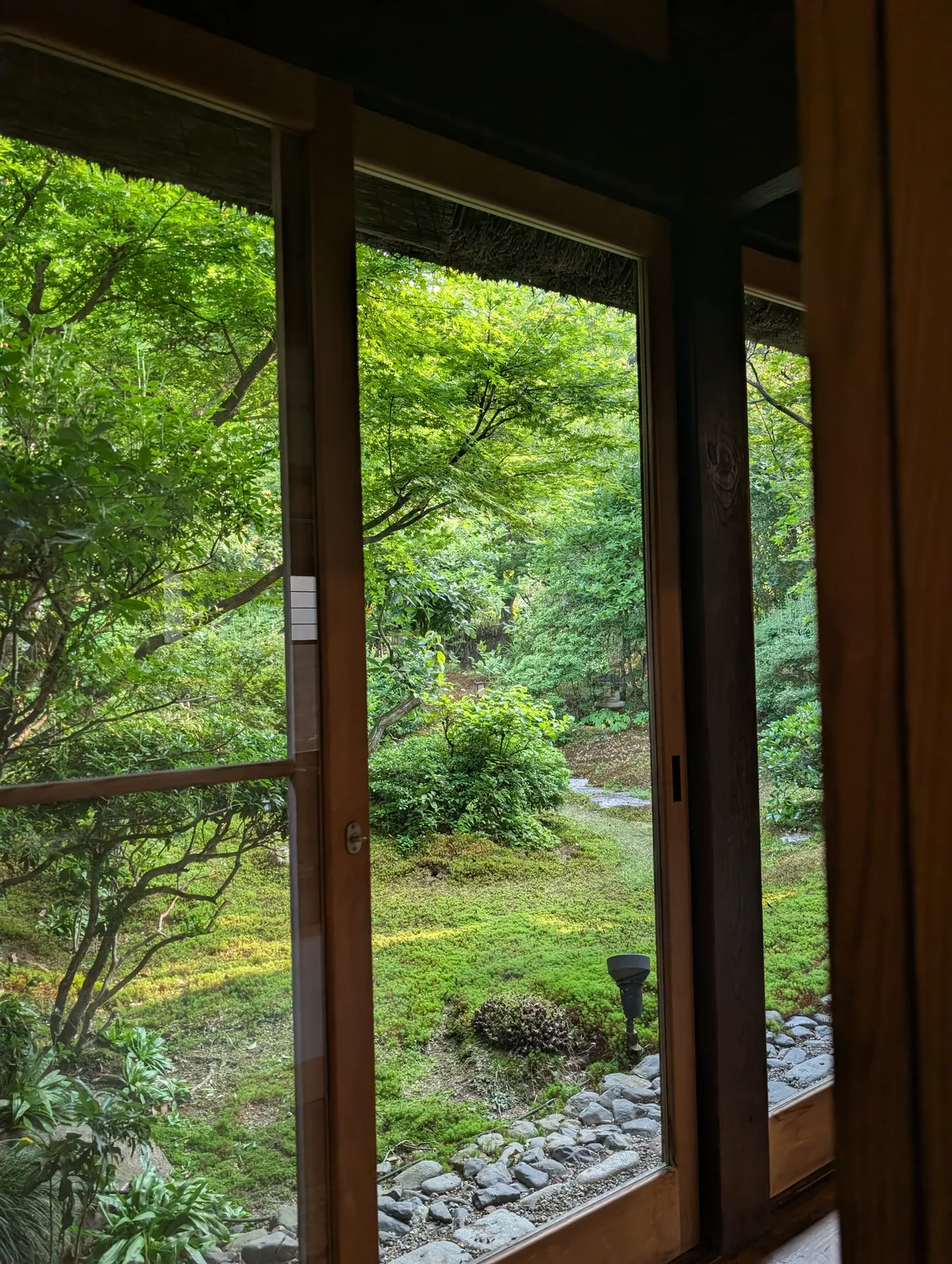
Source: Atsuta Horai-ken Official Site. Hitsumabushi is said to have originated at this restaurant in the Meiji era, when chopped eel was served for delivery orders.
Source: Nagoya Convention & Visitors Bureau lists hitsumabushi alongside miso katsu, tebasaki, and kishimen as one of the defining “Nagoya-meshi” dishes.
Locals always put the accent on the first syllable: not hi-tsu-MA-bu-shi but HI-tsumabushi. If you say it the Nagoya way in front of a local, you’ll get a small smile of approval almost every time.
How Hitsumabushi Was Born
The dish traces back to Atsuta Horai-ken, founded in 1873 (Meiji 6). By the mid-Meiji period, the shop’s delivery orders kept ending in disaster — the ceramic donburi bowls were breaking on the way to customers. The fix was practical: deliver the rice and eel inside a sturdy wooden ohitsu instead. To make the eel easier to portion out at the customer’s table, they began chopping the eel into small pieces. That simple delivery hack became the dish we now line up two hours for.
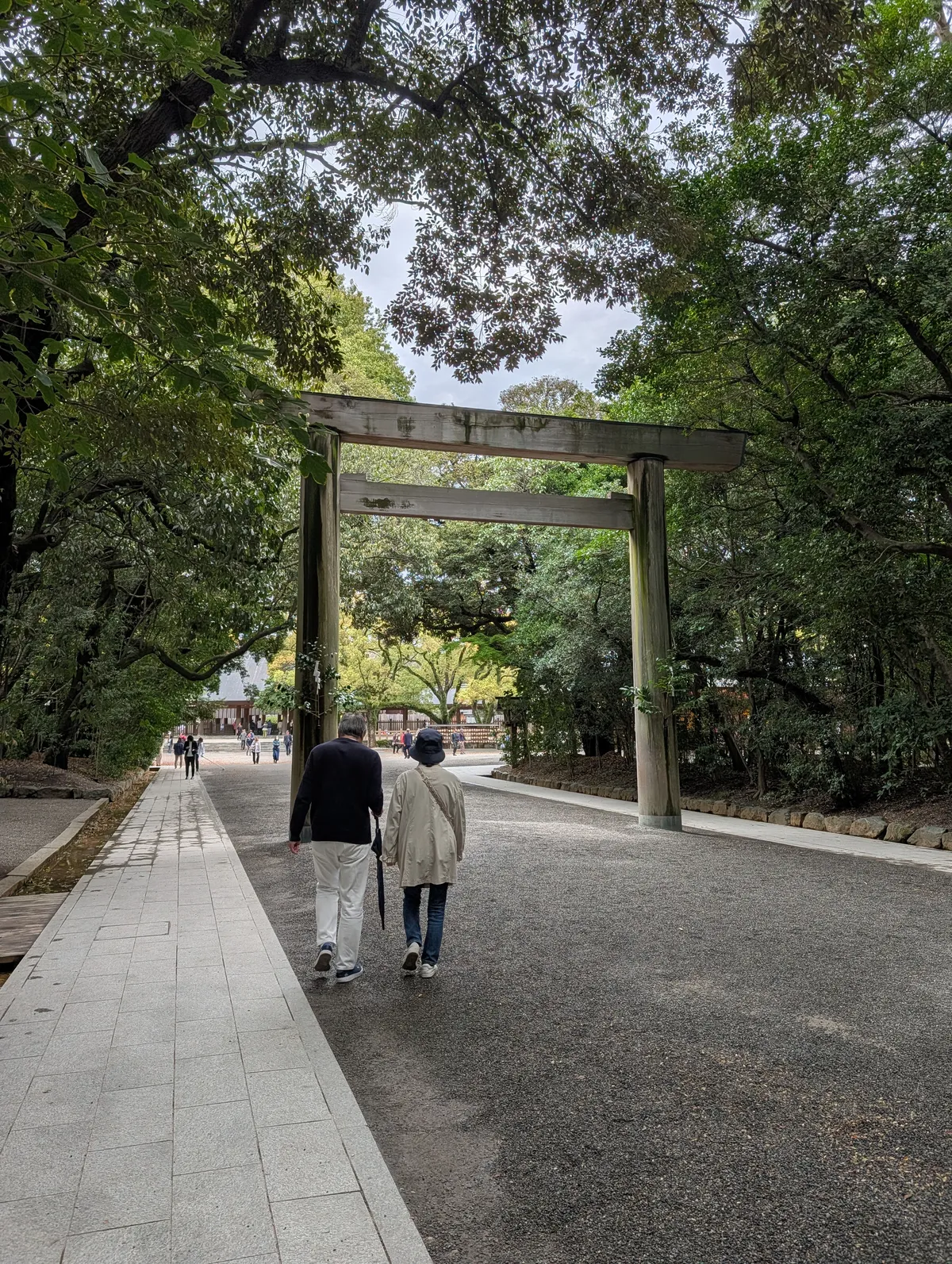
I live in the Osu shopping district today, which puts Atsuta Jingu shrine about ten minutes away by subway. Walking past the original Horai-ken honten always reminds me how perfectly the origin story fits Nagoya’s character: this is a city that prizes practical cleverness over flash. Even with miso katsu, my honest local instinct is to send visitors not to the famous Yabaton (which has Tokyo branches) but to a quieter heritage shop like Suzuya. Hitsumabushi follows the same logic — a merchant city’s solution to a logistics problem that turned out to be more delicious than the original.
Source: Atsuta Horai-ken History Page states that the adoption of the unbreakable wooden ohitsu was the trigger for the birth of hitsumabushi.
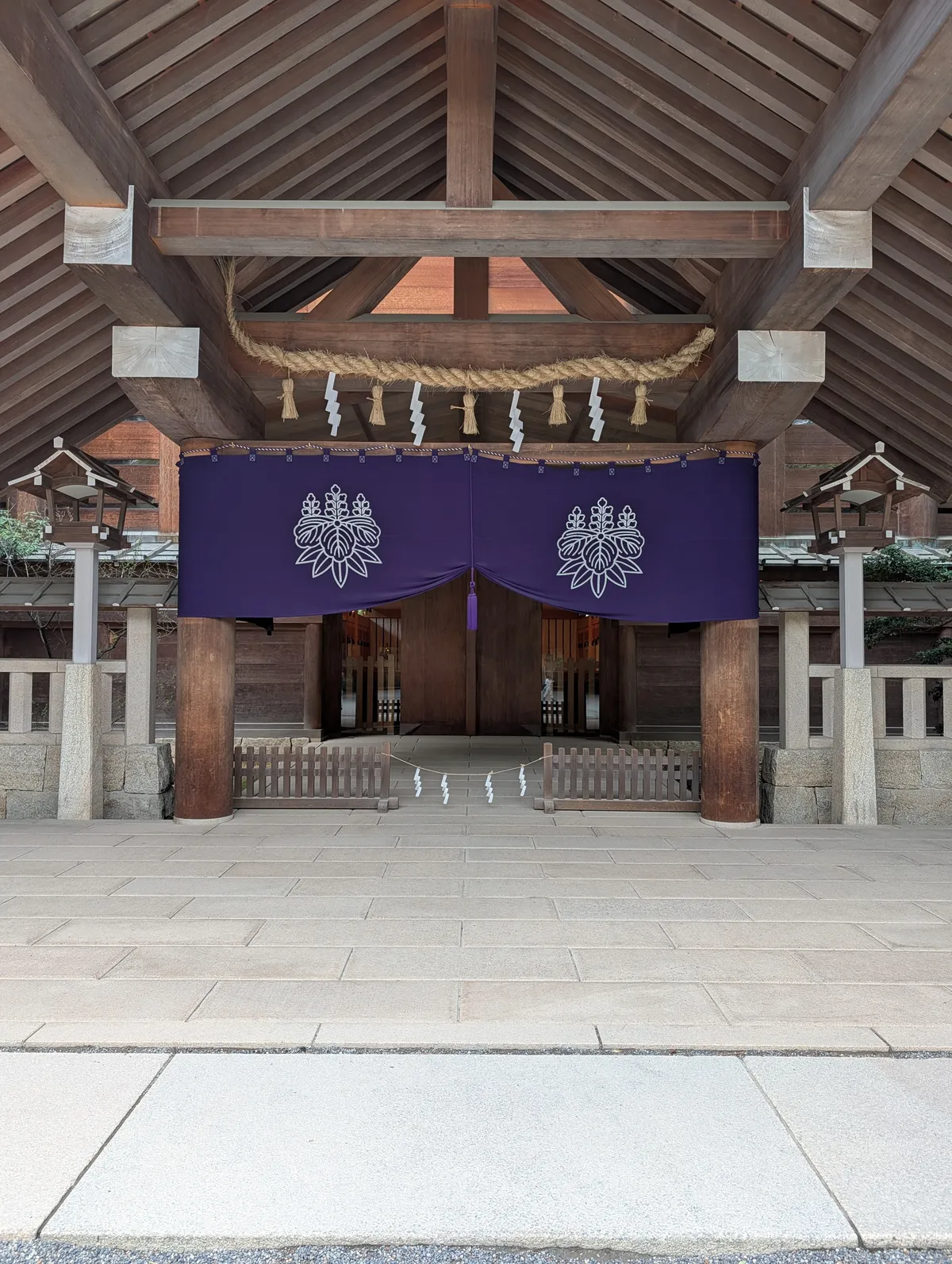
Source: Atsuta Horai-ken Store & Access. The shop right by the shrine’s south gate (about a 1-minute walk) is the Jingu branch; the honten sits about a 5-9 minute walk from the south gate. Both have long served as popular post-worship meal stops.
The name “hitsumabushi” itself is a small linguistic puzzle: “hitsu” refers to the wooden ohitsu, and “mabushi” means to mix or smear — literally “rice and toppings mixed together in a wooden tub.” Atsuta Horai-ken trademarked the spelling in 1987, so technically other restaurants are in a gray zone when they use the exact word, but in practice “hitsumabushi-style” servings have spread throughout the city and no one really challenges it.
The Right Way to Eat Hitsumabushi (4 Stages)
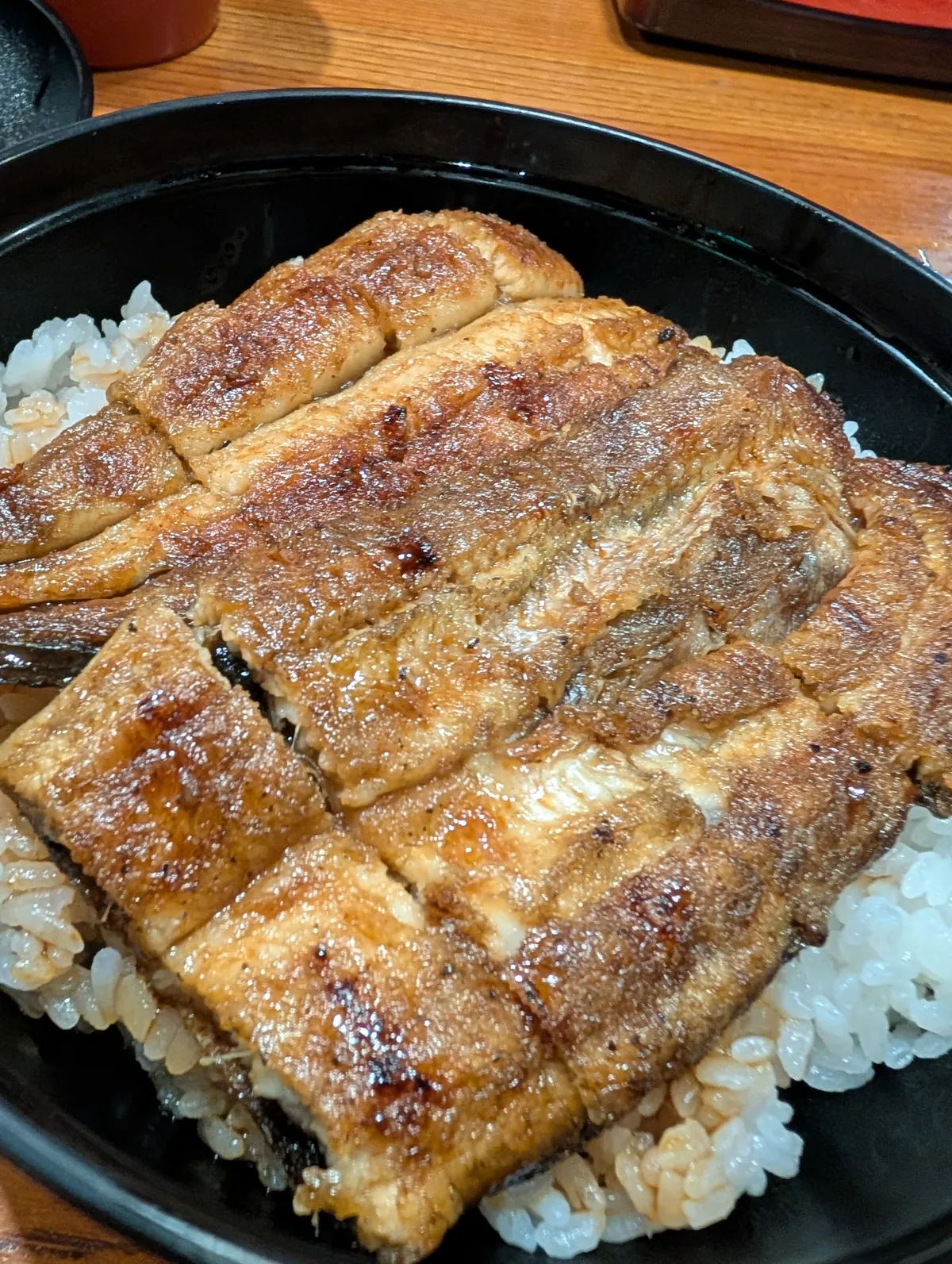
One bowl, four ways to eat it. The classic opening move is to take the rice paddle and divide the contents of the ohitsu into four equal quarters with a cross-shaped cut. From there, each quarter goes into a smaller chawan and gets a different treatment.
Stage 1: Eat It Straight
The first quarter goes into your bowl with nothing added. This is your reference taste — the smokiness from the binchotan charcoal, the balance of the sweet-savory tare, the marbling of the eel itself. Pay attention here. You’re not just eating; you’re calibrating what the chef has actually made.
Stage 2: Add the Condiments
Mix in the chopped scallions, fresh wasabi, and shredded nori served on the side. The wasabi cuts the richness, the scallions add a sharp green snap, and the nori brings sea umami. The same eel suddenly tastes like a completely different dish.
Stage 3: Pour the Dashi (My Personal Favorite)
The third quarter gets hot dashi (or hot tea) poured over it to become an ochazuke.
After 100+ bowls, this is the stage I love above all others. The combination of unagi, scallions, and wasabi the moment the dashi hits the rice is genuinely unbeatable — the steam carries this aroma upward that makes you stop talking for a second. Some people skip the dashi and just eat the seasoned rice as-is, but for me Stage 3 with the broth is the whole reason this dish exists. And here’s a small local secret: drink the small pot of “tea” served on the side as a clear broth on its own. It’s one of those quiet flavors that very gently says “this is Japan,” and it’s the moment I most want foreign visitors to slow down for.
Stage 4: Your Favorite Way Again
The final quarter is a free choice — whichever of the previous three you liked best, you do again. I almost always repeat Stage 3.
If it’s your first time, follow the order 1-2-3-4 strictly. Skipping ahead to the condiments or dashi means you’ll never taste the most luxurious moment of the meal — pure eel and rice with nothing in the way. If you tell the staff “it’s my first time,” most shops will hand you a printed card explaining the steps in Japanese and English.
Source: Japan Guide introduces the 4-stage eating method as the standard procedure for foreign visitors.
16 Hitsumabushi Restaurants I’ve Visited Over 35 Years
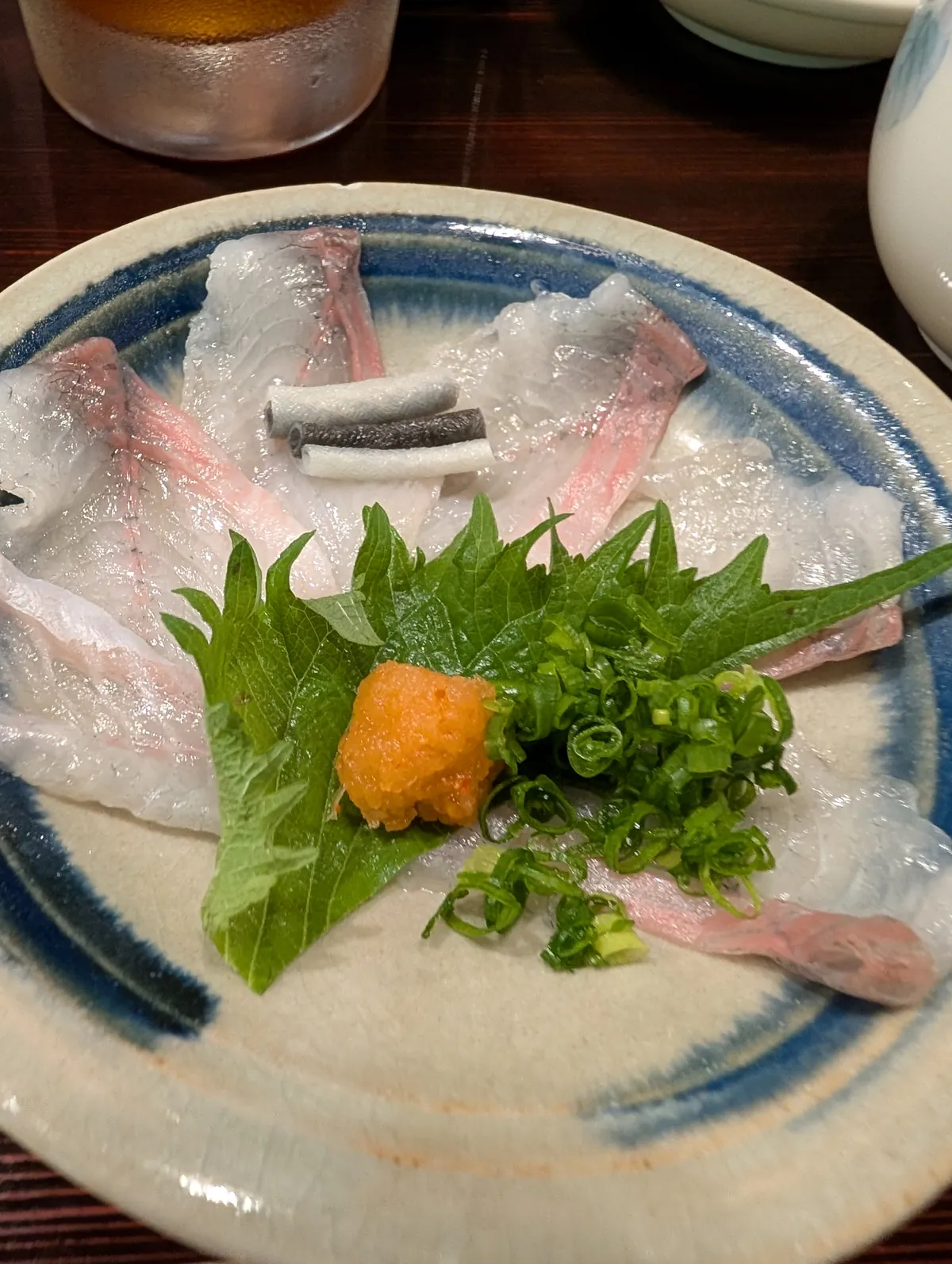
Below are all 16 hitsumabushi restaurants I have personally visited over the years in Nagoya and the surrounding area. A “I’ve actually been to all of them” list from a local is something most travel guides cannot give you, so I want to make this one count.
| # | Restaurant | Area | My Rating | Quick Note |
|---|---|---|---|---|
| 1 | Shiba Fukuya (Unagi-ya Shiba Fukuya) | Nagono (Nishi-ku) | ★★★★★ | My #1 — what I always tell foreign visitors to try |
| 2 | Nagono Shiba Fukuya Meieki Branch | Meieki | ★★★★★ | Same group as Shiba Fukuya, easy access from the station |
| 3 | Sumiyaki Una Fuji Nagoya Station Taiko-guchi Branch | Meieki | ★★★★ | Walking distance from Nagoya Station, consistently satisfying |
| 4 | Sumiyaki Una Fuji Shirakabe Bettei | Shirakabe | ★★★★ | Quiet, upscale residential setting |
| 5 | Oka Fuji (Unau Oka Fuji) | Misono-za | ★★★★★ | My #2 — tatami rooms, family- and meeting-friendly |
| 6 | 4-Daime Kikukawa Sakae Branch | Sakae | ★★★★ | Famous for its takeout bento as well |
| 7 | Unagi no Una-Yasu Nishiki Branch | Nishiki | ★★★★ | Reliable Nishiki-area performer |
| 8 | Una Haru | Taxi from Sakae | ★★★★★ | My #3 — for people who want to eat a lot |
| 9 | Sumiyaki Unagi Kashiwa Tougawa Ikeshita Branch | Ikeshita | ★★★★ | A quiet hidden gem in the Ikeshita area |
| 10 | Nagoya Meibutsu Nagoya-meshi Shokudo Maruhachi | Nagoya-meshi sampler | ★★★ | Good for tasting Nagoya specialties together |
| 11 | Unagi Kiya | Heritage shop | ★★★★ | Famous for the early-morning queue |
| 12 | Hiru-Dake Unagi-ya Sakae Honten | Sakae | ★★★★ | Lunch-only specialty |
| 13 | Atsuta Horai-ken Matsuzakaya Branch | Sakae / Matsuzakaya | ★★★★ | Some seats reservable, very convenient |
| 14 | Atsuta Horai-ken Honten | South of Atsuta Jingu | ★★★★★ | The original birthplace shop, an essential visit |
| 15 | Miyakagi | South of Nagoya Station | ★★★★ | Serves both eel and chicken-miso hotpot |
| 16 | Isshin-ya Aoyama Branch | Chita Peninsula | ★★★★★ | My #4 — best takeout in the region |
After all of these, one conclusion has stuck with me: there are basically no bad hitsumabushi shops in Nagoya. The historic shops and the strong newcomers are all delicious in their own way, and even a first-time visitor walking blind into a famous-name place like Atsuta Horai-ken or the Shira-kawa group will leave very happy. That said, if you want my honest local top 4 — the ones I will defend in a conversation — those are in the next section.
My Personal Top 4 Picks
Out of the 16, these are the four restaurants I will recommend to a foreign visitor without hesitation, with the specific reason for each.
#1: Shiba Fukuya (Unagi-ya Shiba Fukuya) — Nagono Honten
My personal number one, and the place I always send visitors who are basing themselves around Nagoya Station.
- Location: Sits in the kind of preserved old-Japan streetscape that travelers actively photograph — a charming, atmospheric corner of the city.
- Even the wait is good: The neighborhood is so attractive that the queue itself becomes part of the experience.
- Taste: Outstanding. If you ask me to define “Nagoya unagi” in one shop, this is it.
- Best for: First-time Nagoya visitors and tourists in general.
Beyond the honten, there is also Nagono Shiba Fukuya Meieki Branch. If the original is packed, the Meieki branch is the same kitchen lineage and the quality is right there with it.
#2: Oka Fuji (Unau Oka Fuji) — Beneath Misono-za
The place that balances business-meeting formality with family-meal ease better than anywhere else on this list.
- Location: Beneath the Misono-za theater — easy to combine with a properly Nagoya-style sightseeing day.
- Tatami rooms: Suitable for client lunches, business entertainment, and quieter meals.
- Menu consistency: Every eel dish hits. There is no weak choice on the menu.
- Try the shirayaki: The whole side menu is excellent — go beyond the hitsumabushi.
- Kid-friendly: Comfortable to bring children without feeling out of place.
- Best for: Business meals, families, travelers wanting a “very Nagoya” sightseeing day.
#3: Una Haru — Short Taxi from Sakae
The shop for the “I just want to eat a lot of eel” traveler.
- Location: Slightly off-center from Sakae, but well worth the short taxi ride.
- Old-school service: In years past, you could get rice refills and free extra unagi tare poured on top (please confirm whether this is still offered when you visit).
- Value: The tare alone could carry several bowls of rice — this is the place for big appetites.
- Best for: Hungry travelers, groups, value-conscious diners.
#4: Isshin-ya Aoyama Branch — Chita Peninsula
The unsung champion of takeout.
- How I use it: I almost always get it to go — I eat their unadon during work meetings.
- Quality: The grill work is precise and the flavor really lands.
- Texture: The eel is cut in larger pieces, giving each bite real substance.
- Travels well: One of the rare unagi shops where takeout doesn’t compromise the dish.
- Location: Some distance from the airport, but among all the eel you can eat on the Chita Peninsula it stands at the top, and even compared to central Nagoya shops it absolutely holds its own.
- Best for: Travelers using Chubu Centrair Airport, takeout fans, business travelers eating between meetings.
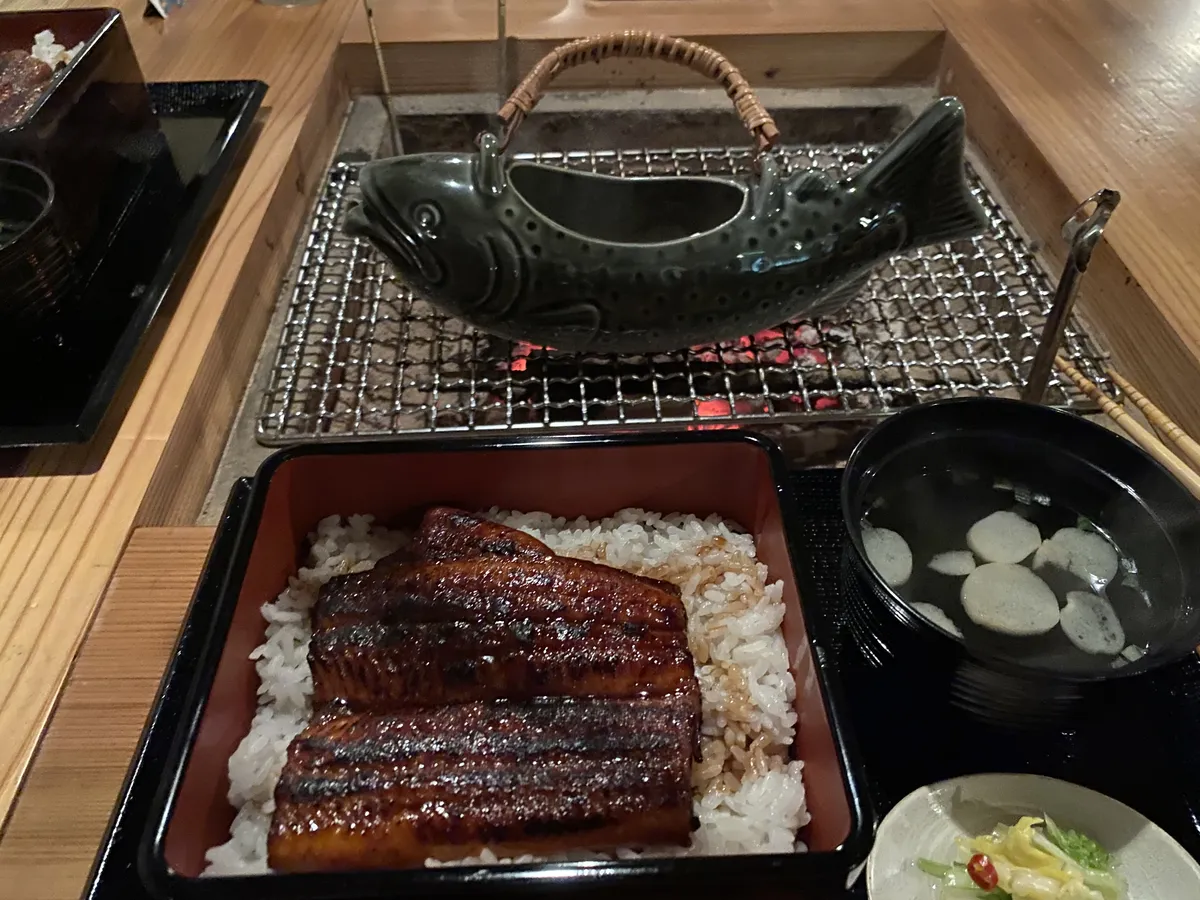
For a wider survey of the city’s food scene, see the Nagoya Food Guide.
Hitsumabushi vs. Unaju vs. Unadon
Three eel dishes, three clearly different things. The confusion is so common among first-time visitors that I want to lay it out side by side.
| Item | Hitsumabushi | Unaju | Unadon |
|---|---|---|---|
| Origin | Nagoya (Meiji era, Atsuta Horai-ken) | Edo (late Edo period) | Edo (Edo period) |
| Eel form | Finely chopped | Whole or half fillet, uncut | Sliced and arranged on rice |
| Vessel | Wooden ohitsu (rice tub) | Lacquered jubako box | Ceramic donburi |
| Eating style | 4 stages with condiments and dashi | Eaten plain, as-is | Eaten plain, as-is |
| Price range | 4,000-7,000 yen | 3,500-10,000 yen | 2,500-5,000 yen |
| Grilling style | Mostly Kansai-style jiyaki (no pre-steaming) | Mostly Kanto-style steamed-then-grilled | Mostly Kanto-style steamed-then-grilled |
During my corporate years I worked at the Nagoya branch (in Sakae) of a Tokyo-headquartered company in Shibuya, and I was constantly hosting transferred colleagues from Tokyo, Yokohama, Fukuoka, Nara, Shizuoka — every region you can name. “What’s the difference between unaju and hitsumabushi?” was one of the most common questions I got. My standard answer became: “Unaju is the orthodox version where you taste the eel itself, one bite at a time. Hitsumabushi is the experiential version where you eat one bowl in four different ways.” Neither is superior — pick based on your mood and your budget on the day.
Source: Japan’s Ministry of Agriculture, Forestry and Fisheries “Our Hometown Cuisine” Database. Hitsumabushi is officially registered as a regional dish of Aichi Prefecture.
Prices and Budgeting
Hitsumabushi sits at the top of the Nagoya-meshi price ladder. Knowing what to expect makes booking and ordering far less stressful.
Price Range by Restaurant Type (as of April 2026)
| Restaurant Type | Price (per person) | Representative Shops |
|---|---|---|
| Heritage flagship | 4,500-5,200 yen | Atsuta Horai-ken, Maruya Honten |
| Mid-tier specialist | 3,900-4,800 yen | Shiba Fukuya, Shira-kawa, Miyakagi, Oka Fuji |
| Casual | 2,800-3,800 yen | Una Haru, 4-Daime Kikukawa, Maruhachi |
| Hotel restaurants | 5,500-8,500 yen | Nagoya Marriott (Kyoto Tsuruya — reservation required) |
| Takeout | 2,500-4,500 yen | Isshin-ya, Shirakawa, 4-Daime Kikukawa |
For a realistic total per person — hitsumabushi plus the included clear soup, plus a side of grilled eel liver (kimo-yaki, around +800 yen), plus a beer or tea — budget 5,500-7,500 yen per person.
Hitsumabushi is the priciest item in the Nagoya-meshi lineup. If you’re only in Nagoya for one or two days, the realistic plan is to splurge on one hitsumabushi meal during your stay and balance the rest of your budget with miso katsu (around 1,500 yen), kishimen noodles (around 1,000 yen), and tebasaki chicken wings (around 1,000 yen). That’s exactly how locals manage their own food spending here.
For a complete cost simulation see the Nagoya Trip Cost & Budget Guide.
Reservation Tips and Reactions from Out-of-Town Guests
At the popular shops, showing up without a reservation routinely means a 2-hour wait. To avoid burning a half-day of your trip standing in line, here is the strategy I actually use.
Prioritize Reservable Shops
- Atsuta Horai-ken Matsuzakaya Branch — partial seats reservable online
- Shira-kawa — all branches accept phone and website reservations
- Shiba Fukuya — bookable via Tabelog
- Oka Fuji — phone the shop directly for tatami room bookings
If You Must Visit a No-Reservation Shop
- Atsuta Horai-ken Honten — line up 30 minutes before opening (11:00 weekdays, 10:30 weekends)
- Unagi Kiya — distributes numbered tickets from around 9 AM (verify on the day)
- Same-day-ticket shops — pick up your number first, then sightsee
Hidden Time Windows
- Weekday 14:00-15:00 — just before lunch last orders
- Weekend 20:00 onward — late dinner shift
Reactions I Hear Most From Out-of-Town and Overseas Guests
Across 100+ bowls, a huge share of which were spent hosting visitors, here are the reactions that have stayed with me:
- “Delicious. Nagoya’s bold eel flavor is fantastic — fluffy and substantial.“
- “The rice keeps disappearing — this is genuinely good.“
- “Once I get back home I won’t be able to eat eel the same way again.” (the famous “ruined for other unagi” effect)
- “I didn’t know eel could be like this — I love unagi now.“
That third line — “I won’t be able to eat eel the same way back home” — has come up so many times from Tokyo and Osaka guests that I treat it as proof: Nagoya hitsumabushi has a real addictive quality that most first-time eaters do not see coming.
One more practical observation from my Sakae-office days hosting transferred colleagues: when you weigh the cost of waiting two hours at a flagship honten on a weekend against the alternative, the math almost always favors a reservable branch — Atsuta Horai-ken’s Matsuzakaya store, or Shiba Fukuya’s Meieki branch — where you can sit down on time. Multiple visiting guests have left happier from the branches than they would have from a queue. That is the conclusion I trust after years of hosting.
Practical Information
| Most famous shop | Atsuta Horai-ken Honten (founded 1873) |
| Author’s personal #1 | Shiba Fukuya (Nagono Honten) |
| Honten address | 503 Godo-cho, Atsuta-ku, Nagoya |
| Nearest stations | Subway “Atsuta-Jingu Temma-cho” Station (Meijo Line), 7 min walk; Meitetsu “Jingu-mae” Station, approx. 10 min walk (the south-gate-adjacent Jingu branch is a separate shop) |
| Honten hours | 11:30-14:00 (LO) / 16:30-20:30 (LO) |
| Honten closed | Wednesdays, 2nd and 4th Thursdays |
| Phone | 052-671-8686 (honten) |
| Price range | Hitsumabushi 4,500-5,200 yen |
| Realistic per-person budget | 5,500-7,500 yen (with drinks) |
| Reservations | Honten not reservable; Matsuzakaya branch, Shiba Fukuya, Oka Fuji are reservable |
| Cards | Most shops accept Visa/Mastercard. Carry some cash as backup. |
| Official site | Atsuta Horaiken Official Site |
| English menus | Available at Atsuta Horai-ken, Shira-kawa, Maruya Honten, Shiba Fukuya |
Frequently Asked Questions
Which of the 4 stages is your personal favorite?
Stage 3 — the dashi ochazuke — is by far my favorite. After 100+ bowls, the combination of unagi, scallions, and wasabi the moment you pour the hot dashi is unmatched, and the aroma rising from the bowl is one of the best moments of the meal. Some people skip the dashi and just enjoy the seasoned rice, but for me Stage 3 is the whole reason hitsumabushi exists. A small local secret: drink the small pot of “tea” served on the side as a clear broth on its own — it’s a quietly beautiful flavor I always recommend foreign guests try.
When is the best time of year to eat hitsumabushi?
Eel’s true natural season is actually late autumn to early winter, when the fish fatten up for hibernation — not summer. The custom of eating eel in summer traces back to an Edo-period marketing trick (popularly credited to Hiraga Gennai) built around the “Doyo no Ushi no Hi” day, and that late-July date still sees a huge demand spike today, with tight reservations and some shops raising prices by around 1,000 yen. Thanks to modern aquaculture you can eat excellent hitsumabushi year-round regardless, but the hidden window I love is October-November autumn eel — the fat content is genuinely at its best and tourist crowds drop, so it’s easier to walk in and easier to book. (Toranomon Ichiba: eel season explainer)
Can I eat hitsumabushi alone as a solo diner?
Yes, solo diners are welcome. Atsuta Horai-ken honten and Matsuzakaya branch, Shiba Fukuya, and Shira-kawa all have counter seats or tables sized for one. During peak times you may share a table. Avoid the 12:00-13:00 lunch rush and aim for the second-round window after 14:00 for a calmer, more leisurely meal.
What if someone in the group has an eel allergy or doesn’t like eel?
Most hitsumabushi shops carry side options like chicken hitsumabushi (tori-hitsumabushi), grilled eel liver sets (kimo-yaki teishoku), or u-maki (eel omelet) sets. Some Shira-kawa branches serve chicken or anago hitsumabushi, and Atsuta Horai-ken honten also offers a “teishoku” set without the ochazuke component. Check the official site before going.
Can hitsumabushi be ordered as takeout?
Some shops do takeout, and “Isshin-ya Aoyama Branch” is the place I personally rely on for it — I often eat their unadon during meetings. The unagi bento from Unagi no Shirakawa and 4-Daime Kikukawa are also excellent and come up often as gifts from clients. That said, the true magic of hitsumabushi (the 4-stage eating, the heat of the dashi) only works in-shop, so for a first-timer I strongly recommend dining in. Takeout is mostly the unadon or unaju style.
What reactions do out-of-town and overseas visitors usually have?
The most common reaction is “delicious — fluffy, satisfying, the rice keeps disappearing.” The line that stands out most for me is “once I get home I won’t be able to eat eel the same way” — I’ve heard it many times from Tokyo and Osaka guests, and it speaks to how addictive Nagoya hitsumabushi really is. First-time eel eaters often say “I didn’t know eel could taste like this — I love it now”. Trying it once is genuinely worth it.
Are English menus available?
The major historic shops (Atsuta Horai-ken, Shira-kawa, Maruya Honten, Shiba Fukuya) all carry English and photo menus. Some hand out a printed card explaining the 4-stage method in English. If you are still unsure, the Google Translate camera function reads handwritten daily specials reliably.
About the Author
Yuu was born and raised in Nagoya and has lived there for 35 years. He has eaten hitsumabushi and unadon over 100 times in his life, currently averaging 30+ bowls per year. He has personally visited 16 of Nagoya’s leading hitsumabushi restaurants, hosting family meals, business meetings, and friends from out of town and overseas in each of them. Once a month, a long-standing client treats him to an unagi bento (from Unagi no Shirakawa or 4-Daime Kikukawa) — a small ritual that has shaped his ongoing tasting log. He writes about the version of central Japan that does not appear in standard guidebooks.
Related Guides
- Nagoya Food Guide — A complete overview of hitsumabushi, miso katsu, tebasaki, and the rest of the Nagoya-meshi lineup.
- Nagoya Ramen Guide — The home of Taiwan mazesoba and the city’s distinctive ramen culture.
- Nagoya 3-Day Itinerary — A 3-day sightseeing plan that includes a hitsumabushi meal.
- Nagoya Trip Cost & Budget Guide — A full simulation of food, transport, and lodging budgets.
- Getting Around Nagoya — How to reach Jingu-mae and Tenma-cho stations near Atsuta Horai-ken.
Booking these yourself?
Compare Japan eSIM options on Klook →Most of these shops take reservations by phone.