Nagoya morning culture is the local custom where coffee shops across the city offer a free breakfast — toast, a boiled egg, sometimes a small salad — included with the price of a single drink, served until around 11 AM. The tradition is said to have started in the post-war boom of the 1950s and 60s, and it gave rise to a whole world of kissaten food found nowhere else: Komeda Coffee Shop (Japan’s largest kissaten chain, founded here in 1968), Ogura Toast (buttered toast topped with sweet azuki paste), and Iron-Plate Napolitan (Japanese-style ketchup spaghetti served sizzling on a hot iron griddle over egg). For any first-time visitor, breakfast on day one is the single best way to feel what Nagoya is actually like.
Last updated: April 2026 | Author: Yuu (born and raised in Nagoya, 35 years local)
This article may contain affiliate links. See our affiliate disclosure for details.
Table of Contents
- What Is Nagoya Morning Culture?
- Why Did Morning Culture Take Root in Nagoya?
- What Is Ogura Toast and How Do You Eat It?
- Komeda Coffee Shop: The Brand and Its Nagoya Roots
- Local Kissaten vs. Komeda: Which Should You Choose?
- The Best Morning Spots in Nagoya
- Iron-Plate Napolitan: The Other Kissaten Classic
- How to Order, Best Times, and Etiquette
- Practical Information
- Frequently Asked Questions
- About the Author
- Related Guides
What Is Nagoya Morning Culture?
Nagoya morning culture is the local custom in which ordering one drink at a coffee shop automatically comes with a small breakfast — typically toast and a boiled egg — at no extra charge. In Tokyo or Osaka, kissaten will normally charge a separate “morning set” fee on top of the drink. The very idea of “free with your coffee” is something specific to Nagoya and parts of Aichi Prefecture.
At most shops, between roughly 7:00 and 11:00 AM, ordering a coffee (400-550 yen) brings out a tray with half a slice (or a half-portion) of toast, one boiled egg, and a small side of salad or yogurt by default. Some shops add ogura toast, chawanmushi (savory egg custard), or onion soup as their own house twist. Locals only half-jokingly say you could spend an entire week in Nagoya doing nothing but sampling different morning sets, and that is essentially true.
Speaking as a 35-year resident: for someone who grew up here, the kissaten morning service is “everyday infrastructure.” My high school was in Nakamura-ku, and Nagoya Station felt like my own backyard. A quick breakfast at a kissaten before school, weekends spent meeting friends by bicycle at a coffee shop — that was the rhythm of daily life. For Nagoyans, a kissaten isn’t really “eating out.” It’s closer to a second living room, a few blocks away from your real one.
Source: AichiNow (the Aichi Prefecture official tourism site), “Ichinomiya Morning” introduces the morning service — a light meal that comes with the price of a drink — as a food culture rooted in this region.
Source: Aichi Kissaten & Food Sanitation Trade Association (Aichi-ken Kissa Inshoku Seikatsu Eisei Dogyo Kumiai). Aichi Prefecture’s count of registered kissaten ranks among the highest of any prefectural association in Japan, illustrating how dense the city’s coffee shop scene actually is.
When a local orders a coffee and toast appears, no one blinks — it’s normal. But every time I’ve taken a Tokyo or Osaka friend to a Nagoya kissaten, the moment the toast lands they say, “Wait, I didn’t order this.” Quietly explaining “it’s free here, that’s just how Nagoya works” is one of the small everyday pleasures of being a local.
Why Did Morning Culture Take Root in Nagoya?
The most widely cited birthplaces of morning culture are Ichinomiya City and Toyohashi City in Aichi Prefecture, but the way it began differs between the two. In Ichinomiya, the story is tied to the wool-textile industry: during the 1950s and 60s economic boom, traders held many of their negotiations inside coffee shops, and to thank customers who lingered for hours of business talk, shops began adding a slice of toast on the house. In Toyohashi, the roots lie not in textiles but in the bars and nightlife district by the station, where shops are said to have added a slice of toast as a makeshift breakfast for night-shift workers from snack bars and cabarets coming off their shift. In both cities, as competition intensified, the “service war” escalated — boiled egg, salad, fruit — until what started as a small thank-you turned into an unofficial breakfast plate.
The other commonly told story credits the generosity of individual shop owners. As the kissaten scene grew crowded, the way to stand out was to “treat the regulars like family at breakfast time.” That instinct lined up neatly with another piece of Nagoyan character — a merchant city that values practicality and value-for-money over flash.
An author’s observation: when I look at Nagoya’s food scene, the same logic appears again and again: “substance over appearance, practicality over showmanship.” When I recommend miso katsu to visitors, my honest local instinct is to point them not to Yabaton (which has Tokyo branches anyway) but to a quieter heritage shop like Suzuya — somewhere you can only eat in Nagoya. The morning culture’s “let’s put the value-for-money up front” attitude comes from exactly the same place. The fact that paying for a drink already gets you breakfast is, in itself, very Nagoya.
Source: AichiNow (the Aichi Prefecture official tourism site), “Ichinomiya Morning” traces the origins of morning culture to the wool-textile industry of the Owari-Gifu region centered on Ichinomiya.
Source: Ichinomiya City Official Website. Ichinomiya promotes itself as the “birthplace of morning service,” and the local Ichinomiya Morning Council and Chamber of Commerce run recurring morning-themed events, such as the Ichinomiya Morning Marche.
What Is Ogura Toast and How Do You Eat It?
Ogura Toast is a deceptively simple but genuinely surprising breakfast: thick-cut Japanese white bread, buttered, toasted, and topped with ogura-an — chunky sweetened azuki bean paste. The dish is widely credited as a Nagoya invention, with the most popular origin story pointing to a now-defunct kissaten called Matsuba (満つ葉) in Sakae in the 1920s. Today it appears on the menu of nearly every kissaten in the city, plus every Komeda Coffee Shop branch.
Variations on How to Eat It
- Standard style: the toast arrives with the ogura paste already spread on top.
- Side-served style (anko betsuzoe): the ogura paste comes in a small dish on the side, and you spread it yourself in any quantity you like.
- Pre-baked style (nose-yaki): the ogura paste is spread on the bread before toasting, so the top caramelizes slightly. More common at older heritage shops.
- Sandwich style: two slices of bread with a generous mound of ogura paste between them.
The standalone price is typically 400-700 yen. At many shops you can also choose ogura toast as the free morning side that comes with your drink.
Author’s experience: during my corporate years, while based at our Nagoya branch in Sakae, I had countless chances to take colleagues from Tokyo, Yokohama, Fukuoka, and Nara out for a Nagoya morning. The Tokyo guests almost always recoiled at ogura toast first — “I genuinely cannot picture sweet bean paste on white bread.” Then they took one bite. The standard reaction is something like, “Actually — the saltiness of the butter and the sweetness of the bean paste balance out really well.” The salt of the butter on a thin layer of toasted bread, paired with the texture of chunky paste rather than smooth paste, creates a flavor combination you cannot quite replicate anywhere else.
When you order ogura toast, ask for it “with the anko on the side” (anko betsuzoe). Controlling the amount yourself is the surest way to enjoy it. Try the first bite with very little paste; once you’re comfortable, pile it on. Most people end up wanting more anko, not less.
Source: Komeda Coffee Shop Official “Morning Menu”. Even at the nationwide Komeda chain, ogura toast is a permanent fixture among the morning options.
Komeda Coffee Shop: The Brand and Its Nagoya Roots
Komeda Coffee Shop (KOMEDA’S Coffee) was founded in 1968 and is a Nagoya-born kissaten chain that has since grown to over 1,000 locations across Japan, making it the country’s largest coffee shop brand. The company listed on the Tokyo Stock Exchange in 2016 and has since expanded overseas, including locations in Taiwan and Shanghai. Every store is built around warm wood interiors evoking a mountain lodge, and the brand has become so synonymous with the city that there’s even a Komeda inside the Shinkansen platform area at Nagoya Station.
Komeda’s Signature Menu Items
| Item | Price (incl. tax, varies by region) | Description |
|---|---|---|
| Shironoir | approx. 980-1,040 yen | Warm Danish pastry topped with soft-serve ice cream — Komeda’s signature dessert |
| Mini Shironoir | approx. 780-840 yen | Half-size version of the Shironoir |
| Komeda Blend | varies by region/season | The house coffee, eligible for the morning service |
| Ogura Toast | varies by region/season | Thick-cut bread with chunky azuki paste |
| German | varies by region/season | A hearty plate of grilled sausages with salad and buttered rolls |
| Mixed Sandwich | varies by region/season | A signature multi-filling sandwich popular as a Nagoya souvenir lunch |
Komeda uses regional pricing, so the exact amount differs by area (Tokyo, Nagoya, etc.) and by season. The figures above are rough guides — always check the latest prices at each store or on the official site. (Source: reference on recent Komeda menu pricing.)
The Morning Service
At Komeda, ordering any drink between roughly 7:00 and 11:00 AM entitles you to choose one free morning side from the following:
- Toast plus boiled egg (the standard)
- Komeda’s special ogura paste (sweet azuki paste, served on the side at no extra charge)
- Ogura paste plus boiled egg (with the bean paste served on the side)
- Komeda’s house-made egg paste plus toast
Source: Komeda Coffee Shop “Morning Service” Official Page. Hours and morning options vary by branch and season.
Source: Komeda Holdings Co., Ltd. Corporate History. The brand traces back to January 1968, when founder Taro Kato opened his first store in Nishi-ku, Nagoya.
Speaking as a 35-year resident: Komeda is so woven into daily life that the value of the brand can be hard to convey to visitors. Komeda has plenty of branches in Tokyo now, but the Nagoya branches feel different. The average customer skews older, and you’ll see regulars settling in for hours with the morning paper. That slow, expansive use of time is the real heart of Nagoya morning culture. Walk in alone with an iPad and work for two hours, or just listen to the local retirees gossip over their second refill — both are valid uses of the room. Komeda is a place to taste time itself.
Local Kissaten vs. Komeda: Which Should You Choose?
The Nagoya morning experience splits into two broad worlds: local kissaten (independently run, often decades old) and large chains like Komeda Coffee Shop. Both are wonderful, but their personalities are completely different.
| Item | Local Kissaten | Komeda Coffee Shop |
|---|---|---|
| Atmosphere | Showa-era retro, full of character | Mountain-lodge style, consistent across branches |
| Customers | Mostly regulars (often 60s-80s) | Families, young people, and seniors mixed |
| Morning service | Each shop has its own twist (very local) | Standardized nationwide menu |
| Drink price | 450-550 yen | 500-600 yen |
| Menu language | Japanese only at most shops | English menu available |
| Smoking | Some shops separate, some still allow smoking | Non-smoking by default |
| Foreign-visitor friendliness | Welcoming but explanation can be hard | Used to international guests |
| Typical stay | 60-90 minutes | 1-2 hours |
Author’s experience: when I was hosting colleagues from out of town, I always recommended starting with Komeda for the first Nagoya morning. The English menu, the predictable atmosphere, and the simple Komeda system (order a drink, pick a morning side) are all easy to convey to someone who isn’t yet used to traveling in Japan. Experience the basics at Komeda on day one, then move on to a local kissaten on day two — that’s the pattern that always worked best. Drag a first-timer straight into a tucked-away local kissaten and they’ll get tangled in the menu and the timing of the order, and a lot of the magic gets lost.
When you spot a local kissaten, look at the signboard before going in. The words “モーニング” (morning), “M”, or “朝食” (chōshoku, breakfast) on the door confirm that the shop participates in the morning service tradition. Some shops styled as kissaten don’t actually offer morning service, so this small check saves disappointment.
The Best Morning Spots in Nagoya
Out of the hundreds of kissaten in the city, here are six shops I’d genuinely recommend to a visiting traveler.
1. Komeda Coffee Shop (Multiple Locations)
The safest, most foolproof choice. Komeda has more than 100 locations inside Nagoya city alone, and almost every subway station has one within walking distance. Easy options on any standard tourist itinerary include the Nagoya Station underground (across from the Grand Kiosk), the Sakae area near Mitsukoshi, and the Osu area near Nadya Park. English menus available.
- Morning hours: opening to 11:00 AM (varies by branch)
- Price: 500-600 yen drink + free morning side
- Reservations: not required (expect a 10-30 minute wait at peak times)
2. Kissa New Poppy (Nagono, Nishi-ku)
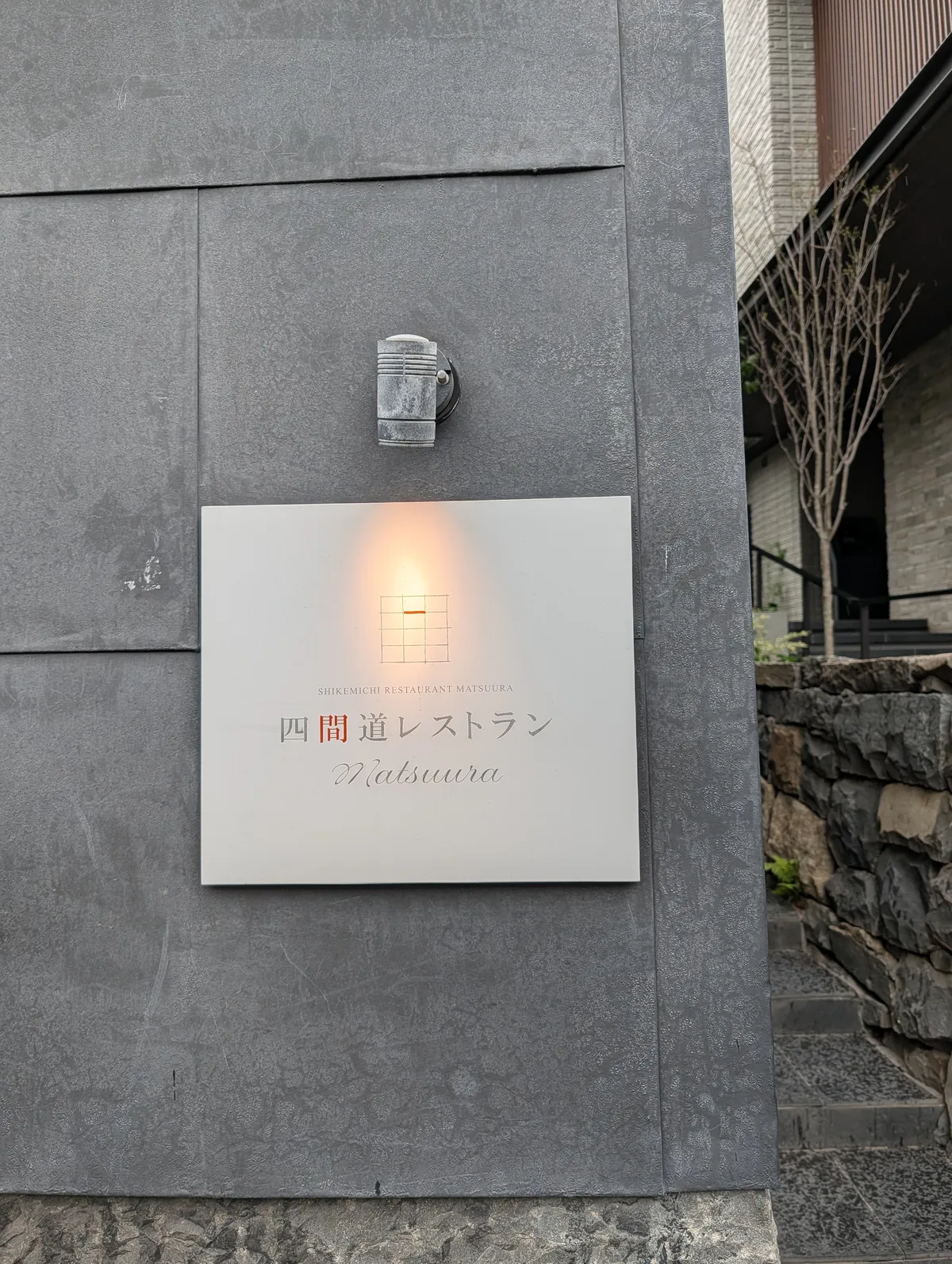
A retro pure-kissaten in the historic Shikemichi district of Nishi-ku, a short walk from Nagoya Station. Its predecessor, “Kissa Poppy,” opened near Nagoya Station in 1977 and closed in 2010; the current “Kissa New Poppy” opened in 2019 in a corner of Shikemichi’s old townscape. It serves Nagoya-style kissaten dishes such as iron-plate spaghetti, and the nostalgic streets around it make it an easy stop to fold into a stroll.
- Morning hours: 8:00-11:00 AM
- Highlight: a perfectly preserved retro pure-kissaten interior
3. Shirubia Coffee (Multiple Locations)
A Nagoya-born mid-size chain. Branches are smaller and quieter than Komeda, with a calmer atmosphere. The morning set is the textbook combination of “toast plus boiled egg plus a small salad.” Many branches sit close to train stations and are popular with business travelers.
- Morning hours: 7:00-11:00 AM
- Price: around 500 yen for a drink, with the morning service free
4. A Neighborhood Kissaten Near Hongo Station (Meito-ku)
Several neighborhood kissaten in the eastern part of Nagoya, around Hongo Station, serve a morning set that includes free chawanmushi (savory egg custard) — a great way to taste the “anything goes” creativity inside Nagoya morning culture. (Note: we could not verify a single specific shop name for this listing against an official or reliably current source, so treat this as a style of morning set to look for in the area rather than one exact address.)
- Morning hours: 7:30-11:00 AM
- Highlight: chawanmushi morning — a one-of-a-kind take on the tradition
5. Top Fruit Yaobun (Shioji-cho, Mizuho-ku)
A kissaten run by a fruit shop in Mizuho-ku, with the Sakurayama Station (Sakura-dori subway line) as the nearest stop. The menu comes with a generous serving of seasonal fruit, with the lineup changing throughout the year. Strawberries, peaches, melon, chestnut — whatever is at its peak that month is what you’ll get.
- Hours: Mon-Sat 9:00 AM-5:00 PM / Sun 9:00 AM-12:00 PM (closed Wed)
- Highlight: a fruit-shop-direct serving of unusual quality
6. Cafe de Lion (Nagoya Station West Exit)
A perfectly located kissaten in the underground passage on the west side of Nagoya Station. Functions as the “last Nagoya morning before the Shinkansen” for business travelers and tourists alike. Connected directly to Nagoya Station.
- Morning hours: 7:00-11:00 AM
- Highlight: direct station access, ideal before catching a train
Speaking as a 35-year resident: the truth is that with local kissaten, the upside is that you basically cannot fail. Beyond the six shops above, there are hundreds more across the city, and almost every one of them runs a morning service, and almost every one is good. “Walk into whatever kissaten happens to be within five minutes of your hotel” may genuinely be the most authentic Nagoya thing you can do.
Iron-Plate Napolitan: The Other Kissaten Classic
The other signature dish of the Nagoya kissaten is Iron-Plate Napolitan (also called teppan spaghetti). For context, “Napolitan” is a Japanese-style spaghetti tossed in ketchup with onions, peppers, and ham — invented in postwar Japan, not Italy. The Nagoya twist is to serve it on top of a layer of beaten egg poured onto a sizzling cast-iron griddle. The egg cooks against the hot iron, the spaghetti sits on top, and every bite picks up the fluffy egg. The contrast of textures is what makes the dish unforgettable.
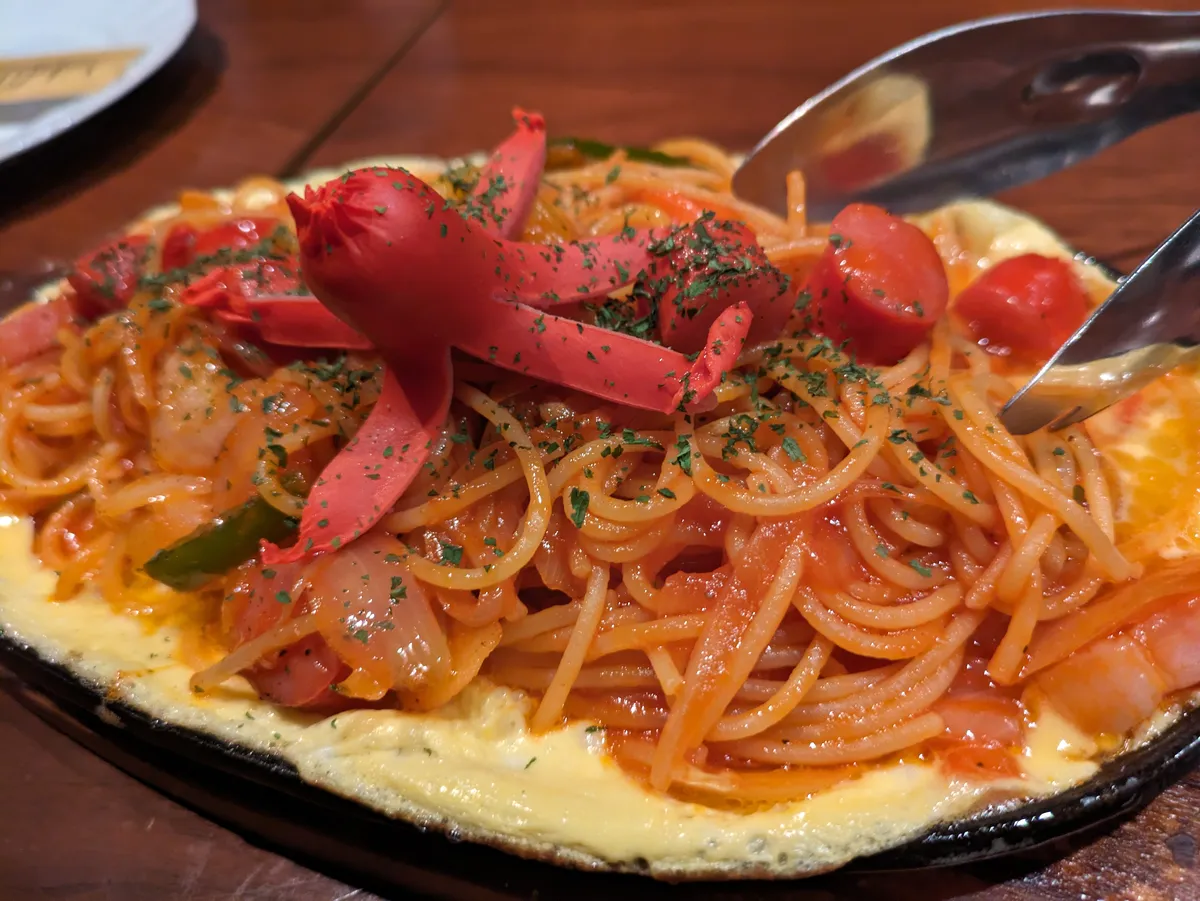
The dish is widely traced to Yuki, a kissaten founded in 1957 in Aoi, Higashi-ku (near Kurumamichi Station). The shop is still in business today (it relocated a few meters south in 2018 due to a land-readjustment project; hours 10:30 AM-3:00 PM, closed Fri and Sat), and iron-plate Napolitan now appears on kissaten menus all over the city.
Famous Spots for Iron-Plate Napolitan
- Spaghetti House Yokoi (Sakae 3-chome, Naka-ku): also famous as the originator of Nagoya ankake spaghetti.
- Kissa New Poppy (Nagono, Nishi-ku / Shikemichi district): a retro pure-kissaten in the old townscape where you can also enjoy iron-plate spaghetti.
- Kissa Mountain (Takigawa-cho, Showa-ku): legendary for its enormous portions and wildly inventive seasonal pasta dishes.
An author’s observation: Iron-Plate Napolitan is less a breakfast dish and more “a serious plate of spaghetti you order in the afternoon.” It’s solid evidence that a Nagoya kissaten doubles as a casual restaurant. At local shops, the rotation of yakisoba and Napolitan is treated as core lunch and dinner food, not just morning fare. At 1,000-1,500 yen the price is high for kissaten cooking, but the dish absolutely earns it.
Source: CBC Magazine (on Kissa Yuki and iron-plate Napolitan) introduces iron-plate Napolitan as a dish inseparable from Nagoya’s kissaten culture.
For the full Nagoya food landscape, see the Nagoya Food Guide.
How to Order, Best Times, and Etiquette
Practical notes for a foreign visitor doing the Nagoya morning ritual for the first time.
The Order of Operations
- Aim to arrive between 7:00 and 10:30 AM — you want to be seated and ordered before the 11 AM cutoff.
- Once seated, you can order just a drink without even opening the menu — the morning side comes automatically.
- At a local kissaten, say something like “Mōningu, kōhī de” (“morning, with a coffee”).
- At Komeda, say “Burendo kōhī, mōningu de” or pick from “Morning A / B / C” on the menu.
- Anything beyond the free morning side (ogura toast, German, mixed sandwich) is ordered separately.
Times to Avoid
- Saturday and Sunday, 9:00-10:00 AM: packed with local families. Komeda waits can hit 45 minutes.
- Weekday 11:00-11:30 AM: right at the morning-service deadline. The kitchen may already have switched off the morning menu.
Payment and Etiquette
- Cash is still common, especially at independent kissaten. Komeda accepts the major credit cards.
- No tipping — Japanese custom, no exceptions.
- Lingering is fine. Staying an hour or more is normal and expected. This is local culture, not a rude habit.
“Morning” doesn’t necessarily end with breakfast. Many kissaten run a continuation of the same idea into the afternoon under the names “lunch set” or “midday morning.” Komeda offers a discounted “Komeda’s Lunch” set until 2 PM. If you fall in love with the kissaten mood, you can essentially extend your morning across the entire day in Nagoya.
Practical Information
| Item | Information |
|---|---|
| Morning service hours | Roughly 7:00-11:00 AM (varies by shop) |
| Average drink price | 450-600 yen |
| Morning service add-on | Free with a drink at most participating shops |
| Ogura toast (a la carte) | 400-700 yen |
| Komeda branches in Nagoya city | 100+ |
| Foreign-language support | English menu at Komeda; mostly Japanese-only at independent kissaten |
| Card payment | Major chains accept cards; local kissaten lean cash-only |
| Komeda official site | Komeda’s Coffee Official Site |
| English menu | Available at Komeda and other major chains |
Frequently Asked Questions
Is it really true that Nagoya coffee shops give you breakfast for the price of a drink?
Yes. At most kissaten in Nagoya, ordering a single drink (400-600 yen) automatically comes with toast, a boiled egg, and often a small salad or yogurt at no extra charge. This is something you simply do not see in Tokyo or Osaka, where any breakfast set is a separate, paid menu item. The morning service is generally available from around 7 AM to 11 AM, with slight variations by shop. Not every coffee shop participates, so check the signboard or storefront display before going in.
What time is best for the morning service?
The sweet spot is 8:00-9:30 AM. At 7 AM you arrive right at opening with empty seats, and after 9 AM the local family crowd starts to fill in. Past 10:30 the staff are getting ready to wind down the morning menu, which makes the room feel rushed. Weekends are noticeably busier than weekdays — at popular shops, Saturday and Sunday mornings between 9:00 and 10:00 can mean a 30+ minute wait.
Is ogura toast actually good? Any tips on how to eat it?
Most first-timers hesitate at the bread-plus-sweet-bean-paste combination, but the salty butter on the toast and the sweetness of the chunky azuki paste balance each other surprisingly well. My recommendation is to order it “with the anko on the side” (anko betsuzoe) so you can spread it yourself. Try the first bite with a small amount, then increase from there. Some shops also offer variations like “ogura paste plus whipped cream” or “ogura paste plus a thick layer of butter” — both are worth trying once you’re hooked.
Should I go to Komeda Coffee Shop or to a local kissaten?
If it’s your first time in Nagoya, start with Komeda. The English menu, the predictable system (order a drink, choose a morning side), and the high number of branches all make it the easiest entry point. From day two, switch to a local kissaten for the “Showa-era retro” version of Nagoya morning culture. Komeda is the modern face of the tradition; the local kissaten is the historic one. Both are worth experiencing.
What’s the difference between morning and lunch in a Nagoya coffee shop?
Morning service runs from about 7 AM to 11 AM and is structured as “a breakfast plate that comes free with your drink.” Lunch generally runs 11 AM to 2 PM and is the opposite — a main dish (spaghetti, curry, sandwiches) that comes with a drink as part of a set. At Komeda, the bargain continues into the afternoon under the name “Komeda’s Lunch.” If you’re serious about the kissaten experience, you can essentially extend the morning mood through the entire day in Nagoya.
Is it easy for foreign visitors to walk in?
Yes — at Komeda and the other major chains, English menus are standard and the staff are used to international guests. Local independent kissaten are welcoming but rarely have an English menu, so you may end up pointing at a photo menu or the laminated signboard at the entrance. The easiest path for visitors is to ask your hotel front desk to recommend a nearby Komeda branch and head there.
About the Author
Yuu is a 35-year Nagoya local — born here, raised here, still here. He spent his university years backpacking through New York, then returned home and learned the city block by block through a sales job that took him into every corner of Nagoya. Today he runs his own company while writing about the version of central Japan you don’t find in standard guidebooks. His personal rule of thumb: don’t aim for places built for tourists; aim for places where the youngest regular is 70 years old.
Related Guides
- Nagoya Food Guide: 18 Must-Try Nagoya Meshi Dishes — a complete tour of hitsumabushi, miso katsu, morning culture, and the rest of the Nagoya-meshi family.
- Hitsumabushi Guide: 16 Restaurants by a Local — a 100+ bowl deep-dive into Nagoya’s most iconic dish.
- Nagoya Ramen Guide: Taiwan Mazesoba and Beyond — the Nakagawa-ku ramen holy land and the dishes Nagoya invented.
- Nagoya 3-Day Itinerary: A Local’s Plan — how to fit a kissaten morning into a packed sightseeing day.
- Osu Shopping Street: A Local’s Complete Guide — the central neighborhood where kissaten coexist with vintage shops and temples.