Last updated: August 2, 2026 | Written by Yuu, a Nagoya native of 35 years
This article may contain affiliate links. See our affiliate disclosure for details.
I have taken the Nagoya-to-Kanazawa trip more times than I can count over the years. As someone born and raised in Nagoya, day trips to neighboring cities have been a part of my life for as long as I can remember — whether it was tagging along with family as a kid or exploring on my own as an adult. The Kanazawa route used to be a four-hour ordeal with an awkward transfer, but since the Hokuriku Shinkansen extended to Tsuruga in March 2024, the journey is faster and smoother than ever. Kanazawa consistently ranks among my top recommendations when visitors ask me what to do from Nagoya, and after reading this guide, you will understand exactly why.
This guide covers every detail you need: how to get there, what to see, where to eat, exactly how much it costs in 2026, and an hour-by-hour itinerary that I have personally tested and refined over dozens of visits.
Table of Contents
- Why Is Kanazawa Worth a Day Trip from Nagoya?
- How Do You Get from Nagoya to Kanazawa?
- What Are the Best Things to See in Kanazawa?
- What Should You Eat in Kanazawa?
- What Does a Kanazawa Day Trip Itinerary Look Like?
- How Much Does a Kanazawa Day Trip Cost?
- What Practical Tips Should You Know Before Going?
- What If You Want to Extend Your Trip?
- What If It Rains? Weather and Contingency Planning
- Frequently Asked Questions about Kanazawa Day Trips
Why Is Kanazawa Worth a Day Trip from Nagoya?
Kanazawa is one of the few major Japanese cities that escaped bombing during World War II, which means its historical districts are genuinely old — not reconstructions built decades later. Walking through the Higashi Chaya geisha district or the Nagamachi samurai quarter, you are experiencing streets and buildings that date back to the Edo period. That authenticity is something you can feel in the atmosphere.
Beyond the history, Kanazawa delivers an extraordinary range of experiences packed into a compact, walkable city center. Here is what makes it stand out:
- Kenrokuen Garden — Consistently ranked as one of Japan’s top three gardens alongside Okayama’s Korakuen and Mito’s Kairakuen
- Omicho Market — A 300-year-old covered market with some of the best fresh seafood in Japan
- Higashi Chaya District — Beautifully preserved wooden tea houses from the 1820s, far less crowded than Kyoto’s geisha districts
- 21st Century Museum of Contemporary Art — One of Japan’s most innovative art spaces, designed by the world-renowned architecture firm SANAA
- Gold leaf culture — Kanazawa produces 99% of Japan’s gold leaf, and you will find it on everything from traditional crafts to ice cream
- Exceptional seafood — Fresh catches from the Sea of Japan that rival, and many locals say surpass, Tokyo’s finest sushi
The fact that most major attractions sit within a 15-20 minute walk of each other makes Kanazawa perfect for a focused day trip. You do not waste hours on transit between sights the way you might in sprawling Kyoto or Tokyo.
As someone who has lived in Nagoya my entire life and has done these day trips countless times, I genuinely consider Kanazawa one of the best side trips available from central Japan. It offers a completely different character from the other popular day trip destinations like Takayama and Shirakawa-go or Inuyama Castle, making it an essential addition to any central Japan itinerary.
How Do You Get from Nagoya to Kanazawa?
You have two main options for reaching Kanazawa from Nagoya. As a lifelong Nagoya resident who knows the local transit connections inside and out, I will walk through both honestly so you can decide which fits your trip best.
Option 1: Train via Tsuruga (Recommended for Day Trips)
Since the Hokuriku Shinkansen extended to Tsuruga in March 2024, the train route has become significantly faster and more convenient. This extension was a game-changer for us Nagoya locals — what used to be a long, somewhat tedious journey is now quick and seamless. The journey involves one transfer at Tsuruga Station.
Leg 1: Nagoya to Tsuruga
- JR Shirasagi Limited Express: About 1 hour 35 minutes, reserved seat available
- Rapid and local trains via Maibara: About 2 hours 15 minutes with a transfer at Maibara, no reservation needed, cheaper
Leg 2: Tsuruga to Kanazawa
- Hokuriku Shinkansen (Tsurugi): About 45 minutes
Total travel time: Approximately 2 hours 45 minutes to 3 hours depending on your train choice and connection time
Total cost (one way): Around ¥9,080 with reserved seats on the Shirasagi and the Shinkansen; less if you take rapid/local trains to Tsuruga and ride the Shinkansen unreserved
The transfer at Tsuruga Station is designed for exactly these connections. The Shinkansen platform is clearly signed, and wait times between trains range from under 10 minutes on the tightest timed connections to about 25 minutes. I have never found the transfer stressful, even on my first time through. If you are nervous about navigating a Japanese train transfer, I completely understand — I felt the same way navigating the New York subway as a solo backpacker in college. But Tsuruga is infinitely easier. Everything is well-signed in English, and station staff are incredibly helpful.
Option 2: Highway Bus
- Meitetsu Bus / Hokutetsu Bus departing from Meitetsu Bus Center at Nagoya Station
- Travel time: About 3.5 to 4 hours each way
- Cost: ¥3,600 to ¥5,800 one way depending on the date (Hokutetsu calendar fares)
- Reservation: Recommended, especially on weekends and holidays
Which Option Should You Choose?
| Factor | Train (Shirasagi + Shinkansen) | Train (Rapid + Shinkansen) | Highway Bus |
|---|---|---|---|
| One-way cost | ~¥9,080 | ~¥7,460 | ¥3,600 – ¥5,800 |
| Round-trip cost | ~¥18,160 | ~¥14,920 | ~¥7,500 (discount return) |
| Travel time (one way) | ~2 hours 50 minutes | ~3 hours 15 minutes | ~3.5-4 hours |
| Total transit time (round trip) | ~5 hours 40 minutes | ~6 hours 30 minutes | ~7-8 hours |
| Comfort level | High (reserved seat, spacious) | Medium (unreserved seating) | Medium (reclining bus seat) |
| Best for | Day trips, maximum time in Kanazawa | Budget day trips with flexibility | Overnight trips, budget travelers |
| JR Pass compatible | Yes | Yes | No |
JR Pass and Rail Pass Guide for Central Japan
Train Booking Tips
- Shirasagi Limited Express: Book at JR ticket counters or online via JR West’s e5489 service (English available). Note that SmartEX does not cover this train. Reserve seats if traveling on weekends or holidays.
- Hokuriku Shinkansen: Same booking methods. The Tsurugi trains between Tsuruga and Kanazawa run frequently, so even if you miss one connection, the next departure is usually within 20-30 minutes.
- No JR Pass? Buy a combined through-ticket at the JR Nagoya Station ticket counter. It is slightly cheaper than purchasing each leg separately.
- e5489 tip: You can reserve seats on your phone and collect the tickets from a machine at the station, or ride ticketless on many services by linking an IC card. SmartEX, which covers the Tokaido Shinkansen, cannot be used for this route.
For more details on navigating central Japan’s train network, see our getting around Nagoya and central Japan guide.
What Are the Best Things to See in Kanazawa?
Kanazawa packs a remarkable density of world-class attractions into a small area. Here are the must-visit spots, listed in the order I recommend visiting them for the most efficient day trip.
Kanazawa Districts at a Glance
Use this table to plan how you allocate your time. On a day trip you can realistically cover all five areas, but knowing the time commitment and costs upfront helps you prioritize.
| District / Attraction | Time Needed | Best For | Admission |
|---|---|---|---|
| Kenrokuen Garden | 60 – 90 min | Iconic scenery, seasonal beauty, photography | ¥320 (Ishikawa Prefecture) |
| Higashi Chaya District | 45 – 60 min | Historic atmosphere, gold-leaf crafts, tea houses | Free (Kaikaro Tea House: ¥750) |
| 21st Century Museum of Contemporary Art | 45 – 90 min | Modern art, architecture, the famous “Swimming Pool” | Free zone + ¥450 – 1,200 exhibitions (21st Century Museum) |
| Omicho Market | 30 – 60 min | Fresh seafood lunch, street food, local ingredients | Free entry (budget ¥1,500 – 3,500 for food) |
| Nagamachi Samurai District | 30 – 45 min | Samurai history, earthen-wall lanes, quiet strolls | Free (Nomura House: ¥550) |
Kenrokuen Garden
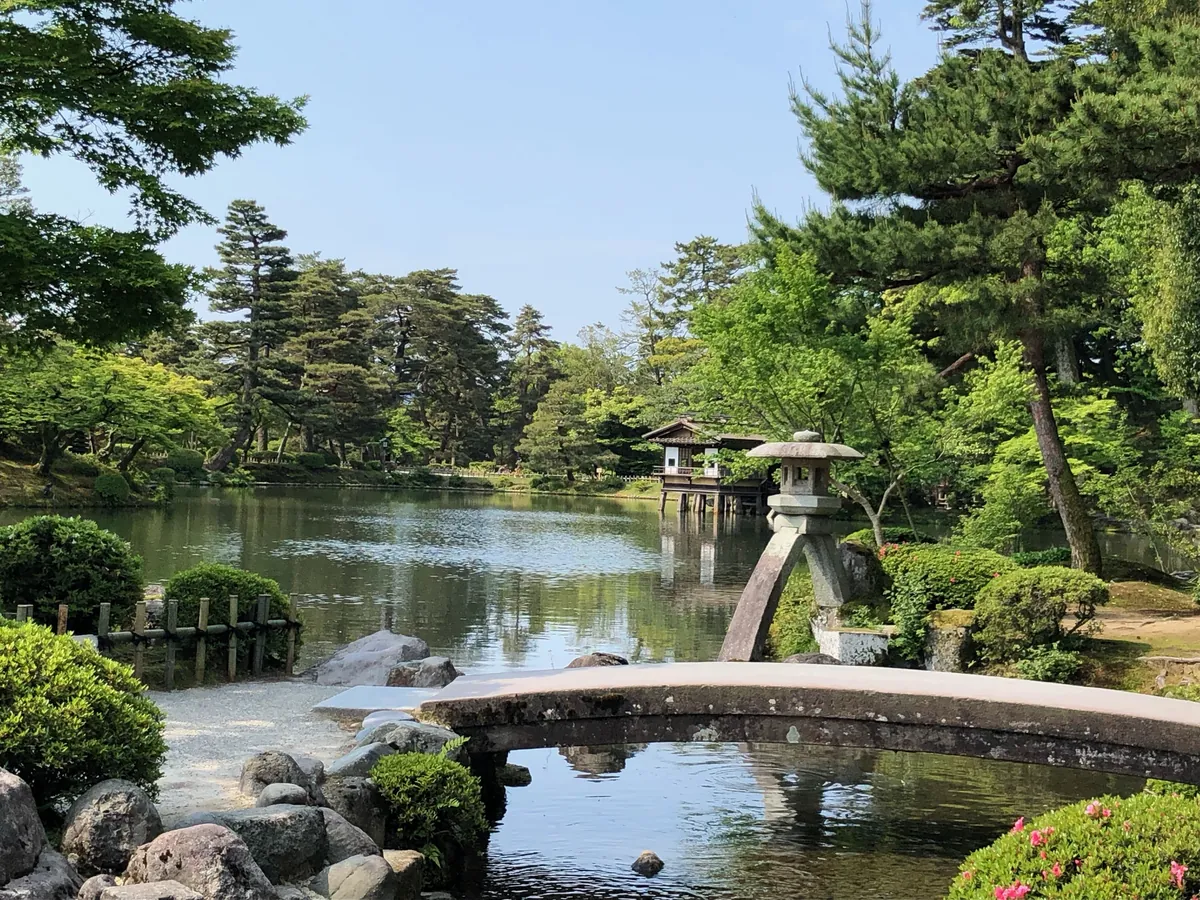
Kenrokuen is the crown jewel of Kanazawa and one of Japan’s “Three Great Gardens.” The name means “Garden of Six Sublimities” — spaciousness, seclusion, artifice, antiquity, water, and panoramic views. The garden covers approximately 11.4 hectares and transforms dramatically with each season.
Every time I visit, the garden looks different. Spring brings cascading cherry blossoms reflected in the ponds. Summer is lush and impossibly green. Autumn delivers spectacular red and gold foliage. Winter features the iconic yukitsuri — the cone-shaped rope structures protecting pine trees from heavy snow — which are uniquely photogenic and something you will not see anywhere else in Japan.
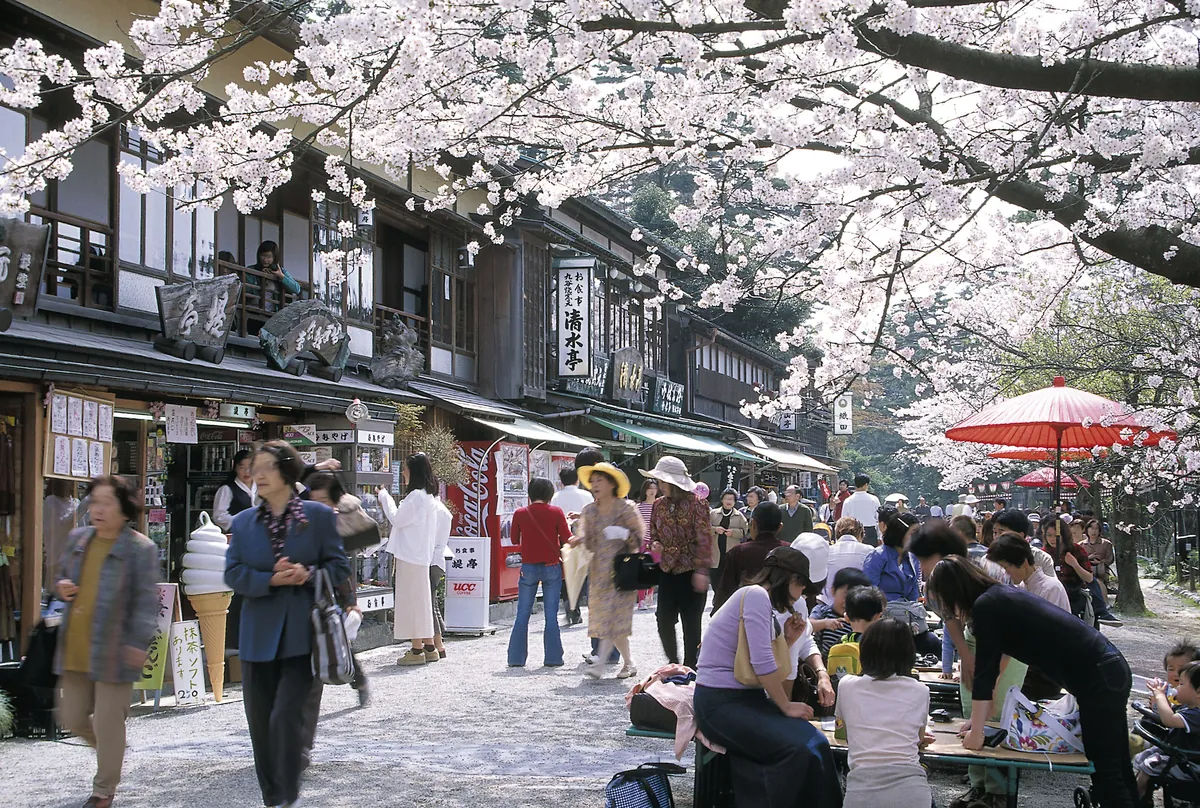
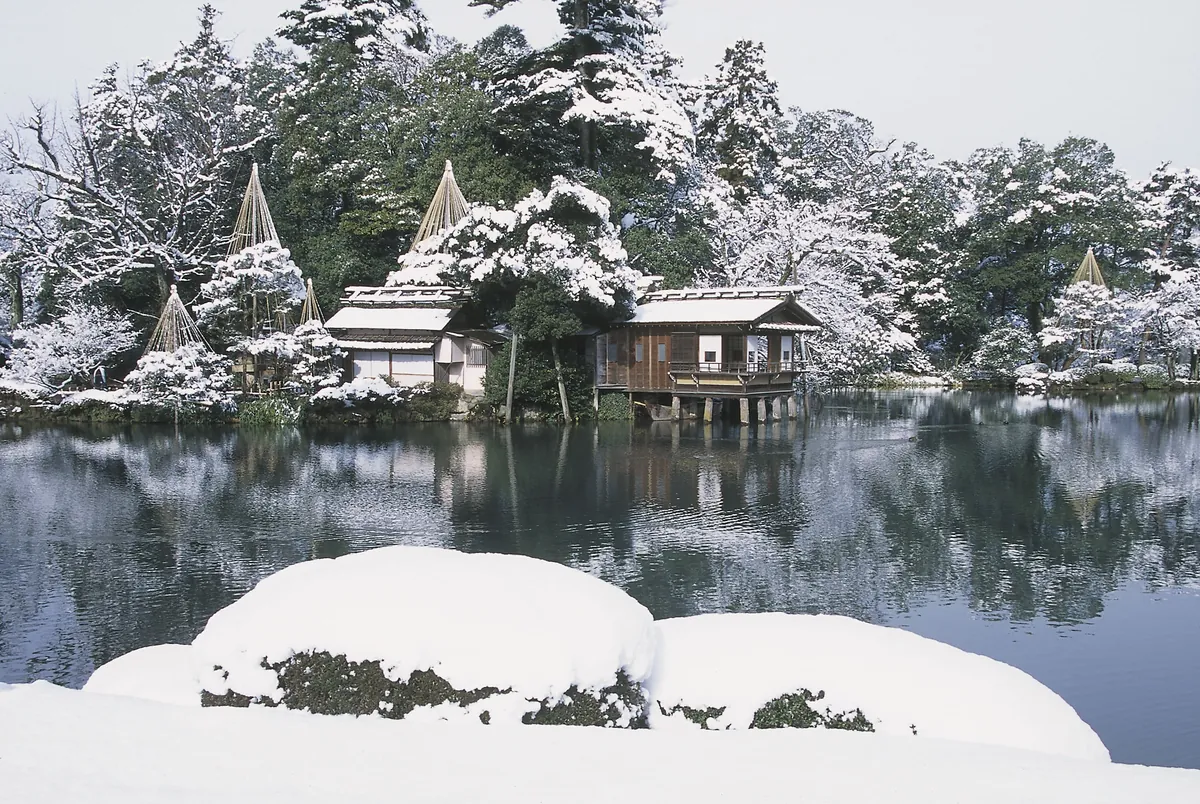
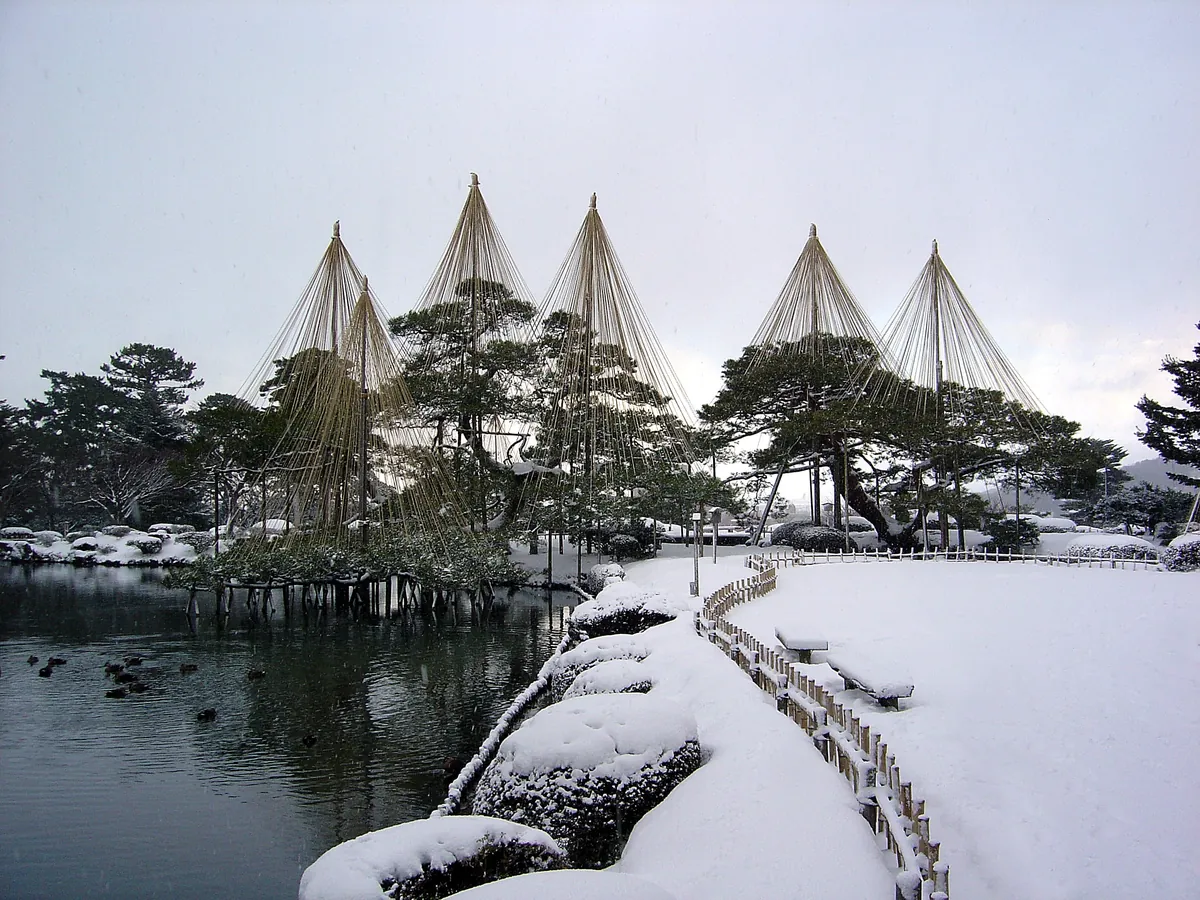
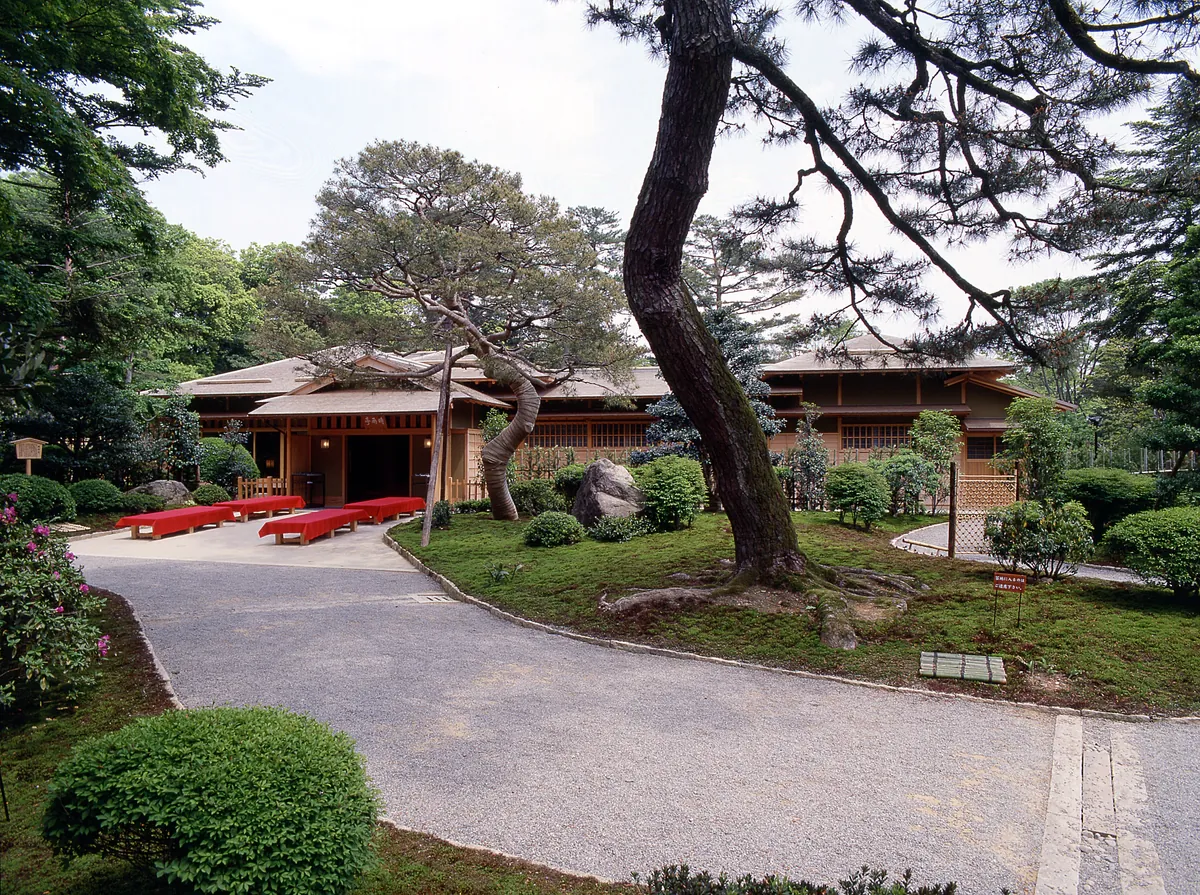
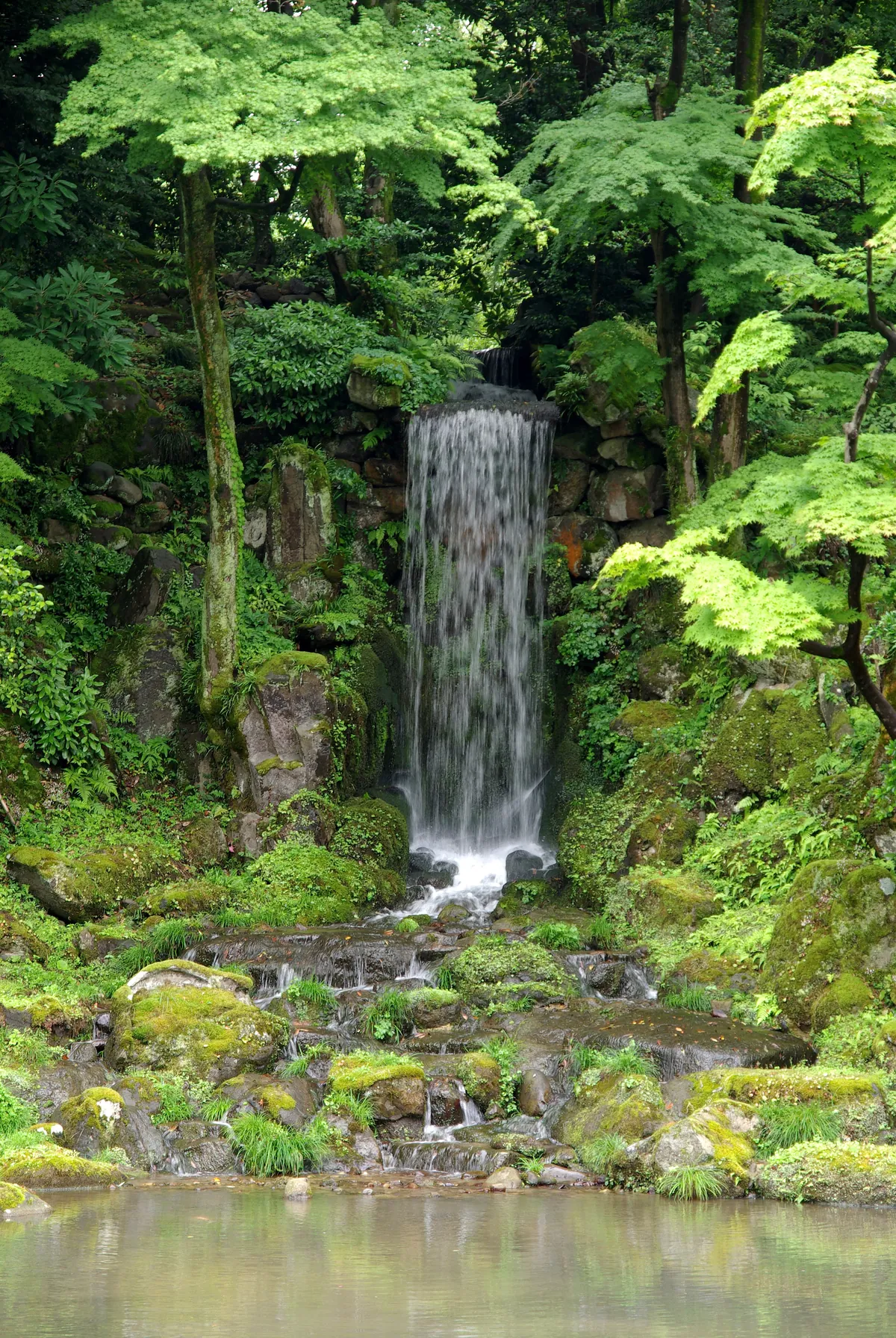
Photos above: © Ishikawa Prefecture
The most photographed spot is the Kotoji stone lantern beside Kasumigaike Pond. You have probably seen it on every Kanazawa postcard and tourism poster. Arriving early makes a huge difference here — by mid-morning, tour groups cluster around it and getting a clean photo becomes difficult.
- Hours: 7:00 AM – 6:00 PM (March 1 – October 15), 8:00 AM – 5:00 PM (October 16 – end of February). Open year-round; last entry 30 minutes before closing.
- Admission: ¥320 per adult
- Time needed: 60-90 minutes for a proper visit without rushing
Kanazawa Castle Park
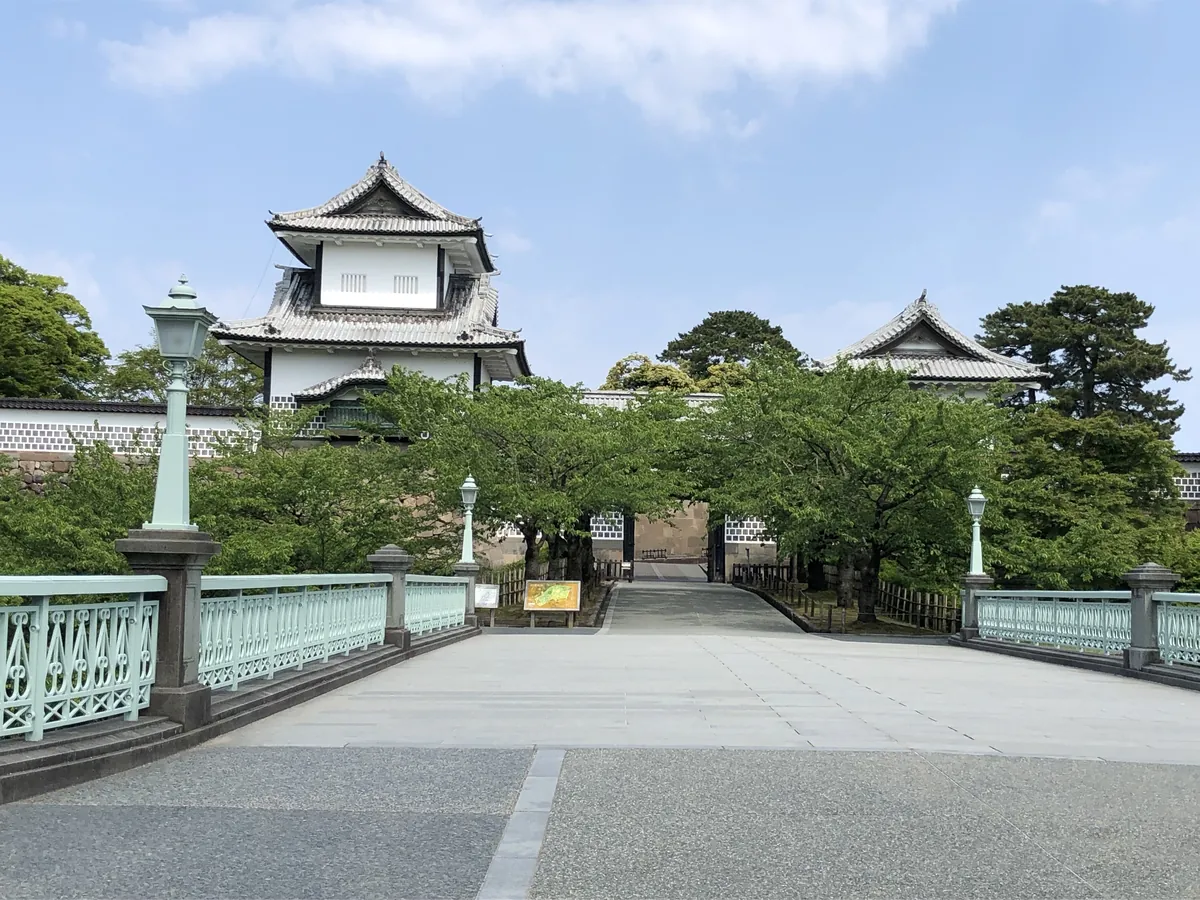
Connected to Kenrokuen by a bridge, Kanazawa Castle Park is a spacious and pleasant complement to the garden. The castle has been rebuilt multiple times after fires over the centuries, but the impressive Ishikawa Gate and the long Gojikken Nagaya storehouse are genuinely striking examples of traditional Japanese castle architecture.
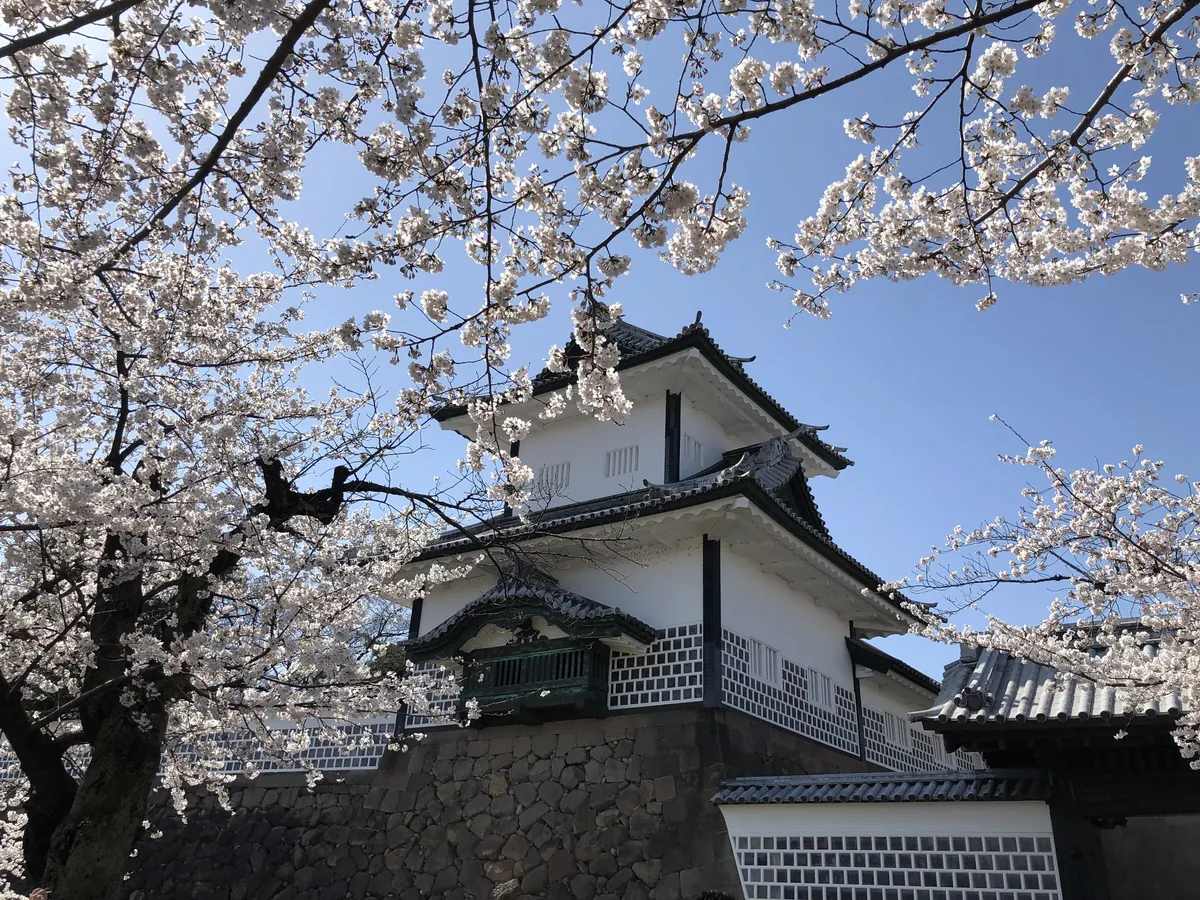
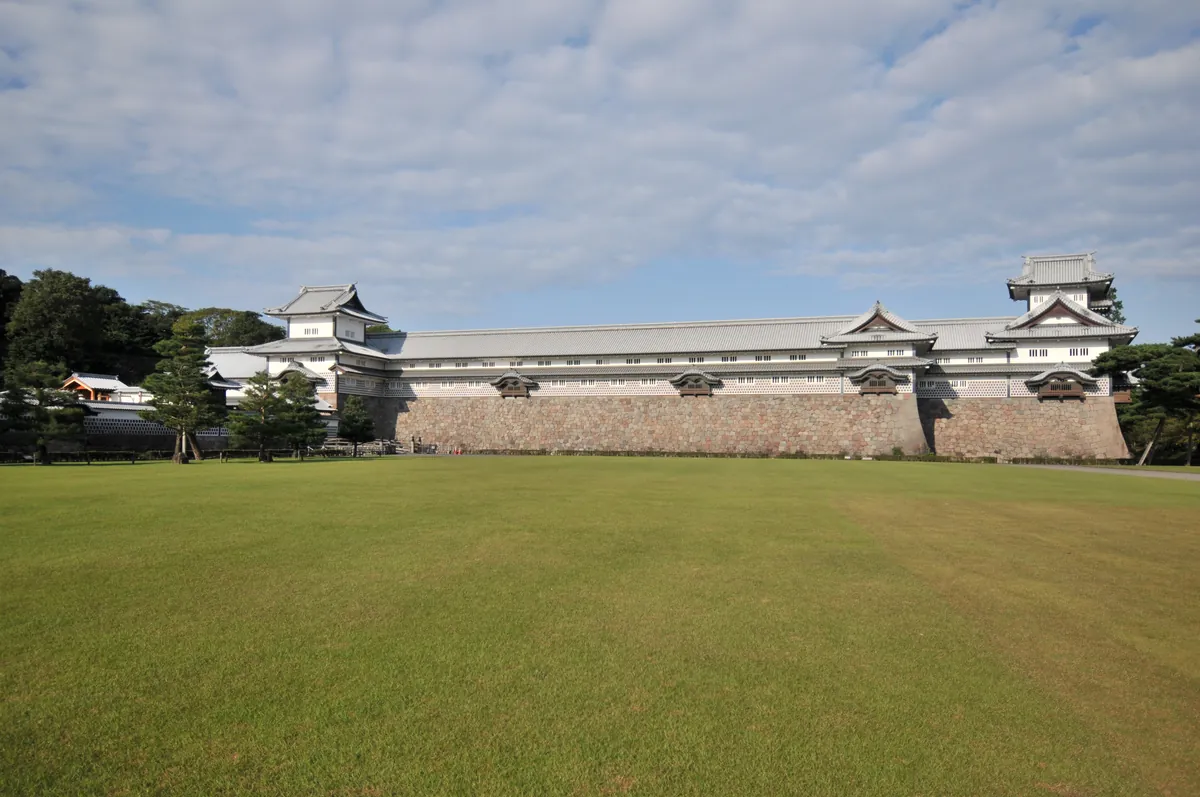
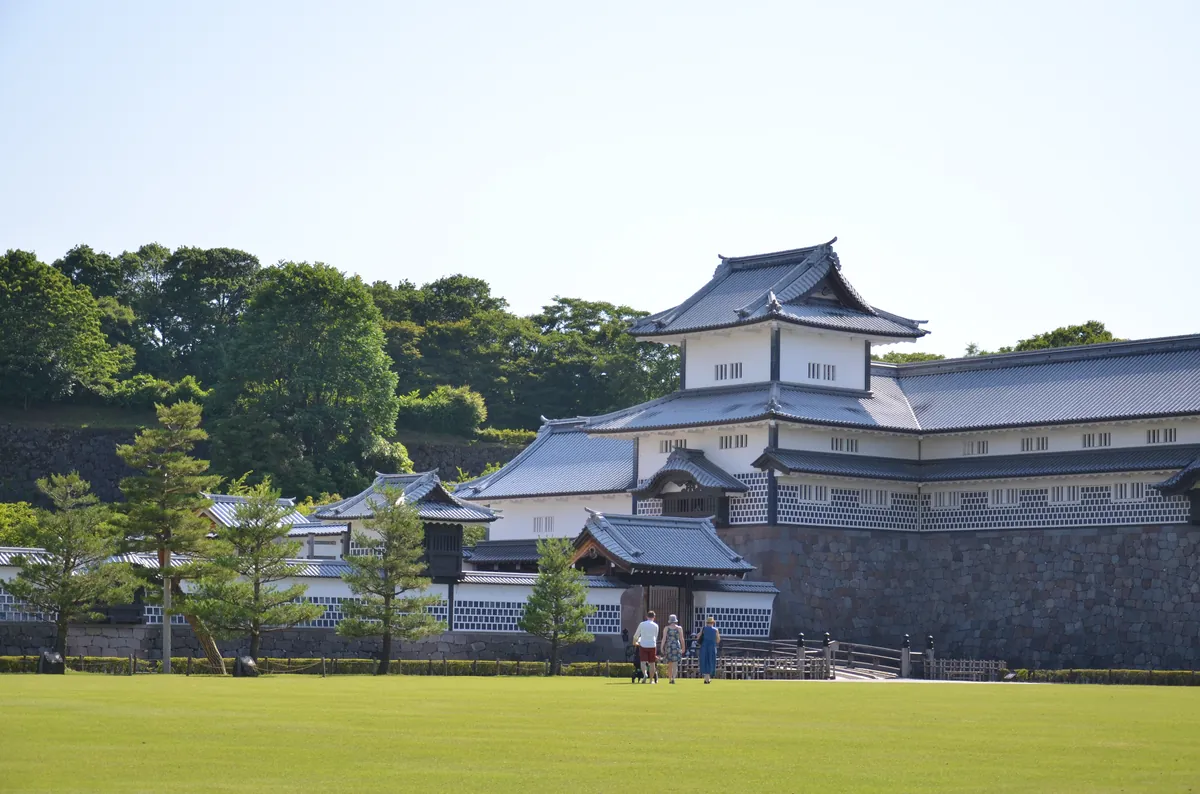
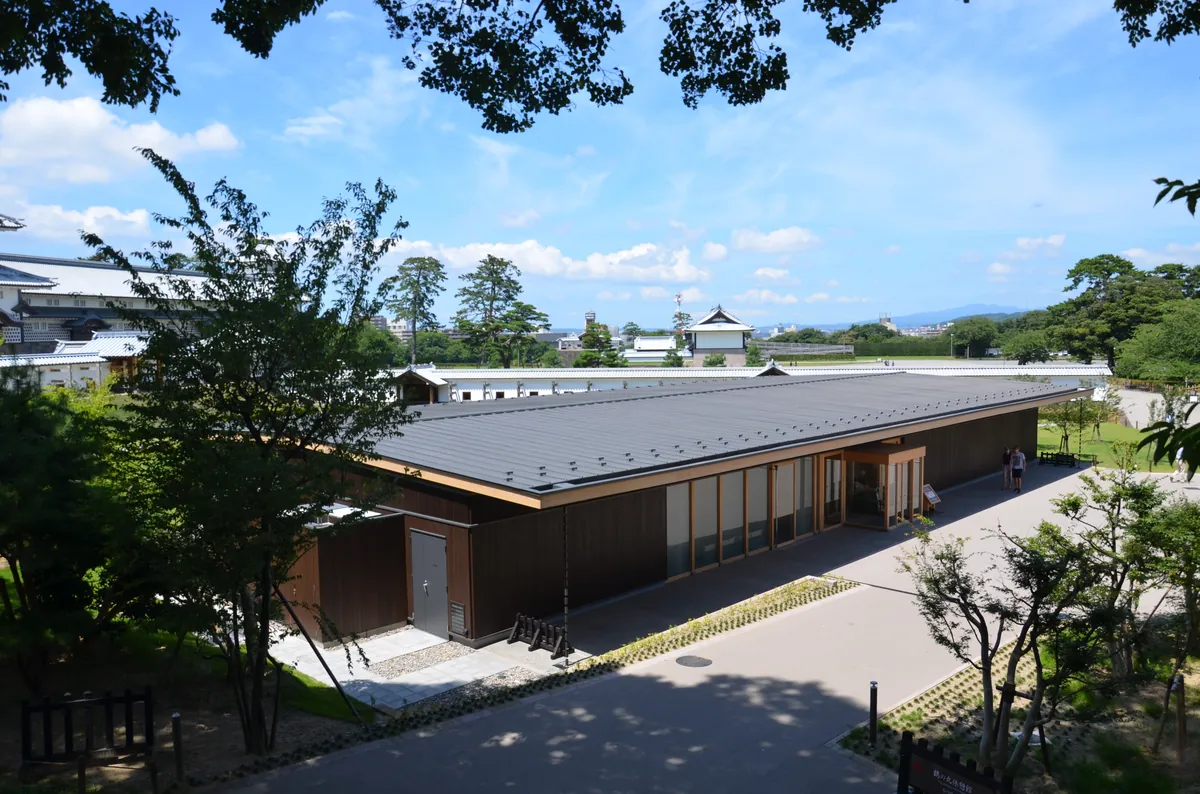
Photos above: © Ishikawa Prefecture
- Park admission: Free
- Castle buildings interior: ¥320 (or ¥500 combo ticket with Kenrokuen — save ¥140)
- Time needed: 30-45 minutes
The park grounds are noticeably less crowded than Kenrokuen and offer wide open spaces. I often use the walk through the castle park as a transition between Kenrokuen and the eastern part of the city. The elevated views from the castle walls toward the city are worth pausing for.
Higashi Chaya District (Eastern Geisha District)
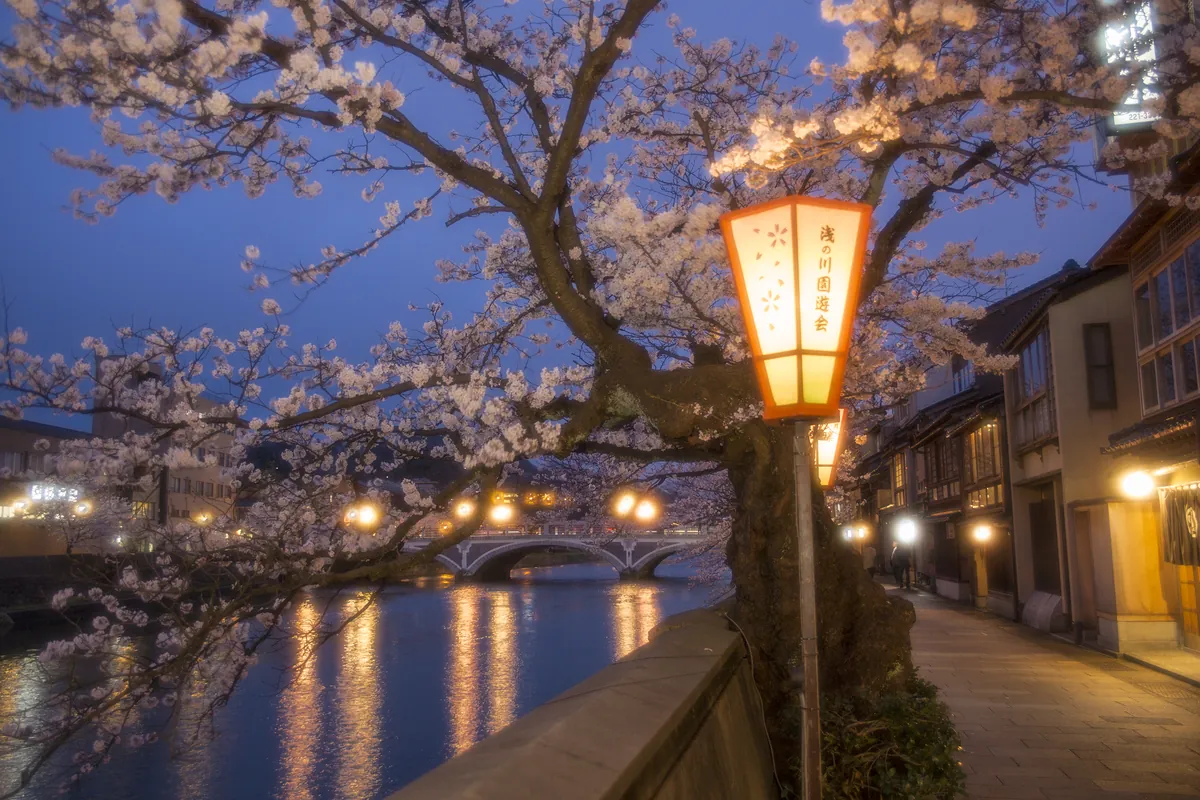
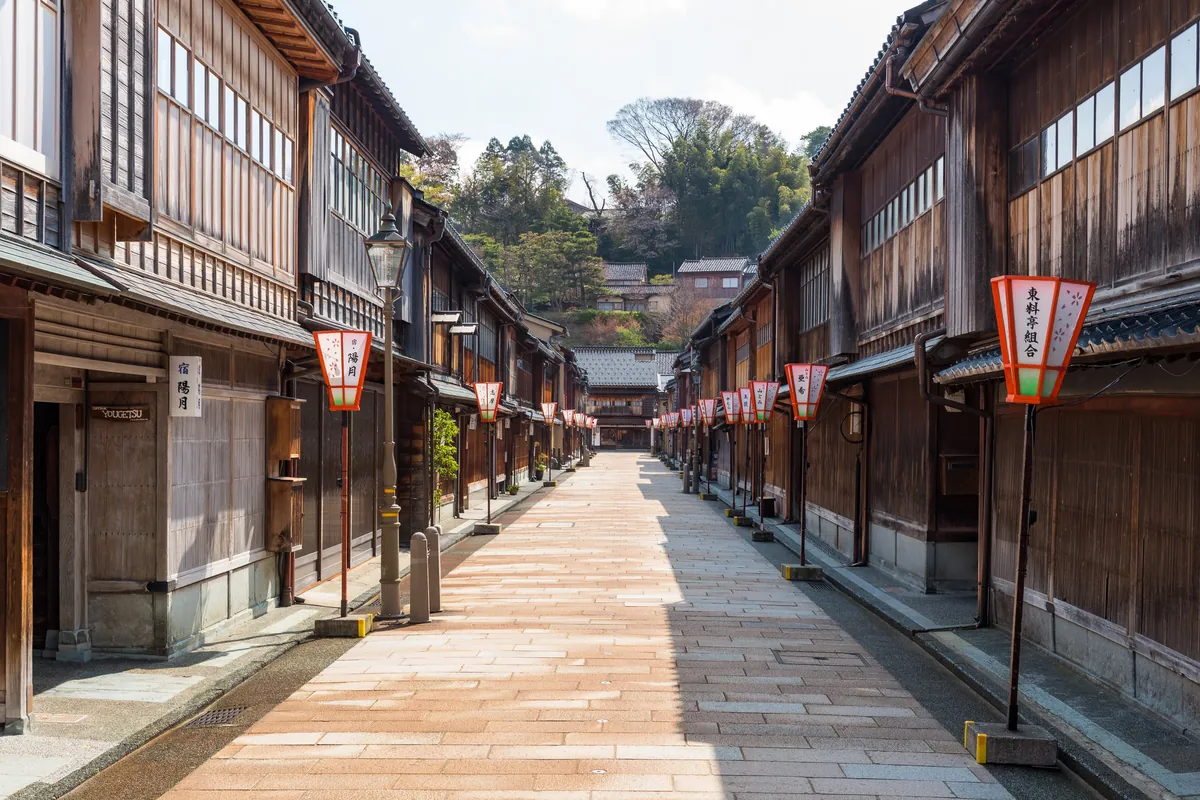
This is the most photogenic neighborhood in Kanazawa and, in my opinion, one of the most atmospheric historical districts in all of Japan. The narrow streets are lined with beautifully preserved wooden tea houses dating back to the 1820s. The dark wooden lattice facades (called kimusuko) create a distinctive visual rhythm that photographs beautifully in any light.
What sets Higashi Chaya apart from Kyoto’s more famous geisha districts is the relative calm. Even on weekends, it maintains a quieter, more authentic atmosphere. During early morning hours, you might hear only the sound of your own footsteps on the stone pavement.
What to do here:
- Kaikaro Tea House — One of the few chaya open to the public. Step inside to see gorgeous red-lacquered interiors and learn about geisha culture. Admission: ¥750.
- Hakuza Gold Leaf Shop — Watch artisans working with gold leaf in real time. Kanazawa’s signature craft is mesmerizing to observe up close.
- Gold leaf ice cream — The most iconic vendor is Hakuichi Kanazawa Higashiyama, whose gold-leaf soft cream (¥891) is the photo that ends up on every Kanazawa travel feed. Other shops along the main street serve similar versions in the ¥800-1,000 range. The gold leaf itself has no flavor (it tastes like regular soft serve), but the visual experience and the photos are absolutely worth it.
- Browse artisan shops — Ceramics, lacquerware, silk goods, and Kutani pottery. Prices range from affordable souvenirs to museum-quality pieces.
Time needed: 45-60 minutes
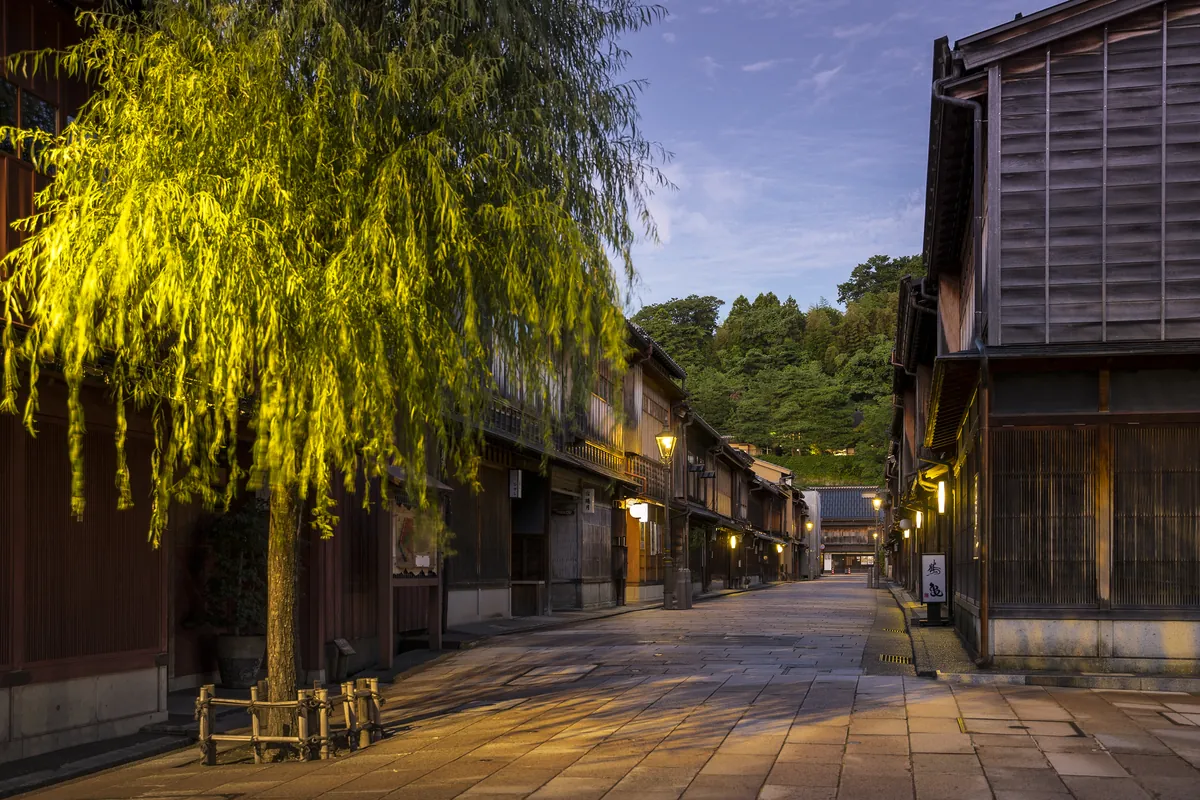
Photos above: © Kanazawa City
21st Century Museum of Contemporary Art
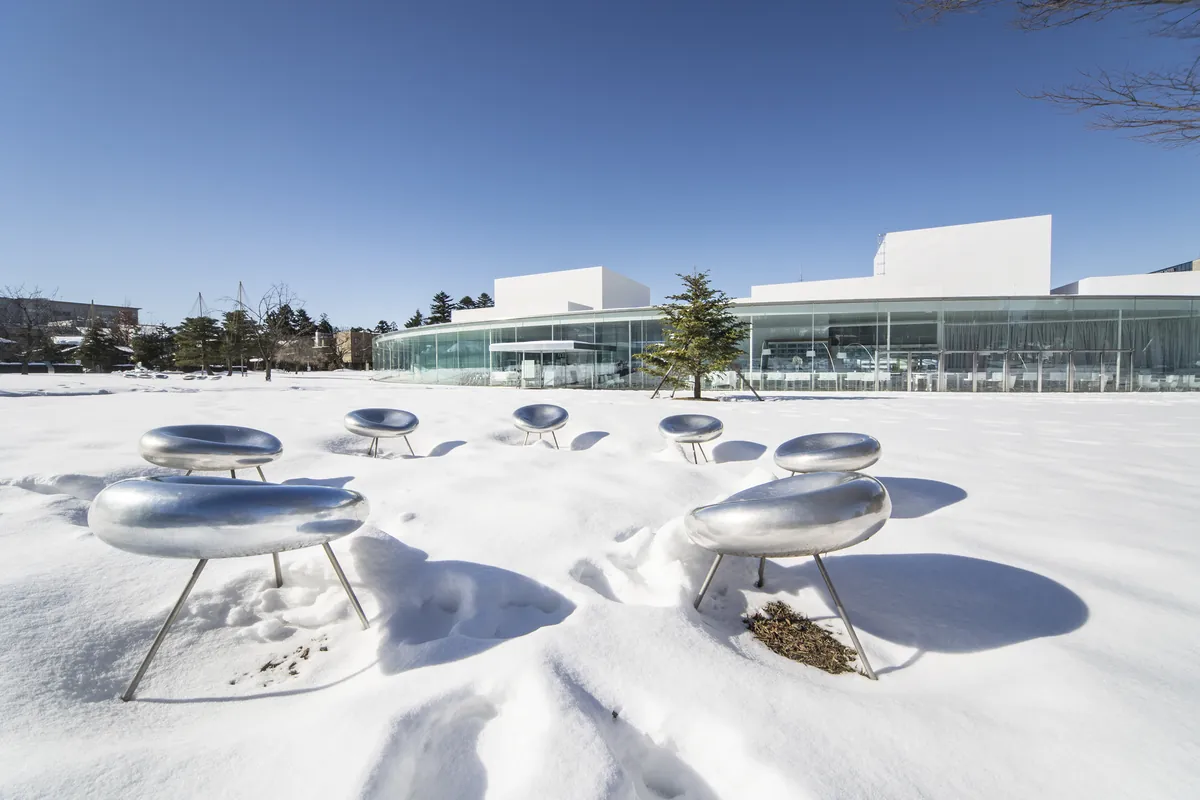
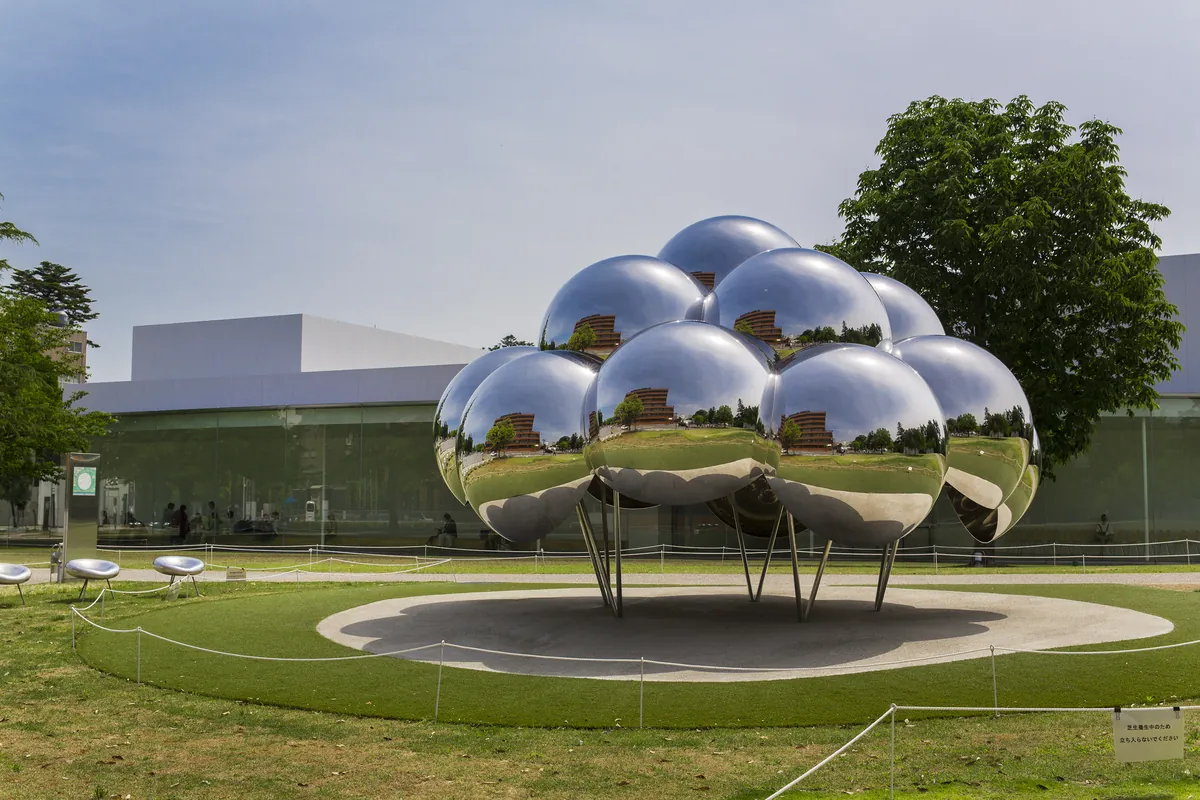
This museum is unlike any art space you have visited before. Designed by the Pritzker Prize-winning architecture firm SANAA (Kazuyo Sejima and Ryue Nishizawa), the building itself is a work of art — a flat, circular glass structure with no defined front or back entrance. The design philosophy is about openness and accessibility, and you feel it the moment you approach.
The most famous permanent installation is Leandro Erlich’s “Swimming Pool.” From above, it appears to be a full swimming pool with people walking on the bottom. Walk underneath and you discover it is actually an empty room with a thin layer of water on a glass ceiling. It is brilliant, playful, and invariably delights visitors of all ages.
- Public zone: Free (includes viewing the Swimming Pool from above, outdoor installations, and the building’s architecture)
- Exhibition zone: ¥450-1,200 depending on current exhibitions
- Hours: 10:00 AM – 6:00 PM (closed Mondays; if Monday is a holiday, closed Tuesday instead)
- Time needed: 45-90 minutes depending on your interest in the current exhibitions
Nagamachi Samurai District
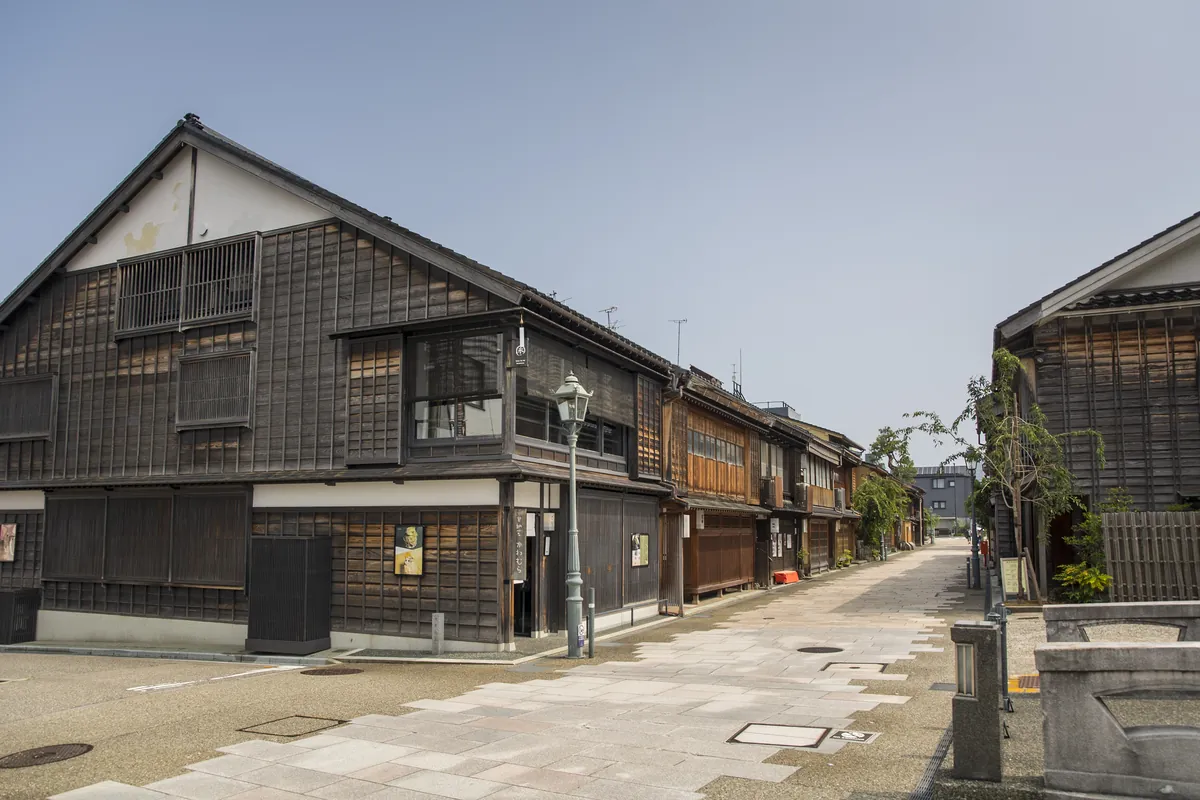
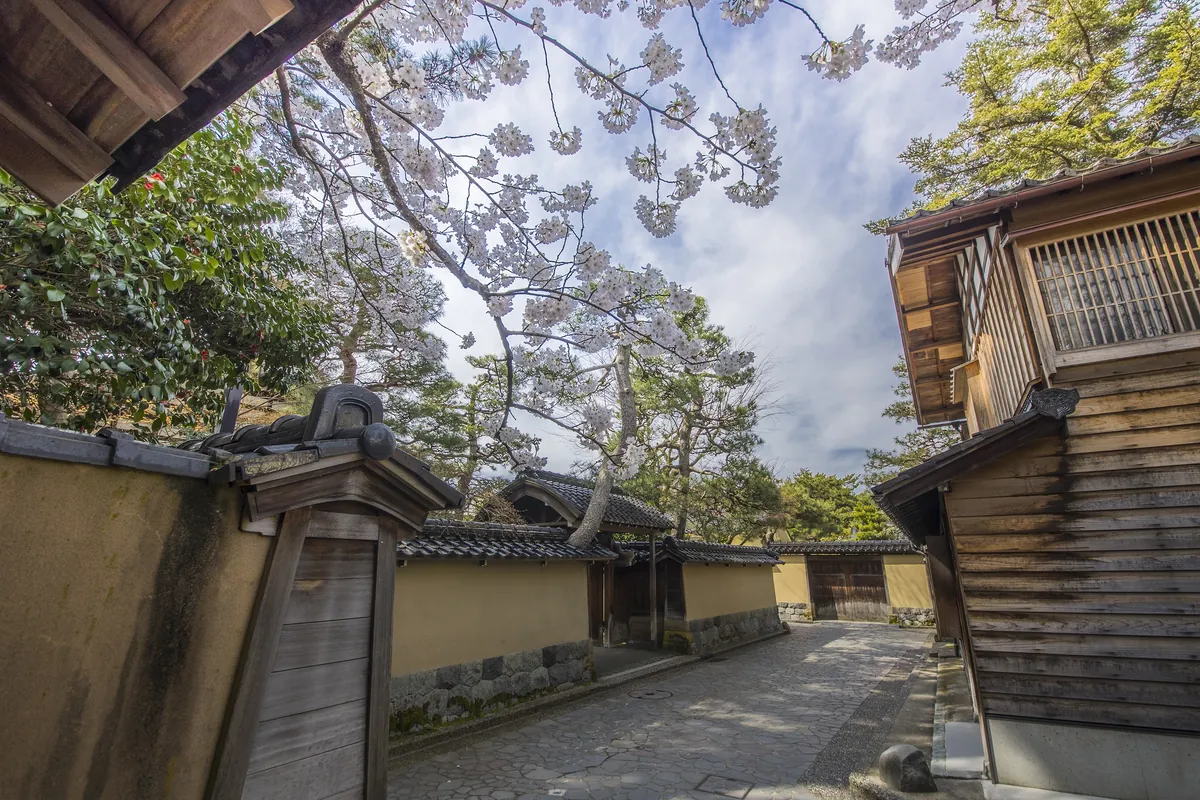
While the geisha district gets more tourist attention, the Nagamachi Samurai District is equally atmospheric and usually much less crowded. This was where middle and upper-ranking samurai families lived during the Edo period, and the distinctive earthen walls lining the narrow lanes give it a completely different character from any other part of Kanazawa.
Highlights:
- Nomura Samurai House — The standout attraction. A beautifully preserved samurai residence with an exquisite miniature garden that Lonely Planet once ranked among Japan’s top three gardens for its size. The interior rooms with their painted screens and views over the garden are genuinely transporting. Admission: ¥550.
- Earthen walls (tsuji-bei) — The iconic mud-and-tile walls along the lanes are unique to Kanazawa’s samurai districts and are a protected cultural property.
- Shinise Memorial Hall — A former pharmacy building showcasing Kanazawa merchant life during the Edo period. Admission: ¥100 (closed Mondays).
Time needed: 30-45 minutes
The Nagamachi District connects naturally to both the castle area and the Katamachi shopping district, making it a perfect walking route when transitioning between Kenrokuen and the bus terminal or shopping area.
Kanazawa Station and the Tsuzumi Gate
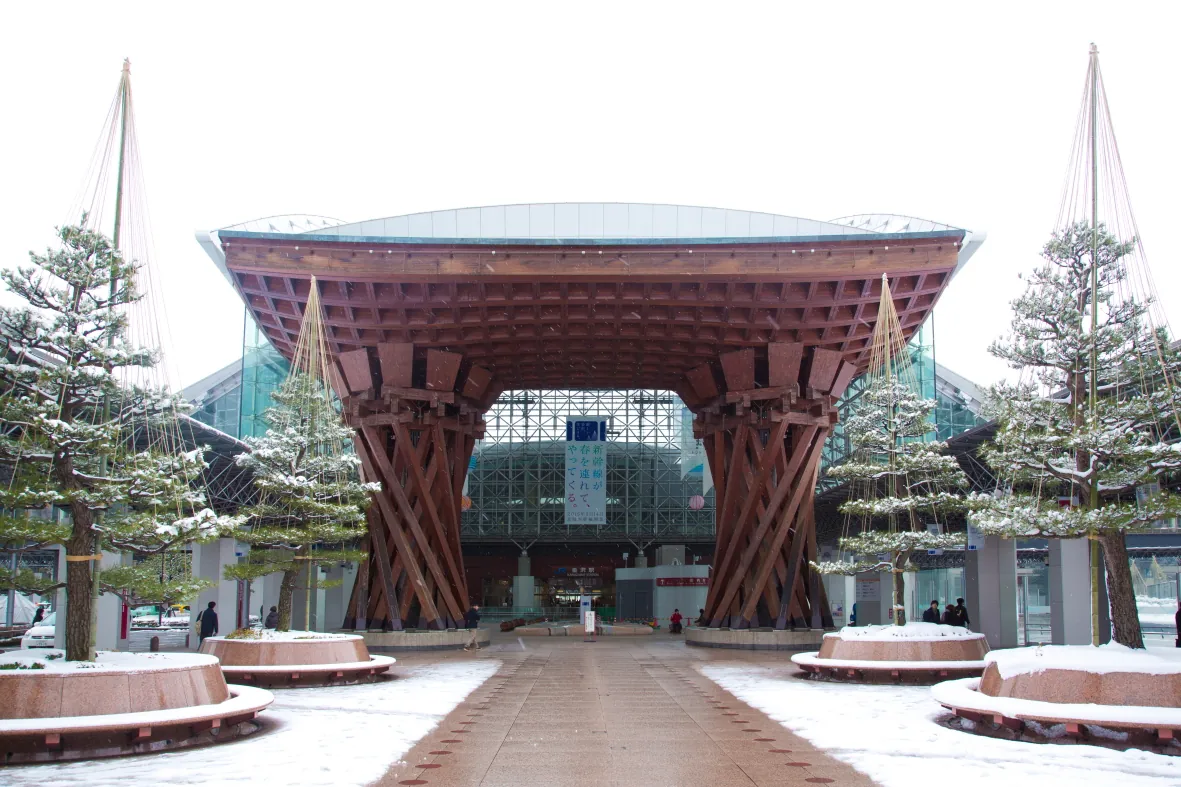
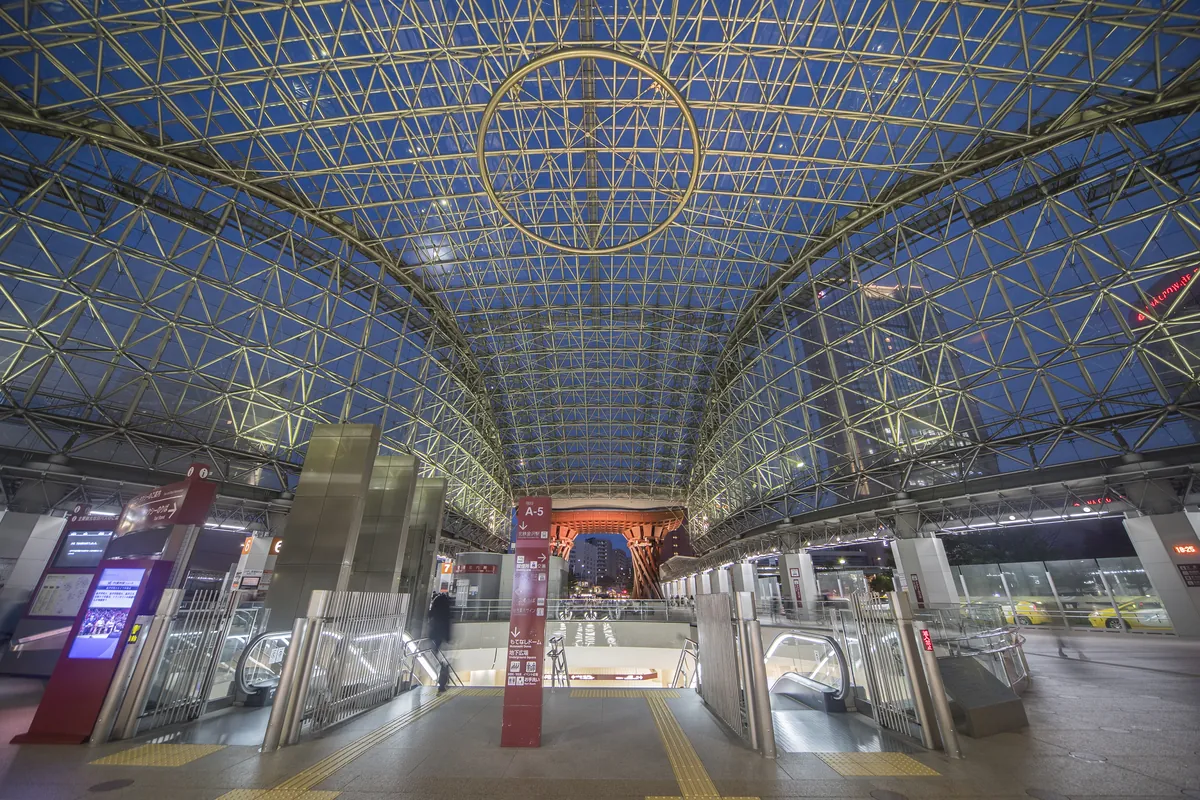
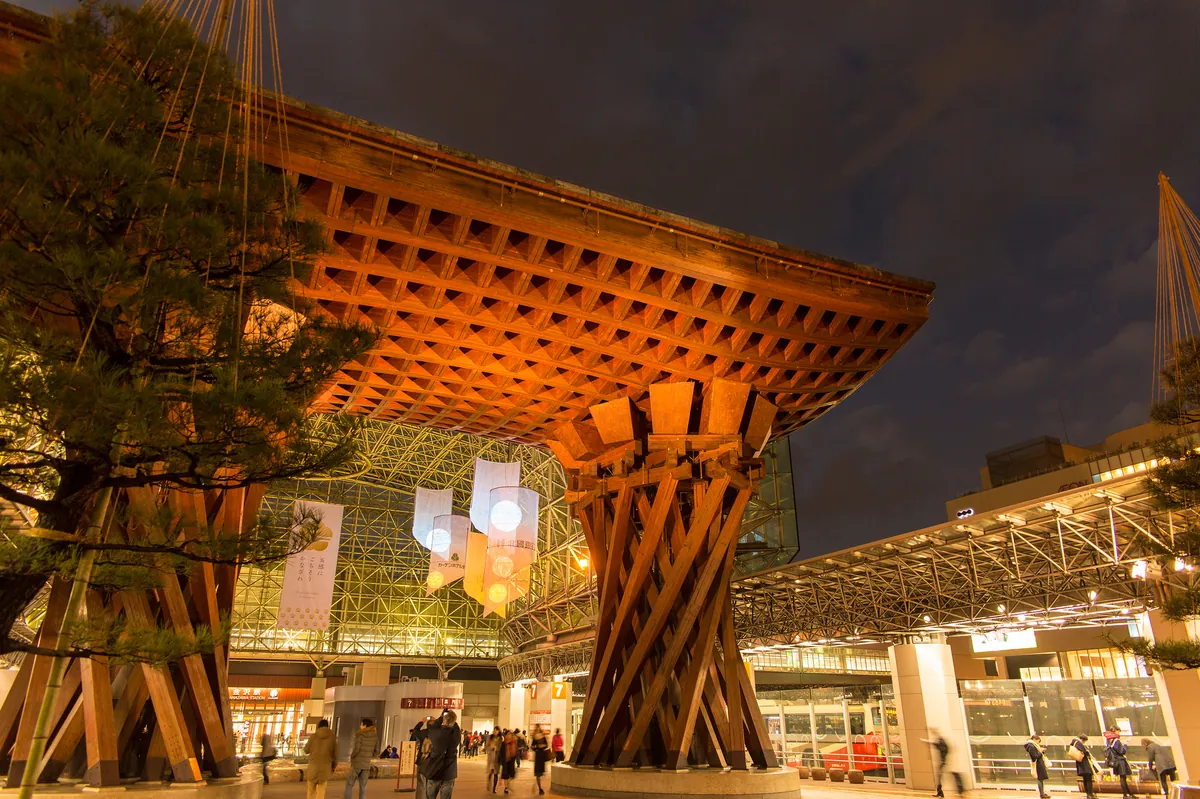
Do not rush past Kanazawa Station itself. The Tsuzumi Gate (Motenashi Dome) at the east exit is one of the most photographed train station structures in Japan. The massive wooden gate is inspired by traditional tsuzumi hand drums used in Noh theater. Behind it, the glass Motenashi Dome creates a dramatic covered plaza that looks spectacular in any weather.
The station area also has excellent shopping. Kanazawa Hyakubangai is a shopping complex inside the station with curated local crafts, sweets, and souvenirs. It is the most convenient place to pick up gifts before catching your return train.
Time needed: 15-30 minutes for photos and quick shopping
Photos above: © Kanazawa City
What Should You Eat in Kanazawa?
Kanazawa’s food scene is one of its greatest strengths. The city’s position on the Sea of Japan coast means the seafood is exceptionally fresh, and local culinary traditions have been refined over centuries. Here is what you should not miss.
Kanazawa has incredible seafood — there is no getting around that. The freshness of what you find at Omicho Market is on a completely different level from inland cities. But here is what I always tell visitors: enjoy the seafood in Kanazawa, then come back to Nagoya in the evening and experience the miso-based dishes you cannot get anywhere else. Nagoya’s food culture — the miso katsu, the miso nikomi udon, the tori no miso nabe (chicken miso hot pot) — is a completely different world from Kanazawa’s seafood, and tasting both in a single day gives you an incredible range of Japanese flavors.
Omicho Market: Kanazawa’s Kitchen
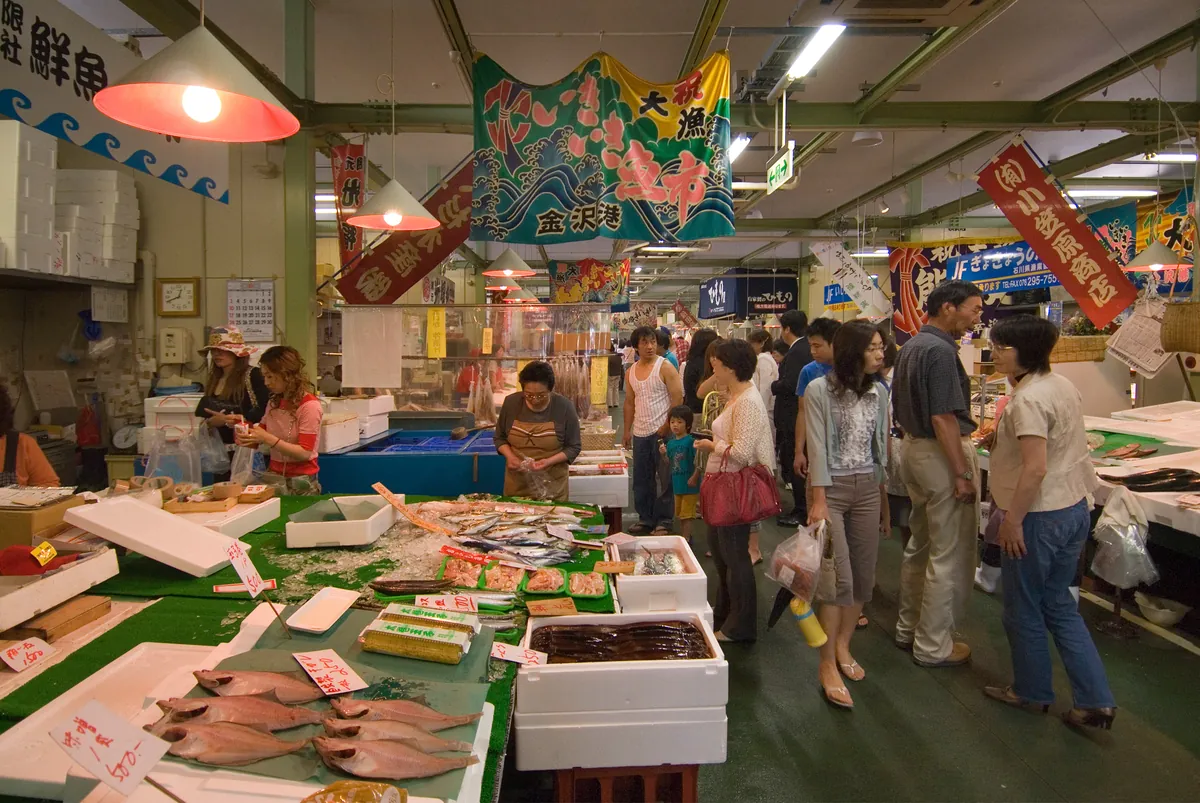
Known as “Kanazawa’s Kitchen,” Omicho Market has been feeding locals for over 300 years. The covered market houses about 170 shops selling fresh seafood, produce, street snacks, and prepared meals. This is where I always eat lunch on Kanazawa day trips.
Must-try foods at Omicho Market:
- Kaisendon (seafood rice bowl): The star attraction. A generous mound of fresh sashimi — tuna, salmon, shrimp, uni (sea urchin), ikura (salmon roe), and more — piled over warm rice. Popular stalls include Iki Iki Tei (the signature Iki Iki Tei don is around ¥2,200), Yamasan Sushi, and Omicho Ichiba Sushi (Omicho Market Official). Expect to pay ¥2,000-3,500 for a good one — the more expensive bowls typically include premium items like uni and Kano crab.
- Kanazawa-style sushi: Noticeably different from Tokyo-style. The fish variety reflects the Sea of Japan catch — you will encounter species here that are rare in Pacific-side cities. A sushi set lunch runs ¥1,500-3,000.
- Fried korokke (croquettes): Cheap, hot, and delicious street snack. Usually ¥200-300 each. The crab croquettes are a Kanazawa specialty.
- Kanazawa oden: A local winter specialty featuring unique ingredients like Kano crab legs, bai-gai (sea snails), and car-fu (wheat gluten). Available year-round at some stalls.
- Fresh oysters and crab (seasonal): If you visit between November and March, the Kano crab (local snow crab) is extraordinary and worth splurging on. A whole grilled crab leg starts around ¥1,500.
Market hours: Most shops open 9:00 AM – 5:00 PM (some restaurants stay open until evening)
Closed: Wednesdays (some shops) and January 1-4
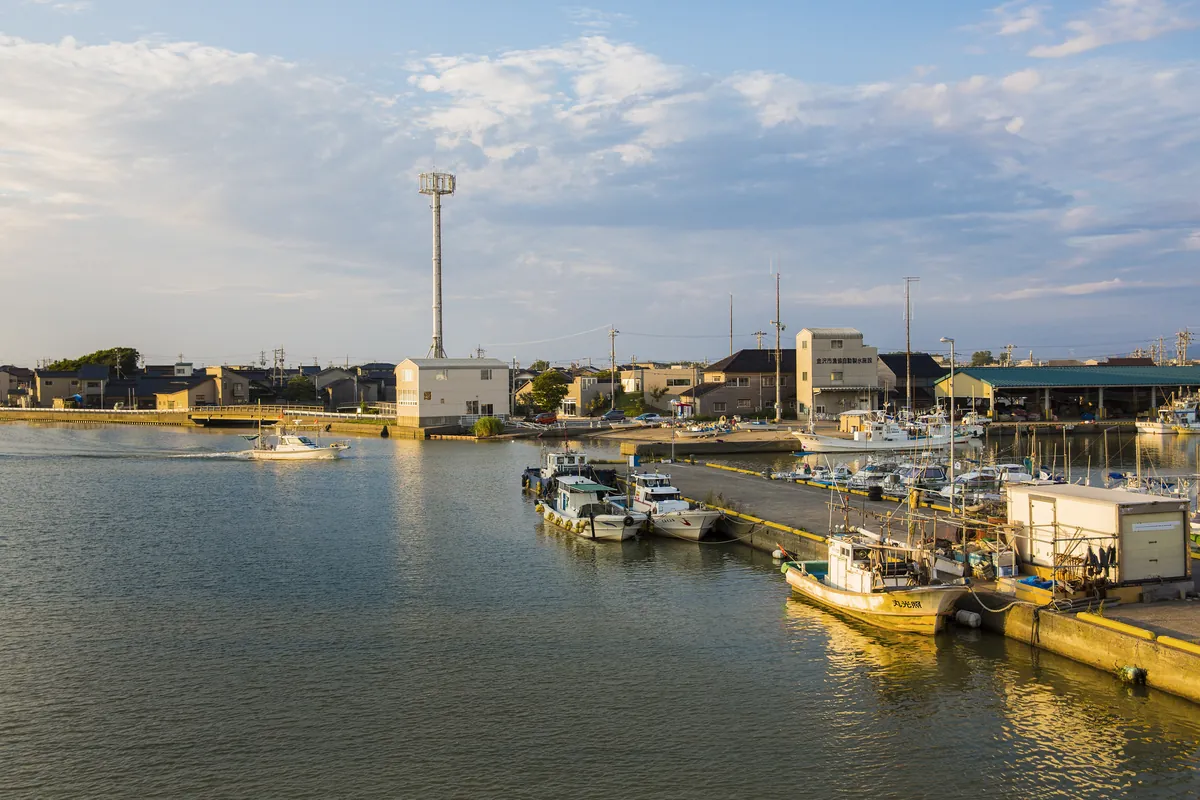
Other Dining Spots
If the market is too crowded or you want a sit-down meal:
- Sushi restaurants near Kanazawa Station — Several excellent options in the Hyakubangai area. More relaxed than the market and still serving top-quality local fish.
- Katamachi area — Kanazawa’s main dining and entertainment district. Good range of restaurants from casual izakaya to high-end kaiseki.
- Cafe culture — Kanazawa has a surprisingly vibrant cafe scene. Look for cafes in converted machiya (traditional townhouses) in the Higashi Chaya area.
For more on central Japan’s food scene, see our Nagoya food guide covering Nagoya-meshi specialties.
What Does a Kanazawa Day Trip Itinerary Look Like?
Here is my recommended hour-by-hour itinerary, refined over many personal visits. This schedule is built on the first through Shirasagi Limited Express of the day and gives you about 6 hours 15 minutes in Kanazawa. The train times below come from the JR timetable current in August 2026 — always reconfirm them on JR West’s official timetable before you travel, because train numbers and times change at each timetable revision.
| Time | Activity | Details |
|---|---|---|
| 7:51 AM | Depart Nagoya Station | Shirasagi 1 — the first through limited express of the day to Tsuruga |
| 9:27 AM | Arrive Tsuruga | Transfer to the Hokuriku Shinkansen platform (about 19 minutes here) |
| 9:46 AM | Depart Tsuruga | Hokuriku Shinkansen Tsurugi 8 to Kanazawa |
| 10:43 AM | Arrive Kanazawa Station | Pick up Loop Bus 1-Day Pass at bus terminal |
| 11:00 AM | Take Kanazawa Loop Bus | Right loop to Kenrokuen-shita stop (~15 min) |
| 11:15 AM-12:15 PM | Kenrokuen Garden | Full garden walk. Enter via Katsurazaka Gate. |
| 12:15-12:40 PM | Kanazawa Castle Park | Walk through grounds, see Ishikawa Gate. Free entry to park. |
| 12:40-12:55 PM | Walk to Omicho Market | 15-minute walk |
| 12:55-1:55 PM | Omicho Market | Late lunch (kaisendon!) and market browsing |
| 1:55-2:10 PM | Walk to Higashi Chaya District | 15-minute walk |
| 2:10-2:50 PM | Higashi Chaya District | Explore tea houses, gold leaf shops, artisan stores |
| 2:50-3:10 PM | Loop Bus to the 21st Century Museum | Short ride plus waiting time |
| 3:10-3:50 PM | 21st Century Museum of Contemporary Art | Swimming Pool installation + current exhibitions |
| 3:50-4:00 PM | Walk to Nagamachi District | 10-minute walk |
| 4:00-4:30 PM | Nagamachi Samurai District | Nomura Samurai House + stroll along earthen walls |
| 4:30-4:50 PM | Loop Bus to Kanazawa Station | ~15 minutes, then Tsuzumi Gate photos on the way in |
| 5:00 PM | Depart Kanazawa | Hokuriku Shinkansen Tsurugi 37 to Tsuruga |
| 5:59 PM | Arrive Tsuruga | Timed cross-platform connection — only about 9 minutes, so do not wander off |
| 6:08 PM | Depart Tsuruga | Shirasagi 14 Limited Express to Nagoya |
| 7:46 PM | Arrive Nagoya Station | Back in time for a late dinner in Nagoya! |
This itinerary gives you about 6 hours 15 minutes in Kanazawa, which is enough for all the major highlights at a brisk but manageable pace. On weekends and public holidays you can buy yourself an extra 75 minutes: the Shirasagi 51 runs Maibara 7:47 → Tsuruga 8:18 and connects into the Tsurugi 4, reaching Kanazawa at 9:28 — but you have to get to Maibara on the Tokaido Shinkansen first, which is a separate fare.
If You Prefer a Slower Pace
The itinerary above is comfortably full but not exhausting. If you prefer a more relaxed day, drop either the 21st Century Museum or Nagamachi District and spend the extra time lingering at the remaining spots. Having an unhurried lunch at Omicho Market and a slow walk through Kenrokuen is a perfectly satisfying Kanazawa experience on its own.
You could also take a later morning train (departing Nagoya around 8:00 AM) and an earlier return (departing Kanazawa around 4:00 PM), giving you 5-6 hours. In that case, prioritize Kenrokuen, Higashi Chaya, and Omicho Market as your three essential stops.
How Much Does a Kanazawa Day Trip Cost?
One of the most common questions I get from visitors is about budgeting. Here is a realistic breakdown based on 2026 prices, drawn from my own recent visits.
| Expense | Budget Option | Mid-Range | Comfortable |
|---|---|---|---|
| Transport (round trip) | ¥7,500 (highway bus) | ¥14,920 (rapid + Shinkansen) | ¥18,160 (Shirasagi + Shinkansen) |
| Kenrokuen admission | ¥320 | ¥320 | ¥500 (combo with castle) |
| 21st Century Museum | Free (public zone only) | ¥450 | ¥1,200 (special exhibition) |
| Nomura Samurai House | — (skip) | ¥550 | ¥550 |
| Kaikaro Tea House | — (skip) | ¥750 | ¥750 |
| Lunch at Omicho Market | ¥1,500 (croquettes + simple bowl) | ¥2,500 (kaisendon) | ¥3,500 (premium kaisendon) |
| Snacks & drinks | ¥500 | ¥1,000 (incl. gold leaf ice cream) | ¥1,500 |
| Loop Bus pass | ¥800 | ¥800 | ¥800 |
| Souvenirs | ¥0 | ¥1,500 | ¥3,000 |
| Total per person | ~¥10,620 | ~¥22,350 | ~¥29,960 |
What Practical Tips Should You Know Before Going?
Money and Payment
Kanazawa is more cash-dependent than you might expect. While convenience stores and chain restaurants accept IC cards and credit cards, many of the smaller shops in Omicho Market, traditional tea houses, and artisan craft stores operate on cash only. Bring at least ¥10,000-15,000 in cash for a comfortable day. 7-Eleven and Lawson ATMs near Kanazawa Station accept international cards.
As a Nagoya local, this is something I navigate daily — even in a modern city like Nagoya, the small local restaurants, the red-lantern izakayas, and many specialty shops are still cash-only in 2026. It is one of those things about Japan that surprises visitors, but once you are prepared with cash in your pocket, it is never a problem.
For a complete guide to managing money in Japan, including IC cards and the best ATM strategies, see our Japan travel essentials guide.
What to Wear and Bring
This itinerary involves substantial walking — plan for 10,000-15,000 steps. Wear comfortable walking shoes with good support. The streets in Higashi Chaya and Nagamachi feature uneven stone and cobblestone surfaces, so flat, sturdy shoes are essential.
Always carry a compact umbrella, regardless of what the weather forecast says. Kanazawa sits on the Sea of Japan coast and gets significantly more rain than Nagoya. The local saying is “Even if you forget your lunch, don’t forget your umbrella.” I have been caught in sudden downpours in Kanazawa more times than I care to admit, and the weather can shift from sunny to rainy within minutes.
Seasonal Considerations
- Spring (late March – April): Cherry blossom season. Kenrokuen is spectacular but crowded. Book trains early on weekends.
- Summer (July – August): Hot and humid, similar to Nagoya. Stay hydrated. Fewer tourists than spring or autumn.
- Autumn (November): Foliage season. Kenrokuen’s autumn colors are among the best in the Hokuriku region.
- Winter (December – February): Cold with frequent snow (0-5°C). Dress warmly in layers. The yukitsuri in Kenrokuen and fresh Kano crab make winter visits uniquely rewarding.
Getting Around Within Kanazawa
The Kanazawa Loop Bus is the most convenient transportation within the city. Two loops (right and left) run in opposite directions, connecting all major tourist spots. Single rides cost ¥220 (adult) / ¥110 (child); with the 1-Day Pass (¥800 adult), you can hop on and off freely.
Walking between attractions is also very feasible — the city center is flat and compact. Distances between major sights range from 10-20 minutes on foot.
Bicycle rental is another excellent option for good weather days. Several rental shops operate near Kanazawa Station, and the flat terrain makes cycling easy and pleasant. The city’s Machi-nori share-cycle system charges ¥1,650 for a 1-day pass.
Luggage Storage
If you are doing this as a day trip from Nagoya, travel light. Kanazawa Station has coin lockers (¥400 for small, ¥600 for medium, ¥800 for large) near the east exit. The largest lockers fit standard carry-on suitcases. On busy weekends, lockers fill up early, so use them first thing when you arrive.
What If You Want to Extend Your Trip?
Overnight in Kanazawa
If you can spare an extra day, staying one night in Kanazawa is incredibly rewarding. An overnight trip lets you experience:
- Evening Higashi Chaya District — The tea houses are lit with warm lanterns after dark, creating an atmosphere that is genuinely magical. Far fewer tourists in the evening.
- Kazuemachi Chaya District — A second, smaller geisha district along the Asano River. Peaceful and photogenic, especially at sunset.
- Myoryuji (Ninja Temple) — A fascinating temple with hidden rooms, secret passages, and trap doors. Reservation required, tours in Japanese with English pamphlet available.
- Morning Omicho Market — Experiencing the market when it first opens, watching fishmongers set up their displays, is a different experience from the midday tourist rush.
Combining Kanazawa with Other Central Japan Destinations
The classic central Japan loop route is: Nagoya → Takayama → Shirakawa-go → Kanazawa → Nagoya (or the reverse). This takes 2-3 days to do properly and is one of the best multi-day itineraries in Japan. Our 3-day Nagoya itinerary shows exactly how to fit this into a broader Central Japan trip. The Takayama-Hokuriku Area Tourist Pass covers this loop via the Takayama Line and Toyama, though not the Shirasagi route via Maibara used for the fastest day trip.
For planning your broader central Japan trip, check out:
- Nagoya to Takayama & Shirakawa-go Day Trip Guide — The other essential day trip from Nagoya
- 3-Day Nagoya Itinerary — How Kanazawa fits into a longer central Japan trip
- Things to Do in Nagoya — Fill the rest of your Nagoya days
- Where to Stay in Nagoya — Best areas and hotels for your base
What If It Rains? Weather and Contingency Planning
Kanazawa is one of the rainiest cities in Japan — it records about 2,400 mm of precipitation a year, and there is a local saying that goes bento wasuretemo kasa wasureruna (even if you forget your lunch, don’t forget your umbrella). The good news: Kanazawa is built for rain, and some of its best experiences actually improve in wet weather.
- Kenrokuen Garden in rain is genuinely beautiful — the moss glows a deeper green, the ponds ripple, and the crowds thin out dramatically. Japanese garden aesthetics embrace rain as part of the experience, and Kenrokuen is no exception. Carry a compact umbrella and take your time.
- Omicho Market is mostly covered, so seafood browsing and eating are completely unaffected by rain. This is an ideal place to spend extra time on a wet day.
- Higashi Chaya District has numerous indoor tea houses and gold leaf workshops where you can try gold leaf ice cream, watch craftspeople at work, and sit for matcha without getting wet. The narrow streets with rain-slicked stone paths are actually more photogenic than on a sunny day.
- 21st Century Museum of Contemporary Art is fully indoor and makes an excellent rain day anchor. The museum is centrally located and you can easily spend 1.5-2 hours here.
- Heavy rain or typhoon warning: Check the Japan Meteorological Agency forecast before departure. The Shirasagi limited express and the Hokuriku Shinkansen between Nagoya and Kanazawa can experience delays or suspensions during severe weather. If conditions look dangerous, consider redirecting to indoor Nagoya alternatives — Tokugawa Art Museum (¥2,000), Noritake Garden (free to enter; ¥500 for the Craft Center and Noritake Museum, closed Mondays), or Nagoya’s extensive underground shopping arcades are all weatherproof options.
Frequently Asked Questions about Kanazawa Day Trips
Is Kanazawa worth visiting as a day trip, or should I stay overnight?
A day trip is absolutely worthwhile and you can see all the major highlights in about six hours using the itinerary in this guide. However, if you have the flexibility, one night in Kanazawa lets you experience the city at a slower pace and enjoy the atmospheric evening scenes in the tea house districts. The evening illumination in Higashi Chaya is genuinely magical and worth the extra night if your schedule allows it.
How do I get from Nagoya to Kanazawa by train in 2026?
Take the JR Shirasagi Limited Express from Nagoya to Tsuruga (about 1 hour 35 minutes), then transfer to the Hokuriku Shinkansen Tsurugi to Kanazawa (about 45 minutes). Total travel time is approximately 2 hours 50 minutes. One-way cost is around ¥9,080 with reserved seats. The connection at Tsuruga is straightforward with clear signage. Tsurugi Shinkansen trains run frequently, so transfers are stress-free. The Hokuriku Shinkansen extension to Tsuruga in March 2024 made this route much more accessible than it used to be — it has been a game-changer for day trips from Nagoya.
Can I use the JR Pass for the Nagoya to Kanazawa route?
Yes, the nationwide JR Pass covers both the Shirasagi Limited Express to Tsuruga and the Hokuriku Shinkansen to Kanazawa. For central Japan-only travel, the Takayama-Hokuriku Area Tourist Pass (¥19,800 for 5 days) is a cheaper alternative that covers this route plus Takayama and Shirakawa-go bus connections.
Is the highway bus a good option for a day trip to Kanazawa?
I would not recommend the bus for a day trip. At 3.5-4 hours each way, you would spend 7-8 hours on transportation alone, leaving very little time to actually explore Kanazawa. The bus makes much more sense for overnight trips where saving ¥9,000-10,000 on transport is worth the extra travel time and you are not racing to see everything in one day.
What if I want to combine Kanazawa with Takayama and Shirakawa-go?
This is the classic central Japan loop: Nagoya → Takayama → Shirakawa-go → Kanazawa → Nagoya (or reverse). It takes 2-3 days minimum to do properly. The Takayama-Hokuriku Area Tourist Pass (¥19,800/5 days) is designed exactly for this route and covers all trains and buses. See our Takayama and Shirakawa-go guide for the complete planning details.
Is Kanazawa crowded with tourists?
Kanazawa has grown in popularity since the Hokuriku Shinkansen first reached the city in 2015, and the 2024 extension to Tsuruga made it even more accessible. Weekends and cherry blossom season (late March to early April) are the busiest periods. Weekdays are noticeably calmer at all attractions. Even at its busiest, Kanazawa is far less crowded than Kyoto — the difference is dramatic and consistently appreciated by visitors who experience both.
What is the best time of year to visit Kanazawa?
Each season has its appeal. Spring (late March-April) offers cherry blossoms in Kenrokuen. Autumn (November) brings spectacular foliage. Winter (December-February) features unique yukitsuri snow protection ropes in Kenrokuen and the best Kano crab season. Summer (July-August) is warm but has the fewest tourists. For a first visit, I personally recommend autumn for the combination of pleasant weather, beautiful colors, and moderate crowds.
Final Thoughts
Kanazawa is one of those places that consistently surprises visitors. People come expecting a quick garden visit and leave wishing they had planned two or three days. The combination of genuine historical preservation, world-class food, innovative contemporary culture, and that slightly off-the-beaten-path feeling makes it unlike anywhere else in Japan.
As someone who has made this day trip from Nagoya more times than I can count, I can tell you that it never gets old. Every visit, I discover a new shop in Higashi Chaya, try a different kaisendon combination at Omicho, or find a quieter corner of Kenrokuen that I had overlooked before. And every time I return to Nagoya in the evening and sit down at a local izakaya with a cold beer and some tebasaki, I am reminded why I love living here — because you can have two completely different, world-class Japanese experiences in a single day.
Whether you go for a focused day trip or extend it to an overnight stay, Kanazawa delivers an experience that will be among the highlights of your Japan visit. The seafood alone is worth the train ticket — and the miso-laden Nagoya dinner waiting for you when you get back makes it even better.
Sources & Statistics
According to the Ishikawa Prefecture Tourism Statistics, Kanazawa welcomed approximately 10.98 million visitors in 2024 (up 3.9% year-on-year), making it one of the most-visited cities on the Sea of Japan coast.
According to Ishikawa Prefecture’s official tourism site, Kenroku-en spans about 11.4 hectares and is designated a national Special Place of Scenic Beauty, and it is traditionally counted as one of Japan’s Three Great Gardens alongside Okayama’s Korakuen and Mito’s Kairakuen.
According to UNESCO Creative Cities Network, Kanazawa was designated a UNESCO Creative City of Crafts and Folk Art in 2009, recognizing its centuries-old traditions in gold leaf production, Kutani pottery, and Kaga yuzen silk dyeing.
For more day trip ideas and planning your central Japan adventure, explore our other guides:
- Things to Do in Nagoya: Complete Guide
- Nagoya to Takayama & Shirakawa-go Day Trip
- Inuyama Castle & Meiji Mura Day Trip
- Nagoya Food Guide: Nagoya-Meshi Specialties
- Getting Around Nagoya & Central Japan
- Where to Stay in Nagoya
- Ghibli Park Complete Guide
- 7 Best Day Trips from Nagoya
Start with our Japan Travel Essentials Guide for everything you need to know about SIM cards, rail passes, money, and packing — specifically for the Nagoya region.
Thinking about staying the night?
Browse Kanazawa accommodation →The evening is the part day-trippers miss.