Inuyama is a 25-minute train ride from Nagoya and home to Japan’s oldest surviving original castle keep, built in the late 1580s and designated a National Treasure. The town also features Meiji-Mura, an open-air museum preserving 67 Meiji-era buildings. Budget 3,760-9,260 yen for a half-day or full-day trip.
Quick Answer: Inuyama is a 25-minute train ride from Nagoya and offers Japan’s oldest surviving original castle keep (a National Treasure built in the late 1580s), a charming Edo-period castle town with excellent street food, and Meiji-Mura, an open-air museum of 60+ Meiji-era buildings including Frank Lloyd Wright’s Imperial Hotel entrance hall. Budget a half day for the castle and town, or a full day to include Meiji-Mura.
Last updated: August 2, 2026 | Written by Yuu, a Nagoya native of 35 years
This article may contain affiliate links. See our affiliate disclosure for details.
Table of Contents
- Why Is Inuyama the Best Day Trip from Nagoya?
- How Do You Get to Inuyama from Nagoya?
- What Makes Inuyama Castle So Special?
- What Should You Eat in Inuyama Castle Town?
- Is Haritsuna Shrine Worth a Visit?
- What Is Meiji-Mura and Why Should You Go?
- What Is Cormorant Fishing on the Kiso River?
- When Is the Inuyama Festival?
- What Are the Best Inuyama Day Trip Itineraries?
- How Much Does an Inuyama Day Trip Cost?
- What Practical Tips Should You Know Before Visiting?
- What If It Rains? Weather and Contingency Planning
- Frequently Asked Questions About Inuyama
Why Is Inuyama the Best Day Trip from Nagoya?
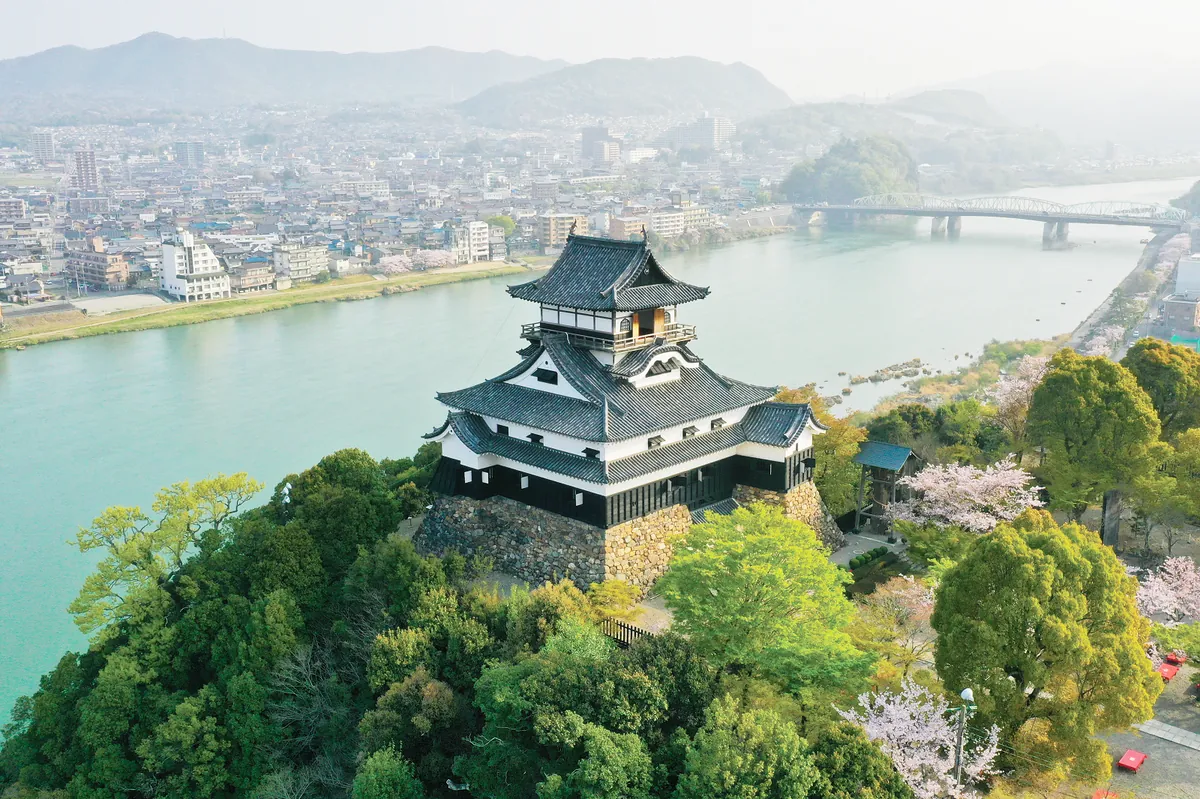
Inuyama combines Japan’s oldest surviving original castle keep (built in the late 1580s), a preserved Edo-period castle town with excellent street food, and the 67-building Meiji-Mura museum — all just 25 minutes by train from Nagoya for 630 yen each way on Meitetsu (fares are distance-based — check the exact fare on Meitetsu’s official fare and route search).
Inuyama is the single most rewarding day trip you can take from Nagoya. In just 25 minutes by train, you trade the modern city for a real Japanese castle, a genuine Edo-period castle town, and one of Japan’s most unique museums — all without the crushing crowds of Kyoto or Kamakura.
I have a deeper connection to Inuyama than any other place I write about. In 2010, I spent two months here on an internship, carrying bags for a city council member who showed me every corner of this remarkable town. I walked every street, talked to local shopkeepers, and ate at neighborhood kissaten every day. That experience transformed Inuyama from “a place near Nagoya with a castle” into one of the places I care about most in all of Japan. I learned about the city’s tourism policies, its preservation efforts, and the quiet pride its residents take in their heritage. Since then, I have brought visiting friends to Inuyama more times than I can count, and it never disappoints. Here is what makes it stand out:
- Inuyama Castle is one of only 12 original castles remaining in Japan. Of those 12, just 5 are designated National Treasures — and Inuyama is one of them. This is not a concrete reconstruction. You are walking on the same wooden floors and climbing the same steep stairs that samurai used more than 400 years ago.
- The castle town (Honmachi Street) has been beautifully preserved and revitalized, with traditional Edo-era buildings now housing food stalls, craft shops, sake breweries, and small museums. The street food scene here is genuinely excellent. What struck me during my internship was how intentionally the city has worked to create this atmosphere — the power lines along the castle town streets have been buried underground (a process called “denchu chichuka”), giving the area a remarkably clean, almost European aesthetic. It is one of those details that most visitors feel without consciously noticing, but it makes a huge difference in how the town photographs and how it feels to walk through.
- Meiji-Mura is unlike anything else in Japan — an open-air collection of over 60 real buildings from the Meiji era (1868-1912), relocated piece by piece to this hillside location. The centerpiece is the entrance hall of Frank Lloyd Wright’s Imperial Hotel, originally built in Tokyo in 1923.
- It is easy, affordable, and fast to reach. No complicated transfers, no reservations needed, no yen-draining bullet train tickets. Just tap your IC card and go.
If you are planning a broader Central Japan itinerary, Inuyama fits perfectly into a 3-day Nagoya itinerary as a half-day or full-day option. For other day trip ideas, check out our guides to Takayama and Shirakawa-go and Kanazawa.
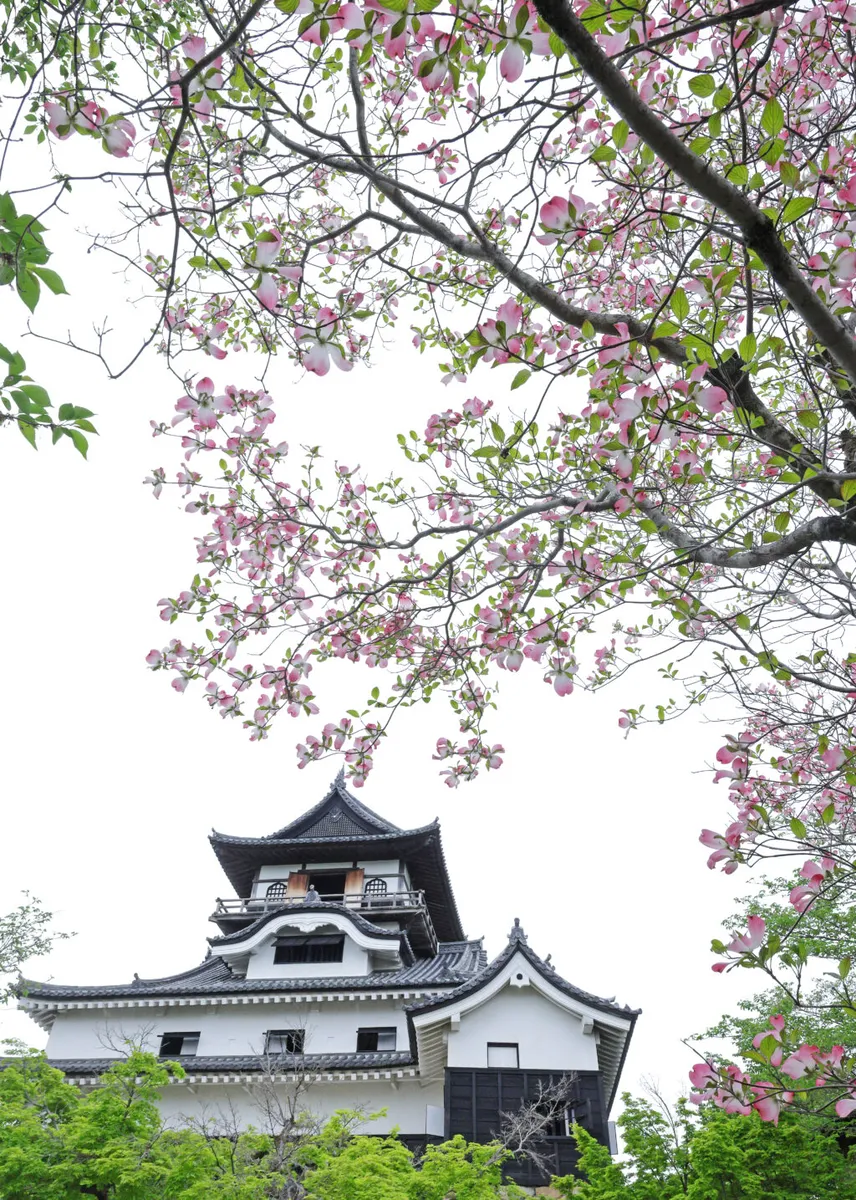
According to a 2021 tree-ring dating study published by Inuyama City, the main timbers of Inuyama Castle’s keep were felled between 1585 and 1588, and the keep was built in a single continuous campaign in the late 1580s. The study confirmed it is still the oldest surviving original castle tower in Japan; the traditional date of 1537 refers to the founding of the castle, not to the keep standing today.
According to Meiji-Mura’s official site, the museum preserves 67 historically significant buildings from the Meiji era across its 100-hectare hillside campus.
According to the Meitetsu Railway, Inuyama is just 26 kilometers from central Nagoya, reachable in approximately 25 minutes by express train for 630 yen.
How Do You Get to Inuyama from Nagoya?
Take the Meitetsu Inuyama Line express from Meitetsu Nagoya Station directly to Inuyama Station. The ride takes 25-30 minutes, costs 630 yen, and trains run every 10-15 minutes with no transfer required.
Getting to Inuyama is straightforward. The Meitetsu Inuyama Line runs directly from Meitetsu Nagoya Station to Inuyama, with no transfers needed.
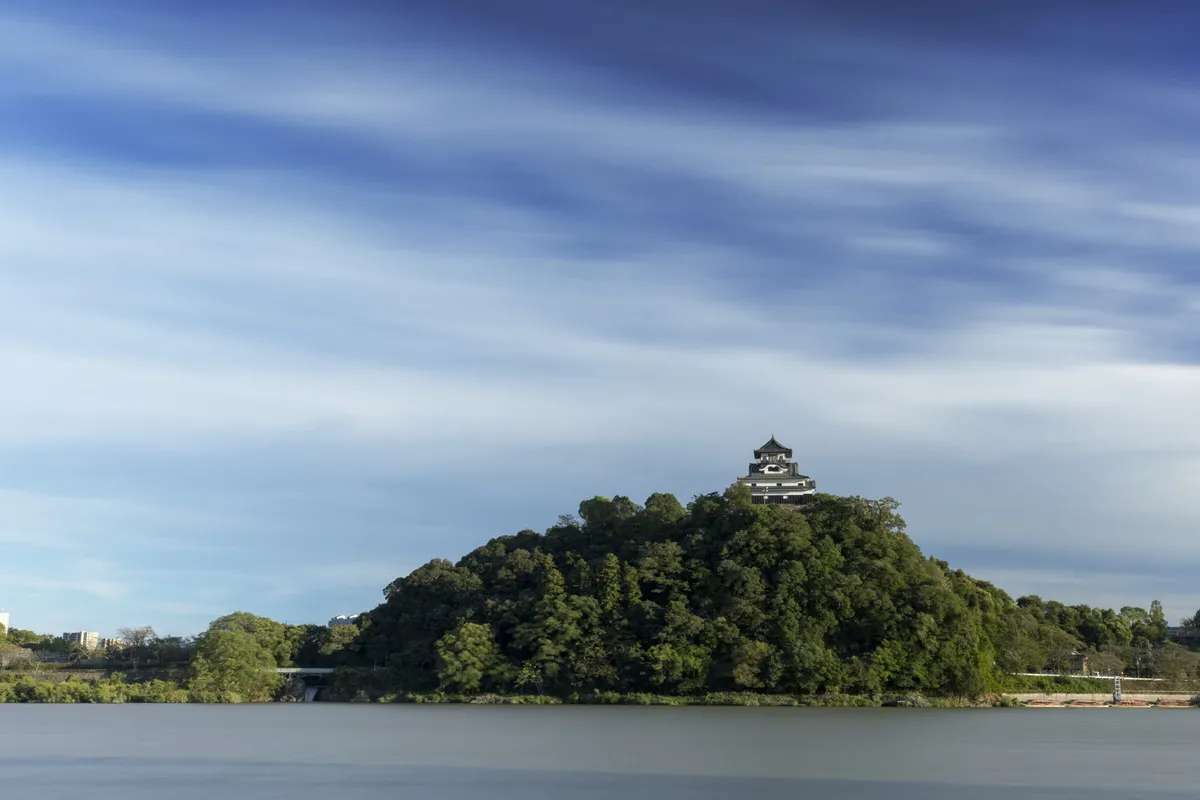
During my two-month internship in Inuyama in 2010, I commuted from Nagoya Station via Meitetsu every single day. That daily routine taught me something I want to pass on to you: once you are on the Meitetsu line, the access is genuinely great. The train is comfortable, the ride is scenic as you leave the city behind, and before you know it you are in a completely different world. The 25-minute journey is so easy that Inuyama works perfectly even for travelers with limited time in the Nagoya area. If you are staying near Nagoya Station — our where to stay in Nagoya guide explains why it is the best base — the Meitetsu platform is right there underground.
By Meitetsu Train (Recommended)
| Route | Train Type | Time | Price (2026) |
|---|---|---|---|
| Meitetsu Nagoya → Inuyama | Express (Kaisoku Tokkyu) | ~25 minutes | ¥630 |
| Meitetsu Nagoya → Inuyama-Yuen | Express | ~30 minutes | ¥630 |
| Meitetsu Nagoya → Inuyama | Local (Futsu) | ~40 minutes | ¥630 |
Trains run every 10-15 minutes throughout the day. No reservation is needed — just tap your IC card (Suica, ICOCA, TOICA, or manaca) at the gate and board.
Pro Tip: Which station should you use? Get off at Inuyama-Yuen Station if you are heading straight to the castle — it is about a 15-minute riverside walk to the castle, but this route bypasses the castle town. Get off at Inuyama Station if you want to visit Meiji-Mura first, since the bus departs from there. From my commuting days, I can tell you that the Meitetsu platform at Nagoya Station can be a bit confusing for first-timers — look for signs pointing to the “Inuyama/Seto Line” and make sure you board the express (kaisoku tokkyu) if you want the fastest ride.
By Car
About 30-40 minutes from central Nagoya via the Meishin Expressway. Paid parking is available near the castle (300 yen per hour on normal days and 500 yen per hour on designated peak days, capped at 1,800-3,000 yen per day) and at Meiji-Mura (1,000 yen). Honestly though, the train is easier and you avoid navigating the narrow castle-town streets.
Which IC Cards and Passes Work?
Any major IC card works on Meitetsu trains. The JR Pass does not cover Meitetsu lines. For more on transit options, see our guide to getting around Nagoya and our Japan travel essentials for Central Japan.
What Makes Inuyama Castle So Special?
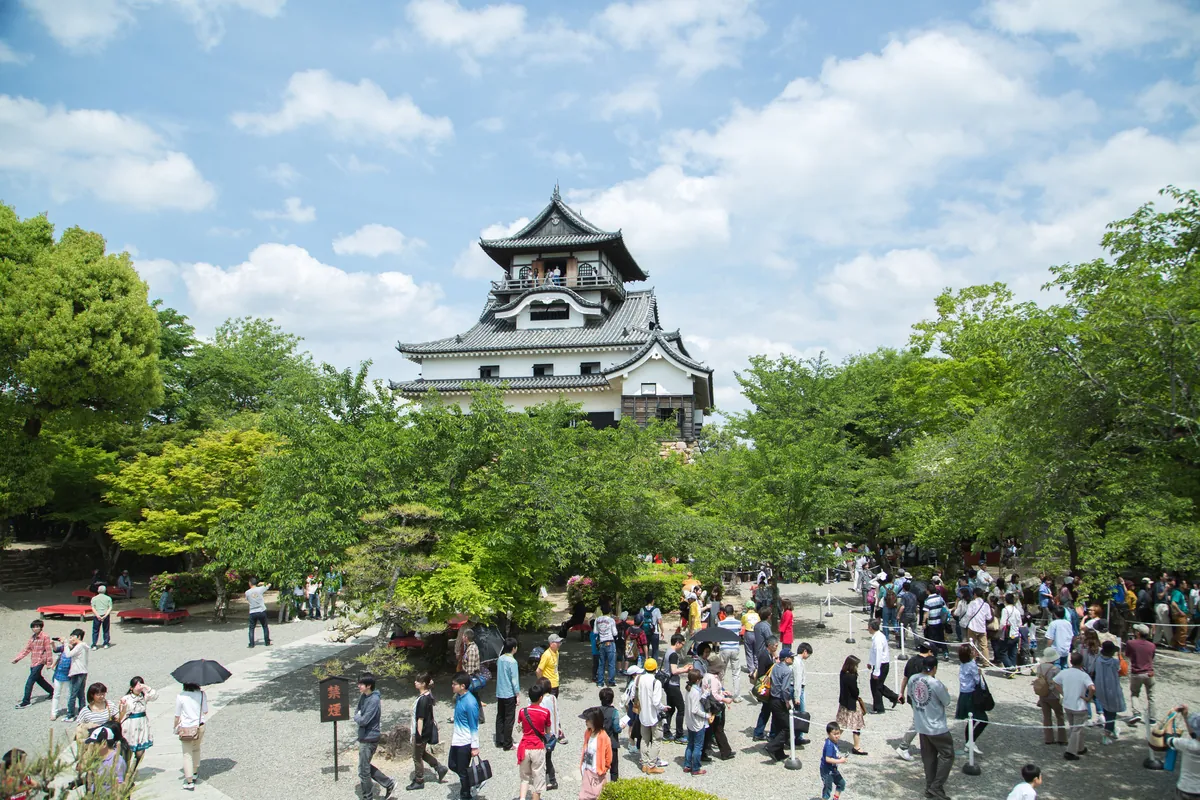
Inuyama Castle’s keep was built in the late 1580s and is the oldest original castle keep surviving in Japan. It is one of only 5 National Treasure castles and one of just 12 with original structures — not a concrete reconstruction.
Inuyama Castle (Inuyama-jo) was founded around 1537, but tree-ring dating published in 2021 showed that the keep you climb today was built between about 1585 and 1590 – still the oldest original keep surviving in Japan. To put that in perspective, this building was already standing before the Tokugawa shogunate was founded in 1603. While nearly every famous castle in Japan — including Nagoya Castle’s main keep and Osaka Castle — is a concrete reconstruction, Inuyama is the real thing: original timbers, original walls, original stairs.
A Brief History
The castle was built by Oda Nobuyasu, an uncle of Oda Nobunaga, one of the three great unifiers of Japan. Its position atop a hill overlooking the Kiso River made it strategically important during the Sengoku (Warring States) period. The castle changed hands multiple times during various conflicts before the Naruse family took ownership in 1617.
Here is a remarkable detail that most visitors — and even many Japanese people — do not know: the Naruse family held private ownership of Inuyama Castle for nearly 400 years, making it the last privately-owned castle in Japan. It was not until 2004 that the castle was transferred to a public foundation for preservation. I learned this during my internship in 2010 when the city council member I was shadowing told me the story. I remember being genuinely shocked — I had grown up in Nagoya, just 25 minutes away, and I had no idea that a single family had owned and maintained this National Treasure for centuries. Think about what that means: through wars, earthquakes, the Meiji Restoration, two World Wars, and Japan’s entire modern transformation, one family kept this castle standing. That kind of dedication is extraordinary, and it is a big part of why this castle feels different from others. You can sense the care that has gone into its preservation.
Visiting the Castle: What to Expect
Inuyama Castle Visitor Information (2026)
- Hours: 9:00 AM – 5:00 PM (last entry 4:30 PM)
- Admission: 1,000 yen (adults), 200 yen (elementary and junior high school students) — raised from 550 yen on March 1, 2026; older guidebooks may show the previous price
- Time needed: 30-60 minutes
- Closed: December 29-31
- Official site: inuyama-castle.jp
The castle is compact — just four floors — but what it lacks in size it makes up for in authenticity. You remove your shoes at the entrance (bags are provided), then climb steep wooden staircases that feel more like ladders than stairs. The floorboards creak beneath your feet. The air smells of old wood. Low doorways force you to duck. Every detail reminds you that this is more than 400 years old.
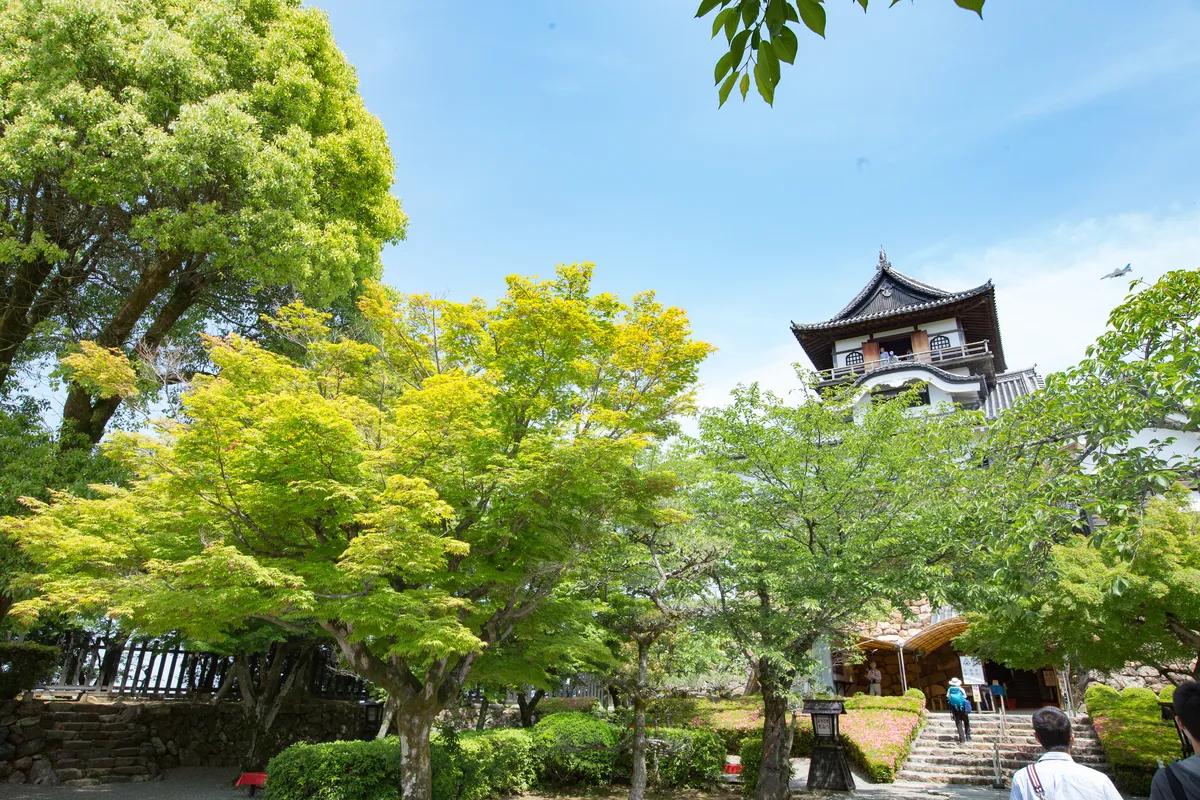
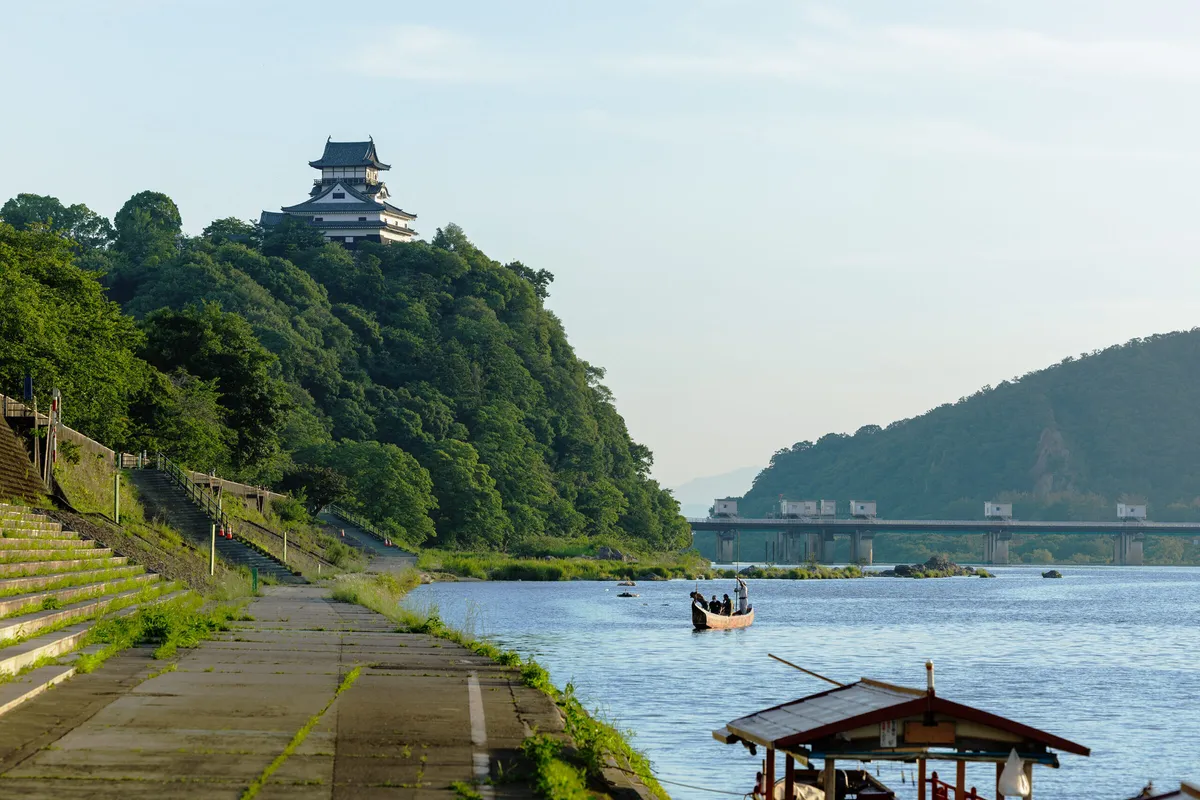
The top floor observation deck is the highlight. You step outside onto a narrow walkway with a low wooden railing — it feels exposed, almost thrillingly so — and are rewarded with panoramic views of the Kiso River below, mountains stretching to the horizon, and on clear days, the Nagoya skyline in the distance. In cherry blossom season, the view is extraordinary, with pink blossoms framing the river valley. During my internship, I had the privilege of visiting the castle multiple times across the spring season, and watching the cherry blossoms progress from buds to full bloom to scattered petals along the river was one of the most beautiful things I have experienced in Aichi Prefecture.
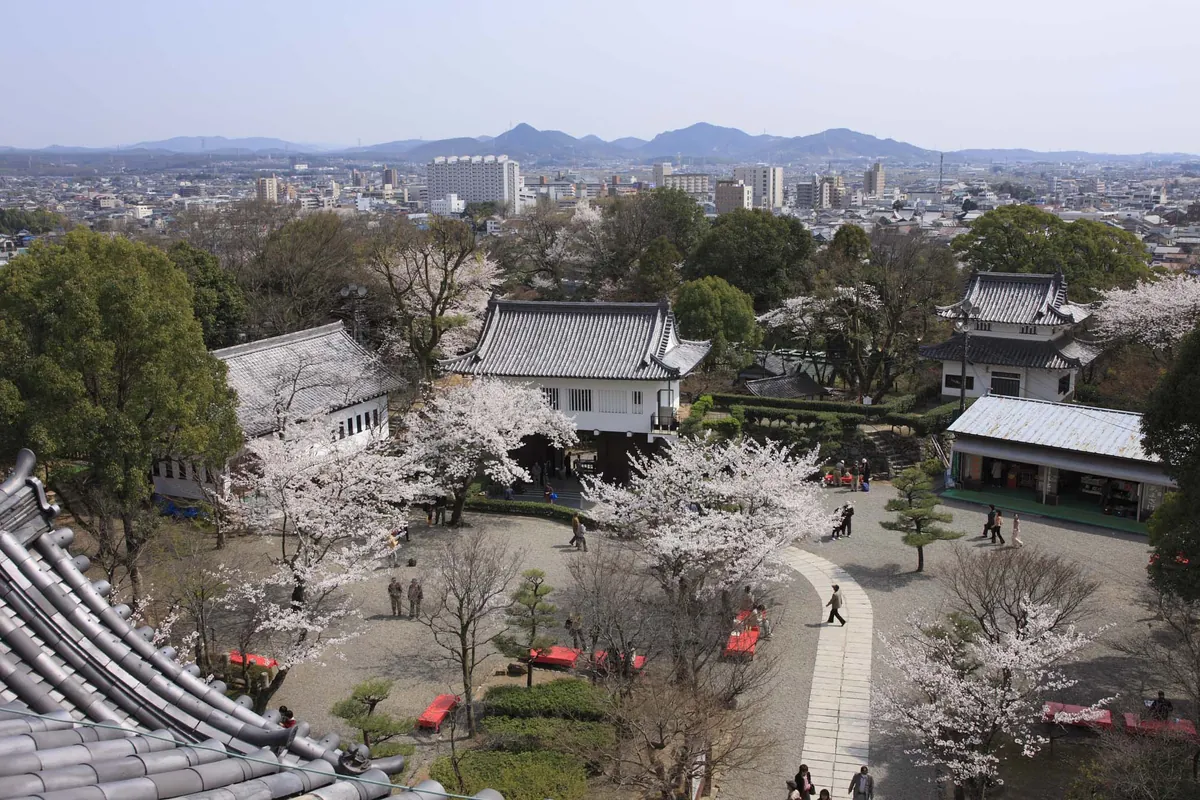
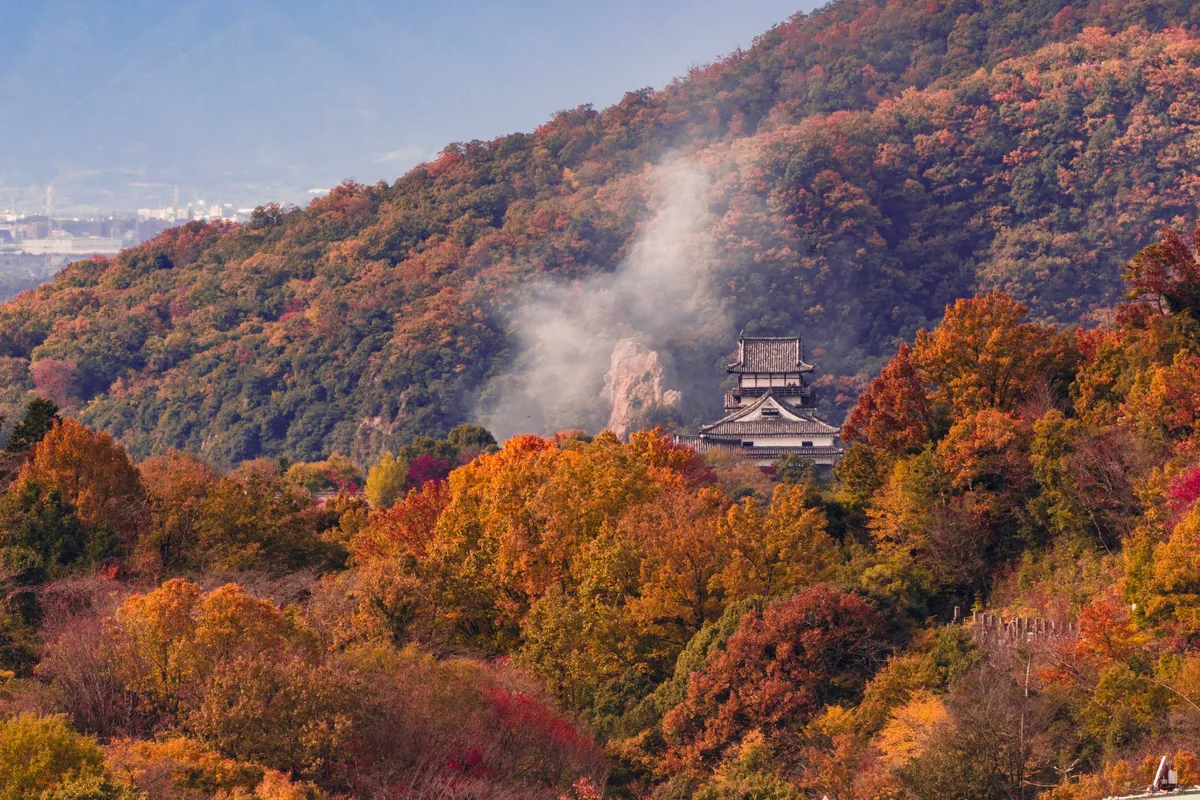
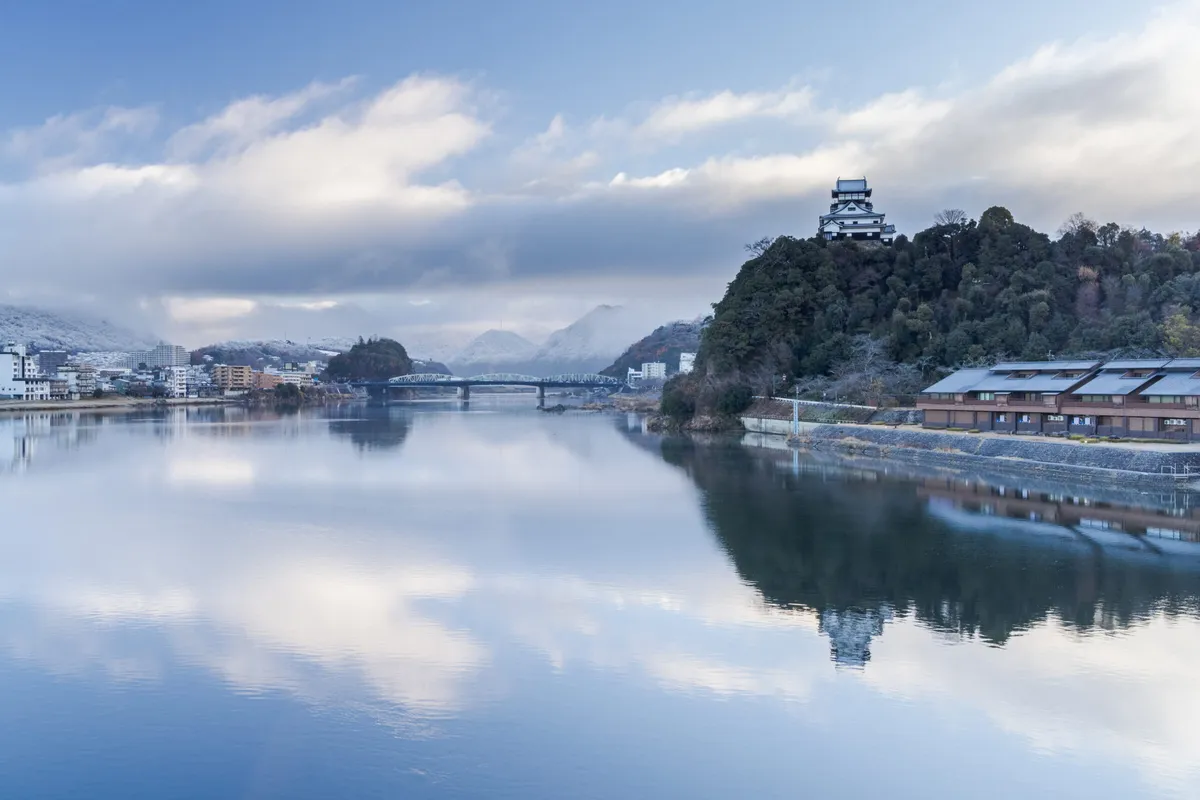
Seasonal views of Inuyama Castle:
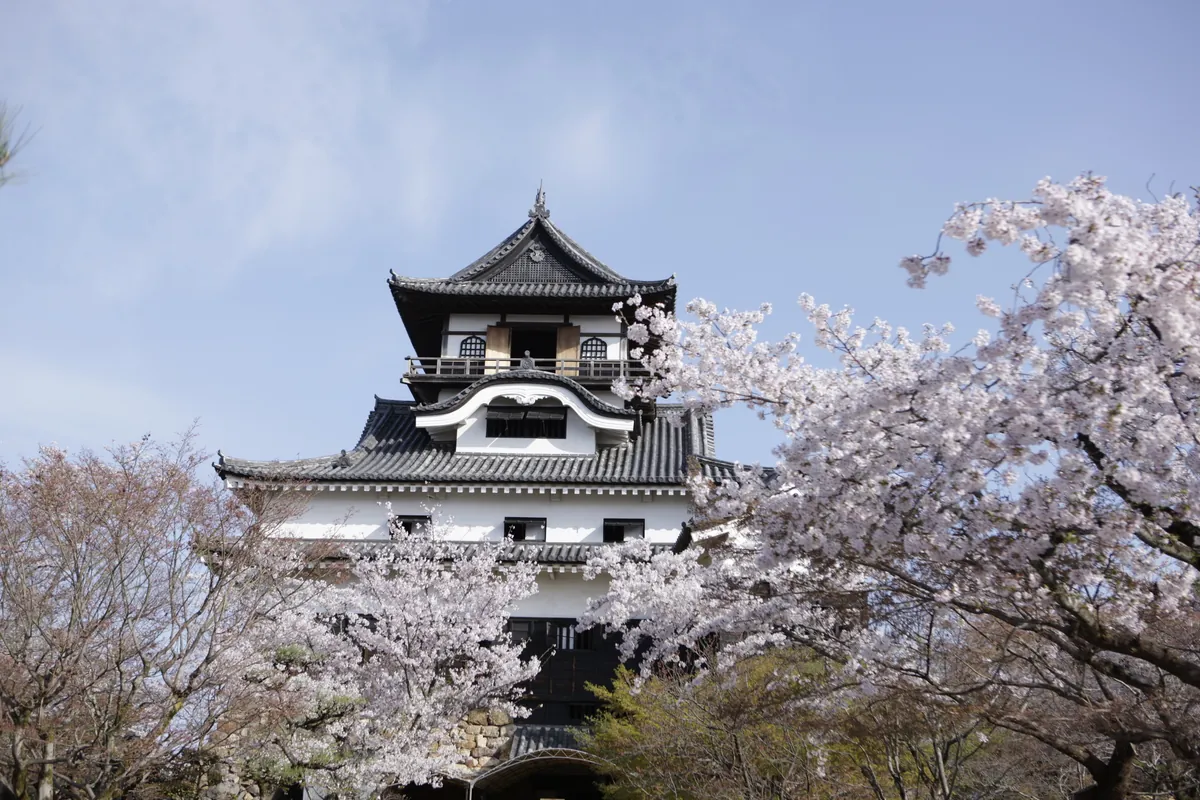
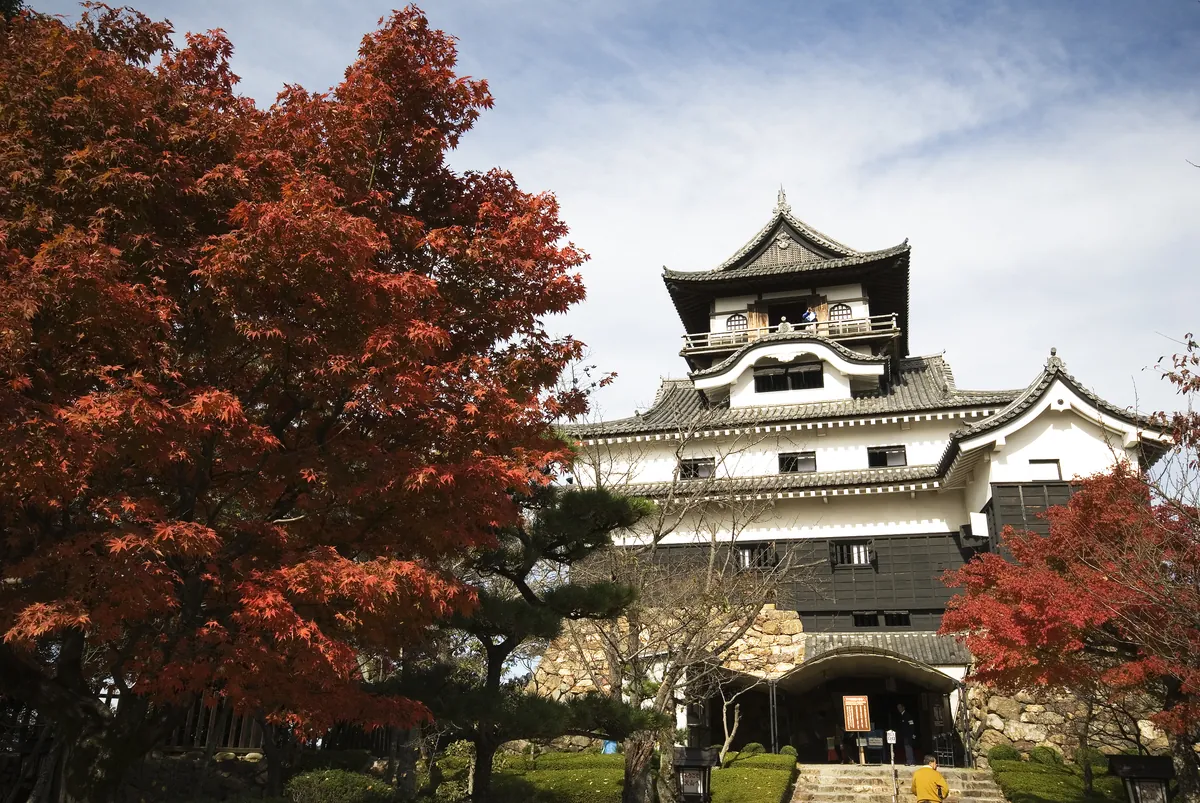
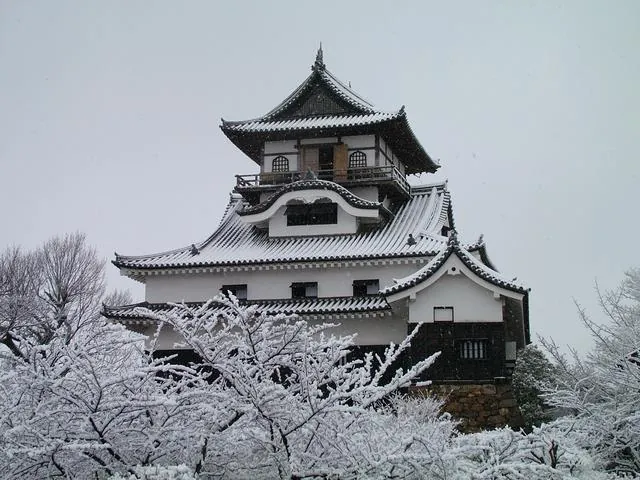
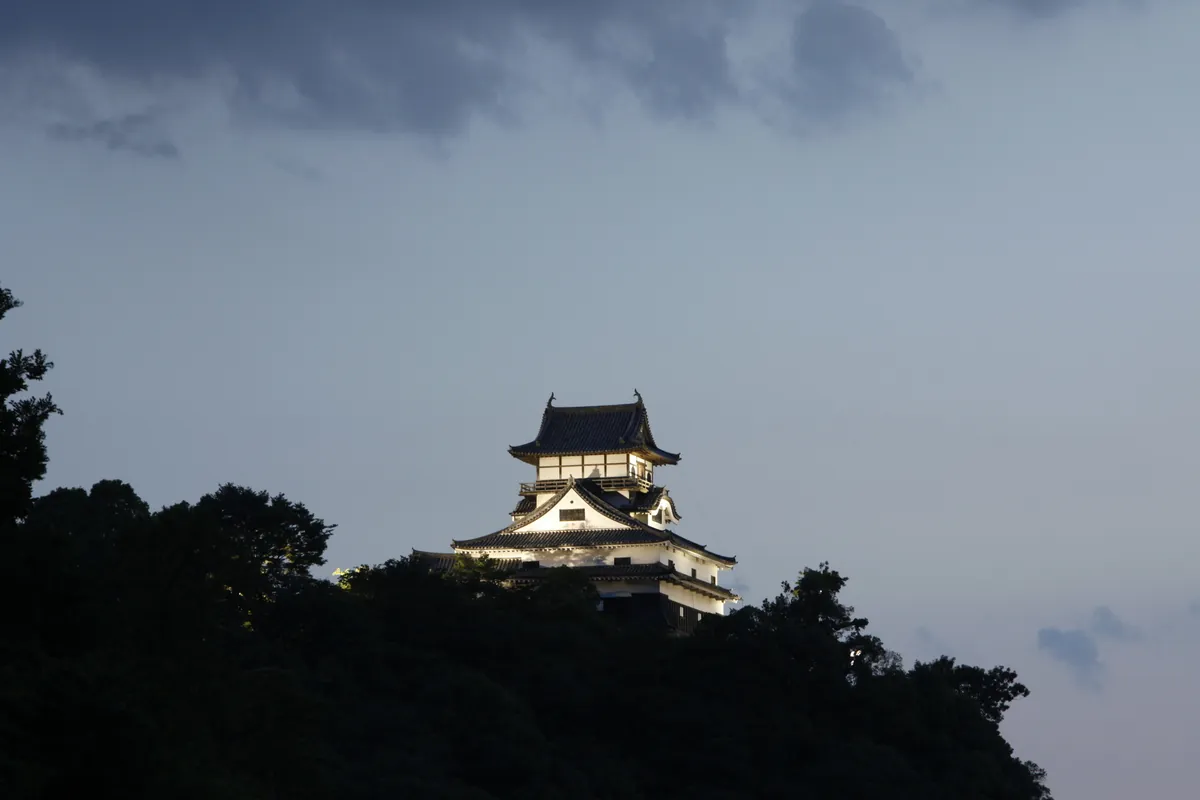
Photos above: © Inuyama Tourism Association
Local Tip: Visit early in the morning or after 3:00 PM. The castle is small and the narrow stairways create bottlenecks during peak hours (10:00 AM – 2:00 PM), especially on weekends and holidays. A weekday visit is ideal if you have flexibility in your schedule.
Important accessibility note: The stairs are extremely steep and there is no elevator. If you have mobility issues, knee problems, or difficulty with very steep stairs, the upper floors may not be accessible. The castle grounds and observation areas at the base are still worth visiting.
Accessibility at Inuyama
- Inuyama Castle interior: NOT wheelchair accessible. The original wooden staircases are extremely steep (nearly ladder-like) with no elevator. Visitors must remove shoes and climb in socks. The upper floors are not suitable for anyone with significant mobility limitations.
- Castle grounds and hilltop area: The path up the hill is a moderate incline. Wheelchair users can reach the castle entrance area but cannot enter the keep itself.
- Castle town (Honmachi Street): The main street is flat, paved, and fully walkable with a wheelchair or stroller. Most shops are at street level. This area is easily the most accessible part of Inuyama.
- Haritsuna Shrine: Mostly flat with gravel paths. Accessible for strollers; wheelchairs may find the gravel surface challenging but manageable.
Inuyama Castle vs. Other Japanese Castles
| Castle | Original or Reconstruction? | National Treasure? | Built | Access from Nagoya |
|---|---|---|---|---|
| Inuyama Castle | Original wooden keep | Yes | c. 1585-1590 (keep); castle founded 1537 | 25 min by train |
| Nagoya Castle | Concrete reconstruction (main keep) | No (keep) | 1612 (original); 1959 (reconstruction) | City center |
| Himeji Castle | Original wooden keep | Yes + UNESCO | 1609 | ~2 hours by Shinkansen |
| Matsumoto Castle | Original wooden keep | Yes | 1594 | ~3 hours by train |
| Osaka Castle | Concrete reconstruction | No | 1583 (original); 1931 (reconstruction) | ~1 hour by Shinkansen |
As you can see, Inuyama offers something genuinely rare: an original National Treasure castle within 30 minutes of a major city. You simply cannot get this combination anywhere else in Japan. For more on what Nagoya itself offers between day trips, see our things to do in Nagoya guide.
What Should You Eat in Inuyama Castle Town?
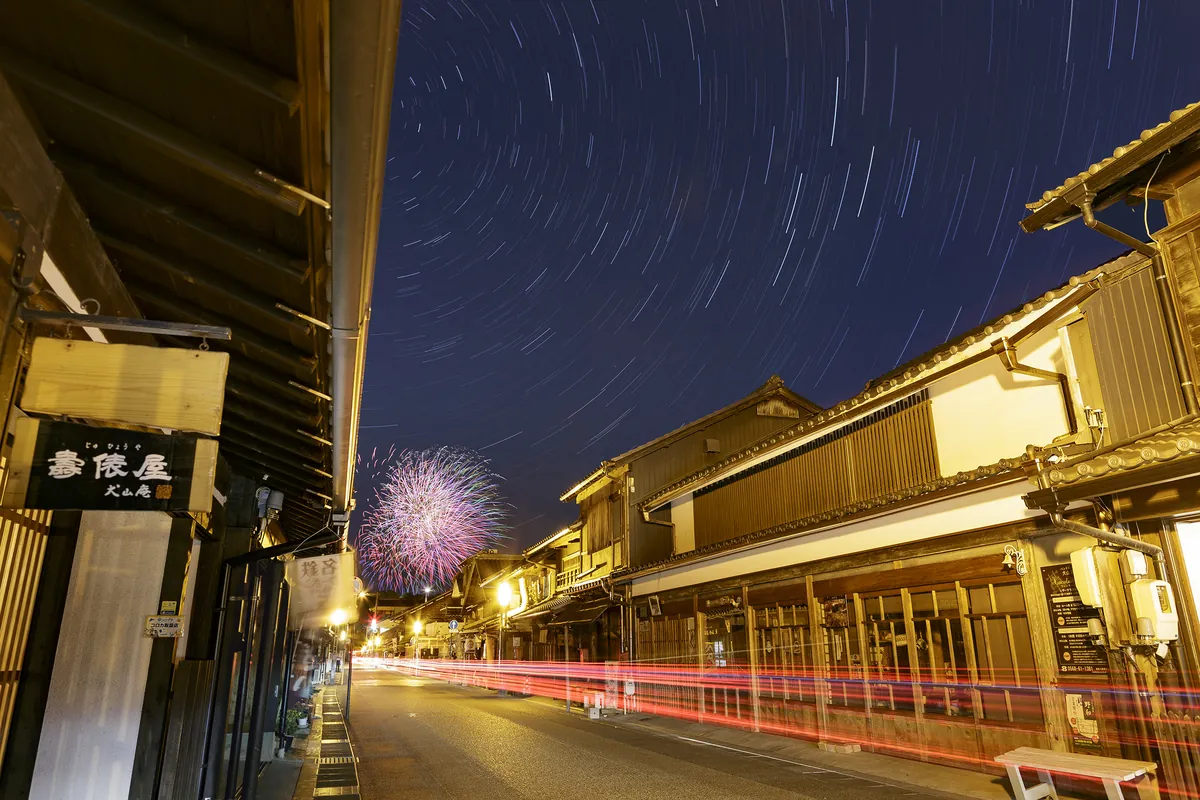
Walk the 500-meter Honmachi Street for grilled dengaku skewers, warabi mochi, dango, and five-colored inari sushi. Two sake breweries offer tastings from 300 yen. Budget 1,000-2,000 yen for a satisfying street food lunch.
The approach to Inuyama Castle runs along Honmachi Street (Honmachi-dori), a beautifully preserved Edo-period streetscape stretching about 500 meters. This is where you will spend most of your eating and shopping time, and the street food culture here has become one of Inuyama’s biggest draws.
When I first started coming to Inuyama regularly during my 2010 internship, Honmachi Street was quiet — pleasant but sleepy. The revitalization over the years since has been remarkable. I got to see firsthand how the city was thinking about tourism promotion during that internship, learning about their strategies from the inside. Today you can see the results: the street is packed with food stalls, craft shops, sake breweries, and small museums, all housed in traditional wooden buildings. It manages to feel lively without being tacky. That underground power line project I mentioned earlier plays a huge role here — without utility poles and overhead wires cluttering the skyline, the castle town has a visual clarity that makes it feel almost like stepping onto a film set.
One thing I want to emphasize: do not overlook the local kissaten (traditional Japanese coffee shops) in Inuyama. During my two months here, I ate at several of these places, and the food was genuinely excellent — yakisoba, Napolitan spaghetti, sandwiches — all at reasonable prices. During my internship, these were my daily lunch spots and I never tired of them. These are not fancy restaurants — they are the kind of old-school spots where the owner has been cooking the same menu for decades. The food is comforting, affordable, and completely authentic. If you see a small kissaten with a handwritten menu and a few locals inside, go in. You will not regret it.
Must-Try Street Food on Honmachi Street
Gohei-mochi (350-450 yen)
A Central Japan specialty you rarely find in Tokyo or Osaka. Flattened rice on a stick, grilled over charcoal and coated with a sweet miso-walnut sauce. The outside is smoky and crisp, the inside chewy. Every stall has a slightly different recipe, and I have yet to find one I did not like. Shouzan (昭山) is a long-standing favorite among locals (Inuyama Tourist Association). This is the single food I recommend above all others in Inuyama.
Inuyama Dengaku (350-550 yen)
Tofu skewers topped with sweet miso paste and grilled — a local specialty dating back centuries. The dengaku at the shops near the castle entrance tends to be the best. Look for the stalls with a line of locals — that is always the indicator.
Dango (250-400 yen)
Grilled rice dumplings on a stick, typically with sweet soy glaze or red bean paste. Simple, satisfying, and perfect for snacking while you walk.
Kurikinton Soft Serve (450-500 yen)
Chestnut-flavored soft serve ice cream made from Nakatsugawa kurikinton (candied chestnuts), a famous regional specialty. Rich, nutty, and not overly sweet. Available at several shops along the street.
Inuyama Wagyu Beef Skewers (800-1,200 yen)
Local wagyu beef grilled on a stick at butcher shops along Honmachi. Narita (なり多) is the most famous spot for these skewers (Inuyama Tourist Association). Not cheap, but the quality is genuine. The fat melts on your tongue. Worth the splurge at least once.
Local Craft Beer (600-900 yen)
Inuyama has developed a small but growing craft beer scene. A few spots on Honmachi serve local brews that pair perfectly with the street food.
Local Tip: Most castle town shops close between 4:00 and 4:30 PM. Do not save the castle town for the end of your day. I usually arrive around 10:30 AM, eat my way up the street, visit the castle, then explore more on the way back down. This schedule means you hit the food stalls when they are freshest and the castle before the afternoon crowds.
Shopping and Crafts
Beyond food, Honmachi Street offers excellent souvenir shopping:
- Inuyama-yaki pottery — A local ceramic tradition with distinctive styles. Small plates and cups make lightweight, packable souvenirs.
- Traditional wagashi (Japanese sweets) — Beautifully crafted confections that look like art. Many shops let you watch the craftspeople at work.
- Sake tasting — Two sake breweries on Honmachi offer tastings (typically 300-500 yen for a flight of 3-4 varieties). The staff is often happy to explain the differences even with limited English.
- Handmade crafts and textiles — Several shops sell locally made bags, accessories, and fabrics.
For more on the regional food culture, see our complete Nagoya food guide covering all of Nagoya meshi.
Is Haritsuna Shrine Worth a Visit?
Yes. Haritsuna Shrine sits at the base of the castle hill directly on your walking path, requiring no detour. It is especially worth visiting during the Inuyama Festival in early April when massive floats gather here.
Yes — and it takes almost no extra time since it sits directly at the base of the castle hill, right on your path to the castle entrance.
Haritsuna Shrine (Haritsuna Jinja) is Inuyama’s main shrine, with a history stretching back over 1,000 years. It is dedicated to safe childbirth and good health. The neighboring Sanko Inari Shrine (Sanko Inari Jinja), a separate shrine right next to Haritsuna Shrine, has become particularly popular for prayers related to love and romantic relationships.
You will spot Sanko Inari immediately — look for the rows of pink and red heart-shaped ema (prayer plaques). It is one of the most photogenic spots in Inuyama and popular on social media.
Haritsuna Shrine Visitor Information
- Hours: Open all day (grounds accessible 24 hours)
- Admission: Free
- Time needed: 10-20 minutes
If you are visiting during the Inuyama Festival in early April, Haritsuna Shrine is the center of the festivities. The massive festival floats gather here, and the atmosphere is electric.
What Is Meiji-Mura and Why Should You Go?
Meiji-Mura is an open-air museum preserving 67 real buildings from the Meiji era (1868-1912), including Frank Lloyd Wright’s Imperial Hotel entrance hall. It spans 100 hectares and takes 2-3 hours to explore. Admission is 2,500 yen for adults.
Meiji-Mura is Inuyama’s second major attraction, and it is genuinely unlike anything else in Japan. I describe it as a “living time capsule” — an open-air architectural museum spread across a forested hillside overlooking Iruka Pond, where over 60 historically significant buildings from Japan’s Meiji era (1868-1912) have been physically relocated from across the country to save them from demolition.
You walk through a Meiji-era post office, step inside a Victorian-influenced church, explore a kabuki theater, enter a prison, and wander through schools, banks, and private homes — all original structures from over a century ago. The scale is vast, the preservation meticulous, and the setting amid forests and hills adds a contemplative atmosphere that most museums cannot match.
The Crown Jewel: Frank Lloyd Wright’s Imperial Hotel
The centerpiece of Meiji-Mura is the main entrance hall and lobby of the Imperial Hotel, designed by Frank Lloyd Wright and originally built in Tokyo in 1923. When the hotel was demolished in 1967, this section was carefully dismantled brick by brick and reconstructed here.
Standing inside this space is remarkable. The geometric oya-stone ornamentation, the interplay of light through layered windows, the sense of mass and intimacy at the same time — Wright’s genius is palpable. Even visitors who have no particular interest in architecture tend to be moved by this building. I have visited probably 15 times and I still notice new details.
Other Highlights at Meiji-Mura
- St. John’s Church — A beautiful wooden church with stained glass, relocated from Kyoto.
- Sapporo Telephone Exchange — A striking Western-style building from Hokkaido.
- Kanazawa Prison — Walk through an actual Meiji-era prison. Eerie and fascinating.
- Mie Prefecture Office — Elegant government architecture reflecting Japan’s rapid Westernization.
- SL Steam Locomotive — A real Meiji-era steam train that runs a short route within the park.
- Kyoto City Tram — Ride a restored Meiji-era streetcar through the grounds.
Practical Information
Meiji-Mura Visitor Information (2026)
- Hours: 9:30 AM – 5:00 PM (March-July, September-October); 10:00 AM – 5:00 PM (August); 9:30 AM – 4:00 PM (November); 10:00 AM – 4:00 PM (December-February). Last entry is 30 minutes before closing (official schedule)
- Admission: 2,500 yen (adults), 1,500 yen (high school students), 700 yen (elementary/junior high)
- Time needed: 2-4 hours (the grounds are extensive)
- Access: Bus from Inuyama Station East Exit (stop 2), about 25 minutes, 540 yen one way (Gifu Bus)
- Closed: Scattered weekday closures throughout the year (in 2026: late July, and several days in August, September and December; in January 2027 as well) – always check the official closing calendar before you go
- Official site: meijimura.com
Getting Around Meiji-Mura
The grounds are large enough that walking everything is a serious commitment. Fortunately, multiple transport options exist within the park:
| Transport | What Is It? | Price (2026) |
|---|---|---|
| Kyoto City Tram | Restored Meiji-era streetcar | ¥500 single ride |
| Steam Locomotive (SL) | Real Meiji-era steam train on a short route | ¥700 per ride |
| SL/Tram Combined Day Pass | Unlimited rides on both SL and tram | ¥1,000 |
| Village Bus | Modern bus connecting main sections | ¥500 all-day pass |
Local Tip: Meiji-Mura is a hidden gem that most international tourists miss entirely. On weekdays, you might have entire buildings to yourself. It is genuinely one of my favorite places in the Nagoya area, and I try to visit at least once a year. If you have any interest in architecture, history, or photography, this place will exceed your expectations.
Pro Tip: If you are combining Meiji-Mura with Inuyama Castle in one day, visit Meiji-Mura in the morning (it opens at 9:30 AM for most of the year, but at 10:00 AM in August and from December to February) and budget 2-3 hours. Then take the bus back to Inuyama Station and head to the castle town for a late lunch and afternoon castle visit. The bus (¥540 one-way, operated by Gifu Bus) from Meiji-Mura runs about every 20-30 minutes.
What Is Cormorant Fishing on the Kiso River?
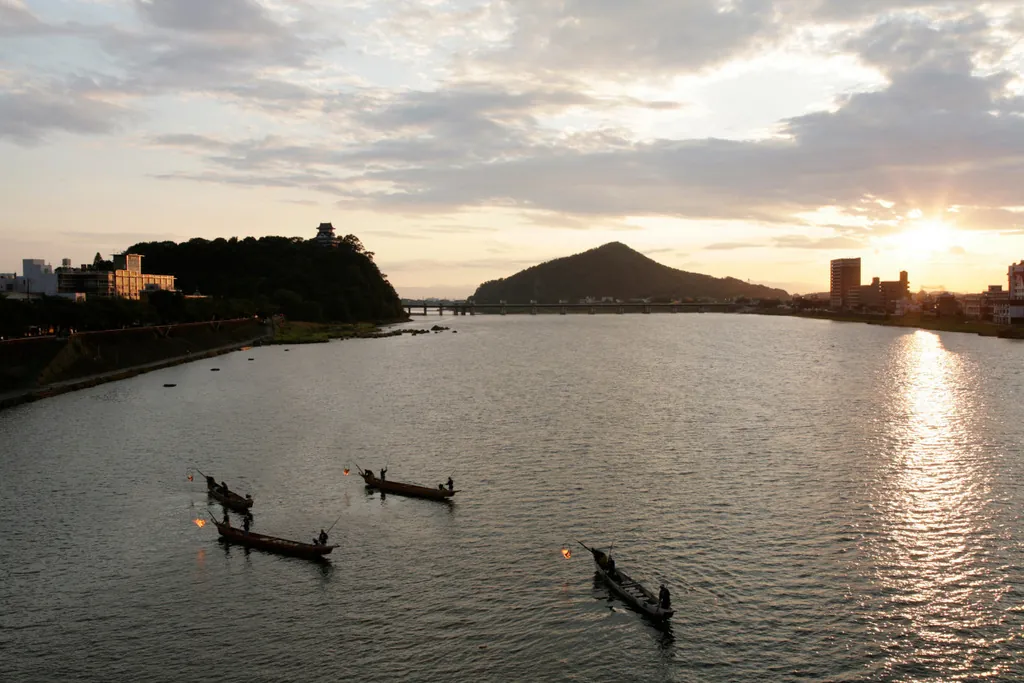
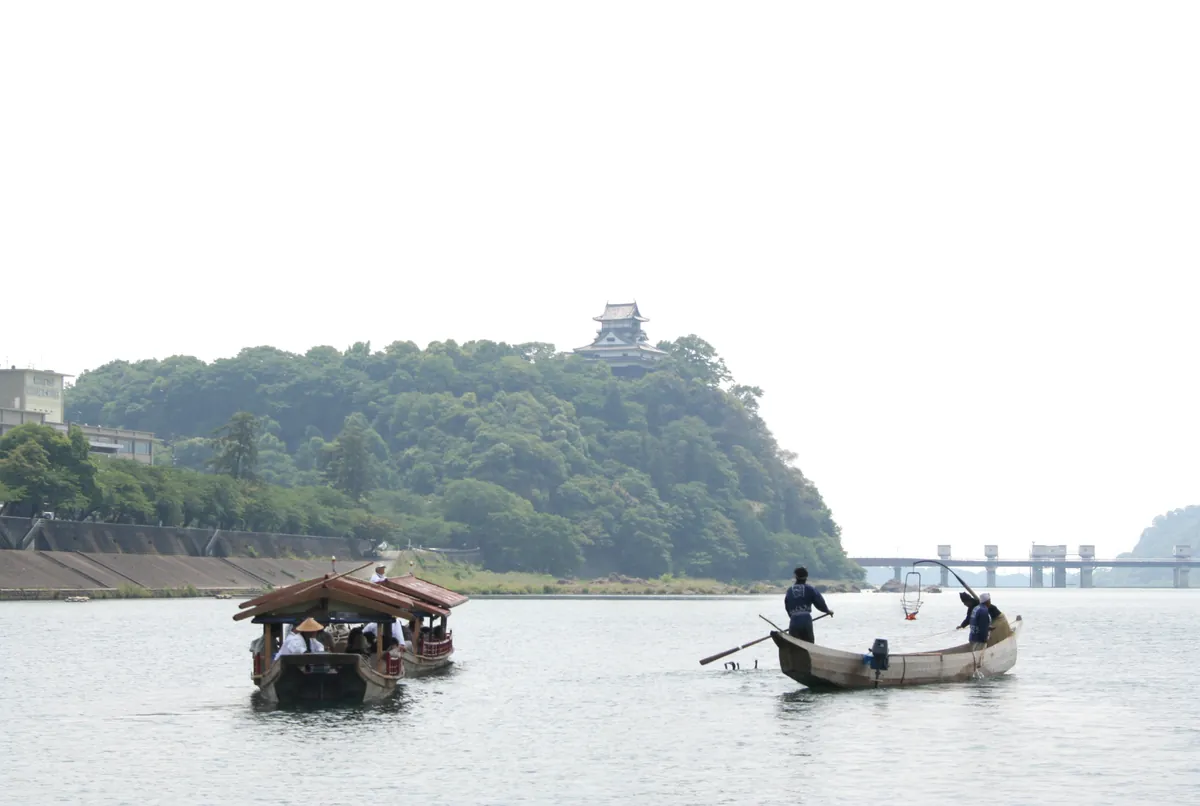
Ukai (cormorant fishing) is performed on the Kiso River below Inuyama Castle from June through October. Fishermen use trained cormorants to catch ayu sweetfish by torchlight. Viewing boat tickets cost 3,500-6,000 yen per person.
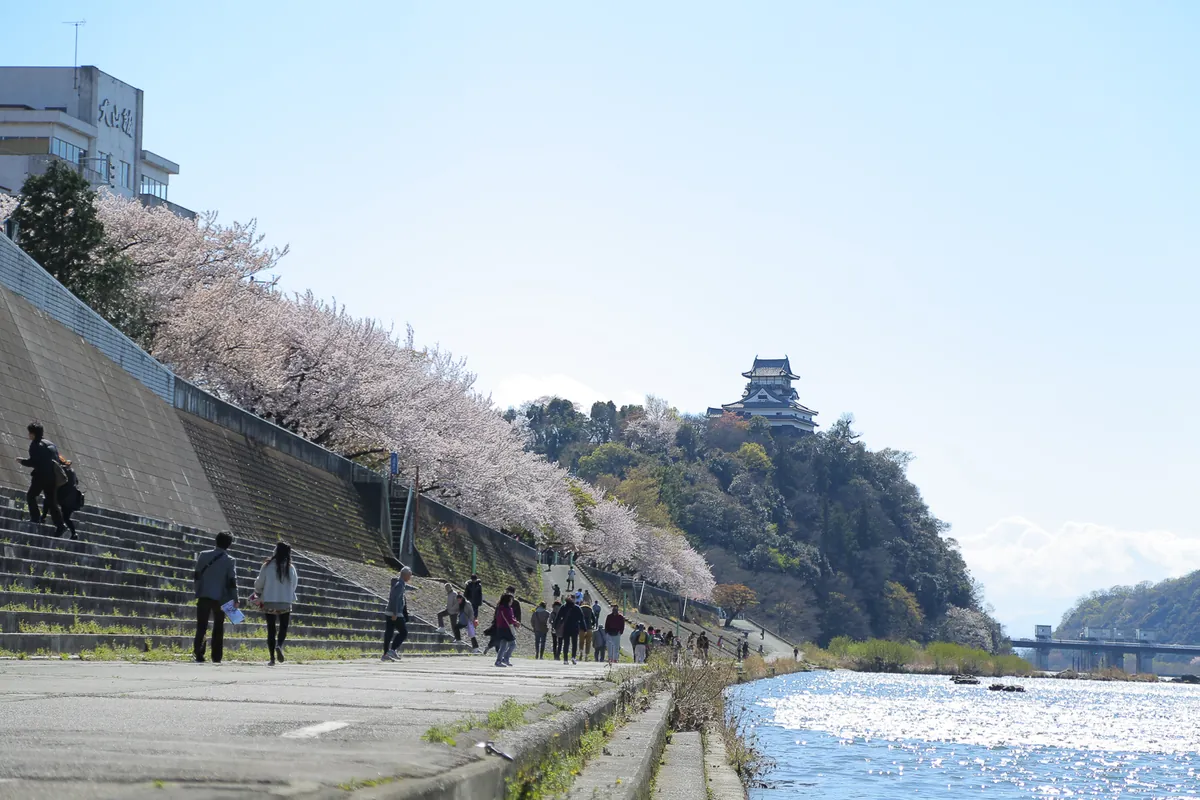
The Kiso River flows directly below Inuyama Castle, creating the dramatic scenery visible from the observation deck. In summer and early autumn, this river hosts one of Japan’s most ancient and atmospheric traditions: ukai (cormorant fishing).
How Cormorant Fishing Works
Trained cormorant birds dive into the dark river to catch sweetfish (ayu). Leashes around their necks prevent them from swallowing the larger fish. Fishermen in traditional white clothing work from wooden boats illuminated by blazing bonfires suspended over the water. The flickering firelight, the splashing birds, and the silhouette of Inuyama Castle on the hill above create a scene that feels transported from another era.
This practice dates back over 1,300 years in Japan. Watching it happen below a castle keep that has stood for more than 400 years is an experience available nowhere else.
Inuyama Ukai Season and Practicalities
Inuyama Cormorant Fishing (2026)
- Season: June 1 – October 15
- Departure time: Depends on the plan and the month – dinner plans board at 6:00 PM (June-August) or 5:30 PM (September-October); viewing-only plans board at 7:30 PM or 7:00 PM
- Price: 3,500-6,000 yen per person (depending on boat type and meal inclusion)
- Reservation: Required in advance – book directly with the operator, Kisogawa Kanko, by phone (0568-61-2727) or online through the official Kiso River ukai site
- Duration: About 1 hour 15 minutes for the viewing-only plan, or about 2 hours 30 minutes with the on-board meal
You watch from a separate viewing boat as the fishermen and their cormorants work the river. Some packages include a bento dinner eaten on the boat before the fishing begins.
Local Tip: Ukai is weather-dependent. Heavy rain or high river water can cancel the event. If cormorant fishing is a priority for your trip, have a backup evening plan and check conditions on the day. Even when conditions look fine in the morning, afternoon weather can cause cancellations.
When Is the Inuyama Festival?
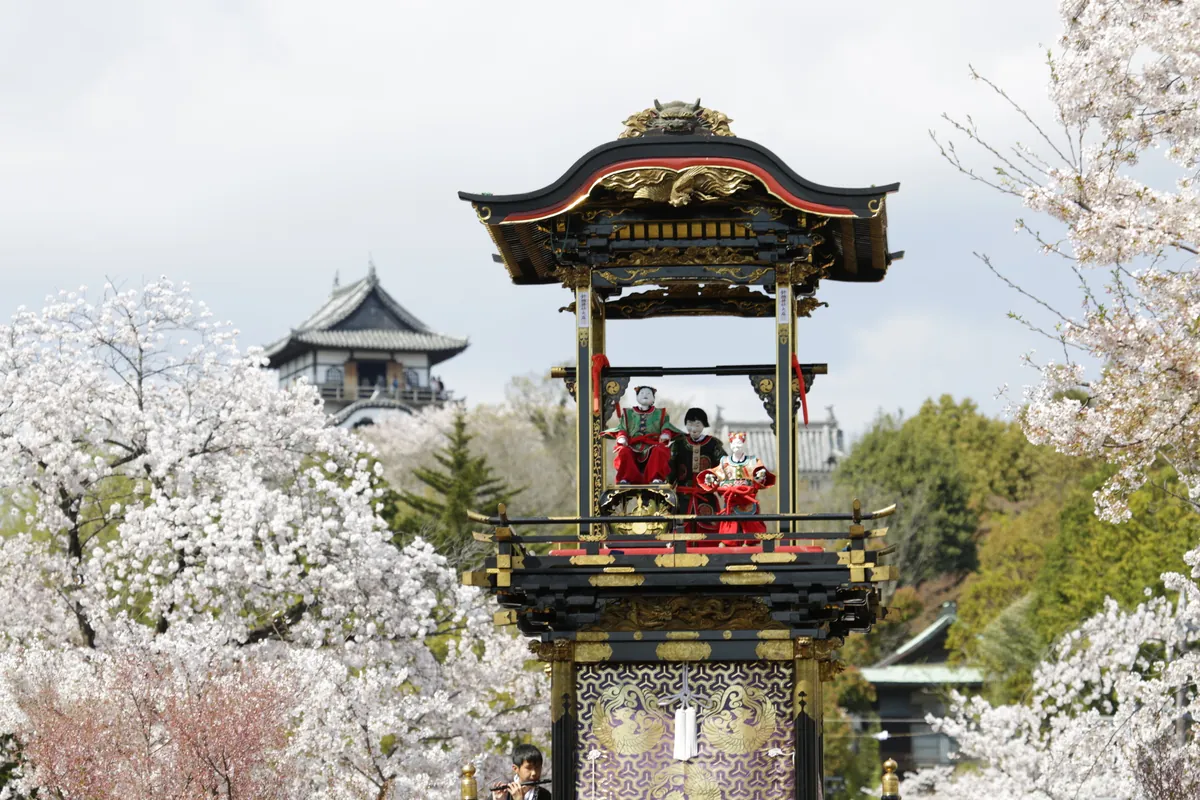
The Inuyama Festival takes place on the first Saturday and Sunday of April each year, coinciding with cherry blossom season. It features 13 towering yama floats with mechanical karakuri puppets and is UNESCO-listed as an Intangible Cultural Heritage.
If you are visiting Central Japan in early April (typically the first Saturday and Sunday), you might catch the Inuyama Festival (Inuyama Matsuri), one of the most spectacular festival events in Aichi Prefecture and the broader Tokai region.
What Makes the Inuyama Festival Special?
- 13 massive floats (yama) — Three-tiered wooden floats, some exceeding 8 meters in height, are pulled through the narrow streets of the castle town by teams of locals. The craftsmanship on these floats is breathtaking.
- Karakuri puppet performances — Mechanical puppet shows performed on top of the floats, a tradition unique to the Owari region around Nagoya. These intricate wooden puppets perform acrobatic tricks using strings and levers.
- Cherry blossoms — The festival coincides with peak cherry blossom season in most years, creating an unforgettable backdrop of pink petals against the wooden floats and castle.
- Evening lantern procession — As dusk falls, the eight-meter floats are covered in candle-lit paper lanterns and paraded through the streets in two groups, six from the north side of town and seven from the south. The warm glow of the lantern light reflected in the darkness is the undisputed highlight.
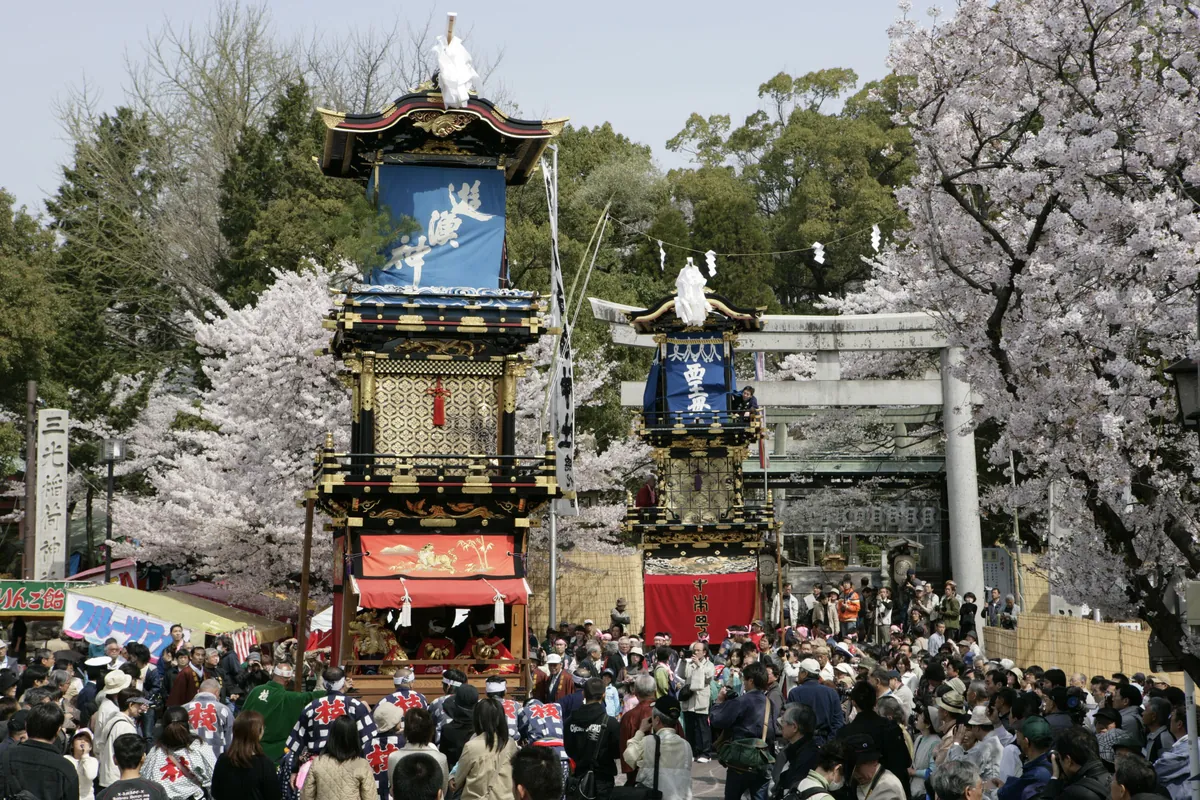
The Inuyama Festival has been recognized as a UNESCO Intangible Cultural Heritage as part of Japan’s float festival traditions (Yama, Hoko, Yatai float festivals), alongside the famous Gion Festival in Kyoto.
During my internship, I learned from city officials just how much effort goes into preserving this festival tradition. The floats are maintained by local neighborhood associations year-round, and the karakuri puppet techniques are passed down through families. It is not a performance put on for tourists — it is a living community tradition that happens to be one of the most visually stunning events in all of Japan. Understanding that context makes watching the festival even more powerful.
Local Tip: If you can time your visit for the festival, do it. The nighttime lantern procession is widely considered one of the most beautiful festival sights in Japan. Arrive by mid-afternoon to get a good viewing spot along Honmachi Street. The town gets very crowded during the festival, so prepare for large crowds and plan your return train in advance. For the full 2027 date, the Saturday/Sunday schedule, and what each half of the festival actually involves, see our Inuyama Festival guide.
Inuyama Festival 2027
- Dates: April 3-4, 2027 (the festival is always the first Saturday and Sunday of April; the 2026 edition was held April 4-5)
- Location: Honmachi Street and Haritsuna Shrine area
- Admission: Free (street viewing)
- Best viewing: Honmachi Street for the float procession; Haritsuna Shrine area for the evening lantern gathering
What Are the Best Inuyama Day Trip Itineraries?
Choose from three options: a half-day itinerary (castle and castle town, 3-4 hours), a full-day itinerary adding Meiji-Mura (7-8 hours), or a summer evening itinerary including cormorant fishing on the Kiso River.
Based on years of personal experience visiting Inuyama — starting with my two-month internship and continuing with countless return visits since — here are three tested itineraries for different time frames and interests.
Half-Day Itinerary: Castle and Castle Town Only (4-5 Hours)
| Time | Activity | Notes |
|---|---|---|
| 10:00 AM | Depart Meitetsu Nagoya Station | Express train, 25 min |
| 10:30 AM | Arrive Inuyama-Yuen Station | Walk toward castle town |
| 10:40 AM | Honmachi Street — street food snacking | Gohei-mochi, dengaku, dango |
| 11:30 AM | Haritsuna Shrine | 10-15 minutes |
| 11:45 AM | Inuyama Castle | 30-45 minutes |
| 12:30 PM | More castle town exploration + lunch | Sit-down lunch or more street food |
| 1:30 PM | Return to Nagoya | Arrive Nagoya ~2:00 PM |
Best for: Travelers with limited time, or those combining Inuyama with afternoon activities in Nagoya. This pairs well with a morning at Nagoya Castle — see our things to do in Nagoya guide for ideas.
Full-Day Itinerary: Castle + Meiji-Mura (8-9 Hours)
| Time | Activity | Notes |
|---|---|---|
| 9:00 AM | Depart Meitetsu Nagoya to Inuyama Station | 25 min express |
| 9:30 AM | Bus from Inuyama Station to Meiji-Mura | ~25 min, ¥540 |
| 9:50 AM – 12:30 PM | Explore Meiji-Mura | Imperial Hotel, SL ride, key buildings |
| 12:30 PM | Bus to Inuyama Station, train to Inuyama-Yuen | ~30 min total |
| 1:00 PM | Lunch on Honmachi Street | Street food or sit-down restaurant |
| 2:00 PM | Haritsuna Shrine + Inuyama Castle | 60-75 minutes |
| 3:15 PM | Castle town shopping, craft browsing, sake tasting | Before shops close at 4:30 |
| 4:00 PM | Walk along Kiso River | Beautiful afternoon light |
| 4:30 PM | Return to Nagoya | Arrive ~5:00 PM |
Best for: Travelers who want the complete Inuyama experience. This is my most recommended itinerary.
Full-Day + Evening: Castle + Town + Cormorant Fishing (June-October)
Follow the half-day castle and town itinerary in the afternoon, then stay for the evening cormorant fishing experience on the Kiso River. Boats depart around 6:00-6:30 PM. You will be back in Nagoya by 9:00-9:30 PM. The last Meitetsu express runs around 10:30 PM, so timing is comfortable.
Best for: Summer and early autumn visitors who want a unique evening experience. Book ukai in advance.
How Much Does an Inuyama Day Trip Cost?
A half-day trip (castle and castle town) costs 3,760-4,760 yen per person including train fare, castle admission (1,000 yen), and food. A full day adding Meiji-Mura runs 7,760-9,260 yen. Summer cormorant fishing adds 3,500-5,500 yen.
Inuyama is one of the most affordable day trips from Nagoya. Here is a detailed breakdown per person for 2026.
Half-Day Budget (Castle + Castle Town)
| Item | Cost (2026) |
|---|---|
| Meitetsu train round trip | ¥1,260 |
| Inuyama Castle admission | ¥1,000 |
| Street food and lunch | ¥1,500 – 2,500 |
| Total | ¥3,760 – 4,760 (~$25-32 USD) |
Full-Day Budget (Castle + Town + Meiji-Mura)
| Item | Cost (2026) |
|---|---|
| Meitetsu train round trip | ¥1,260 |
| Bus to Meiji-Mura round trip | ¥1,080 |
| Inuyama Castle admission | ¥1,000 |
| Meiji-Mura admission | ¥2,500 |
| Meiji-Mura tram/SL rides | ¥500 – 1,000 |
| Street food and lunch | ¥1,500 – 2,500 |
| Total | ¥7,840 – 9,340 (~$52-62 USD) |
Full-Day + Cormorant Fishing (Summer/Autumn)
Add 3,500-6,000 yen per person for the ukai experience, plus dinner costs if not included in the boat package.
Money-Saving Tip: Check if a Meiji-Mura + Inuyama Castle combination ticket is available. These are periodically offered and can save 200-400 yen. Meiji-Mura also runs seasonal promotions, especially in slower months (January-February, June). Check their official website before you go.
What Practical Tips Should You Know Before Visiting?
Visit on a weekday to avoid crowds. Wear comfortable shoes for the steep castle stairs. Carry cash since many castle town shops do not accept cards. Start at Meiji-Mura in the morning and finish at the castle town for afternoon street food.
These tips come from years of personal experience visiting Inuyama in every season — starting with two months of daily visits during my internship, and continuing with regular return trips ever since. Inuyama is a place I know intimately, and these are the things I wish someone had told me the very first time.
Bring cash. Many castle town food stalls and smaller shops are cash only. Bring at least 5,000 yen in small bills and coins. There is a 7-Eleven with an international ATM near Inuyama Station if you need to withdraw.
Use coin lockers. Lockers are available at both Inuyama Station and Inuyama-Yuen Station (300-600 yen depending on size). Use them — you do not want to carry a daypack up those steep castle stairs or around Meiji-Mura.
Wear comfortable walking shoes. Between the castle town, castle hill, Haritsuna Shrine, and potentially Meiji-Mura, you will easily log 10,000-15,000 steps. The castle hill is a moderate incline, and the castle interior requires navigating very steep stairs in socks (your shoes are stored at the entrance).
Go on a weekday if possible. Weekdays are dramatically less crowded than weekends. If you have flexibility, Tuesday through Thursday is ideal. The difference in crowd levels is striking — what takes 30 minutes on a busy Saturday takes 15 minutes on a Wednesday.
Check the weather. Inuyama is an outdoor-heavy destination. Rain does not ruin the trip (the castle town has some covered areas, and Meiji-Mura buildings provide shelter), but sunshine makes everything better. The castle observation deck in particular is best on clear days.
Summer heat warning. Nagoya and the surrounding area are notoriously hot in July and August (35+ degrees Celsius). If visiting in summer, bring water, use sunscreen, and take breaks in shaded or air-conditioned spaces. Start early to avoid the worst heat.
Soak in the atmosphere. This is my most personal piece of advice. Inuyama has a charm that is hard to put into words — a certain warmth and quietness that sets it apart from bigger tourist destinations. During my internship, I came to understand that this atmosphere is not accidental. The city has worked deliberately to preserve its character while welcoming visitors. The buried power lines, the restored buildings, the local shopkeepers who genuinely care about their crafts — all of it creates something special. Take your time. Sit by the Kiso River with a drink from one of the vending machines and watch the light change over the castle. Walk the back streets away from Honmachi and notice how the town transitions from tourist-friendly to quietly residential. Inuyama rewards patience and curiosity more than almost any place I know.
For more planning tips, see our Japan travel essentials guide for Central Japan.
What If It Rains? Weather and Contingency Planning
Inuyama is a compact town and most attractions are within walking distance, so light rain does not ruin the day. But some of the top sights are heavily outdoor, so it helps to know what works in wet weather and what does not.
Rainy day strategy
- Inuyama Castle keep is indoor after the climb, with excellent views from the top floor. However, the outdoor observation deck on the uppermost level gets slippery in rain — hold the railing and watch your step. The stone path up the hill to the castle can also be slick, so wear shoes with decent grip.
- Honmachi Street (Castle Town) has some covered shop areas where you can duck in for dango, Inuyama craft beer, and souvenirs without getting soaked.
- IMASEN Inuyama Karakuri Museum is fully indoor and features fascinating mechanical puppet demonstrations — a perfect rain refuge that most tourists overlook.
- Meiji-Mura is mostly outdoor, with historic buildings spread across a large hillside park. Rain significantly reduces the enjoyment here, and the paths between buildings become muddy. Skip Meiji-Mura in heavy rain and save it for a clear day.
- Heavy rain or typhoon warning: Check the Japan Meteorological Agency forecast before departure. If conditions are severe, stay in Nagoya and visit Osu Shopping Street (a covered arcade district with hundreds of shops and street food stalls) or the Nagoya City Science Museum (now branded FUJI Nagoya Science Museum; ¥800 for museum and planetarium, rising to ¥1,000 on October 1, 2026; home to the world’s largest planetarium dome).
Frequently Asked Questions About Inuyama
How long does it take to get to Inuyama from Nagoya?
About 25-30 minutes by Meitetsu express train from Meitetsu Nagoya Station. Trains depart every 10-15 minutes throughout the day, and a one-way ticket costs 630 yen. No reservations are needed. Simply tap your IC card at the gate and board whatever train is next. If you use the slower local train, the journey takes about 40 minutes but costs the same. Having made this commute daily for two months during my internship, I can confirm it is one of the simplest and most pleasant train rides in the region.
Is Inuyama Castle worth visiting if I am already seeing other castles in Japan?
Absolutely — and I would argue it is more worth visiting precisely because you are seeing other castles. Most famous castles in Japan (Osaka, Nagoya main keep, Hiroshima) are concrete reconstructions with elevators and modern interiors. Inuyama is one of only 5 National Treasure castles, and its original wooden keep dates from the late 1580s. Climbing steep wooden stairs that samurai actually used, ducking through low original doorways, and standing on a centuries-old wooden observation deck is a completely different experience from riding an elevator in a reconstruction. If you only visit one castle in Central Japan, make it Inuyama. And knowing that the Naruse family privately maintained this castle for nearly 400 years — a fact I learned during my internship from local officials — makes standing inside it even more meaningful.
Can I do both Inuyama Castle and Meiji-Mura in one day?
Yes, and I highly recommend it. Budget about 2-3 hours for Meiji-Mura (you could easily spend more, but this covers the highlights including the Imperial Hotel entrance hall) and 2-3 hours for the castle and castle town. The key is to start at Meiji-Mura when it opens (9:30 AM for most of the year, 10:00 AM in August and December-February), then head to the castle area by early afternoon for lunch and exploration before shops close around 4:30 PM.
Is Inuyama suitable for families with young children?
Very much so. Children enjoy the castle — the steep stairs are an adventure rather than an obstacle for most kids — and the street food on Honmachi Street keeps them happy. Meiji-Mura is particularly family-friendly: kids can ride a vintage streetcar and steam locomotive, and there are dress-up experiences where children (and adults) can wear Meiji-era clothing for photos. The open-air museum format means kids can run around between buildings rather than being confined to indoor galleries.
When is the best time of year to visit Inuyama?
Early April is the most spectacular time — cherry blossoms along the Kiso River are stunning, and you might catch the UNESCO-listed Inuyama Festival with its lantern-lit float processions. Mid-to-late November is gorgeous for autumn foliage, especially along the river and at Meiji-Mura. Summer evenings (June-October) are ideal if you want to experience cormorant fishing. That said, Inuyama is rewarding year-round — even winter has a quiet charm with almost no tourists and atmospheric misty mornings over the Kiso River.
How much time should I spend in Inuyama?
A half-day (4-5 hours) is enough for the castle and castle town, leaving your afternoon free for other activities like visiting Ghibli Park on the same trip. A full day (8-9 hours) allows you to add Meiji-Mura comfortably. If you are visiting during cormorant fishing season and want to include the evening ukai experience, plan for a long day departing Nagoya in the morning and returning around 9:00 PM. Most visitors find the full-day itinerary with Meiji-Mura to be the most satisfying option.
Getting Back to Nagoya
Simply reverse your journey. Walk to Inuyama-Yuen Station or Inuyama Station and take the Meitetsu Line back to Nagoya. The last express train runs around 10:30 PM, so even if you stay for evening cormorant fishing, you have plenty of time. And once you are back in Nagoya, I strongly recommend heading to a local izakaya or restaurant to cap off the day with some proper Nagoya food — miso katsu, tebasaki wings, or a bowl of miso nikomi udon. After a day exploring one of Aichi Prefecture’s treasures, there is nothing better than settling into the food culture of its capital city. Check our Nagoya food guide for my personal recommendations.
Related Guides
Inuyama is one of several excellent day trips from Nagoya. Depending on your interests and schedule, consider these other options:
- The Perfect 3-Day Nagoya Itinerary — Our comprehensive pillar guide to planning your Nagoya trip, including Inuyama as a Day 3 option
- Takayama and Shirakawa-go Day Trip from Nagoya — UNESCO World Heritage thatched-roof villages and a beautifully preserved mountain town
- Kanazawa Day Trip from Nagoya — One of Japan’s top three gardens, geisha districts, and incredible sushi
- Complete Ghibli Park Guide — Everything you need for visiting Studio Ghibli’s immersive theme park near Nagoya
- Nagoya Food Guide: The Best of Nagoya Meshi — All the iconic dishes you need to try in Nagoya
- Things to Do in Nagoya — The complete overview of Nagoya’s best attractions
- Where to Stay in Nagoya — Neighborhood guide and hotel recommendations
- Getting Around Nagoya — Transit passes, IC cards, subway maps, and more
- Japan Travel Essentials for Central Japan — Packing, visas, money, language tips, and everything else you need
- 7 Best Day Trips from Nagoya — Complete overview of the best day trips from the city
Central Japan Travel Guide is an independent travel blog. Some links in this article are affiliate links — if you purchase through them, we earn a small commission at no extra cost to you. We only recommend services and experiences we have personally used or thoroughly researched. All opinions are our own.
Basing yourself in Nagoya?
Browse Nagoya hotels →This trip works best as an out-and-back from the city.