Atsuta Matsuri (熱田まつり) is the annual Reisai of Atsuta Jingu in Nagoya, held on June 5 every year — next on Saturday, June 5, 2027. An imperial envoy attends the 10:00 rite, lantern towers are lit at the gates after dusk, and about 1,000 fireworks go up from Jingu Park. Entry to the grounds is free.
There is one day a year when Nagoya decides it is summer — not the calendar, this festival. Locals here wear their first yukata of the year on the night of Atsuta Matsuri, and the shrine says so itself. Everything below is confirmed from Atsuta Jingu, the city, the prefecture and the transport operators, with the gaps in the official record left visible rather than filled in.
Written by Yuu — a Nagoya native of 35 years. Published August 15, 2026.
This article may contain affiliate links. See our affiliate disclosure for details.
All festival details verified from official sources on August 15, 2026.
On this page
- What do you need to know in one minute?
- What is Atsuta Matsuri?
- When is the next Atsuta Matsuri, and what happened in 2026?
- What are the highlights of Atsuta Matsuri?
- How do you get to Atsuta Matsuri from Nagoya?
- What should you know before you go?
- What do visitors actually say about it?
- Frequently asked questions
- Where can you check official information?
- Related guides
What Do You Need to Know in One Minute?
Atsuta Matsuri is on June 5 every year, so the next one is Saturday, June 5, 2027. The main rite starts at 10:00, lantern towers are lit at the gates from dusk, and the fireworks begin at 19:45. Entry to the shrine grounds is free.
| Item | Detail |
|---|---|
| Festival | Atsuta Matsuri (熱田まつり) — formally the Reisai (例祭), also called Shobusai (尚武祭) |
| Date | June 5, every year. Next: Saturday, June 5, 2027 |
| Main rite | 10:00, at the main hall and across all 43 auxiliary shrines |
| Lantern towers | Kento makiwara (献灯まきわら), lit at each shrine gate from dusk |
| Fireworks | From 19:45, about 1,000 shells, launched from Jingu Park (神宮公園). Postponed if it rains |
| Street stalls | Roten (露店) on both June 4 and June 5 |
| Where | Atsuta Jingu, 1-1-1 Jingu, Atsuta-ku, Nagoya 456-8585 |
| Nearest station | Jingu-mae (神宮前), Meitetsu Nagoya Main Line — 3 minutes on foot |
| Admission | Free; the grounds are open 24 hours |
| From Nagoya Station | Meitetsu to Jingu-mae, ¥250; or JR to Atsuta, ¥200 |
| Attendance | About 250,000 people, per the shrine |
| Parking | About 400 free spaces, but they normally shut at 17:00 and can be restricted on festival days — come by train |
| Enquiries | Atsuta Jingu shrine office, 052-671-4151 |
| Official page | atsutajingu.or.jp — Reisai (Atsuta Matsuri) |
What Is Atsuta Matsuri?
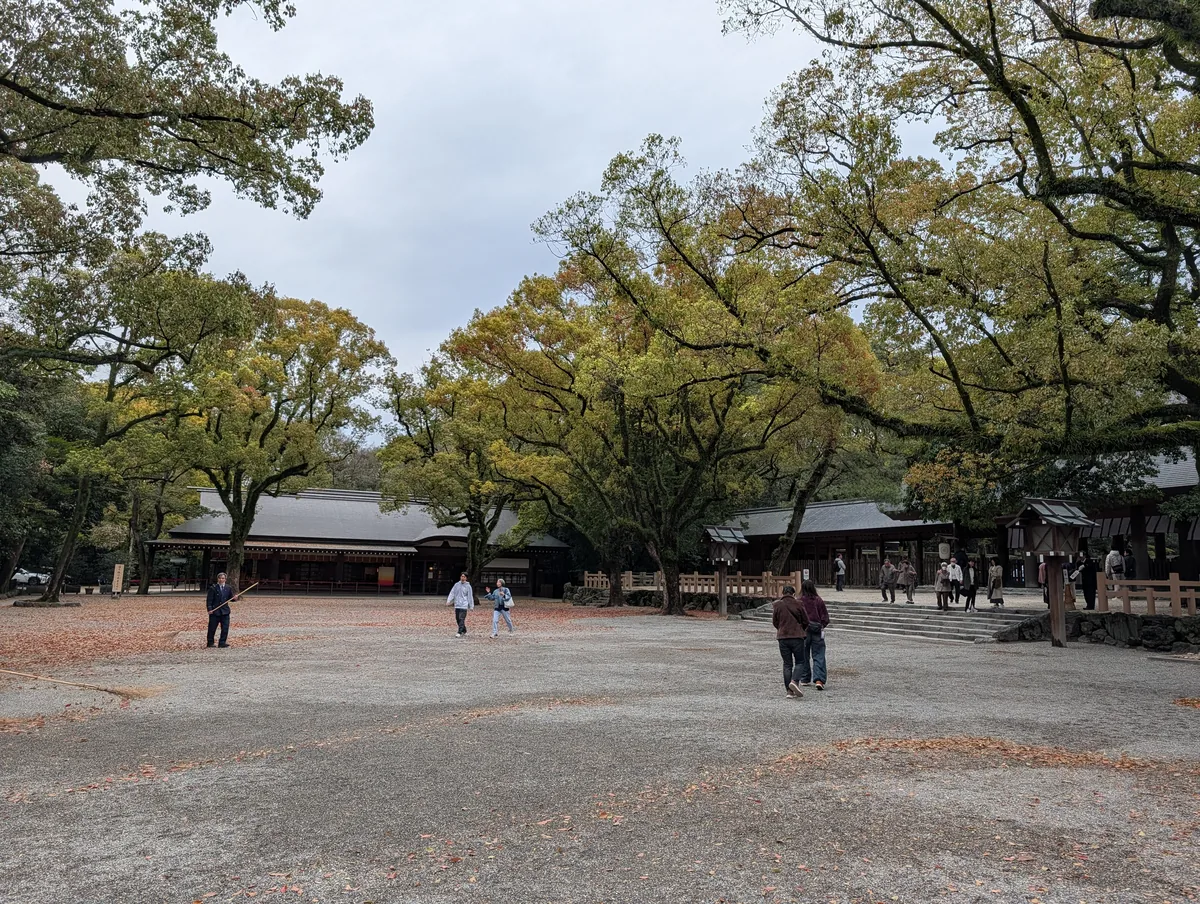
Atsuta Matsuri is the Reisai — the principal annual rite — of Atsuta Jingu, the shrine that houses the Kusanagi sword. The Emperor sends a personal envoy, and the shrine calls it the most important and solemn of all its ceremonies. Around it has grown a full day of martial arts, lanterns and fireworks.
Start with the thing that makes this different from most summer festivals in Japan: it is not a street event that happens to be at a shrine. It is a shrine’s own highest rite, which the city has attached its idea of summer to.
The formal ceremony
Atsuta Jingu describes the Reisai as “the most important and solemn ceremony among the shrine’s rites, attended by an envoy (chokushi) of His Majesty the Emperor”. In practice: the head priest reads a norito prayer, the imperial envoy presents ceremonial offerings called gaheimotsu and reads out a gosaimon proclamation, and prayers are offered for the prosperity of the imperial house and the peace of the country.
It is not confined to the main hall either. The shrine’s own listing says the rite is performed at the main hall, the bekku auxiliary hall, and every shrine inside and outside the precinct — 43 sessha and massha in all. Atsuta Jingu holds roughly 60 regular ceremonies and 10 special rites a year, and its own annual calendar states flatly that the biggest of them is the June 5 Reisai.
Two other names you will see. Atsuta Matsuri (熱田まつり) is what everyone calls it. Shobusai (尚武祭) — literally “the festival that esteems martial virtue” — is the other traditional name, and it is the one that explains the archery, judo, kendo and sumo you will find going on around the grounds all afternoon.
The shrine underneath it
Atsuta Jingu was founded roughly 1,900 years ago, when Miyazu-hime enshrined the Kusanagi-no-Mitsurugi — one of the Three Sacred Treasures of the imperial house. The grounds run to about 190,000 square metres of old camphor forest in the middle of an industrial ward, which is a large part of why the festival feels the way it does after dark. If you want the shrine itself rather than the festival, our complete guide to Atsuta Jingu covers the sword, the thousand-year camphor tree and the eel restaurants at the gate.
What locals actually do on the day
Here is the sentence from the shrine’s own page that I think tells you the most about this festival, and I have not seen it quoted in English anywhere:
Local people have a custom of wearing yukata from this festival each year, holding a fan in hand and browsing the street stalls — a truly seasonal celebration. (Atsuta Jingu, official Reisai page)
That is a shrine describing the behaviour of its own neighbourhood, in an official document. In Nagoya, June 5 is the night the yukata (浴衣) come out of storage — not Obon, not the big August fireworks. If you own one or are thinking of renting one, this is the most natural night of the year in this city to wear it. The other half of that sentence is the uchiwa (うちわ), a flat rigid paper fan rather than the folding kind; early June here is humid enough that you will understand why it counts as part of the outfit.
When Is the Next Atsuta Matsuri, and What Happened in 2026?
June 5, every year, with no weekend-shifting rule. That puts the next one on Saturday, June 5, 2027. The 2026 edition ran on Friday, June 5, 2026, with an expected 200,000 visitors, 377 lanterns on the makiwara towers and about 1,000 fireworks.
The date rule, from the shrine itself
Most Japanese festivals move around the calendar, and guessing the next date is usually a bad idea. This one is the exception. Atsuta Jingu’s own FAQ page carries this question and answer, in Japanese, with no year attached:
Q. When is Atsuta Matsuri?
A. June 5 every year. The street stalls are on the 4th and 5th.
The shrine’s annual ceremony calendar says the same thing from the other direction: “the largest ceremony of all is the June 5 Reisai, known as Atsuta Matsuri.” The Reisai listing gives the time as 10:00, again with no year attached. So the date and the 10:00 start are standing facts, not annual announcements.
What is announced annually is the detailed programme — exact fireworks timing, road closures, bus diversions. In 2026 those went up in mid-May: Nagoya’s official tourism body last updated its early-summer festival feature on May 15, 2026. So if you are planning a 2027 trip, pencil in June 5 now and check the fine print from around mid-May 2027.
2027 at a glance
| What | 2027 | How firm is it? |
|---|---|---|
| Date | Saturday, June 5, 2027 | Firm — the shrine states June 5 every year |
| Main rite | 10:00 | Firm — standing entry on the shrine’s calendar |
| Street stalls | June 4–5 | Likely — the shrine’s FAQ states it without a year |
| Fireworks | From about 19:45 | Likely — shrine FAQ figure; exact window is published each May |
| Road closures | Not yet published | Check from mid-May 2027 |
One genuinely useful consequence of the 2027 date landing on a Saturday: Nagoya’s cheapest transit day pass, the Donichi Eco Kippu, is only valid on Saturdays, Sundays, public holidays and the 8th of each month. In 2026 the festival fell on a Friday and you could not use it. In 2027 you can — see the access section for what that saves you.
What the 2026 edition looked like
Friday, June 5, 2026. Both the Nagoya Convention & Visitors Bureau and Aichi Prefecture’s tourism site listed it identically: rite from 10:00, venue Atsuta Jingu main hall for the dedications and Jingu Park for the fireworks, about 1,000 shells.
Aichi Prefecture put the 2026 fireworks window at 19:40–20:30. Local broadcaster Meitele, reporting from the grounds that afternoon, said the display would begin at 19:50. The shrine’s own standing FAQ says 19:45. Three official-ish numbers, all within ten minutes of each other — I am flagging that rather than smoothing it over, because it is exactly the sort of detail other guides quietly pick one of. Be in position by 19:30 and the discrepancy stops mattering.
From the same broadcast, two details worth carrying forward:
- The imperial envoy presented the gaheimotsu offerings at 10:00, as scheduled.
- The kento makiwara towers were lit from the afternoon, carrying 377 lanterns — the number of days in a year plus the number of months, 365 + 12 — as a prayer for a year free of illness.
Attendance: the shrine’s standing figure is about 250,000. Media coverage of the 2026 edition put the expected turnout at 200,000. No official post-event count has been published that I can find, so treat both as order-of-magnitude rather than precise.
One honest gap. Every report I could locate was filed on the afternoon of June 5, 2026, before the fireworks — so I cannot confirm from any source that the 2026 display actually went ahead rather than being rained off. The shrine’s rule is that fireworks are postponed in rain, so it is a live possibility. I am not going to write “the fireworks lit up the sky” when nothing I can cite says they did.
What Are the Highlights of Atsuta Matsuri?
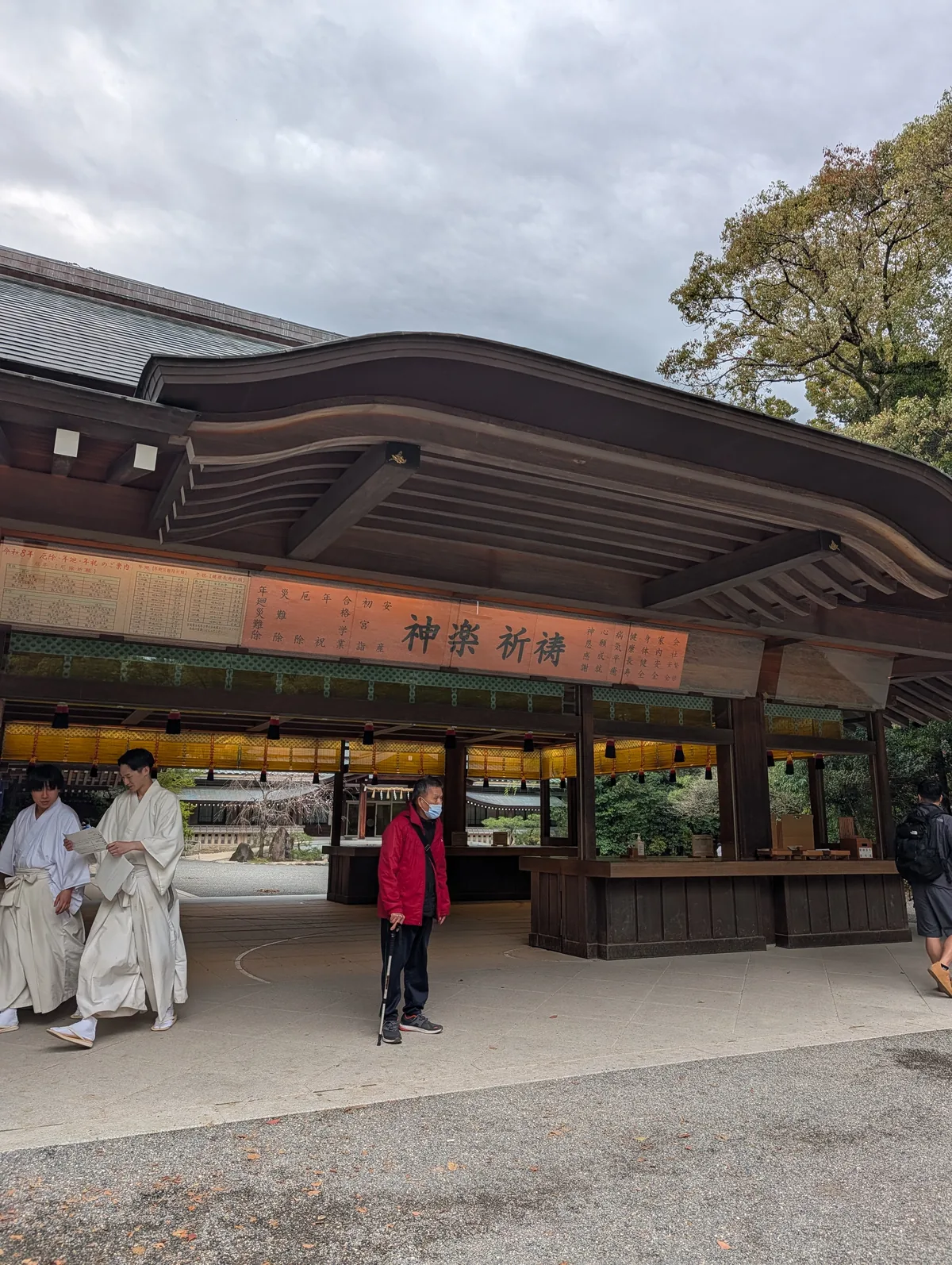
Five things, in the order the day delivers them: the imperial rite at 10:00, martial-arts dedications through the afternoon, the lantern towers at dusk, neighbourhood lion dances and drumming, and about 1,000 fireworks at 19:45.
1. The kento makiwara lantern towers
If you only turn up for one thing, make it this. Kento makiwara (献灯まきわら) are tall votive frames hung with paper lanterns, and the shrine’s description is precise: “from dusk, kento makiwara are decorated and lit at each gate.”
Each tower carries a semicircular fan of lanterns above a central pole. Per the 2026 broadcast, the count is 377 — 365 for the days of the year, 12 for the months — lit as a prayer for twelve months of good health. The shrine’s own page does not publish a number, so treat 377 as a figure reported in the press rather than an official one.
The reason to care is what they do to the place. The approach at Atsuta is a wide gravel path under very old, very tall trees, and it is genuinely dark at night. The window between the lanterns coming on and the fireworks starting — roughly 18:30 to 19:45 — is the best hour of this festival, and it is the part almost no visitor guide tells you to plan for, because everyone optimises for the fireworks.
2. The martial arts, which is the whole point of the other name
Shobusai means the festival that honours martial virtue, and the shrine lists a full slate of dedicatory competitions held across the day: kyudo (archery), judo, kendo, sumo, performing arts, haiku and calligraphy.
Nagoya’s tourism board frames it as “martial arts and performing arts that cannot normally be seen” being dedicated in the grounds. That is the appeal for anyone who has been to a dozen food-stall festivals: this one has a genuinely different daytime programme. Neither the shrine nor the city publishes a schedule of which discipline happens where and when, so this is a wander-and-find-it affair rather than something you can timetable.
3. Children’s lion dances and the makiwara mikoshi
The shrine notes that neighbourhoods from around the district bring kodomo-jishi (children’s lion dances) and makiwara mikoshi — portable shrines built in the same lantern-tower style as the big static ones — into the grounds as offerings.
This is the community layer of the festival, and it is the bit that most reliably makes it feel like a neighbourhood event rather than a tourist attraction. A quiet warning, though: the shrine’s visitor rules explicitly ask people not to photograph other worshippers without permission, which very much includes somebody’s child in a lion costume. Point the camera at the lanterns.
4. Owari Shinjiro Daiko and Atsuta Kagura
Also in the grounds: dedicatory performances of Owari Shinjiro Daiko (尾張新次郎太鼓), a local drumming tradition, and Atsuta Kagura (熱田神楽), the shrine’s own sacred music and dance. Again, no published timetable — they are dedications, not scheduled shows.
5. About 1,000 fireworks from Jingu Park
The finale. Both Aichi Prefecture and the City of Nagoya describe it the same way: “about 1,000 shells are launched from Jingu Park”, and the shrine’s own page calls it the display that announces summer’s arrival in Nagoya.
Now the part where I disappoint you. There is no official viewing area, no ticketed seating, and no designated best spot — not on the shrine’s pages, not on the city’s, not on the prefecture’s. Plenty of blogs will hand you a list of secret vantage points; none of those lists comes from anyone running the event, so I am not going to reproduce one as fact. What the officials give you is the launch site and the time. The rain rule is the one other thing the shrine does state: if it rains, the fireworks are postponed.
6. The stalls — and the day most people miss
Here is the practical detail that most English coverage gets wrong or omits entirely. Atsuta Jingu’s FAQ says the roten street stalls run on June 4 and June 5 — two days, not one.
That means June 4 is a real option: the stalls are up, the approach is lively, and you are not sharing the grounds with a quarter of a million people. You miss the rite, the lanterns and the fireworks, but if crowds are your limiting factor, the 4th is the version of this festival nobody talks about.
How Do You Get to Atsuta Matsuri from Nagoya?
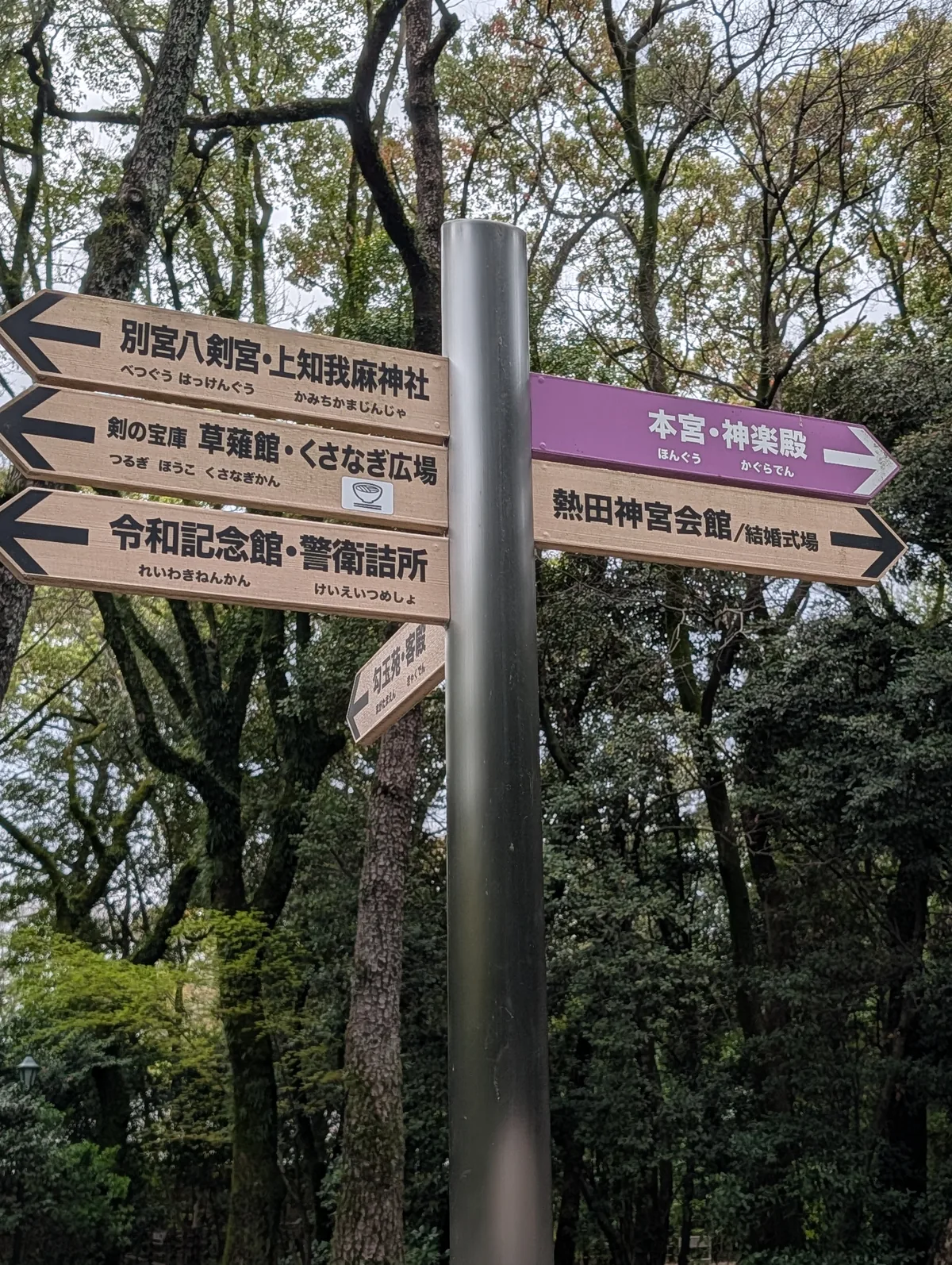
Take Meitetsu from Meitetsu Nagoya to Jingu-mae — ¥250, and the East Gate is a three-minute walk. JR Nagoya to JR Atsuta is ¥200 and eight minutes on foot. Both put you at the shrine without a transfer. Do not drive.
The three rail options
| Route | Station | Adult fare | Walk to shrine | Transfers |
|---|---|---|---|---|
| Meitetsu Nagoya Main Line | Jingu-mae (神宮前) | ¥250 | 3 min to the East Gate | None |
| JR Tokaido Main Line | Atsuta (熱田) | ¥200 | 8 min | None |
| Subway Meijo Line | Atsuta-Jingu-Tenmacho / Atsuta-Jingu-Nishi | ¥240 | 7 min — Tenmacho for the South Gate, Nishi for the West Gate | Change at Sakae, about 25 min total |
| From Centrair airport | Jingu-mae, direct | ¥1,280 (¥830 fare + ¥450 μSKY seat) | 3 min | None, 21–25 min |
Two things to flag. The subway station names changed: on January 4, 2023, “Jingu-Nishi” became Atsuta-Jingu-Nishi and “Tenma-cho” became Atsuta-Jingu-Tenmacho. Older guidebooks — and, at the time of writing, the shrine’s own access pages in both Japanese and English — still use the old names; go by the operator’s signage. The shrine puts the walk from either subway station at seven minutes. And Centrair connects directly: Jingu-mae is on the same Meitetsu line that runs to the airport, so the shrine is an easy stop on a flying-in or flying-out day. Our guide to getting around Nagoya covers IC cards and ticket machines.
Day passes — and why 2027 is different from 2026
Nagoya’s transit bureau sells three relevant passes. Current adult prices:
| Pass | Adult | Child | Valid on |
|---|---|---|---|
| Bus & subway all-lines one-day | ¥870 | ¥430 | Any day |
| Subway all-lines 24-hour | ¥760 | ¥380 | Any day, 24 hours from first tap |
| Donichi Eco Kippu | ¥620 | ¥310 | Saturdays, Sundays, public holidays and the 8th of each month only |
Because June 5, 2027 falls on a Saturday, the ¥620 Donichi Eco Kippu is valid — ¥250 cheaper than the standard one-day pass for the same coverage. In 2026 the festival was on a Friday and it was not. One caveat that catches people: none of these passes covers Meitetsu or JR, so if you take the ¥250 Meitetsu route to Jingu-mae you pay that separately.
Should you drive? No
Atsuta Jingu has about 400 free parking spaces — roughly 300 at the East Gate, 40 at the West Gate, 60 at the South Gate. On any ordinary day that is generous. On June 5 it is a trap, for three stated reasons:
- The car parks normally close at 17:00 — before the lanterns are lit, let alone the fireworks.
- The shrine states that car park use may be restricted during festival events, with closures posted to the “latest information” box on its top page.
- The shrine’s standing notice says the car parks stay full for hours on ordinary weekends and asks visitors to come by public transport — and news coverage of the 2026 festival repeated that request specifically.
Aichi’s tourism listing gives about 10 minutes from either the Hotta or Yobitsugi interchange on Nagoya Expressway Route 3, but those are normal-day figures and June 5 is not a normal day. I could not retrieve the 2026 road-closure map — the city takes its notice page down once the event passes, and it is not in the Internet Archive either — so I will not state times or streets I cannot source. If you must drive, ring the shrine on 052-671-4151 before the day.
Ready to book a day trip?
Handy if you want to pair this with other sights the same day.
What Should You Know Before You Go?
Entry is free and the grounds never close, so timing is entirely yours. The one structural decision is whether you come for the 10:00 rite, the 18:30 lanterns, or both — because the gap in between is a long afternoon in June humidity.
Three ways to do the day
| Plan | Timing | What you get | Best for |
|---|---|---|---|
| The rite | Arrive 09:30 | The imperial envoy’s ceremony at 10:00, then Kencha-sai (tea offering) at 10:30 | Anyone who came for the ritual rather than the party |
| The evening | Arrive 17:30–18:00 | Lanterns from dusk, the Minami-Shingusha rite at 15:00 if you are early, fireworks 19:45 | Most visitors. This is the atmospheric half |
| The quiet version | June 4, any time | Stalls and approach without the crowd; no rite, no lanterns, no fireworks | Families, anyone crowd-averse |
If you do the full day, the shrine’s own grounds are the answer to the afternoon gap. Nineteen hectares of old-growth camphor forest is meaningfully cooler than the street, and the Kusanagi-kan sword museum inside the precinct (adults ¥500, closes 16:30, last entry 16:00) is an air-conditioned hour that is genuinely worth having.
Eating
Two layers. The roten stalls along the approach on the 4th and 5th are the festival food — the shrine explicitly pictures locals browsing them with a fan in hand. Then there is Atsuta’s own speciality: this is the district credited with the invention of hitsumabushi, the grilled-eel rice dish eaten three ways. Atsuta Horaiken (あつた蓬莱軒), founded in 1873 and the registered holder of the hitsumabushi trademark, still sits by the shrine gate and its own history page calls itself the originator. On June 5 the queue will be brutal, so either commit to it early or read our hitsumabushi guide and pick an alternative branch.
Manners inside the grounds
Atsuta Jingu publishes a clear visitor code, and a festival crowd is exactly when it gets stretched. The ones most likely to trip up a visitor:
- No pets in the grounds, at all.
- No smoking outside designated areas.
- No photographing other worshippers without permission.
- No photography, eating or phone use inside the innermost sacred areas.
- Any filming beyond personal use — anything you intend to publish, monetise or broadcast — needs advance written permission from the shrine office. Same-day requests may be refused.
That last one matters if you are a content creator. A tripod and a gimbal at a lit-up gate on the shrine’s biggest night is precisely the scenario the rule exists for.
Weather and what to bring
Early June in Nagoya sits right at the start of the rainy season, which is why the shrine bothers to publish a fireworks postponement rule at all. Expect humidity rather than heat. What I would carry: a fan, water, a compact umbrella, and shoes you do not mind on wet gravel in the dark. Our guide to the best time to visit Nagoya goes into what June actually feels like here.
If you are building a trip around it
Atsuta Matsuri is not an isolated date — it sits at the front of Nagoya’s early-summer festival cluster. In 2026, the following weekend carried the Horikawa Festival on June 6, the Arimatsu Shibori tie-dye festival on June 6–7, the Dekimachi and Tsutsui-cho Tenno festivals on June 6–7 with their float parades, and the Tokugawaen float assembly on June 7. Those 2027 dates are not published yet, but the pattern means a June 5 arrival is rarely a one-festival trip. Our central Japan festival calendar tracks the whole run, and Nagoya’s summer festivals picks up where June leaves off.
What Do Visitors Actually Say About It?
I have not been to this one as a reporter, so rather than invent an evening, here is where to look at it through other people’s eyes — and what the official language itself gives away about how busy it gets.
Official channels worth watching before you commit:
- Atsuta Jingu on Instagram: @atsutajingu.official — the shrine’s own account, and the most reliable place to see the lantern towers lit
- Atsuta Jingu on Facebook: facebook.com/atsutajingu
- Meitele’s news report from the 2026 festival: nagoyatv.com — filed from the grounds on June 5, 2026, and the source of the 377-lantern figure
On how crowded it gets, read the official phrasing rather than any number. The shrine describes “about 250,000 citizens” visiting, and calls it a festival “widely loved” by the city. Coverage of the 2026 edition put the expected turnout at 200,000 and closed with the line that Atsuta Jingu is asking people to use public transport — an organisation does not put that in a press briefing unless the roads genuinely seize up. The other tell is structural: the shrine’s roughly 400 car park spaces close at 17:00 and can be restricted entirely on festival days.
What I will not do is quote strangers’ blog posts as if they were reporting. Where you see “visitors say the atmosphere is magical” in a travel article with no link, somebody wrote that sentence at a desk.
Frequently Asked Questions
When is Atsuta Matsuri?
June 5, every year. Atsuta Jingu’s own FAQ states the date plainly: the festival is on June 5 annually, and the street stalls run on both the 4th and the 5th. The next one is Saturday, June 5, 2027. The main rite begins at 10:00.
What time are the fireworks, and how many are there?
Atsuta Jingu’s official FAQ says the fireworks start at 19:45 on June 5 and are postponed if it rains. For the 2026 edition, Aichi Prefecture’s tourism site listed the window as roughly 19:40 to 20:30, and a local broadcaster reported 19:50 — so be in position by 19:30. About 1,000 shells are launched from Jingu Park (神宮公園). There is no official viewing area or designated best spot.
Is there an entrance fee?
No. Entry to the Atsuta Jingu grounds is free and the grounds are open 24 hours, and no official source lists an admission charge for the festival. The Kusanagi-kan sword museum inside the precinct is separately ticketed — ¥500 for adults, ¥200 for elementary and junior high pupils — and closes at 16:30.
How do I get there from Nagoya Station?
The simplest route is Meitetsu from Meitetsu Nagoya to Jingu-mae, ¥250, then a three-minute walk to the East Gate. JR Nagoya to JR Atsuta is ¥200 and an eight-minute walk. The subway route needs a change at Sakae onto the Meijo Line for Atsuta-Jingu-Tenmacho or Atsuta-Jingu-Nishi, about 25 minutes and ¥240. The shrine puts the walk from either subway station at seven minutes. Note that the two stations were renamed in January 2023, so older guides — and the shrine’s own access pages — still list them as Tenma-cho and Jingu-Nishi.
Are there food stalls, and on which days?
Yes. Atsuta Jingu’s FAQ states that the street stalls (露店, roten) run on June 4 and June 5, so they open a day before the rites do. That makes the 4th a quieter alternative if you want the stalls without a quarter of a million people. Neither the shrine nor the city publishes a stall count.
Can I drive and park at the shrine?
Plan not to. The shrine’s roughly 400 free spaces normally close at 17:00 — before the lanterns are lit — and the shrine states that car park use may be restricted during festival events. Atsuta Jingu asks visitors to come by public transport, and news coverage of the 2026 festival repeated that request. I could not retrieve any official road-closure notice for this festival — the ward office takes its notice page down once the event has passed, and no archived copy exists — so I cannot tell you which streets or hours are affected. Ring the shrine on 052-671-4151 if you have no alternative to driving.
What happens if it rains?
The only rain rule the shrine publishes is for the fireworks: they are postponed if it rains. Nothing official is published about the rites, the lantern towers or the stalls in wet weather. Early June is the start of the rainy season in Nagoya, so check the shrine’s own site in the days before you travel rather than assuming either way.
Where Can You Check Official Information?
Four sources cover this festival properly: the shrine’s own Reisai page and FAQ, Nagoya’s official tourism body, and Aichi Prefecture’s tourism site. The shrine is the only one that publishes the standing date and fireworks rule; the others carry the year-specific programme from around mid-May.
- Atsuta Jingu — official Reisai (Atsuta Matsuri) page: atsutajingu.or.jp/jingu/about/event/event_detail12.html — the ceremony, the dedications, the lantern towers and the attendance figure
- Atsuta Jingu — FAQ: atsutajingu.or.jp/qa/ — the source for “June 5 every year,” the stall dates and the 19:45 fireworks time
- Atsuta Jingu — annual ceremony calendar: atsutajingu.or.jp/jingu/about/event.html — the wider June programme, including Kencha-sai and the Otaue rice-planting rite on June 18
- Nagoya Convention & Visitors Bureau, official city tourism: nagoya-info.jp — early summer festivals feature
- Aichi Now, Aichi Prefecture official tourism: aichinow.pref.aichi.jp/events/detail/1318/
- Nagoya transit fares and day passes: City of Nagoya Transportation Bureau
- Enquiries: Atsuta Jingu shrine office, 052-671-4151
One note on how these pages behave: the city and prefecture take their listings down or mark them “ended” once the date passes, so for most of the year only the shrine’s standing information exists. That is normal, not a cancellation.
Related Guides
- Atsuta Jingu: Complete Guide — the shrine on an ordinary day: the Kusanagi sword, the thousand-year camphor and the eel restaurants at the gate
- Central Japan Festival Calendar — every major festival in the region, month by month
- Nagoya Summer Festivals — what follows once Atsuta Matsuri has declared summer open
- Nagoya Matsuri — the city’s other headline festival, in October
- Getting Around Nagoya — subways, IC cards, Meitetsu and JR
- Hitsumabushi Guide — Atsuta’s own dish, credited to a restaurant a few steps from the shrine gate