Nagoya’s summer is one of Japan’s densest festival seasons, and 2026 has three headliners: the World Cosplay Summit 2026 (July 31-August 2), the Osu Summer Festival (August 1-2), and the Nippon Domannaka Matsuri — “Domatsuri” (August 28-30). Cosplayers from 40 countries and regions take over the streets of Sakae and Osu, the Osu shopping arcade fills with bon-odori dancing and hand-held fireworks, and roughly 200 dance teams flood Hisaya-odori Park. Best of all, most of it happens in the compact heart of the city, so you can hop from one festival to the next on a single subway line. Written by a Nagoya native — 35 years local, now living in the Osu district — this guide covers the dates, venues, food stalls, and heat-survival tips for each one.
Last updated: July 2026 | Author: Yuu (born and raised in Nagoya, 35 years local, now living in the Osu area)
This article may contain affiliate links. See our affiliate disclosure for details.
Table of Contents
- Why Does Nagoya Become a “Festival City” in Summer?
- 2026 Nagoya Summer Festival Calendar (Quick Reference)
- World Cosplay Summit 2026 — the Final Summer Edition
- Osu Summer Festival 2026 — Bon Odori Meets Cosplay
- Nippon Domannaka Matsuri (Domatsuri) 2026
- Nagoya Minato Festival — Fireworks Cancelled in 2026
- Atsuta Matsuri and Other Festivals Around the Season
- Festival Food-Stall Guide: What to Eat, How to Pay, the Manners
- Practical Tips: Beating the Heat, Getting Around, What to Wear
- Frequently Asked Questions
- Summary
- Related Guides
- About the Author
Why Does Nagoya Become a “Festival City” in Summer?
From late July through August, Nagoya holds festival after festival, and the whole city slips into a celebratory mood. What defines a Nagoya summer is the way large events of completely different character — a world-scale cosplay festival, traditional bon-odori dancing, a dance festival with around 200 teams — all pile up within a few short weeks.
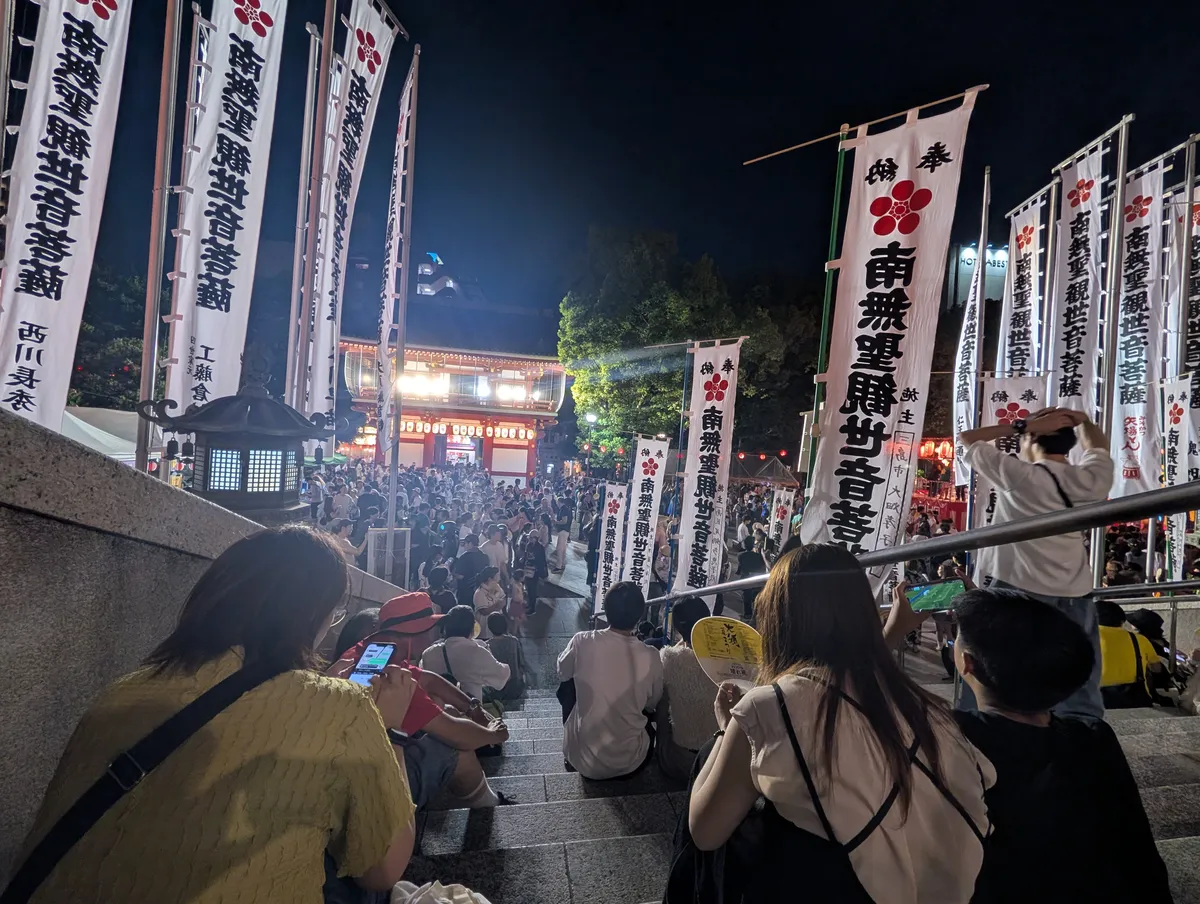
Nagoya has a reputation for being “plain” as a tourist destination, but when it comes to summer festivals it holds its own against Tokyo and Osaka. And because most of the venues cluster in the central Sakae and Osu districts, you can hop from festival to festival on a single subway line. That kind of easy festival-hopping is hard to pull off in sprawling Tokyo — it’s a distinctly Nagoya way to enjoy the season. If this is your first Japanese matsuri, start with our Japanese festival guide for first-timers.
“My earliest memory of a summer festival is the Taiko Matsuri in Nakamura Ward. As a kid, I’d ride my bike to Hokoku Jinja shrine and find both sides of the approach packed with stalls — yakisoba, kushikatsu, cotton candy, all bought for me. My father, usually a strict and slightly scary man, would be in an oddly good mood that one day of the year, generous enough to hand over coins for the shateki cork-gun stall. The glow of the paper lanterns and the press of the crowd — that’s still the ‘smell’ of a Nagoya summer to me.”
— Yuu, japanesefestival.net
The Taiko Matsuri is a neighborhood festival at Hokoku Jinja in Nakamura Ward, the birthplace of the warlord Toyotomi Hideyoshi. It’s held in mid-May — on the weekend closest to May 18 (in 2026, Saturday May 16 and Sunday May 17) — so it differs in both scale and timing from the big midsummer events this guide covers. But the essence of a Japanese festival — stalls lining a shrine approach, families strolling through together — is the same. Throughout this guide I’ll weave in that local feeling while walking you through the Nagoya summer festivals you can actually attend in 2026.
2026 Nagoya Summer Festival Calendar (Quick Reference)
Here’s the big picture first. Below are the major 2026 summer festivals in the order they happen. As of September 2026, all five of these festivals have finished — the Cosplay Summit, the Osu Summer Festival, and Domatsuri all wrapped up in late July and August. The dates below are kept as a record of the 2026 season and as a guide to when each festival usually falls.
| Festival | 2026 Dates | Venue | Highlight | Status |
|---|---|---|---|---|
| Atsuta Matsuri (Annual Grand Festival) | June 5 | Atsuta Jingu | ~1,000 fireworks, imperial-messenger rite | Ended |
| Nagoya Minato Festival | July 20 | Nagoya Port, Garden Pier | Floats & group dancing (fireworks cancelled in 2026) | Ended |
| World Cosplay Summit 2026 | July 31-Aug 2 | Sakae & Osu area | World Championship, cosplay parade | Ended |
| Osu Summer Festival | Aug 1-2 | Osu shopping arcade | Bon odori, cosplay parade, hand-held fireworks | Ended |
| Nippon Domannaka Matsuri (Domatsuri) | Aug 28-30 | Hisaya-odori Park + 16 city venues | Grand parade of ~200 dance teams | Ended |
Local tip from Yuu
The sweet spot is the weekend of August 1-2. Those two days, the World Cosplay Summit (which includes the Osu arcade among its venues) and the Osu Summer Festival overlap completely, and Osu comes alive with cosplayers and festival energy like at no other time of year. It’s a remarkably efficient window — you can experience two festivals at once on a single trip.
For a year-round view of festivals across the wider region, see our companion guide: Central Japan Festival Calendar — Complete Year-Round Guide. This article zooms in on “Nagoya in summer” specifically and goes deep from a local’s point of view.
We cover spring and cherry blossom season in a separate guide.
World Cosplay Summit 2026 — the Final Summer Edition
The World Cosplay Summit 2026 (nicknamed “Cos-Sami” by locals) runs for three days, Friday July 31 to Sunday August 2, 2026, centered on Nagoya’s Sakae and Osu districts. It’s one of the largest cosplay festivals on the planet. The centerpiece is the World Cosplay Championship, in which national representatives who won their home qualifiers compete for the title of world’s best cosplayer, while cosplay parades and runway shows light up the whole city.
According to the organizer, the World Cosplay Summit Executive Committee, representatives from 40 countries and regions took part — 41 had been scheduled, but Vietnam was unable to travel — and the main venue, Oasis 21, drew 259,000 visits across the three days.
Source: World Cosplay Summit 2026 official site and World Cosplay Summit Executive Committee press release (2026 event overview) for the dates, number of participating countries, and attendance projection.
Why 2026 Is the Last “Midsummer” Edition
Here’s the part you shouldn’t miss: 2026 is the final year the summit runs as a midsummer festival. The organizers have announced that from 2027 the event will move from summer to autumn (November), and the biggest reason is the punishing heat of recent years. The press release’s tagline — “The last summer, shine with the World” — points to exactly this turning point. In other words, the spectacle of “the whole city boiling over with cosplay in the blazing Nagoya heat” is something you can only experience one last time in 2026.
Source: World Cosplay Summit Executive Committee press release for the schedule change from 2027 (summer to autumn) and the reasoning behind it.
“I once went out to watch the Cosplay Summit stage in person. Nationality didn’t matter at all — everyone was bonding naturally through anime and manga, a culture that crosses borders. The whole city felt dressed up, like being inside a Disneyland parade. The one thing that worried me was the midsummer heat. Watching participants stand under the blazing sun in those thick, heavy costumes, I honestly thought, ‘I hope they’re okay.’ So when I heard the event is moving to autumn from 2027, it made complete sense to me.”
— Yuu, japanesefestival.net
Cosplay culture was once something people kept quiet about, and now it’s embraced on this scale, out in the open, as an international event welcomed by the whole city. As someone who grew up here, that change itself moves me every single year. If you love anime and manga, this is an atmosphere worth coming to breathe at least once.
Venues and Highlights
The 2026 event unfolds across several venues in central Nagoya:
- Oasis 21 / Hisaya-odori Park: the heart of Sakae, and the base for parades and stage events
- Aichi Arts Center: host to major stages such as the Championship
- Chubu Electric Power MIRAI TOWER (the former Nagoya TV Tower): the Sakae landmark, with its surroundings folded into the event
- Osu shopping arcade: the mingling-and-photo zone where cosplayers blend into the streets
- Hisaya-odori Garden FLARIE: a photogenic garden shooting spot
Source: Nagoya City official tourism info “Nagoya Concierge” — World Cosplay Summit 2026 for the venue list.
Local tip from Yuu
If you just want to watch cosplay, you can enjoy most of it for free. Simply walking through Sakae’s Oasis 21 or the Osu arcade, you’ll come across cosplayers woven into the everyday street scene. If you want to take a photo, always ask the person first. Most participants are used to being photographed and will happily agree — but this is the basic courtesy. For ticketed stages such as the Championship, check ticket details on the official site.
Osu, the summit’s home base, is a shopping district you could happily spend a whole day in on its own. For the full rundown, see our Osu Shopping Street Complete Guide.
Osu Summer Festival 2026 — Bon Odori Meets Cosplay
The 75th Osu Summer Festival takes over the entire Osu shopping arcade across two days, Saturday August 1 and Sunday August 2, 2026. Admission is free. With a bon-odori dance gathering, a cosplay parade, an Awa-odori dance parade, Osu taiko drumming, live artist stages, and hand-held (tezutsu) fireworks, it’s a festival where tradition and contemporary culture share the same street — which is about as “Osu” as it gets.
Source: Nagoya City official tourism info “Nagoya Concierge” — 75th Osu Summer Festival (dates, venue, program) and the Osu shopping street official site (Japanese). The official Nagoya City listing gives operating hours of 2:00 PM to 9:00 PM on both days; hours can vary from year to year, so confirm on the official site before you go.
As noted above, these two days overlap with the World Cosplay Summit (which counts Osu among its venues). The sight of a world cosplay festival and an old-fashioned bon-odori coexisting on the same streets is something only Osu delivers: the bon dance circles turn around a traditional yagura tower while, a street away, cosplayers pose for photos. That “everything jumbled together” quality is exactly what makes Osu special.
“I live in Osu now. There’s some kind of festival here almost every month, and the neighborhood genuinely never gets boring. When it comes to bon odori, I’m a watcher, not a dancer — I like to stand nearby with a beer and take it all in. But my grandmother loved bon odori, and she used to drag me along when I was small. She was the kind of person who’d climb right up onto the yagura tower to dance, while I played tag and hide-and-seek in and out of the circle below. Nagoya has music you’ll only hear in Nagoya — local bon-odori tunes like ‘Dai-Nagoya Ondo’ — and I’d love visitors to see it at least once. If you’re feeling brave, step into the circle and dance along.”
— Yuu, japanesefestival.net
Highlights
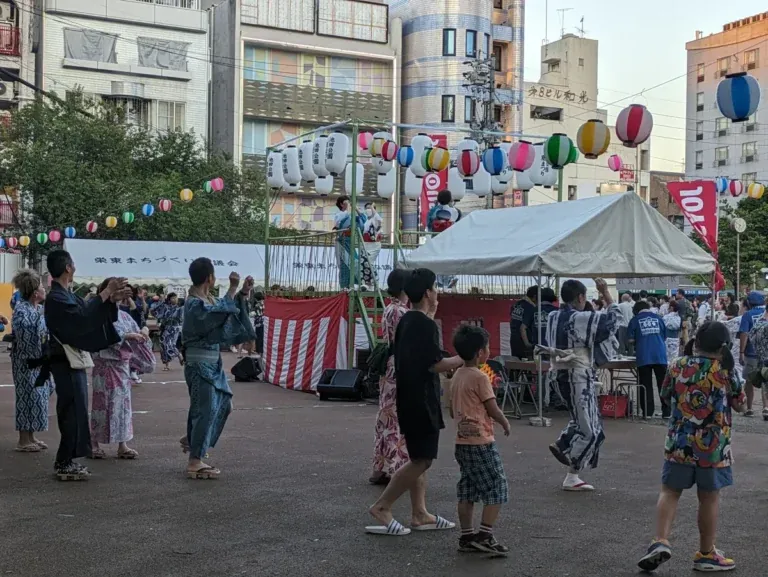
- Bon-odori gathering: dancing around the yagura, a staple of the Japanese summer. Anyone can join the circle.
- Cosplay parade: an Osu signature, with cosplayers processing down the arcade.
- Awa odori & Osu taiko: powerful dance performances and the resonance of Japanese drums.
- Tezutsu (hand-held) fireworks: a Tokai-region tradition in which sparks erupt from a bamboo tube cradled in the arms. The close-up intensity is a must-see. On the Sunday (August 2), fireworks are scheduled for around 7:00 PM.
Source: Walker Plus — 75th Osu Summer Festival for the fireworks timing on August 2 (approx. 7:00 PM).
Access
The Osu shopping arcade is a 2-minute walk from Kamimaezu Station on the subway Meijo and Tsurumai lines, or a 3-minute walk from Osu Kannon Station on the Tsurumai line. It’s roughly 10 minutes by subway from either Nagoya Station or Sakae.
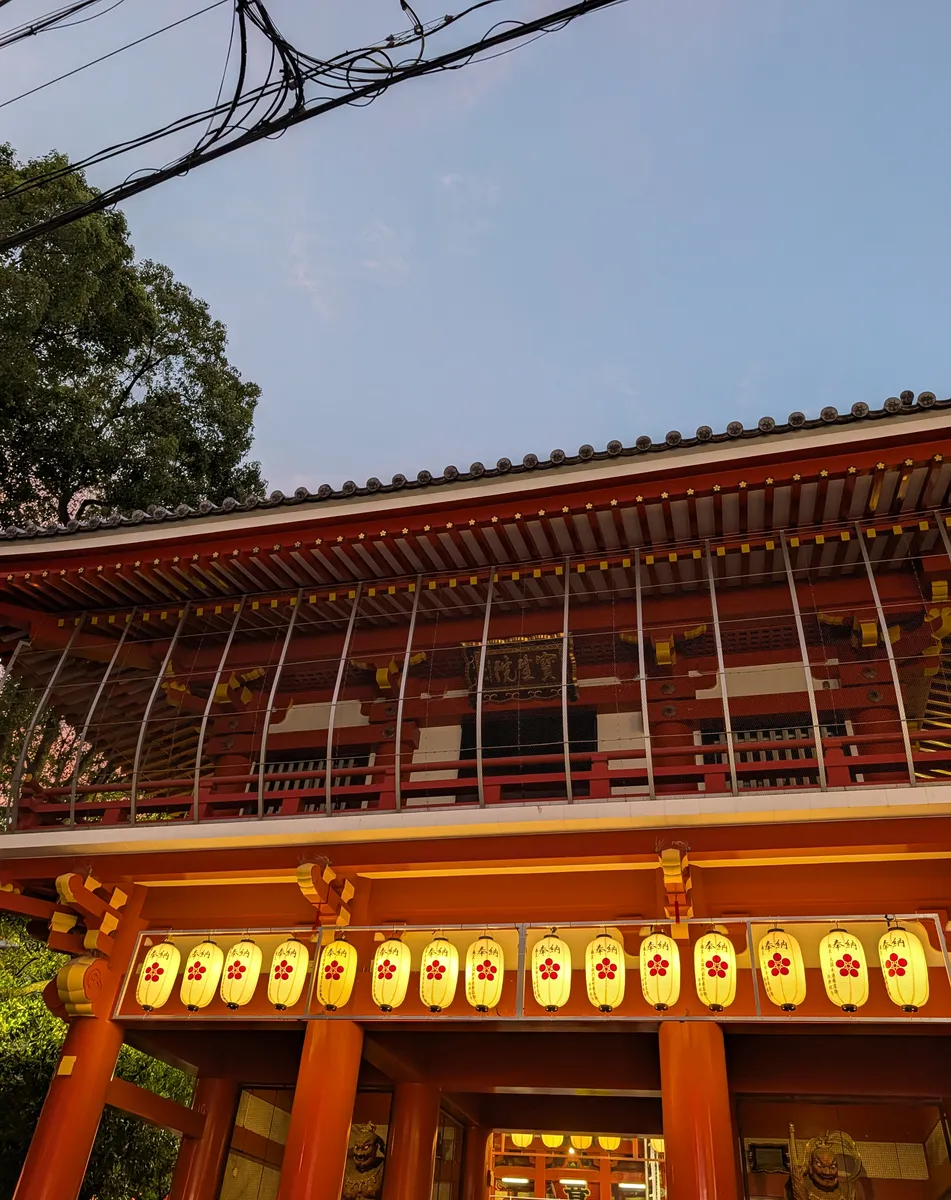
Source: Nagoya City official tourism info “Nagoya Concierge” for nearest stations and walking times.
Local tip from Yuu
Osu is one of Japan’s great street-food-grazing districts. Beyond the festival stalls, the arcade’s permanent shops let you walk and snack on mitarashi dango, soup dumplings, waffles, and karaage fried chicken. You’ll never go hungry while waiting for the bon odori or fireworks. It gets crowded, so agree on a meeting spot in advance in case your group gets separated.
Nippon Domannaka Matsuri (Domatsuri) 2026
The 28th Nippon Domannaka Matsuri (popularly “Domatsuri”) is “midsummer Nagoya’s biggest festival,” running three days, Friday August 28 to Sunday August 30, 2026, centered on Hisaya-odori Park but spread across 16 venues around the city. Roughly 200 dance teams gather from across Japan and abroad, each expressing the culture of its own home region through original music and choreography — a participatory dance festival for everyone. It grew out of the Yosakoi tradition of Kochi, and many teams dance with naruko clappers in hand, dressed in vivid, elaborate costumes.
The one firm rule every team follows is that its music must weave in a phrase of local folk song (min’yo) — the festival describes this as its greatest defining characteristic. That single requirement is why a team from Hokkaido and a team from Okinawa can share the same stage and still each perform something rooted in its own home.
Source: Aichi Prefecture tourism site “Aichi Now” — 28th Nippon Domannaka Matsuri (dates, ~200 teams, 16 venues), the Nippon Domannaka Matsuri Foundation official site, and the foundation’s “Features of Domatsuri” page for the local-folk-song music rule.
Dates and Venues
- Friday August 28 — eve festival: 4:30 PM-9:00 PM
- Saturday August 29 — main festival, day 1: 9:00 AM-9:00 PM
- Sunday August 30 — main festival, day 2: 9:00 AM-9:00 PM
- Main venue: the EDION Hisaya Hiroba main stage in Hisaya-odori Park (plus 16 venues across Nagoya)
Source: Aichi Now and the Hisaya-odori Park official event page for times and venues.
Highlights
Domatsuri’s greatest draw is its sheer scale. With around 200 teams and dancers numbering in the thousands performing in constant rotation, something is always happening at whichever venue you visit. The showstopper is the so-odori (all-together dance) finale on the last night of the main festival, when every participant dances the same number at once. Watching is essentially free — just strolling through Hisaya-odori Park is enough to feel the heat of it.
Local tip from Yuu
Seats at the main stage fill up, so I’d aim for a “nagashi-odori” (parade-style) venue instead, where you can watch the dancing up close from the roadside. Late August in Nagoya is still full midsummer, so keep hydrating through the daytime rounds. It’s cooler after dusk, and the illuminated performances look their best then, too.
Note that Domatsuri also has an autumn spin-off (the “Tele-Domatsuri” / autumn Domatsuri, in November 2026), but the star of “Nagoya in summer” that this guide covers is firmly the late-August event in the city center.
Nagoya Minato Festival — Fireworks Cancelled in 2026
The Sea Day Nagoya Minato Festival is a Nagoya summer tradition, held each year on Marine Day in July at Nagoya Port (Garden Pier). It’s a festival with real history, launched in 1946 as a prayer for postwar recovery, and in a normal year it fills the port’s night sky with about 3,000 fireworks.
Source: Walker Plus — Sea Day Nagoya Minato Festival Fireworks for the history (started 1946) and the usual launch count (~3,000).
However, the 2026 fireworks display (the 80th festival) was cancelled. The reason is the buildup to the Asian Games (Aichi-Nagoya 2026, September 19-October 4), taking place in Aichi and Nagoya in September 2026: it became difficult to secure both the viewing areas and the space for the event’s activities, and the decision prioritized safety. While the fireworks were called off, the float procession by local neighborhood associations and the group dancing (so-odori) by residents were still held — relocated — on July 20.
Source: NAGOYAJIN — “2026 Nagoya Minato Festival” (the 2026 fireworks cancellation and the float/group-dance program) and the Aichi-Nagoya 2026 Asian Games official site (event dates).
In short, the 2026 Minato Festival already wrapped up on July 20. If fireworks are what you’re after, aim for next year’s Marine Day (2027, the 81st festival). Because it falls after the Asian Games conclude, hopes are high for the fireworks to return (check the 2027 official announcement for the confirmed program). Our guide to Japanese fireworks festivals explains how a hanabi taikai works before you go.
“The Minato Festival is my ‘festival of youth.’ In junior high, about ten of us set off together and rode our bikes all the way to Nagoya Port. We ate yakisoba from the stalls, stopped by the arcade — that was all it was, really, but I still remember that day vividly. Looking back now as an adult, it’s the very picture of a Japanese summer vacation. So the 2026 fireworks cancellation genuinely makes me a little sad. I really hope they come back next year.”
— Yuu, japanesefestival.net
Atsuta Matsuri and Other Festivals Around the Season
Just before summer proper, on June 5, one of Nagoya’s most prestigious shrines holds the Atsuta Matsuri (Shobu-sai, the Annual Grand Festival) at Atsuta Jingu. It’s the single most important rite of the shrine’s year: alongside the solemn ceremony attended by an imperial messenger, the evening brings about 1,000 fireworks over Jingu Park, and hundreds of food stalls line the approach. The 2026 edition has already finished on June 5, but if you’re planning to visit Nagoya in early June, put it on next year’s shortlist. For the shrine itself, see our Atsuta Jingu Complete Guide.
Source: Atsuta Jingu official site — Annual Grand Festival (Atsuta Matsuri) for the date, fireworks, and ritual details.
Beyond these, smaller fireworks displays and bon-odori events pop up all around greater Nagoya throughout August. If you want a comprehensive picture of “what’s happening near Nagoya right now,” pair this with our Central Japan Festival Calendar — Complete Year-Round Guide.
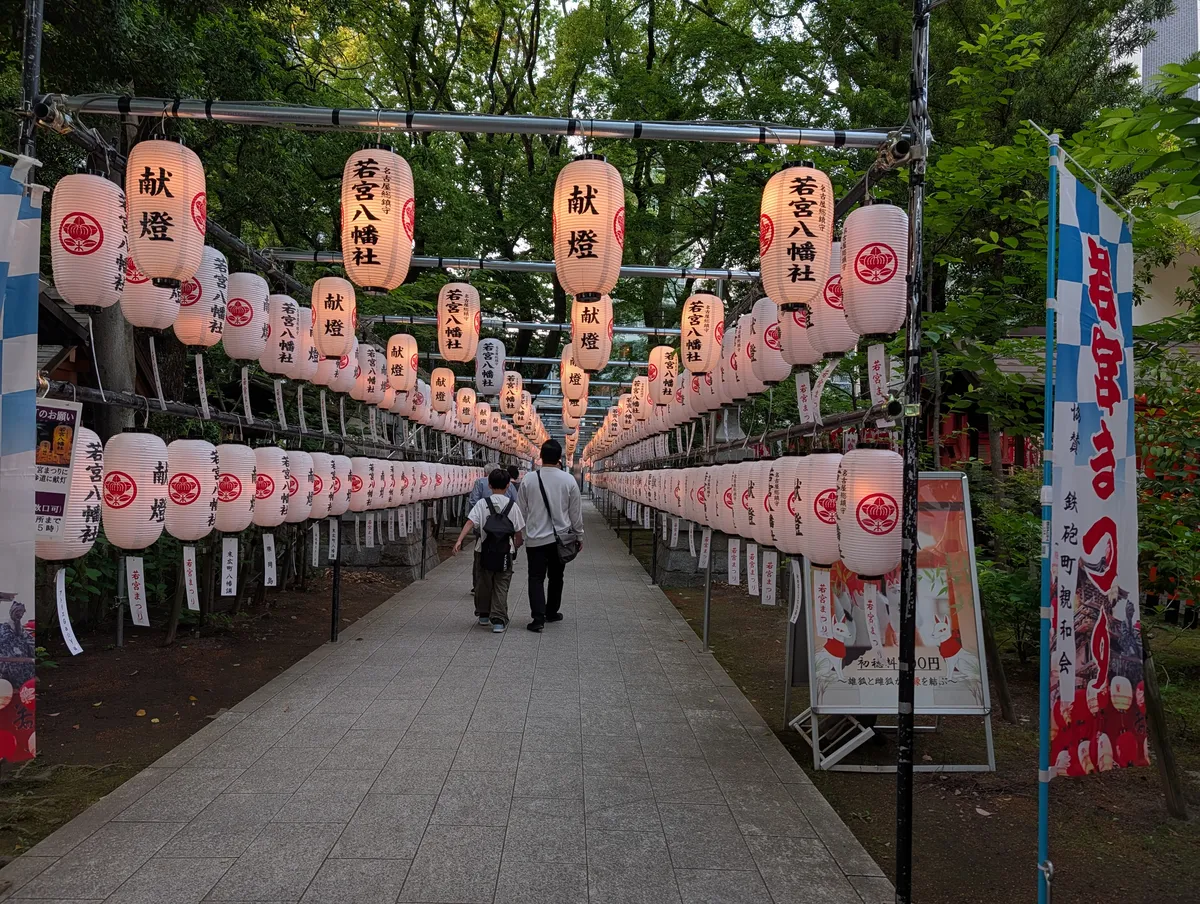
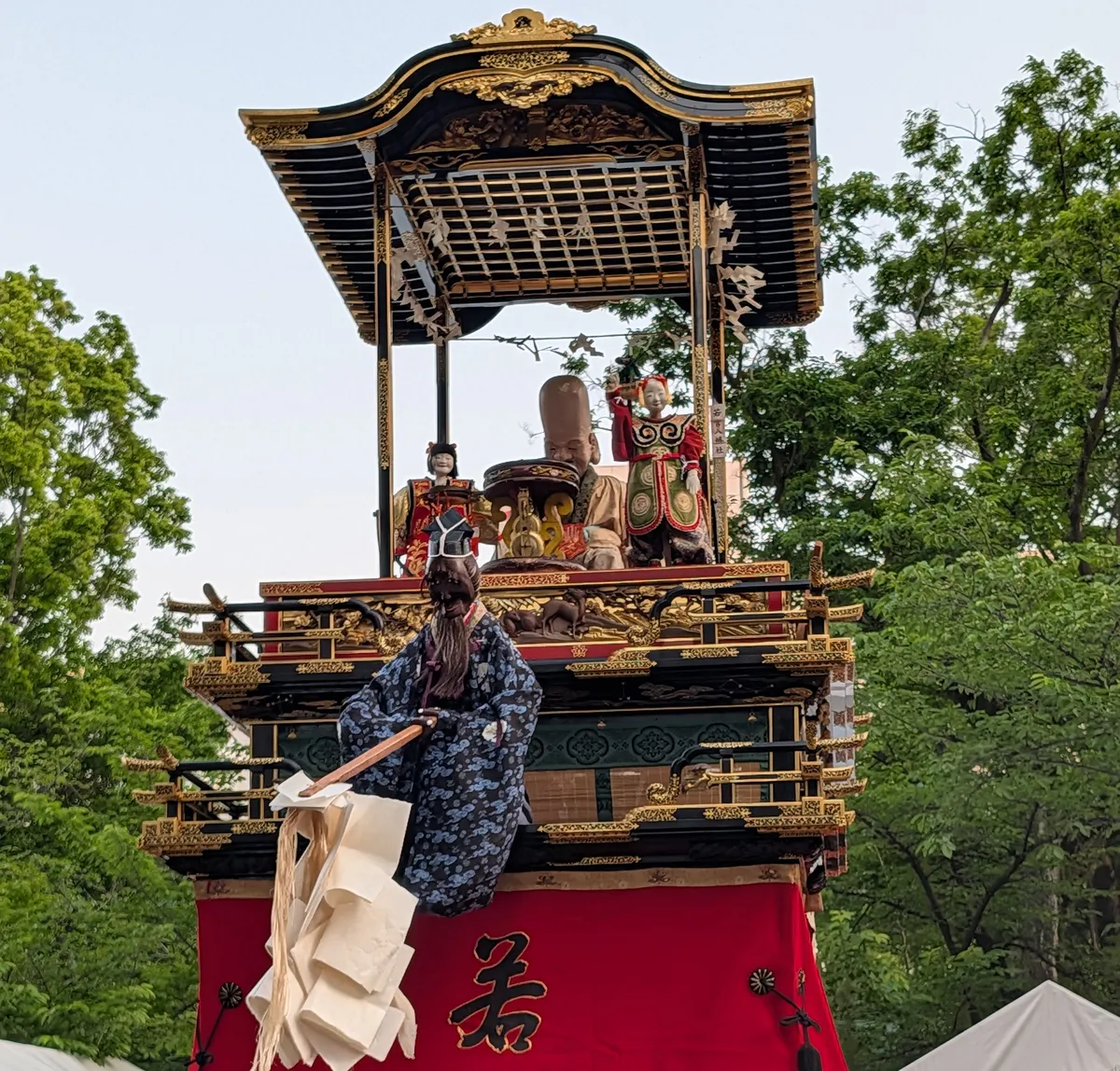
We also cover Gifu’s Nagara River cormorant fishing. If that is the plan, see Inuyama’s summer cormorant fishing.
Festival Food-Stall Guide: What to Eat, How to Pay, the Manners
The real joy of a Japanese festival is, above all, the yatai — the food stalls. Here’s the practical information you need to get the most out of the stalls at Nagoya’s summer festivals. Our festival food and yatai guide covers the wider Central Japan stall menu.
What to Eat: The Classic Stall Menu
| Stall dish | What it is | Rough price |
|---|---|---|
| Yakisoba | Sauce-fried noodles. The festival standard-bearer. | ¥500-700 |
| Takoyaki | Round batter balls with octopus inside. Kansai-born, nationwide favorite. | ¥500-600 |
| Kakigori (shaved ice) | Shaved ice with syrup. Essential in Nagoya’s fierce heat. | ¥400-600 |
| Ringo-ame / anzu-ame | Fruit coated in a hard candy shell; a sweet treat. | ¥400-500 |
| Karaage / frankfurter | The reliable savory, one-handed staples. | ¥500-700 |
| Tebasaki (Nagoya specialty) | Sweet-savory or peppery chicken wings — pure Nagoya. | from ~¥500 |
Prices vary by stall and by year; treat these as rough guides.
At a Nagoya festival, be sure to hunt down the tebasaki (chicken wings). They’re Nagoya soul food, and you’ll spot them at festival stalls too. There’s a small knack to getting the meat off the bone, so if you’re not used to it, reading up on how to eat them beforehand makes the experience more fun. For Nagoya’s local cuisine overall, see our Nagoya Meshi Complete Guide.
“Festival-stall yakisoba tastes better because of the air around it, not the recipe itself. When I was a kid, at both the Taiko Festival and the Minato Festival, the thing I remember most is the taste of the yakisoba. It’s nothing fancy. But eaten under those paper lanterns, together with everyone, it beats any single plate from a famous restaurant.”
— Yuu, japanesefestival.net
How to Pay: Cash and Coins Are the Rule
Festival stalls are basically cash-only. Assume only a small minority accept credit cards or QR-code payment.
- Carry plenty of ¥1,000 notes and coins (stalls may be reluctant to break a ¥10,000 note).
- Convenience stores and bank ATMs near the venue tend to get long lines or run out of cash on the day — withdraw cash in advance.
- Figure on ¥400-700 per item. If you plan to graze several dishes, carrying ¥2,000-3,000 in cash per person is a comfortable buffer.
Stall Manners
- Queue properly. Popular stalls form lines.
- Bin your rubbish in the trash cans near the stalls, and help with sorting. A small plastic bag for carrying trash is handy.
- Be considerate when eating as you walk. Stopping in a crowded lane blocks the flow, so step to the side to eat.
- Keep tarps for saving spots to a minimum. At popular fireworks and bon-odori spots, share the space.
Practical Tips: Beating the Heat, Getting Around, What to Wear
Nagoya’s summer is known for some of the most oppressive heat and humidity in Japan. Here’s the practical know-how — from a local — for enjoying the festivals safely.
Beating the Heat: Don’t Underestimate a Nagoya Summer
In Nagoya, daytime highs above 35°C (95°F) are nothing unusual. Festivals tend to combine outdoors, long hours, and dense crowds — a triple threat — so heatstroke precautions are essential.
- Hydrate and replenish salt often: keep bottled water or a sports drink on hand. Salt tablets help, too.
- Don’t push through the midday peak (11 AM-3 PM): take indoor breaks.
- Evening is the main event: bon odori and fireworks both peak at night. It’s cooler once the sun drops, and that’s when the festival really comes alive.
- Cooling gear: a handheld fan, cooling sheets, a parasol (yes, men use parasols in Japan now, and it’s completely normal).
“A local’s way of getting through summer is, honestly, to not push too hard. On the hottest days I eat cold noodles — somen, zaru soba — slurp something cold at a neighborhood udon shop, and otherwise stay indoors as much as I can. Rather than traveling all the way out to some mountain resort, it’s more comfortable to take frequent breaks in nearby cool spots: a hotel lobby, a cafe. Festivals are the same — don’t overdo it in the daytime, and save your real energy for the cooler evening.”
— Yuu, japanesefestival.net
Getting Around: The Subway Wins, Skip the Car
The festival venues — Sakae, Osu, Hisaya-odori Park — are all in central Nagoya, and the subway is by far the most convenient way to reach them.
- Sakae / Hisaya-odori Park: right at “Sakae” Station on the subway Higashiyama and Meijo lines, or “Hisaya-odori” Station on the Meijo line.
- Osu: 2-minute walk from “Kamimaezu” Station, or 3-minute walk from “Osu Kannon” Station.
- On festival days the surrounding roads face traffic restrictions and heavy congestion, so avoid cars and taxis and use public transport.
- The last trains home get crowded — give yourself plenty of time.
For everything about getting around the city (subway, Meitetsu, city buses, IC cards), see our Getting Around Nagoya — Complete Transport Guide.
Local tip from Yuu
Central Nagoya is a subway town, start to finish. Sakae and Osu are just 1-2 subway stops apart — 15-20 minutes even on foot. If you’re festival-hopping, a subway one-day pass (such as the Donichi Eco Kippu weekend/holiday ticket) is both convenient and good value. Book a room in the Sakae, Fushimi, or Osu areas and you’ll be within walking distance of the venues, which makes moving around far easier (see our Nagoya Hotel Guide by Area).
What to Wear: If You’re Going in Yukata
Joining a festival in a yukata (summer cotton kimono) is a treat both for the photos and for the mood. There are shops around Nagoya Station and Sakae that rent yukata and help you dress.
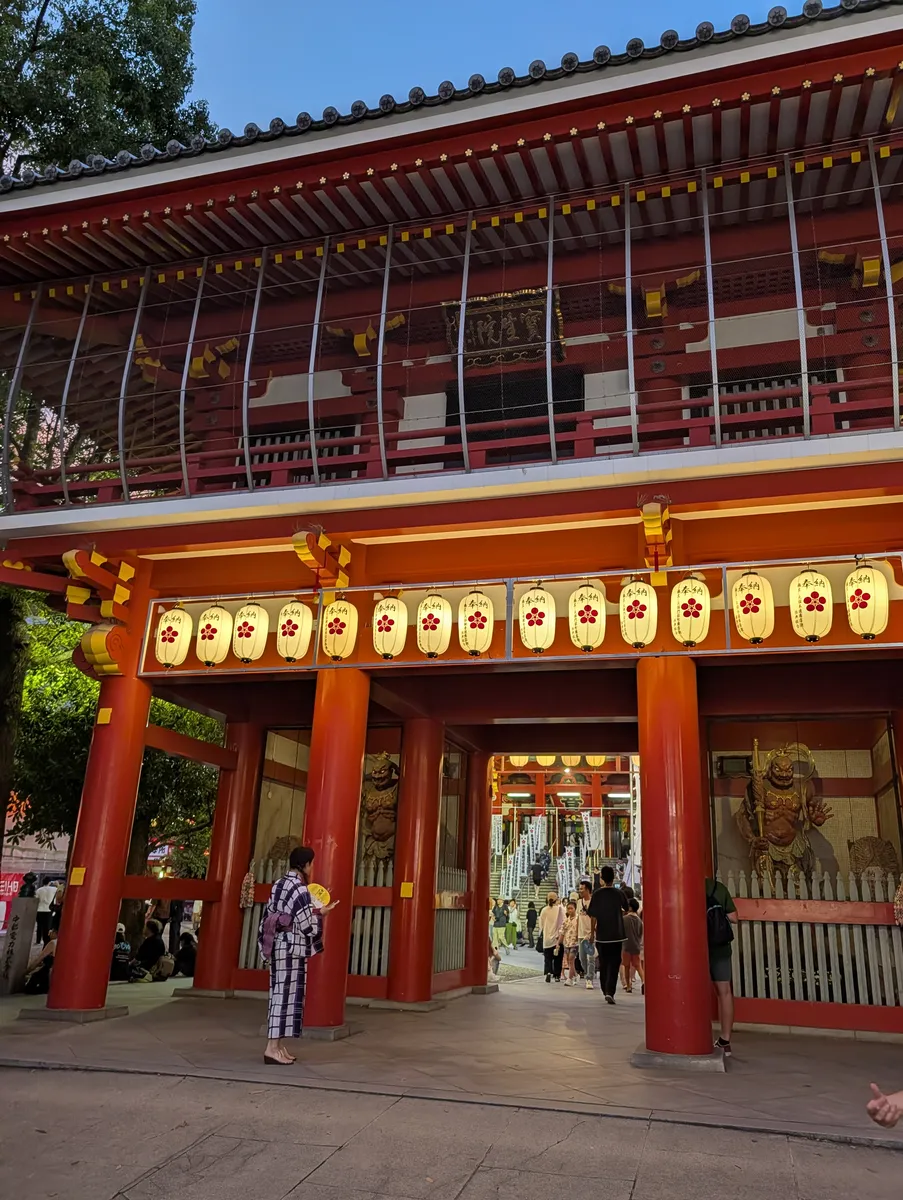
- Prioritize walkable footwear: unfamiliar geta clogs cause blisters. If you’ll be walking a long time, prep for thong-strap chafing.
- Manage sweat: wear a sweat-wicking inner layer under the yukata. A towel and a fan are must-haves.
- Regular clothes are completely fine too: there’s no need to force the yukata. Comfortable, movement-friendly clothing you don’t mind sweating in is best of all.
For the detail, see the best time of year to visit Nagoya. You can read more about what to do if the weather turns. You can read more about hotels near Nagoya Station. Related reading: tours and tickets you can pre-book.
Frequently Asked Questions
What are the main summer festivals in Nagoya in 2026?
The 2026 season’s three headliners have all finished: the World Cosplay Summit 2026 (July 31-August 2), the Osu Summer Festival (August 1-2), and the Nippon Domannaka Matsuri, or “Domatsuri” (August 28-30). All of them play out in central Nagoya — Sakae, Osu, and Hisaya-odori Park.
Can I enjoy the World Cosplay Summit for free?
Yes — watching the street parades and the cosplayers you meet walking around Sakae and Osu is basically free. Some large stages, such as the World Cosplay Championship, may be ticketed, so check ticket details on the official site. Note that 2026 is the final summer edition; from 2027 the event moves to autumn (November).
Will there be fireworks at the Nagoya Minato Festival in 2026?
No — the 2026 fireworks display was cancelled, with safety prioritized amid preparations for the September 2026 Asian Games. The float procession and group dancing were held on July 20. A normal year sees about 3,000 fireworks, so hope for their return and aim for next year’s Marine Day (2027).
Can I enjoy the Osu Summer Festival and the Cosplay Summit at the same time?
Yes. The weekend of August 1-2 is when both overlap. Because the World Cosplay Summit includes the Osu arcade among its venues, Osu on those two days becomes its liveliest of the year, with bon odori and cosplay side by side. It’s a perfect chance to experience both in one visit.
Can I use a credit card at the food stalls?
Cash only, basically. Very few stalls take cards or QR payments. Carry plenty of ¥1,000 notes and coins, and keep around ¥2,000-3,000 in cash per person on hand. ATMs near the venue get crowded, so withdraw cash beforehand.
What should I watch out for regarding the summer heat?
Nagoya summers see many days above 35°C, so heatstroke is a real risk. Take water and salt often, and rest indoors during the midday peak (11 AM-3 PM). Since bon odori and fireworks both center on the night, the local approach is to treat the cooler evening as the main event.
How do I get to the festival venues? Can I drive?
The venues are central — Sakae, Osu, Hisaya-odori Park — and the subway is by far the easiest. On festival days the surrounding roads face traffic restrictions and congestion, so avoid cars and taxis. Sakae and Osu are just 1-2 subway stops apart, so a subway one-day pass is ideal for festival-hopping.
Summary
Nagoya’s summer is one of Japan’s finest festival seasons, with big events of very different characters clustered in the city center. Here’s a recap of the 2026 highlights.
- World Cosplay Summit 2026 (Jul 31-Aug 2): a festival drawing 40 countries and regions. This is the last summer edition — from 2027 it moves to autumn.
- Osu Summer Festival (Aug 1-2): bon odori, cosplay parade, and tezutsu fireworks. The weekend it overlaps with the Cosplay Summit is the one to target.
- Nippon Domannaka Matsuri (Aug 28-30): around 200 teams dancing across Hisaya-odori Park and 16 venues — midsummer Nagoya’s biggest festival.
- Nagoya Minato Festival: fireworks cancelled in 2026 (Asian Games impact). One to look forward to next year.
- Staying into September? Domatsuri finishes on August 30 and the Asian Games begin ticketed competition on September 10 — and the autumn festival season starts right alongside them. Our autumn festivals guide has the verified September-to-November dates.
- Shared tips: cash is a must at the stalls, heat precautions are essential, travel by subway, and the real action starts in the evening.
Nagoya may get overlooked as a destination, but when it comes to summer festivals it has an intensity to rival Tokyo and Osaka — and because the venues sit together in the center, it’s genuinely easy for travelers to festival-hop. As a local who’s been going to Nagoya’s summer festivals since childhood, I’d love for you to come experience this energy for yourself.
If it’s your first time in Nagoya, plan around our Nagoya 3-Day Itinerary and Things to Do in Nagoya — Complete Sightseeing Guide.
Related Guides
- Central Japan Festival Calendar — Complete Year-Round Guide — every festival across the region through the year; for seasons beyond summer, start here.
- Osu Shopping Street Complete Guide — spend a full day in Osu, the stage for the summer festivals.
- Atsuta Jingu Complete Guide — home of the June Atsuta Matsuri and one of Nagoya’s most sacred sites.
- Nagoya Meshi Complete Guide — tebasaki, miso katsu, and other local specialties you’ll also find at the stalls.
- Getting Around Nagoya — Complete Transport Guide — the subway, Meitetsu, city buses, and IC cards.
- Nagoya Hotel Guide by Area — choosing a base in Sakae or Osu, close to the festival grounds.
About the Author
Yuu was born in Nakagawa Ward, Nagoya, and has lived in the city for 35 years. He now lives in the Osu area, where he enjoys the festivals that fill the neighborhood almost every month. A thoroughbred of the “Nagoya summer,” he went to the Taiko Matsuri in Nakamura Ward with his father as a child and rode his bike out to the Nagoya Minato Festival with friends as a junior-high student. He has also been out to the World Cosplay Summit in person, experiencing firsthand the appeal of a festival enjoyed across borders. When showing friends from overseas or out of town around, he prizes the local, on-the-ground experiences that don’t appear in standard guidebooks.