At a Japanese festival, yatai means a food stall: takoyaki, yakisoba, kakigori. Confusingly, the same word means a parade float at Takayama. This guide covers the classics, the Central Japan specialities like gohei-mochi and oni-manju, and why every stall row in the country looks so much alike: the answer involves the fire department and the public health office.
Written by Yuu — a Nagoya native of 35 years. Published August 16, 2026.
This article may contain affiliate links. See our affiliate disclosure for details.
All festival details verified from official sources on August 16, 2026.
Most guides to Japanese festival food list snacks with a price beside each one. This one does not: no organizer and no city government in this region publishes what the stalls charge. So instead of inventing a range, I have spent the space on the paperwork that quietly decides what a stall may cook.
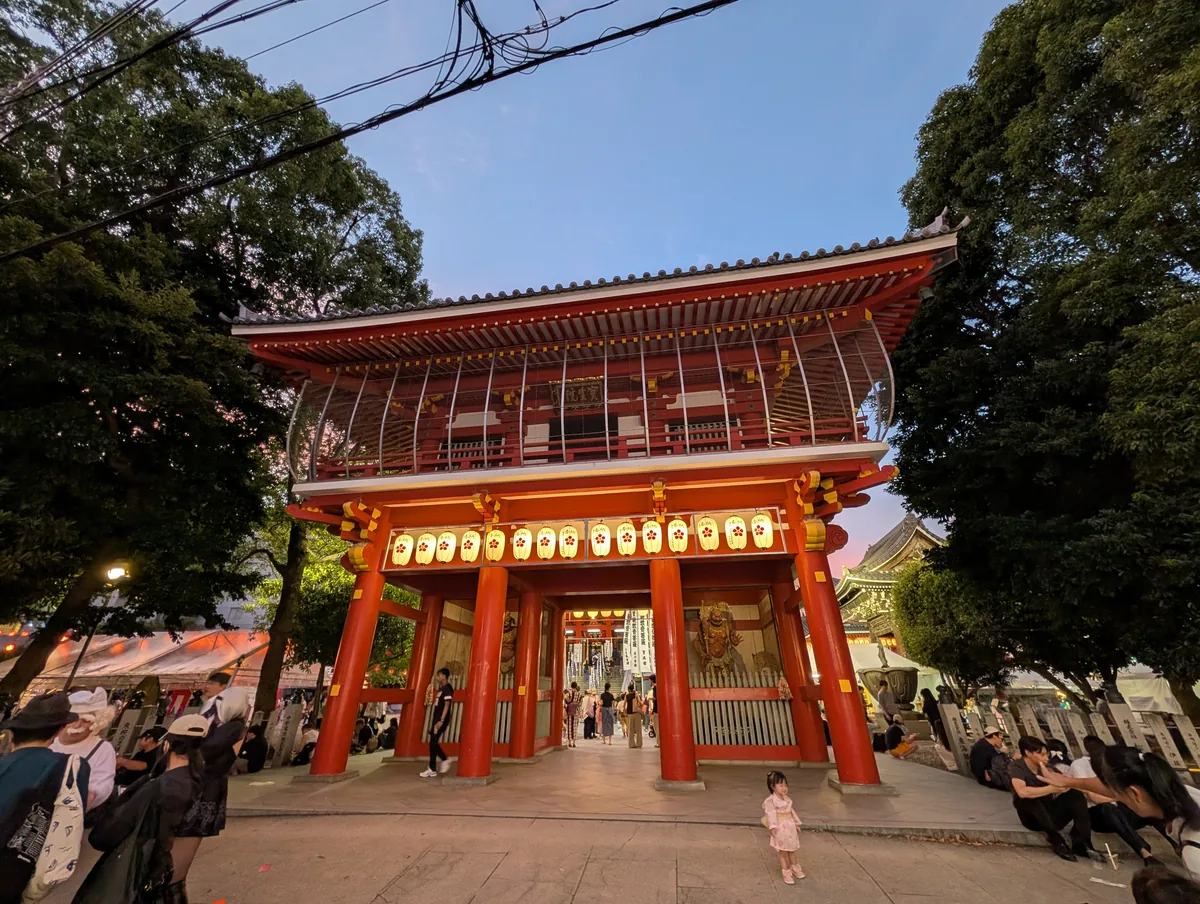
What Is Yatai Food?
Yatai (屋台) at a festival means an open-air food stall: a temporary counter with a griddle or a fryer, selling one or two things, cooked in front of you and eaten standing up. You will also meet roten and yomise for the same idea. Nothing is plated. Everything is built for one hand.
Before going further, a warning about the word itself. In this article yatai means a festival food stall. Confusingly, at float festivals such as the Takayama Festival the same word refers to a wooden parade float — a multi-storey wheeled shrine, generations old, carrying mechanical karakuri puppets. If you read that Takayama has “23 yatai,” nobody is talking about food. Central Japan is the heartland of both meanings, which is why visitors here get caught by it more than anywhere else. When in doubt: if it is on wheels and being pulled by a crowd of men in matching happi coats, it is not selling takoyaki.
Three Japanese words are worth carrying, because the official pages use them and the English pages often do not:
| Japanese | Reading | What it means on the ground |
|---|---|---|
| 屋台 | yatai | A food stall — or, at a float festival, a parade float. Context decides. |
| 露店 | roten | Open-air stall. The formal word, and the one that appears in city and fire-department documents. |
| 縁日 | ennichi | A temple or shrine fair day. The occasion rather than the stall, but where the densest stall rows are. |
The cultural point underneath all this: the stall is not a sideshow to the festival, it is part of how the festival is experienced. Stall food is not restaurant food moved outdoors; it evolved separately, under constraints, and some of what Japan now treats as national cuisine began at exactly this kind of counter.
What Are the Classic Yatai Foods?
The core set repeats at nearly every festival in Japan: takoyaki, yakisoba, kakigori, ringo-ame, baby castella and wata-ame. Two have documented origins in the national regional-cuisine database. The rest carry folk histories that no official source will confirm, and this guide does not pretend otherwise.
Takoyaki — the one that really did start at a stall
According to the Ministry of Agriculture, Forestry and Fisheries’ regional-cuisine entry for takoyaki, the dish is said to descend from chobo-yaki, a snack sold at sweet shops and ennichi stalls from the late Meiji era into the Taisho era. When radio broadcasting began in Japan in the late Taisho years, a stall food named after that brand-new technology — radio-yaki — appeared. In the early Showa period, stalls in Osaka began selling a version using octopus as the filling, and called it takoyaki.
The same source describes how today’s form settled: at first the balls were eaten plain, and only after the war, once thick Japanese sauce existed, did sauce, aonori seaweed and shaved dried bonito — served in a small boat-shaped tray with a toothpick — become standard. That tray is not a flourish; it is the physical answer to eating a spherical, molten-hot food while standing.
This fact reframes the whole category. A dish now sold in supermarkets nationwide is recorded by a government ministry as having been invented at a fairground stall. The stall row is not a lesser version of Japanese food culture; it is where some of it was made.
Kakigori — older than the festival that sells it
Shaved ice has a long documented history here, but be careful how it gets told. The Ministry’s entry on kakigori quotes the Heian-period essayist Sei Shonagon, whose Pillow Book lists shaved ice with amazura syrup in a new metal bowl among elegant things — evidence that Heian aristocrats cooled themselves with ice in summer. The same source records that Himuro Shrine in Nara traces its founding to the enshrinement of an ice deity in 710.
What that does not mean is that the kakigori at your local summer festival descends from the Heian court. It is the history of the food, not of the stall. The two get welded together constantly in English travel writing, and the welded version is not what the source says.
The ones with no verifiable origin story
Yakisoba, ringo-ame, baby castella and wata-ame have no entry in the national regional-cuisine database and no municipal source documenting their origins. Confident origin stories for all four exist online; this guide will not add to them. What can be said plainly is what they are.
| Dish | Japanese | What arrives in your hand |
|---|---|---|
| Takoyaki | たこ焼き | Molten-centred batter spheres with octopus, sauce, aonori and bonito flakes. Do not put a whole one in your mouth. |
| Yakisoba | 焼きそば | Wheat noodles griddled with cabbage, pork and a sweet-savoury sauce, in a tray with a wooden fork. |
| Kakigori | かき氷 | Shaved ice under coloured syrup. The syrups often taste much the same and differ in colour; choose by colour. |
| Ringo-ame | りんご飴 | A whole apple in a hard candy shell on a stick. Beautiful, structurally difficult. Baby versions exist. |
| Baby castella | ベビーカステラ | Bite-sized sponge cakes, bagged hot. The most child-proof thing on the row. |
| Wata-ame | 綿菓子 | Cotton candy, usually in an outsized character-printed bag that becomes the souvenir. |
| Yaki-tomorokoshi | 焼きとうもろこし | Whole corn grilled and brushed with soy sauce. The smell reaches you before the stall does. |
One correction to a common assumption: ringo-ame is a poor first purchase. It is a raw apple encased in glass-hard sugar, it does not bite cleanly, and it cannot be put down once started. Buy it last, or buy the small ones.
What Local Specialties Should I Try in Central Japan?
Four dishes make this region different: gohei-mochi, oni-manju, miso kushikatsu and salt-grilled ayu. All four are documented in national or prefectural official sources, so their stories can be told without guesswork.
Gohei-mochi (五平餅)
The Ministry of Agriculture, Forestry and Fisheries describes gohei-mochi as pounded rice wrapped around a skewer, glazed and grilled. Its range maps onto the mountains of this region: from the Kiso and Ina districts of Nagano, across eastern Tono in Gifu, into the Mikawa districts of Aichi. Note the translation trap — this is not a rice cake in the mochi sense, but cooked rice, crushed rather than pounded smooth, pressed onto a flat wooden skewer.
The origin is said to date to the mid-Edo period, when woodcutters in the Kiso area pressed rice onto offcuts of timber, grilled them over their fire and ate them with miso. On the name, the Ministry is openly undecided. The Gifu entry says it is generally held to come from the gohei, the folded paper wand offered to the gods, whose shape the food resembles — then adds that another account traces it to a man named Gohei, from Mino, who served it to soldiers during the mid-16th-century Kawanakajima campaigns. The Aichi entry lists three explanations instead. When a government ministry declines to pick one, so should a travel guide.
The variety is not in dispute. The Aichi entry records that the flat, oval “straw sandal” shape is common but round forms exist too, and that the miso glaze differs shop by shop, with walnut, sesame, peanut, garlic or spring onion worked in. Gifu Prefecture’s official travel site adds in its gourmet listing that Tajimi’s glaze is often walnut-miso based, and that in Ena and Nakatsugawa gohei-mochi was once the greatest dish you could set before a guest. The Ministry also notes it was eaten on hare occasions such as festivals when rice was precious, and is today a popular snack for eating on the move — a festival-and-outing food, not a guaranteed fixture of every stall row. Away from a festival, the Korankei valley in Asuke is the reliable place.
Oni-manju (鬼まんじゅう)
A Nagoya household staple, and the one visitors most often walk past without recognising. The Ministry’s entry for oni-manju records that it was made during the food shortages of the war and post-war years from sweet potato and wheat flour, and spread as a substitute staple for rice. The name is said to come from the way the cubed sweet potato juts out of the surface, suggesting a demon’s horns or its iron club. Method: potato in one-centimetre cubes, folded into a batter of wheat flour and sugar, then steamed.
The Ministry notes it is made most often in autumn at the harvest but eaten year round, because Japanese confectioners essentially always have it. That last point matters: oni-manju is a shop-and-farm-stand food rather than a documented festival-stall regular, so seek it out at a wagashi shop rather than expecting it on the row. Our Nagoya meshi food guide covers where to find it.
Miso kushikatsu (味噌串カツ)
A stall-origin story from the region itself. Aichi Prefecture’s official tourism promotion site, run by the prefecture’s tourism division, tells the story of miso katsu like this: in the early post-war Showa years, at a stall, a customer dunked a kushikatsu skewer into a pot of dote-nabe — offal simmered in miso. It was good. Other customers demanded the same, and the dish took off. The page notes the miso glaze splits broadly into a thick, rich style and a thinner sweet style, varying enormously between shops.
Two cautions, because this story gets embellished: the prefecture’s account names no particular restaurant as the originator, so neither will I, and it gives the period only loosely, so I am not converting it into a year. What it does establish is genuinely local — in Nagoya, a signature regional dish is on record as having been born at a stall counter, by accident, because someone put one food into another food.
Ayu no shioyaki (鮎の塩焼き)
Salt-grilled sweetfish, threaded on a vertical skewer and stood around a charcoal bed. The Ministry’s entry for ayu no shioyaki records that Gifu, with the Kiso, Nagara and Ibi rivers among many clear streams, has an active ayu fishing season from around June to around October, and that in summer numerous kanko-yana — sightseeing weir traps — are set up where visitors can catch ayu by hand and eat ayu dishes including shioyaki. Fish taken in July and August, fat and full-grown, suit it best, though roe-carrying ayu from August onward are also said to be excellent.
What I will not tell you is that ayu is guaranteed at festival stalls, because no official source says so — only that the ayu season and the summer festival season fall in the same weeks in the same river valleys.
Building more into the trip?
Handy if you want tours or day trips booked around the festival dates.
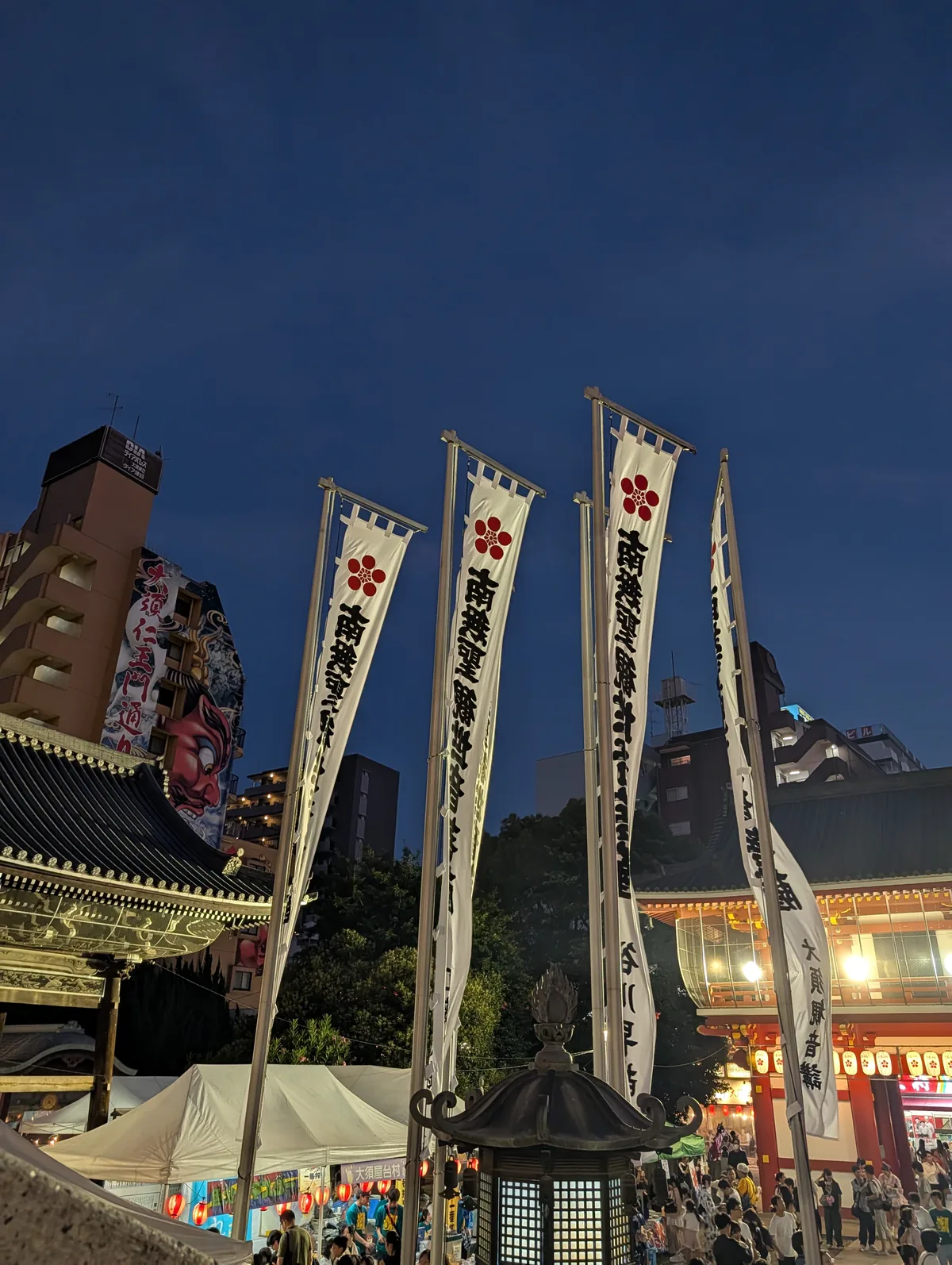
Why Do Yatai Menus Look the Same Everywhere?
Because two separate approval processes shape the menu before a single customer arrives: one at the fire department, one at the public health centre. The result is a menu built almost entirely from grilling, frying, steaming, boiling and simmering. Once you know this, the repetition stops looking like a lack of imagination.
Gate one: the fire department
Take Nagoya as the worked example. The City of Nagoya’s fire bureau publishes a notification form for opening an open-air stall, and the page sets out the rule plainly. Under Article 69 of the city’s Fire Prevention Ordinance, anyone opening a stall that uses designated fire-using appliances at an event where an unspecified number of people gather — the page lists festivals, ennichi fair days, fireworks displays and exhibitions — must notify the fire chief. Each stall must have at least one commercial-grade fire extinguisher. The page is explicit that household extinguishers, buckets of water and aerosol-type simple extinguishing devices are not accepted, and that the requirement applies whether the event is indoors or outdoors.
The definition of “designated fire-using appliances” catches essentially every cooking stall you will ever see: appliances using gaseous fuel such as LPG, liquid fuel such as kerosene or petrol, solid fuel such as charcoal, and appliances using electricity as a heat source. If it cooks, it is in scope.
Note the limit of this fact. Article 69 is a Nagoya municipal ordinance, and other cities have their own numbering. Do not carry the article number to another prefecture — carry the principle, which is that stall food in Japan operates inside a fire-safety regime rather than outside one.
Gate two: the health centre
The second gate shapes the menu itself. Aichi Prefecture’s Konan Health Centre publishes guidance for anyone cooking or serving food at an event. Its starting position: preparing and serving food requires a food business licence as a general rule. Where an activity does not amount to a business a licence may not be needed, and a bazaar notification must be filed instead — and the centre asks organizers to consult it in advance either way.
For events run under that bazaar notification, the centre publishes a list of items considered comparatively safe to handle outdoors and asks operators to stay inside it. Two categories are singled out to avoid: items not heated immediately before serving — onigiri, sushi, sandwiches and chilled cucumber are the examples given — and rice dishes such as curry rice and donburi bowls. The safe list is organised by cooking method, and reading it is like reading a festival row from memory:
| Method | Examples from the health centre’s list | What you actually see |
|---|---|---|
| Grilled | Yakisoba, takoyaki, okonomiyaki, gohei-mochi, yakitori, skewers, frankfurters, buttered potato | The griddle stalls that anchor every row |
| Steamed or boiled | Anmaki, obanyaki, castella-yaki, taiyaki, mitarashi dango, baked sweet potato, grilled corn | The sweet end of the row |
| Deep-fried | American dogs, karaage, kushikatsu, french fries, churros | The queue you can smell from two streets away |
| Simmered | Oden, dote-ni, zenzai | Autumn and winter stalls |
| Other | Fruit candy, warabi-mochi, puffed rice, popcorn, cotton candy | The no-cooking-required stalls, often near the exits |
Two honest caveats. First, this list is guidance for events run under a bazaar notification, not a legal menu imposed on every licensed stall — treat it as part of the explanation for why sushi and curry are rare, not as the whole law. Second, absence from the list is not a ban: kakigori does not appear on it and is obviously everywhere in summer.
Put the fire rule and the hygiene guidance side by side and the entire aesthetic of the Japanese festival stall falls out of them. Food is cooked to order, at high heat, moments before you eat it — both a food-safety strategy and, not coincidentally, the reason it tastes the way it does. Nothing needs refrigeration, and nothing needs a plate or cutlery, because everything arrives on a stick, in a tray or in a bag. The sameness is not laziness; it is the shape that survives the constraints. That is why a stall row looks alike in Nagoya, Gifu and Mie — and why the regional dishes that do break through, like gohei-mochi, are exactly the ones that already came on a skewer.
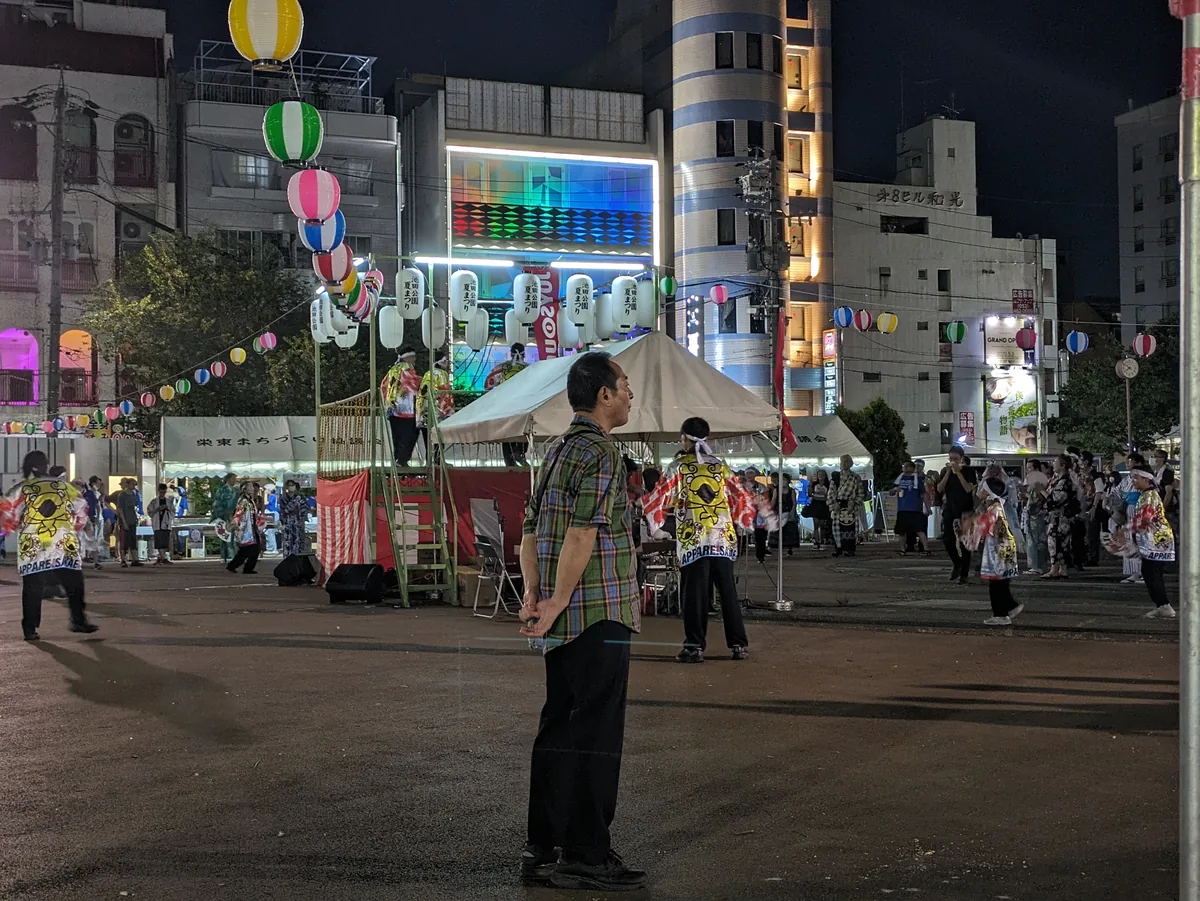
Which Festivals Are Best for Food?
Gujo Odori and the Atsuta Festival are the two safest bets in this region, because both publish stall details officially. The table below includes only festivals where the organizer, shrine, city or prefectural tourism body states something concrete about stalls. For most famous festivals in Central Japan, no official source does, and those are left out on purpose.
| Festival | What the official source states about stalls |
|---|---|
| Gujo Odori (Gifu) | For the all-night dancing nights, the Gujo tourism federation lists two clusters: a yataimura stall village in front of the former town hall from around 18:30, and a night market along Imamachi to Sakaemachi where 11 to 18 kitchen trucks and similar open from around 19:30 to 20:00. Visitors are asked to take their rubbish home. |
| Atsuta Festival (Nagoya) | Atsuta Jingu’s own Q&A states the festival falls on June 5 every year and that the stalls run on June 4 and 5 — that is, from the day before. |
| Furukawa Festival (Hida) | The 2026 official pamphlet scheduled a local food market beside Oyokocho Park, 12:00–21:00 on April 19 and 12:00–18:00 on April 20, with Hida specialities including mitarashi dango, gohei-mochi rich with perilla seed, and Chinese-style noodles. |
| Setomono Matsuri (Seto) | Seto’s tourism association runs a named stall programme, the roten ennichi, listed for 2026 as 9:00–19:00 on September 12 and 9:00–17:30 on September 13, around the Parti Seto station plaza, Miyamae, the Fukagawa Shrine approach and the Miyagawa mall. |
| Kuwana Ishidori Festival (Mie) | Mie Prefecture’s official tourism body confirmed stalls for 2026, centred on Hakkendori on both the eve and the main day. |
| Kariya Mando Festival (Aichi) | Aichi’s official tourism site notes that many stalls, indispensable to a summer festival, add to the atmosphere. No count, location or hours are published. |
| Mino Festival (Gifu) | The 2026 official route map marks stalls in two places: near Ogura Park, and around Hirooka-cho and Komeya-cho. |
| Tsuruma Park blossom season (Nagoya) | Not a festival in the shrine sense, but for 2026 the park announced kitchen trucks and stalls running 10:00–21:00 across the blossom period, with illumination 18:00–22:00. |
Gujo Odori is where I would send a first-time visitor. It is the only festival here where an official source publishes an actual stall count; everywhere else, “lots of stalls” is as precise as the record gets. The 11-to-18 figure comes from the 2026 guidance and is likely to move year to year, so check the current announcement before building a trip around it.
Big fireworks displays often consolidate the food. At the Okazaki fireworks the city designates specific food vendor areas — the Libra east car parks, the civic hall car park and Mutsuna Park — rather than letting stalls line the riverbank freely, so find that area on the official map before you arrive.
The festivals with no stalls at all
Do not assume every Japanese festival has food. Mie Prefecture’s official tourism body states flatly that there are no stalls at the whale-boat rite of Toride Shrine in Tomida, and goes on to suggest where you might eat instead. That is a prefecture warning its own visitors, and it is the most useful sentence in this section.
The same caution applies to float festivals. The Hida-Takayama tourism association’s official Q&A for the autumn Takayama Festival advises visitors about restaurant crowding and suggests eating early, eating late or heading out of the centre — and says nothing about stalls at all. Combine that with the vocabulary trap from the first section and the risk is obvious: a festival advertised as having magnificent yatai may have magnificent floats and nowhere to buy dinner. If food is the point of your trip, look for roten on the official page, not yatai. For which festivals fall when, see our Central Japan festival calendar and Nagoya summer festivals guide.
How Do I Actually Eat at a Festival?
Carry cash, carry your rubbish out, and eat standing near the stall you bought from rather than walking with food. Those three habits cover almost everything separating a comfortable evening from an awkward one, and none of them is posted on a sign.
Money and rubbish
I am not going to tell you what anything costs, because no organizer or city in this region publishes stall prices and I will not invent a range you might budget against. Read the sign at the counter, which every stall has. On payment, bring cash — advice rather than fact, because no official source states what stalls accept, and card or QR acceptance genuinely varies from counter to counter. Our Central Japan travel essentials guide covers cash logistics.
Rubbish surprises visitors most. Japanese streets have very few public bins, and festival routes are no exception. Gujo’s official all-night dancing guidance asks visitors outright to take their rubbish home; treat that as the regional default. In practice: buy from a stall, eat within sight of it, and drop the tray or skewer in the bin that stall keeps beside it. Walk away and you own that packaging until you find a bin, which you may not. A folded plastic bag in a pocket solves the problem.
Eating while walking, and timing
Tabe-aruki — eating while walking — is tolerated at festivals in a way it is not on ordinary streets, but tolerated is the operative word. In dense crowds it is genuinely difficult: you are holding a hot tray at elbow height among people in yukata and wooden geta. The local pattern is to eat in the clearing beside the stall, then move on empty-handed.
Two timing facts are worth planning around. The Atsuta Festival’s stalls run on June 4 as well as June 5, so the eve is a legitimate and less crowded option. And at Gujo Odori the stall village opens around 18:30 while the night market follows at around 19:30 to 20:00, so arriving at dusk means eating before the dancing peaks rather than queuing during it. Summer festivals here also run in real heat and humidity, often on closed roads with no shade: water first, food second.
Dietary restrictions
Be realistic here. Stalls are small operations cooking a few items on shared equipment, they rarely post ingredient information, and English is not guaranteed. Vegetarian, vegan and halal visitors will have an easier time eating before or after the festival than on the row; our guide to vegetarian, vegan and halal food in Nagoya covers the options. With a serious allergy, treat festival stalls as unverifiable. And if this is your first Japanese festival of any kind, our first-timer’s guide covers the wider etiquette.
Visitor Voices
We do not reprint other people’s social media posts here. What follows is how the organizers themselves describe the experience, quoted from their own official pages.
Atsuta Jingu, on its own June festival: local people have a custom of putting on yukata for the first time each year at this festival, and they carry a round fan and browse the stalls — a rite, the shrine says, full of the feeling of the season. That is a shrine describing stall-browsing as part of its festival, not a distraction from it.
Mie Prefecture’s tourism body, on the Tomida whale-boat rite: there are no stalls, and after following the boats you will have worked up an appetite, so here is where to eat instead. It is rare for an official page to tell you what its festival does not have.
Frequently Asked Questions
What does yatai mean at a Japanese festival?
At a festival, yatai usually means an open-air food stall selling cooked-to-order snacks. But the same word means a wooden parade float at float festivals such as the Takayama Festival, where a yatai is a multi-storey wheeled shrine rather than a place to buy takoyaki. Context decides which one is meant. The formal word for a food stall in official documents is roten.
What are the most common foods at a Japanese festival stall?
Takoyaki, yakisoba, kakigori shaved ice, candied apples, baby castella and cotton candy make up the core set at almost every festival. Grilled corn, karaage and various skewers are close behind. Almost everything is grilled, deep-fried, steamed or simmered, and almost everything is designed to be eaten with one hand.
What festival food is unique to Nagoya and Central Japan?
Four dishes stand out: gohei-mochi, which is crushed rice on a flat skewer with a miso or soy glaze; oni-manju, a steamed sweet-potato bun; miso kushikatsu, deep-fried skewers with a sweet miso sauce; and ayu no shioyaki, salt-grilled sweetfish that is a Gifu summer speciality. All four are documented in national or prefectural official sources.
Do all Japanese festivals have food stalls?
No. Mie Prefecture’s official tourism body states plainly that there are no stalls at the whale-boat rite of Toride Shrine in Tomida. Many float festivals publish nothing about stalls at all. If food matters to your visit, check the festival’s own official page before you travel rather than assuming.
Do I need cash for festival food stalls?
Bring cash to be safe. No organizer or city in this region publishes what stalls accept, and card or QR payment acceptance varies from one counter to the next, so cash in small denominations is the reliable option. Prices are not published either, and they differ by stall and by year, so read the sign at the counter.
Why is there almost no sushi or curry at festival stalls?
Public health guidance is part of the answer. Aichi Prefecture’s Konan Health Centre asks organizers running events under a bazaar notification to avoid items not heated immediately before serving, naming onigiri, sushi, sandwiches and chilled cucumber, and to avoid rice dishes such as curry rice and donburi bowls. The safe list it publishes instead is built from grilling, frying, steaming, boiling and simmering.
Which Central Japan festival is best for food stalls?
Gujo Odori in Gifu, because it is the only festival in this region where an official source publishes an actual stall count. For the all-night dancing nights, the tourism federation lists a stall village opening around 18:30 and a night market of 11 to 18 kitchen trucks and similar opening around 19:30 to 20:00. The Atsuta Festival in Nagoya is the strongest city option, with stalls on June 4 as well as June 5.
Related Guides
- Nagoya Meshi Food Guide — the local canon, in restaurants rather than stalls.
- Japanese Festivals: A First-Timer’s Guide — etiquette, crowds and timing.
- Central Japan Festival Calendar — the year-round overview.
- Nagoya Summer Festivals Guide — the densest stall season of the year.
- Gujo Odori Guide — the region’s best-documented stall row.
- Atsuta Festival Guide — the June 5 shrine festival, with stalls from the eve.
- Takayama Festival Guide — where yatai means a float, not a food stall.
- Osu Shopping Street Guide — street food with no festival on.
- Korankei Autumn Leaves Day Trip — where to eat gohei-mochi in Aichi.
- Things to Do in Nagoya — the rest of the city, between festivals.