A Japanese matsuri (祭り) is a shrine rite that grew a crowd, not a show staged for visitors. This guide explains what actually happens, which festivals you may join and which you may only watch, the rules organisers publish in writing, and how to choose among 25 festivals in Central Japan.
Almost everything written in English about Japanese festival etiquette is somebody’s impression. This guide works the other way round: where a rule appears below, a named organiser has published it in writing. Where the official record is silent — as it is on whether food stalls take cards — this guide says so rather than guessing. All sources verified on 16 August 2026.
Written by Yuu — a Nagoya native of 35 years. Published August 16, 2026.
This article may contain affiliate links. See our affiliate disclosure for details.
All festival details verified from official sources on August 16, 2026.
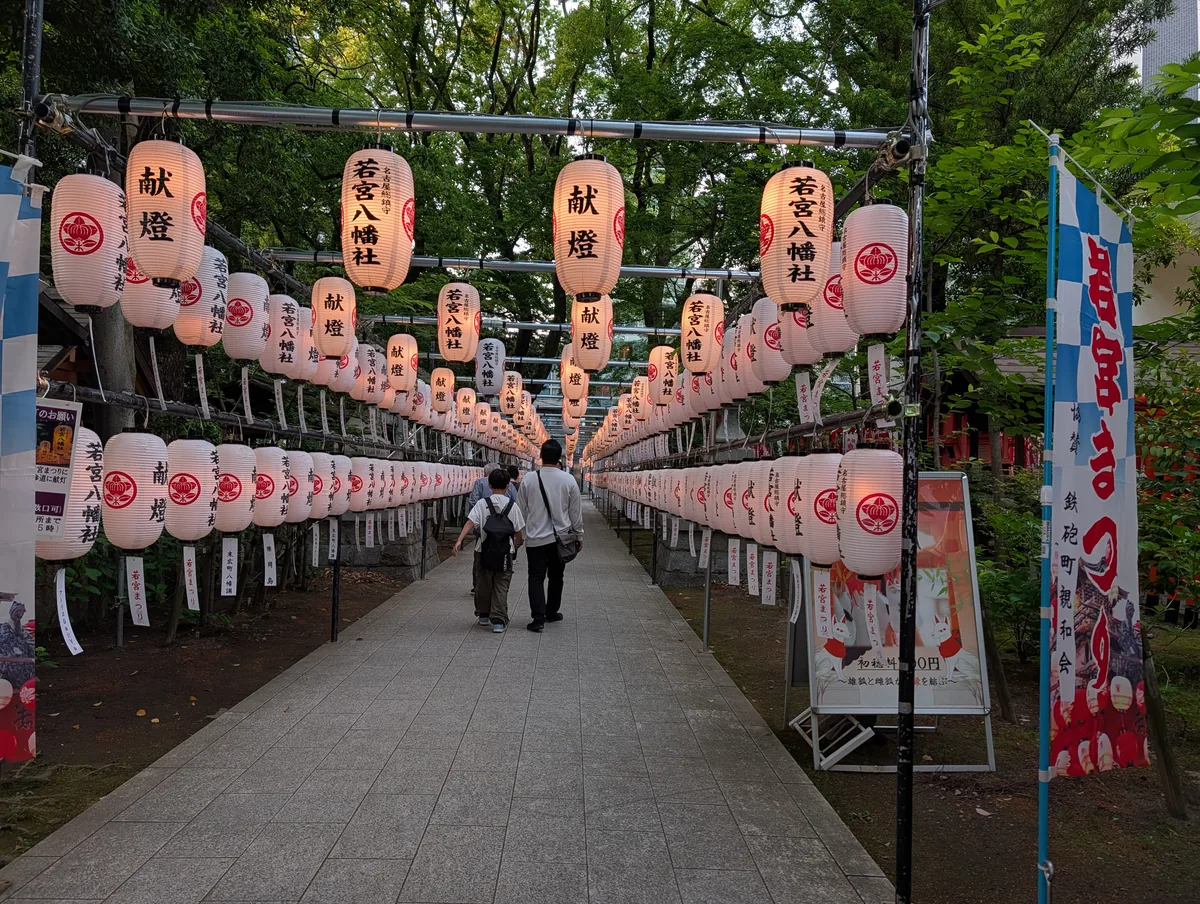
What Is a Japanese Matsuri?
A matsuri (祭り) is a rite offered to a deity, usually by a particular shrine on a particular day, with everything else — the floats, the dancing, the food, the crowd — grown up around that rite over centuries. It is worship first and spectacle second.
That order matters. The core of most festivals here is a shinji (神事), a Shinto rite performed by priests and by the shrine’s ujiko (氏子), the parish households the shrine serves. The Atsuta Matsuri on 5 June is the annual grand rite of Atsuta Jingu, attended by an imperial envoy; the lantern towers and evening fireworks are what the public sees, but they hang off a rite rather than the reverse. Standing at the edge of a Japanese festival means standing at the edge of somebody’s religious calendar and somebody else’s neighbourhood.
Which is why the English word “festival” quietly covers several different things. Several of the 25 events covered on this site are not shrine rites at all. The Hamamatsu Festival is a city festival with no shrine at its centre — kite battles by day, ornate night floats after dark, run by the city’s neighbourhoods. The Nagoya Matsuri is a civic celebration in a public park; the Osu Daido Machinin Matsuri is street performance in a shopping arcade. And two are not festivals at all in their organisers’ own words: the Mino Washi Akari Art Exhibition is officially a light-art event rather than a matsuri, and cormorant fishing on the Nagara River is a nightly working fishery you watch from a boat between 11 May and 15 October, not a one-off rite. Both are worth your evening. Neither belongs in a sentence beginning “Japanese festivals are…”.
The one word that will trip you up: yatai
Learn this one first. Yatai (屋台) means two entirely different things depending on where you are standing. At a general summer festival it is a food stall — grilled squid and shaved ice. At the float festivals of Gifu it is the official term for the float itself: Takayama‘s twenty-three yatai are elaborate wheeled shrines listed as Important Tangible Folk Cultural Properties, and the cultural-property name of the Furukawa festival is literally “the okoshi daiko and yatai rite”. Read “yatai” on a Takayama page, picture a takoyaki stand, and you have misread the event. Elsewhere the float is a dashi (山車), a yama (山), a hoko (鉾), a danjiri at Ueno or a saisha at Kuwana.
Two more terms are worth ten seconds each. Karakuri (からくり) are the mechanical marionettes performed on top of some floats — clockwork automata, not a puppet show. And many festivals run over two days with their own names for them: shigaku (試楽), the eve, and hongaku (本楽), the main day.
What UNESCO actually listed
You will see individual festivals advertised in English as “a UNESCO Intangible Cultural Heritage”. That is not how the listing works. In 2016 UNESCO inscribed a single collective entry, “Yama, Hoko, Yatai, float festivals in Japan”, and according to the Agency for Cultural Affairs that entry is made up of 33 float festivals, each already designated an Important Intangible Folk Cultural Property nationally. No single festival is a UNESCO listing on its own; each is one of the 33.
Cross-checking the Agency’s 33 against the 25 festivals covered here gives exactly eight matches: Takayama, Hida Furukawa, Owari Tsushima Tenno, Inuyama, Kamezaki Shiohi, the Toride Shrine whale-boat rite, Ueno Tenjin and Kuwana Ishidori. The other seventeen are not on that list, including some of the best-loved: Gujo Odori, Hamamatsu, Atsuta, Kariya Mando, Koromo and Mino carry other designations, or none. Worth and paperwork are not the same measurement.
What Happens at a Festival?
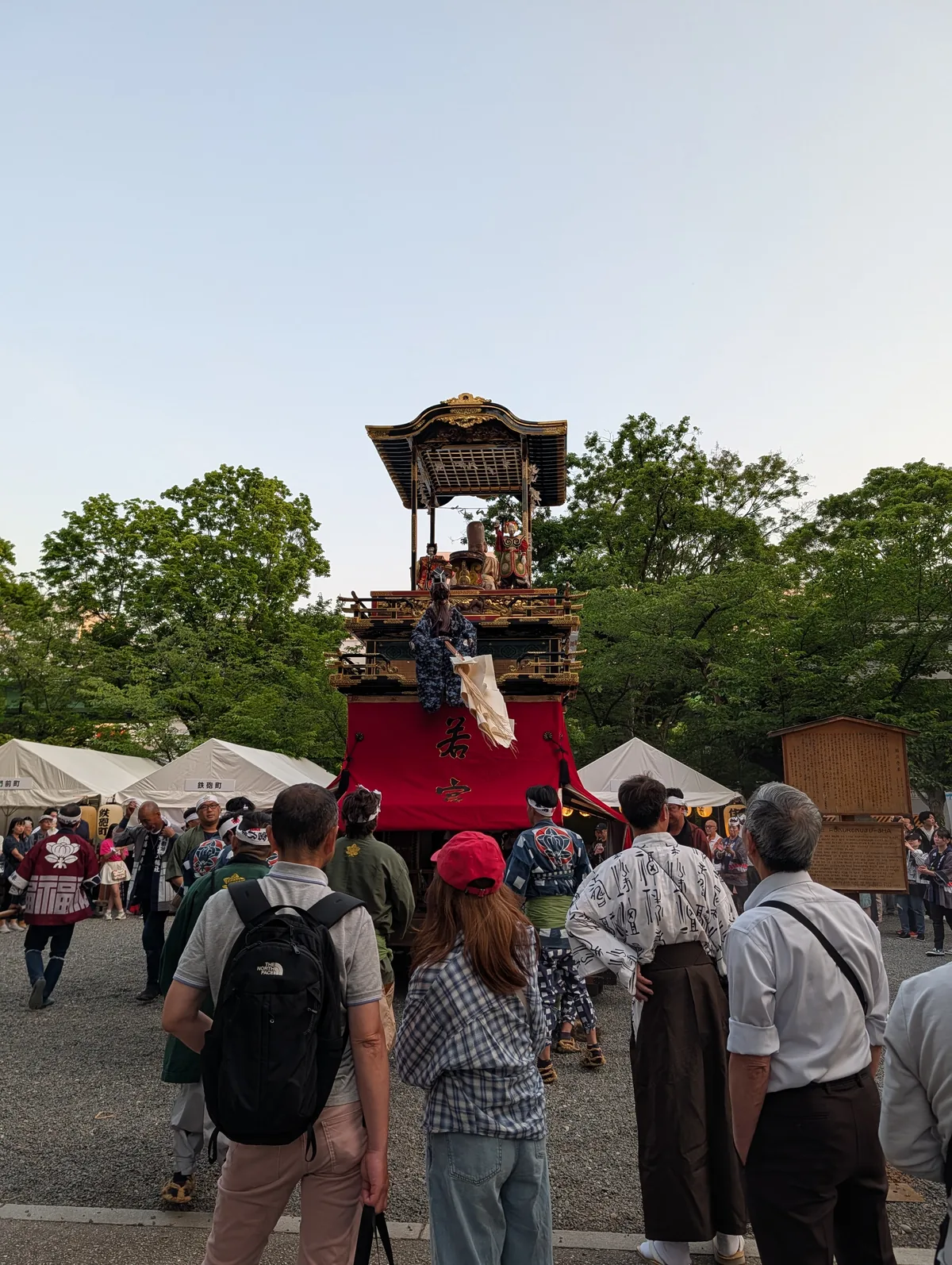
Five things, in various combinations: a rite performed by priests, something enormous moved through the streets by people, dancing, food and market stalls, and fireworks. Almost every festival in this region is a different recipe from those five ingredients.
The rite (shinji). Quiet, early, and usually the part visitors miss entirely. At Atsuta Jingu the annual grand rite is the reason the whole day exists. At the Konomiya Hadaka Matsuri the rite is the event: men in loincloths press toward the shin-otoko in the naoi shinji at Owari Okunitama Shrine, carrying on into the small hours with the night rite. None of it is choreographed for an audience.
Floats. The signature of Central Japan. Inuyama’s three-tiered karakuri floats climb from Haritsuna Shrine to the plaza below the castle keep; Kamezaki’s five are hauled onto the tidal flats at low water; Kuwana’s roughly forty saisha make a noise the organisers market as Japan’s loudest; Koromo’s eight bury the streets in paper confetti; the whale boats at Tomida are harpooned on dry land; Ueno sends demons and danjiri through a castle town. The two most famous are Takayama in April and October and Hida Furukawa on 19–20 April.
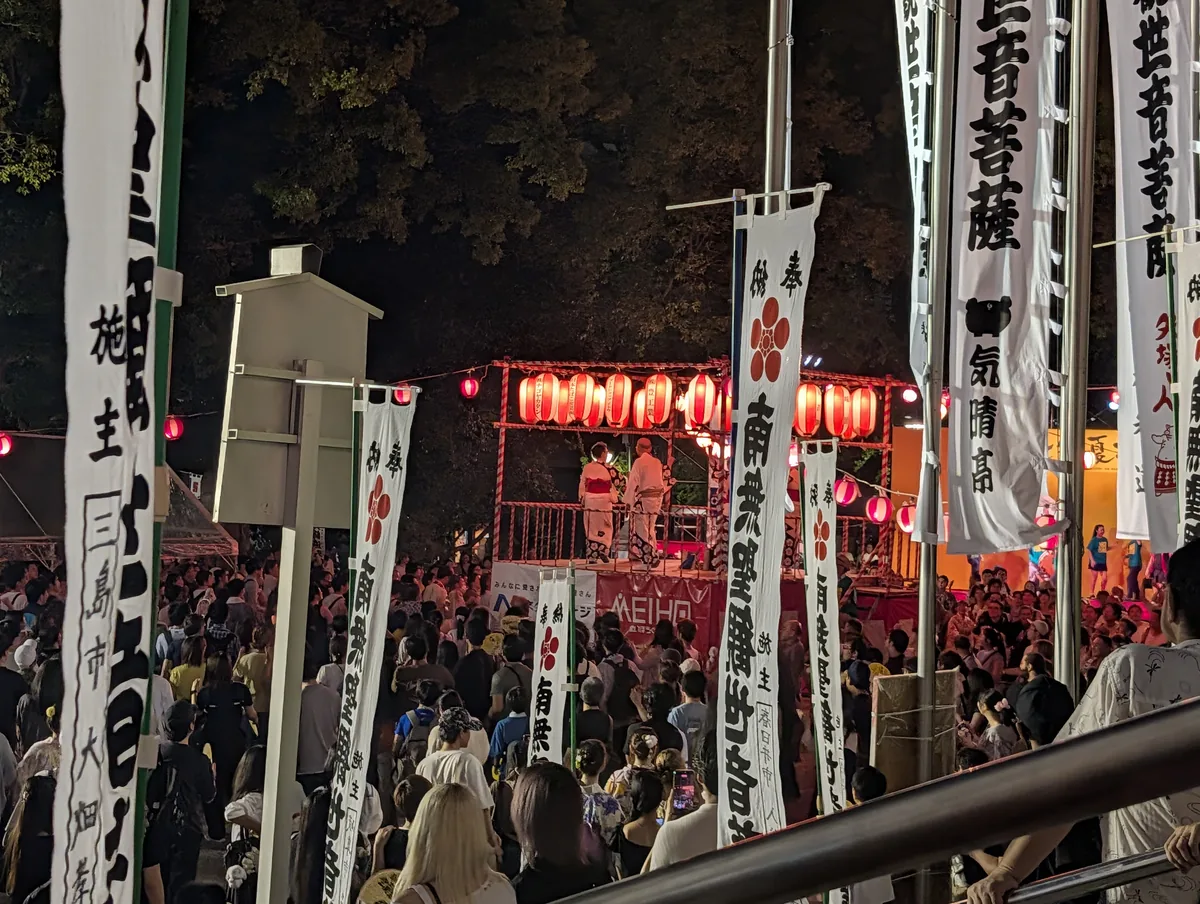
Dancing. One festival here is built entirely around it, and it is the one you can actually take part in — Gujo Odori, roughly thirty nights from mid-July to early September, the venue moving to a different street each night.
Things carried by people. The category that tends to astonish. At Kariya, a paper-and-bamboo figure roughly five metres tall and sixty kilograms is balanced and danced by one person. At Toyohama, papier-mache sea bream between ten and eighteen metres long, weighing about a tonne, are shouldered by around sixty young men.
Stalls and markets. This is where yatai means food: rows of stalls, cash boxes, plastic stools. Some festivals are the market — Setomono Matsuri in Seto is a vast pottery sale along both banks of the river, and the Osu festival fills a shopping arcade with street performers and an oiran procession.
Fireworks. The category where English-language assumptions most often fail. Okazaki, on the first Saturday of August, has no free viewing area at all — a paid-seat event, and in 2026 every seat sold out. The Gifu Nagaragawa Fireworks is ticketed too. The Nagoya Minato Matsuri on Marine Day usually ends in fireworks over the port, but in 2026 the display was cancelled. Check the individual page before building an evening around a firework you have only read about.
Can I Join In?
It depends entirely on the festival, and both answers exist in print. Gujo City states that Gujo Odori is a dance to join rather than watch, open to visitors with no costume or qualification required. The official Hida Furukawa pamphlet states flatly that tourists cannot take part in the okoshi daiko.
Put those two side by side and you have the honest answer: there is no general rule, and anyone who gives you one is inventing it.
Gujo Odori: yes, and they mean it
The City of Gujo puts it in explicit terms: not a dance to be watched but a dance to be joined, with visitors and residents in the same circle. No special costume, no qualification, no ticket, no fee. There is no dress code, though geta — wooden sandals — are what locals recommend, and on the street surface you will hear why within ten minutes. The season runs roughly thirty nights from mid-July to early September, and during the four Obon all-night sessions the circle keeps going until dawn. You are not being tolerated at the edge of somebody’s tradition; you are counted into it. It draws over 300,000 people across its thirty-night season, according to Gifu Prefecture’s official tourism site.
Hida Furukawa: no, and they say so in the pamphlet
The official festival pamphlet for the Hida Furukawa Festival carries a plain notice in its cautions: tourists cannot take part in the okoshi daiko (起し太鼓). The great drum carried through the night of 19 April, and the tsuke-daiko crews in white cloth who charge it, are for the ujiko of Keta Wakamiya Shrine and not for visitors. This is not gatekeeping: it is a physically dangerous rite performed by men who have done it since childhood.
Even here the picture is not absolute. In some years visitors have been able to walk with residents in the Maruko lantern procession, and whether that applies in a given year is a question for the Hida City Tourism Association on 0577-74-1192. “You cannot join the okoshi daiko” is true. “You cannot join anything at Furukawa” is not.
The rule to actually follow
Check the festival’s own official page before assuming either way, and if it does not say, assume you are a spectator. Watching well is its own skill: stand where the marshals put you, do not cross a procession, do not follow one down the street. Takayama asks visitors not to cut across or trail the procession, and to obey stewards and traffic marshals inside the festival zone. At Kuwana, if you are wondering who the officials even are, look for the white happi coats — the youth federation in white handles crowd guidance. Tsushima asks visitors to stay out of marked danger zones and to cooperate with police, festival staff and public-address announcements; Furukawa asks the same of police and the volunteer fire brigade. At a Japanese festival the crowd is managed by people who live there, and their instructions are not suggestions.
Festival Etiquette: What Are the Rules?
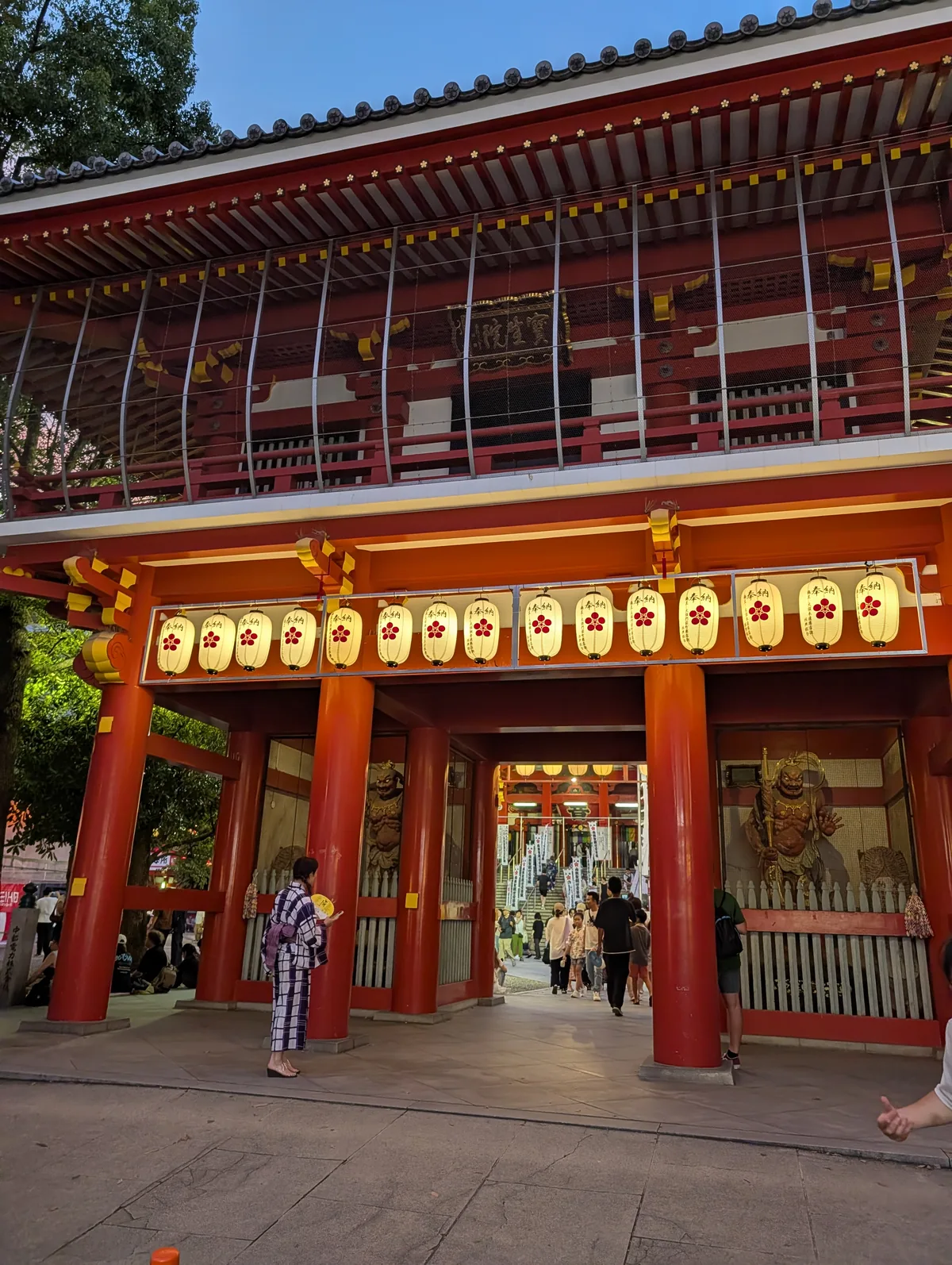
Most etiquette advice online is guesswork. The rules below are different: each is published in writing by a named organiser. Where a rule appears in several festivals’ documents independently, treat it as regional practice.
| Rule | What the organisers actually say | Who publishes it |
|---|---|---|
| Drones are banned | Flying or filming with unmanned aircraft is banned or asked against. Takayama goes furthest, warning in print that offenders have in the past been taken away by police | At least 10 of the 25 festivals covered here, including Takayama, Hamamatsu, Inuyama, Kariya, Konomiya, Nagaragawa Fireworks, Nagoya Matsuri, Nagoya Minato, Tsushima and Ueno Tenjin |
| Never touch a float | Takayama: never lay a hand on the floats, because the oils from human skin degrade them. Kuwana adds: do not touch the saisha, do not step over the tow ropes, do not go under the float canopy | Takayama, Kuwana |
| Take your rubbish home | Bring a bag and carry your rubbish out with you. Hida Furukawa is the exception, running two staffed collection points during the festival | Takayama, Gujo, Tsushima, Okazaki |
| No saving spots in advance | Okazaki bans sitting on roads and footways and bans advance spot-saving, removing sheets on sight; Nagaragawa strictly prohibits saving spots before the day inside its permitted areas; Nagoya Minato bans unattended spot-saving and taping off ground; Nagoya Matsuri asks visitors not to spread picnic sheets, use folding chairs or reserve ground with luggage | Okazaki, Nagaragawa Fireworks, Nagoya Minato, Nagoya Matsuri |
| Camera gear is restricted | Nagoya Matsuri asks visitors not to shoot with tripods, monopods or selfie sticks; Hida Furukawa bans using your phone camera while walking; Atsuta Jingu does not permit photographing other worshippers without permission anywhere in its grounds; Konomiya bans stepladders and step stools as dangerous; Nagaragawa provides a designated tripod area, one tripod per person | Nagoya Matsuri, Hida Furukawa, Atsuta Jingu, Konomiya, Nagaragawa Fireworks |
| No smoking in the street | Takayama bans street smoking to protect its wooden heritage buildings; at Hamamatsu smoking while walking and dropping butts are banned by a city by-law, not a festival rule; Okazaki’s shrine grandstand seating is entirely non-smoking; Atsuta Jingu does not permit smoking in its grounds outside designated places | Takayama, Hamamatsu, Okazaki, Atsuta Jingu |
| Come by train | No visitor parking is provided and public transport is requested. Nagoya Matsuri provides neither car nor bicycle parking; Okazaki has no dedicated car park; the Hamamatsu kite field has no private-car parking at all, directing visitors to shuttle buses and taxis; Nagoya Minato bans parking around the venue entirely | 10 of the 25 festivals, including Nagoya Matsuri, Okazaki, Hamamatsu, Nagoya Minato, Setomono, Kuwana, Kariya, Hida Furukawa, Ueno Tenjin and Konomiya |
| Do as the marshals say | Follow stewards, traffic marshals, police and the volunteer fire brigade; stay out of danger zones; do not cross or follow the procession | Takayama, Hida Furukawa, Tsushima, Kuwana |
One point of translation matters. Organisers distinguish carefully between kinshi (禁止), a ban; kataku okotowari, a strict prohibition; and go-enryo kudasai, a request to refrain. The table preserves that difference. Advance spot-saving is banned at Okazaki and merely discouraged at Nagoya Matsuri — same behaviour, different weight.
What about photography, really?
Photography itself is broadly fine. What organisers restrict is the apparatus and the behaviour around it: tripods, monopods, selfie sticks, stepladders, drones, phone cameras used while walking, and pointing a lens at other worshippers inside shrine grounds without asking. No organiser here publishes a blanket ban on photographing the rite itself, so do not repeat the claim that photography is forbidden during shinji — but read the room. A stepladder in a crowd is genuinely dangerous, which is why Konomiya bans one.
How crowded does it get?
Organisers are candid about it. The Nagoya Minato Matsuri warns in print of heavy congestion, tells visitors to allow extra time, and says entry to the pier area may be restricted for safety; it also notes it does not make public-address pages for lost companions, so agree a meeting point and keep hold of children’s hands. Hida Furukawa warns of pickpockets in the crush. Takayama tells visitors plainly that bicycles and kick scooters cannot move through the crowds and that they should walk. Setomono Matsuri has gone as far as asking people to watch its fireworks from outside the venue.
What happens if it rains?
No general rule here either, and both confident English-language versions are wrong. Takayama publishes that in bad weather its events are reduced or cancelled and never moved to another day, and that the decision is taken on the day so it cannot be announced in advance. Kamezaki does postpone: in 2026 its second day was pushed back to 5 May. The Atsuta fireworks are postponed for rain. The Nagaragawa Fireworks go ahead in light rain and move to the Saturday two weeks later in a storm, with no second postponement. Tsushima proceeds in light rain. Inuyama decides on the festival morning and announces by 8:00. Gujo, unusually, publishes its threshold — a Japan Meteorological Agency warning at level 3 or above, assessed around 9:30 on the day.
The habit that covers all of it: on the morning of the festival, open the organiser’s official site and social accounts before you get on the train.
How Much Money Should I Bring?
Bring cash, in small notes and coins. That is practical advice rather than a documented rule: no official source for any festival here publishes a payment policy for its food stalls, either way. Where cash-only genuinely is documented, it is car parks and shuttle buses.
This is the point where confident advice is easiest to find and hardest to verify. Two separate fact-checks of official sources — for Nagoya’s summer festivals and for Gujo Odori — found the same thing: organisers publish stall locations and opening times and say nothing about how you pay. So no honest guide can tell you Japanese festival stalls are cash only. What it can tell you is that most stalls here have no card or QR reader, that queues move on the assumption you have coins ready, and that small notes cost you nothing while their absence can cost you dinner.
Do not let anyone connect this to the national statistics, either. Japan’s cashless payment ratio reached 58.0 per cent in 2025, on payment value of 162.7 trillion yen, according to the Ministry of Economy, Trade and Industry. That figure is a share of household consumption expenditure by value — not a share of transactions, and not a statement about street stalls. “58 per cent cashless, therefore 42 per cent of purchases are cash” is a misreading, and one that has been published and corrected before now. For the broader picture of paying for things here, our Central Japan travel essentials guide covers it properly.
What is documented, precisely because organisers publish it, is the cash-only infrastructure around the edges. The temporary car park for the Mino Washi Akari Art Exhibition costs 1,000 yen, paid on the day, cash only. The Gifu Nagaragawa Fireworks shuttle bus is 500 yen each way, cash only. Exactly when a card is least useful.
What is free and what is not
More than you would expect is free. The Nagoya Matsuri charges no admission, Gujo Odori is free to join with no ticket, and most float festivals happen on public streets. But fireworks have gone the other way: the Okazaki display has no free viewing area at all, selling out its paid seats completely in 2026, and the Gifu Nagaragawa Fireworks is ticketed. Never assume a Japanese fireworks display is free.
The other cost is accommodation, and it is the one that catches people. Japan received an estimated 42,683,600 international visitors in 2025, a record, up 15.8 per cent on 2024, according to the Japan National Tourism Organization. That is not a festival attendance figure and should not be read as one, but it does describe the pressure on beds. Takayama’s official tourism information states that lodgings in the central town are fully booked more than six months ahead of its festival. If a festival is the reason for your trip, book the room before anything else — or base yourself in Nagoya and travel out for the day, which for most of the festivals below is entirely realistic.
Building more into the trip?
Handy if you want tours or day trips booked around the festival dates.
Which Festival Should I Visit?
Start from your dates rather than from a shortlist. Japanese festivals fall on fixed calendar dates, on a numbered weekday of a month, or on the old lunar calendar — so the question is not which festival is best, but which one is running the week you are here.
The table covers all 25 events with their own guides on this site, in month order. It deliberately gives no years and no times: the individual pages carry the current ones. Takayama appears twice because it genuinely happens twice.
| Month | Festival | How the date is set | Where | What it is |
|---|---|---|---|---|
| Feb or Mar | Konomiya Hadaka Matsuri | The 13th day of the first lunar month, so the calendar date moves every year | Owari Okunitama Shrine (Konomiya), Inazawa | The naoi rite: men in loincloths press toward the shin-otoko, continuing into the small hours |
| Apr | Takayama Festival (spring) | 14 and 15 April, fixed dates | Hie Shrine and the streets south of Yasugawa-dori, Takayama | The Sanno Festival. Ornate yatai floats and karakuri. One of the 33 UNESCO-inscribed float festivals |
| Apr | Hida Furukawa Festival | 19 and 20 April, fixed dates | Keta Wakamiya Shrine and old Furukawa, Hida | The okoshi daiko through the night of the 19th; floats on the 20th. One of the 33 |
| Apr | Inuyama Festival | The first Saturday of April and the Sunday after | Haritsuna Shrine to the plaza below Inuyama Castle | Thirteen three-tiered karakuri floats, lantern-lit after dark. One of the 33 |
| Apr | Mino Festival | The second Saturday of April and the Sunday after | Hachiman Shrine and the Udatsu townscape, Mino | Portable shrines roofed in washi flowers, a night contest of improvised comedy, antique floats the next day |
| May | Hamamatsu Festival | 3, 4 and 5 May, fixed dates | Nakatajima kite field by day; Kajimachi-dori and central Hamamatsu by night | Kite battles between neighbourhoods by day, palace floats by night. A city festival, not a shrine rite |
| May | Kamezaki Shiohi Festival | 3 and 4 May | Kamisaki Shrine and the shore, Kamezaki, Handa | Five floats hauled down onto the tidal flats at low water. One of the 33 |
| May to Oct | Nagara River cormorant fishing | 11 May to 15 October, nightly through the season | The Nagara River, Gifu City | Cormorant masters fishing by firelight, watched from a boat. A nightly event, not a one-off festival |
| Jun | Atsuta Matsuri | 5 June, fixed date | Atsuta Jingu, Nagoya | The shrine’s grand annual rite, attended by an imperial envoy; lantern towers and fireworks in the evening |
| Jul to Sep | Gujo Odori | Around 30 nights from mid-July to early September, the venue moving nightly | The streets of Gujo Hachiman, Gujo | The dance you join rather than watch. The four Obon all-night sessions run until dawn |
| Jul | Nagoya Minato Matsuri | Marine Day, the third Monday of July | Garden Pier, Nagoya Port | Usually floats, massed dancing and fireworks. The 2026 fireworks were cancelled, so check the page first |
| Jul | Toyohama Tai Matsuri | A weekend in late July, timed to the lowest tide | Toyohama, Minami-Chita | Papier-mache sea bream 10 to 18 metres long and about a tonne, carried by around 60 people |
| Jul | Owari Tsushima Tenno Festival | The fourth Saturday of July and the Sunday after | Tennogawa Park, Tsushima, and on to Tsushima Shrine | Boats hung with half-domes of lanterns on the night pond; morning boats the next day. One of the 33 |
| Jul | Kariya Mando Festival | The last Saturday of July and the Sunday after | Around Akiba-sha, central Kariya — nearest station Kariya-shi, not Kariya | A paper-and-bamboo figure about 5 metres tall and 60 kilograms, danced by one person |
| Aug | Kuwana Ishidori Festival | The first Sunday of August, with the Saturday before, opening at midnight with the tatakidashi | Kuwana Sosha (Kasuga Shrine), Kuwana | Around 40 saisha on gongs and drums. The organisers call it Japan’s noisiest festival. One of the 33 |
| Aug | Okazaki Fireworks | The first Saturday of August | The Otogawa below Tonobashi, and the Yahagi river, Okazaki | The home ground of Mikawa fireworks. No free viewing area; paid seating, which sold out in 2026 |
| Aug | Gifu Nagaragawa Fireworks | In August. No weekday rule is published, so ignore any source that gives one | The Nagara River between Nagarabashi and Kinkabashi, Gifu City | A large ticketed display, created in 2023 by merging Gifu’s two big fireworks events |
| Sep | Setomono Matsuri | In September. No official weekday rule has been confirmed | Around Owari-Seto Station and both banks of the Seto river | A huge pottery market along the river, with fireworks |
| Sep | Toride Shrine whale-boat festival | The Saturday and Sunday on or after 23 September — moved from mid-August in 2025 because of the heat | Toride Shrine, Tomida, Yokkaichi | Papier-mache whale boats hunt a whale on dry land. One of the 33 |
| Oct | Takayama Festival (autumn) | 9 and 10 October, fixed dates | Sakurayama Hachimangu and the streets north of Yasugawa-dori, Takayama | The Hachiman Festival, called one of Japan’s three most beautiful. One of the 33 |
| Oct | Koromo Matsuri | The third Sunday of October, with the Saturday before | Koromo Shrine and the surrounding neighbourhoods, Toyota | Eight floats and an extraordinary volume of paper confetti |
| Oct | Ueno Tenjin Festival | The Sunday falling on or before 25 October, with the two days before it | Ueno Tenjin-gu (Sugawara Shrine) and the castle town, Iga | A procession of demons, and danjiri floats. One of the 33 |
| Oct | Nagoya Matsuri | In October. No weekday rule is published | Hisaya-odori Park and other central venues, Nagoya | The city’s own festival, free to attend. The Three Heroes parade is the usual draw, but was not held in 2026 |
| Oct | Osu Daido Machinin Matsuri | In October. No weekday rule is published | The Osu shopping arcades, Naka Ward, Nagoya | Street performers from across Japan, and the oiran procession |
| Oct to Nov | Mino Washi Akari Art Exhibition | October to November, in two parts | The Udatsu townscape, Mino | Washi lanterns lining an old merchant street after dark. A festival-adjacent event, not a matsuri |
| Nov | Gifu Nobunaga Festival | The first Saturday and Sunday of November | Central Gifu City, from the north exit of JR Gifu Station through Yanagase | A civic festival honouring Oda Nobunaga, built around Sunday’s mounted warrior parade |
How to actually choose
If you want to take part, go to Gujo Odori — nothing else here offers a visitor the same thing. For spectacle on one date in April or October, go to Takayama. For a festival that still feels like a town’s own business rather than a destination, Kamezaki in May or Koromo in October. With children, the daytime kite battles at Hamamatsu and the pottery market at Seto are the easiest afternoons. In February or March, Konomiya is essentially your only option, and it is not a gentle one.
Two warnings from checking rather than taste. Festivals move: the Toride Shrine whale-boat festival shifted from mid-August to late September in 2025 because of extreme heat, so guidebooks written even two years ago now send people on the wrong week. And festivals change year to year in ways easy to miss — a parade dropped, a firework display cancelled, a sea-swimming segment not staged for want of hands. The individual pages carry those notes.
To plan around a season rather than a single date, the Central Japan festival calendar lays the year out, with dedicated guides to summer festivals in Nagoya and autumn festivals across Central Japan.
What Do Visitors Actually Experience?
Crowds, mostly, and more of them than the photographs suggest. This site does not reproduce other people’s reviews, so here instead are the attendance figures organisers and local authorities have published themselves.
Gujo Odori draws more than 300,000 people, according to Gifu Prefecture’s official tourism site — the total across roughly thirty nights, not one evening, which is the point people usually miss. An ordinary Wednesday in early August is a manageable town-centre gathering; the Obon all-night sessions are something else entirely.
Hida Furukawa is the rare case where a city publishes a hard number for its own festival. Hida City reported 55,000 people over the two days of the 2026 festival, of whom around 35,000 came for the okoshi daiko on the 19th alone — and the city itself attributed the size of the crowd partly to the 19th falling on a Sunday that year. Read that as a range rather than an annual constant.
Hamamatsu shows why single numbers deserve suspicion. The organisers’ own English brochure puts attendance at approximately two million a year; the festival’s museum says over one million; press reporting of the 2026 event gave a three-day figure well above two million. None should be quoted without saying whose figure it is. For several festivals — Owari Tsushima Tenno and Nagoya Minato among them — no official figure is published at all.
The most useful voices, in practice, are not reviews but the organisers’ own social accounts on the day: they post cancellations, route changes and crowd restrictions in real time, and they post them first. Each festival guide here links to the relevant accounts.
Frequently Asked Questions
Do I need a ticket to go to a Japanese festival?
Usually not. Most festivals in Central Japan happen on public streets and cost nothing to watch, and the Nagoya Matsuri charges no admission at all. Fireworks are the exception: the Okazaki display has no free viewing area and is a paid-seat event, and the Gifu Nagaragawa Fireworks is ticketed. Check the individual festival page before assuming it is free.
Can I join in the dancing or help carry a float?
It depends entirely on the festival, and both answers are published. Gujo City says Gujo Odori is a dance to join rather than watch, with visitors and residents in one circle, no costume, qualification, ticket or fee required. The official Hida Furukawa pamphlet says the opposite in plain terms: tourists cannot take part in the okoshi daiko, which is for the shrine’s parish households. Where a festival does not say, assume you are a spectator.
Are food stalls cash only?
Assume cash. No official source for any festival in this region publishes a payment policy for its stalls, in either direction, so nobody can honestly tell you they are cash only. What is documented is that some car parks and shuttle buses are: the temporary car park for the Mino Washi Akari Art Exhibition is 1,000 yen, cash on the day, and the Gifu Nagaragawa Fireworks shuttle bus is 500 yen each way, cash only. Carry small notes and coins.
Can I take photos at a Japanese festival?
Generally yes, but the equipment is restricted. Nagoya Matsuri asks visitors not to use tripods, monopods or selfie sticks; Hida Furukawa bans using your phone camera while walking; Konomiya bans stepladders and step stools as dangerous; drones are banned or discouraged at at least ten of the festivals covered here. Atsuta Jingu does not permit photographing other worshippers in its grounds without permission.
What happens if it rains?
There is no single rule, so never assume. Takayama reduces or cancels its events and never moves them to another day, deciding on the day itself. Kamezaki postpones, and in 2026 its second day was actually pushed to 5 May. The Atsuta fireworks are postponed for rain. The Nagaragawa Fireworks run in light rain and move two weeks later in a storm. Inuyama announces its decision by 8:00 on the festival morning. Check the organiser’s site before you travel.
Can I drive to a festival?
Usually you should not. At least ten of the festivals covered here state that no visitor parking is provided and ask you to come by public transport, including Nagoya Matsuri, Okazaki, Hamamatsu and Nagoya Minato, which bans parking around the venue outright. There are exceptions, and Setomono Matsuri lays on eight free temporary car parks with around 1,620 spaces, but the default assumption should be the train.
I have one weekend. Which festival should I pick?
Whichever one is running. Japanese festivals fall on fixed dates, on a numbered weekday of a month, or on the old lunar calendar, so your dates decide more than your preferences do. If you have a genuine choice, go to Gujo Odori for a festival you can take part in, or Takayama in April or October for the most elaborate floats in the country.
Related Guides
- Central Japan Festival Calendar — the whole year, month by month
- Nagoya Summer Festivals — the dense July and August season of fireworks and dancing
- Autumn Festivals in Nagoya and Central Japan — October, the busiest float month of the year
- Japan Travel Essentials for Central Japan — money, IC cards and the practical groundwork
- Gujo Odori — the one festival here you are explicitly invited to join
- Takayama Festival — spring and autumn, and the most elaborate floats anywhere