Written by Yuu — a Nagoya native of 35 years, living in Osu — August 15, 2026. Every objective fact on this page was checked against an official source on August 15, 2026.
This article may contain affiliate links. See our affiliate disclosure for details.
The Osu Daido Machinin Matsuri (大須大道町人祭) is a three-day street performance festival held in the Osu shopping arcades of Nagoya. The organising committee has announced October 9–11, 2026 on its official X account, though the official website still shows the 2025 edition. The nearest stations are Kamimaezu and Osu Kannon. No ticket or admission price is published.
Quick Answers
Everything in this table is drawn from official sources and is set out in full, with links, further down the page. Where 2026 information has not been released yet, the table says so rather than filling the gap with last year’s numbers.
| Detail | Info |
|---|---|
| 2026 dates | Friday October 9 (eve festival), Saturday October 10, Sunday October 11 — announced by the organising committee on its official X account. As of August 15, 2026 the official website still shows the 2025 edition |
| Hours | Not yet announced for 2026. In 2025 the main days ran 11:00–20:00 (Sat) and 11:00–18:40 (Sun) |
| Where | Osu shopping street (大須商店街), Osu 2-chome–3-chome, Naka Ward (中区), Nagoya 460-0011 |
| Nearest stations | Subway Kamimaezu (上前津 — Meijo & Tsurumai lines), exits 8 and 12; subway Osu Kannon (大須観音 — Tsurumai line), exit 2 |
| Cost | The organisers publish no ticket or admission price. Performances happen in the public arcades and streets; tipping is described as entirely up to you |
| Signature event | The oiran dochu (おいらん道中) courtesan procession — 20 women, a 20 kg costume, six or seven processions across the festival |
| If it rains | It mostly goes ahead under the arcade roofs — but acts that rely on instruments can be cancelled |
| Parking | No free parking. The organisers ask you to come by public transport |
| Official site | ohsu-gei.net (loads over http only) |
Ready to book a day trip?
Handy if you want to pair this with other sights the same day.
What Is the Osu Daido Machinin Matsuri?
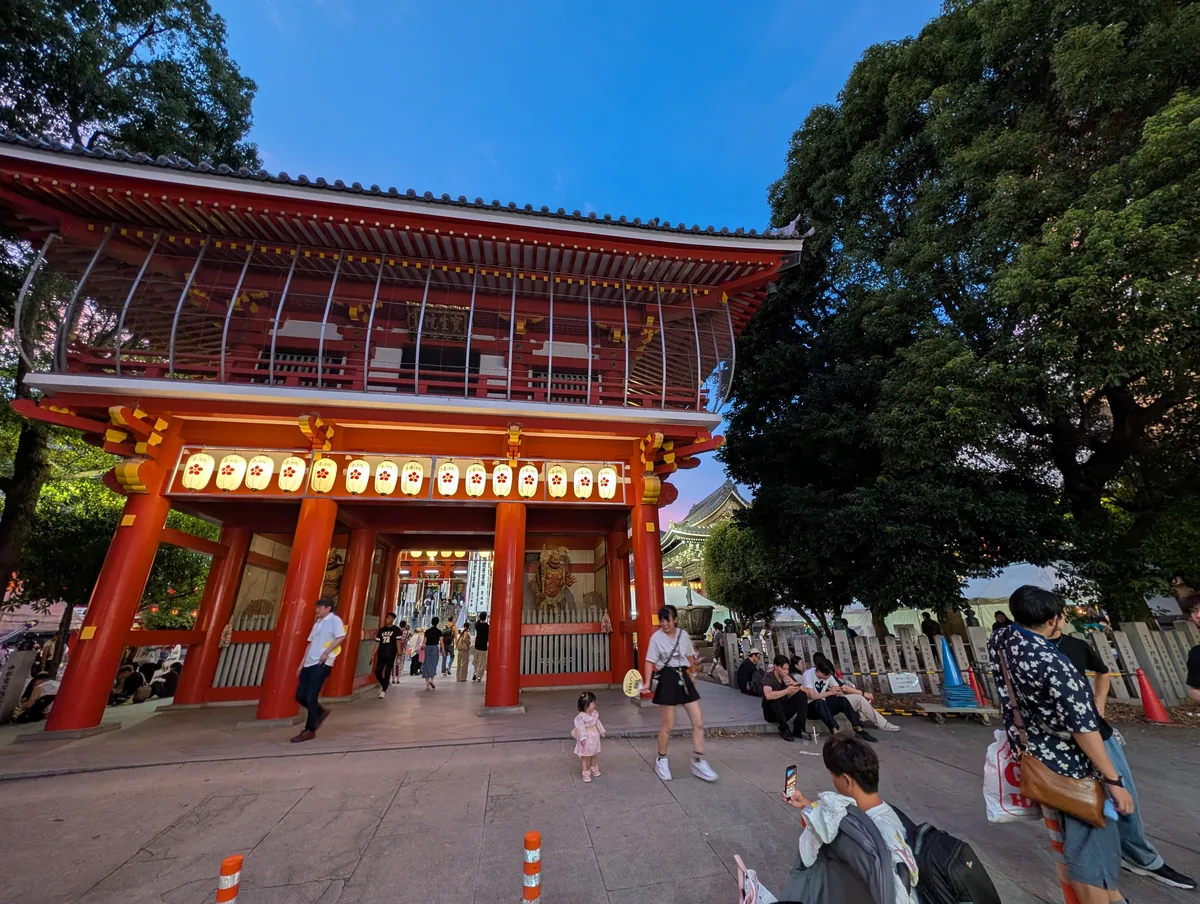
It is a three-day street performance festival staged inside Nagoya’s Osu shopping arcades every October, built around open-call street performers and a courtesan procession. Unlike almost every other festival in this region, it is not attached to a shrine’s ritual calendar — it was created by the shopping street itself, in 1978, as a deliberate alternative to the city’s official festival.
Most Japanese festivals are built around a shrine. This one is built around a shopping street.
For three days each October, the arcades of Osu (大須) — Nagoya’s scruffy, wonderful, endlessly browsable downtown market district — stop being a place you shop in and become a stage. Jugglers, mime artists, acrobats, a butoh dancer, a Chinese acrobatics troupe: they set up in the middle of the walkway, a crowd forms in a ring around them, and the shop behind them keeps selling secondhand cameras the whole time. The City of Nagoya’s own tourism page sums it up plainly: the festival is held in October in the downtown shopping street of Osu, and features the customary oiran procession that livens up the festival, along with all sorts of nostalgic street performances from across Japan.
The name deserves a second of unpacking. Daidogei (大道芸) means street performance — literally “art of the great road.” Machinin (町人) is the Edo-period word for the townspeople: merchants and artisans, not samurai, not clergy. So the full name is roughly “Osu’s Street-Art Festival of the Common Townsfolk,” and that populist streak is not decoration. It is the whole origin story, and it is still visible in how the thing is run.
Nearly fifty years on, it is still made by volunteers. The organisers’ own FAQ describes the committee as shopkeepers, civil servants, teachers, office workers and students who spend a full year putting the festival together. Performers are recruited by open call every single year — professional or amateur, submit a video by the end of April, though the same page warns that April is the absolute deadline and February is when you realistically need to send it. Which is why the line-up genuinely changes from one year to the next, and why you should never assume last year’s headline act will be back.
I live in Osu, so let me be straight about what I can and cannot tell you. I have not worked a festival shift and I am not going to invent a story about one. What I do know is the ground: this district is a grid of covered arcades that all feed into each other, and on an ordinary Saturday it is already busy enough that you walk at the pace of the person in front of you. Everything the organisers say about crowding should be read with that as the baseline, not as a warning about a normally quiet street.
When Is the 2026 Festival, and What Is Actually Confirmed?
The 47th festival is scheduled for Friday October 9 (eve festival), Saturday October 10 and Sunday October 11, 2026. Those dates come from the organising committee’s official X account, announced twice. As of August 15, 2026, no official website has been updated to the 2026 edition — so treat the dates as reliable but reconfirm before booking anything non-refundable.
Here is the honest state of play, and it matters more than usual for this festival.
The date has been announced twice by the organising committee’s own X account, @ohsuguy — once in September 2025 and again in October 2025, with identical dates both times. This is not a random social media rumour: the festival’s official website explicitly tells you to check that account first, and the committee’s contact address on the site belongs to the same person who runs it. The weekdays check out too — October 9, 10 and 11, 2026 are a Friday, Saturday and Sunday.
But as of August 15, 2026, three separate official channels are all still showing 2025. Open the festival’s own website today and the front page still reads “46th Osu Daido Machinin Matsuri, October 10 (Fri) eve festival, 11 (Sat), 12 (Sun) 2025,” last updated October 8, 2025. The Osu Shopping Street Federation’s site — the federation is a co-organiser of the festival — still points visitors to its 2025 information page, even though the rest of that site is being updated weekly. And Nagoya’s official tourism site has not published its 2026 event page yet either.
So: plan around October 9–11, but reconfirm before you book anything non-refundable. Mid-September is roughly when this festival’s information typically lands, and that is when I would check the X account and the official site again.
Still unannounced for 2026:
- Opening and closing times
- The performance timetable and stage assignments
- The performer line-up
- The times and route of the oiran procession
- The venue and start time of the Friday eve festival
None of that is a red flag — it is just how this festival works. The printed programme is published immediately before the event and, in the organisers’ own words, cannot be prepared in advance. The website goes the same way: detailed schedules and route maps appear in the last week or two.
Two calendar notes worth having
Monday October 12, 2026 is Sports Day (スポーツの日), a national holiday in Japan, per the Cabinet Office holiday list — so the festival’s final day sits at the front of a three-day weekend. Accommodation pressure around that weekend is not something I can source, so I am not going to put a number on it, but plan earlier rather than later.
If you were hoping to pair this with the Autumn Takayama Festival, you cannot. That one runs October 9–10, 2026 — exactly on top of these dates. You get one or the other, not both.
One more thing about the dates, because it is the single most common mistake in English write-ups of this festival: the dates move, and there is no published rule. The 45th edition ran October 18–20 in 2024. The 46th ran October 10–12 in 2025. The 47th is set for October 9–11 in 2026. The organisers have never published a formula like “the second weekend of October,” so do not work backwards from a pattern — take the announced dates each year.
What Will You Actually See There?
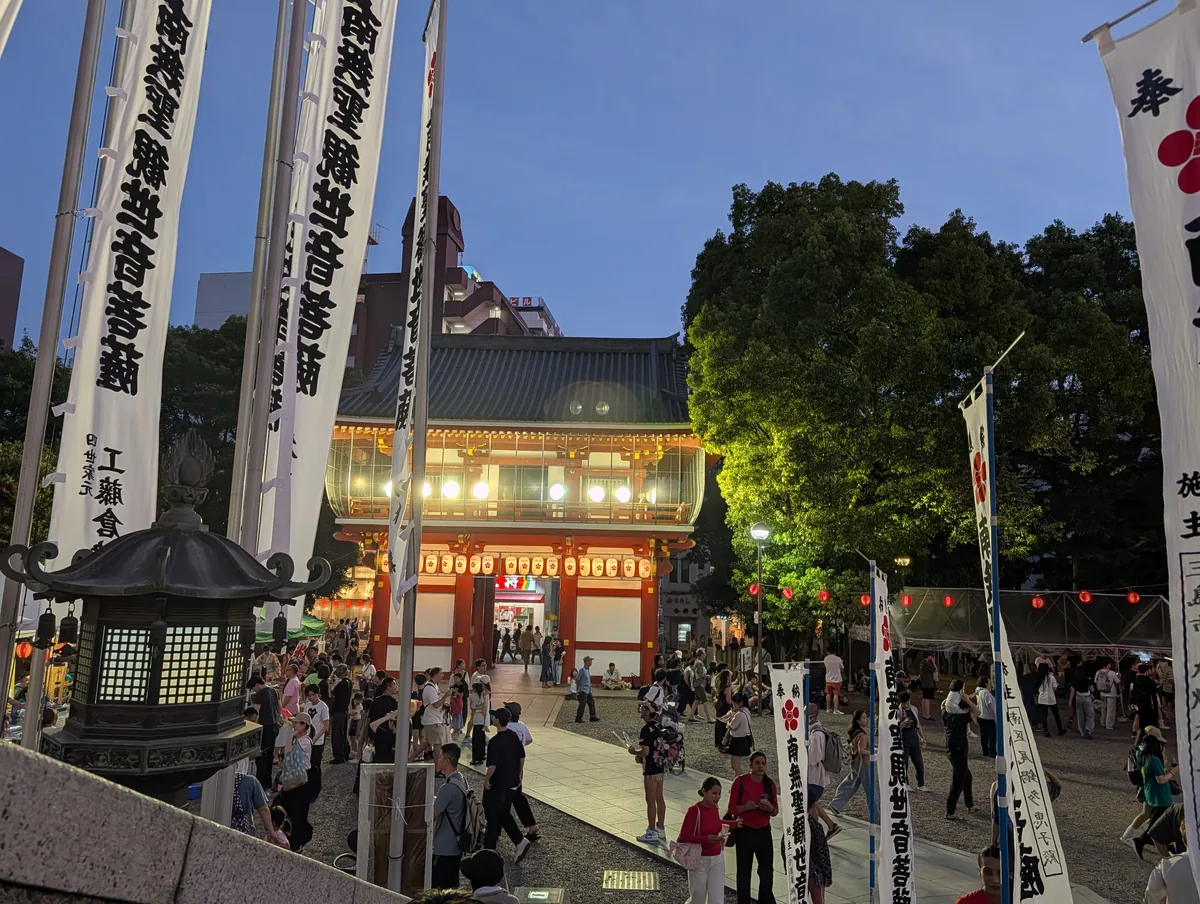
Three things: the oiran procession, a rotating bill of street acts running simultaneously at several points along the arcades, and the tipping ritual that connects the two. The specific performers change every year because they are re-recruited by open call, so the format is the constant, not the line-up.
The oiran procession
If one thing pulls people to Osu, it is this.
An oiran was the highest rank of courtesan in the Edo-period pleasure quarters — and no, that is not the same thing as a geisha, so please do not let anyone tell you otherwise. The shopping street federation explains why the procession belongs in Osu specifically: a licensed pleasure quarter was established here in the Meiji era, and the district grew into a major entertainment centre off the back of it. The procession is the festival’s nod to that history.
The women who perform it are selected by open public application. The organisers’ page on the procession puts the full costume at roughly 20 kilograms, and the oiran processes through the shopping arcade accompanied by a parasol bearer, an entourage of male attendants, kamuro (young child attendants) and shinzo (junior courtesans).
The walk itself is the point. On tall wooden geta — the federation’s page specifies more than 15 centimetres of height — the oiran traces a figure-eight, the hachimonji (八の文字), with each step, moving down the arcade at a deliberate, gliding pace. There are two named versions of the step, an outward figure-eight where the toes open outward and an inward one where the toes turn in; the organisers do not say which is used at the festival, so I will not guess.
Twenty women take the oiran roles. On the count of how many processions there are, the two official sources phrase it differently and both are worth knowing: the festival’s own site says the procession is performed six times across the two main days, while the shopping street federation says seven in total including the eve festival. Those reconcile — six on the main days plus one on the Friday night.
The street performance itself
This is a mixed bill in the truest sense, and the range is wider than “juggling in a shopping street” suggests.
To give you a sense of the spread, the 2025 line-up — and I want to be clear that this is last year’s roster, not a 2026 promise — included butoh dance by Giriyaku Amagasaki (ギリヤーク尼ヶ崎), a gold-paint performance by the butoh company Dairakudakan (大駱駝艦), short-form theatre, “super comic kabuki” by Hara Project, a Chinese acrobatics troupe, hard clowning, pole dance, fire dancing, a magician, a balloon artist, breakdance, hula hoop, and a long bench of mime artists. Alongside those were the older Japanese street trades the festival was founded to rescue: Edo-style marionettes, a gama no abura patent-medicine barker, a kendama player, a spinning-top performer and two candy sculptors.
Because performers are re-recruited annually, treat that list as a flavour sample rather than a schedule. What carries over year to year is the format: multiple acts running simultaneously at different points along the arcades, rotating through the day, so wandering is a better strategy than camping in one spot.
Hat money, and how to do it right
Nothing is ticketed, and the festival’s FAQ answers the tipping question with a lightness I have always liked. Asked how much to give, the organisers say it is however you feel: it is a short time, but please give applause and heart money to show that you enjoyed it.
Heart money is their term, not mine, and it is the right instruction. There is no suggested amount published anywhere, so do not overthink it — watch the whole act rather than drifting off halfway, applaud properly at the end, and put in what the performance was worth to you.
How Do You Get to the Osu Daido Machinin Matsuri?
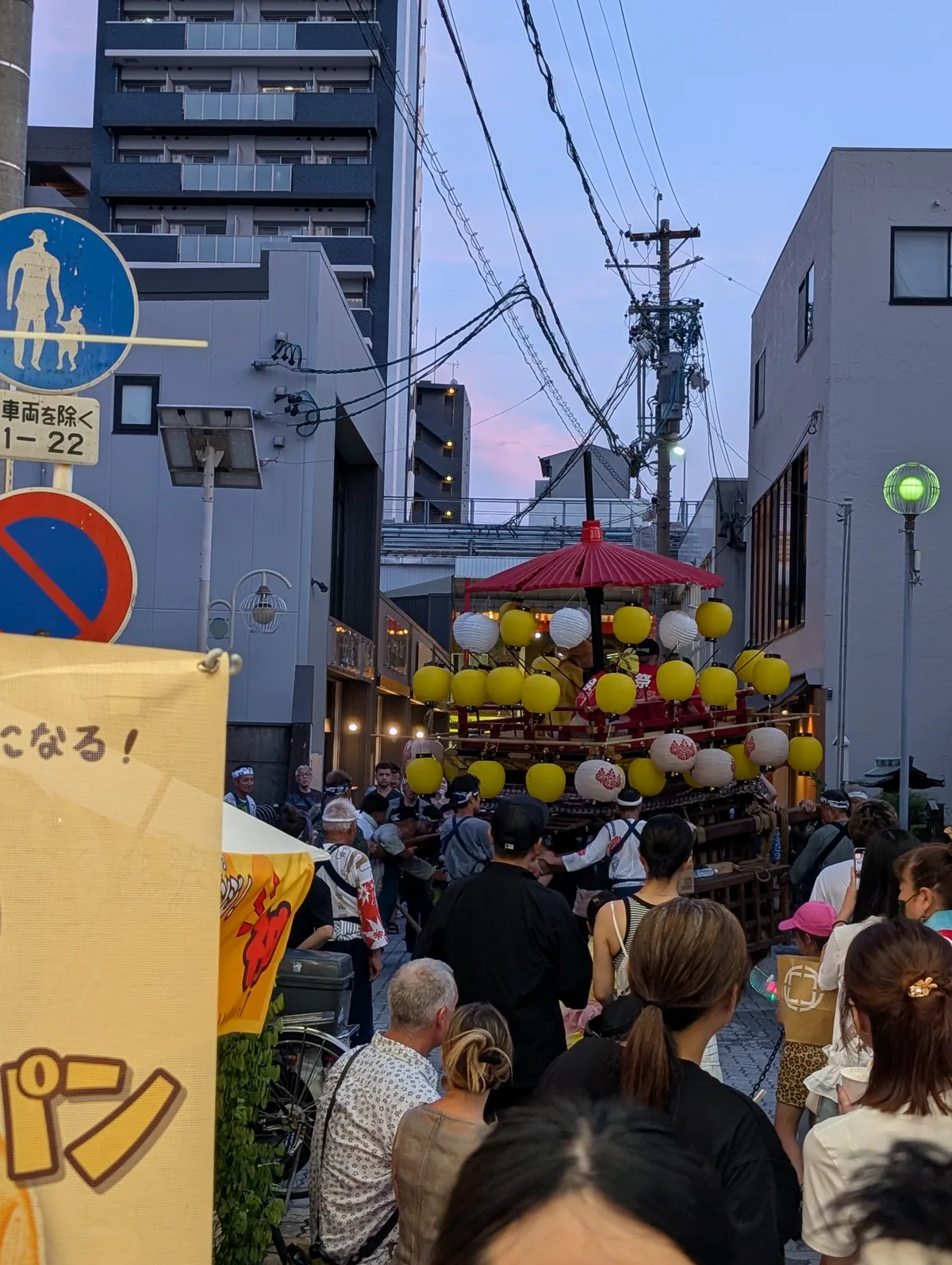
Take the subway to Kamimaezu or Osu Kannon and walk straight into the arcades. That is not just the convenient option — it is what the organisers explicitly ask you to do, because there is no free parking and the district gets too congested to drive or even cycle through.
The festival occupies the Osu shopping street across Osu 2-chome and 3-chome in Naka Ward, and two subway stations put you directly into it.
| Route | Line | Exit | Walk |
|---|---|---|---|
| Kamimaezu Station (上前津) | Meijo Line (名城線) / Tsurumai Line (鶴舞線) | 8 or 12 | 2 min to the shopping street; 6 min quoted to the festival area |
| Osu Kannon Station (大須観音) | Tsurumai Line (鶴舞線) | 2 | 3 min to the shopping street; 7 min quoted to the festival area |
| Meitetsu bus | Bound for Sangenya, via Sakae | Yabacho (矢場町) stop | About 6 min |
The two sets of walking times are not a contradiction, and it is worth understanding which is which. Nagoya’s official tourism site gives 2 and 3 minutes from those exits to the shopping street, while the same site’s festival event listing quotes 6 and 7 minutes to the festival area itself — the difference is simply how far into the district you are heading. Either way, you surface from the station and you are basically there.
Nagoya subway fares are distance-banded, so there is no single “ticket to Osu” price. The Nagoya City Transportation Bureau publishes the bands as follows.
| Zone | Distance | Adult | Child |
|---|---|---|---|
| 1 | Up to 3 km | ¥210 | ¥100 |
| 2 | Up to 7 km | ¥240 | ¥120 |
| 3 | Up to 11 km | ¥270 | ¥130 |
| 4 | Up to 15 km | ¥310 | ¥150 |
| 5 | Over 15 km | ¥340 | ¥170 |
In practice, most trips within the central city land in the first or second band. Use an IC card and stop thinking about it. If you want the wider picture on tickets and passes, our guide to getting around Nagoya covers the system properly.
What Do You Need to Know Before You Go?
Four things: do not drive, expect serious crowding, know that rain barely stops it, and do not try to plan your day in advance. The organisers are unusually direct about the first two, and the last one is a consequence of the timetable only appearing at the last minute.
On driving: do not
The official FAQ is blunt. There is no free parking; the paid car parks exist but considerable congestion is expected; and you are asked to use public transport. The same answer notes that during the festival the crowding in Osu is expected to be heavy enough that even cycling through the district becomes difficult. That is a useful calibration for how packed the arcades get — it is the organisers themselves telling you that a bicycle is too much vehicle for these streets that weekend.
Toilets
The organisers list cooperating toilet locations: the KOMEHYO (コメ兵) stores, the No. 1 and No. 2 Osu Ameyoko buildings, Mega Town, and the pachinko parlours. (The Osu Ameyoko buildings are electronics buildings in this district and have nothing to do with the Ameyoko market in Tokyo.) Whether extra portable toilets are installed for the festival is not stated anywhere official, so do not count on them.
If it rains
This is one of the real advantages of a festival held inside a covered shopping street. Per the official FAQ, the festival mostly goes ahead under the arcades even in rain — but acts that depend on instruments are vulnerable to wet weather and can be cancelled. So a wet forecast does not cancel your day; it reshuffles the bill. Note the wording: the organisers say “mostly,” not “rain or shine,” and I am not going to upgrade their phrasing for them.
Food
I am not going to pretend the festival food is the story here, because the shopping street’s everyday food is the story. Osu is one of the best eating-while-walking districts in the city, festival or not. Come hungry and treat the whole district as your food court. If you want the full rundown of what to eat and where, that is a separate piece: see our Osu shopping street guide, and our Nagoya-meshi food guide for the regional dishes worth hunting down while you are here.
A tactical note
Because the timetable only appears at the last minute, the winning approach is not planning — it is showing up with a few hours free and letting the arcades pull you around. Follow the sound of a crowd. If a ring of people has formed, join the back of it.
The thing I would tell a visiting friend about Osu, festival or not, is that the district rewards getting lost in it. The arcades are not a single street — they are a lattice, with side passages, a temple in the middle of it, and shops that make no sense next to each other. On a normal day that is what makes it fun. On a festival weekend it means the sensible move is to give up on covering everything and let one performance lead you to the next.
Where Did This Festival Come From?
It was founded in October 1978 by shopkeepers and organisers who wanted an alternative to the city’s official festival. The first edition ran on October 14–15, 1978, deliberately scheduled against the Nagoya Matsuri, and the oiran procession was invented as a home-made answer to the city parade’s famous historical procession.
The festival began in October 1978 (Showa 53), led by the late Suzuo Takahashi of Chunichi Production. According to the organisers’ own history page, it was started deliberately in opposition to the Nagoya Matsuri — the big official city festival — as a way to reclaim Osu as a place where people actually meet each other, by gathering together the dying art of street performance and treating the open road as a stage. The same page lists what was performed: temporary playhouses, monkey shows, the gama no abura patent-medicine patter, banana auctioneering, peep-show boxes, the “human pump,” and seven-spice sellers, going on into the night.
The shopping street federation puts a number on that first edition: two days, October 14 and 15, 1978, and a turnout it describes as 500,000 people despite running on the same dates as the Nagoya Matsuri. That figure is the federation’s own account rather than an independent count, so read it as the organisers’ claim about their own history — but the direction of it is the point. The counter-programming worked immediately.
There was a warm-up act, too. In June 1975, students from a self-organised seminar at Meijo University — the Contemporary Philosophy Study Group, supervised by Associate Professor Ikeda (池田芳一) — ran an event called “Action Osu.” Students in happi coats carried residents through the arcades in palanquins while rock concerts, street fashion shows, travelling theatre, rakugo storytelling, junk markets and magic-lantern shows rolled through the district from 3pm until past 9pm. The official history notes — quoting newspapers of the time, not its own count — that around 300,000 people turned out that day. It was repeated over two days in 1976, one day billed for young people and one for families.
Whether Action Osu actually caused the festival is genuinely disputed, and the official history is refreshingly honest about it: the page states that the two years of Action Osu are said to have been the trigger for the Osu Daido Machinin Matsuri, while also recording that some of the people involved say the two had nothing to do with each other. So: a precedent, certainly. A parent, not necessarily.
Even the oiran procession started as a piece of cheek. The history page explains that because the festival was originally scheduled to clash head-on with the city’s official Nagoya Matsuri, the organisers built their own processions by hand — an oiran procession, a children’s heroes procession (子供英傑行列) — as counterparts to the Nagoya Matsuri’s Three Unifiers parade (三英傑行列).
That was the 1970s, and two things have changed since. The two festivals no longer share a date: in 2026 the Nagoya Matsuri falls on October 17–18, a week after Osu. And the Three Unifiers procession that the oiran procession was originally answering is not being held at all in 2026 — the City of Nagoya has cancelled it because of the overlap with the Asian Para Games. See our autumn festivals guide for the detail on that.
One caution if you go digging in the official history yourself: that page has not been comprehensively updated in a long time and still contains a line about the festival reaching its 28th edition. The founding year is solid; the edition counts on that page are not. Nor can you calculate the year from the edition number, because the official archive lists no festival at all for 2020 and 2021 — it jumps from the 42nd edition in 2019 to the 43rd in 2022. The organisers give no reason for the gap, so neither will I.
What Happened at the 2025 Festival?
The 46th festival ran October 10–12, 2025, with published hours of 11:00–20:00 on the Saturday and 11:00–18:40 on the Sunday. The eve festival was held at Banshoji temple from 6pm. The federation billed it as the largest line-up in the festival’s history, at more than 60 acts.
For calibration, here is how the most recent edition actually ran — useful as a rough shape for 2026, provided you remember that none of it is confirmed for this year.
| Day | 2025 (46th) — actual | 2026 (47th) — status |
|---|---|---|
| Eve festival | Friday October 10, 18:00–19:00, at Banshoji (万松寺), with the oiran procession plus idio2 and LUNA | Friday October 9. Venue, time and programme unannounced |
| Main day 1 | Saturday October 11, 11:00–20:00 | Saturday October 10. Hours unannounced |
| Main day 2 | Sunday October 12, 11:00–18:40 | Sunday October 11. Hours unannounced |
| Line-up | More than 60 acts, described by the federation as the most ever | Unannounced — performers are re-recruited by open call each year |
The 2025 hours come from the Kinshachi Shotengai listing run by the Nagoya City Federation of Shopping Street Promotion Associations, and the eve festival details from the festival’s own 2025 page.
The organisers’ event outline for 2025 also gives their own projected turnout: 300,000. Note the wording carefully — that is a projection published in advance by the organisers, not a measured attendance figure, and no official body publishes an actual count for this festival. It is the best number available and it should be read as an order of magnitude, not a statistic. The same outline records that the festival is co-organised by the Osu Shopping Street Federation and the executive committee, with support from Aichi Prefecture, the City of Nagoya and the Nagoya Chamber of Commerce and Industry, and that it has picked up a Nagoya Urban Landscape Award in 1997 along the way.
What Do the Organisers Themselves Say?
We do not reprint other people’s reviews here, so instead: two posts from the organising committee’s own account, which is also where the festival’s news breaks first. Both are the announcements that carry the 2026 dates.
What I would flag from the organisers’ own material, rather than from reviews, is what they choose to emphasise. Their FAQ spends its space on two things: crowding and tipping. A festival FAQ that warns you cycling will be difficult, and then asks you to applaud properly and leave heart money, is telling you what the experience is like. It is dense, it is close-quarters, and the relationship between performer and audience is the entire product.
Frequently Asked Questions
When is the Osu Daido Machinin Matsuri in 2026?
Friday October 9 (eve festival), Saturday October 10 and Sunday October 11, 2026. These dates come from the organising committee’s official X account, which announced them twice — in September and October 2025. As of August 15, 2026 the official website still displays the 2025 edition, so reconfirm closer to the date.
What time does the Osu Daido Machinin Matsuri start and finish?
The 2026 hours have not been announced. In 2025 the main days ran 11:00–20:00 on the Saturday and 11:00–18:40 on the Sunday, with the eve festival at 18:00–19:00 on the Friday. Detailed schedules are published shortly before the festival, usually in the last week or two.
Does the Osu Daido Machinin Matsuri cost anything?
The organisers publish no ticket or admission price for the festival. Performances take place in the public arcades and streets, and the official FAQ asks only for applause and voluntary “heart money” — an amount entirely of your choosing. There is no published suggested amount.
What happens if it rains?
Most of the festival goes ahead, because much of the Osu shopping street is covered by arcade roofs. The official FAQ notes that performances using instruments are vulnerable to rain and may be cancelled, so the bill can change on the day.
Can I drive there?
You are asked not to. The organisers state there is no free parking, that the paid car parks will be heavily congested, and that visitors should use public transport — adding that Osu gets crowded enough during the festival that even cycling through the district is difficult.
Is the oiran procession the same as a geisha parade?
No. An oiran was the highest rank of courtesan in the Edo-period licensed quarters, a different role and a different history from a geisha. At this festival, 20 women chosen by open public application wear the roughly 20 kg costume and process through the arcade on tall geta, tracing the hachimonji figure-eight step.
How do I get to Osu from Nagoya Station?
Take the subway. Kamimaezu Station (Meijo or Tsurumai line) exits 8 and 12, and Osu Kannon Station (Tsurumai line) exit 2, both open onto the shopping street. Nagoya subway fares are distance-banded from ¥210 for adults for journeys up to 3 km.
Where Should You Check Official Information?
- Official festival website: ohsu-gei.net — note this site only loads over
http://, and the schedule, performer list and procession route appear here in the last week or two before the festival - Official X account: @ohsuguy — where dates and schedule changes appear first, and the channel the official site itself tells you to check
- Osu Shopping Street Federation (co-organiser): osu.nagoya — background on the festival and the oiran procession, plus district-wide event news
- City of Nagoya festival page: city.nagoya.jp
- Nagoya Concierge (official city tourism), Osu shopping street: nagoya-info.jp
- Organiser: Osu Daido Machinin Matsuri Executive Committee, c/o Osu Shopping Street Federation, 3-38-9 Osu, Naka-ku, Nagoya 460-0011. Tel +81 52-261-2287. Nagoya’s official tourism listing states that this line does not take enquiries in English, so it is not a practical contact for most visitors
About the Author
Yuu was born in Nagoya and has lived there for 35 years, in Osu itself — this district is his everyday neighbourhood, and our Osu shopping street guide is written from that vantage point. He has not attended the Osu Daido Machinin Matsuri, and this guide does not pretend otherwise: the local perspective here is about the district and how to move through it, while every objective statement — dates, hours, fares, the procession, the history — is sourced from the festival’s executive committee, the Osu Shopping Street Federation, the City of Nagoya, Nagoya’s official tourism body, the Nagoya City Transportation Bureau or the Cabinet Office, with the date each was checked recorded in our fact ledger.
Where 2026 information does not exist yet, this page says so instead of reusing last year’s numbers — which, as of August 2026, is what most English pages about this festival are still doing.
Related Guides
- Osu Shopping Street Guide — the district on a normal day: what to eat, what to buy, and why it is worth half a day even without a festival.
- Central Japan Festival Calendar — every major festival in the region, month by month.
- Autumn Festivals in Nagoya & Central Japan — what else is on in October, including the Nagoya Matsuri and the Autumn Takayama Festival, which overlaps these dates.
- Getting Around Nagoya — subway, Meitetsu and the passes worth buying.
- Where to Stay in Nagoya — which neighbourhood to base yourself in, including Osu itself.
- Nagoya-meshi Food Guide — the regional dishes to hunt down while you are in the arcades.
- Things to Do in Nagoya — how the festival fits into a wider few days in the city.