Ise Grand Shrine (伊勢神宮) is Japan’s most sacred Shinto site with over 2,000 years of history, rebuilt every 20 years. It is 1 hour 20 minutes from Nagoya by Kintetsu Limited Express (¥3,080 one way), admission is free, and approximately 8 million pilgrims visit annually. Budget ¥8,000-12,000 for a full day trip including transport, food at Okage Yokocho, and souvenirs.
Quick Answer: Ise Grand Shrine (Ise Jingu) is Japan’s most sacred Shinto site and one of the most spiritually powerful places in the country. Located about 1.5 hours from Nagoya by Kintetsu Limited Express, it makes an easy and deeply rewarding day trip. Admission is free. Visit the Geku (Outer Shrine) and Naiku (Inner Shrine), eat your way through the excellent Okage Yokocho food street, and optionally add Meoto Iwa (Wedded Rocks). Budget around 8,000-12,000 yen for the entire day including transport, food, and souvenirs.
Last updated: August 2, 2026 | Written by Yuu, a Nagoya native of 35 years
This article may contain affiliate links. See our affiliate disclosure for details.
Table of Contents
- Why Visit Ise Grand Shrine?
- Getting to Ise from Nagoya
- Geku (Outer Shrine): Where Your Visit Begins
- Naiku (Inner Shrine): The Spiritual Heart of Japan
- Okage Yokocho and Oharai Machi: The Best Food Street in the Region
- Meoto Iwa (Wedded Rocks): An Optional Add-On
- Sample Day Trip Itinerary
- Guided Tour Options
- What to Wear and Shrine Etiquette
- Practical Information
- Budget Breakdown
- Weather and Contingency Planning
- Frequently Asked Questions About Ise Grand Shrine
- Related Guides
Why Is Ise Grand Shrine Worth Visiting?
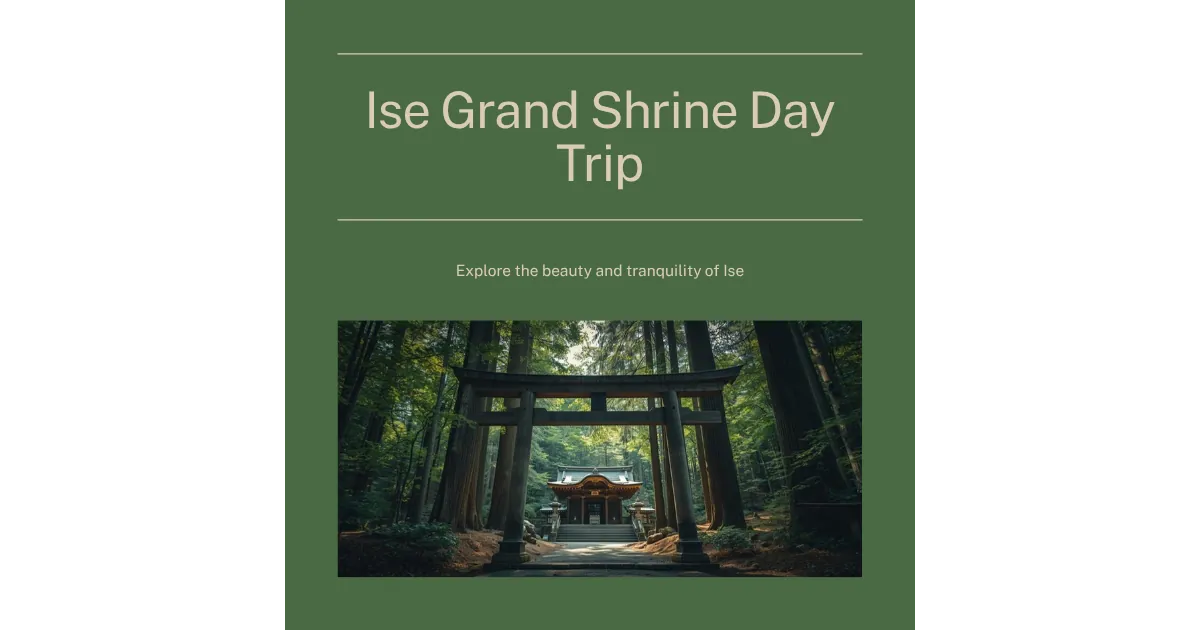
Ise Grand Shrine is Japan’s most important Shinto site, with a 2,000-year-old tradition of ritual rebuilding every 20 years (Shikinen Sengu). The shrine sits within a 5,500-hectare sacred forest, admission is completely free, and the atmosphere is unlike any other temple or shrine in the country.
Ise Grand Shrine is not just another temple or shrine on your Japan itinerary. It is the single most important spiritual site in the entire country — the place where the Japanese imperial family traces its divine ancestry, and where millions of Japanese pilgrims have traveled for over two millennia. If you visit only one shrine in Japan, many Japanese people would tell you it should be Ise.
I have visited Ise Grand Shrine more than 5 times. As a business owner, visiting Ise and Atsuta Shrine for prayer is a serious tradition — not superstition, but a way of marking gratitude and asking for guidance. Many Japanese business leaders do the same. The experience never diminishes. Having traveled to more than 15 countries and visited sacred sites from European cathedrals to Southeast Asian temples, I can say with confidence that the atmosphere at Ise is unlike anything else I have encountered anywhere in the world. There is a weight to the silence here, a quality to the light filtering through the ancient trees, that I have never felt at another place of worship.
Here is what makes Ise Grand Shrine extraordinary:
-
It has been rebuilt every 20 years for over 1,300 years. This tradition, called Shikinen Sengu, means the shrine buildings are simultaneously ancient in design and perpetually new. The most recent rebuilding was completed in 2013, meaning the next will take place in 2033. You are seeing the shrine in its current form for a limited window of time — the same design, the same materials, the same construction techniques used since the 7th century, but with the fresh wood and clean lines of a structure less than 15 years old.
-
It is dedicated to Amaterasu Omikami, the sun goddess. In Shinto mythology, Amaterasu is the supreme deity and the ancestral kami of the Japanese imperial family. The shrine holds the Sacred Mirror (Yata no Kagami), one of the three Imperial Regalia of Japan. No one outside the imperial family and the highest-ranking priests has seen it.
-
The natural setting is breathtaking. Naiku sits within a 5,500-hectare sacred forest of towering cryptomeria cedar trees, many of them centuries old. The Isuzu River flows through the grounds. Walking through this forest feels like stepping into a different century.
-
It is a pilgrimage destination, not a tourist attraction. Ise receives approximately 8 million visitors per year, and the vast majority are Japanese. You will not find the overtourism problems that plague Kyoto’s Fushimi Inari or Tokyo’s Senso-ji. The atmosphere remains reverent and authentic.
For context, Ise is to Shinto roughly what the Vatican is to Catholicism — the spiritual headquarters, the place that matters most. But unlike the Vatican, Ise achieves its power through understatement rather than grandeur. The buildings are made of unadorned hinoki cypress wood. There is no gold, no color, no ornamentation. The beauty lies in the simplicity, the craftsmanship, and the profound age of the tradition itself.
How Do You Get to Ise Grand Shrine from Nagoya?
The Kintetsu Limited Express takes 1 hour 20 minutes from Nagoya to Iseshi Station (¥3,080 one way, departures every 30 minutes). The budget alternative is the JR Mie Rapid at 1 hour 40 minutes for ¥2,000, which is partially covered by the Japan Rail Pass — JR Pass holders must pay a supplemental fare of approximately ¥520 each way for the Ise Railway section (Kawarada to Tsu).
Ise is approximately 130 kilometers south of Nagoya, in Mie Prefecture. Two main rail options connect the cities, and both are straightforward.
Kintetsu Limited Express (Recommended)
The Kintetsu Limited Express is the fastest and most comfortable way to reach Ise from Nagoya. Trains depart from Kintetsu Nagoya Station, which is inside the Nagoya Station complex, and run directly to Iseshi Station or Ujiyamada Station.
- Travel time: Approximately 1 hour 20 minutes
- Cost: ¥3,080 one way (base fare ¥1,740 + Limited Express surcharge ¥1,340). All seats are reserved (Kintetsu Railway Limited Express).
- Frequency: Roughly every 30 minutes throughout the day
- Reservations: Seats are reserved and can be purchased at the ticket counter, vending machines, or online through the Kintetsu Railway site.
The trains are modern and comfortable with large windows, reclining seats, and ample legroom. You can buy tickets at Kintetsu Nagoya Station on the day of travel — advance booking is only necessary during peak periods like New Year and Golden Week.
Pro Tip: Get off at Iseshi Station if you plan to visit Geku first (recommended). Get off at Ujiyamada Station if you want to head directly to Naiku by bus. Iseshi and Ujiyamada are just one station apart, so it does not matter much either way.
Kintetsu Rail Pass and More: Central Japan Pass Guide
JR Mie Rapid (Budget Option)
The JR Mie Rapid (Kaisoku Mie) is a good alternative if you are on a tighter budget or if you hold a Japan Rail Pass.
- Travel time: Approximately 1 hour 40 minutes
- Cost: Approximately 2,000 yen one way (unreserved), approximately 2,530 yen (reserved seat)
- Frequency: Roughly every hour
- JR Pass: Partially covered by the Japan Rail Pass — JR Pass holders must pay a supplemental fare of approximately ¥520 each way for the Ise Railway section (Kawarada to Tsu)
The JR route is perfectly comfortable, just slightly slower. If you already have a JR Pass, this is the obvious choice since you will pay nothing extra.
Comparison Table
| Option | Time | Cost (One Way) | Comfort | JR Pass | Best For |
|---|---|---|---|---|---|
| Kintetsu Limited Express | ~1h 20m | ¥3,080 | Excellent | Not covered | Most travelers |
| JR Mie Rapid | ~1h 40m | ¥2,000-2,530 | Good | Covered | Budget travelers / JR Pass holders |
| Car (highway) | ~1h 30m | ¥3,500-4,500 (tolls + fuel) | Flexible | N/A | Groups of 3+ / combining with Meoto Iwa |
Getting Around Ise: Once in Ise, the CAN bus (operated by Mie Kotsu) connects Geku, Naiku, and other sightseeing spots. A single ride between Geku and Naiku takes about 15 minutes; the Mie Kotsu “Ise-Toba Michikusa” 1-day bus pass, which covers the CAN bus, costs ¥1,300 for adults (¥650 for children) and is the best value if you plan to visit both shrines plus Meoto Iwa (Mie Kotsu official). Alternatively, you can take a regular city bus or a taxi (approximately ¥2,000–3,000 between the two shrines). For a complete guide to transport options in the Nagoya region, see our Getting Around Nagoya guide.
What Should You See at Geku (Outer Shrine)?
Visit Geku first per tradition. It is a 5-minute walk from Iseshi Station, takes 30-60 minutes, and includes the Sengukan Museum (¥300 admission), the main sanctuary, subsidiary forest shrines, and the empty Shikinen Sengu site where the next shrine will be built in 2033.
Geku, formally known as Toyouke Daijingu, is dedicated to Toyouke Omikami, the deity of food, clothing, and shelter. Tradition dictates that visitors should pay their respects at Geku before proceeding to Naiku, and the logistics work in your favor — Geku is just a 5-minute walk straight down the tree-lined road from Iseshi Station.
What to See at Geku
Geku’s grounds are more compact than Naiku’s, and the atmosphere here tends to be quieter and more intimate. Most visitors spend 30 to 60 minutes here.
-
Sengukan Museum — Located just outside the Geku entrance, this museum explains the Shikinen Sengu rebuilding process in fascinating detail. Admission is ¥300 for adults and ¥100 for elementary and junior high school students; it opens 9:00 AM–4:30 PM (last entry 4:00 PM) and closes on the 2nd and 4th Tuesday of each month (Sengukan official site). You can see full-scale replicas of the tools and construction techniques used to rebuild the shrine. I recommend visiting this before entering Geku itself, as it gives you the context to truly appreciate what you are seeing.
-
The main shrine (Shogu) — Like Naiku, Geku’s main sanctuary is enclosed behind multiple wooden fences. Visitors can approach only as far as the outermost gate. You will bow, toss a coin into the offering box, clap twice, and bow again. The architecture you glimpse beyond the fence is Yuiitsu Shinmei-zukuri, the oldest and purest style of Japanese shrine construction — elevated on pillars, with a thatched roof, and completely unadorned.
-
Subsidiary shrines — The Geku compound contains several smaller shrines scattered through the surrounding forest. The path winding through the woods to these subsidiary shrines is peaceful and usually uncrowded.
-
The Shikinen Sengu site — Next to the current main shrine, you will see an empty plot of land covered in white gravel. This is where the next shrine building will be constructed in 2033, and where the previous one stood before 2013. Seeing the current shrine beside its future (and past) location brings the 1,300-year rebuilding cycle to life in a visceral way.
Pro Tip: Walk to the right around the Geku grounds, following the gravel path through the forest. Most visitors only see the main shrine and leave, but the subsidiary shrines in the forest are beautiful, and you will likely have the path entirely to yourself. This detour adds only 15-20 minutes.
What Makes Naiku (Inner Shrine) So Special?
Naiku is the most sacred ground in Japan, dedicated to Amaterasu Omikami. Plan 60-90 minutes to cross the Uji Bridge, purify your hands at the Isuzu River, walk through a centuries-old cryptomeria forest, and approach the main sanctuary built in ancient Yuiitsu Shinmei-zukuri style.
Naiku, formally known as Kotai Jingu, is the main event. This is the shrine dedicated to Amaterasu Omikami, the supreme deity of Shinto, and it is the most sacred piece of ground in Japan. If Geku is the warm-up, Naiku is the destination. Plan to spend at least 60 to 90 minutes exploring the grounds.
Crossing the Uji Bridge
Your Naiku visit begins on the Uji Bridge, a graceful 100-meter wooden bridge spanning the Isuzu River. This bridge marks the boundary between the everyday world and the sacred domain of the gods. Like the shrine buildings themselves, the Uji Bridge is rebuilt every 20 years. Walk on the right side of the bridge — this is both the custom and the rule, and you will see signs indicating it.
The view from the bridge is your first hint of what awaits: the deep green river below, the towering forest ahead, and the unmistakable feeling that you are entering a different world.
Purification at the Isuzu River
Shortly after crossing the Uji Bridge, stone steps lead down to the banks of the Isuzu River. This is the Mitarashi, where pilgrims have been ritually purifying their hands in the river water for centuries. Dip both hands into the clear, cold water. It is a simple act, but doing it in the same spot where people have performed the same gesture for over a thousand years carries a quiet power.
There is also a standard temizu (hand-washing fountain) nearby if you prefer.
The Approach Through the Forest
The walk from the Uji Bridge to the main sanctuary takes about 15 minutes along a wide gravel path lined with enormous cryptomeria cedars. Many of these trees are centuries old, and their canopy creates a natural cathedral overhead. The light filters through in shafts, the air smells of cedar and earth, and the sounds of the outside world fade completely.
This forest walk is, for me, the single most memorable part of the Ise experience. I have walked through ancient forests in Canada and Scandinavia, through temple complexes across Southeast Asia, and nothing quite matches the combination of natural beauty and spiritual weight that this particular stretch of gravel path delivers. It is not trying to impress you. It simply is what it is — and that is enough.
The Main Sanctuary (Shogu)
At the heart of Naiku, stone steps lead up to the main sanctuary. As at Geku, you cannot enter the innermost precinct. Four wooden fences surround the central shrine building, and the general public may only approach the outermost fence. Beyond it, you will catch glimpses of the pristine thatched roof of the Shogu, built in the ancient Yuiitsu Shinmei-zukuri style.
Photography is not permitted beyond the bottom of the stone steps leading to the Shogu. This is clearly signposted, and the shrine is serious about enforcing it. Please respect this rule.
Stand before the outermost gate, bow twice, clap twice, bow once more. What you are praying to — or simply paying respect to — has stood here in one form or another since ancient times. The building itself is less than 15 years old. The tradition is nearly 2,000.
Important Note: You cannot see the actual shrine building up close. The innermost sanctum is off-limits to all but the imperial family and senior priests. This is not a limitation — it is fundamental to what makes Ise what it is. The hidden nature of the sacred object is itself part of the spiritual experience.
Kaguraden (Sacred Dance Hall)
Near the main sanctuary, the Kaguraden is where you can purchase omamori (protective charms) and ofuda (household shrine talismans). Ise’s omamori are considered the most prestigious in all of Japan. The most popular is the “koutai jingu” talisman for general well-being. If you want to bring home a meaningful souvenir that is more than a trinket, this is it.
You can also arrange for a kagura sacred dance performance here (for a fee, starting around 15,000 yen for a private ceremony). Most visitors simply purchase charms, but if you are interested in a deeper experience, this is worth considering.
What Should You Eat at Okage Yokocho and Oharai Machi?
Must-eat items are Akafuku mochi (¥400 for two with tea, made since 1707), Ise udon (¥650 at Fukusuke), Matsusaka beef croquettes (¥200-400), and tekonezushi marinated bonito sushi (¥1,200-1,800). Plan 60-90 minutes for this 800-meter Edo-period-style food street right outside Naiku.
Immediately outside Naiku’s entrance lies one of my favorite food streets in all of Central Japan. Oharai Machi is a 800-meter stretch of traditional Edo-period-style buildings lining the road from the bus stop to the Uji Bridge. Tucked within its center is Okage Yokocho, a more concentrated cluster of restaurants, sweet shops, and souvenir stores.
These streets recreate the atmosphere of the Edo-period pilgrimage town that once served the millions of travelers making the journey to Ise. Today, they are filled with regional specialties that you genuinely cannot find done as well anywhere else. This is not tourist-trap food. The quality is excellent, the history is real, and the variety is remarkable for such a compact area.
I have been here with family, and the variety is remarkable. Beyond the famous akafuku mochi, you will find udon, croquettes, and all kinds of street food — there are even steak restaurants nearby. Okage Yokocho is one of the few places where absolutely no one in your group will struggle to find something they like. Plan to spend at least 60 to 90 minutes eating and exploring here. Come hungry.
Must-Eat Foods
Akafuku Mochi — The single most iconic food in Ise, and with good reason. Akafuku has been making these soft mochi rice cakes topped with smooth sweet red bean paste since 1707. The main Akafuku shop on Oharai Machi is unmistakable — look for the large traditional storefront with a curtain bearing the Akafuku name. Opening hours are 5:00 AM–5:00 PM, open year-round with no regular closing day (hours may change during peak periods; Akafuku official). A serving of two mochi with Ise tea costs ¥400 (Akafuku official). Eat them fresh, in the shop, seated on tatami overlooking the Isuzu River if possible. The texture of fresh Akafuku, still slightly warm, is incomparably better than the boxed versions sold at train stations.
Ise Udon — Eating Ise udon at Okage Yokocho is my ritual every time I visit — thick, soft udon in a dark soy broth that looks intense but tastes surprisingly gentle. It is completely different from Nagoya’s miso nikomi udon. The noodles are extraordinarily thick and soft — almost pillowy — served in a small amount of intensely dark tamari soy sauce with only a scattering of chopped green onion on top. There is no broth. The simplicity is the point. Fukusuke, inside Okage Yokocho, is the most traditional and well-known spot, and the line moves quickly. A bowl of Ise udon at Fukusuke is ¥650 (Okage Yokocho — Fukusuke).
Matsusaka Beef Croquettes — Mie Prefecture is home to Matsusaka beef, one of Japan’s three most prestigious wagyu brands alongside Kobe and Omi. You will find Matsusaka beef croquettes (korokke) sold from street stalls along Oharai Machi for around 200-400 yen. They are crispy, rich, and perfect for eating while walking.
Tekonezushi — A style of sushi from the Ise-Shima region where sliced bonito (katsuo) is marinated in soy sauce and placed over vinegared rice. It is a fisherman’s dish by origin, rustic and flavorful. Several restaurants on Oharai Machi serve it as part of set meals for around 1,200-1,800 yen.
Other Specialties Worth Trying:
- Ise ebi (spiny lobster) — available at some restaurants, though expensive (seasonal, roughly October-April)
- Samenotataki — dried shark meat, unique to the region
- Henba mochi — another traditional rice cake, rival to Akafuku, with a lightly grilled surface
- Local craft beer at the Ise Kadoya brewery taproom on Okage Yokocho
Pro Tip: Visit Okage Yokocho after Naiku, not before. The food street is right at the Naiku entrance, so the natural flow is: bus from Geku, walk through Oharai Machi, visit Naiku, then eat your way back through the food street on the way to the bus stop. This way, you are not rushed for time at the shrine because you spent too long eating. Trust me — once you start eating here, it is hard to stop.
Should You Add Meoto Iwa (Wedded Rocks) to Your Ise Day Trip?
Yes, if you start early. Meoto Iwa is a 10-minute JR train ride from Iseshi Station plus a 15-minute walk. Adding it requires about 1-1.5 extra hours. The sunrise between the rocks from May through July is especially dramatic.
If you have time and energy remaining, Meoto Iwa (the Married Couple Rocks) is a worthwhile addition to your Ise day trip. These two rocks in the ocean, connected by a thick shimenawa sacred rope, are one of Japan’s most photographed natural landmarks. The larger rock represents the husband, the smaller the wife, and together they symbolize the union of the creator gods Izanagi and Izanami.
Getting There
Meoto Iwa is located in the town of Futami, about 10 minutes by JR train from Iseshi Station (get off at Futaminoura Station). From the station, it is a 15-minute walk along the waterfront to the rocks.
What to See
-
The rocks themselves — Best viewed early in the morning when the sun rises between them (particularly dramatic from May through July). On a clear day, you can see Mount Fuji in the far distance between the rocks. Even without the sunrise, the rocks are striking and the shoreline walk is pleasant.
-
Futami Okitama Shrine — The shrine adjacent to the rocks, famous for its frog statues. Frogs (kaeru) are sacred here because the Japanese word “kaeru” also means “to return” — so the frogs symbolize safe return from journeys, return of good fortune, and recovery from illness.
-
Meoto Iwa Shrine — A small but atmospheric shrine right on the rocky shoreline.
Adding Meoto Iwa to your itinerary requires about 1 to 1.5 extra hours, including travel time. If you started your day early from Nagoya, this is very doable.
Logistics Note: You can visit Meoto Iwa either before or after the shrines. If you are a morning person, consider heading there first from Iseshi Station, then doubling back for Geku and Naiku. If you prefer to save it for last, go after your Okage Yokocho meal and catch a later train back to Nagoya.
What Is the Best Ise Day Trip Itinerary from Nagoya?
Depart Nagoya at 7:30 AM, visit Geku and Naiku, eat at Okage Yokocho, optionally add Meoto Iwa, and return to Nagoya by 4:50 PM. A relaxed version without Meoto Iwa lets you depart later at 8:30 AM and return by 4:35 PM.
This is the itinerary I recommend for first-time visitors doing a full day trip from Nagoya. It covers Geku, Naiku, Okage Yokocho, and optionally Meoto Iwa, with plenty of time for eating and exploring.
Full Day Itinerary (With Meoto Iwa)
| Time | Activity |
|---|---|
| 7:30 AM | Depart Kintetsu Nagoya Station on the Limited Express |
| 8:50 AM | Arrive Iseshi Station |
| 9:00 – 9:45 AM | Visit Sengukan Museum and Geku (Outer Shrine) |
| 10:00 AM | Take CAN bus from Geku to Naiku (~15 min) |
| 10:15 – 11:30 AM | Explore Naiku (Inner Shrine) |
| 11:30 AM – 1:00 PM | Lunch and food exploration at Okage Yokocho and Oharai Machi |
| 1:15 PM | Bus back to Iseshi Station |
| 1:30 PM | JR train to Futaminoura Station (~10 min) |
| 1:45 – 2:45 PM | Visit Meoto Iwa and Futami Okitama Shrine |
| 3:00 PM | JR train back to Iseshi Station |
| 3:30 PM | Depart Iseshi on Kintetsu Limited Express |
| 4:50 PM | Arrive Kintetsu Nagoya Station |
Relaxed Itinerary (Without Meoto Iwa)
| Time | Activity |
|---|---|
| 8:30 AM | Depart Kintetsu Nagoya Station |
| 9:50 AM | Arrive Iseshi Station |
| 10:00 – 10:45 AM | Visit Sengukan Museum and Geku |
| 11:00 AM | CAN bus to Naiku |
| 11:15 AM – 12:30 PM | Explore Naiku |
| 12:30 – 2:00 PM | Extended lunch at Okage Yokocho (take your time here) |
| 2:00 – 2:30 PM | Browse souvenir shops on Oharai Machi |
| 2:45 PM | Bus back to Iseshi Station |
| 3:15 PM | Depart on Kintetsu Limited Express |
| 4:35 PM | Arrive Nagoya — plenty of time for dinner in Nagoya |
Pro Tip: If you have a JR Pass or regional rail pass, take the JR Mie Rapid instead of Kintetsu to save money. The extra 20 minutes each way does not meaningfully change the itinerary.
Should You Take a Guided Tour to Ise Grand Shrine?
A guided tour costs ¥10,000-20,000 per person and typically includes round-trip transport from Nagoya, visits to Geku and Naiku, an Okage Yokocho lunch stop, and sometimes Meoto Iwa. Independent travel is cheaper (~¥7,650) but a guide adds significant cultural context that is difficult to get on your own.
Ise Grand Shrine is one of those places where what you see and what you understand can be two very different things. The shrine buildings are deliberately simple — unadorned cypress wood, thatched roofs, no paint. Without context, you might walk through the grounds thinking “this is nice, but what am I supposed to be impressed by?” A good guide changes that completely.
Why a Guide Makes a Difference at Ise
Ise is not like visiting a European cathedral where the visual impact is immediate. The significance here is layered beneath the surface — in the construction techniques, in the rituals, in the meaning of every architectural detail. A knowledgeable guide will explain:
- The Shinto worship order — why you visit Geku before Naiku, and the proper way to approach each sanctuary. Most independent visitors miss the subsidiary shrines entirely, but they are an important part of the pilgrimage.
- The Shikinen Sengu rebuilding tradition — what it means that every nail, every beam, every piece of thatch is replaced every 20 years using the same techniques from the 7th century. Seeing the empty lot next to the current shrine is far more powerful when someone explains the full cycle.
- Shinto rituals and symbolism — the meaning behind the torii gates, the shimenawa ropes, the specific way offerings are made, and why the innermost sanctuary is hidden from view. These are not things you can easily pick up from a signboard.
- Historical context — how Ise has been the destination of Japan’s greatest pilgrimage for over a thousand years, and why Japanese emperors and empresses still visit for ceremonies that the public never sees.
What a Typical Guided Tour Includes
Most guided day tours from Nagoya follow a similar structure:
- Round-trip transport from central Nagoya (usually by chartered bus or train, depending on the operator)
- Geku (Outer Shrine) visit with guided explanation
- Naiku (Inner Shrine) visit with guided explanation
- Okage Yokocho lunch stop — free time to eat and explore the food street
- Meoto Iwa (Wedded Rocks) — included on some tours, especially full-day options
Tours typically depart Nagoya around 8:00-9:00 AM and return by 5:00-6:00 PM. Group sizes vary — smaller tours (under 15 people) offer a much better experience than large bus tours.
Cost Comparison
- Guided tour: ¥10,000-20,000 per person (transport, English-speaking guide, and sometimes lunch included)
- Independent travel: ~¥7,650 for a budget trip or ~¥12,400 for a comfortable trip (see our budget breakdown)
The price difference is real, but so is the value. If you are visiting Ise once and want to truly understand what makes it Japan’s most sacred site — not just walk through it — a guided tour is worth the extra cost. If you are a confident independent traveler who enjoys reading up beforehand and exploring at your own pace, you will do fine on your own. The route is straightforward and well-signposted.
Pro Tip: If you decide to go independent but still want context, read up on the Shikinen Sengu tradition and basic Shinto worship etiquette before your visit. The Sengukan Museum at Geku costs only ¥300 and provides excellent background — visit it first before entering the shrine grounds.
Browse Guided Day Tours from Nagoya
What Should You Wear and How Should You Behave at Ise?
Wear comfortable walking shoes for gravel paths, dress modestly covering shoulders, and walk on the sides of paths (not the center). At the shrine, bow twice, clap twice, pray silently, then bow once more. No photography is allowed near the main sanctuaries.
Ise Grand Shrine is an active and deeply revered place of worship. While there is no strict dress code, you should dress respectfully.
Dress Guidelines
- Wear comfortable walking shoes. You will walk on gravel paths for extended periods. Heels, flip-flops, and flimsy sandals are impractical. Sneakers or sturdy walking shoes are ideal.
- Dress modestly. Cover your shoulders and avoid very short shorts or skirts. This is not a rule that will get you turned away, but you will feel more comfortable blending in with the respectful atmosphere. Many Japanese visitors dress semi-formally for their Ise pilgrimage.
- Check the weather. Ise can be hot and humid in summer and quite cold in winter. Dress in layers during spring and autumn.
Shrine Etiquette
- Walk on the sides of the path, not the center. The center is considered the path of the gods (kami).
- Purify your hands at the temizu (water basin) or the Isuzu River before approaching the shrines. Scoop water with the ladle, rinse your left hand, then your right, then pour a small amount into your cupped left hand to rinse your mouth (optional), and finally tilt the ladle to rinse its handle.
- At the shrine: Bow twice deeply, clap your hands twice, offer a silent prayer, then bow once more. This is called nihai-nihakushu-ichihai.
- No photography beyond the posted signs near the main sanctuaries.
- Do not eat or drink on the shrine grounds (save it for Okage Yokocho).
- Be quiet and respectful. This sounds obvious, but the atmosphere at Ise encourages it naturally. You will find yourself lowering your voice without being asked.
What Are the Practical Details for Visiting Ise Grand Shrine?
Both shrines are free, open from 5:00 AM year-round with closing times varying by season (5:00-7:00 PM). Spring and autumn offer the best weather. Avoid the first week of January, when roughly 420,000 hatsumode visitors arrive in the first three days alone and create extreme crowds.
Shrine Hours
| Month | Opening Hours |
|---|---|
| January – April | 5:00 AM – 6:00 PM |
| May – August | 5:00 AM – 7:00 PM |
| September | 5:00 AM – 6:00 PM |
| October – December | 5:00 AM – 5:00 PM |
Note: During the New Year period (December 31 through January 5), the shrines are open for extended hours, sometimes 24 hours on January 1.
Admission
Free. Both Naiku and Geku are free to enter. There is no ticket booth, no entrance fee, no reservation required. This is one of the most important sites in Japan, and it is open to everyone.
Best Time to Visit
- Spring (March-May): Mild weather, cherry blossoms in late March/early April, comfortable walking conditions. This is arguably the best overall season.
- Autumn (October-November): Stunning foliage, cool and pleasant weather, slightly fewer crowds than spring.
- Summer (June-August): Hot and humid. Visit early in the morning to avoid the worst heat. The forest at Naiku provides welcome shade.
- Winter (December-February): Cold but atmospheric. Very few tourists outside the New Year rush. The forest is especially beautiful with bare branches.
- Avoid: The first week of January (Hatsumode New Year visits draw enormous crowds — around 420,000 visitors in the first three days alone) and Golden Week (late April/early May).
Accessibility
The main paths at both Geku and Naiku are wide gravel roads. Wheelchair users can access much of the grounds, though the gravel can be difficult. Strollers are manageable on the main paths. The stone steps up to the Naiku Shogu are steep and not wheelchair accessible.
Detailed Accessibility Notes
- Gravel paths: Both Naiku and Geku use compacted gravel for their main walkways. Standard wheelchairs can manage the main routes but require extra effort — the gravel is dense but not paved. Powered wheelchairs or companions to assist with pushing are recommended.
- Naiku main sanctuary (Shogu): The final approach includes steep stone steps that are NOT wheelchair accessible. Wheelchair users can view the sanctuary gate area from the base of the steps.
- Geku: Generally flatter and slightly easier to navigate than Naiku. The main sanctuary approach has fewer steps.
- Wheelchair loans: Free wheelchairs are available at the information offices near the entrances of both Naiku and Geku.
- Okage Yokocho and Oharai-machi: The shopping streets are flat, paved, and fully accessible — an easy and comfortable experience for wheelchairs and strollers alike.
- Strollers: Manageable on the main gravel paths. Consider a baby carrier for deeper forest sections where the terrain becomes rougher.
How Much Does an Ise Grand Shrine Day Trip Cost?
A budget-conscious trip runs about ¥7,000-8,000 using JR trains, while a comfortable trip with Kintetsu Limited Express costs ¥11,000-12,000. Adding Meoto Iwa adds only ¥400-500 for the extra JR fare.
Here is a realistic budget for an Ise Grand Shrine day trip from Nagoya in 2026:
Budget-Conscious Trip (~8,000 yen)
| Item | Cost |
|---|---|
| JR Mie Rapid round trip | ¥4,000 |
| CAN bus one-day pass | ¥1,300 |
| Ise udon lunch | ¥650 |
| Akafuku mochi | ¥400 |
| Matsusaka beef croquette | ¥300 |
| Omamori (charm) | ¥1,000 |
| Total | ~¥7,650 |
Comfortable Trip (~12,000 yen)
| Item | Cost |
|---|---|
| Kintetsu Limited Express round trip | ¥6,160 |
| CAN bus one-day pass | ¥1,300 |
| Ise udon | ¥650 |
| Akafuku mochi | ¥400 |
| Tekonezushi set lunch | ¥1,500 |
| Matsusaka beef croquette | ¥400 |
| Omamori and souvenirs | ¥2,000 |
| Total | ~¥12,410 |
With Meoto Iwa Add-On
Add approximately 400-500 yen for the JR round trip between Iseshi and Futaminoura stations.
Money-Saving Tip: If you are visiting Ise as part of a broader Kansai or Central Japan trip, the Kintetsu Rail Pass 5-Day (5 days, ¥4,900 adult per the official Kintetsu page) can provide excellent value. It covers unlimited Kintetsu rides (local, express, and rapid trains — but not Limited Express surcharges) across a wide area including Nagoya, Osaka, Kyoto, and Nara. The 5-Day Plus version is ¥6,700 and adds Mie Kotsu CAN bus and extended bus coverage. Even just covering the Nagoya-to-Ise return journey makes it nearly worth the price, and any additional rides are pure savings.
Best Time to Visit Ise Grand Shrine
Ise Grand Shrine is a rewarding destination year-round, but the season you choose affects crowds, weather, and the overall experience. Here is a season-by-season guide to help you plan.
| Season | Weather | Crowds | Special Events |
|---|---|---|---|
| New Year (Jan 1-5) | Cold, 2-8°C, clear | Extreme — around 420,000 visitors in the first three days | Hatsumode (first shrine visit of the year). A once-in-a-lifetime atmosphere, but expect multi-hour waits to approach the main sanctuaries. Not recommended for first-time visitors. |
| Winter (Jan-Feb) | Cold, 3-9°C, mostly clear | Low — one of the quietest periods | Kinensai, the prayer-for-a-good-harvest festival (February 17-23). The forest paths are serene and uncrowded. A great time for photography and contemplation. Layer up as the forest can feel colder than the temperature suggests. |
| Spring (March-April) | Mild to warm, 10-20°C | Moderate — busier on weekends | Cherry blossoms along the Isuzu River and shrine approach (late March – early April). Comfortable walking weather. One of the two best seasons to visit. Okage Yokocho is lively but not overwhelming. |
| Golden Week (late Apr-early May) | Warm, 18-24°C | Very high — long queues at all areas | No specific shrine events, but national holiday crowds make this a difficult time to visit. Okage Yokocho and Oharai Machi become extremely congested. Avoid if possible. |
| Early Summer (May-June) | Warm, 18-27°C; rainy season from mid-June | Low to moderate | Fresh greenery in the sacred forest. The rainy season (tsuyu) brings lush, atmospheric scenery — the ancient cryptomeria trees look magnificent in the mist. Carry rain gear. |
| Summer (July-August) | Hot and humid, 27-34°C | Moderate — Obon week (mid-Aug) is busy | Peak season for Ise Bay seafood, especially abalone and lobster. The shrine forest provides natural shade and is cooler than the open streets. Start early to avoid the worst heat. Evening visits to Okage Yokocho are pleasant. |
| Autumn (September-November) | Cool and comfortable, 12-25°C | Moderate — very manageable | Kannamesai Festival (mid-October), the most important annual ceremony at Ise Grand Shrine, offering the first rice harvest to Amaterasu. Autumn foliage along the Isuzu River peaks in late November. The other best season to visit alongside spring. |
| Early Winter (December) | Cool to cold, 4-12°C | Low — until the New Year rush begins late December | A peaceful month for visiting. The shrine grounds are quiet, the air is crisp, and you can enjoy the sanctuaries without crowds. Late December sees an influx of early hatsumode visitors. |
Best time overall
Late October to mid-November and late March to mid-April offer the ideal combination of comfortable weather, manageable crowds, and seasonal beauty. For the most peaceful experience, visit on a weekday morning — arriving at Geku by 9:00 AM means you can complete your shrine visits before the day-trip crowds arrive from Osaka and Nagoya.
According to the Ise Jingu Official Website, the Shikinen Sengu rebuilding tradition has been carried out every 20 years for over 1,300 years, with the most recent ceremony completed in 2013 and the next scheduled for 2033.
According to visitor statistics compiled by the City of Ise, the Inner and Outer Shrines together drew about 7.7 million worshippers in 2025, making Ise one of the most visited religious sites in Japan (Ise City visitor statistics).
According to Ise Jingu, the Naiku shrine grounds sit within a sacred forest (kyuikirin) of about 5,500 hectares, where the shrine cultivates cypress for use in future rebuildings (Ise Jingu — The Eternal Forest).
What If It Rains? Weather and Contingency Planning
Light rain actually enhances the Ise experience — the sacred forest canopy provides natural shelter and the atmosphere becomes even more mystical. Heavy rain or typhoons require more planning, but Ise is manageable in most weather conditions.
One of the most common questions I get about Ise is whether it is worth visiting in the rain. My honest answer: light to moderate rain can make Ise even better. The ancient forest at Naiku transforms in the rain — mist drifts between the cryptomeria trees, the moss glows an impossible green, and the sound of rainfall on the canopy overhead adds another layer to the atmosphere. Some of my most memorable visits to Ise have been on overcast, drizzly days when the crowds were thinner and the forest felt truly ancient.
Light Rain: Go Anyway
The towering cryptomeria trees at both Geku and Naiku form a dense overhead canopy that acts as natural shelter. In light rain, you may barely need an umbrella on the main forest paths. The experience feels more intimate and contemplative — closer to what a pilgrimage should feel like.
Okage Yokocho and Oharai Machi are partially covered by shop awnings and overhanging eaves along sections of the street. You can duck into restaurants and shops easily, and eating warm Ise udon or sipping tea with fresh Akafuku mochi while watching the rain outside is a genuinely pleasant experience.
Moderate to Heavy Rain: Adjust Your Plans
- Geku and Naiku main paths are gravel and can become muddy in heavy rain. Wear waterproof shoes or sturdy sneakers that you do not mind getting dirty. Sandals and canvas shoes will get soaked. Bring a compact towel for wiping down before entering restaurants.
- Meoto Iwa (Wedded Rocks) is fully exposed on the shoreline with no shelter. Skip it in heavy rain — the coastal wind combined with rain makes it unpleasant, and the views are diminished. Save it for a return visit on a clear day.
- The stone steps to Naiku’s main sanctuary can be slippery when wet. Take your time and hold the railing where available.
Typhoon or Severe Weather: Have a Backup Plan
If a typhoon or severe weather warning is in effect, postpone your Ise trip entirely. The shrine grounds may close, and travel disruptions are likely.
Train reliability in bad weather:
- Kintetsu trains are generally more reliable than JR in adverse weather conditions. The Kintetsu Limited Express tends to keep running in moderate storms when JR Mie line services are delayed or suspended. Download the Kintetsu app to check real-time service status before you depart.
- JR Mie Rapid is more susceptible to weather-related delays and cancellations, particularly on coastal sections of the route.
Indoor alternatives in Nagoya if you cancel: If the weather is truly severe and you need to scrap the Ise plan, Nagoya has plenty of indoor options to fill the day. The Toyota Commemorative Museum of Industry and Technology, the Nagoya City Science Museum (now branded FUJI Nagoya Science Museum), and the Atsuta Shrine Treasure Hall are all excellent rainy-day choices. Check our Things to Do in Nagoya guide for more ideas.
Pro Tip: Pack a compact umbrella, a plastic bag for wet items, and waterproof shoes regardless of the forecast. Ise’s location on the coast means weather can change quickly, and the Mie Prefecture coastline receives more rainfall than inland Nagoya. Even if the forecast in Nagoya is clear, check the Ise-specific forecast separately.
Frequently Asked Questions About Ise Grand Shrine
Q: Is Ise Grand Shrine worth visiting if I’m not religious or interested in Shinto?
Absolutely. Even setting aside the spiritual significance, Ise offers one of the most beautiful forest walks in Japan, fascinating architecture, a world-class food street, and a profound sense of history. You do not need to be religious to appreciate a tradition that has been unbroken for 1,300 years. Many Japanese visitors treat the trip as a cultural experience rather than a strictly religious one.
Q: How crowded does Ise Grand Shrine get?
On regular weekdays, Ise is pleasantly uncrowded — especially at Geku and along the forest paths at Naiku. Weekends are busier but manageable. The only periods to truly avoid are New Year (January 1-5, when more than 400,000 people visit in the first three days alone) and Golden Week. Major national holidays can also bring crowds. Arriving before 10:00 AM significantly reduces crowding at any time of year.
Q: Can I do Ise Grand Shrine and Nagoya sightseeing in the same day?
Yes, if you take the relaxed itinerary (without Meoto Iwa), you can be back in Nagoya by 4:30-5:00 PM with time for an evening of Nagoya sightseeing or dining. Check our Things to Do in Nagoya guide for evening activity ideas.
Q: Is there a guided tour option from Nagoya?
Yes, several tour operators offer guided day trips from Nagoya to Ise Grand Shrine. These typically include round-trip transport, an English-speaking guide, and sometimes lunch. Tours cost approximately 10,000-20,000 yen per person. They are a good option if you prefer not to navigate independently, though the route is straightforward enough that most travelers do fine on their own.
Q: Where should I stay if I want to turn this into an overnight trip?
The Ise-Shima area has excellent ryokan (traditional Japanese inns), particularly in the Toba and Kashikojima areas along the coast. Our Toba and Shima guide covers what there is to do out on that coast. Staying overnight allows you to visit Meoto Iwa at sunrise, enjoy a kaiseki dinner featuring local seafood, and explore the Ise-Shima coastline. However, Ise works perfectly well as a day trip — an overnight stay is a luxury, not a necessity.
Q: Are there coin lockers at Iseshi Station?
Yes, Iseshi Station has coin lockers in various sizes (300-700 yen). If you are traveling with luggage between cities and want to stop in Ise along the way, you can store your bags here for the day.
Related Guides
Planning your Nagoya trip? These guides will help:
- Getting Around Nagoya — Complete guide to trains, buses, and IC cards in the Nagoya area
- Things to Do in Nagoya — Top attractions and activities in the city
- JR Pass Guide for Central Japan — Which rail pass is right for your itinerary, including coverage to Ise
- 7 Best Day Trips from Nagoya — Complete overview of the best day trips from the city
If you are coming to Nagoya, you have access to two of Japan’s most important spiritual sites — Ise Grand Shrine and Atsuta Shrine. Very few cities in Japan offer this. For business travelers or anyone who appreciates Japanese spiritual culture, visiting both is a rare privilege.
Ise Grand Shrine is one of those rare places that lives up to its reputation. In a country filled with extraordinary temples and shrines, Ise stands apart — not because it is the most visually dramatic or the most ornate, but because it is the most genuine. The simplicity of the architecture, the age of the tradition, and the power of the forest combine into something that stays with you long after you leave. If your Nagoya itinerary has room for one day trip, make it this one.
Have questions about visiting Ise Grand Shrine from Nagoya? Leave a comment below or reach out — I’m happy to help you plan your trip.