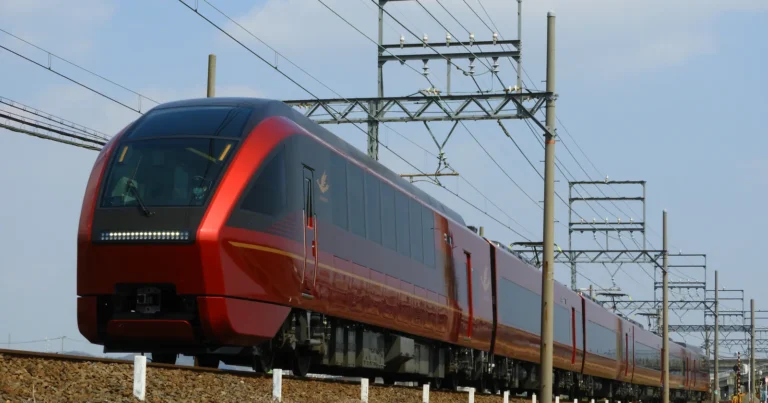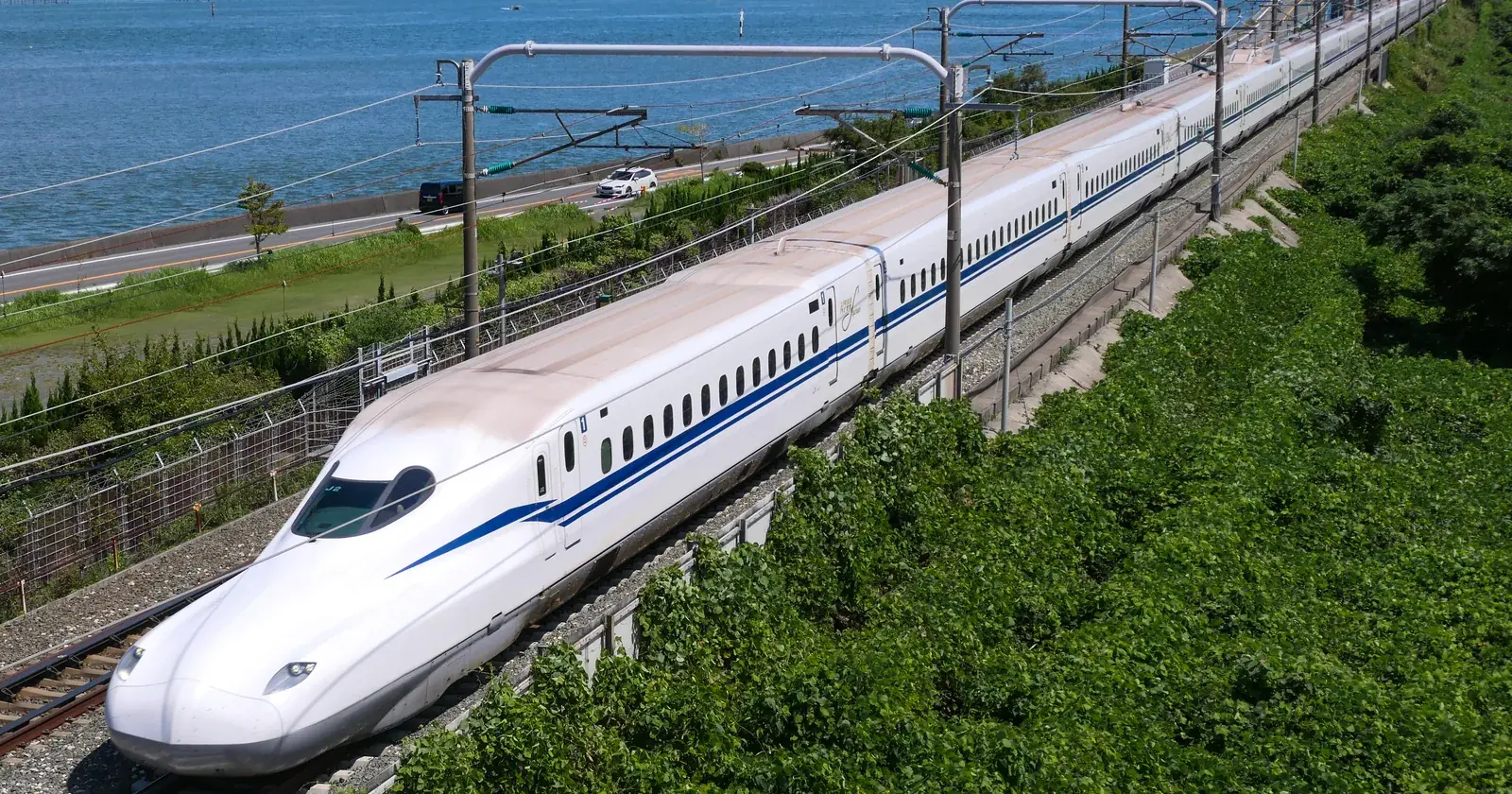
Nagoya to Kyoto takes 34 minutes by Shinkansen and Nagoya to Shin-Osaka 50. On this short hop the Hikari is exactly as fast as the Nozomi to Kyoto and cheaper, booking a week ahead drops the fare to ¥4,700, and for Osaka the Kintetsu Hinotori undercuts a Nozomi reserved seat.
Quick answer: Take the Hikari, not the Nozomi. Nagoya to Kyoto is 34 minutes on either train, and the Hikari reserved seat costs ¥5,700 against the Nozomi’s ¥5,910. If your date is fixed a week out, book EX Hayatoku 7 on smartEX for ¥4,700 — a reserved seat for less than a non-reserved ticket. For Osaka, the Kintetsu Hinotori is ¥4,990 in the regular car and ¥5,690 in the premium car, both below a ¥6,680 Nozomi reserved seat, in exchange for about two hours instead of fifty minutes. Cheapest of all is the highway bus, from ¥1,600 to Kyoto booked early on a weekday.
Last updated: August 2026 | Written by Yuu, a Nagoya native of 35 years
This article may contain affiliate links. See our affiliate disclosure for details.
Living in Nagoya, Kyoto and Osaka are not trips. They are afternoons. The Shinkansen puts Kyoto 34 minutes away — about how long it takes to cross Nagoya on the subway — and Osaka a little under an hour. It works in both directions, so if you are still deciding how to get here at all, our Tokyo to Nagoya guide covers that leg.
What follows is every realistic way to cover the ground west, with the actual 2026 numbers, read off the operators’ own Japanese-language pages on August 24, 2026. Two of the traps below cost money and one costs you an hour at a ticket gate.
Kyoto or Osaka — and which “Osaka” do you mean?
Two decisions come before any comparison of trains. Kyoto and Osaka are not interchangeable destinations from Nagoya, and “Osaka” is three different stations depending on where you are staying.
Osaka Station and Shin-Osaka Station are not the same place
The Shinkansen does not stop at Osaka Station. It stops at Shin-Osaka, which is a different station. Umeda, the downtown district most first-time visitors book their hotel in, is at Osaka Station — four more minutes on the JR Kyoto Line. You do not need a second ticket for that hop if you buy through to Osaka in the first place: bought as one journey, Nagoya to Osaka Station is ¥6,470 and 1 hour 9 minutes with one change, on a Hikari as far as Shin-Osaka. Minami — Namba, Shinsaibashi, Dotonbori — is a different part of the city again, and it is exactly where the Kintetsu option shines.
Kintetsu is an Osaka route, not a Kyoto route
Kintetsu (Kinki Nippon Railway) runs its own line from Nagoya, and its trains are genuinely worth choosing. But every one of its Nagoya limited expresses runs to Osaka-Namba. There is no through limited express from Nagoya to Kyoto in Kintetsu’s own timetable, and even the plain fare from Kintetsu-Nagoya to Kyoto is ¥3,130, more than the ¥2,640 JR charges for the same city pair on local trains.
Remember this Kintetsu is the Osaka option. For Kyoto, it is JR or a bus, and nothing else.
How do the options compare?
Here is every realistic route with its real 2026 price. All figures are one way for one adult in the regular season, taken from operator sites on August 24, 2026. Shinkansen reserved-seat prices move with the season; everything else here is fixed.
Nagoya to Kyoto
| Option | Journey time | One way | Best for |
|---|---|---|---|
| Shinkansen Hikari, reserved | 34 min | ¥5,700 | Almost everybody |
| Shinkansen Nozomi, reserved | 34 min | ¥5,910 | Catching whatever leaves next |
| Shinkansen Kodama, reserved | 51 min | ¥5,700 | Nobody, at the same price |
| Shinkansen non-reserved | 34–51 min | ¥5,170 | Light luggage, same-day decisions |
| smartEX “EX Hayatoku 7” | 34–51 min | ¥4,700 | Anyone who can commit 7 days ahead |
| Highway bus (Meishin Highway Bus) | 2 h 10 m – 2 h 40 m | ¥2,800, or ¥1,600 booked early on a weekday | Tightest budgets |
| JR local trains via Ogaki and Maibara | 2 h 37 m | ¥2,640 | Rail fans, Seishun 18 holders |
Sources: JR Central fare and timetable search, smartEX EX Hayatoku 7, West Japan JR Bus fare table.
Nagoya to Osaka
| Option | Journey time | One way | Arrives at |
|---|---|---|---|
| Shinkansen Hikari, reserved | 54 min | ¥6,470 | Shin-Osaka |
| Shinkansen Nozomi, reserved | 50 min | ¥6,680 | Shin-Osaka |
| Shinkansen Kodama, reserved | 1 h 08 m | ¥6,470 | Shin-Osaka |
| Shinkansen non-reserved | 50–68 min | ¥5,940 | Shin-Osaka |
| smartEX “EX Hayatoku 7” | 54–68 min | ¥5,470 | Shin-Osaka |
| Kintetsu Hinotori, regular car | about 2 h 08 m | ¥4,990 | Osaka-Namba |
| Kintetsu Hinotori, premium car | about 2 h 08 m | ¥5,690 | Osaka-Namba |
| Kintetsu Urban Liner, regular seat | about 2 h 21–24 m | ¥4,790 | Osaka-Namba |
| Highway bus (Meishin Highway Bus) | 2 h 50 m – 3 h 00 m | ¥3,100 before discounts | Osaka Station JR Expressway Bus Terminal |
| JR local trains via Ogaki and Maibara | 2 h 43 m | ¥3,410 | Osaka Station |
Sources: JR Central fare and timetable search, Kintetsu fare and charge search (Japanese), West Japan JR Bus fare table.
Why is the Hikari the right Shinkansen on this route?
Because on this stretch the Nozomi buys you nothing. Nagoya to Kyoto is 34 minutes on both trains. Nagoya to Shin-Osaka is 50 minutes on the Nozomi and 54 on the Hikari. The Nozomi’s reserved-seat limited express charge is ¥210 higher either way, so you are paying ¥210 for four minutes to Osaka and for nothing at all to Kyoto. That is the opposite of the Tokyo–Nagoya corridor, where the Nozomi saves close to twenty minutes and earns its premium.
The catch: the Nozomi comes far more often
Frequency is where the Nozomi earns its keep. Counting westbound departures from Nagoya in one sampled weekday hour, 10:00 to 11:00, there were six Nozomi services against one Hikari and one Kodama. That is a single sampled hour rather than an official published figure, but the shape holds all day: Nozomi services come along every few minutes, Hikari services are something you plan around.
So: walking into Nagoya Station and taking whatever leaves next, that will usually be a Nozomi and the ¥210 is fine. Choosing a departure in advance, choose a Hikari.
The same seat can cost ¥600 more depending on the date
JR Central prices reserved seats in four seasonal bands. For the year running April 1, 2026 to March 31, 2027, the peak season adds ¥400 to the regular-season reserved limited express charge, the high season adds ¥200, and the off-peak season takes ¥200 off. Checking the same Nagoya–Kyoto Hikari on four dates produced exactly that spread:
| Season | Hikari reserved, Nagoya to Kyoto |
|---|---|
| Off-peak | ¥5,500 |
| Regular | ¥5,700 |
| High | ¥5,900 |
| Peak (New Year and similar) | ¥6,100 |
Two details make this useful rather than merely annoying. The base fare of ¥2,640 never changes — only the limited express charge moves. And the non-reserved limited express charge of ¥2,530 does not move either, so a non-reserved seat costs ¥5,170 to Kyoto in every season and the worse the season, the better that looks. Rule details are on JR Central’s seasonal charge page.
Non-reserved is ¥530 below the reserved Hikari on both journeys — ¥5,170 to Kyoto, ¥5,940 to Shin-Osaka. For 34 minutes with a small bag, standing is survivable. With a large suitcase it stops being an option at all, for reasons covered further down.
How do you get the cheapest Shinkansen seat?
Book on smartEX seven days ahead and Nagoya to Kyoto costs ¥4,700. smartEX is JR’s own online booking service, free to join, and its early-booking product on this section is cheaper than a non-reserved walk-up ticket — for a reserved seat. It is the single best-value move on this route.
What smartEX costs normally
| smartEX standard price | Nagoya to Kyoto | Nagoya to Shin-Osaka |
|---|---|---|
| Nozomi, reserved | ¥5,710 | ¥6,480 |
| Hikari or Kodama, reserved | ¥5,500 | ¥6,270 |
| Non-reserved | ¥5,170 | ¥5,940 |
Note what that table is telling you: the discount is a flat ¥200 and it applies only to reserved seats. Non-reserved tickets on smartEX cost exactly what they cost at the machine, so booking online to ride non-reserved saves nothing at all.
The one that matters: EX Hayatoku 7
Reserve by 23:30 seven days before your travel date and the price drops to ¥4,700 to Kyoto and ¥5,470 to Shin-Osaka. On the Tokaido Shinkansen it covers reserved ordinary-car seats on Hikari and Kodama services. Compare the three ways of buying the same trip to Kyoto: ¥5,700 for a Hikari reserved seat at the station, ¥5,170 for non-reserved at the station, ¥4,700 on EX Hayatoku 7. A guaranteed seat for ¥470 less than standing room. If your dates are settled a week out, there is little reason to buy this journey any other way.
Not available here The deeper discount, EX Hayatoku 21, has no setting for Nagoya–Kyoto or Nagoya–Shin-Osaka. It is a long-distance product, mostly for journeys starting in Tokyo, so do not go hunting for it on this section.
Tapping through with an IC card
Register a transport IC card — Suica, ICOCA, PASMO and the rest all work — with your smartEX account and you can tap through the Shinkansen gate with no paper ticket to collect. Two things catch people out. Every member of your party needs their own registered card; if one person is unregistered, the whole group collects paper tickets instead. And the gate prints an EX riding slip showing your seat — take it, because without it you can be charged for the fare and the limited express ticket all over again on board. The mechanics are on smartEX’s IC card page; registration, changes and refunds are in our smartEX guide.
Is the Kintetsu Hinotori better than the Shinkansen to Osaka?
For a certain kind of traveller, yes — and not only because of the price. Kintetsu’s flagship Hinotori costs less than a Nozomi reserved seat even in its top class, it leaves from Kintetsu’s own Nagoya station, and it ends in Namba instead of Shin-Osaka. It takes about two hours instead of fifty minutes.
What it costs
Kintetsu prices a journey in layers: a basic fare, a limited express charge, then a car-class charge. Nagoya to Osaka-Namba is ¥2,860 basic fare plus ¥1,930 limited express, then ¥200 for a Hinotori regular car seat, ¥900 for a Hinotori premium seat, or ¥520 for an Urban Liner deluxe seat.
| How you travel | Total, one adult one way |
|---|---|
| Ordinary trains, no limited express ticket | ¥2,860 |
| Urban Liner, regular seat | ¥4,790 |
| Urban Liner, deluxe seat | ¥5,310 |
| Hinotori, regular car | ¥4,990 |
| Hinotori, premium car | ¥5,690 |
Look at the last line against the Shinkansen. A Hinotori premium seat — leather, back-shell reclining so you never disturb the passenger behind you — is ¥5,690, which is ¥990 less than a Nozomi reserved seat at ¥6,680. Cheaper, more comfortable and slower is a combination Japanese rail hardly ever offers.
The timetable is easy to remember
Nagoya departures follow a clock pattern: the Hinotori leaves on the hour, the Urban Liner at half past. From the weekday timetable in force since March 14, 2026:
| Train | Leaves Nagoya | Arrives Osaka-Namba | Journey |
|---|---|---|---|
| Hinotori, train 57 | 7:00 | 9:08 | 2 h 08 m |
| Urban Liner, train 157 | 7:30 | 9:54 | 2 h 24 m |
| Hinotori, train 58 | 8:00 | 10:07 | 2 h 07 m |
| Urban Liner, train 158 | 8:30 | 10:51 | 2 h 21 m |
The Hinotori runs past Kuwana, Yokkaichi and Shiroko, stopping only at Tsu, Yamato-Yagi, Tsuruhashi and Osaka-Uehommachi. The Urban Liner makes more stops and takes fifteen to twenty minutes longer for it.
The last departure from Nagoya is the 21:30 Urban Liner, reaching Osaka-Namba at 23:48; the last Hinotori is the 21:00. Coming back, the last train from Osaka-Namba is also at 21:30, into Nagoya at 23:53, with the last Hinotori again at 21:00. The first from Osaka-Namba is the 6:30, arriving 8:54.
Kintetsu terminates at Osaka-Namba, in the middle of Minami. If your hotel is in the Namba, Shinsaibashi or Dotonbori area, that beats arriving at Shin-Osaka and working your way south; if it is in Umeda, the Shinkansen is the more natural pairing.
The Kintetsu Rail Pass angle
The visitor-only KINTETSU RAIL PASS 5day costs ¥4,900 for an adult. A Nagoya–Namba return at the basic fare is ¥2,860 twice, or ¥5,720 — so one return trip already beats the pass by ¥820. The catch is that the pass covers the basic fare only. Every limited express charge, the ¥1,930 and the car-class charge on top, is paid separately, and Kintetsu limited expresses are entirely reserved with no unreserved cars to fall back on. We work through all four pass types in our Kintetsu Rail Pass guide; prices are from Kintetsu’s official pass page.
How cheap is the highway bus, and what do you give up?
Nagoya to Kyoto can cost ¥1,600. That is the Meishin Highway Bus early-booking fare on Monday to Thursday departures, against ¥5,700 for a Hikari reserved seat, in exchange for roughly an extra hour and forty minutes each way.
Nagoya to Kyoto by bus
| Detail | |
|---|---|
| Route | Nagoya Station to Kyoto Station Central (Karasuma) Exit, stand 1 |
| One way | ¥2,800 |
| Early booking (“Hayauri 1”) | ¥1,600 Monday–Thursday, ¥2,200 on designated dates |
| Return ticket | ¥5,000, valid 3 days |
| Student fare | ¥2,300 |
| Departures | 12 scheduled, of which one is currently suspended — 11 running |
| Operating window | 07:00 to 19:15 from Nagoya |
| Journey | 2 h 10 m – 2 h 40 m |
| Seating | Four across |
The spread in journey time is not random. The “super express” runs go via the Shin-Meishin Expressway and take 2 hours 10 to 15 minutes; the “express” runs pick up intermediate stops along the way and take 2 hours 25 to 40 minutes.
So the deal at its cleanest: ¥4,100 saved for 1 hour 40 minutes spent. On a tight budget with a flexible morning, an easy yes. On a two-day trip where the afternoon is the point, an easy no.
Nagoya to Osaka by bus
| Detail | |
|---|---|
| Route | Nagoya Station to Osaka Station JR Expressway Bus Terminal; some services continue to Universal Studios Japan |
| One way | ¥3,100 |
| Discounts | Tokuwari fare ¥1,600–2,800, sale fares ¥1,800–2,400, return ticket ¥5,700, student ¥2,600 |
| Departures | 13 scheduled, of which one runs on designated dates only |
| Operating window | 06:45 to 20:10 from Nagoya |
| Journey | 2 h 50 m – 3 h 00 m |
The daytime Osaka buses do not call at Kyoto. Every daytime service runs past it. Do not plan to string Kyoto and Osaka together on one bus ticket.
There is exactly one overnight bus
The Osaka Dream Nagoya-go leaves Nagoya Station at 23:30, calls at Gifu Station north exit at 0:30, reaches Kyoto Station Karasuma exit at 4:50, Osaka Station JR Expressway Bus Terminal at 6:00 and Universal Studios Japan at 6:30. Fares vary by travel date: ¥3,360–3,770 to Kyoto, ¥3,560–3,970 to Osaka.
Unlike the long overnight runs from Tokyo, this one does not save you a hotel night in any useful way — arriving in Kyoto at 4:50 gives you nowhere to be and nothing open. It earns its place in one scenario: being at the gates of Universal Studios Japan when they open.
Where the bus actually drops you in Osaka
JR buses use the Osaka Station JR Expressway Bus Terminal, immediately outside JR Osaka Station’s Central North Gate on the first floor of the North Gate Building. Other operators do not. WILLER EXPRESS uses entirely different places — its own terminal at the Umeda Sky Building, the fourth Osaka Ekimae building, Namba OCAT — and does not serve Kyoto Station from Nagoya at all, its only stop in Kyoto Prefecture on this route being Kosoku Nagaokakyo. Do not treat “the bus to Osaka” as one thing; check the drop-off point for the operator you booked.
At the Nagoya end, both the Kyoto and the Osaka services leave from the Shinkansen side of Nagoya Station – the JR Highway Bus stop, about a minute’s walk from the Shinkansen North Gate. The overnight service uses the same stop, and nothing on this route leaves from the Hirokoji exit, whatever an older timetable may say.
Booking in English has a real restriction
The JR group’s booking site has an English version, Japan Expressway Bus Net, with Nagoya, Kyoto and Osaka all selectable. But it carries a notice that matters: because the site does not support the GDPR or the UK GDPR, it cannot accept applications from residents of the EEA — the EU plus Iceland, Liechtenstein and Norway — or the United Kingdom, as stated on the site itself. If you live in Europe or the UK, plan to buy at a bus ticket counter after you arrive in Japan, or through a travel agent.
Can you take local trains — and why your IC card will not work
Yes, and this is the section that will save you the most trouble. Local trains reach both cities for the price of the Shinkansen base fare alone. But the IC card in your pocket cannot pay for the journey, and finding that out at the gate in Kyoto is a bad way to start a day.
The slow way, and what it costs
| Journey | Fare | Time | Changes |
|---|---|---|---|
| Nagoya to Kyoto | ¥2,640 | 2 h 37 m | 2, at Ogaki and Maibara |
| Nagoya to Osaka | ¥3,410 | 2 h 43 m | 2, at Ogaki and Maibara |
The interesting part is that those fares are identical to the base fare component of a Shinkansen ticket. The Shinkansen premium is purely the limited express charge. Framed that way, going to Kyoto by Hikari means paying ¥3,060 to save 2 hours 3 minutes — a more honest comparison than ¥5,700 against ¥2,640.
Why Suica and ICOCA do not work here
Nagoya sits in JR Central’s TOICA area, Kyoto in JR West’s ICOCA area, and on the Tokaido Main Line the western edge of the TOICA area is Maibara — which your journey crosses straight through. Both operators state the rule plainly. JR Central’s TOICA page says that except within a commuter pass section you cannot ride beyond the area, and that for journeys crossing between inside and outside it you must buy a ticket for the whole journey in advance. JR West’s ICOCA page says that with limited exceptions the areas cannot be used across.
Do this before you board Travelling to Kyoto or Osaka on local trains, buy a paper ticket for the whole journey at the machine — ¥2,640 to Kyoto, ¥3,410 to Osaka. Do not tap in with Suica, ICOCA, PASMO or manaca. Tap in and you will be stopped at the gate on arrival and made to settle up.
Now the part that genuinely confuses people. The Shinkansen will take an IC card. Register your card with smartEX and you can tap straight through the gate at Nagoya and out again at Kyoto with no paper ticket — the exact journey the local train refuses. Fast train, IC card fine; slow train, IC card useless. Our guide to Japan’s IC cards covers where else the area boundaries bite.
Sources: JR Central TOICA area, JR West ICOCA area.
What changes if you hold a Japan Rail Pass?
Almost nothing, which is the good news. The pass does not cover the Nozomi, and on most routes that hurts. Here it does not, because the Hikari is the same speed to Kyoto and four minutes slower to Shin-Osaka.
The pass explicitly excludes the Nozomi and the Mizuho, in reserved seats, Green Car seats and non-reserved seats alike. If you genuinely need a specific Nozomi, there is a supplement ticket for pass holders at ¥2,530 for an adult and ¥1,260 for a child — the same price for Nagoya–Kyoto and Nagoya–Shin-Osaka, and the same whether you want a Green Car, a reserved seat or a non-reserved seat. Paying ¥2,530 to save zero minutes to Kyoto is not a serious proposition.
The overseas pass price rose on October 1, 2026
| Where you buy it | Ordinary adult 7-day | 14-day | 21-day |
|---|---|---|---|
| Official web sales service | ¥50,000 | ¥80,000 | ¥100,000 |
| Overseas sales agents, to September 30, 2026 | ¥50,000 | ¥80,000 | ¥100,000 |
| Overseas sales agents, from October 1, 2026 | ¥53,000 | ¥84,000 | ¥105,000 |
Read that table carefully, because it is widely misreported. What rose on October 1, 2026 is the price at overseas sales agents only; the official web sales price is unchanged. Buying an exchange order abroad now costs ¥3,000 more on a seven-day pass (¥53,000) than buying through the official web sales service (¥50,000). Prices are from the Japan Rail Pass official price list; the Nozomi exclusion is on the official eligible trains page.
To be clear This is a pass price change, not a fare change. We could find no official announcement of a JR fare or charge revision on this section in October 2026, and the Nagoya–Kyoto base fare checked out at ¥2,640 on dates either side of October 1. Anything describing an “October 2026 JR fare increase” on this route is not describing the table above.
Whether the pass makes sense at all usually turns on how far west you are going. We cover the regional alternatives in our central Japan rail pass guide and run the break-even numbers in is the Japan Rail Pass worth it.
Can you do Kyoto or Osaka as a day trip from Nagoya?
Comfortably, with hours to spare. The first westbound Shinkansen and the last eastbound one leave roughly sixteen hours apart. These are weekday timings, checked for October 14, 2026.
| Journey | First | Last |
|---|---|---|
| Nagoya to Kyoto | Nozomi 101, 06:20 → 06:54 | Nozomi 293, 22:58 → 23:31 |
| Nagoya to Shin-Osaka | Nozomi 101, 06:20 → 07:09 | Nozomi 293, 22:58 → 23:45 |
| Kyoto to Nagoya | Nozomi 230, 06:14 → 06:48 | Nozomi 108, 22:46 → 23:20 |
| Shin-Osaka to Nagoya | — | Nozomi 108, 22:30 → 23:20 |
Land in Kyoto at 06:54, leave at 22:46, and you have had roughly sixteen hours in the city. Osaka works out about the same. An evening festival, an illumination, a late dinner — all of it fits, and you still sleep in Nagoya.
The catch on the way home Local trains and buses shut down long before the Shinkansen does. The last local train from Kyoto leaves at 21:31 and gets into Nagoya at 23:53; from Shin-Osaka it is 21:05, also arriving 23:53. That is more than an hour earlier than the last Shinkansen, and the last northbound highway buses go earlier still. The workable pattern is cheap on the way out, Shinkansen on the way back.
Which option suits your luggage?
Sometimes the bag decides, not the budget. If your suitcase is large, one of the cheap options quietly disappears — and not the one most people expect.
The Shinkansen: over 160 cm and you must reserve
- A bag whose three sides total more than 160 cm and up to 250 cm counts as oversized baggage.
- You must reserve an oversized baggage seat in advance. Bring one aboard without a reservation and there is a ¥1,000 fee.
- The seat itself costs the same as any other reserved seat. There is no surcharge for booking it.
- You cannot take oversized baggage into a non-reserved car, or into certain reserved cars that have no oversized baggage space.
- S Work seats, S Work P seats and the limited-period car for passengers travelling with children have no oversized baggage space either, so avoid booking those with a large case.
Which produces the rule that catches families out: with a big suitcase, “save money by riding non-reserved” is not available to you. See JR Central’s oversized baggage rules for the detail. Some deck-level oversized baggage corners are being trialled as no-reservation storage, but a trial is not something to build a plan on.
The bus is more generous than you would guess
Underfloor luggage goes up to 250 cm across three sides, with no single side over 200 cm, and you may carry on a bag totalling up to 100 cm. Handling varies by operating company, so confirm with whoever runs your service. For someone with a genuinely large case, the bus stops being merely the cheap choice and starts being the easy one.
Or skip the problem: if you are spending a few days in Kyoto or Osaka and returning to Nagoya, Japan’s door-to-door delivery network will move the bag overnight, and our luggage forwarding guide explains how.
Which option is right for you?
| If you are… | Take… | Why |
|---|---|---|
| On a first trip to Japan, one day in Kyoto | Hikari reserved, or EX Hayatoku 7 | 34 minutes. Choosing takes longer than travelling |
| A backpacker counting every yen | Highway bus | ¥1,600 to Kyoto booked early on a weekday — a return costs less than one Shinkansen leg |
| A family with two suitcases | Shinkansen reserved with oversized baggage seats | Non-reserved is not open to you. Near Namba, the Urban Liner is roomier and cheaper |
| Staying in Minami (Namba, Shinsaibashi, Dotonbori) | Kintetsu Hinotori | Terminates at Osaka-Namba, so no onward connection with bags |
| Treating the journey as part of the trip | Hinotori premium car, ¥5,690 | Cheaper than a Nozomi reserved seat, and among the best seats on any Japanese limited express |
| A Japan Rail Pass holder | Hikari | The Nozomi is not covered and is not faster to Kyoto anyway |
| Staying in Kyoto until late | Anything out, Shinkansen back | The last Nozomi out of Kyoto is at 22:46 |
How do you book from outside Japan?
smartEX is the channel to learn. It is JR’s own service, it is in English, it is free to join, and it is the only place carrying the EX Hayatoku 7 price. Once the account exists, booking a seat takes about a minute, and a registered IC card gets you through the gate without collecting anything. Our guide to booking Shinkansen tickets walks through the whole process, station machines included.
For the rest: the KINTETSU RAIL PASS is sold online and through overseas travel agents. The Japan Rail Pass has official web sales, whose price is unaffected by the October 1, 2026 overseas increase. And the JR bus site, Japan Expressway Bus Net, is in English but cannot take bookings from EEA or UK residents, as covered above.
What happens when you arrive?
Kyoto Station is a big building, so leave yourself a few minutes inside it. Highway buses from Nagoya use the Central (Karasuma) exit, at stand 1; the Shinkansen has its own platforms and gates, and the walk between them and the exit you want is longer than the map suggests.
Shin-Osaka to Osaka Station is four minutes on the JR Kyoto Line, with no extra fare if you bought through from Nagoya. Osaka-Namba, if you came by Kintetsu, leaves you in Minami, close to Namba, Shinsaibashi and Dotonbori.
Coming back the other way, the subway system under Nagoya Station is genuinely useful — our guide to getting around Nagoya covers the passes and the lines worth knowing.
Going west for Gion Matsuri?
A sixteen-hour day in Kyoto means Kyoto’s festivals are reachable from a Nagoya hotel — useful in July, when Kyoto accommodation is at its most expensive and most booked out. According to the official schedule published by the Gion Matsuri Yamahoko Rengokai, the main dates are:
- Saki Matsuri Yoiyama: July 14–16
- Saki Matsuri Yamahoko Junko: July 17, from 9:00 a.m.
- Ato Matsuri Yoiyama: July 21–23
- Ato Matsuri Yamahoko Junko: July 24, from 9:30 a.m.
Leave Nagoya on the 06:20 and you are in Kyoto at 06:54, on the parade route two hours before the floats move. Coming home, the last Nozomi at 22:46 leaves room for a full evening at Yoiyama first.
The organisers add a warning worth repeating: the dates and times of some events change from year to year, so check the current year’s schedule before committing to a date. Background on the festival and the shrine at its centre is on Yasaka Shrine’s official English pages.
Frequently asked questions
How long does it take to get from Nagoya to Kyoto?
Thirty-four minutes by Shinkansen, on both the Nozomi and the Hikari. A Kodama takes 51 minutes, a highway bus 2 hours 10 minutes to 2 hours 40 minutes, and JR local trains 2 hours 37 minutes with two changes. The Shinkansen figure is station to station, so add your own time getting to and from the stations.
How much is the Shinkansen from Nagoya to Kyoto?
In the regular season a Nozomi reserved seat is ¥5,910, a Hikari or Kodama reserved seat is ¥5,700, and a non-reserved seat is ¥5,170. Book seven days ahead on smartEX using EX Hayatoku 7 and it drops to ¥4,700 for a reserved seat. Reserved-seat prices move by up to ¥400 with the season; the non-reserved price does not move at all.
Should I take the Nozomi or the Hikari?
The Hikari. Nagoya to Kyoto takes 34 minutes on either train and the Hikari costs ¥210 less. To Shin-Osaka the Nozomi is four minutes quicker, again for ¥210 more. The only real argument for the Nozomi is frequency: it runs several times an hour, so if you are catching whatever leaves next it will usually be a Nozomi.
What is the cheapest way from Nagoya to Osaka?
The highway bus, at ¥3,100 one way before discounts, with discounted fares between ¥1,600 and ¥2,800. By rail the cheapest is Kintetsu on ordinary trains with no limited express ticket, at ¥2,860, though that means several changes and a long ride. JR local trains cost ¥3,410 and take 2 hours 43 minutes.
What is the Hinotori?
Kintetsu’s flagship limited express between Nagoya and Osaka-Namba. It leaves Nagoya on the hour and takes about 2 hours 8 minutes. A regular car seat costs ¥4,990 all in and a premium car seat ¥5,690, both less than the ¥6,680 a Nozomi reserved seat costs to Shin-Osaka. The premium car has leather back-shell reclining seats.
Can I ride the Nozomi with a Japan Rail Pass?
No. The pass excludes the Nozomi and the Mizuho in reserved seats, Green Car seats and non-reserved seats alike. You can buy a supplement ticket for pass holders at ¥2,530 for an adult and ¥1,260 for a child, the same price to Kyoto and to Shin-Osaka. On this section it is not worth it, because the Hikari is the same speed to Kyoto and only four minutes slower to Shin-Osaka.
Can I use Suica or ICOCA on local trains from Nagoya to Kyoto?
No. Nagoya is in the TOICA area and Kyoto is in the ICOCA area, and transport IC cards cannot be used for journeys that cross between IC areas. On the Tokaido Main Line the TOICA area ends at Maibara. Buy a paper ticket for the whole journey before you board, ¥2,640 to Kyoto or ¥3,410 to Osaka. The Shinkansen is different: with a card registered to smartEX you can tap straight through.
What do I do with a large suitcase?
On the Shinkansen, a bag whose three sides total more than 160 centimetres needs an oversized baggage seat reserved in advance, and bringing one aboard without a reservation costs ¥1,000. The seat itself costs no more than a normal reserved seat, but oversized baggage cannot go in a non-reserved car at all. Highway bus holds take bags up to 250 centimetres total, so the bus is more forgiving.
Can I visit Kyoto or Osaka as a day trip from Nagoya?
Yes, easily. The first Shinkansen leaves Nagoya at 06:20 and reaches Kyoto at 06:54, and the last one back leaves Kyoto at 22:46 and arrives in Nagoya at 23:20 — roughly sixteen hours in the city. Osaka works out about the same. Local trains and buses stop far earlier, so plan to return by Shinkansen.
Are Osaka Station and Shin-Osaka Station the same?
No, they are separate stations. The Shinkansen stops at Shin-Osaka, and Osaka Station in the Umeda district is four minutes further on the JR Kyoto Line. Buy your ticket through to Osaka from Nagoya and the connection is included, at ¥6,470 for 1 hour 9 minutes. If you arrive by Kintetsu instead you finish at Osaka-Namba, a third location again.
Is there a JR fare rise in October 2026?
We could not find any official announcement of a JR fare or charge revision on this section in October 2026, and the Nagoya to Kyoto base fare checked out at ¥2,640 on dates either side of October 1. What did change on October 1 is the Japan Rail Pass price at overseas sales agents, where the ordinary adult 7-day pass went from ¥50,000 to ¥53,000. The official web sales price is unchanged.
Can I get from Nagoya to Kyoto on Kintetsu?
Not in any practical sense. Kintetsu’s Nagoya limited expresses all run to Osaka-Namba and there is no through limited express to Kyoto in its timetable, so the trip means changing trains. The plain fare from Kintetsu-Nagoya to Kyoto is ¥3,130, more than the ¥2,640 JR charges on local trains. Treat Kintetsu as the Osaka option only.
About the Author
Yuu was born in Nagoya’s Nakagawa Ward and has lived here for 35 years. From this city Kyoto and Osaka are not trips so much as long afternoons, which is the perspective this guide is written from: the question is rarely whether to go, only which train to take.
Every number on this page came from the operators’ own Japanese-language pages on August 24, 2026, because the English versions of Japanese transport sites are frequently a year or more behind. Where operators disagree with each other, or publish nothing at all, this guide says so rather than picking a figure. He writes japanesefestival.net to give central Japan the English coverage it deserves.
Related Guides
- Tokyo to Nagoya: Shinkansen vs Bus vs Plane — the same comparison for the eastbound leg
- Best Day Trips from Nagoya — where else a 16-hour day will take you
- Nagoya Trip Cost & Budget Guide — what a week here actually costs
- Nagoya 3-Day Itinerary — a plan that leaves room for a day in Kyoto
- Where to Stay in Nagoya — basing yourself here instead of in Kyoto
- Japan Travel Essentials: Central Japan — IC cards, luggage, connectivity and the rest