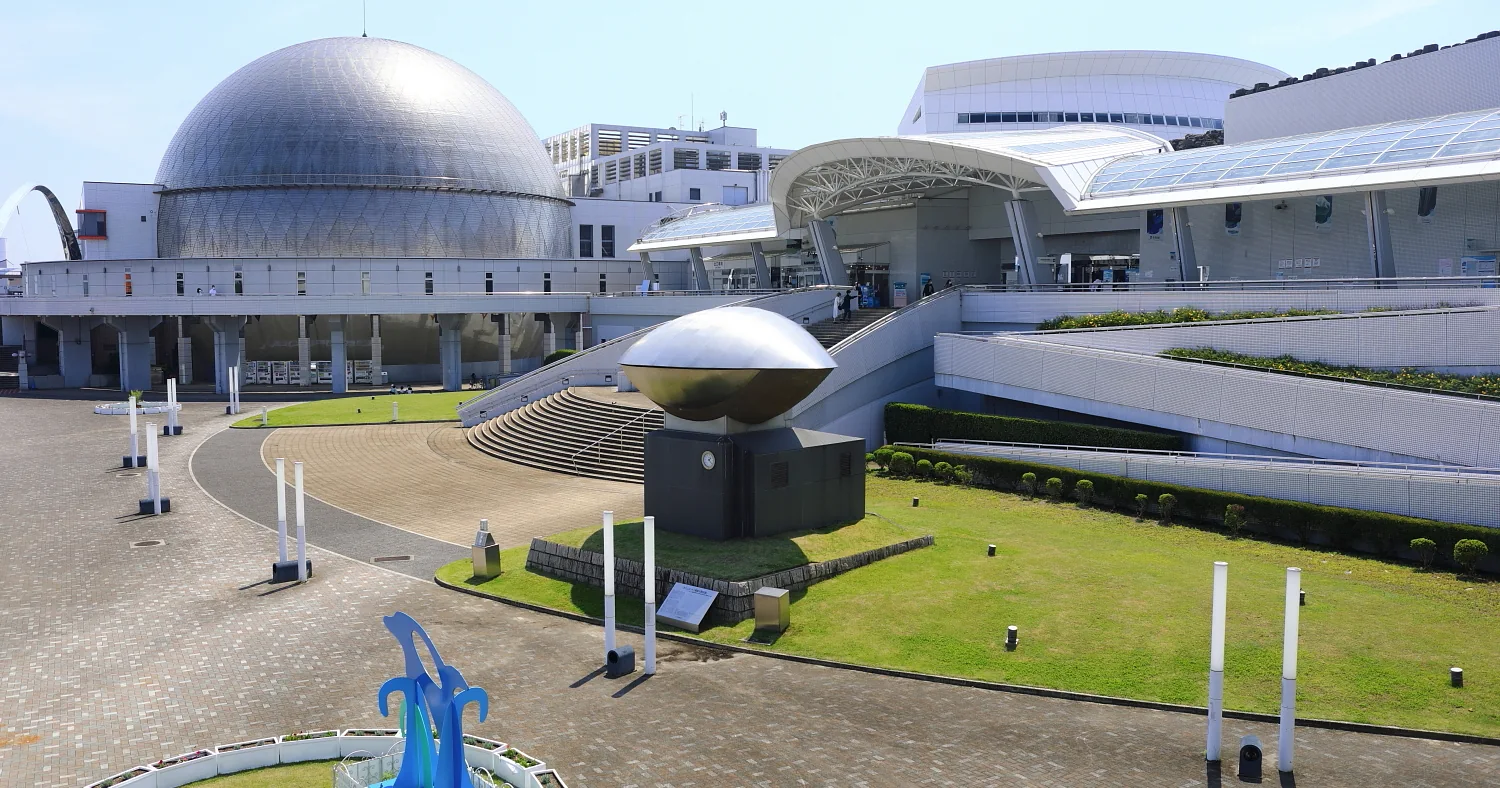
The Port of Nagoya Public Aquarium is one of the largest aquariums in Japan, set on Garden Pier overlooking Ise Bay. It is one of only a handful of facilities in Japan to keep both orcas (killer whales) and belugas (white whales), and its enormous North Building main pool hosts daily dolphin performances. The South Building takes you on a journey across five seas — from the waters of Japan to the equator and on to the Antarctic. Combined with the moored Antarctic research ship Fuji and the surrounding port skyline, it is easily a half-day to full-day visit. Access is straightforward: about 25 minutes by subway from Nagoya Station, then a 5-minute walk from Nagoyako Station. This guide covers highlights, tickets, show schedules, model itineraries, and practical visiting tips for international families and couples.
Last updated: June 2026 | Author: Yuu (born and raised in Nagoya, 35-year local)
This article may contain affiliate links. See our affiliate disclosure for details.
Table of Contents
- What Is the Port of Nagoya Public Aquarium?
- How to Get There from Nagoya Station
- Hours, Tickets & Closed Days
- North Building: Orcas, Dolphins & Belugas
- South Building: Japan, Coral Reefs & Antarctica
- Show Schedule: Dolphin Performances & Public Training
- Around the Aquarium: Antarctic Ship Fuji, Garden Pier & JETTY
- Model Itineraries: Half Day & Full Day
- Visitor Tips: Crowds, Photos & Family Travel
- Frequently Asked Questions
1. What Is the Port of Nagoya Public Aquarium?
The Port of Nagoya Public Aquarium is made up of two connected buildings — the original South Building, opened in 1992, and the North Building, added in 2001. Combined, the floor area places it among the largest aquariums in Japan. The flagship orca pool in the North Building is publicly listed at 60 meters wide, 30 meters deep (front to back), up to 12 meters in water depth, and around 13,400 tonnes of water — one of the largest aquarium pools in the country.
According to the official floor map of the Port of Nagoya Public Aquarium, the two buildings carry separate themes: the North Building is themed “The 3.5-Billion-Year Journey: Animals That Returned to the Sea,” while the South Building is themed as a “journey to Antarctica.” Display, breeding, and research of marine mammals — orcas, belugas, and bottlenose dolphins — form the core of its identity. Keeping orcas and belugas under one roof is something only a small number of Japanese aquariums can claim.
How It Compares to Other Aquariums
| Feature | Port of Nagoya Public Aquarium | Typical Aquarium |
|---|---|---|
| Headline animals | Orcas, belugas, bottlenose dolphins, penguins | Mostly fish |
| Scale | One of Japan’s largest (two-building complex) | Single building |
| Setting | Integrated into the port and waterfront cityscape | Inland or isolated coastal locations |
| Access | One subway line + 5-minute walk from Nagoya Station | Often a long bus or car ride from the nearest station |
For international visitors, the simple fact that you can see orcas in Japan is itself a meaningful experience. Live orca exhibits have steadily decreased in North America and Europe, so for many travelers, the Port of Nagoya Public Aquarium has become one of the few accessible places worldwide to observe these animals up close.
If you’re still mapping out the rest of your time in the city, our Things to Do in Nagoya guide pairs well with this article — the aquarium fits naturally alongside Nagoya Castle, Atsuta Jingu, and the Osu shopping district.
2. How to Get There from Nagoya Station
One of the aquarium’s biggest advantages is how reachable it is. From Nagoya Station, you can be at the entrance in under 30 minutes by subway, with no transfers more complicated than a city tourist can handle.
By Subway (Recommended)
- From Nagoya Station, take the Higashiyama Line to Sakae Station (two stops, via Fushimi).
- At Sakae, transfer to the Meijo Line and board a train bound for Nagoyako (Kanayama direction, counterclockwise). Because the Meijo Line runs through onto the Meiko Line at Kanayama, you stay on the same train all the way to the terminus, Nagoyako Station — no second transfer needed.
- Take Exit 3 from Nagoyako Station — the aquarium is about a 5-minute walk.
Total travel time from Nagoya Station: roughly 25-30 minutes. The subway system has clear English signage, and the route is simple enough for first-time visitors. (Source: Port of Nagoya Public Aquarium – Access.)
Local Tip from Yuu: The cleanest mental map is “Nagoya Station → Higashiyama to Sakae → Meijo Line train bound for Nagoyako (terminus).” Just one transfer at Sakae. If you arrive by Meitetsu or JR instead, transfer to the Meiko Line at Kanayama for a train bound for Nagoyako. Every station displays English, and if you’re using an IC card (Suica, ICOCA, manaca), just tap and go — no need to figure out fares.
One-way subway fare is roughly 240-270 yen depending on the segment. If you plan to ride the subway several times in a day, the Donichi Eco Kippu (weekend/holiday pass) at 620 yen gives unlimited rides on Nagoya City subways and buses on weekends and holidays — a strong choice if you’re combining the aquarium with Sakae or Osu. (Source: Nagoya City Transportation Bureau.)
For a complete overview of subway, bus, and IC card options, see our Getting Around Nagoya transport guide.
Taxi, Walking & Cycling
- Taxi: About 20-25 minutes from Nagoya Station, roughly 3,000-4,000 yen. A reasonable choice for families with luggage or anyone wanting to skip the transfers.
- Aonami Line: Note that the Aonami Line runs from Nagoya Station to Kinjo-futo (where the Legoland and Maglev museum are) — it does not serve the aquarium. The Meiko Line subway is the correct choice.
- Driving: Paid parking is available around Garden Pier (Garden Pier Parking Lot and others). Expect crowding on weekends and holidays.
From Chubu Centrair International Airport
- Take the Meitetsu Mu Sky limited express to Kanayama Station (about 24 minutes), then transfer to the Meiko subway line and ride to Nagoyako Station. Total: roughly 45-60 minutes depending on connection times — always check the official access page or a live transit app for the exact connection.
- This makes the aquarium one of the few major Nagoya attractions you can reach directly from the airport without passing through Nagoya Station.
If that is the plan, see Atsuta Jingu. There is a separate guide to hotels near Nagoya Station.
3. Hours, Tickets & Closed Days
Opening Hours
| Period | Hours |
|---|---|
| Standard | 9:30 – 17:30 |
| Golden Week, summer holidays & other peak periods | 9:30 – 20:00 (extended evening hours) |
| Winter (December – March) | 9:30 – 17:00 |
Last admission is one hour before closing. Source: Port of Nagoya Public Aquarium official site.
During the summer holiday period (late July through August), the aquarium often runs as a “Night Aquarium” with extended evening hours. The illuminated main pool during the night-time dolphin performance is one of the most memorable visitor experiences of the year — and a great way to skip the daytime heat.
Closed Days
- Mondays (when Monday is a national holiday, the aquarium closes the following weekday instead).
- Year-end and New Year hours vary; check the official calendar before visiting.
- During Golden Week, summer break, and spring break, the aquarium typically operates without weekly closures.
Admission Fees
| Category | Daytime | Evening (5pm onward, peak periods) |
|---|---|---|
| Adults & high school students | 2,030 yen | 1,620 yen |
| Elementary & junior high school students | 1,010 yen | 800 yen |
| Preschool (4 and over) | 500 yen | 400 yen |
| 3 and under | Free | Free |
Source: Port of Nagoya Public Aquarium – Admission Fees (verified May 2026). Evening rates apply only during peak-period night-operation days.
How to Get Tickets
- Same-day tickets: Available at the entrance ticket machines. Major credit cards are accepted.
- Advance e-tickets: Available via the official site and partner platforms. Strongly recommended during Golden Week and the summer holidays — same-day queues at the gate can stretch 30-60 minutes.
- International ticket platforms: Convenient one-click purchase with English support and confirmation receipts that work straight from your phone.
Annual Passport & Combo Tickets
- Individual annual passport: 5,190 yen for adults/high school students; 2,540 yen for elementary/junior high students; 1,220 yen for preschoolers (4 and over). Worth it if you plan to visit twice in a year.
- Family-rate annual passport: Discounted rates apply when multiple family members register together (4,680 yen for adults, 2,240 yen for elementary/junior high, 1,010 yen for preschoolers).
- 4-facility combination ticket: One ticket covering the aquarium, the Antarctic research ship Fuji, the Nagoya Port Building observation deck and the Nagoya Maritime Museum costs 2,440 yen for adults and high school students (1,210 yen for elementary and junior high students, 500 yen for preschoolers aged 4 and over) — against 2,930 yen if bought separately. Sold at the aquarium ticket counter, the ticket machine on the 1st floor of the Port Building, and the machine in front of the ship Fuji. (Source: Port of Nagoya Public Aquarium – Admission Fees.) Note for August 1 – November 30, 2026: three of these four facilities — the ship Fuji, the Port Building observation deck and the Nagoya Maritime Museum — are closed for Asian Games preparations during that window (see section 7), so only the aquarium portion would be usable. The official fee page has not been updated with a closure note, so check how the combo ticket is being handled at the counter before buying it.
See tickets and passes you can pre-book.
4. North Building: Orcas, Dolphins & Belugas
The North Building, added in 2001, is the heart of the aquarium and home to the largest marine mammals. If you only have time for half the building, make it this one. The most exciting moments of any visit happen here.
4-1. Orcas
The aquarium’s signature animal. Live orca exhibits exist at only a tiny number of Japanese facilities, and this is one of them. As of 2026 the aquarium keeps one orca — a female named Lin, born here on November 13, 2012 — after the male Earth died in August 2025 and Stella was returned to her owner and moved to Kobe Suma Sea World in March 2024. Orcas can grow to 6-8 meters long and several tonnes — apex predators of the marine ecosystem — and watching one cruise past the underwater viewing window is a different category of experience from seeing fish in a tank.
During the public training sessions (see schedule below), trainers and the orca work together in full view of the audience. It’s an honest, low-spectacle look at how the animals are cared for.
4-2. Bottlenose Dolphins
The main pool hosts the “BLUE ECHO” dolphin performance several times a day. Jumps, spins, and crowd-soaking splashes — the routines themselves are familiar to anyone who has been to a major aquarium, but the scale of the pool itself is something else. The first three rows of seating are an officially marked splash zone; bring a towel or a poncho.
4-3. Belugas (White Whales)
The North Building has a dedicated beluga pool. Their smooth white bodies and the rounded “melon” forehead are unmistakable, and during the public training sessions, you can watch them respond to trainers’ cues, vocalize, and surface for contact at very close range.
Belugas live in cold Arctic waters in the wild, and only a handful of Japanese aquariums keep them. The reaction from young children — “look, a white dolphin!” — is more or less universal.
4-4. Tips for the North Building
- The main pool has both above-water seating and an underwater viewing gallery, which lets you watch dolphins and orcas swim past the glass at eye level.
- Rows 1-3 of the show seating are the official splash zone. If you want to keep your camera dry, sit in row 4 or further back.
- For families with young children who may find the spray overwhelming, the underwater gallery is often a calmer way to enjoy the same animals.
5. South Building: Japan, Coral Reefs & Antarctica
The South Building — the aquarium’s original building, opened in 1992 — is themed as a “journey to Antarctica.” Visitors travel through five distinct seas — the local waters of central Japan, the equatorial ocean, the deep sea, the wetlands of Australia, and finally Antarctica.
5-1. Seas of Japan
The journey begins close to home: Ise Bay, Mikawa Bay, and the Kuroshio current. Highlights include a sardine “tornado” — thousands of fish moving in a synchronized vortex — and a wide range of deep-sea creatures from the waters off central Japan.
5-2. Equator & Coral Reefs
Tropical fish and coral reef tanks bursting with color. Garden eels poking out of the sand and Pacific blue tangs (the famous “Dory” from Finding Nemo) make this one of the most child-friendly sections in the building.
5-3. Deep-Sea Gallery
Giant spider crabs, cat sharks, specimens and dioramas of creatures from below 200 meters, set against atmospheric lighting. On the same floor sits Kurage Nagorium, a dedicated jellyfish gallery holding roughly 11 species and 500 individuals. It’s one of the aquarium’s most photogenic areas — and a quiet enough space for a calm pause mid-visit.
5-4. Australian Waterways
A small but distinctive section recreating a subtropical Australian waterway with living plants from the region. Look for the pig-nosed turtle (Carettochelys insculpta), the Australian lungfish, the northern barramundi (an arowana relative) and other Southern Hemisphere species you won’t see in many other Japanese aquariums.
5-5. Antarctic Sea & Penguins
The climax of the South Building. Several penguin species — Adelie, Gentoo, Chinstrap, and Emperor penguins — share a wide enclosure that recreates real ice slopes and sub-zero water temperatures.
Emperor penguins are kept at only a few facilities in Japan, which makes the Port of Nagoya Public Aquarium one of the country’s premier destinations for penguin viewing. If your child is even mildly interested in penguins, this is the room they will not want to leave.
6. Show Schedule: Dolphin Performances & Public Training
Show and public training schedules vary by day, season, and the health of individual animals. The most reliable approach is to check the schedule board on arrival or the Port of Nagoya Public Aquarium official site on the morning of your visit. A typical daily example:
| Program | Approx. Time | Location |
|---|---|---|
| Dolphin performance (“BLUE ECHO”) | 3-4 times daily (summer 2026: 10:30 / 12:30 / 14:30 / 16:30) | North Building 3F stadium (main pool) |
| Orca public training (approx. 15 min) | Times posted on the day | North Building 3F stadium (orca pool) |
| Beluga public training (approx. 10 min) | Times posted on the day | North Building 3F “Aurora Sea” beluga pool |
| Penguin feeding time (approx. 10 min) | Times posted on the day | South Building 3F penguin tank (Antarctic Sea) |
Times shift with the season and the animals. Always confirm on the day with the official schedule.
How to Watch Like a Local
- The dolphin performance runs 3-4 times a day. A common strategy is to watch the first show, explore the rest of the aquarium, and return for the final show — giving you two performances in one visit.
- Rows 1-3 are splash territory. A waterproof case (or a cheap rain poncho from a convenience store) is a small investment that pays off.
- Beluga public training is a smaller-scale program but at very close range — easier to enjoy with toddlers than the big dolphin show.
- The summer “Night Aquarium” performance is a separate experience: lights, music, and a meaningfully different atmosphere from the daytime show.
7. Around the Aquarium: Antarctic Ship Fuji, Garden Pier & JETTY
It would be a missed opportunity to leave straight after the aquarium. Garden Pier itself has several walkable attractions worth folding into your day.
7-1. Antarctic Research Ship Fuji
Permanently moored right next to the aquarium is the actual Fuji, the icebreaker that served Japan’s Antarctic expeditions for 18 years starting in 1965. The ship is now a floating museum displaying the cabins, kitchens, and scientific equipment used by the original crew. (Official Fuji page)
Temporarily closed August 1 – November 30, 2026: the Nagoya Port Building (the whole building, including the Nagoya Maritime Museum and the observation deck), the Fuji, and Port House are all closed during this window for preparations related to the Aichi-Nagoya 2026 Asian Games and Asian Para Games. The aquarium itself is not affected and stays open as normal. (Official closure notice)
- Admission: roughly 300 yen per adult.
- The 4-facility combination ticket (aquarium + Fuji + Port Building observation deck + Nagoya Maritime Museum, 2,440 yen for adults) covers it, and is sold at the machine in front of the ship. Unusable August 1 – November 30, 2026 while the ship and Port Building are closed for Asian Games preparations.
- Surprisingly popular with both children and adults — the “Antarctic theme” pairs naturally with the penguin exhibit.
7-2. Nagoya Port Building Observation Deck
An observation deck 53 meters above ground, on the top (7th) floor of the 63-meter-tall Nagoya Port Building, offering 360-degree views of Nagoya Port, Ise Bay, and the Nagoya cityscape. On clear days you can see across the bay — a strong sunset spot, especially in autumn and winter. Closed August 1 – November 30, 2026 for Asian Games preparations — see the closure notice above.
7-3. JETTY
Right across from the aquarium is JETTY, a port-side dining and shopping complex. Seafood bowls, Western-style restaurants, cafes, and souvenir stores are all on-site. A natural lunch stop before or after the aquarium — and usually a quieter option than the in-aquarium restaurants during peak hours.
7-4. Strolling Garden Pier
A pleasant boardwalk runs along the water with benches and viewpoints. The sunset hour in particular is one of the most photogenic moments along this stretch of waterfront, and seasonal illuminations sometimes light up the area in winter.
7-5. Nagoya Port Festival (Summer)
Each July, on Marine Day, Garden Pier normally hosts the Nagoya Port Festival — a fireworks-and-yatai event that turns the entire pier into an open-air festival ground. Note: at the 80th edition on July 20, 2026 the organisers cancelled the fireworks display, the parade and the stage events, because the athletes’ village for the Asian Games and Asian Para Games was built on Garden Pier and safe viewing space could not be secured; only the festival float procession and the mass dance went ahead, on a reduced scale. As a Nagoya local, I have memories of riding bikes down here with friends as a teenager during festival season; it’s the kind of summer evening that lives in many residents’ minds. If your trip lines up with mid-July, it’s worth checking the official calendar.
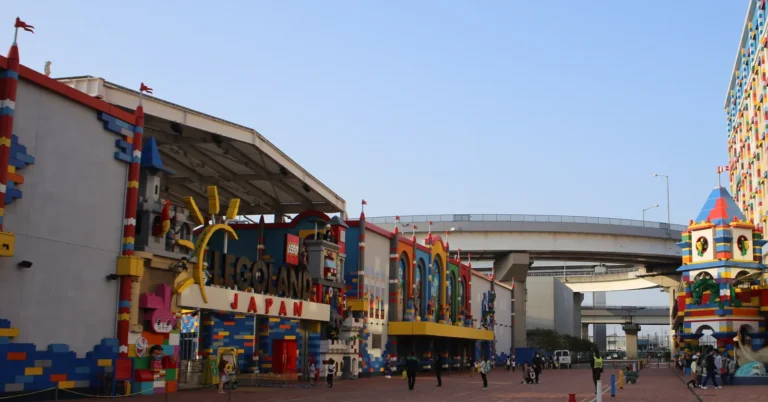
See LEGOLAND Japan and SEA LIFE nearby. We cover Nagoya meshi back in the city in a separate guide.
8. Model Itineraries: Half Day & Full Day
8-1. Half-Day Plan (3-4 hours)
Best for travelers who want to focus on the aquarium itself and move on to other Nagoya sights afterwards.
| Time | What to Do |
|---|---|
| 9:30 | Enter at opening (head straight to the belugas while crowds are light) |
| 10:15 | Take a seat in the North Building 3F stadium for the first dolphin performance (summer 2026 start times: 10:30 / 12:30 / 14:30 / 16:30) |
| 11:00 | South Building: tour from “Seas of Japan” through to Antarctica |
| 12:15 | Back to the stadium if an orca or beluga public training is on that day’s schedule (these are announced on the day, not fixed) |
| 12:45 | Lunch at JETTY, then onward |
8-2. Full-Day Plan (Family or Couple)
For travelers who want to combine the aquarium with the full Garden Pier experience.
| Time | What to Do |
|---|---|
| 9:30 | Aquarium opens — head in |
| 10:30 | Dolphin performance, first show of the day (summer 2026 start times: 10:30 / 12:30 / 14:30 / 16:30) |
| 11:15 | North Building: orcas and belugas, plus any public training posted for that day |
| 12:30 | Lunch at JETTY |
| 13:30 | South Building, timed around that day’s penguin feeding (announced on the day) |
| 14:30 | Dolphin performance, second show |
| 15:30 | Finish the South Building or go back to a favorite tank |
| 16:30 | Tour the Antarctic ship Fuji |
| 17:30 | Sunset views from the Nagoya Port Building observation deck |
| 18:30 | Return to Sakae for dinner |
Why the times above are approximate: only the dolphin performance has published start times, and they shift with the season — as of summer 2026 they are 10:30 / 12:30 / 14:30 / 16:30. The orca, beluga and penguin programmes have no fixed timetable; each day’s times go up on the schedule board at the entrance. Build your route around that board rather than the clock times above (Port of Nagoya Public Aquarium official site). Note also that the Fuji tour and the Port Building observation deck in the evening slots above are unavailable August 1 – November 30, 2026 (Asian Games preparations); swap in more time at JETTY or the Garden Pier boardwalk during that window.
8-3. Combining With the Rest of Your Nagoya Trip
Because the aquarium is comfortably done in half a day, it slots well into a multi-day Nagoya trip. Our Nagoya 3-Day Itinerary shows one way to combine it with Nagoya Castle, Atsuta Shrine, Osu, and a hitsumabushi dinner. If you’re still finalizing where to stay, our Where to Stay in Nagoya guide breaks down the major neighborhoods (Meieki, Sakae, Fushimi) and which one fits which travel style.
You can read more about more indoor options for a wet day. Related reading: the Toyota Commemorative Museum. We also cover 2-day weekend itinerary.
9. Visitor Tips: Crowds, Photos & Family Travel
9-1. Beating the Crowds
- Weekday mornings are best. From opening (9:30) until about 11:00, the building is at its calmest.
- Avoid: Golden Week, Obon, year-end and New Year, spring break weekends, and summer-holiday weekends.
- The summer “Night Aquarium” evenings are often less crowded than daytime peaks, with the bonus of cooler temperatures.
- Counterintuitively, rainy days can be more crowded, since families switch to indoor plans.
9-2. Where to Take Photos
| Spot | What to Capture |
|---|---|
| North Building underwater gallery | Dolphins and orcas mid-swim, eye level through glass |
| Beluga viewing window | White silhouettes of belugas with visitor reflections |
| South Building deep-sea gallery | Jellyfish under colored lighting |
| Antarctic Sea exhibit | Penguins on ice |
| Garden Pier deck | Group photos with the port skyline; note that boarding the Antarctic ship Fuji is suspended August 1 – November 30, 2026 (see section 7-1) |
For phone photography through glass, switch off the flash and rest the lens directly against the glass to eliminate reflections — this single trick fixes most aquarium photo problems.
9-3. Family Travel Notes
- Strollers: The building is fully accessible with elevators, and a limited number of strollers are available for rental at the entrance.
- Nursing rooms & diaper changing: Both the North and South buildings have dedicated facilities.
- Lockers: Paid coin lockers by the North Building entrance and in the connecting corridor (200 yen small, 300 yen large, 400 yen extra large) — useful given how often you’ll be carrying or holding up small children at viewing windows.
- Food: The aquarium has restaurants and cafes, but during peak hours JETTY across the plaza has more variety and shorter waits.
- For penguin-loving kids, prioritize the Antarctic Sea feeding time over almost everything else — the visceral excitement is hard to replicate.
- I’ve helped many international families navigate this aquarium, and the consistent feedback is that it works well across age ranges from toddlers to grandparents — a rare quality for an attraction at this scale.
9-4. Couple Travel Notes
- Late afternoon to closing tends to be calmer, with the jellyfish gallery’s atmospheric lighting at its best.
- The summer Night Aquarium, with light shows and music, has become a popular date-night option.
- After visiting, walk the Garden Pier boardwalk. The Nagoya Port Building observation deck is the classic way to close the evening, but it is shut August 1 – November 30, 2026 (see section 7-2), so during that window let the boardwalk and the JETTY waterfront be the evening instead.
9-5. Where to Stay Near the Aquarium
Most international visitors base themselves around Nagoya Station (Meieki) or Sakae, both of which connect to the aquarium by a single subway ride. There are also a handful of hotels closer to the port — convenient if you’re prioritizing an early-morning visit or pairing the aquarium with a day at the port. For broader trip-planning context, our Japan Travel Essentials: Central Japan guide covers payment, language, and packing.
For the detail, see family-friendly hotels in Nagoya. Worth a look: the best time of year to visit.
10. Frequently Asked Questions
How long should I plan to spend at the Port of Nagoya Public Aquarium?
For the full exhibits plus one dolphin performance, plan around 3 hours. If you want to catch two dolphin shows and explore the South Building thoroughly, 5 to 6 hours is realistic. Most international families I’ve helped end up staying about 4 hours.
Is there English signage and English support inside the aquarium?
Yes. Major exhibit panels are bilingual in Japanese and English, and English-language maps are available at the entrance. Dolphin performance announcements are mainly in Japanese, but the visual nature of the show means the language barrier is minimal. There is also an English-language section of the official website.
Am I guaranteed to see the orca?
Not necessarily. The aquarium currently keeps a single orca, a female named Lin, and whether she appears on a given day depends on her health and the training schedule. Check the daily schedule board on arrival, or the Port of Nagoya Public Aquarium official website on the morning of your visit, for the most current information.
Are credit cards and IC cards accepted?
Yes. Major credit cards and electronic money are accepted at the ticket machines, gift shop, and restaurants inside the aquarium. Some smaller kiosks may be cash-only, so it is wise to carry a small amount of yen as backup.
Is the aquarium worth visiting on a rainy day?
Absolutely. The aquarium is a fully indoor facility, so it works as a reliable rainy-day plan. Note that the adjacent Antarctic research ship Fuji and the Garden Pier walkway are outdoor attractions, so bring an umbrella or rain jacket if you plan to combine them.
Can I visit the aquarium and Ghibli Park on the same day?
It is geographically possible, but each location really needs at least a half day. Most travelers find it more enjoyable to split them across two days of a Nagoya trip, which also leaves time for Nagoya Castle, Atsuta Shrine, or Osu shopping district.
What age range is the aquarium best for?
Penguins, dolphins, and the colorful coral reef tanks are accessible from around 2-3 years old. The orcas and the deep-sea exhibits are appreciated more deeply by elementary-age and older children, who can absorb the educational context. Strollers and elevators are available throughout the building.
Where can I eat near the aquarium?
Right in front of the aquarium is JETTY, a port-side complex with seafood bowls, Western dining, cafes, and souvenir shops. There are also restaurants and cafes inside the aquarium itself, but JETTY tends to offer more variety and is often less crowded during peak hours.
Related Guides
- Things to Do in Nagoya — A complete sightseeing overview for first-time visitors.
- Getting Around Nagoya: Transport Guide — Subway, bus, and IC card practical info.
- Nagoya 3-Day Itinerary — A local’s plan combining aquarium, castle, shrine, and food.
- Where to Stay in Nagoya — Meieki vs. Sakae vs. Fushimi: which area suits your trip.
- Japan Travel Essentials: Central Japan — Money, payment, language, packing.
References
- Port of Nagoya Public Aquarium – Official Site — hours, fees, show schedules, exhibit content.
- Port of Nagoya Public Aquarium – English Site — visitor information for international visitors.
- Port of Nagoya Public Aquarium – Admission Fees — verified pricing as of May 2026.
- Port of Nagoya Authority – Official English Site — Garden Pier, observation deck, ship Fuji.
- Nagoya City Transportation Bureau — Meiko Line subway, Donichi Eco Kippu day pass.
— Yuu