Gujo Hachiman is a small castle town in the Gifu mountains, north of Nagoya, and it is built around running water. The draw is a wooden castle keep rebuilt in 1933, canal-lined lanes, plastic food-sample workshops you can actually join, and about thirty nights of Gujo Odori dancing each summer.
Written by Yuu — a Nagoya native of 35 years. Published August 16, 2026.
This article may contain affiliate links. See our affiliate disclosure for details.
All festival details verified from official sources on August 16, 2026.

What is Gujo Hachiman?
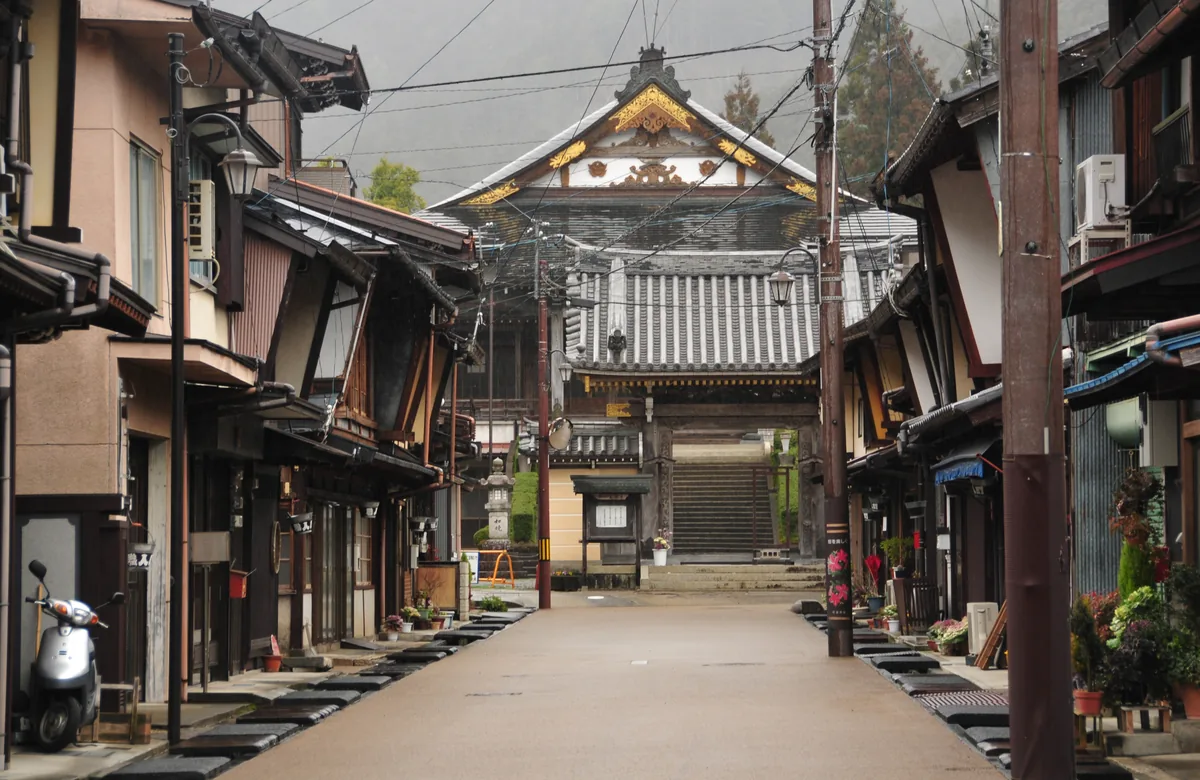
Gujo Hachiman (郡上八幡) is a castle town in Gujo City, Gifu Prefecture, laid out on a grid where two rivers meet. Canals cut in the 1660s as firebreaks still run down the streets, a hilltop keep looks over it, and the tourism association says the town produces most of Japan’s plastic food samples.
Everyone calls it the town of water, which sounds like tourist-board copy until you learn why the water is there. The tourism association is blunt: the channels running through the old town were built around 1660 by an Endo lord redeveloping his castle town, and he spent four years on them for one reason — fire prevention. Houses were packed tight and the town had already burned twice.
The system is still in use. Along the Yanagimachi channel, households drop their own weir boards in to raise the water level and wash in it, canal cleaning runs on a rota, and the association describes the tradition as kept up under rules as strict as a local code.
It is a lived-in town, not an open-air museum. The 14.1 hectares that draw visitors — the main-gate street, the samurai street and the artisans’ and blacksmiths’ quarters — form a nationally designated Important Preservation District for Groups of Traditional Buildings, cited for the way unified townhouses and water facilities together carry the character of the place.
From Nagoya you head up the Nagara River valley into Gifu’s interior, and the air changes on the way. One surprise waits at the top: plastic food samples started here. The tourism association says the idea originated in this town and still accounts for around 70% of national output — its own figure, not a government statistic.
What should I see in Gujo Hachiman?
Start at the free Old Town Hall Memorial Hall, which doubles as the tourist office and has 24-hour lockers. Then walk the water — Sogisui spring, Yanaka Mizu-no-Komichi, Igawa Komichi — and finish by climbing to Gujo Hachiman Castle, which is a mountain castle, not a stroll.
Gujo Hachiman Castle
The keep you photograph is not an original. The castle’s own site says it was built in 1933, modelled on Ogaki Castle, and that it is unusual for being built in wood — which is why it is known as the oldest surviving wooden reconstructed castle keep in Japan. Its stone walls became a prefectural historic site in 1955, the keep a Gujo City cultural property in 1987.
The origins run back to a battle for control of Gujo in 1559. The castle proper dates to 1566 and its founder was Endo Yoshitaka (遠藤慶隆); in 1870 it was pulled down to its walls.
| Item | Detail |
|---|---|
| Keep | Rebuilt 1933, wooden, four tiers and five storeys, 17.18 m tall |
| Elevation | 353.95 m above sea level, 129.75 m above the town, at the summit lookout |
| Admission | 400 yen adults (high school and above), 200 yen children (elementary and junior high) |
| Groups of 20 or more | 350 yen adults, 150 yen children |
| Combination ticket | Castle plus Hakurankan 750 yen / 400 yen, valid one week from purchase |
| Eight-site pass | 1,500 yen / 900 yen, valid two days |
| Hours | March-May and September-October 9:00-17:00; June-August 8:00-18:00; November-February 9:00-16:30 |
| Last entry | 15 minutes before closing |
| Closed | December 20 to January 10, plus unscheduled closures for weather |
| Also listed | Zoku Nihon 100 Meijo, the follow-up Top 100 Castles list; stamp on the keep’s first floor |
The combination ticket does real work: the museum alone is 540 yen, so 400 plus 540 is 940 yen against 750 for the pair. The eight-site pass is published with a price and a two-day validity but no list of the sites, so ask at the counter.
One trap for early-August trips: on the day of the castle town fireworks, usually around August 7, the castle opens only from about 8:00 to 10:00, and from 11:00 the summit is closed to all but staff.
Autumn is the season the castle sells hardest, and fairly: almost all the planting inside the grounds is maple and the average peak is mid-November. A Maple Festival with an evening light-up runs in November, but as of August 16, 2026 this year’s dates and pricing were unpublished; they normally appear on the castle’s news page in October.
The water walk
Sogisui (宗祇水) is the set piece: a spring designated by the Environment Agency in 1985 as one of Japan’s 100 Famous Waters. Gifu Prefecture calls it the first of the hundred to be designated, while the Environment Ministry’s list gives no numbering, so treat that as a local claim. In 1471 the renga master Sogi and the lord of Gujo exchanged poems beside it as Sogi left for Kyoto.
Yanaka Mizu-no-Komichi (やなか水のこみち) is the lane everyone photographs: a channel, willows and a path of 80,000 river cobbles from the Nagara and Yoshida rivers, the number a play on the district’s name.
Igawa Komichi (いがわこみち) is the one to be careful in. It runs beside a broad channel full of carp next to the Memorial Hall, with three washing places along it. The association writes that the women who used them as a meeting spot have thinned out because they dislike having cameras pointed at them. Photograph the water, not the residents.
The mizubune (水舟) are two- or three-basin tanks fed by spring water: the first basin for drinking and washing food, the second for dirty dishes, the scraps flowing to a pond where carp eat them. Several are installed for visitors around town.
You will also read about young men leaping from Shin-bashi into the Yoshida River. Do not join in. The tourism association devotes a public request to it: the bridge is 12 metres, which it likens to a fifth-floor balcony, and the jump is a rite of passage for local children.
Indoor stops, and the free one
| Place | Admission | Hours and closures |
|---|---|---|
| Gujo Hachiman Old Town Hall Memorial Hall | Free | 8:30-17:00; closed December 29 to January 3 |
| Gujo Hachiman Hakurankan | 540 yen / 320 yen | 9:30-17:00, last entry 16:30, to 18:00 on Gujo Odori dates; closed December 24 to January 2 |
| Yudokan | 400 yen | Closed Thursdays |
| Saito Museum | 300 yen | Closed Thursdays |
| Gujo Hachiman Rakugeikan | 220 yen | Closed Mondays |
| Jionzenji | 500 yen | Temple visit fee |
| Machinami Koryukan | Free | Closed Wednesdays |
The last five prices come from the tourism association’s listing rather than each site’s own page, so read them as indicative.
The Memorial Hall is the practical hero of a day trip: free, 8:30 to 17:00, closed only December 29 to January 3, and home to the tourism association. Its car park, outside toilets and coin lockers are usable 24 hours all year, with free wi-fi inside. The building is a Western-style wooden town hall of 1936, registered as a national cultural property in 1998.
The Hakurankan makes Gujo Odori a year-round proposition, with live demonstrations five times a day from 11:00 to 15:00, about fifteen minutes each. Demonstration days vary month to month and are published in a calendar on the museum’s news page.
Can I make fake food samples in Gujo Hachiman?
Yes, at two different makers. Sample Kobo in the old town takes walk-ins for four of its five menus, from 1,500 yen. Sample Village Iwasaki needs a phone booking at its main shop near the station, but its old-town branch accepts walk-ins.
Booking is where foreign visitors get stuck. Neither maker publishes an English booking route: Sample Kobo (さんぷる工房) takes reservations by phone and through Jalan, both in Japanese, and Iwasaki by phone. Nothing on either site mentions English-speaking staff, so the workaround is the walk-in options below, or asking your accommodation to call.
| Sample Kobo | Iwasaki, main shop | Iwasaki, old-town branch | |
|---|---|---|---|
| Where | Hashimoto-cho, in the old town | 5 minutes’ walk from Gujo-Hachiman Station | Tonomachi, in the old town |
| Booking | Four of five menus take walk-ins; tempura must be booked | Advance booking required | Walk-ins accepted; call ahead if busy |
| Phone | 0575-67-1870, lines open 10:00-16:00 | 0575-65-3378 | 0575-65-3378 |
| Hours | Shop 10:00-17:00 | 10:00-16:00, experiences until 15:00 | Experience reception 10:00-15:00 |
| Closed | New Year only | Tuesdays, first Thursday of October, first Saturday of February, December 29 to January 5 | Wednesdays, first Thursday of October; winter closure December 21 to February 20 |
| Cheapest experience | 1,500 yen | 1,600 yen (B set) | 1,600 yen (B set) |
| How long | 20-30 minutes | Not published | Not published |
Sample Kobo’s fee includes admission to its Retro Art Museum, otherwise 500 yen. The spilled ice cream phone stand is 1,500 yen, the milk bottle stand and the tart memo stand 2,000 yen each, the sushi stand 2,400 yen; all four take same-day walk-ins. Tempura is 3,000 yen, must be booked, and is open only to elementary school children and above because the work uses hot wax.
One quirk worth planning around: during Golden Week, Obon and three-day weekends Sample Kobo takes no advance reservations at all, and you apply in person on the day. That makes a mid-August visit a turn-up-early proposition.
Iwasaki is the industry’s biggest name and its menu is wider: tempura and lettuce at 2,000 yen for the A set or 1,600 yen for the B set, a petit tart 1,600 yen, sushi 1,900 yen, zaru soba 2,200 yen, spaghetti caught mid-lift on a fork 3,800 yen, ramen with its bowl 4,200 yen and keychains from 1,400 yen. Zaru soba, spaghetti and shaved ice are weekday-only specials, not offered during the spring and summer holidays.
My practical read: without a reservation, aim at Sample Kobo or the Iwasaki branch in the old town, and check the day of the week first. The main shop shuts on Tuesdays, the branch on Wednesdays, and the branch closes for winter from December 21 to February 20. Iwasaki’s last experience slot is 15:00, not the 16:00 closing time.
One warning about figures elsewhere: the tourism association’s page still lists an Iwasaki experience at 800 yen and a phone number that does not match the maker’s. The maker’s own site prices its cheapest set at 1,600 yen and gives 0575-65-3378. Where a facility and a portal disagree, the facility wins.
What about Gujo Odori?
Gujo Odori (郡上おどり) runs about thirty nights from mid-July to early September, it is free, and anyone can join the circle — visitors included. Four of those nights are danced until dawn in mid-August. Full dates and etiquette are in my dedicated Gujo Odori guide.
The short version, because this is a town guide. In 2026 the season runs from July 11 to September 5, thirty nights in all, moving around the streets rather than sitting on a stage. There is no ticket and no costume requirement: it is a dance you take part in, and locals and visitors share the same circle.
The peak is the tetsuya odori, the all-night dancing in mid-August. In 2026 those nights are August 13 to 16, starting at 20:00 and running to 4:00 or 5:00 in the morning, on streets that change from night to night. Ordinary nights run 20:00 to 22:30, or to 23:00 on Saturdays. The next year’s schedule is normally published by Gujo City in mid-December.
The history ties back to the castle. Gujo City’s account is that the dance goes back more than four centuries, its foundation credited to Endo Yoshitaka, who is said to have gathered dances from across his domain into the castle town — the same man who founded the castle in 1566. In November 2022 it was inscribed on the UNESCO Intangible Cultural Heritage list as one of 41 Furyu-odori dances.
If your dates miss the season, the Hakurankan’s demonstrations are the fallback. For the full schedule, read my Gujo Odori guide; for the regional year, see the central Japan festival calendar.
What local food should I try?
Ayu sweetfish from the upper Nagara River in summer, soba and tofu made with the town’s water, and the spring-onion okonomiyaki the town calls Gujo-yaki. Keichan, the grilled chicken dish visitors associate with Gujo, is really a speciality of the Meiho district up the road.
Ayu first, because in summer it is the point. The tourism association explains that the fish of the upper Nagara here are known by their own name, Gujo ayu (郡上鮎): young fish in June and July, a richer taste through August, roe-bearing fish in September. Most inns and restaurants keep them alive in tanks fed by river or spring water until the moment of cooking. My guide to cormorant fishing on the Nagara River covers the same water downstream.
Keichan (鶏ちゃん) needs its geography stated plainly, because English pages get it wrong. Gujo City’s own page presents it as a speciality of the Meiho (明宝) district, a separate part of the city about half an hour away by car, and the Gujo Hachiman tourism association’s dining page does not mention it at all. It is an old home-style dish from Hida down into Okumino: chicken marinated in miso or soy sauce and fried with cabbage and onion at the table on an iron plate.
Beyond those two, the association’s dining page reads like a portrait of a water town: eel restaurants keeping fish alive in wells on their own premises, soba that depends on the water as much as the flour, tofu shops identified by a white wooden box hung under the eaves, and Gujo-yaki, okonomiyaki made with nothing but a great deal of spring onion.
What I will not do is name restaurants: a listing is not proof a place is still trading. Gujo miso gets the same treatment — it is on every souvenir shelf, but no official page defines what makes it distinctive.
How do I get to Gujo Hachiman?
From Nagoya, the simplest route is the Gifu Bus highway coach from the Meitetsu Bus Center to Jokamachi Plaza in the middle of town, 2,400 yen one way. By rail it is JR to Mino-Ota, then the Nagaragawa Railway, from 2,370 yen with two changes.
This is a place where the bus beats the train. No JR line reaches the town: rail means getting to Mino-Ota, then riding a single-track local railway 46.9 kilometres up the valley.
| Route | Adult one way | Notes |
|---|---|---|
| Meitetsu Bus Center, Nagoya, to Jokamachi Plaza, by Gifu Bus | 2,400 yen | Reserved-preference seating; children half fare |
| JR Gifu to Jokamachi Plaza or the station front, by Gifu Bus | 1,800 yen | No reservation, pay on board, IC cards accepted; round trip 3,200 yen; about 1 hr 27 min, 66.0 km |
| Meitetsu Nagoya, combined rail and bus e-ticket | 2,220 yen | One way, mobile only, valid two consecutive days, not sold over Obon |
| Chubu Centrair Airport, combined rail and bus e-ticket | 3,060 yen | Same conditions as above |
| JR Nagoya to Mino-Ota via Tajimi, then Nagaragawa Railway | 990 + 1,380 = 2,370 yen | Chuo and Taita lines, about 1 hr 14-20 min, then about 1 hr 20-30 min |
| JR Nagoya to Mino-Ota via Gifu, then Nagaragawa Railway | 1,170 + 1,380 = 2,550 yen | Tokaido and Takayama lines, about 1 hr 3-25 min, then about 1 hr 20-30 min |
| Hida limited express to Mino-Ota, then Nagaragawa Railway | 3,100 + 1,380 = 4,480 yen | 43 minutes to Mino-Ota with no change, reserved seat |
By highway bus
The Nagoya service is the Nagoya-Gujo-Hirugano line, run jointly by Gifu Bus and Meitetsu Bus, for 2,400 yen. Seats are reserved with priority to bookings, on 058-201-0489 or 0570-08-0489. I am deliberately not quoting a journey time: the operator’s figure covers the whole run to Hirugano Kogen, well past Gujo Hachiman.
From Gifu city the Gifu-Hachiman line is the easy one — 1,800 yen, no reservation, pay on the bus, IC cards accepted, about 1 hour 27 minutes over 66.0 kilometres, with a 3,200 yen return valid seven days. That makes this a natural second act to a Gifu city day trip. A combined Meitetsu and Gifu Bus e-ticket costs 2,220 yen from Meitetsu Nagoya or 3,060 yen from Centrair, but it is one way, mobile only, needs changes at Meitetsu Gifu and JR Gifu, and is not sold during Obon.
The Nohi Bus service between Nagoya and Takayama also stops at the Gujo Hachiman interchange, so the town slots into a Takayama trip; from that stop you need the connecting taxi described below. I have not verified Nohi’s fares or timings.
By train
Rail is the scenic option and cheaper than people assume. JR Central’s own fare search gives two ways from Nagoya to Mino-Ota: 990 yen and about 1 hour 15 to 20 minutes via Tajimi, or 1,170 yen and anywhere from about an hour to an hour and twenty-five via Gifu, both with one change. From Mino-Ota the Nagaragawa Railway runs 46.9 kilometres to Gujo-Hachiman for 1,380 yen, roughly 1 hour 20 to 30 minutes on weekdays. The cheapest through fare is 2,370 yen — near enough the same as the coach, for a longer trip with more changes.
The Hida limited express reaches Mino-Ota in 43 minutes with no change, at 1,170 yen plus a 1,930 yen reserved-seat charge. Whether that buys anything depends on how the connection lands, since the Nagaragawa Railway runs a thin timetable.
Gujo-Hachiman Station is worth two minutes on arrival: it is a registered national cultural property, its wooden station building and footbridge surviving largely as they were when the line opened in 1929.
Getting around once you are there
Here is what nobody tells you: the station is not in the old town. It is about a 20-minute walk into the central sightseeing area, and the castle a further 20 minutes uphill. A taxi from the station to the castle takes about 12 minutes; the local firms are Gujo Taxi on 0575-65-3155 and Shirotori Kotsu Taxi on 0575-67-9034.
The town’s own answer is the Mame Bus, a community loop with red and blue routes, both starting at Jokamachi Plaza and calling at the Hakurankan, the Memorial Hall and the station. It is a flat 100 yen a ride or 200 yen for a day pass. On Sundays and holidays the red route leaves the plaza on the hour from 9:00 to 16:00 and the blue route at ten past, 9:10 to 16:10. Weekday and Saturday timetables sit on a separate city page I have not verified, and the route changes over Obon.
Jokamachi Plaza is the hub: tourist information, souvenirs, a free rest area and toilets, with the bus stops on site. It opens 8:30 to 17:00, but the lockers, rest area and toilets are usable 24 hours. Parking is 550 yen per visit for a car and 300 yen for a motorcycle.
If you arrive at the Gujo Hachiman interchange on an expressway coach rather than in town, a connecting taxi links the interchange stop with Jokamachi Plaza. It must be booked and costs a flat 350 yen; reservations go to Gujo Taxi on 0120-053155, 9:00 to 17:00.
By car
The castle is about 12 minutes from the Gujo Hachiman interchange, and where you park is the real decision. The free summit car park holds about 25 cars, but the road up is narrow, tightly switchbacked and shared with walkers, and the castle steers nervous drivers to Shiroyama Park, which has about 17 free spaces and a 10-minute walk, or to Jokamachi Plaza, paid and 20 minutes on foot. Buses cannot reach the summit at all.
For a wider plan, my roundup of the best day trips from Nagoya puts Gujo Hachiman beside the other options in range, Mino is another preservation-district town on the same railway, and Gero Onsen is the hot spring night over the hills.
Building more into the trip?
Handy if you want tours or day trips booked around the wider Central Japan route.
What can I check before I go?
More than for most small towns. The castle posts near-daily updates on conditions at the summit, the Hakurankan publishes a monthly calendar of dance demonstrations, and Jokamachi Plaza’s social account carries bus changes. Those beat second-hand reviews for a trip this seasonal.
I am writing this from official sources rather than from my own visits, and I will not paraphrase other people’s reviews as though they were mine. Here are the channels worth checking beforehand.
- The castle’s official news page is unusually active, with frequent posts on weather, crowding and the access road, and it is where this year’s light-up dates will appear, normally in October.
- The Hakurankan’s monthly calendar is the only way to know whether the Gujo Odori demonstration runs on your date.
- Jokamachi Plaza’s Instagram account carries service changes, including Mame Bus route changes over Obon — the sort of thing that never reaches an English guide in time.
- The Memorial Hall’s account and the tourism association’s Facebook page cover town-wide announcements and the preservation district.
The behaviour requests follow from what this town is. Do not photograph people at the washing places along Igawa Komichi, do not jump from Shin-bashi, and treat the canals as the washing water of the houses beside them.
What else do travellers ask about Gujo Hachiman?
These are the questions that decide an itinerary.
How much does it cost to enter Gujo Hachiman Castle?
Admission is 400 yen for adults, meaning high school students and above, and 200 yen for elementary and junior high school children. Groups of 20 or more pay 350 and 150 yen. A combination ticket with the Gujo Hachiman Hakurankan is 750 yen for adults and 400 yen for children, valid one week including the day of purchase.
Do I need to book a food-sample workshop in Gujo Hachiman?
Not always. At Sample Kobo, four of the five menus accept same-day walk-ins and only the tempura course must be booked, although during Golden Week, Obon and three-day weekends the shop takes no advance bookings at all and applications are made in person on the day. Sample Village Iwasaki requires a booking at its main shop, but its old-town branch accepts walk-ins.
How do I get to Gujo Hachiman from Nagoya?
The direct highway bus from the Meitetsu Bus Center to Jokamachi Plaza costs 2,400 yen one way. By rail, JR from Nagoya to Mino-Ota is 990 yen via Tajimi or 1,170 yen via Gifu, and the Nagaragawa Railway from Mino-Ota to Gujo-Hachiman is 1,380 yen and takes about 1 hour 20 to 30 minutes, giving a cheapest through fare of 2,370 yen.
When is Gujo Odori held?
It runs about thirty nights from mid-July to early September, and in 2026 the season runs from July 11 to September 5. Ordinary nights are 20:00 to 22:30, or to 23:00 on Saturdays, and the four all-night sessions fall in mid-August. Taking part is free and open to anyone, and the next year’s dates are normally published by Gujo City in mid-December.
Can I visit Gujo Hachiman as a day trip from Nagoya?
Yes, and the highway bus to Jokamachi Plaza makes it workable, but the town is spread out: the station is about a 20-minute walk from the central sightseeing area and the castle a further 20 minutes uphill. Budget on the castle, one water walk and one food-sample workshop, and use the 100 yen Mame Bus loop or a taxi rather than walking everything.
When is the best time to visit Gujo Hachiman?
Mid-November for the maples, since almost all the planting in the castle grounds is maple and the average peak is mid-November, or the Gujo Odori season from mid-July to early September. Winter needs checking: the castle closes from December 20 to January 10, and the Iwasaki food-sample branch in the old town closes from December 21 to February 20.
Can I jump off the bridge into the river in Gujo Hachiman?
No. The tourism association publicly asks visitors not to jump from Shin-bashi, pointing out that the bridge is 12 metres high, comparable to a fifth-floor balcony, and that the jump is a rite of passage for local children rather than an attraction. It asks visitors to look down from the railing and stop there, and says getting home unhurt is the best souvenir.
Where can I check official Gujo Hachiman information?
Use the castle’s own site for the castle, each maker’s own site for the workshops, and the tourism association for the water and the townscape. Where a portal and a facility disagree on a price, the facility is right.
| What you need | Official source |
|---|---|
| Castle hours, admission, closures and light-up dates | Gujo Hachiman Castle official site |
| Castle history and the 1933 reconstruction | Gujo Hachiman Castle, history |
| Water sights, the preservation district, the Shin-bashi request | Gujo Hachiman Tourism Association |
| Tourist office, lockers, free wi-fi | Gujo Hachiman Old Town Hall Memorial Hall |
| Dance demonstrations and museum admission | Gujo Hachiman Hakurankan |
| Food-sample workshop prices and walk-in rules | Sample Kobo |
| Food-sample menus, opening days and booking | Iwasaki Mokei, Sample Village Iwasaki |
| Bus hub, parking and 24-hour lockers | Gujo Hachiman Jokamachi Plaza |
| Mame Bus fares and timetable | Gujo City |
| Highway bus from Nagoya | Gifu Bus, Nagoya-Gujo-Hirugano line |
| Highway bus from Gifu and the combined e-ticket | Gifu Bus, Gifu-Hachiman line |
| JR fares and timings to Mino-Ota | JR Central access search |
| Sogisui and the 100 Famous Waters designation | Gifu Prefecture |
| Keichan, how it is cooked and where it is eaten | Gifu Prefecture tourism site |
Telephone enquiries about the castle, the Memorial Hall and Jokamachi Plaza go to the Gujo Hachiman Industrial Promotion Public Corporation on 0575-67-1819; the tourism association is on 0575-67-0002. The castle is at postcode 501-4214; the 520-1 address you may see quoted is the operating body’s office at the Memorial Hall, not the castle.
Which related guides should I read next?
Gujo Hachiman rewards being combined with something else — the dance, the city downstream, or another old town on the same river.
- The full Gujo Odori guide has the season dates, the all-night nights and what to wear.
- A day trip to Gifu city sets up the 1,800 yen no-reservation bus route and makes an easy two-day pairing.
- Cormorant fishing on the Nagara River covers the same water downstream and the culture behind Gujo ayu.
- The best day trips from Nagoya places Gujo Hachiman among the other options in range.
- Getting around Nagoya covers the city end of every route on this page.
This guide will be revised when the castle publishes its autumn light-up dates in October.