Update: the Asian Games have ended
The 20th Asian Games Aichi-Nagoya 2026 ran from September 19 to October 4, 2026, and closed with the closing ceremony on October 4 [Source]. This page is now a record of how cricket at the Games worked for visitors; ticket sales, schedules and event-day arrangements described below are no longer current. Korogi Athletic Park and the Linimo line to it are still there. The Asian Para Games are still to come, from October 18 to 24, 2026 — see our Asian Para Games 2026 guide [Source].
Cricket at the Asian Games 2026 was scheduled from 17 September to 3 October at Korogi Athletic Park in Nisshin City, just outside Nagoya: twenty-two T20 sessions, with general admission tickets from ¥2,000, at a venue you reach from Nagoya Station for ¥590 on the subway and the Linimo.
Quick answer: All 22 cricket sessions were scheduled at Korogi Athletic Park in Nisshin City, between 17 September and 3 October 2026. Tickets were ¥2,000 to ¥10,000 for adults and exactly half that for children, in a single A General Admission category — there were no seat choices to make. There was no regional restriction on buying, so the sale was open to buyers outside Japan. As of 30 August 2026, cricket was excluded from the official ticket resale service, so a ticket that could not be used could not be handed back.
Last updated: August 30, 2026 | Written by Yuu, a Nagoya native of 35 years
This article may contain affiliate links. See our affiliate disclosure for details.
Cricket and Japan are not a pairing most people expect, and for good reason: chances to actually watch the game here are rare. For seventeen days this autumn that changes, a short ride east of the city I live in, at a sports park that has never had a reason to be on a visitor’s map.
Everything below was read off the organising committee’s own pages, Aichi Prefecture’s venue page, the official English ticketing guide and the operators’ Japanese-language fare documents on 30 August 2026. Where the official sources disagree with each other — and on four sessions they do — this guide says so instead of picking a number.
Four things to know about how cricket worked
- Cricket started before the Games did. The women’s quarter-finals were scheduled to begin at 09:00 on 17 September, two days before the opening ceremony on 19 September at 18:00.
- Tickets started at ¥2,000 for adults and ¥1,000 for children, and there was only one seating category — A General Admission, unreserved. Buyers chose a session, not a seat.
- Tickets could be bought from abroad. The official sale carried no regional restriction.
- But cricket was outside the official resale service as of 30 August 2026, so there was no official way to release a ticket once bought.
Why is there cricket at the Asian Games in Nagoya?
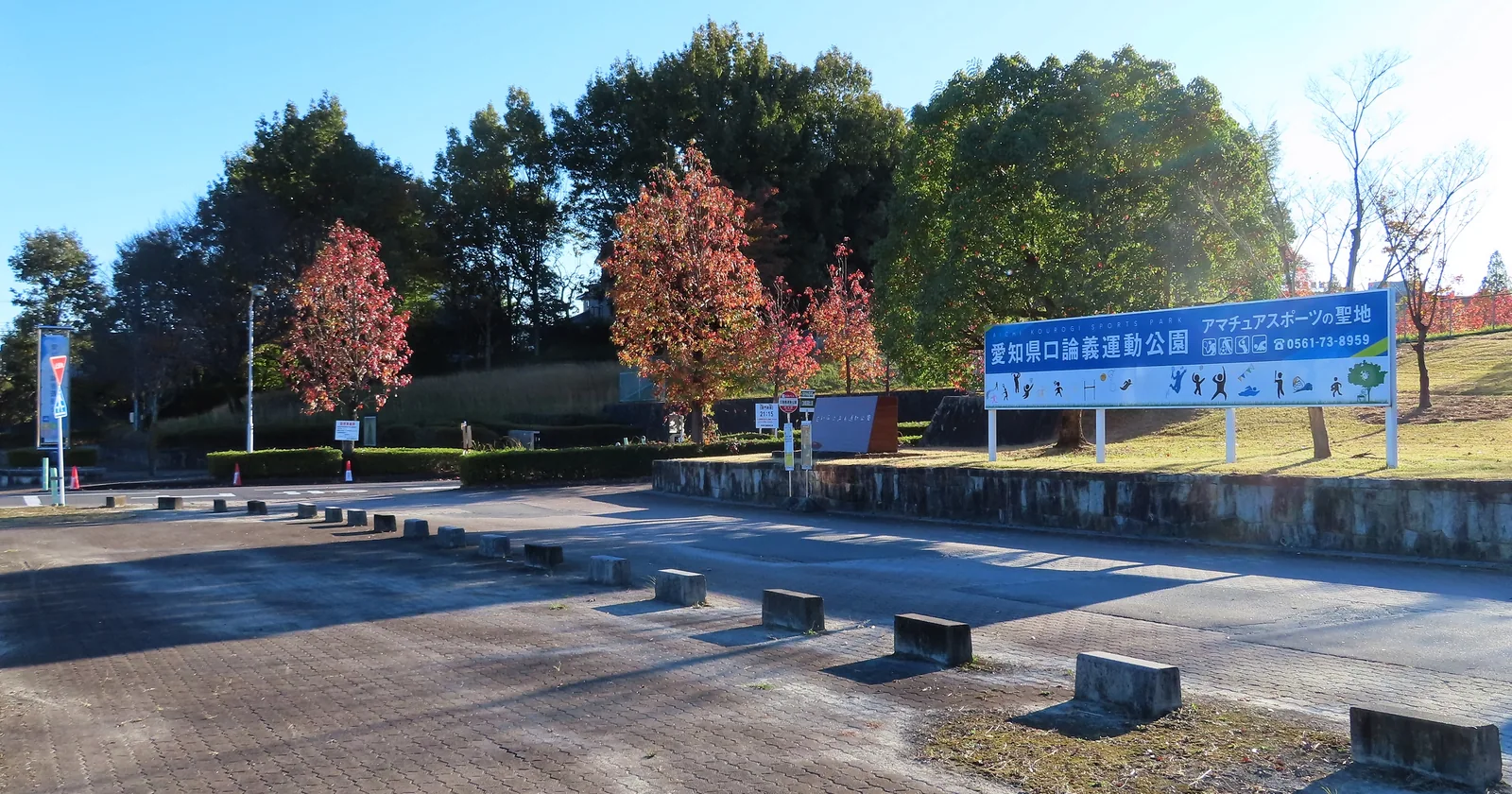
The venue is Korogi Athletic Park, which in Japanese is Aichi-ken Korogi Undo Koen. The organising committee describes it as a sports park in Nisshin City where a cricket ground was developed for the Asian Games, and calls it the second facility in Japan to feature a natural grass pitch that meets the requirements for hosting international competitions [Source].
The committee does not say which facility is the first, so neither will I. What the description does tell you is the important part: for these seventeen days, international-standard cricket is being played in Japan on a regular schedule, which is not something that happens here.
The format is T20
The competition is T20. The official ticketing guide puts it plainly: cricket is played over multiple innings between two teams of eleven players each, and T20 is the fast, aggressive format in which each side bats one innings of 20 overs, facing 120 balls — the format adopted for the Aichi-Nagoya 2026 Games [Source].
If you are bringing a Japanese friend who has never watched a match, “each team gets 120 balls, and that is the whole game” is the fastest useful explanation I have found.
How long a match itself takes is a different question, and the official documents do not answer it: nothing published for these Games states a duration for a T20 match, so this guide does not state one either. What the committee does publish is the size of the slot each session sits in. Its session schedule, issued with the competition-schedule notice of 19 August 2026, sets a three-hour window for each cricket session — the morning window runs 09:00 to 12:00 — with one exception: the afternoon window on the two finals days, 22 September and 3 October, is four hours [Source].
A window is the slot the venue is booked for, not the length of the match — and for the four afternoon sessions in the men’s knockout stage it is not a start time you can plan on either, for the reason set out in the next section. What the schedule does establish plainly is the shape of a competition day: most days carry two sessions, one starting at 09:00 and one in the afternoon.
Cricket opens the Games
The opening ceremony was scheduled for 19 September 2026 at 18:00 and the closing ceremony for 4 October, both at Nagoya City Mizuho Park Athletic Stadium. The women’s cricket quarter-finals were scheduled to start at 09:00 on 17 September [Source].
That was two days before the ceremony. Our Asian Games 2026 schedule guide covers where the full competition timetable actually lives, which is less obvious than it should be.
Cricket at the Asian Games 2026 at a glance
| Item | Detail |
|---|---|
| Sport | Cricket (T20) — eleven players a side, one innings of 20 overs (120 balls) |
| Venue | Korogi Athletic Park (Aichi-ken Korogi Undo Koen) |
| Address | 323-8 Kitashinmachi Nishi-Korogi, Nisshin City, Aichi 470-0103 |
| City | Nisshin City — not Toyota City, and not inside Nagoya City |
| Dates | 17 September to 3 October 2026 — 22 sessions |
| Teams | 10 men’s teams, 8 women’s teams |
| Ticket prices | Adult ¥2,000–¥10,000 / Child ¥1,000–¥5,000 |
| Seating | A General Admission only — unreserved, no seat selection |
| Nearest station | Linimo Nagakute Kosenjo, Exit 3 — about 15 minutes on foot |
| From Nagoya Station | Subway ¥310 + Linimo ¥280 = ¥590 one way, about 35 minutes plus the walk |
| Parking at the venue | None for spectators |
| Bicycle parking | None — the venue asks you not to cycle there |
| Official resale | Cricket is excluded as of 30 August 2026 |
| Ghibli Park | Three Linimo stops away — about 6 minutes, ¥280 |
All 22 sessions: dates, rounds and prices
Every session was scheduled at Korogi Athletic Park, and every session sold in the single A General Admission category. Prices below are the face values from the official English ticketing guide, as of 30 August 2026 [Source].
Women’s competition, 17–22 September
| Code | Date | Start | Round | Adult | Child | Disabled | Wheelchair |
|---|---|---|---|---|---|---|---|
| CKT01 | 17 Sept (Thu) | 09:00 | Quarter-final | ¥2,000 | ¥1,000 | ¥1,700 | ¥2,000 |
| CKT02 | 17 Sept (Thu) | 14:00 | Quarter-final | ¥2,000 | ¥1,000 | ¥1,700 | ¥2,000 |
| CKT03 | 18 Sept (Fri) | 09:00 | Quarter-final | ¥2,000 | ¥1,000 | ¥1,700 | ¥2,000 |
| CKT04 | 18 Sept (Fri) | 14:00 | Quarter-final | ¥2,000 | ¥1,000 | ¥1,700 | ¥2,000 |
| CKT05 | 20 Sept (Sun) | 09:00 | Semi-final | ¥4,000 | ¥2,000 | ¥3,700 | ¥4,000 |
| CKT06 | 20 Sept (Sun) | 14:00 | Semi-final | ¥4,000 | ¥2,000 | ¥3,700 | ¥4,000 |
| CKT07 | 22 Sept (Tue, holiday) | 09:00 | Bronze medal match | ¥4,000 | ¥2,000 | ¥3,700 | ¥4,000 |
| CKT08 | 22 Sept (Tue, holiday) | 14:00 | Final | ¥6,000 | ¥3,000 | ¥5,700 | ¥6,000 |
Men’s preliminary round, 24–26 September
| Code | Date | Start | Round | Adult | Child | Disabled | Wheelchair |
|---|---|---|---|---|---|---|---|
| CKT09 | 24 Sept (Thu) | 09:00 | Preliminary round | ¥2,000 | ¥1,000 | ¥1,700 | ¥2,000 |
| CKT10 | 24 Sept (Thu) | 14:00 | Preliminary round | ¥2,000 | ¥1,000 | ¥1,700 | ¥2,000 |
| CKT11 | 25 Sept (Fri) | 09:00 | Preliminary round | ¥2,000 | ¥1,000 | ¥1,700 | ¥2,000 |
| CKT12 | 25 Sept (Fri) | 14:00 | Preliminary round | ¥2,000 | ¥1,000 | ¥1,700 | ¥2,000 |
| CKT13 | 26 Sept (Sat) | 09:00 | Preliminary round | ¥2,000 | ¥1,000 | ¥1,700 | ¥2,000 |
| CKT14 | 26 Sept (Sat) | 14:00 | Preliminary round | ¥2,000 | ¥1,000 | ¥1,700 | ¥2,000 |
Men’s knockout stage, 28 September – 3 October
| Code | Date | Start | Round | Adult | Child | Disabled | Wheelchair |
|---|---|---|---|---|---|---|---|
| CKT15 | 28 Sept (Mon) | 09:00 | Quarter-final | ¥4,000 | ¥2,000 | ¥3,700 | ¥4,000 |
| CKT16 | 28 Sept (Mon) | Afternoon — time not settled | Quarter-final | ¥4,000 | ¥2,000 | ¥3,700 | ¥4,000 |
| CKT17 | 29 Sept (Tue) | 09:00 | Quarter-final | ¥4,000 | ¥2,000 | ¥3,700 | ¥4,000 |
| CKT18 | 29 Sept (Tue) | Afternoon — time not settled | Quarter-final | ¥4,000 | ¥2,000 | ¥3,700 | ¥4,000 |
| CKT19 | 1 Oct (Thu) | 09:00 | Semi-final | ¥6,000 | ¥3,000 | ¥5,700 | ¥6,000 |
| CKT20 | 1 Oct (Thu) | Afternoon — time not settled | Semi-final | ¥6,000 | ¥3,000 | ¥5,700 | ¥6,000 |
| CKT21 | 3 Oct (Sat) | 09:00 | Bronze medal match | ¥8,000 | ¥4,000 | ¥7,700 | ¥8,000 |
| CKT22 | 3 Oct (Sat) | Afternoon — time not settled | Final | ¥10,000 | ¥5,000 | ¥9,700 | ¥10,000 |
Why four start times are missing from that table
The four afternoon sessions in the men’s knockout stage — CKT16, CKT18, CKT20 and CKT22 — are not given the same afternoon start by every official document. Three official documents cover them: the organising committee’s session schedule issued with its notice of 19 August 2026, the official English ticketing guide (ver3.06, created 24 August 2026), and the committee’s participating-countries announcement of 26 August 2026. The first two agree with each other. The third, which is also the newest, gives a different afternoon time for those four rows.
They agree on everything else: the date, the round, the session code and the price are identical across all three. Only the afternoon start time differs.
Why this guide gave no start time for four sessions
Because the newest official document disagreed with the two published before it, this guide did not state a start time for CKT16, CKT18, CKT20 or CKT22. Two documents against one is not a correction, and the later document is not automatically the wrong one.
The women’s sessions and the men’s preliminary afternoons — CKT02, CKT04, CKT06, CKT08, CKT10, CKT12 and CKT14 — were given as 14:00 in all three documents.
How the prices work
- The child price is exactly half the adult price in all 22 sessions.
- The disabled ticket is ¥300 below the adult price — ¥1,700 against ¥2,000, ¥9,700 against ¥10,000, and so on.
- The wheelchair ticket costs the same as an adult ticket.
- Prices climb with the round: ten sessions sit in the ¥2,000 band, and the men’s final at ¥10,000 is the highest.
The cheapest were the ten sessions at ¥2,000: the four women’s quarter-finals (CKT01–CKT04) and all six men’s preliminary matches (CKT09–CKT14).
The schedule was subject to change
The official guide carries a plain warning: “Match order is subject to change due to broadcasting requirements.” Every date, time and fixture on this page is as of 30 August 2026; later changes are not reflected here.
Who was playing, and which fixtures were set by 30 August
Men — ten teams
| Group A | Group B | Seeded teams |
|---|---|---|
| Afghanistan | Hong Kong, China | Bangladesh |
| Japan | Malaysia | India |
| Nepal | Oman | Pakistan |
| Sri Lanka |
The committee states the progression rule directly: “In addition to the top two teams from each group, the four seeded nations, India, Pakistan, Bangladesh, and Sri Lanka, will advance to the knockout stage.” [Source]
India, Pakistan, Bangladesh and Sri Lanka did not play in the group stage at all, so none of those four featured in the men’s preliminary round on 24–26 September; under this format they entered from 28 September onwards.
The committee writes the Hong Kong team as “Hong Kong, China”, and this guide follows the official form.
Women — eight teams
India, Sri Lanka, Japan, Malaysia, Bangladesh, Pakistan, People’s Republic of China and Thailand. There is no group stage in the women’s competition: all eight teams go straight into the four quarter-finals, CKT01 to CKT04.
Fixtures confirmed as of 30 August 2026
| Code | Date and start | Fixture |
|---|---|---|
| CKT01 | 17 Sept, 09:00 | Bangladesh v People’s Republic of China (women’s QF) |
| CKT02 | 17 Sept, 14:00 | Pakistan v Thailand (women’s QF) |
| CKT03 | 18 Sept, 09:00 | Sri Lanka v Malaysia (women’s QF) |
| CKT04 | 18 Sept, 14:00 | India v Japan (women’s QF) |
| CKT09 | 24 Sept, 09:00 | Afghanistan v Japan (men’s Group A) |
| CKT10 | 24 Sept, 14:00 | Hong Kong, China v Malaysia (men’s Group B) |
| CKT11 | 25 Sept, 09:00 | Hong Kong, China v Oman (men’s Group B) |
| CKT12 | 25 Sept, 14:00 | Afghanistan v Nepal (men’s Group A) |
| CKT13 | 26 Sept, 09:00 | Japan v Nepal (men’s Group A) |
| CKT14 | 26 Sept, 14:00 | Malaysia v Oman (men’s Group B) |
Japan appeared in three of those: CKT04 in the women’s competition against India, and CKT09 and CKT13 in the men’s group stage.
The twelve sessions whose opponents were not yet known on 30 August
Twelve sessions were still open at the time of writing, but the men’s quarter-finals were half-decided: the seeded side is fixed, and only the qualifier is missing.
| Code | What is already decided |
|---|---|
| CKT05 | Women’s semi-final — winners of CKT02 and CKT03 |
| CKT06 | Women’s semi-final — winners of CKT01 and CKT04 |
| CKT07 / CKT08 | Women’s bronze medal match and final — undecided |
| CKT15 | Men’s quarter-final — Pakistan v runner-up of Group B |
| CKT16 | Men’s quarter-final — India v runner-up of Group A |
| CKT17 | Men’s quarter-final — Sri Lanka v winner of Group A |
| CKT18 | Men’s quarter-final — Bangladesh v winner of Group B |
| CKT19 | Men’s semi-final — winners of CKT15 and CKT18 |
| CKT20 | Men’s semi-final — winners of CKT16 and CKT17 |
| CKT21 / CKT22 | Men’s bronze medal match and final — undecided |
For visitors from South Asia, the seeded sides’ scheduled sessions were:
- Pakistan — CKT15, 28 September, 09:00
- India — CKT16, 28 September, afternoon (time not settled)
- Sri Lanka — CKT17, 29 September, 09:00
- Bangladesh — CKT18, 29 September, afternoon (time not settled)
All four seeded nations were scheduled to play within 28 and 29 September. Two of those four sessions were the ones whose afternoon start time was unsettled as of 30 August 2026.
How cricket tickets were sold
| Item | Detail |
|---|---|
| Sale period | From 17:00 on 30 June 2026 until each session date |
| Method | First come, first served — no lottery |
| Restrictions | None, including international sales |
| Prerequisite | A free Supporter ID (Ouen-ID) registration |
| Delivery | E-ticket from your order history — the one format on sale for the whole period. The commemorative paper ticket is listed as advance-sales-period only; convenience-store paper tickets are a separate play-guide route |
| Seating | A General Admission only — unreserved |
Supporter ID and ticket formats
A Supporter ID was required. The standard general sale required a free Supporter ID (Ouen-ID) account [Source].
The e-ticket was the main format. The official ticketing-methods table listed the e-ticket — shown on a phone screen or printed from a PDF — as available for the entire sale period. The commemorative “Original Ticket” on paper was listed as advance sales period only; paper for the whole period existed only through the play guides (Ticket Pia, TBS Ticket, CBC Ticket Center), which issued tickets at convenience-store counters [Source]. Where a paper ticket was posted at all it went to the address registered to the buyer’s Supporter ID, and whether it shipped to an overseas address was not stated officially.
Buying without an account: the Asian Q Ticket
A service called the Asian Q Ticket launched on 19 August 2026 and needed no ID registration.
| Item | Detail |
|---|---|
| Window | From 10:00 on 19 August 2026 until 90 minutes before each session’s scheduled finish |
| Payment | Apple Pay and Google Pay |
| Format | Electronic tickets only, first come first served, unreserved seating only |
| Ticket types | Adult, child and disabled tickets only — wheelchair, Heartful and After 4 tickets are excluded |
| Caveats | Outside the official resale service; an issuing fee and a system usage fee apply on top of the face price |
Whether cricket was one of the sports sold this way was not stated. The official announcement said only that the eligible sports were listed on the official ticket information site. Cricket met the unreserved-seating condition, but that is not the same as being confirmed, and this guide does not claim it was.
The full purchasing process, including the resale service and what “currently unavailable” means, is in our Asian Games 2026 ticket guide.
Three things buyers had to know
1. Cricket was outside the official resale service
As of 30 August 2026, every cricket session was excluded from the official ticket resale service. The official notice names four sports whose sessions are all excluded — handball, weightlifting, water polo and cricket — gives the reason as changes in competition schedules and other factors, and describes those sports as currently excluded [Source].
In practice, a ticket once bought could not be handed back through any official channel, whatever the reason.
One more nuance: the official wording was temporary in form — the notice described these four sports as currently excluded following changes in competition schedules, not as a permanent rule. This guide reports the position on 30 August 2026.
2. Tickets from unofficial sources were not valid for entry
The absence of an official resale route was not an invitation to use an unofficial one. The official ticket site put it in one line: tickets purchased through unofficial channels will not be accepted for entry [Source].
3. There was no spectator parking at the venue
Korogi Athletic Park had no spectator parking for the Games [Source].
To be precise, it was not that parking did not exist anywhere nearby — there was provision near the station, with conditions attached, and those conditions collided with the cricket calendar. The section on cars, buses and accessible transport below has the detail.
A note on the city-centre ticket office
A temporary Aichi-Nagoya 2026 City Ticket Office ran inside the Oasis 21 i-Center — the Nagoya City Tourist Information Center — in Sakae. It opened daily from 10:15 to 20:00 and ran until 6 September 2026; it sold spectator tickets for every sport at the Games while stock lasted, took cash or credit card, and issued a paper ticket over the desk. Resale was not handled there [Source].
That counter shut eleven days before the first cricket session on 17 September, but a second, separate counter took over. On 2 September 2026 the organising committee announced the Aichi-Nagoya 2026 Ticket Center, an in-person sales point at 3-5-10 Sakae, Naka Ward — that is Sakae Hirobas in Hisaya-odori Park, right by Exit 15 of Sakae subway station and next to Sakae Mitsukoshi. It was scheduled to open 9 September to 4 October 2026, 10:00 to 17:00 every day, selling spectator tickets for every sport held during the Games while stock lasted [Source]. Neither notice said what languages the sales staff worked in.
Getting to Korogi Athletic Park
| Item | Detail |
|---|---|
| English name | Korogi Athletic Park |
| Japanese name | Aichi-ken Korogi Undo Koen (Aichi Prefectural Korogi Athletic Park) |
| Address | 323-8 Kitashinmachi Nishi-Korogi, Nisshin City, Aichi 470-0103 |
| City | Nisshin City |
| Nearest station | Aichi Rapid Transit Tobu Kyuryo Line (Linimo), Nagakute Kosenjo, Exit 3 — about 15 minutes on foot |
Two things trip people up before they even leave the hotel. The official English name is Korogi Athletic Park, and the Japanese name reads Aichi-ken Korogi Undo Koen. Other romanisations of the Japanese name are in circulation, so use the official spelling when you search for the venue or show the name to a driver. And the venue is not in Nagoya City: Nisshin City is the next municipality east. Book a hotel on the wrong assumption and your daily routes get awkward.
From Nagoya Station, step by step
The one line to remember: Nagoya Station to the venue is ¥590 one way, about 35 minutes plus a 15-minute walk, with one change.
| Leg | Fare (adult / child) | Time |
|---|---|---|
| Subway Higashiyama Line: Nagoya → Fujigaoka | ¥310 / ¥150 | about 28 min |
| Linimo: Fujigaoka → Nagakute Kosenjo (3 stops, 3.4 km) | ¥280 / ¥140 | about 7 min |
| Nagakute Kosenjo Exit 3 → venue | — | about 15 min on foot |
| Total | ¥590 / ¥290 one way (¥1,180 adult return) | about 35 min plus the walk |
Step 1 — Take the Higashiyama Line to the end. The yellow line from Nagoya Station runs to Fujigaoka, its eastern terminus: ¥310 for an adult, ¥150 for a child, about 28 minutes [Source]. It also calls at Sakae, so wherever in central Nagoya you are staying, you are on this line. If you have not used the subway here before, our guide to getting around Nagoya covers tickets and day passes.
Step 2 — Change to the Linimo at Fujigaoka. Fujigaoka is where the Linimo starts. It is a magnetically levitated line, and Nagakute Kosenjo is the third stop, 3.4 km out; adding up the official segment times gives about 7 minutes. The fare is ¥280 for an adult and ¥140 for a child.
The Linimo fare changed on 1 September 2026
Linimo revised its fares on 1 September 2026 [Source]. Every one of the 22 cricket sessions fell after that date, so the ¥280 above was the fare that applied to all of them.
Step 3 — Leave by Exit 3 and walk about 15 minutes. Aichi Prefecture’s official wording specifies the exit: from Nagakute Kosenjo Station, Exit 3, about 15 minutes on foot. The same prefectural page publishes a PDF of the walking route [Source].
What to know about Nagakute Kosenjo Station
It is an unstaffed station. Nagakute Kosenjo (station number L04) is elevated and has no staff on duty; if you need help, you use the intercom on the ticket machine or the fare adjustment machine [Source]. If your Japanese is limited, load an IC card before you go, or buy your return ticket at Fujigaoka where there are people.
The upside: the station connects directly to AEON Mall Nagakute by an overhead walkway, so there is somewhere to eat or shop right next to the station. I have not verified the mall’s opening hours against its own site, so do not build a tight plan around them.
Can you get there without changing trains?
No — Nagoya Station to the venue means one change, at Fujigaoka, the eastern terminus of the Higashiyama Line and the western terminus of the Linimo. Moving between venues during the Games is covered in our Asian Games transport guide.
One caveat on the fare: the subway and the Linimo are separate operators, and the ¥590 above is simply the two fares added together. Whether a through fare or a transfer discount exists is not something I could confirm, so this guide claims neither that there is one nor that there is not.
Cars, buses and accessible transport
Driving: on weekends and holidays, effectively not an option
| Where | Situation |
|---|---|
| Inside the venue | No spectator parking |
| Around Nagakute Kosenjo Station | Spectator parking available — free, weekdays only |
| AEON Mall Nagakute car park No. 6 | Weekdays only. Unavailable on 20 Sept (Sun), 22 Sept (Tue, holiday), 26 Sept (Sat) and 3 Oct (Sat). About 20 minutes on foot to the venue |
Those four unavailable dates were all cricket days.
| Date unavailable | Cricket that day |
|---|---|
| 20 September (Sun) | CKT05 and CKT06 — women’s semi-finals |
| 22 September (Tue, holiday) | CKT07 and CKT08 — women’s bronze medal match and final |
| 26 September (Sat) | CKT13 (Japan v Nepal) and CKT14 |
| 3 October (Sat) | CKT21 and CKT22 — men’s bronze medal match and final |
Both finals, women’s and men’s, fell on days when the park-and-ride option by the station was closed.
On weekday sessions the free station-area parking was available, but even then there was no parking at the venue itself. The Linimo was the practical route.
Bicycles
There is no bicycle parking for spectators. The official guidance asks visitors not to come by bicycle and to use public transport instead.
Buses
Bus stops are right by the venue:
- Meitetsu Bus, Korogi Undo Koen stop — immediately at the venue
- Nisshin City Kururin Bus, Korogi Undo Koen stop — immediately at the venue
- Nagakute City N-Bus, Yamakoshi stop — about 10 minutes on foot
Fares, journey times and frequencies for these routes are not published on the prefectural page and I could not confirm them, so this guide does not state them. For visitors, the Linimo is the practical route. If you want to use a bus, check the operator’s own information.
Accessible shuttle
A pre-booked accessible shuttle was arranged from Nagakute Kosenjo Station for the Games, using universal-design taxis and similar vehicles, for wheelchair users and visitors with disabilities. It was free to use, and booking was required through the reservation route linked from Aichi Prefecture’s venue page.
This is not a general shuttle bus for all spectators; it is specifically for wheelchair users and visitors with disabilities. On ticketing, the wheelchair ticket costs the same as an adult ticket and the disabled ticket is ¥300 less.
Cricket and Ghibli Park in the same day
This is where the venue’s location pays off.
From Nagakute Kosenjo, the same Linimo line reaches Ai-Chikyuhaku-Kinen-Koen Station in three stops — about 6 minutes, ¥280 for an adult and ¥140 for a child. That station is the gateway to Ghibli Park.
No change of train, six minutes, ¥280. It genuinely works as a single day.
Two ways to build the day
Most cricket days ran two sessions, one at 09:00 and one in the afternoon, which allowed either order:
- Morning cricket (an 09:00 session), then Ghibli Park in the afternoon
- Ghibli Park in the morning, then an afternoon cricket session
Because the two stations sit three stops apart on one line, the travelling part costs you almost nothing. The published session windows make the morning version concrete: a morning session’s window ends at 12:00, which leaves the whole afternoon for the park.
Ghibli Park is advance-booking only
Ghibli Park tickets must be booked in advance. You cannot decide on the day that you feel like going. Our guide to booking Ghibli Park tickets from overseas walks through it; how to get there and how to spend the day inside are covered separately.
Where to base yourself
The cricket is in Nisshin City and Ghibli Park is in Nagakute City, and both sit on the Linimo. Staying in central Nagoya — around Sakae or Nagoya Station — and commuting out on the Higashiyama Line and the Linimo gives you the most flexibility for food, shopping and other sports. Our where to stay guide works through the choice.
If you are watching other sports too, the venue and access guide lists the sites, and the spectator itinerary shows how a competition day fits together. The main Asian Games 2026 visitor guide is the hub for everything else.
What had not been announced by 30 August
Some things you would reasonably expect to find here had not been published by 30 August; where they were published later, the table says so. Where a figure exists on other sites without an official source behind it, this guide leaves it out.
| Question | Position as of 30 August 2026 |
|---|---|
| Spectator capacity | No figure found on the organising committee’s or Aichi Prefecture’s official pages |
| Gate opening time | Now published, on 9 September 2026, in the organisers’ Venue Opening Schedule (latest version dated 2 October 2026): the venue opened at 7:30 for the 9:00 sessions and at 12:30 for the afternoon sessions |
| Prohibited items, re-entry, bag checks | Now published, on 3 September 2026: bag and body checks at the Games venues, bilingual lists of prohibited items and prohibited acts, no cloakroom or coin locker inside, and no re-entry without the committee’s prior approval |
| Food and drink sales, shade at the venue | No official information found |
| How long a match lasts | No official statement on T20 match duration. The published session schedule does set a three-hour window per session — four hours for the afternoon on the two finals days — but a window is the slot the venue is booked for, not the match |
Gate opening times were published after all. The organisers’ Venue Opening Schedule, first published on 9 September 2026 and last updated on 2 October, gave Korogi Athletic Park an opening time of 7:30 for the 9:00 sessions and 12:30 for the afternoon sessions, which started at 14:00 or 13:30 depending on the session. Entry rules are no longer a gap: the committee published its prohibited-items and prohibited-acts lists, in Japanese and English, on 3 September 2026.
One related point: September in Nagoya still carries real heat for an outdoor session, and the rules answered the water question. The prohibited-items list published on 3 September 2026 allowed one plastic bottle of 750 ml or less, or one water bottle of about 750 ml, per person — and as a rule visitors could be asked to take a sip at the check. Glass, cans, cartons and frozen drinks were not allowed, and there was no cloakroom or coin locker at the Games venues [Source].
Practical notes for visitors from South Asia
Transport notes
- Trains, not a rental car, were the way to reach the venue — there was no spectator parking at it during the Games
- Carry a transport IC card — the nearest station is unstaffed
Food
The men’s field includes Afghanistan, Bangladesh, Malaysia, Oman and Pakistan, so halal dining was likely to matter to a good share of the crowd. Our guide to halal food in Nagoya covers the options in the city.
Nagakute Kosenjo Station connects to AEON Mall Nagakute, but I have not verified what halal options the mall holds or what hours it keeps, so treat it as somewhere to look rather than somewhere to count on.
Using Nagoya as a base
Twenty-two sessions across seventeen days did not mean cricket every day: the schedule had no cricket sessions on 19, 21, 23, 27 and 30 September, or on 2 October.
Frequently asked questions
Could you buy Asian Games 2026 cricket tickets from outside Japan?
Yes. The official sale carried no regional restriction, and the ticket site stated plainly that there were no restrictions, including international sales. The general sale opened at 17:00 on 30 June 2026 and ran until each session date, first come first served with no lottery. A free Supporter ID (Ouen-ID) account was needed to buy through the standard route. The e-ticket was the format on sale for the entire period, while the commemorative paper ticket was listed as advance-sales-period only.
Could Asian Games cricket tickets be resold through the official service?
No. As of 30 August 2026, every cricket session was excluded from the official ticket resale service, alongside handball, weightlifting and water polo, so there was no official channel for handing a cricket ticket back. The official ticket site also stated that tickets purchased through unofficial channels would not be accepted for entry. The official notice described these sports as currently excluded following changes in competition schedules rather than as a permanent rule.
How much were cricket tickets at the Asian Games 2026?
Adult tickets ran from ¥2,000 to ¥10,000, and children paid exactly half, from ¥1,000 to ¥5,000. The cheapest band covered ten sessions: the four women’s quarter-finals and all six men’s preliminary matches, at ¥2,000. The most expensive single session was the men’s final at ¥10,000. The disabled ticket was ¥300 below the adult price at every level, and the wheelchair ticket cost the same as an adult ticket. All of them were the same A General Admission category.
Where is Korogi Athletic Park and how do I get there from Nagoya Station?
Korogi Athletic Park is at 323-8 Kitashinmachi Nishi-Korogi in Nisshin City, Aichi, east of Nagoya City. From Nagoya Station take the Higashiyama subway line to its terminus at Fujigaoka for ¥310, about 28 minutes, then change to the Linimo for three stops to Nagakute Kosenjo for ¥280, about 7 minutes. Leave by Exit 3 and walk about 15 minutes. That is ¥590 one way for an adult and ¥290 for a child, roughly 35 minutes of travel plus the walk.
Was there parking at the cricket venue?
There was no spectator parking at Korogi Athletic Park itself during the Games. Parking existed near Nagakute Kosenjo Station, free but on weekdays only, and AEON Mall Nagakute car park No. 6 was also weekdays only and about 20 minutes on foot from the venue. That car park was unavailable on 20 September, 22 September, 26 September and 3 October, which were cricket days and included both the women’s final and the men’s final.
When were India, Pakistan, Sri Lanka and Bangladesh scheduled to play?
All four were seeded and skipped the group stage, entering at the men’s quarter-finals. As of 30 August 2026 Pakistan were scheduled for CKT15 at 09:00 on 28 September, India for CKT16 on the afternoon of 28 September, Sri Lanka for CKT17 at 09:00 on 29 September, and Bangladesh for CKT18 on the afternoon of 29 September, with opponents depending on who qualified from the groups. The afternoon start times for CKT16 and CKT18 were not the same in every official document — the committee’s newest announcement differed from the two published before it.
Is Ghibli Park near the cricket venue?
Very close. From Nagakute Kosenjo, the station nearest the cricket ground, the same Linimo line reaches Ai-Chikyuhaku-Kinen-Koen Station in three stops, about 6 minutes, for ¥280 for an adult and ¥140 for a child. That is the station for Ghibli Park, with no change of train. Ghibli Park is advance-booking only, though, so you cannot decide on the day.
Could you choose your seat?
No. Cricket sold in a single category, A General Admission, which was unreserved. There were no AA, B, C or D tiers for this sport, so the purchase never asked where you wanted to sit: buyers chose a session, not a seat. Nothing official was published about whether arriving earlier got you a better position, so this guide makes no claim about that either.
What time did the gates open?
At 7:30 for the 9:00 sessions and at 12:30 for the afternoon sessions, according to the organisers’ Venue Opening Schedule (first published on 9 September 2026, latest version dated 2 October 2026). Nothing had been published as of 30 August 2026.
What could you bring into the venue?
The organising committee published the rules on 3 September 2026. Bag and body checks were carried out at the Games venues, and there was no cloakroom or coin locker inside. Drinks: one plastic bottle of 750 ml or less, or one water bottle of about 750 ml, per person — and as a rule you could be asked to take a sip at the check. Glass, cans, cartons, frozen drinks and alcohol were all out. Also on the list were camera monopods and tripods, stepladders and chairs, flagpoles over 90 cm, camera lenses 30 cm or longer, whistles and gas horns, and large or bulky luggage such as travel bags — the only bag exempted was a soft-material one of roughly 25 litres or less. Re-entry was not allowed without the committee’s prior approval. The full bilingual lists of prohibited items [Source] and prohibited acts [Source] are linked from the official notices.
How long does a T20 match last?
The Aichi-Nagoya 2026 documents do not state how long a match takes, so this guide does not either. What they do publish is the slot: the committee’s session schedule of 19 August 2026 sets a three-hour window for each cricket session, with the morning window running 09:00 to 12:00, the one exception being the afternoon of the two finals days, 22 September and 3 October, which gets four hours. A window is the time the venue is booked for, not the length of the match. Most cricket days carry two sessions, one starting at 09:00 and one in the afternoon.
Was Japan scheduled to play?
Yes, in three sessions as of 30 August 2026. The women’s team was scheduled to play India in CKT04 at 14:00 on 18 September, and the men’s team Afghanistan in CKT09 at 09:00 on 24 September and Nepal in CKT13 at 09:00 on 26 September. The official guide noted that match order was subject to change for broadcasting reasons.
About the Author
Yuu was born in Nagoya and has lived here for 35 years. Cricket has never been part of life in this city, which is exactly why a competition of this size arriving in Nisshin is worth writing about properly rather than in passing.
Every figure on this page was taken from the organising committee’s pages, Aichi Prefecture’s venue page, the official English ticketing guide and the operators’ own Japanese-language fare documents on 30 August 2026. Where the official sources contradict each other, this guide says so instead of choosing one; where nothing has been published, it says that too. He writes japanesefestival.net to give central Japan the English coverage it deserves.
Official sources used on this page
- Official Ticketing Guide (English, PDF) — schedule, prices, seating category, sport description
- Announcement Regarding Participating Countries and Matchups for Cricket (26 August 2026) — teams and fixtures
- Organising committee cricket page — venue name and description
- Aichi Prefecture: Korogi Athletic Park — access, parking, accessible shuttle
- Official ticket site (English) — sale period, Supporter ID, international sales, ticketing methods, unofficial-channel warning
- Notice of Changes to the Competition Schedule and Related Details (19 August 2026) — the session schedule attachment, session windows
- Competitions Excluded from Official Ticket Resale Service (3 August 2026) — cricket excluded from resale
- Announcing the Opening of the “Aichi-Nagoya 2026 City Ticket Office” (18 August 2026) — the Sakae counter
- Linimo fare revision of 1 September 2026 (PDF) — Linimo fares
- Nagoya City Transportation Bureau subway fares — Higashiyama Line fare
Related Guides
- Asian Games 2026 Visitor Guide — the hub: venues, hotels, transport and what to do between sessions
- Asian Games 2026 Tickets — buying from overseas, the resale service and the traps
- Asian Games 2026 Schedule — where the full competition timetable is actually published
- Asian Games 2026 Venues and Access — reaching every site without a car
- Asian Games 2026 Transport Guide — subways, the Linimo and moving between venues
- Asian Games 2026 Spectator Itinerary — building a day around the sessions you hold
- Where to Stay for the Asian Games 2026 — choosing a base by the sessions you hold
- How to Get to Ghibli Park — three Linimo stops from the cricket ground
- Ghibli Park Tickets from Overseas — the advance booking process, step by step
- Ghibli Park One-Day Itinerary — how to spend the afternoon after a morning session
- Getting Around Nagoya — subway tickets, day passes and IC cards
- Halal Food in Nagoya — where to eat between sessions