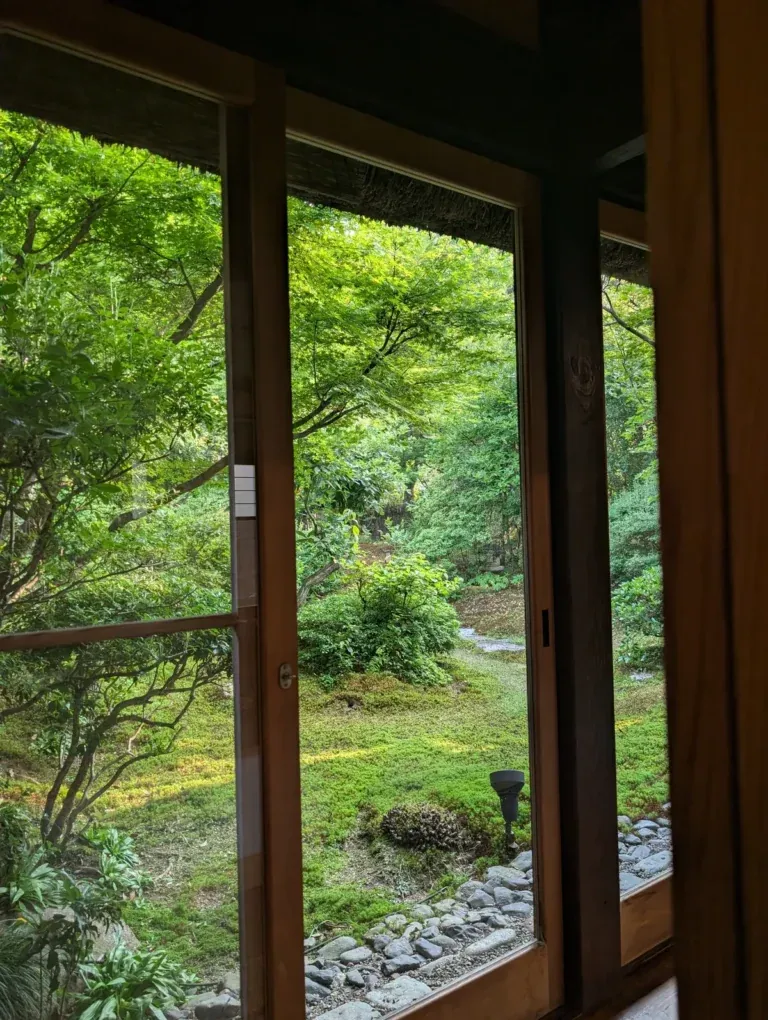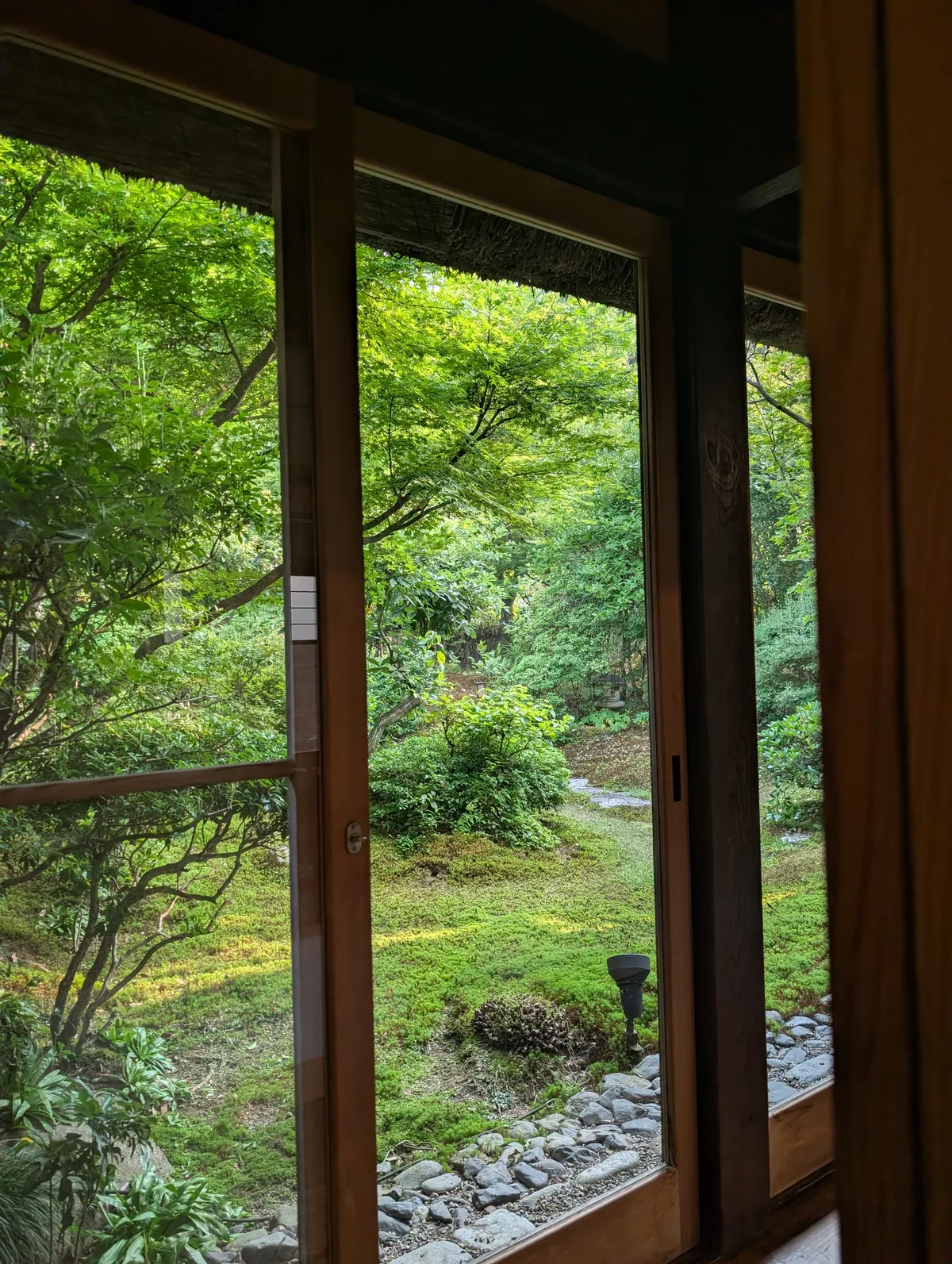
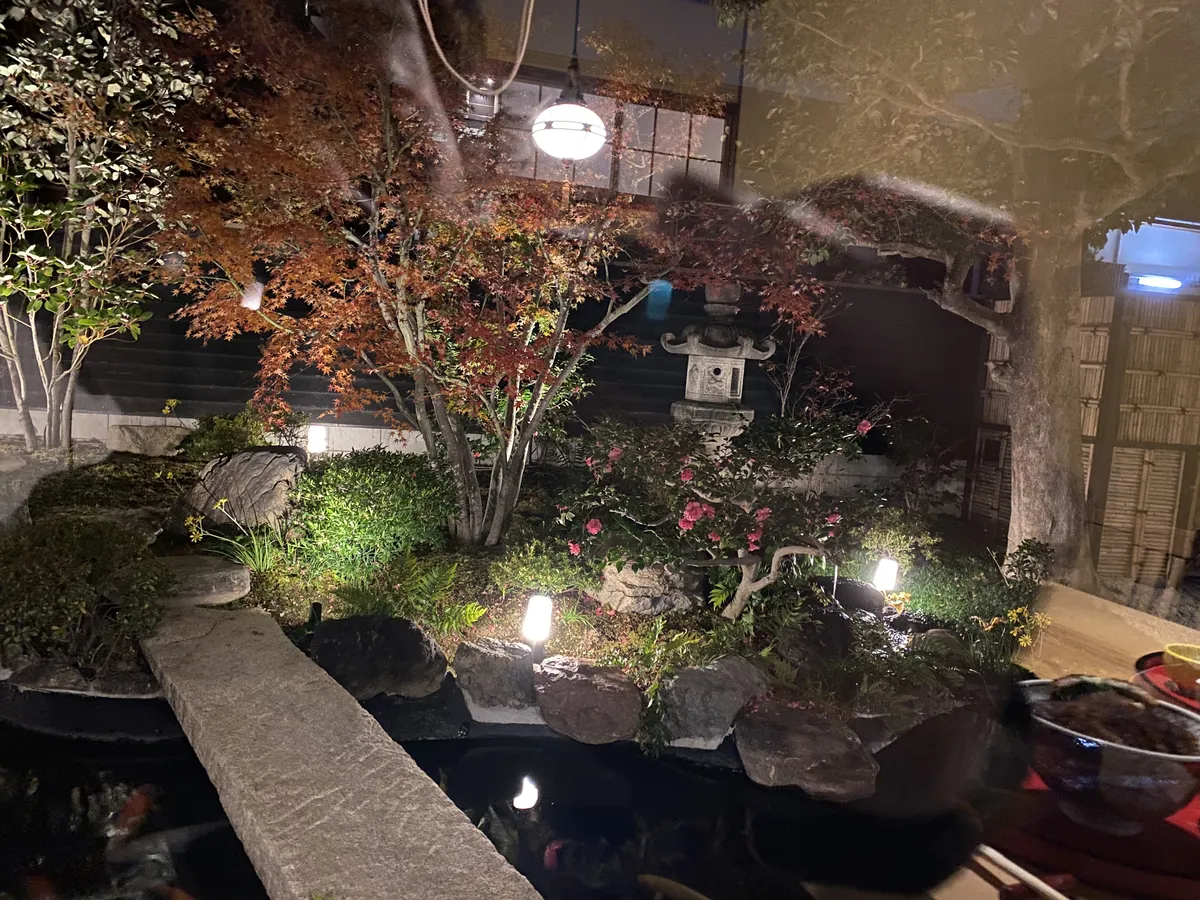
Every year, friends flying into Japan send me the same message: a link to a ryokan, and the words “this looks amazing, but the price seems insane.” Almost every time, my answer is the same — that price is for one person, and it already includes dinner and breakfast. A ryokan is not simply a Japanese-style hotel. The way it is priced, the way cancellations work, and the way the evening runs are all different from anything you have booked before. This guide walks through the whole process, from choosing a booking site to reading the plan to what happens after you arrive, using only official Japanese government and JNTO sources.
The short version.
The single biggest difference: a ryokan is normally priced per person, not per room, and one night’s fee usually includes both dinner and the next morning’s breakfast [Source]. A listing showing “¥30,000, two guests” can mean ¥30,000 each — ¥60,000 in total.
Before you book anything, check these five things.
- Is that price per person or per room?
- Are meals included? (dinner and breakfast / breakfast only / room only)
- When is dinner served, and can you get there in time?
- When do cancellation charges start? A ryokan can start charging far earlier than a city hotel
- Can you stay solo? How are children charged? What is the tattoo policy?
Understand points one and four and you will almost never get an unpleasant financial surprise from a ryokan booking.
Last updated: July 2026 | Author: Yuu (Nagoya-born, 35-year resident)
This article may contain affiliate links. See our affiliate disclosure for details.
Table of Contents
- Five Things to Check Before You Book
- What a Ryokan Actually Is
- How the Price Works: Why It Is Per Person
- Where to Book: Choosing a Booking Site
- Choosing a Plan: Meals, Numbers and Requests
- Cancellation Policies: Why Ryokan Start Earlier Than Hotels
- From Booking to Arrival: Contact, Check-In and House Rules
- Staying at a Ryokan in Central Japan
- Frequently Asked Questions
- About the Author
- Related Guides
Five Things to Check Before You Book
In the order that actually affects your decision. Each one is covered in full further down.
| What to check | Why it matters | Covered in |
|---|---|---|
| Is the price per person? | Ryokan pricing is normally per person. For two people, the figure on screen may double | Pricing |
| Are meals included? | Dinner and breakfast are the standard, but room-only and breakfast-only plans are becoming more common | Pricing |
| Can you make dinner? | Dinner is served in a set window, so arriving late can mean missing it entirely | Arrival |
| When cancellation charges begin | The standard form used by ryokan is far more finely graded than the hotel one, and starts much earlier | Cancellation |
| Numbers, children, tattoos | Some ryokan do not take solo guests. Child pricing depends on meals and bedding. Tattoo policies vary by property | Choosing a plan |
Get the first and the fourth right and the money side of a ryokan booking rarely goes wrong.
What a Ryokan Actually Is
“Ryokan” Is a Style of Inn, Not a Licence Class
There is no separate business licence for a “ryokan” in Japanese law. Under the Hotel Business Act there are three categories — hotel and ryokan business, simple lodging business, and boarding house business — and no category that carves out ryokan on their own [Source]. “Hotel business” and “ryokan business” used to be separate categories, but the revised Act that took effect on June 15, 2018 merged them. In other words, ryokan is a style of inn, not a licence class.
Which leads to something people find surprising: there is no official count of how many ryokan exist in Japan. The most recent Ministry of Health, Labour and Welfare figure — 52,946 hotel-and-ryokan-business facilities as of the end of the 2024 fiscal year (March 2025) — lumps hotels and ryokan together [Source]. If you see a confident “there are roughly X thousand ryokan in Japan” figure online, it is almost never traceable to a source.
What Defines a Ryokan
The Japan National Tourism Organization (JNTO) lists the defining features as tatami-floored rooms, futon bedding, private baths (sometimes outdoor), yukata robes — the cotton kimono-like robes ryokan guests wear — and an in-house kaiseki multi-course dinner followed by a traditional Japanese breakfast [Source].
The Japan Tourism Agency adds that most ryokan have an onsen or another communal bath inside the building [Source]. You are not buying a place to sleep; you are buying an evening that includes the food and the bath. That is the real difference from a hotel — and it is why the price is calculated the way it is.
The food is generally local cuisine built around seasonal, locally produced ingredients [Source]. How many dishes arrive and how long the meal takes varies from ryokan to ryokan, so ask when you book if it matters to your plans.
How the Price Works: Why It Is Per Person
The Key Point: Per Person, With Two Meals Included
The Japan Tourism Agency is blunt about it. “It is common to pay per person,” and it is “very common for a ryokan to offer both an evening meal and a morning meal, and to include those meals in each night’s room fee” [Source]. JNTO says the same thing [Source].
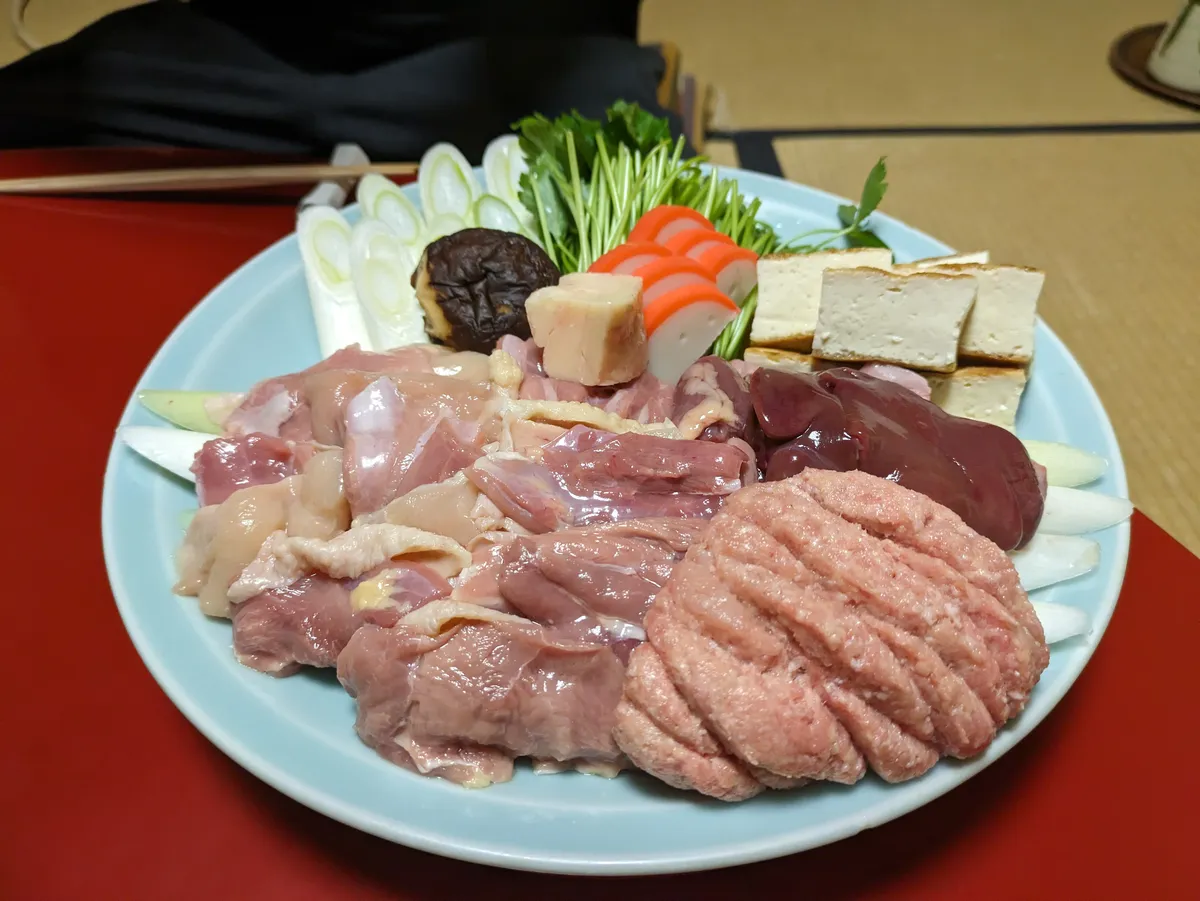
Here is what that means in practice. A ryokan plan listed at ¥25,000 can cost ¥50,000 for two people. If you are used to booking hotels abroad, you automatically read the headline figure as the cost of the room. That assumption does not hold at a ryokan. On the booking screen, look specifically for these labels:
- per person (日本語: 1名様あたり) — multiply by the number of guests
- per room (1室あたり) — the total for the room
- with dinner and breakfast (1泊2食付) — both meals included
- breakfast only (朝食付) or room only (素泊まり) — some or all meals excluded
Two meals is still the standard, but a growing number of ryokan now offer room-only and breakfast-only plans [Source]. If you would rather eat out in the onsen town, those give you more freedom.
What It Actually Costs
JNTO puts the average ryokan stay at around ¥15,000 per night, with high-end establishments charging more [Source].
Let me be straight with you here. Neither the Japan Tourism Agency, nor JNTO, nor the industry associations publish price bands for “budget,” “mid-range” and “luxury” ryokan. The only figure with an official source behind it is JNTO’s “around ¥15,000.” Anything more granular that you find online is somebody’s estimate.
For Central Japan specifically (Aichi, Gifu and Mie), the range we have verified property by property is roughly ¥15,000 to ¥60,000 per person per night with two meals, with most stays falling between ¥15,000 and ¥40,000 (as of July 2026, checked against listed rates including those published by the Gero Onsen Ryokan Cooperative [Source]). That is a regional observation, not a national rule.
One Charge That Sits Outside the Room Rate: The Bathing Tax
At a ryokan in an onsen town, a bathing tax (nyuto-zei) is charged on top of the accommodation fee. The Local Tax Act sets a standard rate of ¥150 per person per day, but “standard” is the operative word — the actual amount is fixed by the ordinance of the municipality where the hot spring is located [Source]. The Japan Tourism Agency’s Model Accommodation Terms also list “bathing tax (onsen areas only)” alongside consumption tax in the tax column [Source]. The sum is small, but it is often excluded from the price shown on a booking site and settled at the property.
Where to Book: Choosing a Booking Site
There are three broad routes to a ryokan reservation.
Route 1: International Booking Sites
The advantage is obvious — multiple languages, multiple currencies, and an interface you already know how to read.
Booking.com maintains a dedicated ryokan category page for Japan with a regional breakdown. As of July 28, 2026, 918 ryokan were listed for the Chubu (Central Japan) region, the largest of any region; listing counts change daily [Source]. Agoda is also cited as one of the main sites English speakers use to book ryokan [Source]. The old advice that “hardly any ryokan can be booked in English” is well out of date.
Route 2: Japanese Booking Sites (Jalan and Rakuten Travel)
Japan’s most-used domestic booking sites both have English versions.
Jalan runs an English site at jalan.net/en/japan_hotels_ryokan/, available in seven languages: English (US), Simplified Chinese, Traditional Chinese, Korean, Thai, Bahasa Indonesia and Malay. It is operated by Recruit [Source].
Rakuten Travel‘s English site is at travel.rakuten.com. The former address, travel.rakuten.co.jp/en/, now redirects there (verified July 2026). If you have the old URL bookmarked from an older guide, update it.
Route 3: Direct with the Ryokan, by Website or Phone
Many ryokan take bookings through their own websites, and by telephone. Be aware, though, that smaller properties may not be able to handle enquiries in English, particularly over the phone [Source]. Email or a web enquiry form is the safer approach.
How to Decide Between Them
An honest caveat first: there is no published, comparable data on which platform lists more ryokan. The booking sites do not release comparable inventory counts, and neither the government nor the industry bodies publish a comparison. The one thing that is documented is this: some ryokan still cannot be booked online in English, particularly smaller properties [Source].
Which points to a simple order of operations.
- Start with the international sites. Language, currency and cancellation terms are all easier to read, and comparison is straightforward
- If the ryokan you want is not there, try the English version of a Japanese site, or the property’s own website
- If it is still nowhere to be found, contact the ryokan directly through its enquiry form
Ready to start looking at actual ryokan?
Check the meal plan, the number of guests and the cancellation terms on each listing before you commit.
Choosing a Plan: Meals, Numbers and Requests
Book Your Meals at the Same Time as Your Room
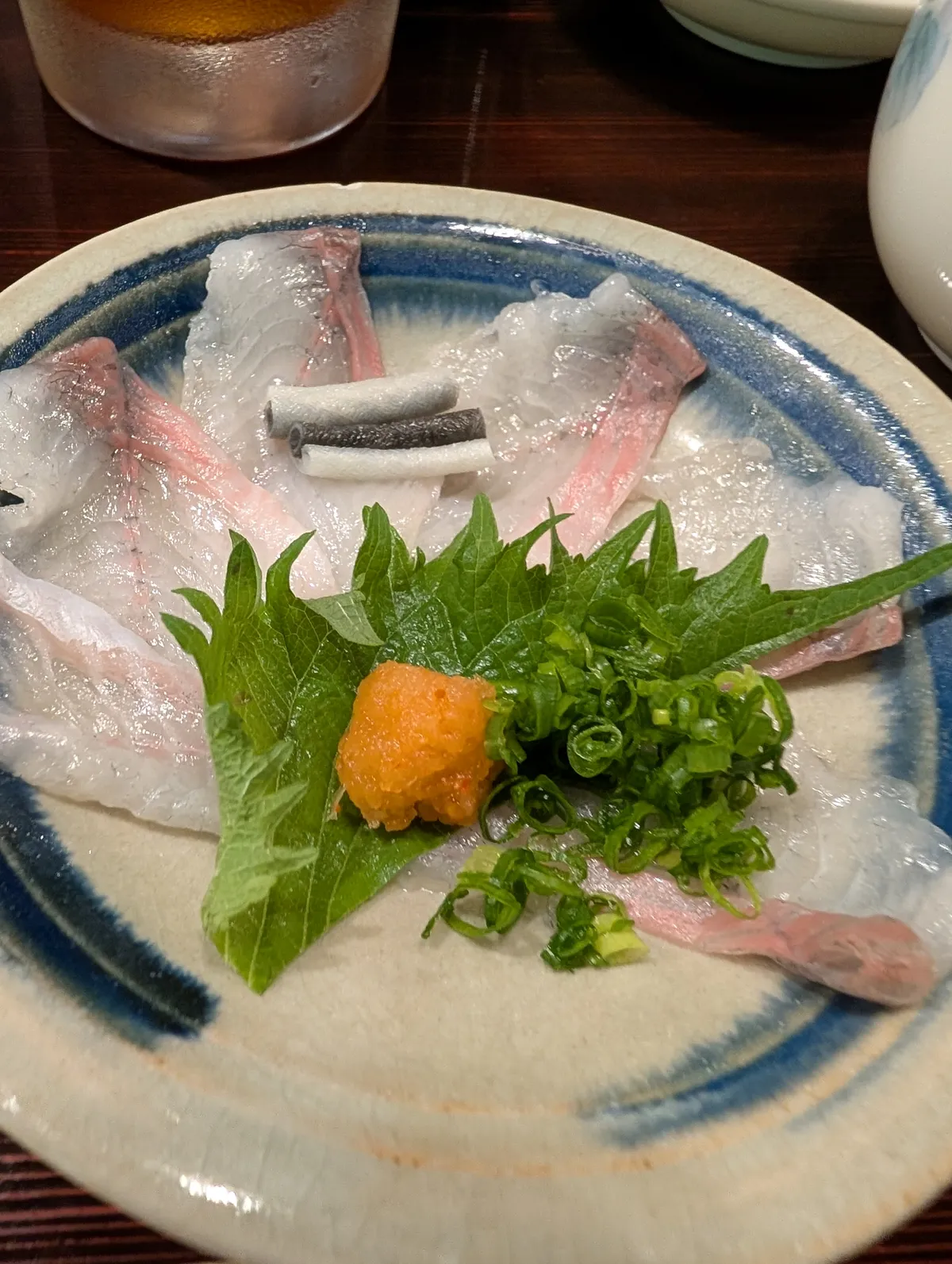
The Japan Tourism Agency explains that at a ryokan you generally reserve your meals at the same time as your room [Source]. This is not a hotel, where you decide about the restaurant after you arrive. At a ryokan, the “dinner or no dinner” decision is made at the moment you book. Asking for dinner after check-in may simply not be possible.
Allergies and Dietary Requests: Give Them a Few Days
The Agency states that most ryokan will do everything they can to accommodate food-related requests, but asks that you make them in advance — if possible, at least a few days before your stay [Source].
On vegetarian, vegan and halal catering, there is no official source that allows any generalisation about ryokan as a whole. What is possible varies enormously from one property to the next, so ask the individual ryokan, and ask early. (For eating in the city itself, we cover the options in our vegetarian, vegan and halal food guide for Nagoya.)
Can You Stay Solo?
A lot of ryokan do not accept single travellers, particularly during busy seasons [Source]. The pricing, the meals and the rooms are all built around two or more guests sharing a room.
If you are travelling alone, set the number of guests to one before you search — results that appear for two guests may not be bookable for one. Look for plans explicitly marked as available for single occupancy, and contact the ryokan directly if you cannot find one.
One thing this guide will not do is quote you a solo supplement. No official or industry source publishes a typical level for the single-occupancy premium. Beyond “it is usually higher than the per-person rate for two guests sharing,” there is nothing reliable to say, so read the figure on the booking screen.
How Children Are Charged
According to the Japan Tourism Agency, most ryokan do not charge a lodging fee for young children (for example, three and under), some charge a reduced fee depending on age, and children aged 12 and over pay the full adult fee [Source].
Why the graded steps? The answer is in the Agency’s Model Accommodation Terms — the template Japanese properties use when drafting their own terms and conditions [Source].
| What the child (elementary school age or younger) is provided with | Proportion of the adult rate |
|---|---|
| Meals and bedding equivalent to an adult’s | 70% |
| A children’s meal and bedding | 50% |
| Bedding only | 30% |
So a child’s rate is not set by age alone — it steps up according to how much food and bedding is provided. Once you know that, the options on a Japanese booking screen (“child, with meal and futon” / “child, futon only”) suddenly make sense.
One important caveat. These are figures from a model template, not rates fixed in law. Every property is free to set its own. Always read the terms of the ryokan you are booking.
If You Have Tattoos
Start with the official position. In a notice dated March 16, 2016, the Japan Tourism Agency told the Japan Hotel Association, the All Japan City Hotel Association, the Japan Ryokan and Hotel Association and the Japan Spa Association that “refusing bathing solely on the grounds that a person has a tattoo is not appropriate.” The same document asks the industry to bear in mind that people have tattoos for many reasons — religious, cultural, fashion — and that the presence of a tattoo does not create a hygiene problem. The Ministry of Health, Labour and Welfare followed on March 18, 2016, asking prefectures and designated cities to make sure that “bathing is not refused for improper reasons” [Source].
That said, this is guidance issued to the industry, not a legally binding regulation. The Agency itself acknowledges in its ryokan Q&A that “policies about tattoos differ widely from ryokan to ryokan” — some place no restrictions whatsoever, others decide case by case [Source].
You will not find a “X per cent of facilities refuse tattoos” statistic in this article, and that is deliberate. The share figures that circulate online cannot be traced back to a primary source. Rather than a number, here is something you can actually use.
The same government document sets out three ways properties are handling it [Source].
- Cover the tattoo with a patch or sticker. The document also notes cases where no special measure is required if the tattoo is small — palm-sized, for example — and not intimidating to other bathers
- Suggest bathing at a quieter time of day, when fewer families are using the bath
- Separate the bathing areas, direct the guest to a private bath, or — at accommodation — offer a room with its own bath
In practice the third is the most reliable: book a private bath (kashikiri-buro) or a room with its own bath. Whatever the communal bath’s policy is, you get your onsen. Ask the ryokan before you book — “I have a tattoo; can I use the bath, and can I reserve a private bath?” — and there is nothing left to worry about on the day.
Cancellation Policies: Why Ryokan Start Earlier Than Hotels
The Standard Form Itself Is Different for Ryokan and Hotels
This is the part of ryokan booking that is most often misunderstood, and the part that costs the most money. The penalty schedule in the Japan Tourism Agency’s Model Accommodation Terms (last revised December 13, 2023) comes in two versions — one for hotels, one for ryokan — and they are graded very differently [Source].
| Version | Cancellation brackets |
|---|---|
| Hotel version | No-show / day of arrival / 1 day before / 9 days before / 20 days before — 5 brackets |
| Ryokan version | No-show / day of arrival / 1, 2, 3, 5, 6, 7, 8, 14, 15, 20 and 30 days before — 13 brackets |
The ryokan schedule starts 30 days out. Approach it with city-hotel instincts — “it’ll be free until the day before” — and you can end up with a bill you did not expect. The Agency’s Q&A puts it plainly: the closer you get to your reservation date the higher the cancellation fee, and cancelling on the day of scheduled arrival means paying the full cost [Source].
Why This Guide Cannot Give You Percentages
And here is the crucial part. In the Model Accommodation Terms, every cell of the penalty table contains only a “%” sign with no number in it. The figures are filled in by each individual property [Source].
Which means there is no nationwide cancellation rate. If you see a specific percentage for a specific number of days quoted somewhere, that is one ryokan’s own policy, not a rule that applies across Japan. Read the rate written on your booking screen and in that property’s terms, with your own eyes, every time.
Three Other Clauses Worth Knowing
The Model Terms contain several provisions with real financial consequences for travellers. All of them are template clauses that each property is free to set for itself [Source].
- The penalty is calculated as a proportion of the basic accommodation charge, not the total bill
- If you shorten your stay, a penalty equivalent to one day (the first day) applies regardless of how many days you cut — going from three nights to one can trigger it
- A deposit may be required. It is set by the property up to the basic accommodation charge for the stay (or for three days, where the stay is longer than three days), and if it is not paid by the date specified, the accommodation contract loses its effect
When You Pay
The Japan Tourism Agency groups payment into three patterns: payment at the ryokan only (when you check out), payment in advance only, and payment either in advance or at the ryokan [Source]. Some properties settle on site only, so check at the time of booking what you will need — cash, or which cards are accepted.
From Booking to Arrival: Contact, Check-In and House Rules
Your Estimated Arrival Time Is Not a Decorative Field
Ever typed something vaguely plausible into the “estimated time of arrival” box? It is in fact a formal element of the reservation as a contract. The Model Accommodation Terms list the application items as the guest’s name, the dates of the stay and the estimated time of arrival, the accommodation charge and any other items the property requires. They further provide that if the guest does not arrive by the stated time without making contact, the accommodation contract may be treated as having been cancelled by the guest (the exact time and grace period are filled in by each property) [Source].
The Agency’s Q&A makes the same point from the practical side: dinner is served during a set time window, so if you arrive too late you may miss it; if it looks like you will be significantly later than the designated check-in time, let the ryokan know [Source].
Put those together and the stakes are clear: fail to call ahead and you may lose not only your dinner but the reservation itself — and still be liable for a penalty. Whatever the reason, contact the ryokan the moment you know you are running late. If there is one practical rule for staying at a ryokan, this is it.
About Dinner Times
“What time is dinner?” has only one accurate answer: the window is set by each ryokan, and there is no national standard. The Japan Tourism Agency says only “a set time window,” and the operating-hours section of the Model Accommodation Terms is a blank template [Source]. It is generally early evening, but the time written in your confirmation email is the only answer that counts. Plan your arrival backwards from it.
Check-In and Check-Out
According to the Agency’s Q&A, check-in usually starts at 15:00 or 16:00, much as at a hotel. If you arrive early, almost every ryokan will hold your luggage at the front desk. Check-out at most ryokan falls between 10:00 and 12:00. Note too that some ryokan offer a pick-up service from the nearest station and some do not, so confirm rather than assume when you book [Source].
Many Ryokan Have a Curfew
This is what surprises overseas visitors most. Most ryokan do have a curfew, and where one exists you cannot enter or leave the building after a certain time of night [Source]. If you are planning to be out in the evening, check at the time of booking whether there is a curfew and when it falls.
Why They Ask for Your Passport
Being asked to present your passport and have it copied at check-in is nothing to be wary of. It is a legal requirement. Guests who are foreign nationals without an address in Japan must have their nationality and passport number recorded in the guest register alongside name, address and contact details, and the passport copy is retained with the guest register for three years [Source]. The Japan Tourism Agency’s Model Accommodation Terms specify the same registration items [Source]. Keep your passport somewhere you can reach it easily.
Inside the Ryokan
JNTO notes that Japanese customs such as removing your shoes indoors, taking an onsen bath and wearing a yukata will all be explained to you by the ryokan [Source]. Ask if you are unsure about anything; that is entirely normal. On the rooms themselves, the Japan Tourism Agency notes the following [Source].
- Almost all rooms have an integrated shower and bathtub unit
- In recent years more ryokan have begun offering rooms with beds (worth seeking out if a futon on tatami is not for you)
- Most ryokan offer Wi-Fi in the rooms and lobby
Who lays out the futon, and when, varies from property to property, so this guide will not state it as a rule. Ask at check-in if you would like to know.
Using the Communal Bath
You do not normally need a reservation for the communal bath. A private bath, on the other hand, has to be reserved in advance. The etiquette is set out officially by both the Japan Tourism Agency and JNTO [Source] [Source].
| Do | Don’t |
|---|---|
| Wash your entire body at the shower station before entering the tub | Get in wearing a swimsuit or any other clothing |
| Pour hot water over yourself before getting in (kakeyu) | Put your towel in the water — fold it and rest it on your head or the edge of the bath |
| Tie up long hair | Take photographs in the bathing area |
Onsen bathing is done in the nude, with clothing — swimwear included — left in the changing area [Source]. For more on the hot springs themselves, see our guide to the best onsen near Nagoya.
Staying at a Ryokan in Central Japan
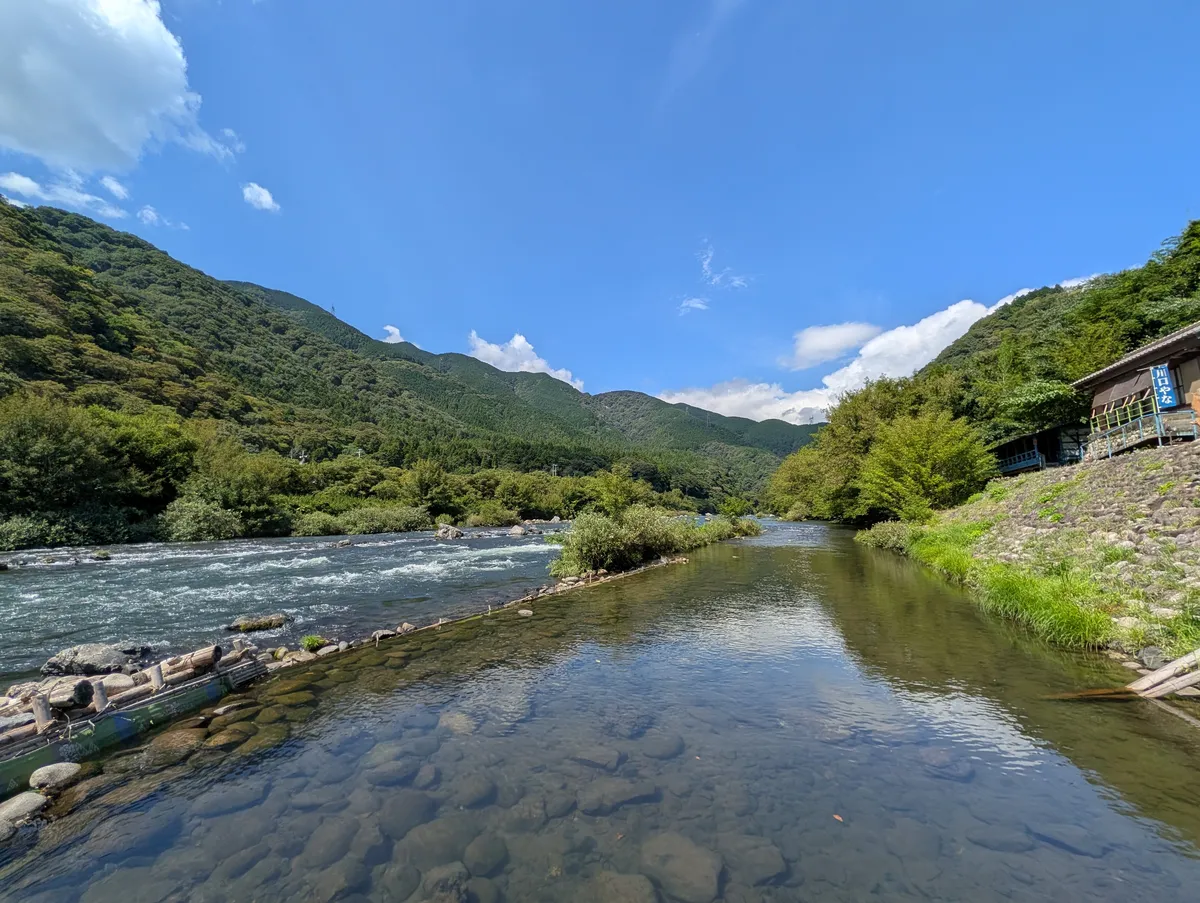
Everything above is about how to book and how the stay works. So which ryokan should you actually choose?
How the two guides divide the work
- This article: how to book a ryokan, how the pricing works and how the stay runs — the process, wherever in Japan you are going
- Ryokan near Nagoya: which ryokan to stay at in Central Japan — individual properties in Gero Onsen, Yunoyama Onsen and the Gamagori onsen area
Use Nagoya as your base and there are several onsen areas within a night’s reach where the per-person, two-meal ryokan experience described above is exactly what you get.
- Gero Onsen (Gifu) — the best-known hot spring town in Central Japan. Long-established inns founded in the 1930s are still operating, including wooden buildings registered as National Tangible Cultural Properties. Full details in our Gero Onsen guide
- Yunoyama Onsen (Mie) — at the foot of the Suzuka mountains, and easy to combine with the ropeway
- The Gamagori onsen area (Aichi) — facing Mikawa Bay, with properties offering ocean-view rooms
Room counts, founding dates, bath configurations and price bands for individual properties are verified one by one in our ryokan near Nagoya guide. If a city hotel rather than a ryokan suits your trip better — and if you are basing yourself in Nagoya for several nights and making day trips, it often does — start with our guide to where to stay in Nagoya.
Have your dates in mind?
See what is available, then read each ryokan’s own meal and cancellation terms before booking.
Frequently Asked Questions
Is the price shown per person or per room?
At a ryokan it is normally calculated per person, and one night’s fee usually includes both dinner and breakfast [Source]. Always check on the booking screen whether the figure is labelled “per person” or “per room.” Multiply by the number of guests and the total can double.
Can I stay on my own?
Some ryokan will take you, but a lot of ryokan do not accept single travellers, particularly during busy seasons [Source]. Set the guest count to one before you search and look for plans marked as available for single occupancy. There is no official benchmark for the single-occupancy premium, so read the amount on the booking screen.
When do cancellation charges start, and how much are they?
The percentages are set by each ryokan, so there is no single national answer. The penalty cells in the Japan Tourism Agency’s Model Accommodation Terms are a blank template. What can be said is the timing: the ryokan version of that form has 13 brackets starting 30 days out, against just five for the hotel version [Source]. Assume charges can begin much earlier than at a city hotel, and read the policy on your booking screen.
I am not going to make it in time for dinner. What should I do?
Contact the ryokan immediately. The Japan Tourism Agency states explicitly that arriving too late can mean missing dinner, and that you should let the ryokan know if you will be significantly late [Source]. On top of that, the Model Accommodation Terms provide that if you do not arrive by the stated time without making contact, the accommodation contract may be treated as cancelled [Source]. Missing dinner is not the worst of it.
Can I stay — and bathe — if I have tattoos?
Staying is not normally an issue. For bathing, policies differ widely from ryokan to ryokan [Source]. The Japan Tourism Agency told the industry associations in 2016 that “refusing bathing solely on the grounds that a person has a tattoo is not appropriate,” but that is guidance, not a binding regulation [Source]. The reliable answer is the one the Agency itself lists among its examples: reserve a private bath, or a room with its own bath. A quick check with the ryokan before booking removes all doubt.
How is the children’s rate decided?
Not by age alone, but by how much food and bedding is provided. The Japan Tourism Agency’s Model Accommodation Terms give, for children of elementary school age and younger, 70% of the adult rate for meals and bedding equivalent to an adult’s, 50% for a children’s meal and bedding, and 30% for bedding only [Source]. These come from a template, and every property is free to set its own. The Agency’s Q&A adds that most ryokan do not charge for young children (three and under, for example) and that children aged 12 and over pay the full adult fee [Source].
About the Author
Yuu was born in Nagoya and has lived here for 35 years. He spent a month backpacking around New York during university and has since travelled to more than 15 countries. This guide grew out of a message he receives most years from friends coming to Japan: “the price on this ryokan looks way too high.” The answer is usually the same — that price is for one person.
Related Guides
- Ryokan Near Nagoya — which ryokan to actually stay at in Central Japan
- Best Onsen Near Nagoya — the hot springs themselves, and how to bathe
- Gero Onsen Guide — how to spend a night in Central Japan’s best-known onsen town
- Where to Stay in Nagoya — the city hotel alternative, area by area
— Yuu