Why I Created This Guide
I was born and raised in Nagoya. I have lived here for 35 years. And for most of those years, I have watched this incredible city get overlooked.
When foreign visitors plan a trip to Japan, the conversation almost always goes the same way: Tokyo, Osaka, Kyoto. Maybe Hiroshima. Maybe Hakone. But Nagoya? The city rarely makes the shortlist, and Central Japan barely gets a mention. That has always frustrated me, because the city I grew up in — the city where I built my career, started my company, and raised my life — has more to offer than most travelers will ever realize.
There are English-language media outlets introducing Nagoya to Japanese audiences, but when I looked for resources aimed at international visitors, I found very little. The guides that did exist were surface-level: the same five tourist spots, the same chain restaurants, the same generic advice that could apply to any Japanese city. None of them captured what actually makes Nagoya special.
So I decided to build this site myself.
I have traveled to more than 15 countries. I have been a backpacker in New York, eaten street food in Southeast Asia, and wandered through European cities with nothing but a daypack and a train pass. Those experiences taught me something important: the best travel advice always comes from someone who actually lives there — someone who can tell you not just where to go, but where the locals go, and why.
That is what Central Japan Travel Guide is. Every recommendation on this site comes from my own experience as a lifelong Nagoya resident who has walked every block of this city and eaten at hundreds of its restaurants. This is not a guide written from a hotel room after a three-day press trip. This is a guide written by someone who has been here for 35 years and has no intention of leaving.
Who I Am
My name is Yuu. I was born in Nakagawa-ku, one of Nagoya’s working-class downtown neighborhoods, and I have called this city home for my entire life. Here are the basics:
- 35 years in Nagoya — born, raised, educated, and still living here
- MBA graduate — earned my degree at a program with classmates from around the world
- 15+ countries visited — from backpacking in New York to traveling across Asia and Europe
- Company founder — I started my own business in Nagoya and run it from the Osu area, where I currently live
- Former door-to-door salesman — I literally walked every neighborhood in this city as part of my job
I am not a travel journalist. I am not a food critic. I am a Nagoya native who happens to love showing people around his city — and who decided to turn that passion into a resource that travelers from anywhere in the world can use.
My Nagoya Story
Childhood in Nakagawa-ku
I grew up in Nakagawa-ku, a down-to-earth neighborhood on Nagoya’s west side. As a kid, I picked wild horsetail shoots along the banks of the Shonai River and spent my afternoons playing in the local parks. It was the kind of neighborhood where everyone knew each other, and where you could walk into any shop and be greeted by name.
My earliest food memory is Tonkatsu Ozeki, a restaurant in nearby Nakamura-ku that has been serving since 1954. My dad told me he would take me there if I could recite all twelve animals of the Japanese zodiac. I memorized them, we went, and I have been going back ever since. That restaurant is still open. The tonkatsu is still incredible.
Nakagawa-ku is also where I first discovered ramen. The area is what locals call a “ramen holy land” — home to shops like Menya Hanabi, the restaurant that invented Taiwan mazesoba. The original location was just a single shop in Takabata when I was growing up. The owner, Naoto Niiyama, created Taiwan mazesoba as a staff meal before it became a nationwide sensation. That shop is my local.
High School in Nakamura-ku
I attended high school in Nakamura-ku, which meant Nagoya Station was practically my backyard. After school, I would ride my bicycle to the station area to hang out at game centers, eat at cheap local diners, and explore the streets around the station. I played tennis in high school and traveled to matches along the Shonai River. I remember the cherry blossoms along the Yamazaki River being particularly stunning in spring.
This was also when I started going to local festivals. I would ride my bike to neighborhood matsuri like the Taiko Matsuri, where food stalls lined the streets and the air smelled like yakisoba and takoyaki. I went to the Nagoya Port Festival too. These experiences — the lanterns, the crowds, the smell of grilled food — are some of my most vivid memories of growing up in this city.
University, New York, and Seeing the World
In college, I worked a series of part-time jobs across the city: at a B&D drugstore, at an Edion electronics shop, and eventually in door-to-door sales, knocking on apartment doors across Nagoya and its suburbs selling internet connections. That sales job took me into neighborhoods most locals never visit, including housing complexes with large Brazilian communities. It was my first real experience communicating across cultures, and I loved it.
In my second year of college, I quit my job and flew to New York as a backpacker. I spent over a month traveling, studying English, and meeting people from every corner of the world. That trip changed my life. It taught me how powerful it is when a local opens the door to the real version of a place — not the tourist version, but the version that only someone who lives there can show you.
I went on to earn my MBA, where I studied alongside classmates from countries all over the world. Those friendships became one of the most valuable parts of my life. When my MBA friends visited Nagoya, I did not take them to the places that show up on the first page of Google. Instead, I took them to local cafes where the owner knows my name, to a chicken miso hot pot restaurant where you sit on tatami mats and share a bubbling pot of Hatcho miso broth, and to tiny udon shops that have never appeared in a guidebook.
I wanted them to experience the real Nagoya — not the tourist version, but the version I actually live in. And every single time, their reaction was the same: “Why doesn’t anyone talk about this city?”
That question is the reason this site exists.
Career and Entrepreneurship
After graduating, I joined a Tokyo-based company but was stationed at their Nagoya office in Sakae. As a salesman, I walked every block of this city, 365 days a year, eating my way through neighborhoods most guidebooks will never mention. My colleagues came from all over Japan — Tokyo, Yokohama, Fukuoka, Nara, Shizuoka — and I became the unofficial Nagoya food guide, the person everyone asked when they wanted to know where to eat.
I also did an internship in Inuyama, a castle town about 30 minutes north of Nagoya by train. I worked closely with a local city council member, learning about tourism policy and community development. It was during that internship that I discovered Inuyama Castle was privately owned by the Narise family for centuries — a fact that still surprises most people. The castle town’s streets have underground power lines, giving them a clean, almost European feel. And the local kissaten (coffee shops) serve some of the best home-cooked meals I have ever had.
I have since lived in Yaba-cho, Sakae, Fushimi, and Osu — spending about ten years across these central Nagoya neighborhoods. I founded my own company here. This city is not just where I live; it is where I have built my entire life.
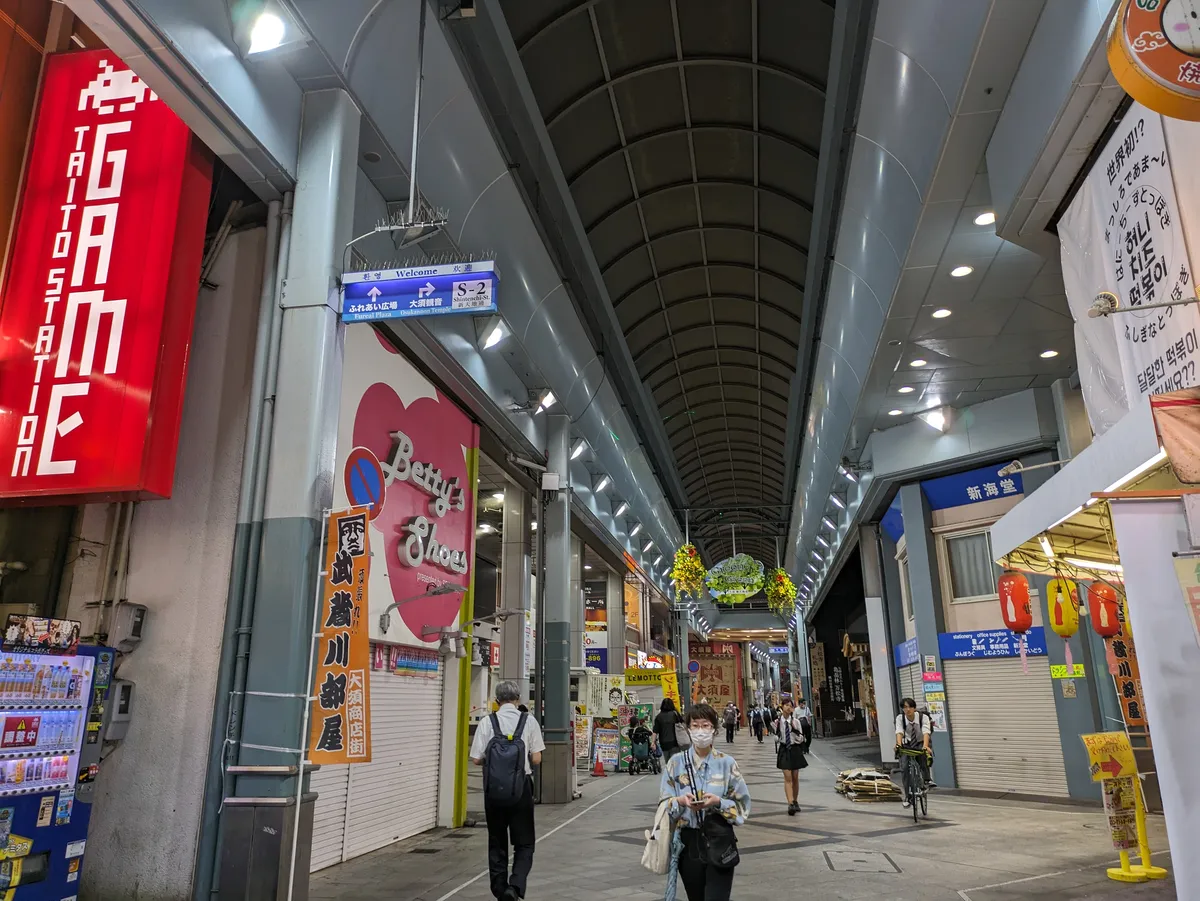
Today, I live in the Osu area, right next to Osu Shopping Street, one of Nagoya’s most vibrant neighborhoods. I have been coming to Osu for decades, and now I get to call it home.
Why Nagoya?
When people ask me why they should visit Nagoya instead of — or in addition to — Tokyo and Osaka, I always give them three reasons.
1. A Real City Without the Tourist Crowds
Nagoya is Japan’s third-largest metropolitan area. It has world-class food, historic temples and castles, excellent public transportation, and a thriving local culture. But because it is not on the standard tourist circuit, you can experience all of this without fighting through crowds of selfie sticks and tour groups.
Walk ten minutes from the main station and you are in quiet residential streets where old ladies tend their gardens and neighborhood cats sleep in the sun. Take a short bus ride and you are in working-class neighborhoods where the youngest customer at the local izakaya is 70 years old and the menu is handwritten on wooden boards. That old-fashioned, lived-in quality — what the Japanese call “shitamachi” atmosphere — is increasingly hard to find in Tokyo and Osaka, but it is alive and well in Nagoya.
2. Friendly People and Easy-to-Understand Japanese
Nagoya has a reputation among Japanese people for being a bit reserved, but in my experience, the people here are genuinely kind to visitors. Shop owners will go out of their way to help you, restaurant staff will patiently explain the menu, and strangers on the street will walk you to your destination rather than just pointing.
There is another practical advantage: Nagoya’s dialect is relatively close to standard Japanese. If you have studied any Japanese at all, you will find it much easier to understand people here than in Osaka (where the dialect is famously thick) or in rural areas. For travelers trying to practice their Japanese, Nagoya is an ideal city.
3. The Perfect Base for Exploring All of Japan
Look at Nagoya on a map and you will see why it is the smartest base for exploring Japan. Tokyo is 1 hour 40 minutes by Shinkansen. Osaka is 50 minutes. Kyoto is 35 minutes. Takayama, Shirakawa-go, Kanazawa, Ise Grand Shrine, Inuyama, Ghibli Park — all of these are easy day trips from Nagoya.
And here is the practical part: hotels in Nagoya are significantly cheaper than in Tokyo and Osaka, and there are plenty of them. Taxis are readily available. Trains run on time. The city is well-organized and easy to navigate. You can base yourself in Nagoya, pay less for accommodation, and reach almost anywhere in Japan within a few hours.
What Makes This Guide Different
There are plenty of Japan travel blogs on the internet. Most of them are written by people who visited a city for a few days, took some photos, and wrote up their impressions. There is nothing wrong with that, but it is not what this site does.
Everything on Central Japan Travel Guide is based on first-hand experience — not the experience of a tourist passing through, but the experience of someone who has lived here for 35 years.
I know which tonkatsu shop feels like eating in someone’s living room (Katsu Taiko in Nakamura-ku). I know which ramen joint invented Taiwan mazesoba as a staff meal (Menya Hanabi in Takabata, my neighborhood growing up). I know which hidden izakaya in Nishiki requires a reservation for three and only accepts cash. I know that the fireflies come out at Nagoya Castle in early summer and that the sight is breathtaking — but you need a local to show you where to go.
Here is what sets this guide apart:
I write about places I have actually been to — most of them dozens of times. When I recommend a restaurant, it is because I have eaten there repeatedly over years, not because I visited once on a press trip. When I recommend an udon shop, it is a place like Asahiro in Osu, where I have eaten every single item on the menu. Asahiro serves excellent udon at traditional Japanese-style tables, with spacious seating that works for groups — and it is the kind of place locals go instead of the famous chain restaurants that tourists already know about.
I prioritize local over famous. My philosophy is simple: do not just go to the restaurants tourists already know. Go to the tiny local spots where the youngest customer is 70 years old. Those red-lantern bars tucked into backstreets, the ones that do not show up on Instagram or food blogs — that is where you will drink local sake with the owner and have conversations you will remember for the rest of your life.
I include the details that matter. Can you use a credit card? Is the menu in English? How crowded is it? What should you order? How do you actually eat tebasaki chicken wings (there is a technique, and knowing it makes a huge difference)? I include the practical details because I know what it is like to travel in a foreign country and feel uncertain about the basics.
I update this site when things change. When a bus schedule changes, I update the article. When a restaurant closes, I remove it. When I discover a new spot worth recommending, I add it. This is a living guide, not a static blog post from 2019.
A Local Who Learns from Other Locals
One thing I love about living in Nagoya is the international community here. Over the years, I have made friends with people from many different countries who call Nagoya home. Some of them have introduced me to their own favorite restaurants — authentic international cuisine tucked into Nagoya’s backstreets that I never would have found on my own. I now regularly visit these places.
That exchange — local knowledge flowing in both directions — is exactly what this site is about. I am not just a Japanese person telling foreigners where to go. I am someone who genuinely enjoys cross-cultural exchange and believes that the best travel experiences happen when locals and visitors share what they know.
My Nagoya Highlights: Personal Recommendations
To give you a sense of the depth of local knowledge behind this guide, here are a few of my personal favorites — places and experiences I come back to again and again.
Osu Shopping Street
I have been coming to Osu for decades, and now I live here. This is one of Nagoya’s most energetic neighborhoods, and it deserves far more attention from international visitors.
Start at Osu Kannon Temple. It is a beautiful Buddhist temple right at the entrance to the shopping arcade, and it is worth a visit for the atmosphere alone — just watch out for the pigeons. There are a lot of them.
Osu hosts festivals and events almost every month, so there is nearly always something happening when you visit. The area has a large international community, and the shop owners are used to serving foreign customers, so you will feel welcome even if your Japanese is limited.
The street food in Osu is outstanding. Walk through the covered arcades and you will find mitarashi dango (sweet soy-glazed rice dumplings), xiaolongbao (soup dumplings from the many Chinese and Taiwanese shops), Belgian waffles, and karaage (Japanese fried chicken). My recommendation: eat your way through the arcade slowly, stopping at whatever catches your eye.
For a sit-down meal, I cannot recommend Asahiro highly enough. It is a local udon restaurant where I have literally eaten every item on the menu. The udon is excellent, the prices are reasonable, and the restaurant has traditional Japanese-style tables and chairs with spacious seating — perfect for groups. This is the kind of place that locals eat at instead of the famous udon chains. If you want authentic Nagoya udon in a genuinely local setting, Asahiro is it.
You will also hear about Yamamotoya and other famous miso nikomi udon restaurants in Nagoya, and they are good. But here is a local secret: the best udon in Nagoya often comes from the small, no-name neighborhood shops that do not have English websites or TripAdvisor pages. Asahiro is one of those places.
Nagoya Castle
Every Nagoya local has been to Nagoya Castle at least once, but honestly, most of us do not go back very often. The castle itself is impressive — especially the reconstructed Honmaru Goten palace — but it is the grounds and surrounding area that I find most interesting.
There is a yokocho (alley of small restaurants and shops) in the castle town area that I visit regularly. It has a lively, old-fashioned atmosphere that feels like stepping back in time.
But here is something most guidebooks will never tell you: Nagoya Castle is one of the best places in the city to see fireflies. In early summer, the castle grounds come alive with hotaru (fireflies), and the sight of these tiny glowing insects drifting through the darkness with the castle silhouetted behind them is genuinely magical. It is the kind of quintessentially Japanese scene — what we call “nihon no genfukei,” the original landscape of Japan — that you would never expect to find in the middle of a major city.
There is one important caveat: if you want to see the fireflies, you absolutely need a local to guide you. The best viewing spots are not signposted, and timing matters. This is exactly the kind of insider knowledge that this guide exists to share.
Chicken Miso Hot Pot (Tori no Miso Nabe)
If I could make every visitor to Nagoya eat one thing, it would be chicken miso hot pot. This is the dish I recommend most passionately, and yet most visitors — and even many Nagoya locals — have never tried it.
Miyakagi in the Meieki area has been serving this dish since 1899. They use Mikawa red chicken simmered in a rich Hatcho miso broth, and you eat it upstairs in a tatami room, sitting on the floor around a low table with the pot bubbling in the center. You finish the meal by adding kishimen noodles or rice to the remaining broth. It is one of the most authentic, deeply “Nagoya” experiences you can have.
I have been to Miyakagi more than ten times and I go back three to four times a year. It never gets old.
What This Site Covers
I am based in Nagoya, and this site focuses on destinations I know firsthand:
- Nagoya — Japan’s most underrated food city: miso katsu, hitsumabushi, Taiwan mazesoba, chicken miso hot pot, tebasaki wings, and a cafe culture unlike anywhere else in Japan
- Takayama — A beautifully preserved Edo-era mountain town in the Japanese Alps
- Shirakawa-go — UNESCO World Heritage thatched-roof farmhouses in the mountains
- Ghibli Park — Studio Ghibli’s magical theme park in Aichi Prefecture
- Inuyama — A charming castle town with underground power lines and a castle that was privately owned for centuries
- Kanazawa, Ise, Gujo, and beyond — Day trips and hidden gems most guidebooks skip
Whether you are planning a weekend in Nagoya or a full week exploring Central Japan, you will find honest, detailed guides written by someone who actually lives here and updates them when things change.
My Promise to You
When a bus schedule changes, I update the article. When a restaurant closes, I remove it. When I have not been somewhere myself, I tell you. Accuracy matters when you are planning a trip from the other side of the world.
I do not copy from other travel blogs. I do not write about places I have never visited. And I will never recommend something just because it pays me to.
A Note About Affiliate Links
This site contains affiliate links to booking platforms, tour companies, and travel services. When you book through these links, I earn a small commission at absolutely no extra cost to you. This income helps me keep the site running, visit new destinations, and continue creating free travel guides.
I only recommend products and services I genuinely believe will improve your trip. Affiliate partnerships never influence my opinions or recommendations. For full details, please see my Affiliate Disclosure page.
Thank you for visiting. I hope this site helps you discover the Nagoya — and the Central Japan — that I love.
— Yuu